Skip to content

Theme

Schools & Education

One-room academies, Rosenwald schools, desegregation, and the teachers and students who filled the county's classrooms.

From the academies of the early 1800s and the Burwell School for young women to Rosenwald schools, Lincoln and Central high schools and the desegregation fights of the 1950s and 1960s, schooling in Orange County has been a story of who was taught, and where. The storylines follow the academies, the segregated systems and the campaigns that ended them.

6,686 works about Schools & Education are indexed here. 39 held at OCPL →

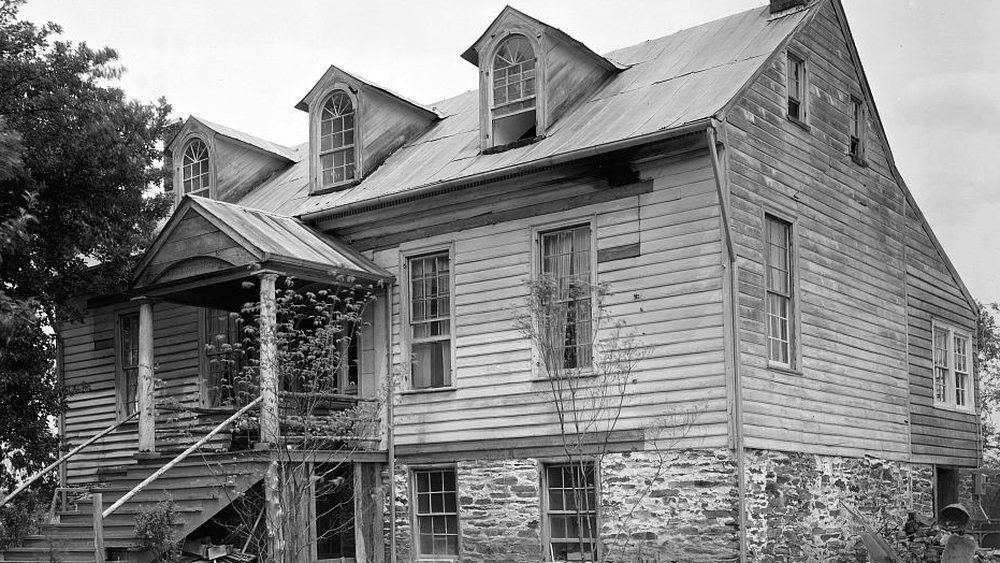
An early frame house on a stone foundation.

Events and storylines

Named events and storylines the index follows in detail. Each has its own page.

Show all 65 events and storylines
The founding of the University and Chapel Hill, 1789–1795The 1789 charter, the trustees’ 1792 choice of New Hope Chapel Hill at their Hillsborough meeting, the Old East cornerstone of October 1793, and the first students of 1795 Orange County’s nineteenth-century academiesHillsborough Academy, the Bingham School, the Burwell School, the Nash and Kollock School, and the other schools that made the county an educational center before the public system Orange County’s Black high schools: the Training School, Lincoln and CentralThe Orange County Training School and Lincoln High in Chapel Hill and Central High in Hillsborough, the county’s high schools for Black students until desegregation in the late 1960s Desegregating the University of North Carolina, 1933–1955Five Black students began law school classes on June 22, 1951, after the courts barred the university from refusing them; the first Black undergraduates, the Frasier brothers and John Brandon, followed in 1955 Consolidation and desegregation in the Orange County SchoolsThe county system’s closing of small community schools and its desegregation in the 1960s, from Caldwell School and the Aycock consolidation to the Central High walkout that ended the dual system Building the public schools, 1868–1920The county’s public schools from the 1868 constitution through township and district school committees, separate schools for Black and white children, teachers’ institutes, and the first graded and high schools Schools and a new courthouse: the county bonds, 1947–1954The 1947 bond issue the voters turned down, the 1948–49 study of county needs, the November 1949 vote for $1.25 million in school and courthouse bonds, and the new courthouse opened in 1954 Rebuilding Chapel Hill High School, 1940–1947The fire that destroyed the high school in 1942, classes in a church and the Hume house, the plans and rejected bids, and the new building on West Franklin Street opened in 1947 The county superintendency passes from Claytor to Proffit, 1946–1947R. H. Claytor’s thirty years as county school superintendent ending in 1947, Glenn T. Proffit’s election, the teachers’ petition for Claytor, and the board’s answer Cameron Park School, 1952–1959Hillsborough’s new elementary school on Rebecca Wall’s Cameron Park: the offer she turned down, the deed signed at the condemnation deadline, the fight to save the trees, the bonds, the bids and the opening Carrboro’s school and the Chapel Hill district, 1950–1959The crowded Carrboro school, its split from White Cross, the new site at the end of Ash Street, and the long argument over joining the Chapel Hill school district, which Carrboro’s school did in 1958 The 1956 school bonds and what they built, 1955–1958The $2 million county school bond issue voters approved in March 1956: how the commissioners brought it to a vote, the objection raised over the segregation ruling, and the schools the board built with it, from the new Carrboro school to gymnasiums at Hillsboro High and Central The Pearsall Plan in Orange County, 1956–1961The 1956 state amendment that let localities close schools rather than integrate them: the debate in Chapel Hill and Hillsborough, Representative Umstead’s support and his proposal for biracial committees, and a county vote that approved the plan while Chapel Hill voted it down Central High School’s crowding, fire and rebuilding, 1956–1960Hillsborough’s high school for Black pupils in its last years under segregation: the crowding, the borrowed lodge rooms parents protested, the new gymtorium and classrooms, the February 1958 fire that destroyed the main building, and the building that replaced it White Cross School: merger votes, Black families’ transfers and the closing, 1958–1961The western Orange school district that three times voted not to join the Chapel Hill schools: the merger elections, the long bus rides of its Black pupils, their families’ requests to attend White Cross School, and the county board’s decision to close it Building Orange High School, 1960–1964How the county board planned and built one high school for northern Orange: the 6-3-3 plan, the Latta land, the 1961 bonds and the architect, the Aycock fight over consolidation, and the opening of Orange High and Orange Junior High in 1963 Carrboro’s old school becomes its town hall, 1959–1961How Carrboro bought the old Carrboro School on West Main Street when the new school opened, voted bonds to remodel it, and made it a town hall with room for the library, the police and fire departments and a National Guard platoon Chapel Hill’s schools leave West Franklin Street, 1963–1969How the Chapel Hill schools sold their downtown tract on West Franklin Street and moved out: the search for new sites, the $1 million sale, the coed dormitory and shops that took the land, and the new junior high and integrated high school Cedar Grove School’s road to accreditation, 1956–1961The five-year effort by parents at Cedar Grove School, the Black elementary school in the far north of the county, to win state accreditation: their requests to the county board, the new cafeteria and classrooms, the state’s 1958 refusal and the 1961 approval White Furniture union drives, 1956–1964The efforts to organize workers at the White Furniture Company’s Hillsborough and Mebane plants: the 1956 labor board election that rejected the United Furniture Workers, the school auditorium refused to union organizers in 1964, and the election that year that brought the union in The 1915 sanitary survey of Orange CountyThe U.S. Public Health Service’s house-to-house sanitary survey of Orange County in 1915 and what the county did alongside it: Hillsboro’s privy ordinance, the women’s Sanitation League, the work through Black churches, privies at the schools, and the boards’ thanks Hillsboro’s memorial high school, 1919–1941How Hillsboro got a new high school meant to honor the county’s First World War dead: the county board’s $20,000 offer in 1919, the 1921 bond election and plans, and the brick school on West Tryon Street finished in 1922 Carrboro’s first public schools and school taxes, 1898–1927Carrboro’s schools from a mill house on Center Street to a brick graded school: the frame Carrboro Public School of about 1908, the $25,000 bond vote of 1920, the new building of 1921, and the old schoolhouse’s move to the Methodists Consolidating the rural schools and hauling the children, 1919–1926How Orange County began closing its one- and two-teacher schools and hauling children to larger ones: the first school trucks to Chapel Hill, Claytor’s consolidation plan, the new schools at Cedar Grove, Efland, Orange Grove and White Cross, the county’s first buses, and the sale of closed schoolhouses Chapel Hill’s nurse for Black residents, 1924–1941The public health nurse who worked among Chapel Hill’s Black residents from 1924: her hiring by the Community Club, the seal money, town share and Black residents’ share that paid her, her clinics and classes, and the canvasses Black citizens organized for her salary The Chapel Hill school as a University training school, 1926–1927How the Chapel Hill school became a training school of the University’s school of education in 1927: the new women faculty, the opening under E. R. Mosher, the school board’s borrowing, the parents’ protest over double sessions, and Mosher’s resignation The Orange County Civic Association, 1928The Orange County Civic Association in its first months of 1928: its founding at Hillsboro as a nonpartisan group to gather facts about county government, with E. C. Branson and Paul W. Wager, and its meetings on school bus costs and the county’s roads The Morehead-Patterson bell tower, 1930–1931The building of the Morehead-Patterson bell tower on the University campus: the chime of twelve bells and the clock ordered in 1930, the first sounding of the bells and the clock’s striking in September 1931, and the Thanksgiving Day dedication Consolidating the University, 1931–1936How Chapel Hill, State College and the Greensboro college became one University of North Carolina: the 1931 act, the 1932 survey and commission plan, the trustees’ rejection of a chancellor, Frank P. Graham’s election, and the 1934 deans of administration The Carrboro school as a community center: night school and clinics, 1929–1933The Carrboro school as a meeting place for the whole community from 1929: the group commencement and health clinics, the dental clinic, the night school for adults and its honors, the parent-teacher meetings and recitals, and a library for grown people Chapel Hill and the 1933 school law: the special district and the ninth monthHow Chapel Hill kept the right to tax itself for its school under the 1933 school law: the board’s petition, the State School Commission’s ruling and reversal, the enlarged district, the dispute over the registrar, and the October vote for a ninth month White Cross School burns and is rebuilt, 1933The White Cross school from the fire that destroyed its building to the new brick school of 1933: the county board’s appropriation, the contracts and the insurance, the plans from the Rosenwald Fund’s Tennessee office, and the classrooms in use that fall The Civil Works Administration in Orange County, 1933–1934The Civil Works Administration in Orange County from November 1933 to March 1934: George H. Lawrence’s projects and quota, the work on Hillsborough’s courthouse square and library, Chapel Hill’s streets, the creek, schools and campus, the February cuts, and the program’s end Orange County’s PWA school building program, 1935–1936How Orange County rebuilt its schools with Public Works Administration aid in 1935 and 1936: the application and approval, the county’s share cut and raised again, the Black schools in Chapel Hill and Hillsboro, the bonds, the rural additions and the new Chapel Hill high school The University’s debts and the sale of its Tennessee lands, 1830–1837How the University’s trustees worked their way out of debt in the 1830s: the crisis of 1830, the state loan they refused, the land and bank stock sales, the executive committee of 1835, the sale of the Tennessee lands and the endowment put into Bank of the State shares Joseph Caldwell’s last years and the choice of David L. Swain, 1833–1837How the University passed from its first president to its next: Joseph Caldwell’s illness and Elisha Mitchell’s acting presidency, Caldwell’s death and the mourning in Chapel Hill and Hillsborough, the delayed election, David L. Swain’s arrival and the busts and monument made in Caldwell’s memory The Caldwell Institute at Hillsborough, 1845–1851How Orange Presbytery’s Caldwell Institute came from Greensboro to Hillsborough: the town’s welcome in 1845, the refitted academy building handed over in 1846, the charter of 1847, enrollment that peaked at 100, the close in 1850 and the academy revived under Huske and Graves The Hillsborough Military Academy, 1858–1861How Charles C. Tew of South Carolina built a military school on the west end of Hillsborough: the land bought in 1858, the opening in January 1859, the barracks cornerstone, the Commandant’s House, the cadets’ registers and Tew’s departure for Fort Macon in April 1861 Benjamin Hedrick, the scientific school and his dismissal, 1851–1862How Benjamin Hedrick went from first honors to the University’s chair of agricultural chemistry in its new scientific school, and how his 1856 support for Fremont led to effigy burnings, the faculty’s disavowal, his dismissal by the trustees and, in 1862, his removal from the Presbyterian roll The county schools under Superintendent James L. Currie, 1882–1889How the county’s public schools ran under Superintendent James L. Currie from 1882 to 1889: the white and Black teachers’ associations and institutes, the new Board of Education of 1885, the school reports showing short terms and unequal pay, and Currie’s resignation in 1889 The Bingham School at Mebane after the 1890 fire, 1890–1913How a school carried on at the old Bingham School grounds near Mebane after the 1890 fire and the move to Asheville: the Presbyterian High School, Herbert Bingham’s brief charge, Preston Lewis Gray’s William Bingham School, the 1898 fight over the name and the later enrollments Caldwell Institute at Caldwell, 1877–1905How Caldwell Institute in Little River Township lasted from the 1870s into the age of public school taxes: its crowded commencements, the 1886 fire, J. H. McCracken’s new building and growing rolls, the 1899 charter and the Caldwell district’s vote for a rural graded school George T. Winston’s presidency of the University, 1890–1896How George T. Winston led the University from 1891 to 1896: Kemp Battle’s move to the new chair of history, Winston’s election and inauguration, the fraternity ruling, the fights in the legislatures of 1893 and 1895, the growing rolls and his departure for Texas Hillsborough’s public school and its first schoolhouses, 1891–1911How Hillsborough’s public school found a home of its own: the school in the Academy in 1891, the fight over the Female Academy lot, the first schoolhouse bought in 1901, the new building of 1903, the West Hill school and the high school’s growing rolls Heading the new University: Ker, Harris, Gillaspie and Caldwell, 1794–1799How the new University was led in its first years: David Ker as presiding professor, the first student dismissed, the trustees’ tavern rules, Charles Wilson Harris’s months in charge, Joseph Caldwell’s arrival, James Smiley Gillaspie as principal and the student rising of 1799 that returned Caldwell to the head Person Hall and the Main Building (South Building), 1796–1814How the University finished its first chapel and its Main Building, later South Building: Thomas Person’s gift and Person Hall, Charles Gerrard’s Tennessee lands, the Masonic cornerstone of 1798, the roofless walls, the lotteries, William Polk’s appeal, Joseph Caldwell’s subscription tours and the students’ move in 1814 Robert H. Chapman’s presidency of the University, 1812–1816How Robert H. Chapman’s four years as president of the University unfolded: Joseph Caldwell’s step back to teaching, Chapman’s Bible study and the Chapel Hill Presbyterians, the raids on his property, the Shepard rebellion of 1816, the powder bomb, his resignation and Caldwell’s return Selling the county’s farm produce, 1923–1926How Orange County farmers sold their cream, eggs and poultry through the Chapel Hill school’s agriculture teachers: the cream routes to the Burlington creamery, the first pure-bred egg shipments, the marketing truck of 1924 with its county-paid driver and school-board fund, and the producers’ reports of 1926 The Black Student Movement’s demands, 1968–1969How the Black Student Movement’s 23 demands of December 1968 were pressed and answered: the visits to South Building, the Faculty Council’s recruiting steps, Chancellor Sitterson’s reply, the marches of February 1969, the BSM’s recognition and its own court, and the start of Afro-American Studies Residence colleges and Hinton James, 1965–1971How UNC grouped its dormitories into residence colleges from 1965 to 1969 and built Hinton James: Morehead, Morrison and Scott colleges, the provisional college areas, the ten-story hall on Manning Drive, classes in the halls, the experimental colleges with faculty fellows and Project Hinton’s coed floors Opening the Morehead awards to women, 1973–1977How the Morehead Foundation opened its undergraduate scholarships to women: the 1973 refusal of a Chapel Hill High nominee, the faculty women’s letter and the Faculty Council’s request, the threatened court challenge, the trustees’ 1974 vote and the first women scholars Town elections and bond votes, 1979–1989How Chapel Hill, Carrboro, Hillsborough and Orange County voted in 1979: the Town Council’s bond questions and the open space fight, the mayor’s race Joe Nassif won, the council, aldermen, commissioners and school board races, the county’s rejected $20.4 million bond package and the new council’s first acts UNC and the state budget cuts, 1989–1991How the state’s budget cuts reached UNC between 1989 and 1991: the 1989 deficit and Student Congress’s loan offer, the 1990 cuts and hiring freeze, the protests and Save UNC Day, Hardin’s decision against layoffs, the 1991 section cuts and graduate students’ demands, the Carolina Inn decision and the budget flexibility the campus won Orange County in the 1992 electionHow Orange County voted in 1992: Margaret Pollard’s challenge to state senators Howard Lee and Russell Walker, the student registration drives and campus rallies, the Greens’ independent candidate for commissioner, the fight over the $52 million school bond, the Clinton and Gore rally in Hillsborough and the November results The city schools’ multicultural plan, sexual orientation and the gay literature unit, 1990–1994How the Chapel Hill-Carrboro schools’ multicultural plan became a fight over sexual orientation between 1990 and 1994: the 1990 plan, the protests and petitions of 1993, the suspended gay and lesbian literature unit at Chapel Hill High, the revised mission statement and the board’s 1994 vote LaVonda Burnette and the school board recall, 1993–1994How LaVonda Burnette’s seat on the Chapel Hill-Carrboro school board was contested from her 1993 election to her 1994 resignation: her acknowledgment that she was not a UNC student, the board’s call to resign, the recall law, the charges, the petition drive and the NAACP’s objections Hardin’s retirement and the search for a chancellor, 1994–1995How UNC looked for a successor to Chancellor Paul Hardin in 1994 and 1995: his retirement announcement, the trustees’ search committee, the student and employee campaigns for more seats, the committee’s first meeting and forums, and Michael Hooker’s inauguration The 1993 town elections in Chapel Hill and CarrboroHow Chapel Hill and Carrboro chose their mayors, council members and aldermen in 1993: the retirements and filings, the forums and endorsements, the November 2 results and the Carrboro recount, and the swearing-in of the new boards Condoms at Chapel Hill High School, 1993–1994How the Chapel Hill-Carrboro school board came to make condoms available at Chapel Hill High School in 1993 and 1994: the forums, the board’s votes, the parents’ groups that opposed the plan, the opt-out letters and the program’s start

More storylines

Other storylines that include this theme, in date order. Each has its own page.

StorylineSt. Matthew's Parish and Hillsborough's old church, 1752–18241752–1824 · 26 events · From 1752 St. Matthew's Parish was Orange County's established Anglican church, with chapels at New Hope and St. Mary's and, from about 1768, a church in Hillsborough. Its rector, George Micklejohn, preached to Tryon's troops in 1768 and stayed loyal to the Crown in 1776. Its church served as an army hospital, an academy and the meeting place of the 1788 convention, and in 1797 the Assembly ordered the ruinous building sold. Episcopal worship came back through St. Jude's and St. Mary's in 1818 and 1819, and in 1824 the reorganized parish left the old lot to the Presbyterians. StorylineHugh McAden, Henry Pattillo and the first Presbyterian congregations, 1753–17901753–1790 · 19 events · Orange County's Presbyterian settlers had congregations before they had ministers. Hugh McAden preached on the Eno and at the Hawfields in 1755 and 1756, and the settlements asked Hanover Presbytery for preachers, but none came regularly until Henry Pattillo became pastor of the Hawfields, Eno and Little River churches in 1765. Pattillo and his fellow ministers condemned the Regulators in 1768 and he preached to Tryon's troops; in 1770 they formed Orange Presbytery, which first met at Hawfields. In 1775 the Provincial Congress sent Pattillo to win former Regulators to the American cause, and about 1790 the old Pattillo field was split into two pastoral charges. StorylineThe Bentons at Hartford: Jesse Benton and the young Thomas Hart Benton, 1780–17991780–1799 · 10 events · When Thomas Hart left Orange in 1780, Hartford and its mills passed to Jesse Benton, and his letters to Hart show what the war and the drought of 1782 cost the place. Benton backed the Science Hall academy and claimed 23,931 acres in the west, but he died in 1790 with his estate heavily in debt, and his will let his executors sell Hartford and its mills. His son Thomas Hart Benton, born in 1782 and later a U.S. senator from Missouri, left Hartford for the university and was expelled from the Philanthropic Society in March 1799 for taking his roommates' money. StorylineEagle Lodge and the Hillsborough Masonic Hall, 1788–18231788–1823 · 10 events · Eagle Lodge, silent since 1799, was revived at Hillsborough in 1819 and paid for its Masonic Hall with a lottery. Under a new number, 71, the lodge voted money toward a male academy in 1820, and from 1821 it ran a lottery, held over eleven years, to pay for a hall. In July 1823 commissioners advertised for proposals to build a brick hall, and the cornerstone was laid on November 23, 1823 at what is now 142 West King Street. The Greek Revival hall was designed by the state architect William Nichols and is believed built by John Berry and Samuel Hancock. The Grand Lodge restored the lodge's original number, 19, in 1932. StorylineStudent disorder and the trustees' discipline, 1799–18191799–1819 · 15 events · In its first twenty years the University's students repeatedly defied its faculty and trustees, and the board answered with expulsions, new ordinances and in 1817 the courts. Students beat principal Gillaspie in 1799, about forty-five left in 1805 over an oath for monitors, an 1811 outbreak left no graduates, and in 1816 a forbidden oration brought expulsions and a powder bomb at a tutor's door. Duels, a stabbing at the 1804 ball and an 1818 beating of an enslaved man ran alongside, until in 1819 students had to hand in six pistols and two dirks. StorylineBinding out: the county court and its apprentices' masters, 1801–18211801–1821 · 7 events · Binding a child out made a master responsible for the child's food, clothing, schooling and trade, and the Orange County court kept the power to take the child back. From 1801 it required every child to be bound out to be produced in court, and in 1807 it wrote reading, writing and ciphering into three bindings. Between 1812 and 1825 it heard sworn complaints that masters failed to clothe, feed or lodge their apprentices or beat them, summoned the masters to show cause, and cancelled or rescinded indentures.
Show all 45 storylines
StorylineOrange County's common schools, 1840–18531840–1853 · 12 events · When the federal census of 1840 counted 6,463 Orange County children between five and twenty, fewer than 500 of them were enrolled in school. After county voters accepted the 1839 school law, the county court levied a school tax and the county was laid off in districts. A common school opened in the Hawfield district near Gravelly Hill in May 1840, and the Recorder urged the other districts to follow. By the 1844-45 term 57 common schools taught only white children. In 1850 Samuel Wellwood Hughes was appointed to what NCpedia calls the first Orange County board to examine teachers, and the earliest written record of the schools, for 1853, showed 2,507 of 4,447 children attending. StorylineThe Samuel Phillips law office, 1843–19831843–1983 · 8 events · Samuel Phillips built a small law office on East Franklin Street about 1843; a boys' school met there, and Phillips and Judge William Horn Battle taught law in it. The merchant Adam A. Kluttz bought it about 1894, Professor W. S. Bernard made it his home in 1916, and it was rented to students from the 1950s. In 1982 the Chapel Hill Preservation Society bought it and sold it to buyers who restored and enlarged it in 1983. StorylineElm Grove school district, 1846–19221846–1922 · 5 events · The Elm Grove school district, about five and a half miles south of Hillsborough, built a log schoolhouse with a rock chimney in 1846 and 1847, under a contract said to be for $80, and John Latta taught the first school there. In 1896 the district put up a new schoolhouse near the old one, but in 1903 its voters rejected a special tax for a graded school, 19 to 16. Twelve pupils served in the World War while the district's women sewed, knitted and canvassed for the soldiers, and two former pupils died of influenza at Camp Greenleaf in October 1918. In March 1922 influenza and grippe closed the school for a week. StorylineNorthside, Pine Knolls, and Tin Top1864–2023 · 106 events · Chapel Hill’s historic Black neighborhoods took shape after emancipation around the West End church and school, the Orange County Training School and its Rosenwald campus of 1924, St. Joseph CME and First Baptist, and the tin-roofed houses that named Tin Top. Lincoln High opened on Merritt Mill Road in 1951, residents resisted urban renewal in the 1970s, and as the Black population fell by about 40 percent the conservation districts, the Jackson Center and the 2015 Northside initiative worked to keep the neighborhoods in place. StorylineThe Freedmen’s Bureau at Hillsborough, 1865–1868August 1865–December 1868 · 100 events · After emancipation the county court went on binding out Black children, apprenticing them to masters, and the Freedmen's Bureau itself apprenticed some, among them Cadmus and Erasmus Webb in October 1865. From May 1866 to the end of 1868 the Bureau kept an office at Hillsborough for the sub-district of Orange, under Lt. Isaac Porter until the fall of 1867 and Lt. Thomas H. Hay from May 1868. It heard freedpeople's complaints over wages, crops and children, approved labor contracts, gave rations to destitute people white and Black, and helped freedpeople open schools. The court kept binding children through 1867, and in 1868 it rescinded bindings, among them Calvin Godfrey's because he was working for wages paid to his mother. StorylineThe University's summer schools for teachers, 1877–19071877–1907 · 8 events · For three decades the university used its summers to train the state's teachers, though the work stopped and started. The General Assembly set up a Summer Normal School there in 1877 to train white teachers, and President Kemp Battle and the Board of Education admitted white women, though state money could not be spent on them. Its last session was in 1884. In 1894 Edwin A. Alderman opened a Summer School for Teachers and Students, and in 1900, by Battle's account, the first summer term of degree courses began. The trustees' executive committee held no summer school for teachers in 1905, but N. W. Walker revived it in 1907 and directed it for twenty-seven years. StorylineThe Farmers' Alliance headquarters at Hillsborough, 1895–19201895–1920 · 21 events · The Farmers' State Alliance made the old Hillsborough Military Academy barracks its state headquarters in 1896 and found the property a burden from about 1901. It published its Alliance Weekly there until the paper stopped at a loss, and ran a tannery and shoe factory that stopped, reopened, paid its debt by 1899 and closed in 1900. From the Barracks it denounced the railroad lease, asked for four-month public schools and compulsory attendance, and heard Governor Charles B. Aycock in 1904. In 1905 it offered the buildings and 146 acres to the A. and M. College for an agricultural school. By 1916 it had decided to sell, and in 1920 the property was cut into lots and sold at auction. StorylineThe UNC pharmacy school under Howell and Beard, 1897–19311897–1931 · 5 events · An earlier College of Pharmacy, begun in 1880, had been short-lived, and in March 1897 the university trustees set up a chair of pharmacy and elected Edward Vernon Howell, beginning the department that became the School of Pharmacy. In 1901 the department, with Howell as dean, was formally incorporated into the university and its laboratory and lecture space was doubled. Howell died on February 14, 1931 after seventeen days of pneumonia, and the Weekly's editor, his neighbor, wrote of the Halloween parties he gave the village children. J. Grover Beard, a 1909 graduate long on the pharmacy faculty, was named acting dean, and the trustees' executive committee ratified his appointment on March 19, 1931. StorylineChapel Hill's volunteer fire company, 1898–19311898–1931 · 22 events · From about 1898 a volunteer company fought Chapel Hill's fires, at first with two hand reels and hose lent by the University, and more than once a building burned where no hydrant was near. In 1921 the town built a brick municipal building and fire house and received an American La France motor truck. In June 1922, with the nearest hydrant almost half a mile away, fire destroyed the Orange County Training School, the county's school for Black students. In 1923 the company hosted the state's firemen at a barbecue, and the state association elected Chief John L. Foister its president. After officers missed an alarm, the aldermen put a full-time fireman on duty in 1928. In 1931 the bricklayer John Johnson became, by the Weekly's account, the only Black member of a white fire company in North Carolina. StorylineLocal school taxes come to Orange County, 1903–19091903–1909 · 10 events · Between 1903 and 1910 Orange County's school districts voted one by one on whether to tax themselves for better schools, and the votes went both ways. Caldwell District approved a local tax for a rural graded school in 1903, while Elm Grove rejected one that October. After a 1904 election the Mebane district followed, and in 1905 the commissioners levied special school taxes in both. In 1907 Superintendent John C. Hocutt said he meant to campaign for local taxes. In 1908 the Hillsboro district defeated a school tax while Fairfield carried one, and in 1909 the legislature created the Chapel Hill Graded School District with a special tax. By 1910 special school taxes were collected in six districts. StorylineUniversity students' night schools and social work, 1910–19161910–1916 · 4 events · About 1911, asked for help by the young Black workers who cut firewood and carried water in the dormitories, students began teaching them reading and arithmetic in what were called moonlight schools. Under Frank Porter Graham at the campus YMCA those classes grew to take in history, English, debating, home sanitation and the Bible. The YMCA had already organized Sunday schools enrolling 321 pupils. On November 1, 1915 it opened night moonlight schools in six schoolhouses within four miles of Chapel Hill, with 54 student teachers and about 300 pupils, and students also ran a night school at Carrboro and two for Black pupils. Fifteen students carried the night schools on in the fall of 1916. StorylineTeachers' pay in Chapel Hill and Orange County, 1918–19351918–1935 · 6 events · Orange County spent far less on Black teachers than on white ones, from a 1918-19 count of school spending to a 1935 salary table. In 1919 the county board decided to lift salaries to a $75 monthly average. Facing a deficit and debt in May 1928, the Chapel Hill school board offered sharp cuts, then restored the old schedule after a week of public concern; that September citizens resolved to endorse notes for a bank loan so the teachers could be paid at once. In 1931 teachers in both the white and Black schools took a 10 per cent cut. In 1935 white teachers were paid about $65 to $77 a month and Black teachers about $38 to $46. StorylineHillsboro's improvements, 1922–19231922–1923 · 5 events · In 1922 and 1923 Hillsboro gained a new bridge, a new school and paved streets. On February 8, 1922 the State Highway Commission let a reinforced concrete bridge over the Eno to contractor George W. Kane for $30,651.20; it was the main way into town from the south until 1964. That September the town's new $100,000 brick school on West Tryon Street was nearly ready, and by early 1923 it housed grades one through eleven of the consolidated Hillsboro schools. Paving the streets with bond money cost Main Street some of its old elms and maples, to the regret of some citizens, and in April the Carolina Playmakers performed in the school's new auditorium. StorylineThe Chapel Hill school's money and leaders: budgets, tuition, bonds and debt, 1922–19441922–1944 · 21 events · Chapel Hill's school ran so short of money that by 1928 its teachers' pay was months in arrears and its board members had personally endorsed bank notes. Voters approved $40,000 in building bonds in 1922, but in 1925 the county cut the school's allowance, and the teachers gave up their raises. After a 1928 audit citizens endorsed notes so the teachers could be paid, and in 1929 voters carried bonds to clear the debts. C. A. Hoyle became principal of the Chapel Hill and Carrboro schools that year, and in 1930 voters took the territory around town into the district, ending tuition for outside children. J. Minor Gwynn led the schools from 1932 and Allison W. Honeycutt from 1937. StorylineCounty school finance and the special tax districts, 1923–19241923–1924 · 5 events · In 1923 Orange County began its first round of school consolidation and, for the first time by Lefler and Wager's account, funded its school deficits with bonds. Robert Hume Claytor folded one- and two-teacher schools into larger ones and sought local tax elections. In August the commissioners voted six percent bonds to pay debts the Board of Education had run up to keep a six-month term, and called school tax elections in the Carrboro district and part of Cedar Grove Township. In April 1924 the county board moved building money to Efland, which had a local tax, an eight-month term and a paved road for school trucks, and put it first in the building order. StorylineTown and county budgets and tax rates, 1925–19321925–1932 · 16 events · What a Chapel Hill taxpayer paid in town and county taxes together fell from $2.69 on $100 of valuation in 1926 to $2.22 in 1932. In January 1926 the Orange County rate was $1.34, up from 90 cents in 1922, and the aldermen held the town rate at $1.38 through 1928; new state school and highway aid helped lower the county rate in 1929. From July 1, 1931 the state took over Orange's roads, which county accountant G. W. Ray said wiped out the county's 25-cent road tax, and that July the aldermen cut town employees' pay 10 percent. In 1932 the aldermen adopted a smaller town budget and the commissioners set the county rate at 80 cents. StorylineThe Mary Bayley Pratt Children's Library, 1929–19401929–1940 · 8 events · Chapel Hill's children's library began in the spring of 1929 with citizens' gifts and kept going on memberships and gifts as its appropriation fell. That October it moved into a basement room of the Chapel Hill school as the Mary Bayley Pratt Memorial Library. William Bayley, brother of the late Mrs. Joseph Hyde Pratt, and his family gave $1,500 toward a permanent endowment, and in the year to June 1931 the library lent 17,181 books. With its appropriation down to $94.61 in 1933-34, it cut its yearly membership fee from $5 to $1. In the spring of 1940 a campaign brought in more than $185 from 822 contributors, some children giving their weekly allowances. StorylineBaby clinics and the Junior Service League, 1930–19471930–1947 · 10 events · Free monthly clinics for babies, held separately for Black and white children, were opened by Chapel Hill's Junior Service League in 1940 and moved into the new Carrboro Health Center in 1947. An earlier clinic for Black babies had run for several weeks at Rock Hill Baptist Church in 1930. With the district health department, the League held clinics for children under two, for Black babies at the Orange County Training School and for white babies at the Carrboro school. It also began a free training school for Black household workers, with an employment agency. Dr. Robert Barrett Lawson and later Dr. Beryl Mason attended the clinics, and by 1944 Hillsborough had separate clinics of its own. StorylineAdult literacy classes in Orange County, 1931–19391931–1939 · 5 events · In 1939 the county's adult education council counted 530 white and 1,106 Black adults in Orange who could not read and write, and night classes had been working to reach them since 1931. They grew from a two-week course in Chapel Hill in July 1931, taught by Eva Edgerton of the High Point night schools, whose students started the Carrboro Night School for Adults. In the year to December 1939 the council held classes for 637 adult students in Carrboro, the McFarland community and around Hillsborough. By November 1939 Black adults met weekly at Rock Hill Baptist Church, taught by volunteers from the Orange County Training School, though the congregation had no money to heat the building. StorylineBlack civic clubs and the Chapel Hill town board, 1935–19561935–1956 · 6 events · From 1935 to 1956 Black civic clubs in Chapel Hill took their neighborhoods' needs to the town board and, later, the school board. In July 1935 Black representatives asked the aldermen for more police protection on West Franklin and West Rosemary streets. In 1946 Adolphus Clark asked for sewer service, drainage, street markings and a light on Sunset Drive; the board ordered the light, markings and drainage but said sewer lines had to wait. Requests for sidewalks, traffic lights and sewer pipe followed in 1950, and in 1952 the club reported 344 children crossing West Franklin Street each day. In 1956 a club petitioned for a Black member on the school board, which named druggist William L. Sloan instead. StorylineHome demonstration and 4-H clubs in Orange County, 1935–19391935–1939 · 7 events · Home demonstration work, the teaching of homemaking to farm women and girls by a county agent, began in Orange in September 1935, when no county school but Hillsboro's taught home economics. Grace Holcombe, hired jointly by Orange and Chatham counties, led it. That month women of New Hope and Blackwood Station organized what the Weekly called the county's first club, and Fairfield women the second. Holcombe organized girls' 4-H clubs that fall, and by May 1936 there were seven clubs with 106 members and ten girls' 4-H clubs with 231. The boys' 4-H clubs were reorganized in 1938, Woodward Byars succeeded Holcombe by 1939, and by 1941 the county had 17 home demonstration clubs. StorylineThe hard winter of 1935–19361935–1936 · 3 events · Chapel Hill had not had so cold a winter since 1899, said Clyde Eubanks, who kept the town's weather records, and by February 1936 snow and sickness had put off University events and closed the Chapel Hill school. Snow and ice lay on the ground almost without a break from just before Christmas 1935, and on January 28 the thermometer near Phillips Hall read 6 degrees above zero. The heaviest of six snows, beginning February 6, left about a foot. On February 11, in what Dean Robert B. House called a mild epidemic of colds, the University postponed Parents' Day, the midwinter dances and the week's athletic events, and the school closed on February 13 and 14. StorylineOrange County's war loan drives, 1942–19451942–1945 · 12 events · From farm families pledging a pig or an acre of crops in 1942 to the Victory Loan of 1945, Orange County kept buying war bonds, and it passed its quota in each drive from the Fourth War Loan on. In 1942 rural families pledged $50,000 in bonds and stamps for the year. The Fourth War Loan of 1944, under county chairman J. Maryon Saunders of Chapel Hill, passed its $540,000 quota by mid-February, helped by a $25,000 county investment, though E bond sales lagged. The county went over in the Fifth and Sixth loans, and in 1945 the Seventh closed at $1,308,000 against a $574,000 quota. Saunders counted $6,120,000 in bonds bought in the seven drives he led. StorylineThe Navy Pre-Flight School at Chapel Hill, 1942–1945May 1942–October 1945 · 92 events · Commissioned at UNC in May 1942, the U.S. Navy Pre-Flight School trained 18,700 cadets before it was decommissioned on October 15, 1945. Cadets ate in Lenoir Hall and drilled in a Navy-built armory that opened in 1943. George H. W. Bush trained there as a cadet, Gerald Ford taught there, and Ted Williams played on its baseball team. StorylineShort wartime school days, 1943–19441943–1944 · 3 events · Wartime farm work shaped Orange County's school hours in 1943 and 1944. In August 1943 Superintendent R. H. Claytor announced that most county schools would run from 8:15 to 1:15 for the first six weeks so children could help on farms. Chapel Hill's schools ran a wartime short day from 8 to 1. In November, 99 of 160 parents favored a day from 8:40 to 2, but on November 16 the Chapel Hill school board put an 8:45 to 3:15 schedule into effect, against most parents' wishes. By May 1944 all Orange County schools had gone on a short schedule, after young farmers were drafted and heavy spring rains delayed the crop year. StorylinePolio and vaccination1944–1964 · 29 events · Polio closed the county’s schools in 1944 and 1948, the University pool in 1950 and two UNC football games in 1952, and the county’s polio chapter bought iron lungs. The first Salk vaccinations reached first and second graders in 1955, and more than 25,000 residents took the Sabin oral vaccine on one Sunday in 1964. StorylineNorth Carolina Memorial Hospital and the medical center, from 19521947–2012 · 85 events · The Good Health Plan of 1947 funded a four-year medical school and teaching hospital at Chapel Hill, and North Carolina Memorial Hospital admitted its first patients in September 1952. It ended racial segregation in 1965, became UNC Hospitals in 1989 and the UNC Health Care System in 1998, and with the cancer and neurosciences hospitals made the town a medical center employing about 7,000 people by 2010. StorylineThe five-member county board, 1953–19561953–1956 · 8 events · In January 1953 rural residents brought petitions with about 940 names asking that the county commissioners and the board of education each be enlarged from three to five members. After a heated hearing on February 2 the commissioners voted 2 to 1 to ask for a five-member board elected at large, without the one-per-township rule the petitioners wanted, and the General Assembly passed the local act that March. The first primary for five seats came in May 1954, voters filled the enlarged board that November, and the first five-member board took office on December 6, 1954, electing R. J. M. Hobbs chairman. In 1956 the commissioners asked the legislature to limit the board to two members from any one township, and after protests from Chapel Hill speakers and the League of Women Voters they reaffirmed the request that November. StorylineOrange County's school and water bonds, 1966–19671966–1967 · 3 events · In the fall of 1966 the Orange County commissioners postponed a $3 million school bond election, expecting it to fail, and a $650,000 water and sewer bond vote was moved to December. In 1967 voters approved $3 million in school bonds, $1 million for the county schools and $2 million for Chapel Hill's. StorylineHealth care across language and immigration1967–2024 · 13 events · From the student-run SHAC clinic of 1967 to UNC’s interpreter services, the CAMPOS program and the Center for Latino Health of 2008, care for the county’s newcomers has grown with its languages, and the health department was serving clients in almost 20 languages by 2014. El Futuro’s bilingual mental health work in Carrboro and the refugee wellness program of 2015 carry it on. StorylineSelling the Protean Radish, 1968–19701968–1970 · 6 events · In October 1969 a Chapel Hill junior high suspended an 11-year-old for selling the leftist Protean Radish at school, and the school board limited selling in the schools to school groups. Campus police briefly stopped sales of the paper outside Student Stores in 1970, and the Civil Liberties Union and then the boy's father, in a federal suit, challenged the schools' rule. StorylineThe ArtSchool and the ArtsCenter in Carrboro, 1974–19941974–1994 · 34 events · Jacques Menache began the ArtSchool in Carrboro in 1974 with painting and drawing classes on East Main Street, and it added a gallery, dance, drama and the Gallery Theatre. It leased space in Carr Mill Mall late in 1978. In 1986 a partnership formed with Menache bought the former Piggly Wiggly shopping center on East Main Street, and the school, renamed The Arts Center, opened its new building there in July 1987. Menache resigned in 1988 and Aubrey Bowie became director. In 1990, behind on its rent, the center sued its landlord, banks foreclosed on a $150,000 loan its guarantors had backed, and a task force cut its debt to $240,000. Chapel Hill, Carrboro, Orange County and Glaxo gave it money in 1990 and 1991, and in 1992 activists charged it with neglecting minority artists. In 1994 the center began a $900,000 drive to buy its building, and Carrboro pledged $15,000 a year for ten years. StorylineThe PTA Thrift Shop and the Chapel Hill-Carrboro schools, 1977–19891977–1989 · 5 events · The PTA Thrift Shop, run by the Chapel Hill and Carrboro PTAs, gave its profits to the local schools. It turned over $61,479 in 1977, opened a second store in its own building on Jones Ferry Road in Carrboro by 1979 and cleared $250,202 in the year ending June 1985. In 1989 it decided to buy the lot beside the Carrboro store for an addition. In 1989 the shops gave the schools $279,000, their largest donation yet. StorylineMoving to middle schools in Chapel Hill-Carrboro, 1986–19891986–1989 · 6 events · As enrollment grew, Chapel Hill-Carrboro elementary schools added temporary classrooms in 1986. In February 1987, after a six-month study and a hearing that backed the change, the school board voted unanimously to turn its junior highs into middle schools for grades six through eight. To relieve crowding it moved Carrboro Elementary's sixth graders to Culbreth Junior High in 1988 and more sixth and ninth graders in 1989. StorylineUNC’s School of Education after Frank Brown, 1989–19921989–1992 · 7 events · Frank Brown resigned as dean of UNC's School of Education at the end of 1989, and in August 1990 the Board of Governors named Donald J. Stedman to succeed him. The school gained a Center for Educational Leadership in 1991, and its faculty agreed to teach more classes as it lost four faculty positions. In 1992 it stopped admitting new students to its high school social studies program. StorylineThe movement for a freestanding Black Cultural Center, 1990–19941990–1994 · 114 events · The Faculty Council asked in 1990 for a new Black Cultural Center building, and after professor Sonja Haynes Stone died in August 1991, a student campaign won the center her name that October. In 1992 a coalition pressed for a freestanding building; Chancellor Paul Hardin opposed one into September, and after marches, a Spike Lee rally and his working group's report, he endorsed it on October 15. The trustees approved a site in July 1993. Student leaders accepted the trustees' Coker Woods site that November, and the Bicentennial Campaign took on the building's $7 million. In 1994 director Margo Crawford resigned, the Board of Governors approved the building, and NationsBank and other donors brought gifts to about $1.6 million by November. StorylinePlanning and building new Chapel Hill-Carrboro schools, 1990–19941990–1994 · 13 events · In November 1990 the Chapel Hill-Carrboro school board planned four new schools by 2000. Early in 1992 it contracted to buy about 40 acres between Old Fayetteville and Hillsborough roads, and in April it discussed a middle school there with the Carrboro aldermen. Citing rising enrollment, officials backed a $52 million school bond, which Orange County voters approved on November 3, 1992. The board chose a Weaver Dairy Road site for a second high school in 1993, and McDougle Middle School, which the Daily Tar Heel called the district's first school named for Black people, opened in August 1994. StorylineReplacing Superintendent Gerry House, 1991–19921991–1992 · 4 events · Superintendent Gerry House announced in December 1991 that she would leave the Chapel Hill-Carrboro City Schools for Memphis. The board first kept its search committee to board members, then in March 1992 widened it to teachers, staff, the PTA Council and others and named James Ellerbee interim superintendent. Assistant superintendent Neil Pedersen took office as superintendent on June 30, 1992. StorylineCOVID-19 in Orange County, 2020–20222020 to 2022 · 32 events · From the first cases in March 2020 to the last emergency measures in 2022: closures, remote school, the health department's response, mutual aid, and the pandemic's unequal weight.

Indexed works

Works about Schools & Education from library and archive catalogs. The most widely held appear first; novels are not shown here. Follow a link to find a copy or view the material.

Widely held

William Friday

Link, William A. · 1995

Biography of William C. Friday, president of the University of North Carolina system, by historian William A. Link, published by UNC Press in 1995 with the subtitle power, purpose, and American higher education. It covers Friday's career and the history of the university at Chapel Hill and statewide. Part of the Rebecca B. Wall Local History Collection.

Included because: The record names this subject alongside a heading for the county or its towns.

The Woman Who Rang the Bell: The Story of Cornelia Spencer Phillips

Russell, Charles Phillips · 1949

Charles Phillips Russell's biography of Cornelia Phillips Spencer (1825-1908), the Chapel Hill writer remembered for ringing the bell of South Building when the university reopened in 1875 after its closure during Reconstruction. It doubles as a history of Chapel Hill and the university. Published by the University of North Carolina Press in 1949, 293 pages with illustrations.

Included because: Catalog heading in the Durham record: Spencer, Cornelia Phillips, 1825-1908.

Reviewed in Journal of American History (1949).

Hark the Sound of Tar Heel Voices

Barefoot, Daniel W. · 2008

Daniel W. Barefoot arranges first-hand recollections of the University of North Carolina by decade, from the 'infant university' of the 1790s through the Civil War years when promise turned to despair, the rebuilding of the 1870s, the 'frosh' life of the 1880s, wartime fame in the 1940s, the controversies of the 1960s and the bicentennial of the 1990s. Thomas Wolfe's student years appear among the voices. Published by John F. Blair of Winston-Salem in 2008, 257 pages.

Included because: Catalog heading in the UNC record: Students.

The Story of the Institute of Government, The University of North Carolina at Chapel Hill

Coates, Albert McKinley · 1981

Albert Coates's own account of the Institute of Government at the University of North Carolina, which he founded, subtitled 'out of a classroom in Chapel Hill' and published in 1981. The 303 pages trace the institute's history and its role in educating North Carolina's public officials.

Included because: Catalog heading in the UNC record: Coates, Albert, 1896-1989.

Horace Williams

Winston, Sr., Robert Watson · 1942 · The University of North Carolina press

Robert Watson Winston's biography of Henry Horace Williams (1858-1940), who taught philosophy at the University of North Carolina for half a century, subtitled gadfly of Chapel Hill. Published by the University of North Carolina Press in 1942, 309 pages with frontispiece and portraits; this copy is autographed. Topics include educators in Chapel Hill and the university's history.

Included because: The record names this subject alongside a heading for the county or its towns.

Reviewed in Social Forces (1943).

Show 2 more

To Drink from the Well: The Struggle for Racial Equality at the Nation’s Oldest University

Kapur, Geeta · 2021

Geeta Kapur's history of race at the University of North Carolina at Chapel Hill, from the enslaved labor that built the campus through desegregation and the Black student protests that followed. Twelve chapters, with a foreword by William Barber II, move from the founding era and the Great Depression controversies to the state's response to integration and the turmoil of later decades; North Carolina Central University also figures. Published 2021 by Blair in Durham.

Included because: Catalog heading in the UNC record: Minority college students.

Communists on Campus

Billingsley, William J. · 1999 · University of Georgia Press

William J. Billingsley's history of the Speaker Ban Law, the 1963 North Carolina statute that barred known Communists from speaking on state campuses, and the fight over it at the University of North Carolina in Chapel Hill. The subtitle sets the scope: race, politics and the public university in sixties North Carolina. It treats academic freedom, anti-communist movements and free speech in the state. University of Georgia Press, 1999, 308 pages with eight pages of plates.

Included because: Catalog heading in the NCCU record: Education -- Political aspects.

Reviewed in Academe (2000), The American Historical Review (2001), The Journal of Southern History (2001), Journal of American History (2001), The Journal of Politics (2001).

Recently indexed: The "value-added" effects of two-year college transfer programs (1976) · 100 years of Epsilon of Phi Gamma Delta, 1851-1951 : centennial celebration, March 31, 1951 (1951) · 25th anniversary (1975) · 'Varsity banking (1959) · 50 years of change and challenge, 1940-1990 (1989) · A A U W asks how well do you know our schools? (1954)

Search all 6,686 indexed works →

Start at OCPL

Books in OCPL’s Rebecca B. Wall Local History Collection whose titles, catalog subjects, or descriptions match this theme. The Friends’ recommended starting points are labelled. Books marked Wider context cover the broader subject rather than this theme itself.

  • Foundational · NC 371.82 ENG The Book of Burwell Students: Lives of Educated Women in the Antebellum South Engstrom, Mary Claire · 1979

    Mary Claire Engstrom's biographical register of the young women who attended the Burwell School in Hillsborough, subtitled lives of educated women in the antebellum South. The school was kept by Margaret Anna Burwell and her husband, and the book bears on women's education in nineteenth-century North Carolina. Published by the Historic Hillsborough Commission, 1979, 256 pages with illustrations and portraits.

  • Start here · NC 371.097 PENDER A History of Orange County Schools, 1752-1983 Pender, Irene Oliver · 1983

    Irene Oliver Pender's history of the public schools of Orange County from 1752 to 1983, covering more than two centuries of schooling in Hillsborough, Efland, Cedar Grove and the rural districts of the county. Published in 1983, 186 pages with illustrations.

  • Foundational · 371.009 MOORE The Impact of Slavery on the Education of Blacks in Orange County, North Carolina 1619-1970 Moore, Rosetta Austin · 2015

    Rosetta Austin Moore's survey of Black education in Orange County from the colonial era to 1970, in a revised edition published in 2015 through Lulu in Morrisville. After chapters on slavery nationally and on schooling for enslaved people in North Carolina, the book turns to the county: its formation, the growth of its schools, the arrival of free public schooling for all, and the schools and African American educators of the twentieth century. 265 pages with maps, portraits and facsimiles.

Show 6 more
  • Foundational · NC 371.009 RUF Hillsborough Negro School 1936-1968: The First State Supported Negro School in Orange County, North Carolina Ruffin-Villines, Donna · 1998

    Donna Ruffin-Villines documents the school that served African American students in Hillsborough from 1936 until 1968, described as the first state supported school of its kind in Orange County. Published in 1998 concerning African American public schools and their history in the county. A starting point for anyone tracing segregated education in Hillsborough.

  • Rebecca Wall Collection · NC 379 ORANGE Orange County (N.C.) Minutes, Board of Education on Microfilm 1872

    Microfilm of minutes kept by the Orange County Board of Education, dated 1872, documenting the organization and staffing of the county's public schools after the Civil War.

  • Foundational · NC 373.756 NAS Ladies in the Making (also A Few Gentlemen) at the Select Boarding and Day School of the Misses Nash and Miss Kollock, 1859-1890, Hillsborough, North Carolina Nash, Ann Strudwick · 1964

    Ann Strudwick Nash's history of the Nash and Kollock School, the select boarding and day school the Misses Nash and Miss Kollock ran in Hillsborough from 1859 to 1890, mostly for girls with a few boys. Published in Hillsborough in 1964 with plans and portraits. Part of the Wall Local History Collection.

  • Wider context · NC 373.756 COO North Carolina Schools and Academies, 1790-1840: A Documentary History Coon, Charles L. · 1915

    Charles L. Coon's documentary history of North Carolina academies and schools from 1790 to 1840, published by the North Carolina Historical Commission in 1915. Its 846 pages reprint academy notices, legislative acts and items from the Raleigh Register and other papers, with a section on the colleges' beginnings. Hillsborough Academy trustees' notices are among them, and Coon's introduction notes how many academy principals came from the University in Chapel Hill.

  • Wider context · NC 370.973 HUN First in America: An Education Governor Challenges North Carolina Hunt, James B. · 2001

    James B. Hunt Jr., governor of North Carolina from 1977 to 1985 and again from 1993 to 2001, lays out his views on public schools, education reform and early childhood programs, Smart Start among them, and challenges the state to build the best schools in the nation. Issued by the First in America Foundation in Raleigh in 2001, 93 pages.

  • Foundational · NC 975.656 HISTORIC Antebellum Hillsborough, Slavery, and Enslaved and Free People of Color Who Worked at the Burwell School, 1837-1857 Historic Hillsborough Commission (Hillsborough, N.C.) · 2019

    The Historic Hillsborough Commission's account of slavery in antebellum Hillsborough and of the enslaved and free people of color who worked at the Burwell School, the female school the Burwells kept in town, between 1837 and 1857. African American history in Hillsborough and the school's own history are its two threads. Published in 2019.

In the chronology

A selection of 12 events from the 2,997 chronology entries for this theme, including highlights and examples from different years. See all 2,997 dated events in the chronology →

  1. Burwell School for young women operates Robert and Margaret Anna Burwell operated their Hillsborough school for girls from 1837 to 1857. People: Margaret Anna Burwell, Robert Armistead Burwell, Elizabeth Hobbs Keckly Place: HillsboroughNCpedia
  2. Women enroll at UNC for the first time After the trustees opened UNC's post-graduate courses to women early in 1897, four women registered in September for the 1897–98 session, which The Tar Heel called the start of coeducation: Dixie Lee Bryant, Sallie Walker Stockard, Cecye Dodd and Mary MacRae. President Edwin Alderman let women enter junior and senior classes as well. People: Dixie Lee Bryant, Sallie Walker Stockard Place: Chapel Hill · Also named: Mary MacRae, Edwin AldermanSearch the index · The Tar Heel, September 24, 1897, p. 3: Co-Education (DigitalNC)
  3. Sallie Walker Stockard becomes UNC's first woman graduate Sallie Walker Stockard, a Guilford College graduate, entered UNC's senior class in the fall of 1897, the first year the university admitted women. She became the first woman to graduate from UNC when the class of 1898 received its degrees on June 1, 1898, and she earned a master's degree there in 1900. People: Sallie Walker Stockard Place: Chapel HillSearch the index · DigitalNC: Charlotte Daily Observer, June 1, 1898, page 4 (Chapel Hill, May 31)
  4. Influenza epidemic strikes Chapel Hill Spanish influenza swept the University in early October 1918, putting the campus and its student soldiers under a three-week quarantine. By October 23 about 300 students had been ill and three had died, and President Edward Kidder Graham died of influenza and pneumonia on October 26. People: Edward Kidder Graham Place: CarrboroThe Tar Heel, October 23, 1918, p. 1
  5. The Texas community asks the Bureau of Indian Affairs for an Indian school Clayton Jeffries, Charles Will Jeffries and others retained a lawyer, drew up a list of Indian families, made contact with the Indian community in Person County that already had a state sponsored school, and wrote to Commissioner of Indian Affairs John Collier seeking a federal school for their children. A bureau agent visited and reported the families to be Indian, and the bureau's letters called the settlement an Indian community, but no assistance was ever given. Place: Pleasant Grove Township · Also named: Clayton Jeffries, Charles Will Jeffries, John CollierExcavating Occaneechi Town (UNC Press): Twentieth Century
  6. Morehead Planetarium is dedicated Morehead Planetarium was dedicated at UNC on May 10, 1949. People: John Motley Morehead III Place: Chapel Hill · Also mentions: Morehead PlanetariumSearch the index · Morehead Planetarium
  7. Orange County Negro Public Library dedicates its own building About 150 people attended an open house on May 27, 1951 dedicating the Orange County Negro Public Library's own building in Hillsborough, a structure bought from Camp Butner and put up with volunteer labor. Begun in 1942 by Marinda McPherson, the library had opened to the public in 1949 and now held more than 3,000 books. Place: Hillsborough · Also named: Marinda McPhersonThe News of Orange County (Hillsborough), May 31, 1951, p. 1 (Open House Officially Opens Community Library For Negro Citizens Here Sunday)
  8. North Carolina Memorial Hospital opens North Carolina Memorial Hospital opened to patients on Tuesday, September 2, 1952, without a formal ceremony, as the core of the new University Medical Center. Its opening allowed the UNC School of Medicine to grow from a two-year program into a four-year school. Place: Chapel Hill · Also mentions: North Carolina Memorial Hospital, UNC School of MedicineThe Chapel Hill Weekly, September 5, 1952, p. 1 · Also: UNC Libraries: Office of the Dean of the School of Medicine of the University of North Carolina at Chapel Hill Records, 1905-2020
  9. WUNC-TV begins broadcasting WUNC-TV began broadcasting from Chapel Hill on January 8, 1955. Place: Chapel Hill · Also mentions: WUNC-TVSearch the index · PBS North Carolina · Also: The Daily Tar Heel, December 4, 1979, p. 1
  10. Central High students march and Orange County schools integrate In 1968 Black students at Central High School in Hillsborough walked out and marched to protest a plan for phased desegregation. After Central's last class graduated that spring, its high school students moved to Orange High, ending the county's dual school system in 1968–69. Place: Hillsborough · Also mentions: Central High School, Orange HighAlliance for Historic Hillsborough: Central High School/Agnes Kindergarten
  11. COVID-19 transforms Orange County Orange County, Chapel Hill and Carrboro declared states of emergency on March 13, 2020, and the county and its three towns ordered residents to stay home from March 27. UNC moved undergraduate classes online in August 2020 after campus clusters. The county emergency, extended more than a dozen times, expired on May 1, 2022. Place: Chapel HillChapelboro: Orange County: COVID-19 State of Emergency Will Officially Expire (May 1, 2022)
  12. Drakeford Library Complex opens Orange County's Southern Branch Library opened in February 2025 in the $42 million Drakeford Library Complex at 203 South Greensboro Street in Carrboro, replacing the Carrboro Cybrary, which had closed on January 31, 2025. The building, named for Robert Drakeford, Carrboro's first Black mayor, also houses town recreation offices and WCOM Radio. Place: Carrboro · Also named: Robert Bob Drakeford, Robert DrakefordThe Local Reporter: Southern Branch Library has a "soft opening" (February 12, 2025)

See all 2,997 dated events in the chronology →

Places in this theme

Buildings, schools, churches and other sites named in the dated events on this page, the most often named first. The map shows the 148 with a known location.

Map tiles © OpenStreetMap contributors. Site locations from the N.C. State Historic Preservation Office survey, Open Orange, Orange County GIS, OpenStreetMap and a few other published sources named on each site’s page; town and community pins show approximate locations.

Show 165 more

All places and the county map →

Research sources

Sources and research tools for this subject. Research guide: How to research with Orange County Indexed.

Background 13

Show all 13

National Register files 6

Show all 6

Historic sites, markers, and maps

Records of the time

Collections and databases 7

Show all 7

Local help

Background reading at OCPL

Books from OCPL’s Rebecca B. Wall Local History Collection that provide broader context. They may not discuss Schools & Education directly.

  • Background reading · Rebecca Wall Collection A History of the Public Schools of North Carolina Noble, M. C. S. · 1930

    M. C. S. Noble, dean of the School of Education at the University of North Carolina, traces the state's public schools from colonial apprenticeship of orphans and chartered academies through the Literary Fund of 1825, the common school law of 1839, Calvin H. Wiley's superintendency, Reconstruction, and the graded schools and the white and Black normal schools of the late 1800s. Published at Chapel Hill in 1930; 463 pages with portraits and an index.

    Subjects in the Library of Congress catalog record: Education -- North Carolina -- History; Public schools -- North Carolina OCPL call number: NC 352 NOB
  • Background reading · Rebecca Wall Collection Their Highest Potential: An African American School Community in the Segregated South Siddle Walker, Vanessa · 1996

    Vanessa Siddle Walker's case study of the Caswell County Training School, a school for Black students in segregated Caswell County, and of the community around it. Caswell was formed from Orange County in 1777, with Yanceyville as its seat. UNC Press, 1996; 259 pages with illustrations, a map, a bibliography and an index.

    Subjects in the Library of Congress catalog record: African Americans -- Education -- North Carolina -- Caswell County -- Case studies; Community and school -- North Carolina -- Caswell County -- Case studies; Caswell County Training School (Caswell County, N.C.) OCPL call number: NC 371.979 WAL

Search the Wall Collection for related books →

Picture: Library of Congress photograph, late 1930s; public domain. Image credits →

More to discover

Keep Reading Local

The Friends connect people with new library materials, local writers and publishers, and resources documenting Orange County.

Two mice reading back to back against a leaf, with the hand-lettered words Friends of the Orange County Public Library
Illustration by Caldecott Medalist Matthew Cordell, gifted to the Friends 2026