Skip to content

Local figure

Charles Phillips

Phillips taught at the University of North Carolina in Chapel Hill as a tutor from 1844, professor of civil engineering from 1854 and professor of mathematics from 1860. He was stated supply for the Chapel Hill Presbyterian Church from 1857 to 1868 and was ordained at Orange County's New Hope Church in 1866.

Source: NCpedia: Phillips, Charles

1822–1889 · Dates from the Library of Congress · On the Friends’ Local Authors roster → · Library of Congress authority record ↗

10 works about Charles Phillips are indexed here, as is one work by Phillips.

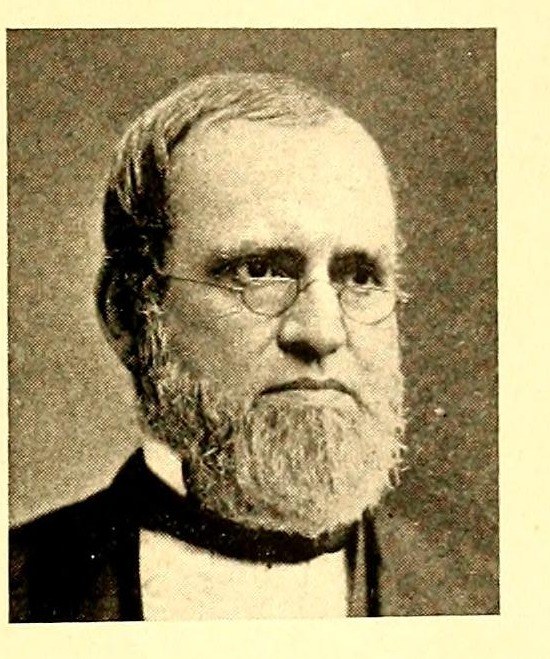
Charles Phillips, portrait plate published 1907

Life and Orange County connections

Storylines this person is part of, in date order. Each has its own page.

Dated events connected with this person, in date order. See these 42 dated events in the chronology →

During their lifetime

  1. Presbyterians begin worshipping together in Chapel Hill A Presbyterian church at Chapel Hill appears in Orange Presbytery's 1827 report to the Synod, with twenty members and President Joseph Caldwell as stated supply; it met in homes and university buildings, with faculty as ministers. Its session was formed in 1845, when David L. Swain and Charles Phillips were elected elders, its first sanctuary on Franklin Street was dedicated September 23, 1849, and the congregation took the name University Presbyterian Church in the 1960s. People: David L. Swain, Charles Phillips, Joseph Caldwell Place: Chapel Hill · Also mentions: University Presbyterian Church, Franklin StreetSearch the index · University Presbyterian Church: Our History · Also: Cornelia Phillips Spencer, The Presbyterian Church in Chapel Hill
  2. Charles Phillips joins New Hope church James Phillips's son Charles, later a minister and teacher at the university, joined the church at New Hope. He often preached there with his father in later years. People: James Phillips Place: New HopeSearch the index · NC Digital Collections: D. I. Craig, Historical Sketch of New Hope Church in Orange County, N.C. (1891), p. 29
  3. Alumni gather at Chapel Hill and organize the university's Alumni Association Graduates meeting at commencement organized the Alumni Association with former governor Morehead in the chair. At the 1844 meeting they adopted a constitution and chose Morehead as the association's first president. People: John Motley Morehead, William A. Graham, Charles Phillips, William Horn Battle, Charles Manly Place: Chapel HillSearch the index · Internet Archive: Kemp P. Battle, History of the University of North Carolina, vol. 1 (1907), full text · Also: The Daily Tar Heel, October 13, 1983, p. 3
  4. Charles Phillips returns to Chapel Hill as a tutor of mathematics Phillips accepted a call from President David L. Swain in July 1844 to return to the University of North Carolina as his father's assistant. He held the post of tutor of mathematics until 1853. People: David L. Swain, James Phillips Place: Chapel HillSearch the index · NCpedia: Phillips, Charles
  5. Measles spreads through Chapel Hill households Measles went through the village in February 1845. Charles Phillips was laid up with it, and at the Mitchell house ten people were waiting to come down with it. People: Charles Phillips, Elisha Mitchell Place: Chapel HillSearch the index · Hope Summerell Chamberlain, Old Days in Chapel Hill (1926), scan p. 74
  6. David L. Swain and Charles Phillips transfer from New Hope to the Chapel Hill church University president David L. Swain, who first joined a church at New Hope, and Charles Phillips were released by letter to the Presbyterian church at Chapel Hill, according to the New Hope church's history. Lucy Phillips Russell, writing from the Chapel Hill church records in 1936, said the first Session record there, dated June 8, 1845, shows Swain and Phillips ordained as ruling elders of the Chapel Hill congregation, months before the date the New Hope history gives for their release. People: David L. Swain, Charles Phillips Place: New HopeSearch the index · NC Digital Collections: D. I. Craig, Historical Sketch of New Hope Church in Orange County, N.C. (1891), p. 29 · Also: Chapel Hill Weekly, April 24, 1936, p. 3
  7. Dabney Cosby builds the Presbyterian church on Franklin Street After the university work Cosby built a small Tuscan style church designed by Alexander Jackson Davis for the Chapel Hill Presbyterian congregation, whose members included university president David L. Swain. In March 1848 the congregation member Charles Phillips wrote to Davis that the mason could not match the lilac gray color specified for the outside. The building no longer stands. People: Dabney Cosby, David L. Swain, Charles Phillips, Alexander Jackson Davis Place: Chapel HillSearch the index · North Carolina Architects and Builders, NC State University Libraries: Cosby, Dabney (1779-1862)
  8. The Rev. William Mercer Green buys an East Franklin Street lot and builds a house Episcopal minister William Mercer Green bought the lot at 513 East Franklin Street in 1847 and had a two-story frame house built there before he sold it, two years later, to Charles Phillips, professor of engineering and mathematics. People: William Mercer Green, Charles Phillips Place: 513 East Franklin Street, Chapel HillSearch the index · NC Digital Collections: Chapel Hill Historic Sites Survey: Final Report (1992), p. 37
  9. Charles Phillips buys the house William Mercer Green built on East Franklin Professor Charles Phillips bought the house at 513 East Franklin, just east of his father's, from the Rev. William Mercer Green, who had built it a few years earlier and was leaving to become Episcopal bishop of Mississippi. Phillips lived there until his death in 1889. People: William Mercer Green Place: Green-Phillips house, 513 East Franklin Street, Chapel HillSearch the index · Bernard Lee Bryant Jr., Occupants and Structures of Franklin Street, Chapel Hill (1998; Chapel Hill Historical Society, 1999), scan p. 91
  10. The Presbyterian church on Franklin Street is finished and dedicated Built with money and effort from James and Charles Phillips, Elisha Mitchell and President Swain, the small Presbyterian church on the old Grand Avenue ground was completed and formally dedicated. Lucy Phillips Russell, writing from the church records in 1936, said it was dedicated free of debt on Sunday, September 23, 1849, when Rev. John A. Gretter of Greensboro preached the dedicatory sermon. People: James Phillips, Charles Phillips, Elisha Mitchell, David L. Swain Place: Presbyterian Church, East Franklin Street, Chapel Hill · Also named: John A. GretterSearch the index · Bernard Lee Bryant Jr., Occupants and Structures of Franklin Street, Chapel Hill (1998; Chapel Hill Historical Society, 1999), scan p. 91 · Also: Chapel Hill Weekly, April 24, 1936, p. 3
  11. University library moved from South Building to Smith Hall The university's books were taken from the president's lecture room in South Building to the new Smith Hall, and Hubbard, Charles Phillips and the librarian were told to prepare a catalogue. At the start of the Civil War the books were stored in a room of the East Building. People: Charles Phillips, Fordyce M. Hubbard Place: Smith HallSearch the index · Documenting the American South: Kemp P. Battle, History of the University of North Carolina, vol. I (1907), p. 634
  12. University trustees create a school of applied science and elect Charles Phillips professor of civil engineering At their annual meeting the university trustees decided to set up a School for the Application of Science to the Arts with two new chairs, civil engineering and agricultural chemistry, and elected the mathematics tutor Mr. Phillips to the chair of civil engineering. Place: University of North Carolina, Chapel HillSearch the index · Hillsborough Recorder, February 16, 1853, p. 3
Show all 38 dated events
  1. School for the Application of Science to the Arts opens Under a trustee resolution of 1852 the university opened a scientific school with departments of civil engineering, under Charles Phillips, and of chemistry applied to agriculture and the arts, under Benjamin S. Hedrick, with a laboratory in the basement of Smith Hall. Its students could earn a Bachelor of Science in about two and a half years. People: Charles Phillips, Benjamin Sherwood Hedrick Place: Smith HallSearch the index · Documenting the American South: Kemp P. Battle, History of the University of North Carolina, vol. I (1907), p. 642
  2. The legislature charters four plank road companies through Orange County The 1855 charters were for roads from Chapel Hill to Morrisville and to Durhamsville, from Hillsborough to Chapel Hill, and from Hillsborough to Milton, with capital from $20,000 to $150,000. The Hillsboro' and Chapel Hill company was chartered on February 10, 1855, and the Hillsboro' and Milton and the Chapel Hill and Durhamsville Plank Road and Turnpike companies on February 14. Lefler and Wager could not say which, if any, were built. People: Charles Phillips, Edmund Strudwick, Andrew Mickle, Patterson H. McDade Place: Orange County · Also mentions: Hillsborough to Chapel HillSearch the index · Lefler and Wager, Orange County, 1752-1952 (1953), p. 184 · Also: Internet Archive: North Carolina Historical Review 16
  3. The faculty vote 12 to 1 to disown Hedrick's published views Called together by President Swain, the faculty resolved that Hedrick's letter broke the university's custom of keeping out of party politics and that no other member shared his opinions, while expressing personal regard for him. Instructor H. Herrisse cast the only vote against, saying no one suspected the faculty of Republicanism. People: Benjamin Sherwood Hedrick, David L. Swain, Elisha Mitchell, James Phillips, Charles Phillips, Fordyce M. Hubbard Place: University of North Carolina, Chapel Hill · Also named: H. HerrisseSearch the index · J. G. de Roulhac Hamilton, Benjamin Sherwood Hedrick (1910), scan p. 19
  4. Francis L. Hawks argues for the Mecklenburg Declaration at commencement At the 1857 commencement Hawks gave a long, later published oration defending the authenticity of the Mecklenburg Declaration of May 20, 1775. In the audience was Professor Charles Phillips, an equally firm disbeliever in the document. People: Francis L. Hawks, Charles Phillips Place: Chapel HillSearch the index · Documenting the American South: Kemp P. Battle, History of the University of North Carolina, vol. I (1907), p. 673
  5. Professor William J. Martin buys the Franklin and Boundary corner and builds a house Martin, who replaced Elisha Mitchell on the faculty and later served as a Confederate colonel, bought the northeast corner of Franklin and Boundary streets from Charles Phillips and built his home there soon after. He resigned his chair in the fall of 1867 and moved to Tennessee. People: Elisha Mitchell, Charles Phillips, William Joseph Martin Place: Martin house, northeast corner of Franklin and Boundary streets, Chapel HillSearch the index · Bernard Lee Bryant Jr., Occupants and Structures of Franklin Street, Chapel Hill (1998; Chapel Hill Historical Society, 1999), scan p. 107
  6. Thirty Chapel Hill families pool money to buy corn Amid wartime scarcity, thirty heads of families sent Andrew Mickle to buy corn in a better-supplied district; he brought back about 1,921 bushels by rail to Durham and wagon from there, at $6.75 a barrel delivered. The livery keeper John H. Watson took ninety barrels, President Swain 33 and Judge Battle 24. People: Charles Phillips, David L. Swain, Andrew Mickle, John H. Watson Place: Chapel HillDocumenting the American South: Kemp P. Battle, History of the University of North Carolina, vol. I (1907), p. 725
  7. Wheeler's cavalry reaches Chapel Hill and posts a guard on the university Confederate cavalry under General Joseph Wheeler reached Chapel Hill, and at the request of alumnus James P. Coffin, Wheeler detailed Lieutenant McBurney Broyles and fifteen men to report to President Swain and protect the university's books and apparatus. Wheeler's headquarters were opposite the Episcopal church. People: David L. Swain, Charles Phillips Place: Chapel Hill · Also named: Joseph Wheeler, James P. Coffin, McBurney BroylesDocumenting the American South: Kemp P. Battle, History of the University of North Carolina, vol. I (1907), p. 741
  8. Charles Phillips teaches a Sunday school for Black residents of Chapel Hill Charles Phillips and his wife Laura taught a Sunday school for Black people in Chapel Hill, and in March 1866 a supply of books arrived from New York for it. When he left for Davidson College in 1868, a crowd of his scholars stood weeping at the gate. People: Charles Phillips Place: Chapel Hill · Also named: Laura Battle PhillipsHope Summerell Chamberlain, Old Days in Chapel Hill (1926), scan p. 153
  9. Charles Phillips is ordained at New Hope Church in Orange County Phillips was ordained on 14 April 1866 at Orange County's New Hope Church, which had long been under the pastoral charge of his father James Phillips. Orange Presbytery had convened there on Wednesday, April 11, and ordained Phillips and Calvin H. Wiley during the meeting. People: James Phillips Place: Orange County · Also named: Calvin H. WileySearch the index · NCpedia: Phillips, Charles
  10. Calvin H. Wiley is ordained at New Hope At the last meeting of Orange Presbytery held at New Hope, Calvin H. Wiley was ordained with Charles Phillips, both sine titulo, without a pastoral charge. People: Charles Phillips Place: New Hope · Also named: Calvin H. WileySearch the index · NC Digital Collections: D. I. Craig, Historical Sketch of New Hope Church in Orange County, N.C. (1891), p. 31
  11. Charles Phillips serves as stated supply for the Chapel Hill Presbyterian Church Phillips, licensed to preach by the Presbytery of Orange in December 1857, succeeded his father James as stated supply of the Chapel Hill Presbyterian Church after James died in March 1867, and served until he left for Davidson College in February 1869. He taught and superintended the church Sunday school and with his wife started a Sunday school for Black residents. Place: Chapel Hill · Also mentions: Chapel Hill Presbyterian ChurchSearch the index · Cornelia Phillips Spencer, The Presbyterian Church in Chapel Hill (1897), scan p. 13 · Also: NCpedia: Phillips, Charles
  12. Swain and the faculty resign as trustees plan a new university At a meeting Governor Jonathan Worth called to face the university's collapse, Charles Phillips presented the resignations of President Swain, Professors Hubbard, Fetter and Smith, law professor William H. Battle and himself, and the trustees adopted Kemp P. Battle's resolution for a committee to plan an elective university system with higher standards. People: David L. Swain, Charles Phillips, Kemp Plummer Battle, Jonathan Worth Place: Chapel Hill · Also named: William H. BattleDocumenting the American South: Kemp P. Battle, History of the University of North Carolina, vol. I (1907), p. 763
  13. Charles Phillips is dismissed from the university faculty When the state's Reconstruction government reorganized the University of North Carolina in 1868, Phillips was dismissed from the faculty. He took a professorship at Davidson College in February 1869. Place: Chapel HillSearch the index · NCpedia: Phillips, Charles
  14. Professor Charles Phillips certifies aged Chapel Hill residents for Bureau rations On July 8 and 9, 1868, Charles Phillips, signing as professor in the University of North Carolina, wrote certificates asking the Bureau to give food to an aged, bedridden freedwoman of the village and to an elderly couple. He wrote that the want of patronage to the University had so reduced the means of the people who had long helped the couple that they had to turn to the Bureau, and Jones Watson, J.P., A. Mickle and H. B. Guthrie endorsed his statements. People: Charles Phillips, Jones Watson, Hugh B. Guthrie Place: Chapel Hill · Also named: A. MickleFreedmen's Bureau, North Carolina Field Offices, Hillsboro: Records Relating to Cases Tried & Destitute Freedmen, Part 2, transcription p. 189
  15. David L. Swain dies after a buggy accident Weeks after the Reconstruction board of trustees accepted his resignation, David L. Swain was thrown on August 11, 1868, from a buggy pulled by the horse General Sherman had given him. He seemed to be recovering but died on August 27 and was buried on August 29 in the garden of his Chapel Hill home; Charles Phillips preached his funeral sermon. People: David L. Swain, Charles Phillips Place: Chapel HillSearch the index · Hillsborough Recorder, September 2, 1868, p. 2 (death notice) · Also: UNC Wilson Special Collections Library: David L. Swain Papers #706
  16. Samuel F. Phillips sells his East Franklin Street house to Henry J. Hogan Samuel Phillips sold his East Franklin Street house and lot to Henry J. Hogan, who moved to Tennessee right away and left the place to his father, William J. Hogan. The sale sent Phillips's mother and his sister Cornelia Phillips Spencer to live in Charles Phillips's house. People: Samuel Field Phillips, Cornelia Phillips Spencer, Charles Phillips Place: Samuel Phillips house, East Franklin Street, Chapel Hill · Also named: Henry J. Hogan, William J. Hogan, Samuel Phillips · Also mentions: East Franklin StreetSearch the index · Bernard Lee Bryant Jr., Occupants and Structures of Franklin Street, Chapel Hill (1998; Chapel Hill Historical Society, 1999), scan p. 123
  17. Charles Phillips ordains two elders and leaves the emptied Presbyterian church in their care With the university closed and most of the faculty gone, Charles Phillips ordained Thomas Kirkland and a Mr. Thompson as elders just before he left for Davidson College and put the church in their hands. The Sunday school went on under Thompson, and the presbytery sent a visiting minister now and then. People: Charles Phillips Place: Chapel Hill Presbyterian Church, Chapel Hill · Also named: Thomas KirklandCornelia Phillips Spencer, The Presbyterian Church in Chapel Hill (1897), scan p. 15
  18. Charles Phillips returns to Chapel Hill and chairs the faculty When the University of North Carolina reopened in 1875, Phillips was invited back as professor of mathematics and served as chairman of the faculty during his first year. Illness forced his retirement in 1879, when he became the first professor emeritus named by the trustees. People: Cornelia Phillips Spencer Place: Chapel HillSearch the index · NCpedia: Phillips, Charles
  19. UNC reopens The university resumed classes on Monday, September 6, 1875, after more than four years closed, with Charles Phillips as chairman of the faculty, and held a public celebration on September 15. Kemp P. Battle, then secretary of the trustees, was elected president in 1876. People: Kemp Plummer Battle, Charles Phillips Place: Chapel HillUNC Libraries, History on the Hill: Chronological List of Events
  20. Faculty dismisses five students for a mock revival meeting During a revival in a village church, a group of students staged a burlesque meeting with mock sermons, and the faculty dismissed five of them despite petitions from townswomen and both literary societies. When classmates marched the five out of town, Charles Phillips stopped the procession at his house and turned it back, and four of the five later returned and graduated. People: Charles Phillips Place: Chapel HillSearch the index · Documenting the American South: Kemp P. Battle, History of the University of North Carolina, vol. II (1912), p. 110
  21. The trustees accept Charles Phillips's resignation from the mathematics chair The executive committee of the university trustees accepted the resignation of the Rev. Dr. Charles Phillips, professor of mathematics, who left on his doctor's advice after more than forty years with the university. The committee left the chair vacant for the coming session, put Professor Graves in temporary charge and chose James S. Manning as assistant professor. Place: University of North Carolina, Chapel Hill · Also named: James S. ManningSearch the index · The Chapel Hill Ledger, August 30, 1879, p. 2
  22. University trustees keep Charles Phillips on the rolls as emeritus professor of mathematics Accepting with regret the resignation of Rev. Charles Phillips, the university trustees resolved unanimously, on Dr. Grissom's motion, that his name remain in the catalogue as emeritus professor of mathematics in recognition of his long service. Place: University, Chapel Hill · Also named: Eugene GrissomSearch the index · The Chapel Hill Ledger, February 7, 1880, p. 2
  23. James Lee Love wins the Phillips Mathematical Prize The sons of Charles Phillips had offered a prize for the best sophomore in mathematics. Love's marks in trigonometry and analytic geometry so far outran the class that Professor Ralph H. Graves dropped the planned examination and gave him the prize on his year's record; it came at commencement as thirty dollars with a letter from William B. Phillips. People: James Lee Love, William Battle Phillips, Ralph Henry Graves (1851-1889), Charles Phillips Place: UNC campus, Chapel Hill · Also named: Ralph H. GravesSearch the index · James Lee Love, Recollections (1920-1921), scan p. 189
  24. W. F. Wilhelm is installed pastor of the Hillsborough and Chapel Hill Presbyterian churches The Rev. W. F. Wilhelm, called from Virginia by the two churches jointly, was installed at the Hillsborough Presbyterian Church on May 18, a week after a like service at Chapel Hill. H. T. Darnall of Durham charged the pastor, A. Currie charged the people, and Dr. Charles Phillips spoke for the Chapel Hill church. People: Charles Phillips, W. F. Wilhelm Place: Presbyterian Church, Hillsborough; Presbyterian Church, Chapel Hill · Also named: H. T. Darnall, A. Currie · Also mentions: Hillsborough Presbyterian ChurchSearch the index · Orange County Observer (Hillsborough), May 24, 1884, p. 3
  25. The Presbyterian church buys the Phillips house on East Franklin Street for a manse After Charles Phillips left Chapel Hill and died in 1889, the Chapel Hill Presbyterian church bought his former home at 513 East Franklin Street and made it the minister's residence. Bryant dates the purchase to 1891. People: Charles Phillips Place: 513 East Franklin Street, Chapel HillSearch the index · NC Digital Collections: Chapel Hill Historic Sites Survey: Final Report (1992), p. 37
  26. Professor emeritus Charles Phillips dies Phillips, who came to Chapel Hill at four, graduated in 1841, taught mathematics for decades and chaired the faculty at the 1875 reopening, left Chapel Hill at the end of April 1889 to live with his sons in Alabama and died on the way, at his son-in-law John S. Verner's home in Columbia, South Carolina. His body was brought back and buried in the Chapel Hill cemetery, and a tablet in the Presbyterian church records his work in building it. Place: Columbia, South Carolina (buried in Chapel Hill) · Also mentions: Chapel Hill cemeterySearch the index · Orange County Observer (Hillsborough), May 18, 1889, p. 2 (reprinting the Raleigh News and Observer of May 12) · Also: Documenting the American South: Kemp P. Battle, History of the University of North Carolina, vol. II

After their death in 1889

Later events: estates and burials, and the buildings, honors and histories that remember them.

  1. Laura Phillips sells the old Fetter house to Sarah Welling After Charles Phillips died, his widow Laura sold off much of the family's property, including the old Fetter house on East Franklin Street, which went to Mrs. Sarah Welling of Warwick, New York. Professors John Manning, Edwin A. Alderman and Edward Vernon Howell lived there in turn over the next years. People: Charles Phillips, John Manning Place: Old Fetter house, East Franklin Street, Chapel Hill · Also named: Laura Phillips, Sarah Welling, Edwin A. Alderman, Edward Vernon Howell · Also mentions: East Franklin StreetSearch the index · Bernard Lee Bryant Jr., Occupants and Structures of Franklin Street, Chapel Hill (1998; Chapel Hill Historical Society, 1999), scan p. 159
  2. Phillips Hall opens, named for three Phillips family teachers Phillips Hall opened on the Chapel Hill campus in 1919, honoring three members of the Phillips family who taught at the university in the nineteenth century: James Phillips, his son Charles Phillips and his grandson William Battle Phillips. People: James Phillips, Charles Phillips, William Battle Phillips Place: Chapel Hill, Phillips HallSearch the index · Carolina Story: Virtual Museum of University History: James Phillips, Charles Phillips, and William Battle Phillips and Phillips Hall
  3. The Presbyterians sell their East Franklin manse to Gordon L. McAndrews After 77 years of ownership, the church sold its manse at 513 East Franklin, the house William Mercer Green built in the 1840s and Charles Phillips later owned, to McAndrews. People: William Mercer Green, Charles Phillips Place: 513 East Franklin Street, Chapel Hill · Also named: Gordon L. McAndrewsSearch the index · Bernard Lee Bryant Jr., Occupants and Structures of Franklin Street, Chapel Hill (1998; Chapel Hill Historical Society, 1999), scan p. 325
  4. C. D. Spangler Jr. buys the old Green-Phillips house at 513 East Franklin After stepping down as president of the University, Spangler bought the house Walter and Anne Dellinger had owned since before 1973 and began restoring it. The house, built for William Mercer Green in the 1840s, later belonged to Charles Phillips and then served the Presbyterians as their manse. People: C. D. Spangler Jr., William Mercer Green, Charles Phillips Place: 513 East Franklin Street, Chapel HillSearch the index · Bernard Lee Bryant Jr., Occupants and Structures of Franklin Street, Chapel Hill (1998; Chapel Hill Historical Society, 1999), scan p. 385

People named in the same events

People named in the same dated entries as Charles Phillips, those sharing the most entries first. Each line links one of the shared entries in the chronology, where its source is cited. A shared entry shows these people in the same event, not how well they knew each other.

Show 17 more

Indexed works

Works about or by Charles Phillips. Each links to the institution that holds or provides it. Background reading appears below.

By Charles Phillips

Charles Phillips papers, 1807-1968.

Phillips, Charles, 1822-1889 · 1807

Papers connected with Charles Phillips (1822-1889), a member of the faculty at the University of North Carolina, spanning 1807 to 1968, about nine hundred items in 3.5 linear feet, part of the Southern Historical Collection at UNC, collection 2462. The papers follow the family into later generations, naming Laura Battle Phillips, Lucy Phillips Russell and Phillips Russell, and concern schools and women's higher education in New Jersey and social life in Chapel Hill.

UNC

About Charles Phillips

Three little children of long ago, 1901.

Pace, Fannie Phillips · 1901

A thirty two page account written in 1901 by Fannie Phillips Pace under the title 'Three little children of long ago', part of the Southern Historical Collection at UNC, collection 1759. A note records that the original was in private hands in 1950. Topics include the Phillips family of Chapel Hill, including James, Charles and Samuel Phillips and Cornelia Phillips Spencer, and on children's social life in the town.

Included because: Catalog heading in the UNC record: Phillips, Charles, 1822-1889.

UNC

John H. Wheeler (1806-1882) Diaries and Papers

Wheeler, John H. · 1854

Diaries and papers of John Hill Wheeler of Hertford County, historian, legislator, state treasurer from 1843 to 1845 and minister to Nicaragua from 1854 to 1857. The diaries, a broken run from 1854 to 1882, follow his social and political life in Washington, D.C. University commencements at Chapel Hill and his work on North Carolina history also come up. State Archives of North Carolina, MfP.51.

Included because: Their name appears in the record.

Letter from John Quincy Adams, May 23, 1846, to Charles Phillips

Adams, John Quincy, 1767-1848 · 1846

Letter from former president John Quincy Adams to Charles Phillips of Chapel Hill, 23 May 1846, in four images. Adams discusses his father's essay 'Thoughts on Government' and is proud that North Carolina's constitution took up so many of John Adams's ideas. He also writes about the Declaration of Independence.

Included because: Their name appears in the record.

NC Digital Collections record courtesy of the North Carolina Department of Natural and Cultural Resources.

William Mercer Green papers, 1843-1887.

Green, William Mercer, 1798-1887 · 1843

Ten items kept as the papers of William Mercer Green, 1798 to 1887, spanning 1843 to 1887, collection 1120-z in the Southern Historical Collection at UNC, in part a typed transcription. The diaries contain travel writing on Baltimore, Washington, Tennessee and North Carolina, Episcopal bishops, and Green's place on the University of North Carolina faculty. A preservation microfilm was made in 1979.

Included because: Catalog heading in the UNC record: Phillips, Charles, 1822-1889.

UNC

Malcolm Douglas papers, 1809-1886.

Douglas, Malcolm, active 1856-1886 · 1809

Fifteen or so items of personal papers from Malcolm Douglas, active between 1856 and 1886, spanning the years 1809 to 1886, in the Southern Historical Collection at UNC, collection 227-z. Topics include clergy in Ohio, Hobart College and its president Benjamin Hale, private libraries in New York State, and army service in the nineteenth century, with travel accounts touching Chapel Hill and Washington State.

Included because: Catalog heading in the UNC record: Phillips, Charles, 1822-1889.

UNC

David L. Swain papers, 1807-1877 (bulk 1833-1868)

Swain, David L. (David Lowry), 1801-1868 · 1807

David L. Swain, 1801 to 1868, served as governor of North Carolina and then as president of the university at Chapel Hill. His papers span 1807 to 1877 with the bulk from 1833 to 1868. Subjects include Cornelia Phillips Spencer, Elisha Mitchell, W. W. Holden and Thomas Ruffin, and cover state politics, railroads, and records of enslaved people. Microfilm reels were made in 1949 and 1974.

Included because: Catalog heading in the UNC record: Phillips, Charles, 1822-1889.

UNC
Show 3 more about Charles Phillips

David L. Swain (1801-1868) Papers

Swain, David L. (David Lowry), 1801-1868 · 1763

Papers of David L. Swain, 1763 to 1895. A Buncombe County lawyer and legislator, Swain was governor from 1832 to 1835, president of the university at Chapel Hill from 1835 to 1867 and a founder of the North Carolina Historical Society. Letters come from business partners D. L. Barringer and Nicholas W. Woodfin and from relatives in Georgia, Texas and the navy. State Archives of North Carolina, PC.84.

Included because: Their name appears in the record.

Phillips Hall, University of North Carolina, Chapel Hill, N.C.

R. W. Foister, Chapel Hill, N.C

Phillips Hall, the university's engineering laboratories, on an undated postcard published by R. W. Foister of Chapel Hill. The caption explains the name: four generations of the Phillips family taught at the University of North Carolina, among them James, Charles and Samuel Field Phillips.

Included because: Their name appears in the record.

Memoir of Rev. Charles Phillips, D.D., LL.D

Battle, Richard H. (Richard Henry), 1835-1912 · 1890 · Published by the students of the University

Richard H. Battle's memoir of Charles Phillips, an alumnus of the University of North Carolina who died in 1889, published at Chapel Hill by the students of the university in 1890 after appearing in the North Carolina University magazine. It concerns alumni biography and university history. One of a group of printed tributes to the Chapel Hill men of that generation.

Included because: Catalog heading in the UNC record: Phillips, Charles, 1822-1889.

UNC

Start at OCPL

Books in OCPL’s Rebecca B. Wall Local History Collection whose titles, catalog subjects, or descriptions match this person. The Friends’ recommended starting points are labelled.

  • Rebecca Wall Collection · NC 378.756 RUS These Old Stone Walls Russell, Phillips · 1972

    Charles Phillips Russell's These Old Stone Walls, a history of Chapel Hill and the University of North Carolina, including biographical sketches and campus miscellany. Issued by the Chapel Hill Historical Society in 1972 as an illustrated typescript of 147 pages with manuscript corrections. Part of the Rebecca B. Wall Local History Collection.

Places in this person’s story

Buildings, schools, churches and other sites named in the dated events on this page, the most often named first. The map shows the 8 with a known location.

Map tiles © OpenStreetMap contributors. Site locations from the N.C. State Historic Preservation Office survey, Open Orange, Orange County GIS, OpenStreetMap and a few other published sources named on each site’s page; town and community pins show approximate locations.

All places and the county map →

Records of enslaved people

One record of 1847 name Charles Phillips as a party to the sale, gift, trust or other transfer of enslaved people. Each record lists the people named in it, with their ages and family ties.

Search all records of enslaved people in Orange County →

Deeds

6 deeds, 1847 to 1867, in the county’s deed books name Charles Phillips as a party, from Mark Chilton’s published abstracts. Each links to the deed-book page at the Register of Deeds.

Search every historic deed →

Research sources

Sources and research tools for this person. For ready-made searches of other catalogs, see Search further. Research guide: Trace a family through historical records.

Records of the time

Collections and databases

  • NC LIVE: prepared search for Charles Phillips Library card Search NC LIVE for this subject and Orange County. You can change the search terms. Sign in through your North Carolina library to access the materials.
  • Ancestry Library Edition In the libraryOrange County Public Library Census, birth, death and marriage records, and more, free on the public computers at OCPL libraries

Local help

Search further

Search other catalogs and collections for this name. Results may include other people with the same name and have not been reviewed by the Friends.

Books about Charles Phillips

Books by Charles Phillips

Find copies at other libraries

Photographs, papers, and newspapers

Historical records and collections

Catalog searches use the Library of Congress name heading: Phillips, Charles, 1822-1889. Historical-record searches use the person’s name and may include namesakes. Links open in a new tab.

Found a book OCPL doesn’t own? You can often borrow it through interlibrary loan at OCPL.

Picture: Charles Phillips, portrait plate published 1907. Public domain. Kemp P. Battle, History of the University of North Carolina, vol. 1 (1907); via the Internet Archive

More to discover

Keep Reading Local

The Friends connect people with new library materials, local writers and publishers, and resources documenting Orange County.

Two mice reading back to back against a leaf, with the hand-lettered words Friends of the Orange County Public Library
Illustration by Caldecott Medalist Matthew Cordell, gifted to the Friends 2026
