Skip to content

Local figure

James Phillips

English-born James Phillips (1792–1867) taught mathematics and natural philosophy at the University of North Carolina from 1826 until he died in his classroom in 1867. Licensed by Orange Presbytery in 1833, he became minister of New Hope Presbyterian Church near Chapel Hill. His children were Cornelia Phillips Spencer, Charles Phillips and Samuel Field Phillips.

Source: NCpedia (Dictionary of North Carolina Biography): Phillips, James

1792–1867 · Dates from the Library of Congress · On the Friends’ Local Authors roster → · Library of Congress authority record ↗

7 works about James Phillips are indexed here, as are 2 works by Phillips.

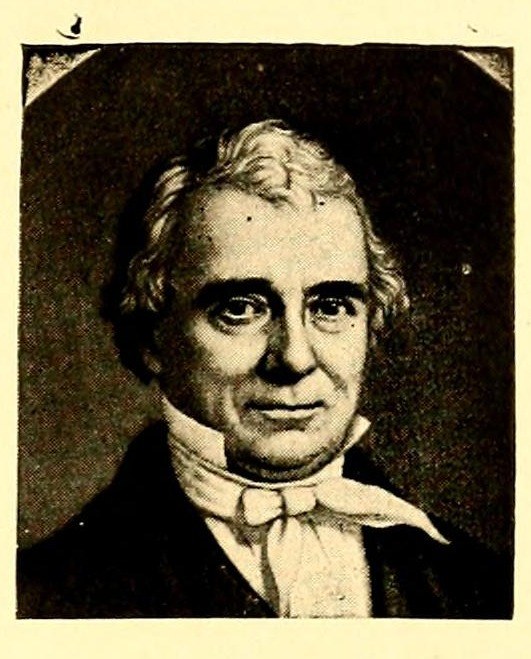
James Phillips, painted portrait, reproduced 1907

Life and Orange County connections

Storylines this person is part of, in date order. Each has its own page.

StorylineNew Hope Presbyterian Church, 1740–18401740–1840 · 35 events · When Orange Presbytery called in 1820 for long-vacant churches to be reorganized, New Hope Presbyterian Church had no roll of members, and it reorganized with four elders and ten members. Elijah Graves, then teaching at Hillsborough, had preached there from 1818 as stated supply, a minister serving without being installed as pastor, and he returned from 1825 to 1831 after Shepherd K. Kollock ended his connection. A revival in 1831 and 1832 added at least seventy communicants. George W. Ferrill was pastor from 1833 until 1836, and that August James Phillips, a university mathematics professor, began preaching at New Hope, which he served until 1865, longer than any other minister. Four more elders were ordained in 1840. StorylineThe death of Elisha Mitchell and the University’s mourning, 1857–18581857–1858 · 9 events · Elisha Mitchell, for nearly forty years a professor at the University, fell to his death from a cliff on June 27, 1857 while crossing the Black Mountains alone, and the village and the University mourned him together. The townspeople met in the University Chapel, agreed to wear mourning for thirty days and walked in procession to give his family their resolutions; the students agreed to wear mourning too, and the village commissioners recorded the loss of a fellow commissioner. The trustees voted his widow the rest of his half-year salary and bought his books, apparatus and mineral cabinet. Two professors and his son took up his teaching, and in January 1858 the trustees elected W. J. Martin to his chair. StorylineBuilding Memorial Hall, 1883–18851883–1885 · 16 events · Memorial Hall began with a promise from Governor Thomas J. Jarvis at the June 1883 commencement, when Gerrard Hall overflowed, and with a planned monument to the late president David L. Swain. The board ordered a large hall instead of an obelisk, and the cornerstone was laid on September 25, 1883. Work stopped that winter because the architect, Samuel Sloan, had underestimated the cost; Kemp P. Battle and George T. Winston canvassed the state for memorial tablets, and work resumed in the spring. After Sloan died in 1884 his chief carpenter finished the hall, with Paul C. Cameron advancing funds without security. It was dedicated on June 3, 1885, with the state's bill for its prison brick still unpaid.

Dated events connected with this person, in date order. See these 32 dated events in the chronology →

During their lifetime

  1. The Puckett house stands on East Franklin Street across from Hooper's John Puckett, a former postmaster, bought the lot at 501 East Franklin Street from John Craig in 1817, and by early 1818 his widow lived in a two-story Federal house there; Denison Olmsted bought it from her about 1820 and remodeled it. Before the Civil War it was the home of mathematics professor James Phillips, whose family held Ben and Dilsey Craig in slavery; the Craigs lived in a brick kitchen in the back yard. People: James Phillips, Denison Olmsted, Dilsey Craig Place: 501 East Franklin Street, Chapel Hill · Also named: Jane Puckett, John CraigSearch the index · NC Digital Collections: M. Ruth Little, The Town and Gown Architecture of Chapel Hill, 1795-1975 (2004), p. 15 · Also: Battle, History of the University, vol. 1, pp. 271, 299-300
  2. Professor Denison Olmsted buys the Widow Puckett house on East Franklin Street In 1820 Denison Olmsted bought the two-story Federal house and lot at 501 East Franklin Street from the Puckett family. From 1826 it was home to the family of mathematics professor James Phillips. People: Denison Olmsted, James Phillips Place: 501 East Franklin Street, Chapel HillSearch the index · NC Digital Collections: Chapel Hill Historic Sites Survey: Final Report (1992), p. 37 · Also: The Daily Tar Heel, September 23, 1991, p. 5
  3. Trustees take over Denison Olmsted's house for the professors of chemistry When Olmsted resigned in December 1825 to teach at Yale, the trustees bought at cost the house he had purchased from Mrs. Puckett for $1,300 and repaired. The lot was set apart for the professors of chemistry, and the house was later the home of James Phillips and then of President Venable. People: Denison Olmsted, James Phillips Place: Chapel HillSearch the index · Documenting the American South: Kemp P. Battle, History of the University of North Carolina, vol. I (1907), p. 299
  4. Elisha Mitchell moves from mathematics to the chair of chemistry, mineralogy and geology When Denison Olmsted resigned in December 1825 to teach at Yale, Mitchell moved from mathematics and natural philosophy to Olmsted's chair of chemistry, mineralogy and geology, and James Phillips took over mathematics. The memoir says the new post widened Mitchell's field trips across the state. People: Elisha Mitchell, Denison Olmsted, James Phillips Place: University of North Carolina, Chapel HillSearch the index · A Memoir of the Rev. Elisha Mitchell (1858), scan p. 14 · Also: Battle, History of the University of North Carolina, vol. I
  5. James Phillips buys Ben and Dilsey, an enslaved married couple, soon after reaching Chapel Hill Soon after he arrived in Chapel Hill, professor James Phillips bought a married couple, Ben and Dilsey. They lived with the family for decades and appear throughout Spencer's letters. People: James Phillips, Benjamin Craig, Dilsey Craig Place: Phillips household, Chapel HillHope Summerell Chamberlain, Old Days in Chapel Hill (1926), scan p. 43
  6. The Phillips family, with infant Cornelia, moves to Chapel Hill James Phillips moved his family from New York to Chapel Hill in 1826 when he became professor of mathematics at the University of North Carolina, where he taught until his death in 1867. His daughter Cornelia, born in Harlem in March 1825, grew up in the village. People: Cornelia Phillips Spencer, James Phillips Place: Chapel HillSearch the index · UNC Libraries: Cornelia Phillips Spencer Papers, 1833-1975 (#00683), finding aid
  7. Professor James Phillips hires David Barham from his owner as a college servant In 1830 Professor James Phillips hired David Barham from William Barham to work as a college servant. A university account book page from the same year shows students paying a two-dollar fee to compensate the slaveholders whose people were hired as servants. People: James Phillips Place: Chapel Hill · Also named: David Barham, William BarhamUNC University Archives (For the Record): The Names of the Enslaved People who Built the University of North Carolina
  8. Friends of education organize the North Carolina Institute of Education at Chapel Hill During commencement week a meeting adopted a constitution on Benjamin M. Smith's motion, elected Simmons J. Baker president and made professors Elisha Mitchell, William Hooper and James Phillips its executive committee. The Institute met at the next few commencements and enrolled about 130 members before it lapsed. People: Elisha Mitchell, James Phillips, Walter A. Norwood, William James Bingham Place: Chapel Hill · Also named: Benjamin M. Smith, Simmons J. Baker, William HooperSearch the index · Documenting the American South: Kemp P. Battle, History of the University of North Carolina, vol. I (1907), p. 339
  9. The evangelist Nettleton preaches in Chapel Hill and a revival follows James Phillips and William Hooper rode to Virginia in the summer vacation to hear the evangelist Nettleton, who then came to Chapel Hill that autumn. A religious awakening followed in both village and university, and Phillips began the preaching that led to his licensing by Orange Presbytery in 1833. People: James Phillips Place: Chapel Hill · Also named: William Hooper, NettletonSearch the index · Hope Summerell Chamberlain, Old Days in Chapel Hill (1926), scan p. 34
  10. James Phillips is licensed to preach and later serves New Hope Presbyterian Church Mathematics professor James Phillips joined the Presbyterian church in 1832 and was licensed to preach by Orange Presbytery in 1833. He was later ordained and installed as minister of New Hope Presbyterian Church, about seven miles outside Chapel Hill, and shared the university chapel work with Elisha Mitchell. Place: Orange County, New Hope Presbyterian Church · Also named: Elisha MitchellSearch the index · NCpedia (Dictionary of North Carolina Biography): Phillips, James
  11. James Phillips opens a female school in Chapel Hill In 1836 mathematics professor James Phillips announced Phillips' Female School in Chapel Hill. Mrs. Phillips and a teacher from Emma Willard's seminary at Troy, New York, did most of the teaching. People: James Phillips Place: Chapel HillLefler and Wager, Orange County, 1752-1952 (1953), p. 137
  12. James Phillips begins nearly thirty years as stated supply at New Hope The university professor began preaching at New Hope in August 1836 and served it until December 1865, longer than any other minister. Because Chapel Hill long had no Presbyterian church, New Hope heard him almost every Sunday for years. Place: New HopeSearch the index · NC Digital Collections: D. I. Craig, Historical Sketch of New Hope Church in Orange County, N.C. (1891), p. 29
Show all 26 dated events
  1. Fresh Treat riot and a textbook rebellion bring dismissals In the fall of 1840 a drinking feast paid for by new students turned into a riot in which tutors' windows were broken, faculty were stoned, classrooms were wrecked and professors' horses were ridden, and soon after all the blackboards were burned. Several students were dismissed, three more for defying James Phillips's rule against books in recitation, and the trustees approved a faculty resolution to prosecute serious outrages in the courts. People: James Phillips, David L. Swain, Elisha Mitchell Place: Chapel HillSearch the index · Documenting the American South: Kemp P. Battle, History of the University of North Carolina, vol. I (1907), p. 464
  2. Charles Phillips joins New Hope church James Phillips's son Charles, later a minister and teacher at the university, joined the church at New Hope. He often preached there with his father in later years. People: Charles Phillips, James Phillips Place: New HopeSearch the index · NC Digital Collections: D. I. Craig, Historical Sketch of New Hope Church in Orange County, N.C. (1891), p. 29
  3. Charles Phillips returns to Chapel Hill as a tutor of mathematics Phillips accepted a call from President David L. Swain in July 1844 to return to the University of North Carolina as his father's assistant. He held the post of tutor of mathematics until 1853. People: Charles Phillips, David L. Swain, James Phillips Place: Chapel HillSearch the index · NCpedia: Phillips, Charles
  4. James Phillips buys the Village Chapel lot for the Presbyterian church Professor James Phillips, as trustee, bought for $200 the lot where the Union or Village Chapel stood, as a site for the Presbyterian church, on condition that no burials be made there. The old chapel was moved a few hundred yards north, enlarged, and long served as the village public school. Place: Chapel Hill · Also mentions: Village ChapelSearch the index · Documenting the American South: Kemp P. Battle, History of the University of North Carolina, vol. I (1907), p. 611
  5. The Presbyterian church on Franklin Street is finished and dedicated Built with money and effort from James and Charles Phillips, Elisha Mitchell and President Swain, the small Presbyterian church on the old Grand Avenue ground was completed and formally dedicated. Lucy Phillips Russell, writing from the church records in 1936, said it was dedicated free of debt on Sunday, September 23, 1849, when Rev. John A. Gretter of Greensboro preached the dedicatory sermon. People: James Phillips, Charles Phillips, Elisha Mitchell, David L. Swain Place: Presbyterian Church, East Franklin Street, Chapel Hill · Also named: John A. GretterSearch the index · Bernard Lee Bryant Jr., Occupants and Structures of Franklin Street, Chapel Hill (1998; Chapel Hill Historical Society, 1999), scan p. 91 · Also: Chapel Hill Weekly, April 24, 1936, p. 3
  6. James Phillips keeps weather records at Chapel Hill From 1854 to 1862 Professor James Phillips kept weather records at Chapel Hill. They survive in the Southern Historical Collection alongside Chapel Hill records kept from December 1879 to 1882 by Professors W. B. Phillips and Francis Preston Venable. People: Francis Preston Venable, William Battle Phillips Place: Chapel Hill · Also mentions: Southern Historical CollectionSearch the index · UNC-Chapel Hill Libraries Catalog: Chapel Hill (N.C.) weather records, 1854-1862; 1879-1882
  7. The faculty vote 12 to 1 to disown Hedrick's published views Called together by President Swain, the faculty resolved that Hedrick's letter broke the university's custom of keeping out of party politics and that no other member shared his opinions, while expressing personal regard for him. Instructor H. Herrisse cast the only vote against, saying no one suspected the faculty of Republicanism. People: Benjamin Sherwood Hedrick, David L. Swain, Elisha Mitchell, James Phillips, Charles Phillips, Fordyce M. Hubbard Place: University of North Carolina, Chapel Hill · Also named: H. HerrisseSearch the index · J. G. de Roulhac Hamilton, Benjamin Sherwood Hedrick (1910), scan p. 19
  8. The faculty mourn Elisha Mitchell and ask for a funeral sermon and a eulogy At its first regular meeting after Elisha Mitchell's death the university faculty adopted resolutions on its oldest member and asked the Rev. James Phillips to preach a funeral discourse in the University Chapel the next Sunday and President Swain to deliver a eulogy before the university. People: James Phillips, David L. Swain Place: University, Chapel Hill · Also named: Elisha Mitchell · Also mentions: University ChapelSearch the index · The Chapel Hill Gazette, July 25, 1857, p. 2
  9. New Hope's 1805 church burns The church burned on a Saturday night, most people believing it was set on purpose. The next morning James Phillips preached to the congregation under the trees, and through the summer of 1862 they worshipped under a large arbor built on the grounds. People: James Phillips Place: New HopeSearch the index · NC Digital Collections: D. I. Craig, Historical Sketch of New Hope Church in Orange County, N.C. (1891), p. 26
  10. James Phillips hides the family silver in Dilsey's cabin as Union troops arrive When a detachment of Sherman's army reached Chapel Hill, Professor James Phillips boxed the family silver, jewelry and watches and left the box at the cabin of Dilsey, a woman enslaved in his household, expecting the soldiers to leave her cabin alone. She buried the box for safety; it came back intact except that rainwater seeping in ruined the watches and harmed some jewelry. People: James Phillips, Dilsey Craig Place: Dilsey's cabin, Chapel HillJames Lee Love, Recollections (1920-1921), scan p. 277
  11. James Phillips pays Dilsey her first wages as a free woman Dilsey and her husband Ben stayed with the Phillips family after emancipation, and in 1866 James Phillips paid Dilsey her first wages as a freedwoman with the first five-dollar gold piece he received after the war. People: Dilsey Craig Place: Phillips household, Chapel HillSearch the index · Hope Summerell Chamberlain, Old Days in Chapel Hill (1926), scan p. 43
  12. Thomas Lynch becomes stated supply at New Hope after James Phillips Lynch took up the New Hope pulpit after Phillips stopped preaching there at the end of 1865 and served until the winter of 1867. People: James Phillips Place: New Hope · Also named: Thomas LynchSearch the index · NC Digital Collections: D. I. Craig, Historical Sketch of New Hope Church in Orange County, N.C. (1891), p. 30
  13. Charles Phillips is ordained at New Hope Church in Orange County Phillips was ordained on 14 April 1866 at Orange County's New Hope Church, which had long been under the pastoral charge of his father James Phillips. Orange Presbytery had convened there on Wednesday, April 11, and ordained Phillips and Calvin H. Wiley during the meeting. People: Charles Phillips, James Phillips Place: Orange County · Also named: Calvin H. WileySearch the index · NCpedia: Phillips, Charles
  14. James Phillips dies in the college chapel On the morning of March 14, 1867, James Phillips went early to the college chapel to lead morning prayers and was found dead on the rostrum as the bell rang. He had taught at the university since 1826 and was buried in the Chapel Hill Cemetery. Place: Chapel Hill, University of North Carolina · Also mentions: Chapel Hill CemeterySearch the index · Hillsborough Recorder, March 20, 1867, p. 2 (President Swain's letter of March 14, 1867) · Also: NCpedia (Dictionary of North Carolina Biography): Phillips, James

After their death in 1867

Later events: estates and burials, and the buildings, honors and histories that remember them.

  1. Solomon Pool's new faculty move into the old professors' houses With Swain and the old faculty gone, the professors Pool brought in took over their Franklin Street homes: Fisk P. Brewer the Tom Taylor house, David Settle Patrick Swain's house, and James A. Martling the late James Phillips's house. People: Fisk P. (Fisk Parsons) Brewer, James Phillips, Solomon Pool Place: East Franklin Street, Chapel Hill · Also named: David Settle Patrick, James A. Martling, Tom Taylor · Also mentions: Tom Taylor house, Franklin StreetBernard Lee Bryant Jr., Occupants and Structures of Franklin Street, Chapel Hill (1998; Chapel Hill Historical Society, 1999), scan p. 115
  2. Trustees pay for Memorial Hall tablets to Caldwell, Swain, Mitchell and Phillips Besides the subscribed tablets, the trustees put up tablets at their own cost to presidents Joseph Caldwell and David L. Swain and professors Elisha Mitchell and James Phillips, in tribute to the long-serving officers. Governor Scales told the dedication crowd that the hall, first meant as Swain's memorial alone, had been redesigned so these names stood beside his. People: Joseph Caldwell, David L. Swain, Elisha Mitchell, James Phillips Place: Memorial Hall, UNC, Chapel HillSearch the index · University of North Carolina, Memorial Hall Inaugural Proceedings, Wednesday, June 3, 1885 (1885), scan p. 10
  3. Dilsey Craig, enslaved in the household of professor James Phillips, dies Dilsey Craig (1802-1894) and Ben Craig were enslaved by the family of mathematics professor James Phillips and lived in the brick kitchen behind 501 East Franklin Street. Dilsey remained with the family long after freedom, and a memorial marks her in the old Chapel Hill Cemetery. People: James Phillips, Dilsey Craig Place: Chapel Hill · Also mentions: Chapel Hill Cemetery, 501 East Franklin StreetSearch the index · NC Digital Collections: M. Ruth Little, The Town and Gown Architecture of Chapel Hill, 1795-1975 (2004), p. 31
  4. June Spencer Love sets a stone on Dilsey Craig's grave in the Chapel Hill cemetery When June Spencer Love placed grave markers in the Chapel Hill cemetery for her mother, her grandparents, and her uncle Samuel Phillips and his wife, she also put one on the grave of Dilsey, who had been enslaved in the James Phillips household and stayed on as its cook after freedom. Love writes that both June and her mother had looked after Dilsey in her old age. People: Dilsey Craig, James Phillips, Samuel Field Phillips, June Spencer Love Place: Old Chapel Hill Cemetery, Chapel Hill · Also named: Samuel PhillipsSearch the index · James Lee Love, Recollections (1920-1921), scan p. 276
  5. Phillips Hall opens, named for three Phillips family teachers Phillips Hall opened on the Chapel Hill campus in 1919, honoring three members of the Phillips family who taught at the university in the nineteenth century: James Phillips, his son Charles Phillips and his grandson William Battle Phillips. People: Charles Phillips, William Battle Phillips Place: Chapel Hill, Phillips HallSearch the index · Carolina Story: Virtual Museum of University History: James Phillips, Charles Phillips, and William Battle Phillips and Phillips Hall
  6. A Phillips grandchild sets a headstone for Dilsey Craig A small granite headstone was placed over the grave of Dilsey Craig, who died in 1894 after sixty years enslaved, mostly in the household of Professor James Phillips. Its inscription says a Phillips grandchild erected it, and its style suggests the 1930s. People: James Phillips, Dilsey Craig Place: Section B, Old Chapel Hill Cemetery, South Road (NC 54) and Country Club Road, Chapel HillNC State Historic Preservation Office: Old Chapel Hill Cemetery, National Register nomination (OR0496), p. 11

People named in the same events

People named in the same dated entries as James Phillips, those sharing the most entries first. Each line links one of the shared entries in the chronology, where its source is cited. A shared entry shows these people in the same event, not how well they knew each other.

Indexed works

Works about or by James Phillips. Each links to the institution that holds or provides it. Background reading appears below.

By James Phillips

Excerpts from newspapers taken during the years, '61, '62, '63

Spencer, Cornelia Phillips, 1825-1908; Phillips, James, 1792-1867 · 1843

Civil War newspaper articles pasted into a ledger that had earlier held meteorological observations for Chapel Hill. The clippings cover most of the weather entries, with about eleven complete months still visible, the first from April 1843 and the last from September 1851. Cornelia Phillips Spencer and James Phillips are named as creators. In the North Carolina Collection at UNC.

UNC

James Phillips Paper

Phillips, James, Rev. · 1840

Letter of 1840 from the Rev. James Phillips at Chapel Hill to a Connecticut clergyman. He writes about the difficulties facing clergymen and the university's reluctance to hire foreigners for its modern languages department. Phillips taught at the university. State Archives of North Carolina, PC.843.

About James Phillips

Three little children of long ago, 1901.

Pace, Fannie Phillips · 1901

A thirty two page account written in 1901 by Fannie Phillips Pace under the title 'Three little children of long ago', part of the Southern Historical Collection at UNC, collection 1759. A note records that the original was in private hands in 1950. Topics include the Phillips family of Chapel Hill, including James, Charles and Samuel Phillips and Cornelia Phillips Spencer, and on children's social life in the town.

Included because: Catalog heading in the UNC record: Phillips, James, 1792-1867.

UNC

Dr. James Phillips

Swain, David L. (David Lowry), 1801-1868 · 1882 · Dialectic and Philanthropic Literary Societies of the University of North Carolina

David L. Swain's account of James Phillips, the Presbyterian clergyman who served on the University of North Carolina faculty, first written as a letter to the North Carolina Presbyterian in March 1867 and reprinted in 1882 from the University Monthly. The Dialectic and Philanthropic Literary Societies issued it at Chapel Hill. Phillips lived from 1792 to 1867.

Included because: Catalog heading in the UNC record: Phillips, James, 1792-1867.

UNC

Cornelia Phillips Spencer (1825-1908) Papers

Spencer, Cornelia Phillips, 1825-1908 · 1857

Letters and papers of Cornelia Phillips Spencer, the Chapel Hill writer and historian and daughter of professor James Phillips, 1857 to 1905. Most of the correspondence, from 1859 to 1895, concerns the university and life in the village, with letters exchanged with Swain, Kemp P. Battle and George T. Winston, successive heads of the university, and with Mrs. Swain and W. C. Kerr. State Archives of North Carolina, PC.7.

Included because: Listed as its creator.

Chapel Hill (N.C.) weather records, 1854-1862; 1879-1882.

1854

Two volumes of weather observations for Chapel Hill covering 1854 to 1862 and 1879 to 1882, collection 1941-z in the Southern Historical Collection at UNC. The observations are associated with James Phillips, William Battle Phillips and Francis Preston Venable. Observations for Mitchell County are noted as well.

Included because: Catalog heading in the UNC record: Phillips, James, 1792-1867.

UNC

Cornelia Phillips Spencer papers, 1833-1975 (bulk 1839-1942).

Spencer, Cornelia Phillips, 1825-1908 · 1839

Cornelia Phillips Spencer (1825-1908), the Chapel Hill writer, is the subject of papers running 1833 to 1975 with the bulk from 1839 to 1942, about 6,700 items in ten linear feet in the Southern Historical Collection at UNC, collection 683. Diaries and albums are named among the material. Topics include James and Judith Vermeule Phillips, Julia Spencer Love and James Lee Love, mothers and daughters, Reconstruction in North Carolina, and American women authors of the nineteenth century.

Included because: Catalog heading in the UNC record: Phillips, James, 1792-1867.

UNC

Phillips Hall, University of North Carolina, Chapel Hill, N.C.

R. W. Foister, Chapel Hill, N.C

Phillips Hall, the university's engineering laboratories, on an undated postcard published by R. W. Foister of Chapel Hill. The caption explains the name: four generations of the Phillips family taught at the University of North Carolina, among them James, Charles and Samuel Field Phillips.

Included because: Their name appears in the record.

Places in this person’s story

Buildings, schools, churches and other sites named in the dated events on this page, the most often named first. The map shows the 6 with a known location.

Map tiles © OpenStreetMap contributors. Site locations from the N.C. State Historic Preservation Office survey, Open Orange, Orange County GIS, OpenStreetMap and a few other published sources named on each site’s page; town and community pins show approximate locations.

All places and the county map →

Research sources

Sources and research tools for this person. For ready-made searches of other catalogs, see Search further. Research guide: Trace a family through historical records.

Background

Records of the time

Collections and databases

Local help

Search further

Search other catalogs and collections for this name. Results may include other people with the same name and have not been reviewed by the Friends.

Books about James Phillips

Books by James Phillips

Find copies at other libraries

Photographs, papers, and newspapers

Historical records and collections

Catalog searches use the Library of Congress name heading: Phillips, James, 1792-1867. Historical-record searches use the person’s name and may include namesakes. Links open in a new tab.

Found a book OCPL doesn’t own? You can often borrow it through interlibrary loan at OCPL.

Picture: James Phillips, painted portrait, reproduced 1907. Public domain. Kemp P. Battle, History of the University of North Carolina, vol. 1 (1907); via the Internet Archive

More to discover

Keep Reading Local

The Friends connect people with new library materials, local writers and publishers, and resources documenting Orange County.

Two mice reading back to back against a leaf, with the hand-lettered words Friends of the Orange County Public Library
Illustration by Caldecott Medalist Matthew Cordell, gifted to the Friends 2026