Skip to content

Key local figure

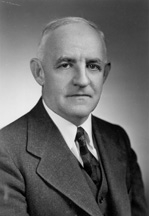
Frank Porter Graham

Frank Porter Graham graduated from UNC in 1909, taught history at Chapel Hill from 1914, and became the university's president in 1930 and the first president of the Consolidated University of North Carolina after the 1932 merger. Appointed to the U.S. Senate in 1949, he lost the 1950 Democratic runoff to Willis Smith in a racially charged campaign.

Source: NCpedia: Graham, Frank Porter

1886–1972 · Dates from the Library of Congress · On the Friends’ Local Authors roster → · Library of Congress authority record ↗

79 works about Frank Porter Graham are indexed here, as are 16 works by Graham. 1 held at OCPL →

Frank Porter Graham
Frank Porter Graham

Life and Orange County connections

Storylines this person is part of, in date order. Each has its own page.

StorylineStudent loan funds at the University, 1879–19321879–1932 · 5 events · When the state's budget cut threatened to drive students out of the University in January 1932, town and campus groups gave to a student loan fund whose beginnings went back to 1879. That year Charles F. Deems sent $300 to start a loan fund in memory of his son Theodore, killed at Gettysburg, and William H. Vanderbilt later added $10,000 through him. In 1906 Dr. Martin's will left more than $7,000 for loans to poor students. In 1932 Mayor Zeb Council named a citizens' committee, the sponsors of a concert by Amelita Galli-Curci gave their share of the receipts, and the campus Janitors' Association, facing a wage cut, gave five dollars. By early February about $7,000 had been raised. StorylineUniversity students' night schools and social work, 1910–19161910–1916 · 4 events · About 1911, asked for help by the young Black workers who cut firewood and carried water in the dormitories, students began teaching them reading and arithmetic in what were called moonlight schools. Under Frank Porter Graham at the campus YMCA those classes grew to take in history, English, debating, home sanitation and the Bible. The YMCA had already organized Sunday schools enrolling 321 pupils. On November 1, 1915 it opened night moonlight schools in six schoolhouses within four miles of Chapel Hill, with 54 student teachers and about 300 pupils, and students also ran a night school at Carrboro and two for Black pupils. Fifteen students carried the night schools on in the fall of 1916. StorylineOld Memorial Hall condemned and replaced, 1929–19311929–1931 · 9 events · In 1929 University architect Thomas C. Atwood found the bases of Memorial Hall's wooden roof arches rotted to powder and warned that the building could fall at any minute. President Harry Woodburn Chase had closed it that fall over a bulge in its slate roof. In January 1930 the trustees voted to replace it on the same site, and the old hall was torn down in February. The new Colonial Revival hall stood by early 1931. Chase had found the money within University accounts, helped by a gift from John Sprunt Hill, but none was left to furnish it, and guests at the October 1931 dedication sat on scarred benches saved from the old hall. StorylineThe University’s hard year and the choice of Frank Graham, 19301930 · 6 events · In 1930 the University lost its president and two faculty members and had its budget cut 20 percent before the trustees chose Frank Porter Graham to lead it. Harry Woodburn Chase left for the University of Illinois, and Dean Addison Hibbard left for Northwestern, a loss the Weekly put down to larger salaries and pensions elsewhere, and Howard Mumford Jones left for Michigan. The trustees named a committee to gather facts and lay names before the board, not to nominate one man. On June 9 they voted without nominations. R. D. W. Connor led the first ballot, but Graham took a majority on the fourth. Brought in from a walk, Graham asked that Connor be chosen instead, then accepted. StorylineConsolidating the University, 1931–19361931–1936 · 17 events · In 1931 the legislature merged the University, State College and the North Carolina College for Women into one University of North Carolina, and by 1936 the trustees had divided the work among the three campuses. They put the schools under one president, electing Frank P. Graham in November 1932, and in 1934 provided a dean of administration at each unit. In June 1935 they voted 58 to 11 for Graham's plan to combine the engineering schools at State College, move its science and business work to Chapel Hill and center graduate work there. In 1936 the University faculty voted 80 to 19 to send the trustees resolutions against moving the engineering school, but the trustees refused to reconsider. StorylineThe University and Duke library partnership, 1932–19361932–1936 · 3 events · In May 1932 President Frank P. Graham announced a gift of $30,000 from the General Education Board to the University library, to buy printed catalogues of the great libraries, national and subject bibliographies and equipment, the basic tools the library wanted for a strong graduate school. By May 4, 1934 the Board had granted $12,500 to the libraries of the University of North Carolina and Duke University to duplicate their catalogs, so that each library would hold a catalog of the other's books. By February 14, 1936 the General Education Board of New York had given the two universities $50,000, divided equally, to build research collections in the biological, physical and social sciences and English literature. The money was spent under a cooperative plan that avoided duplicate purchases. By then the two libraries shared borrowing privileges, a daily delivery service and copies of each other's card catalogs.
Show all 15 storylines
StorylineThe 1933 bank holiday in Orange County1933 · 3 events · The March 1933 bank holiday left University students unable to get cash, and the University and Chapel Hill merchants made allowances. The Bank of Chapel Hill closed on March 6 and 7 under the national and state orders, and President Graham postponed the University's recess because students could not get cash to travel home and back. Students were allowed to register without paying fees at once, and merchants kept accepting checks and giving credit. The bank reopened for limited business on March 8, and when full banking resumed on March 15 deposits far exceeded withdrawals. In April, with the Carrboro mills idle, the bank closed its Bank of Carrboro branch and moved the accounts to the parent bank. StorylinePerson Hall becomes the University’s art museum, 1933–19371933–1937 · 5 events · Turning old Person Hall, once a chapel and later the home of medicine, chemistry, pharmacy and music, into the University's art gallery depended on relief money that started and stopped. Work began in early 1934 with a federal allotment to be matched by friends of the University led by Katherine Pendleton Arrington, then halted for months with the building a roofless shell. A special relief grant let the University resume that September, and by December the Weekly already spoke of the hall as an art museum, though it was not finished. Emergency Relief Administration money closed it in during 1935, work went on through 1936, and the Person Hall Art Gallery opened on January 15, 1937. StorylineWoollen Gymnasium, the Bowman Gray Pool and the first women’s dormitories, 1935–19411935–1941 · 12 events · Once the state supreme court settled the legal questions in 1935, the University won a Public Works Administration grant of $283,000 toward a physical education building with a swimming pool and a dormitory for graduate women, meeting its own share with a self-supporting bond issue and gifts. The dormitory, later named for Edwin Alderman, was occupied by September 1937. The gymnasium was presented to the University in March 1938, its pool the gift of Mrs. Nathalie Gray and her sons in memory of Bowman Gray, and the trustees named the building for Charles T. Woollen, who had advocated for it. Two more women's dormitories opened in 1939, and by August 1941 the University had six dormitories for women. StorylineThe Institute of Government’s building, 1935–19391935–1939 · 6 events · Albert Coates's first plan for an Institute of Government building collapsed when the Public Works Administration rescinded its grant in the summer of 1936. The University trustees had offered a site south of the Carolina Inn in 1935, and Coates had won extensions and let a contract, but the promised materials and cash never fully came through. With the campus site no longer available, he arranged to buy lots on the north side of Franklin Street facing Graham Memorial and borrowed to clear them in 1938. A gift from Will Reynolds paid for the land, gifts from Gordon and Bowman Gray covered half the building's cost, and Jefferson Standard Life lent the rest. The building opened in November 1939. StorylineThe Graham Plan dispute, 19361936 · 2 events · President Frank P. Graham proposed new eligibility rules for the Southern Conference, signed by six conference presidents, that barred aid to athletes as athletes and required every candidate to disclose his sources of support. On January 31, 1936 the University trustees, meeting in Raleigh, referred the rules to the faculties of the University and State College with power to act. On February 4 the Chapel Hill faculty met for four hours and voted 80 to 40, by secret ballot, to approve them. Carl Snavely did not see eye to eye with Graham, whose Graham Plan would have reduced the place of big-time football at the University and across the Southern Conference. Snavely resigned in March 1936. Early on the morning of April 3 he left Chapel Hill to become head coach at Cornell University. StorylineThe University’s PWA building program of 1938–19411938–1941 · 26 events · In August 1938 a special legislative session called by Governor Hoey to match grants from the Public Works Administration approved University building at Chapel Hill, though not all that President Graham had asked for. Federal allotments and a last-minute approval of three more dormitories and a Carolina Inn addition raised the program to $2,349,000 by October, the government paying 45 per cent. Between 1938 and 1941 the University built dormitories, a power plant, an Inn addition, a new dining hall seating 1,050 and a zoology building, and rebuilt the interiors of older halls such as Gerrard Hall and Bynum Gymnasium. Graham dedicated the zoology building as the Wilson Zoology Laboratory in 1941. StorylineRebuilding the Forest Theatre in stone, 1939–19431939–1943 · 5 events · The Forest Theatre in Battle Park took its present stone form in a WPA rebuilding begun in 1940. By December 1939 the WPA had approved a project of about $20,000, mostly WPA labor and materials, for stone seats, light towers, dressing rooms and a gate. Work began in 1940 under Al Bell, who had supervised the building of the Lost Colony theatre on Roanoke Island, with the University putting about $1,500 into materials. Crews built a screen wall, curved seating along the hillside, towers for lights and sound, and a rough stone stage. May Day and the Playmakers' Romeo and Juliet were held in the new theatre in May 1941, and President Frank Porter Graham dedicated it in May 1943. StorylineChapel Hill before Pearl Harbor, 1940–19411940–1941 · 13 events · Chapel Hill and the University were preparing for war and sending aid to Europe well before Pearl Harbor. In February 1940 twenty University students began flight training, and in May President Frank Graham offered the University's faculty and laboratories to the government. In June a Chapel Hill branch of the Committee to Defend America by Aiding the Allies was organized, the American Legion post asked Congress for conscription, and citizens signed an appeal urging the United States into the war beside Britain. Relief committees sewed, shipped clothing and raised money for a mobile tea kitchen for England. Within days of Pearl Harbor, armed sentries guarded the airport, the University Lake dam and the power plant. StorylineCharles M. Jones and the Chapel Hill Presbyterian Church, 1941–19531941–1953 · 8 events · In 1953 a commission of Orange Presbytery removed Charles M. Jones as pastor of the Chapel Hill Presbyterian Church, though his congregation had voted to keep him. By Frank Porter Graham's account, Jones sheltered the riders of both races who tested bus segregation in 1947. In November 1952 the presbytery's Judicial Commission called for a clean break, holding that he and the church had not always been true to the denomination's standards. The congregation voted 156 to 14 not to dismiss him. In February 1953 the commission dissolved the pastoral relationship, though its chairman said there were no charges or censures against Jones. After the General Assembly's commission upheld it, Jones asked to be divested of office without censure.

Dated events connected with this person, in date order. See these 151 dated events in the chronology →

During their lifetime

  1. Frank Porter Graham was born Frank Porter Graham was born in Fayetteville; he later led UNC. Place: Fayetteville; later Chapel Hill connectionSearch the index · NCpedia
  2. Nonfraternity juniors elect a fraternity man class president and hold an open junior prom Frank Porter Graham helped rally the nonfraternity majority of his class to elect a fraternity member as president on merit, breaking a long custom, and the class held a junior promenade open to every man in it. People: Frank Porter Graham Place: UNC, Chapel HillSearch the index · Howard E. Covington Jr., Fire and Stone: The Making of the University of North Carolina under Presidents Edward Kidder Graham and Harry Woodburn Chase (2018), p. 49
  3. Students nominate Woodrow Wilson for president after his campus speech Students impressed by Woodrow Wilson's speech on Robert E. Lee met in the YMCA building right afterward and nominated him for president of the United States. One of them, Frank Porter Graham, was in the floor demonstration when the Democrats nominated Wilson in 1912. People: Woodrow Wilson, Frank Porter Graham, Robert E. Lee Place: YMCA building, UNC campusSearch the index · Howard E. Covington Jr., Fire and Stone: The Making of the University of North Carolina under Presidents Edward Kidder Graham and Harry Woodburn Chase (2018), p. 111
  4. Students start night classes for the Black men who served the dormitories Asked for help by the young Black workers who cut firewood and carried water in the dormitories, students began teaching them reading and arithmetic in what were called moonlight schools. Under Frank Porter Graham at the campus YMCA the classes grew to take in history, English, writing, debating, home sanitation and the Bible. People: Frank Porter Graham Place: YMCA, UNC, Chapel HillHoward E. Covington Jr., Fire and Stone: The Making of the University of North Carolina under Presidents Edward Kidder Graham and Harry Woodburn Chase (2018), p. 81
  5. A YMCA lecture series on Black life in the South is held for students Frank Graham and the campus YMCA organized lectures on 'Negro life in the South.' Professor Harry W. Chase told students that Black citizens were a third of the population but received a sixteenth of school spending, and that what they did not pay in property taxes they made up in fines. A second series was held five years later. People: Frank Porter Graham, Harry Woodburn Chase Place: YMCA, UNC, Chapel Hill · Also named: Frank GrahamSearch the index · Howard E. Covington Jr., Fire and Stone: The Making of the University of North Carolina under Presidents Edward Kidder Graham and Harry Woodburn Chase (2018), p. 360
  6. The Chapel Hill Community Club runs an improvement contest in a Black neighborhood Susan Moses Graham and the Community Club, with YMCA students under Frank Porter Graham, organized a project in an African American neighborhood at the edge of town, giving prizes for the cleanest house, the cleanest yard and the best fence. People: Frank Porter Graham Place: African American neighborhood at the edge of Chapel Hill · Also named: Susan Moses Graham · Also mentions: YMCAHoward E. Covington Jr., Fire and Stone: The Making of the University of North Carolina under Presidents Edward Kidder Graham and Harry Woodburn Chase (2018), p. 81
  7. The university grants war leaves to eleven faculty members President Edward K. Graham told the trustees' executive committee that eleven faculty members going into war service, among them Joseph Hyde Pratt, P. H. Winston, T. J. Campbell and Frank P. Graham, had been granted leave for the duration. A partial list already counted 213 lieutenants, 24 captains and 11 majors among university men. People: Edward K. Graham, Joseph Hyde Pratt, Frank Porter Graham Place: University of North Carolina, Chapel Hill · Also named: P. H. WinstonThe News (Chapel Hill), September 6, 1917, p. 1
  8. Frank Porter Graham becomes dean of students Chase brought Graham back from the Marines over the summer to fill the new post of dean of students, in charge of discipline and of reviving student government after the SATC, while also teaching history. He agreed to try it for a year. People: Harry Woodburn Chase Place: UNC, Chapel HillSearch the index · Howard E. Covington Jr., Fire and Stone: The Making of the University of North Carolina under Presidents Edward Kidder Graham and Harry Woodburn Chase (2018), pp. 210-211
  9. The University opens its first postwar year with a record 1,350 students On opening day almost 400 freshmen filled Memorial Hall to hear Chase. Enrollment reached 1,350, about 500 more than the spring before; three or four men shared rooms built for two, some 600 boarded in the village, and 80 veterans of the AEF formed a club. People: Harry Woodburn Chase, Frank Porter Graham Place: Memorial Hall, UNC, Chapel HillSearch the index · Howard E. Covington Jr., Fire and Stone: The Making of the University of North Carolina under Presidents Edward Kidder Graham and Harry Woodburn Chase (2018), pp. 208-213 · Also: The News (Chapel Hill), October 9, 1919, p. 1
  10. Thirty-three of forty university professors polled favor ratifying woman suffrage During the 1920 campaign over the Nineteenth Amendment, thirty-three of forty University of North Carolina professors who were asked said they favored ratification. Archibald Henderson said woman suffrage would add eager, active minds to public life, Frank P. Graham called the vote a human right, and Louis R. Wilson said it was illogical for a democracy to deny women the ballot. People: Archibald Henderson, Frank Porter Graham, Louis Round Wilson Place: Chapel HillSearch the index · Internet Archive: North Carolina Historical Review 38 (1961), p. 185
  11. Forty-three alumni meet at the Coop and start the campaign for the state's colleges Telegrams sent in Chase's name by Frank Porter Graham and alumni secretary Edgar R. Rankin brought 43 alumni to the Coop, an off-campus boardinghouse, where talk of the crowding went on past midnight. The book counts the meeting as the start of the citizens' movement that won the 1921 building appropriation. People: Frank Porter Graham, Harry Woodburn Chase Place: The Coop boardinghouse, Chapel Hill · Also named: Edgar Ralph RankinSearch the index · Howard E. Covington Jr., Fire and Stone: The Making of the University of North Carolina under Presidents Edward Kidder Graham and Harry Woodburn Chase (2018), pp. 220-222
  12. Frank Porter Graham takes the higher-education campaign to Hillsboro alumni A day after Greensboro alumni founded the Association for the Promotion of Higher Education, Graham spoke to an alumni meeting in Hillsboro, one of nearly two dozen club gatherings across the state that October. Place: HillsboroughSearch the index · Howard E. Covington Jr., Fire and Stone: The Making of the University of North Carolina under Presidents Edward Kidder Graham and Harry Woodburn Chase (2018), p. 223
Show all 150 dated events
  1. Frank Graham leads a faculty resolution urging Chase to stay While Chase was in Oregon being offered that university's presidency, Frank Porter Graham took the floor at a specially called faculty meeting and won adoption, without a word of dissent, of a resolution praising Chase and tying his staying to the cause of freedom and tolerance. It was wired to Chase in Portland. People: Harry Woodburn Chase Place: UNC, Chapel HillSearch the index · Howard E. Covington Jr., Fire and Stone: The Making of the University of North Carolina under Presidents Edward Kidder Graham and Harry Woodburn Chase (2018), pp. 341-342 · Also: Chapel Hill Weekly, February 19, 1926, p. 2
  2. Chase's memorandum warns faculty against advocacy that embarrasses the university Under attack from textile editor David Clark, Chase sent Howard Odum, Dudley D. Carroll and Frank Graham a discussion memo on proper activities for social scientists. Faculty whose causes involved colleagues in general embarrassment should leave, he wrote; in North Carolina such causes included certain taxes, labor organizing, racial equality and socialism. People: Harry Woodburn Chase, Howard W. Odum, Dudley Dewitt Carroll, Frank Porter Graham Place: UNC, Chapel Hill · Also named: David Clark, Frank GrahamSearch the index · Howard E. Covington Jr., Fire and Stone: The Making of the University of North Carolina under Presidents Edward Kidder Graham and Harry Woodburn Chase (2018), pp. 381-383
  3. Kiwanis Club of Chapel Hill receives its charter About 200 people, more than half of them visitors, attended a dinner in the Baptist church social rooms at which the district governor presented a charter to the new Kiwanis club of Chapel Hill, sponsored by the Durham club. The club's president, Rev. Eugene Olive, accepted it, and the paper listed 37 charter members. People: J. Maryon (Joseph Maryon) Saunders, Frank Porter Graham Place: Baptist church social rooms, Chapel Hill · Also named: Eugene OliveSearch the index · The Chapel Hill Weekly, September 28, 1928, p. 1
  4. A workmen's compensation law that Frank Graham and Harry Wolf helped write passes Sixteen earlier bills had failed, but with Governor O. Max Gardner's backing the 1929 General Assembly passed a no-fault workmen's compensation act. Frank Graham lobbied for it, and he and economics professor Harry Wolf helped draft it; the governor's support kept textile interests from objecting to Graham's role. People: O. Max Gardner Place: General Assembly, Raleigh · Also named: Harry Wolf, Frank GrahamSearch the index · Howard E. Covington Jr., Fire and Stone: The Making of the University of North Carolina under Presidents Edward Kidder Graham and Harry Woodburn Chase (2018), p. 395
  5. A children's library opens in the Episcopal parish house, and its subscribers form a library association Subscribers to a new children's library voted to open it in a room of the Episcopal parish house, and it opened on June 5, 1929, lending books free on Tuesday and Friday afternoons. They formed a Children's Library Association of all subscribers with nine directors, and planned to move the library into the school building in the fall. People: Alfred Stratton Lawrence, Frank Porter Graham Place: Episcopal parish house (Chapel of the Cross), Chapel HillSearch the index · The Chapel Hill Weekly, June 7, 1929, p. 1
  6. Chase refuses a mill official's demand that Frank Graham be fired After the Southern Textile Bulletin wrongly placed Graham at a Communist Labor Day rally, an official of the company that owned Gastonia's Loray Mill asked Governor Gardner to have him dismissed. In the reply Gardner passed along, Chase said Graham had been in New York and that faculty had the same right as other citizens to form and voice opinions, and he would resist any censorship of those seeking change by lawful means. People: Harry Woodburn Chase, Frank Porter Graham, O. Max Gardner Place: UNC, Chapel HillSearch the index · Howard E. Covington Jr., Fire and Stone: The Making of the University of North Carolina under Presidents Edward Kidder Graham and Harry Woodburn Chase (2018), pp. 406-407
  7. A new Memorial Hall with a Doric portico replaces the Victorian auditorium In January 1930 the university decided to raze Old Memorial Hall and build a larger auditorium to plans by Atwood and Nash. The new Colonial Revival hall, with three entrances under a monumental Doric portico facing Cameron Avenue, went up through 1930 and opened on February 6, 1931, one of three buildings the university completed in the early Depression under Frank Porter Graham. People: Frank Porter Graham Place: Memorial Hall, UNC campus, Chapel Hill · Also mentions: Cameron AvenueSearch the index · NC Digital Collections: M. Ruth Little, The Town and Gown Architecture of Chapel Hill, 1795-1975 (2004), p. 55 · Also: The Daily Tar Heel, January 29, 1930, p. 1; Chapel Hill Weekly, July 18, 1930, p. 1; Chapel Hill Weekly, September 12, 1930, p. 1; Chapel Hill Weekly, January 23, 1931, p. 1; Chapel Hill Weekly, February 6, 1931, p. 2
  8. Frank Graham circulates his Industrial Bill of Rights Answering the 1929 Gastonia strike deaths, Graham gathered more than four hundred signers across the state, among them Odum, Branson, Poteat and Walter Murphy, though not Chase. The statement ran in the state's Sunday papers on February 16, 1930, upholding freedom of speech and assembly and the right to organize and bargain collectively, and calling for a national survey of the textile industry and better laws on the work of women and children. He made it the theme of his mid-April 1930 address as president of the North Carolina Conference for Social Service, ignoring advice to soften it while the trustees searched for a president. Place: UNC, Chapel Hill · Also named: Walter MurphySearch the index · Howard E. Covington Jr., Fire and Stone: The Making of the University of North Carolina under Presidents Edward Kidder Graham and Harry Woodburn Chase (2018), pp. 406-408 · Also: Chapel Hill Weekly, February 21, 1930, p. 2
  9. Alexander H. Graham chairs the trustees' committee in the search that ends with Frank Porter Graham as UNC president Meeting in Raleigh on March 4, 1930, the trustees set up a committee of five to look into the fitness of persons suggested for the presidency of the University of North Carolina, with Alexander H. Graham as chairman and John J. Parker, Leslie Weil, Charles Whedbee and Stahle Linn as members. It was to gather facts and lay names before the board, not to nominate one man, and the trustees elected Frank Porter Graham president on June 9, 1930. His papers hold the committee correspondence from February to May 1930. People: Alexander H. "Sandy" Graham, Frank Porter Graham Place: UNC, Chapel Hill · Also named: John J. Parker, Leslie WeilSearch the index · UNC Libraries: Alexander H. Graham Papers (#4998), finding aid · Also: Chapel Hill Weekly, March 7, 1930, p. 1; Chapel Hill Weekly, May 9, 1930, p. 1; Chapel Hill Weekly, June 13, 1930, p. 1
  10. North Carolina Federation of Students is organized at Chapel Hill Delegates from the state's colleges met in Gerrard Hall to organize the North Carolina Federation of Students, planned by a committee of University students under student body president Ralph Greene, with State Superintendent A. T. Allen and Frank Graham as the speakers. John Lang became its first president. People: Frank Porter Graham Place: Gerrard Hall, UNC, Chapel Hill · Also named: Ralph C. Greene, A. T. Allen, John Lang, Frank GrahamSearch the index · The Chapel Hill Weekly, May 23, 1930, p. 1
  11. Hillsboro high school graduates 31 seniors Thirty-one seniors graduated from the Hillsboro high school, with Frank Graham of the University as the speaker of the evening. J. C. Ray presented the diplomas and Dr. R. B. Hayes the athletic awards. People: Frank Porter Graham Place: Hillsboro high school, Hillsborough · Also named: J. C. Ray, R. B. Hayes, Frank GrahamSearch the index · The Chapel Hill Weekly, May 16, 1930, p. 5
  12. Trustees elect Frank Porter Graham president of the university Meeting in Howell Hall during commencement, the trustees voted without nominations. R. D. W. Connor led the first ballot 26 to 20, but Graham took a majority of 47 on the fourth, and the vote was made unanimous. Found walking by Battle Park and brought in, Graham asked that Connor be chosen instead, then accepted. People: R. D. W. Connor, O. Max Gardner Place: Howell Hall, UNC, Chapel Hill · Also mentions: Battle ParkSearch the index · Howard E. Covington Jr., Fire and Stone: The Making of the University of North Carolina under Presidents Edward Kidder Graham and Harry Woodburn Chase (2018), pp. 412-414 · Also: Chapel Hill Weekly, June 13, 1930, p. 1; The Daily Tar Heel, October 14, 1986, p. 1
  13. University summer school opens with a record 1,365 students The University summer school held its opening ceremonies on the central lawn of the campus with about 1,500 people present, as registration reached a record 1,365, 215 more than the year before. Retiring President Harry W. Chase gave a farewell talk and President-elect Frank Graham spoke on the work of teachers. People: Harry Woodburn Chase, Frank Porter Graham, N. W. Walker Place: Central lawn, UNC, Chapel Hill · Also named: Frank GrahamSearch the index · The Chapel Hill Weekly, June 20, 1930, p. 1
  14. Allan Wilson Hobbs is named dean of the University's college of liberal arts President Frank Graham announced on July 5, 1930, that A. W. Hobbs, professor of applied mathematics and 13 years on the faculty, would be dean of the college of liberal arts. He succeeded Addison Hibbard, who had left for Northwestern University. People: Frank Porter Graham, Addison Hibbard Place: UNC, Chapel Hill · Also named: Allan Wilson Hobbs, Frank Graham, A. W. HobbsSearch the index · The Chapel Hill Weekly, July 11, 1930, p. 6
  15. Chapel Hill's men give Frank Graham a barbecue supper on his accession as president About 200 men of Chapel Hill gave Frank Graham, the University's new president, a barbecue supper at the Country Club on the evening of July 9, 1930. Mayor Zeb Council spoke for the town, Rev. A. S. Lawrence for the churches and Robert B. House for the village's alumni, and M. C. S. Noble closed with recollections of the presidents he had known. People: Alfred Stratton Lawrence, R. B. House, M. C. S. Noble, Zeb P. Council Place: Country Club, Chapel Hill · Also named: Frank GrahamSearch the index · The Chapel Hill Weekly, July 11, 1930, p. 8
  16. State health officer James M. Parrott plans a Chapel Hill training school that would also serve as Orange County's health department Working with university officials, the State Board of Health drew up a plan for a training school for county health workers at Chapel Hill. Because Orange County had no full-time health officer, the school's director would fill that post and the county nurse, sanitary officer and health secretary would teach, but the Rockefeller Foundation could find no money for it. People: Herman G. Baity, Frank Porter Graham Place: Chapel Hill; Orange County · Also named: James M. ParrottRobert Rodgers Korstad, Dreaming of a Time: The School of Public Health, The University of North Carolina at Chapel Hill, 1939-1989 (1990), scan p. 29
  17. Irish poet George W. Russell (A. E.) visits and lectures in Chapel Hill The Irish poet, painter, editor and farm co-operative leader spent a day in Chapel Hill, lunching at the Carolina Inn with Frank Graham, Frederick Koch, Paul Green and Lynn Riggs, sitting in President Battle's old seat at Piney Prospect, and giving a lecture in the evening; at a tea at Mrs. A. A. Kluttz's that afternoon he met the actress Ethel Barrymore. People: Frank Porter Graham Place: Carolina Inn and the University, Chapel Hill · Also named: George W. Russell, Ethel Barrymore, Frank Graham, Paul Green, Frederick Koch, Lynn RiggsSearch the index · The Chapel Hill Weekly, March 13, 1931, p. 1
  18. The legislature passes the act consolidating the University, State College and the College for Women Both houses approved, with amendments, Governor Gardner's plan to merge the University, State College in Raleigh and the North Carolina College for Women in Greensboro into one University of North Carolina under a board of 100, at least ten of them women, taking control July 1, 1932. A commission of faculty members named by the three presidents and six members named by the governor was to hire outside experts in higher education, an amendment President Graham had won in committee, and report a plan by that date. People: O. Max Gardner, Frank Porter Graham Place: General Assembly, Raleigh; University of North Carolina, Chapel HillSearch the index · The Chapel Hill Weekly, April 3, 1931, p. 1
  19. UNC trustees elect M. T. Van Hecke dean of the law school Meeting in Chapel Hill, the University trustees unanimously elected Maurice Taylor Van Hecke dean of the law school on President Graham's nomination, succeeding Charles T. McCormick, who had resigned to go to Northwestern. Van Hecke, 39, had practiced in Chicago and taught law at Chicago, Wisconsin, Yale, Minnesota and Kansas. People: Frank Porter Graham Place: UNC, Chapel Hill · Also named: Maurice Taylor Van Hecke, Charles T. McCormickSearch the index · The Chapel Hill Weekly, June 12, 1931, p. 1
  20. UNC trustees require three years of college for admission to the law school After the longest debate of their meeting, the trustees raised the law school's entrance requirement from two years of college work to three, on the advice of President Graham and Dean McCormick, with an exception for able students who could not meet it. Senator Cameron Morrison led the opposition, saying the rule would bear hard on poor students. People: Frank Porter Graham, Cameron Morrison Place: UNC, Chapel Hill · Also named: Charles T. McCormickSearch the index · The Chapel Hill Weekly, June 12, 1931, p. 5
  21. UNC establishes its School of Library Science A School of Library Science opened at Chapel Hill in the week of September 21, 1931, early in Frank Porter Graham's presidency, with University librarian Louis R. Wilson as director, thirty-five students and a five-year subsidy from the Carnegie Corporation. People: Frank Porter Graham, Louis Round Wilson Place: Chapel Hill · Also mentions: School of Library ScienceSearch the index · Lefler and Wager, Orange County, 1752-1952 (1953), p. 153 · Also: Chapel Hill Weekly, September 25, 1931, p. 1; Chapel Hill Weekly, January 22, 1932, p. 3; The Daily Tar Heel, March 27, 1981, p. 2
  22. John Sprunt Hill gives the University the lot between the Episcopal church and the Barbee place At the exercises dedicating the new Memorial Hall, President Frank Graham announced that John Sprunt Hill had given the University the plot of land between the Episcopal church and the Algernon Barbee place. People: John Sprunt Hill, Frank Porter Graham, Algernon S. Barbee Place: between the Episcopal church and the Algernon Barbee place, Chapel Hill · Also named: Algernon Barbee, Frank Graham · Also mentions: Memorial HallSearch the index · The Chapel Hill Weekly, October 16, 1931, p. 1
  23. The Southern Conference on Education opens at the Carolina Inn on the theme of education and the Depression The University's annual Southern Conference on Education, paid for by the Julius Rosenwald Fund, opened with a dinner at the Carolina Inn, where President Frank Graham welcomed the delegates and W. L. Poteat, Thomas H. Briggs and Rosenwald Fund president Edwin R. Embree spoke. The heads of the Southern states' public schools reported on the Depression's effects at sessions in Gerrard Hall the next day. People: Frank Porter Graham Place: Carolina Inn and Gerrard Hall, Chapel Hill · Also named: Edwin R. Embree, W. L. Poteat, Frank Graham · Also mentions: Gerrard HallSearch the index · The Chapel Hill Weekly, November 6, 1931, p. 3
  24. Frank Porter Graham is inaugurated as president in Kenan Stadium On Armistice Day, delegates from campuses across the country attended a full-dress ceremony in the stadium. In an address of more than an hour and a quarter, Graham restated the university's freedom to teach and to report findings whatever powerful lobbies thought, and praised Chase. It was the last such inauguration for the Chapel Hill campus alone. Place: Kenan Memorial Stadium, UNC, Chapel HillSearch the index · Howard E. Covington Jr., Fire and Stone: The Making of the University of North Carolina under Presidents Edward Kidder Graham and Harry Woodburn Chase (2018), p. 418 · Also: Chapel Hill Weekly, November 13, 1931, p. 1
  25. Association of American Universities holds its 33rd annual meeting at Chapel Hill The Association of American Universities, then 29 institutions, opened its 33rd meeting at the University the day after Frank Porter Graham's inauguration and met through November 14. Its executive committee set the dates so delegates could attend the inauguration. People: Frank Porter Graham Place: University of North Carolina, Chapel HillSearch the index · The Chapel Hill Weekly, November 13, 1931, p. 1
  26. President Frank Porter Graham refuses to cancel Langston Hughes's Chapel Hill reading After Contempo printed Hughes's "Christ in Alabama" and his Scottsboro essay, Graham and town officials received a flood of letters calling Hughes sacrilegious and demanding the engagement be canceled. Graham did not interfere, and the reading went on as planned. People: Langston Hughes, Frank Porter Graham Place: Chapel HillSearch the index · UNC Libraries, A Right to Speak and to Hear: Contempo and Langston Hughes
  27. The university is consolidated with the Greensboro and Raleigh colleges In 1932 the university at Chapel Hill, the North Carolina College for Women at Greensboro and State College at Raleigh were joined administratively into one University of North Carolina. People: Frank Porter Graham Place: Chapel HillSearch the index · Lefler and Wager, Orange County, 1752-1952 (1953), pp. 152-153 · Also: Chapel Hill Weekly, July 15, 1932, p. 1
  28. Chapel Hill rallies behind a drive to enlarge the University student loan fund With the state's budget cut threatening to drive students out, Mayor Zeb Council named a citizens' committee and town and campus groups gave to the University student loan fund. By early February about $7,000 had been raised, including $1,000 from John Sprunt Hill, and the trustees backed the drive. People: John Sprunt Hill, Frank Porter Graham, Zeb P. Council Place: Chapel Hill and the UniversitySearch the index · The Chapel Hill Weekly, January 29, 1932, p. 1
  29. Kennon Cheek moves that the Janitors' Association give to the student loan fund Frank Porter Graham came to an association meeting to tell the janitors that the Depression would cut their wages but that everyone would come through together. Cheek then moved that the Janitors' Association give five dollars to the fund set up to keep students in school, the first campus organization to contribute to it. The Chapel Hill Weekly of January 29, 1932, reported the $5 as one of the first responses to the community drive for the students' loan fund. People: Kennon Cheek, Frank Porter Graham Place: UNC campus, Chapel HillSearch the index · UNC Names in Brick and Stone: Cheek Clark Building · Also: Chapel Hill Weekly, January 29, 1932, p. 1
  30. A Kenan family gift of $25,000 lifts the University's student loan fund to $55,000 President Graham announced a $25,000 gift from Mrs. Wise of Wilmington, of the Kenan family, a day after an anonymous gift, bringing the fund begun that winter to keep hard-pressed students in school to $55,000. The Weekly noted that money lent to students came back to the University as fees and board. People: Frank Porter Graham Place: University of North Carolina, Chapel HillSearch the index · The Chapel Hill Weekly, April 15, 1932, p. 3
  31. The University cuts staff pay 20 percent for the last three months of the year With the state appropriation reduced, the University paid its faculty and staff, except janitors, student assistants and fellows, 80 percent of their rate for April, May and June, on top of a 10 percent cut at the start of the year. The Weekly put the net cut for the year at 14.5 percent and said part might be returned if $40,000 in unpaid student fees came in. People: R. B. House, Frank Porter Graham Place: University of North Carolina, Chapel HillSearch the index · The Chapel Hill Weekly, April 29, 1932, p. 1
  32. The General Education Board gives the University library $30,000 for bibliographies President Graham announced the gift, to buy printed catalogues of the great libraries, national and subject bibliographies and equipment, the basic tools the library wanted for a strong graduate school. People: Frank Porter Graham Place: University library, Chapel HillSearch the index · The Chapel Hill Weekly, June 3, 1932, p. 8
  33. The consolidation commission adopts its plan for one university under a single head After hearing the survey committee's report, the Commission on University Consolidation voted unanimously to recommend one executive for the Chapel Hill, Raleigh and Greensboro units, in office by July 1, 1933 if possible, with the three presidents acting as a directorate until then. It also called for an eight-member executive committee, one comptroller, single directors of summer school, extension and graduate study, uniform fees, and free tuition on merit only. People: O. Max Gardner, Frank Porter Graham Place: University of North Carolina, Chapel HillSearch the index · Commission on University Consolidation, Report of Commission on University Consolidation (1932), scan p. 14 · Also: Chapel Hill Weekly, July 15, 1932, p. 1
  34. UNC names W. C. Jackson dean of a new School of Public Administration Graham and Odum announced Jackson, history chair at the Woman's College in Greensboro, as dean of the school Odum had planned for three years with a small state allocation. Graham urged Coates to fold the Institute into it and made him one of its trustees, but Coates kept apart; short of state money, the school was dissolved after Jackson returned to Greensboro as chancellor. People: Howard W. Odum, Frank Porter Graham, Albert Coates Place: UNC, Chapel Hill · Also named: W. C. JacksonSearch the index · Howard E. Covington Jr., The Good Government Man: Albert Coates and the Early Years of the Institute of Government (2018), p. 137 · Also: Chapel Hill Weekly, June 10, 1932, p. 1
  35. The new consolidated board of trustees votes down a chancellor for the University At their first meeting, in Raleigh on July 11, 1932, the trustees of the consolidated University voted down the proposed office of chancellor and the name 'University System'. The three schools were to form the University of North Carolina under one president, with a vice-president at each unit and the three presidents serving meanwhile as a directorate. People: Frank Porter Graham, O. Max Gardner Place: Raleigh (meeting); University of North Carolina, Chapel HillSearch the index · The Chapel Hill Weekly, July 15, 1932, p. 1
  36. Albert Coates convenes the Institute of Government's first statewide school for public officials About six hundred officials and citizens from nearly every county came to Chapel Hill for a two-day meeting Coates had promoted all summer. Frank Graham opened the Friday evening session in Gerrard Hall and Harvard law dean Roscoe Pound gave the closing address on Saturday, when the organizing committee approved hiring Coates as director with a staff. People: Albert Coates, Frank Porter Graham, O. Max Gardner Place: Gerrard Hall, UNC, Chapel Hill · Also named: Roscoe Pound, Frank GrahamSearch the index · Howard E. Covington Jr., The Good Government Man: Albert Coates and the Early Years of the Institute of Government (2018), p. 121 · Also: Chapel Hill Weekly, September 9, 1932, p. 1; Chapel Hill Weekly, September 16, 1932, p. 2
  37. Chapel Hill aldermen name Hooper Lane for Professor William Hooper By ordinance on September 14, 1932 the aldermen named the lane running east from Battle Lane, parallel with Franklin Street, to Boundary Street as Hooper Lane. Collier Cobb proposed it and President Graham wrote in support, recalling William Hooper, the early professor who built the house later known as the Vernon Howell house and owned land along the lane. People: Collier Cobb, Frank Porter Graham Place: Hooper Lane, Chapel Hill · Also named: Vernon Howell · Also mentions: Boundary Street, Franklin StreetSearch the index · The Chapel Hill Weekly, September 16, 1932, p. 6
  38. Trustees elect Frank P. Graham president of the consolidated University Meeting in Raleigh on November 14, the trustees unanimously elected Frank P. Graham, president at Chapel Hill since 1930, as president of the new consolidated University of North Carolina, and made E. C. Brooks and Julius I. Foust vice-presidents in charge of State College and the college in Greensboro. They put off naming a vice-president for Chapel Hill and a comptroller. Place: Raleigh (trustees' meeting); University of North Carolina, Chapel Hill · Also named: E. C. Brooks, Julius I. FoustSearch the index · The Chapel Hill Weekly, November 18, 1932, p. 5
  39. President Graham refuses to license a commercial poolroom in Chapel Hill Under a 1931 law that lifted Chapel Hill's century-old ban on pool, billiards and bowling but made any license subject to the University president's approval, Frank P. Graham said he would approve a non-profit recreation center run on a club plan like the Graham Memorial's, but not a commercial establishment. Rival petitions had circulated, and a joint University-town committee had recommended a single closely supervised center, with John Foushee the leading applicant. People: John M. Foushee Place: Chapel Hill · Also named: John FousheeSearch the index · The Chapel Hill Weekly, November 4, 1932, p. 1
  40. The University imposes a second pay cut of 15 per cent President Graham announced a further 15 per cent cut in University pay, on top of the 10 per cent cut that began the fiscal year, to meet the state budget bureau's 30 per cent reduction in allotments. The Weekly had reported in November that about 200 fewer students and lower fees and rents left a $113,000 deficit, so that pay would fall about 22 per cent for the year. People: Frank Porter Graham Place: UNC, Chapel HillSearch the index · The Chapel Hill Weekly, December 23, 1932, p. 1
  41. The University cancels its March recess because of the bank holiday At an emergency convocation in a packed Memorial Hall, President Graham announced that the recess set for March 13-18 was postponed because students could not get cash to travel home and back. Students cut off from funds were allowed to register for the spring quarter without paying fees at once. People: Frank Porter Graham Place: Memorial Hall, University of North Carolina, Chapel HillSearch the index · The Chapel Hill Weekly, March 10, 1933, p. 1
  42. Coates and law dean Van Hecke withdraw their resignations after meeting with President Graham That spring law dean Maurice T. Van Hecke had recommended that Coates stop teaching and work only for the Institute, and first Coates and then Van Hecke offered to resign. At a June 6 meeting in Graham's South Building office both stayed on: Coates got a fall leave and a second chance in the law school, and he agreed to stop presenting the law school or the university as the Institute's sponsor. People: Albert Coates, Frank Porter Graham Place: South Building, UNC, Chapel Hill · Also named: Maurice T. Van HeckeSearch the index · Howard E. Covington Jr., The Good Government Man: Albert Coates and the Early Years of the Institute of Government (2018), p. 136
  43. The University Janitors' Association reports the University's pledge that no Black workers will be dismissed When a rumor spreading from Durham said the University would dismiss its janitors and other Black employees, the officers of the University Janitors' Association wrote to the Weekly that President Frank Graham and business manager Charles T. Woollen had assured them no janitors had been or would be discharged, which the association said had been the policy throughout the Depression. People: Frank Porter Graham, Charles T. Woollen Place: University of North Carolina, Chapel Hill · Also named: Frank GrahamThe Chapel Hill Weekly, August 11, 1933, p. 1
  44. Dean Isaac Hall Manning resigns after President Graham overrules his Jewish quota Manning limited the admission of Jewish medical students. When Morris Krasny, a rejected Jewish applicant, appealed, President Frank Porter Graham ordered him admitted, and Manning resigned rather than change his decision. The Chapel Hill Weekly reported on September 29, 1933, that he had resigned as dean of the medical school and that Charles S. Mangum had taken his place; it gave no reason. People: Isaac Hall Manning, Frank Porter Graham Place: Chapel Hill · Also named: Morris Krasny, Charles S. MangumSearch the index · Carolina Story (UNC): Morris Krasny, Jewish Life at Carolina · Also: Chapel Hill Weekly, September 29, 1933, p. 1
  45. The trustees ask Frank Graham to stay, and he declines a post with the NRA After the executive committee of the trustees resolved that President Frank Graham could not be spared during the consolidation of the University, Governor Ehringhaus announced that Graham would not accept Gen. Hugh S. Johnson's invitation to direct the NRA's economic education program. Graham stayed on the program's advisory committee. People: J. C. B. Ehringhaus Place: UNC, Chapel Hill · Also named: Frank GrahamSearch the index · The Chapel Hill Weekly, October 20, 1933, p. 4
  46. Janitors' Association president Elliot Washington asks for help joining a union In 1934 Dean Robert House wrote to President Frank Porter Graham about a request from association president Elliot Washington for help with union membership, since the janitors could not afford local union dues. People: Frank Porter Graham, R. B. House Place: Chapel Hill · Also named: Elliot WashingtonThe Daily Tar Heel: A history of housekeepers organizing at UNC
  47. The Baptist church opens a Sunday evening series on race relations Dean W. C. Jackson opened a series of four Sunday evening talks on Black progress and race relations in the South at the Chapel Hill Baptist church on March 4, to be followed by sociologists Guy B. Johnson and Howard W. Odum and by President Frank P. Graham. People: Guy Benton Johnson, Howard W. Odum, Frank Porter Graham Place: Baptist church, Chapel Hill · Also named: W. C. JacksonSearch the index · The Chapel Hill Weekly, March 9, 1934, p. 3
  48. University trustees retire Brooks and Foust and replace vice-presidents with deans of administration Acting to make consolidation effective, the trustees accepted the resignations of E. C. Brooks of State College and J. I. Foust of the Woman's College, made them presidents emeritus, abolished the office of vice-president and provided a dean of administration at each of the three units. The same meeting adopted the University's first retirement rules: teachers may retire at 65 and must at 70, administrators at 63 and 68. People: Frank Porter Graham, O. Max Gardner, Josephus Daniels Place: Trustees' meeting, Raleigh · Also named: E. C. Brooks, J. I. FoustSearch the index · The Chapel Hill Weekly, June 8, 1934, p. 1
  49. Former students give the University a portrait of Horace Williams A portrait of the philosopher Horace Williams, painted by Mary deB. Graves (Mrs. Rees), was presented to the University in the Graham Memorial by Kemp D. Battle for the alumni who gave it and accepted by President Graham. Williams himself stayed away. People: Henry Horace Williams, Mary deB. (Mary de Berniere) Graves, Frank Porter Graham Place: Graham Memorial, UNC, Chapel Hill · Also named: Kemp D. BattleSearch the index · The Chapel Hill Weekly, June 15, 1934, p. 2
  50. Relief administrator Harry L. Hopkins gives the University commencement address Rain drove the commencement from Kenan Stadium into Memorial Hall, where a crowd too large for the building heard Harry L. Hopkins, head of the Federal Emergency Relief Administration, forecast unemployment insurance, old-age pensions and government housing. The University conferred 368 degrees and honorary doctorates on Governor Ehringhaus, Jane S. McKimmon, Herman H. Horne and Louis R. Wilson. People: Jane Simpson McKimmon, Louis Round Wilson, Frank Porter Graham, J. C. B. Ehringhaus Place: Memorial Hall, UNC, Chapel Hill · Also named: Harry L. Hopkins · Also mentions: Kenan StadiumSearch the index · The Chapel Hill Weekly, June 15, 1934, p. 1
  51. Robert B. House becomes Dean of Administration at Chapel Hill As part of consolidation, the University trustees' committee charged with choosing three deans of administration met in Chapel Hill on Monday, July 2, 1934, and its chairman, Judge John J. Parker, announced Robert Burton House as dean of administration for the Chapel Hill campus, with W. C. Jackson at the Woman's College in Greensboro. Lefler and Wager credit the choice to President Frank Graham. House's title became chancellor in 1945. People: Frank Porter Graham, R. B. House Place: Chapel Hill · Also named: Frank Graham, W. C. Jackson, John J. ParkerSearch the index · Lefler and Wager, Orange County, 1752-1952 (1953), p. 153 · Also: Chapel Hill Weekly, July 6, 1934, p. 2; Chapel Hill Weekly, July 6, 1934, p. 3; Chapel Hill Weekly, July 6, 1934, p. 1; The Daily Tar Heel, September 23, 1991, p. 5; The Daily Tar Heel, March 17, 1994, p. 3
  52. The Farmers Mutual Exchange holds its fifth annual meeting at Hogan's Lake Members of the cooperative serving Durham, Orange, Chatham, Granville and Person counties met at Hogan's Lake for business, swimming and a picnic dinner. Manager C. W. Tilson reported 700 members and about 4,000 patrons, the exchange paid a 6 per cent dividend and a 2 per cent refund on purchases, and President Graham and Dean Schaub of State College spoke. People: Frank Porter Graham Place: Hogan's Lake, Orange County · Also named: C. W. TilsonSearch the index · The Chapel Hill Weekly, August 10, 1934, p. 1
  53. The United Daughters of the Confederacy hold their state convention in Chapel Hill The North Carolina Division of the United Daughters of the Confederacy held its 38th annual convention in Chapel Hill from October 9 to 11, 1934, with about 300 delegates expected. Three fraternities gave up their houses to lodge them, President Graham welcomed them in Memorial Hall, the Playmakers revived Jane Toy Coolidge's play "Agatha," set in ante-bellum Hillsboro, and on October 11 the delegates elected Mrs. William S. Bernard of Chapel Hill president of the division. People: Frank Porter Graham Place: Memorial Hall and Carolina Inn, Chapel Hill · Also named: Mrs. William S. BernardSearch the index · The Chapel Hill Weekly, October 12, 1934, p. 1
  54. President Graham and Leila Mechlin announce plans for a fine arts center in Person Hall At the North Carolina Art Society meeting in Raleigh on December 3, 1934, President Graham and Leila Mechlin of the American Federation of Arts described plans to make Person Hall, once a chapel and later the home of medicine, chemistry, pharmacy and music, a center for the fine arts, with lectures, a Grand Central Galleries exhibition and a traveling exhibit in the spring. The Weekly wrote that the gutted hall had been converted into an art museum with CWA and ERA labor and private gifts, Mrs. Katherine Pendleton Arrington among the main donors, but it was still a shell: relief money paid to roof and enclose it in 1935, and the Person Hall Art Gallery opened on January 15, 1937. People: Frank Porter Graham Place: Person Hall, UNC campus, Chapel Hill · Also named: Leila Mechlin, Katherine Pendleton ArringtonSearch the index · The Chapel Hill Weekly, December 7, 1934, p. 1 · Also: Chapel Hill Weekly, June 21, 1935, p. 5; Chapel Hill Weekly, January 3, 1936, p. 4; Chapel Hill Weekly, January 15, 1937, p. 1
  55. Graham refuses to move Albert Coates out of the law school In May 1935 Dean Van Hecke reported that Coates's teaching had failed again and, with the whole law faculty behind him, asked that Coates be freed from law school duties to run the Institute. Coates threatened to demand an academic trial; Graham declined the transfer and again refused Van Hecke's offer to resign, and Coates rejoined the law faculty in February 1936 and taught there for thirty years. People: Albert Coates, Frank Porter Graham, R. B. House Place: School of Law, UNC, Chapel Hill · Also named: Maurice T. Van HeckeSearch the index · Howard E. Covington Jr., The Good Government Man: Albert Coates and the Early Years of the Institute of Government (2018), p. 165
  56. University holds a Student-Faculty Day The University held a Student-Faculty Day to bring students and professors together: students had professors as guests at meals, departments kept open house and mounted exhibits on the University's history and work, and the day ended with a stunt program in Memorial Hall. The exhibits stayed open through the following Saturday for visiting parents, and the Daily Tar Heel predicted the day would become an annual event. People: Frank Porter Graham Place: University of North Carolina, Chapel Hill · Also mentions: Memorial HallSearch the index · The Chapel Hill Weekly, February 22, 1935, p. 1
  57. University and Duke committee issues its first report on cooperation A joint committee of University and Duke faculty, appointed in the autumn of 1933, issued its first report on cooperation between the two universities, released at once in Chapel Hill and Durham with a foreword by President Frank P. Graham and President Few. It urged coordinated graduate work, with students taking some courses for credit at the other school and exchanges of professors, along with shared library resources, research, lectures, concerts and publishing. People: Frank Porter Graham, Howard W. Odum, William Chambers Coker, Edgar Wallace Knight Place: Chapel Hill and DurhamSearch the index · The Chapel Hill Weekly, March 22, 1935, p. 6
  58. Eleanor Roosevelt gives the University commencement address in Kenan Stadium Mrs. Franklin D. Roosevelt spoke to about 9,000 people at the 140th Commencement, the largest crowd the Weekly knew of there outside a football game, and received an honorary doctor of laws. The paper had called her the first woman chosen as the University's commencement speaker. Honorary degrees also went to James King Hall, Rufus L. Patterson, Holland Thompson and Wallace E. Rollins. People: Eleanor Roosevelt, Frank Porter Graham, Josephus Daniels, James Hall, Rufus Lenoir Patterson, Holland Thompson Place: Kenan Stadium, UNC, Chapel Hill · Also named: Wallace E. RollinsSearch the index · The Chapel Hill Weekly, June 14, 1935, p. 5
  59. UNC trustees vote to move the engineering school from Chapel Hill to State College Meeting in Chapel Hill, the trustees voted 58 to 11 for President Graham's plan to combine the engineering schools at State College in Raleigh within three years, move State College's science and business work to Chapel Hill, stop admitting women to the freshman and sophomore classes at Chapel Hill and Raleigh, and center graduate work in Chapel Hill. John Sprunt Hill and Walter Murphy had led the opposition in the executive committee. People: Frank Porter Graham, John Sprunt Hill Place: Chapel Hill · Also named: Walter MurphyThe Chapel Hill Weekly, June 14, 1935, p. 1
  60. Edward Mack Jr. is named head of the University's chemistry department Edward Mack Jr., a Goldsboro-born professor of physical chemistry at Ohio State University, accepted President Graham's offer to head the chemistry department from September 1935, subject to the trustees' formal approval. People: Frank Porter Graham Place: UNC, Chapel Hill · Also named: Edward Mack Jr.Search the index · The Chapel Hill Weekly, June 28, 1935, p. 1
  61. Trustees offer land and the PWA approves a grant for an Institute of Government building University trustees agreed to give the Institute a site valued at $15,000 on the western edge of the campus south of the Carolina Inn, the building to go to the university if the Institute ended. The Public Works Administration approved $55,498 for labor, one of 52 grants from 300 applications in the state, toward a building then estimated at $123,000. People: Albert Coates, Frank Porter Graham, Herman G. Baity Place: UNC campus south of the Carolina Inn, Chapel HillSearch the index · Howard E. Covington Jr., The Good Government Man: Albert Coates and the Early Years of the Institute of Government (2018), p. 161
  62. Herman G. Baity brings sanitary engineering into the Division of Public Health After the trustees voted to move the School of Engineering from Chapel Hill to State College in Raleigh, Baity, who had opposed the move, resigned as state director of the Public Works Administration and joined the Division of Public Health as professor of sanitary engineering. He brought the sanitary engineering program with him and kept his assistants, his laboratory and the right to grant advanced degrees. People: Herman G. Baity, Frank Porter Graham Place: University of North Carolina, Chapel HillSearch the index · Robert Rodgers Korstad, Dreaming of a Time: The School of Public Health, The University of North Carolina at Chapel Hill, 1939-1989 (1990), scan p. 39 · Also: Chapel Hill Weekly, September 25, 1936, p. 5
  63. Bill McDade, University janitor since 1875, dies Bill McDade, 84, born in slavery, who served the University as sweeper, bed-maker and fire-builder from its reopening in 1875, died in Chapel Hill. Thousands of students had known him, and the University had given him an unofficial honorary degree at the 1922 commencement; after his Masonic funeral at his church, faculty, students and townspeople held a memorial service for him in Memorial Hall, where President Frank P. Graham and the student body president spoke. People: Frank Porter Graham Place: Chapel Hill; memorial service in Memorial Hall · Also named: Bill McDadeThe Chapel Hill Weekly, January 24, 1936, p. 5
  64. University faculty endorses the Graham Plan athletic rules, 80 to 40 After the trustees, meeting in Raleigh on January 31, referred President Frank P. Graham's proposed Southern Conference eligibility rules to the faculties of the University and State College with power to act, the Chapel Hill faculty met for four hours and voted 80 to 40, by secret ballot, to approve them. The rules, signed by six conference presidents, barred aid to athletes as athletes and required every candidate to disclose his sources of support. People: Frank Porter Graham Place: UNC, Chapel HillSearch the index · The Chapel Hill Weekly, February 7, 1936, p. 1
  65. The University becomes joint publisher of the Southern Economic Journal By March 1936 the Southern Economic Journal, a quarterly begun by the Southern Economic Association, was published jointly by the association and the University of North Carolina and much enlarged. G. T. Schwenning of the faculty was managing editor, and President Graham and association president James W. Martin wrote the foreword to the new series. People: Frank Porter Graham Place: University of North Carolina, Chapel Hill · Also named: G. T. SchwenningSearch the index · The Chapel Hill Weekly, March 27, 1936, p. 3
  66. Carl Snavely leaves UNC for Cornell after the Graham Plan dispute Snavely did not see eye to eye with university president Frank Porter Graham, whose Graham Plan would have reduced the place of big-time football at UNC and across the Southern Conference. He resigned in March 1936 and left Chapel Hill early on April 3, 1936 to become head coach at Cornell University. People: Carl Snavely, Frank Porter Graham Place: Chapel HillSearch the index · NCpedia: Snavely, Carl Gray (Dictionary of North Carolina Biography) · Also: Chapel Hill Weekly, March 20, 1936, p. 1; Chapel Hill Weekly, April 3, 1936, p. 2
  67. The Roland Holt Theatre Collection is given to the University On Saturday evening, April 4, 1936, at the close of the state drama festival, Frederick H. Koch formally presented the Roland Holt Theatre Collection in the Playmakers Theatre for its donor, Roland Holt's widow Constance D'Arcy Mackay Holt, and President Graham accepted it. The playbills, scrapbooks, letters, 250 photographs and books traced the American stage from 1881 to 1931; Mrs. Holt also gave a silver cup to be awarded each year for the best student playwriting. People: Frederick H. Koch, Frank Porter Graham Place: Playmakers Theatre, Chapel Hill · Also named: Constance D'Arcy Mackay HoltThe Chapel Hill Weekly, April 10, 1936, p. 1
  68. Clifford Beers speaks in Chapel Hill for mental hygiene societies in North Carolina On Tuesday evening, April 21, 1936 Clifford Beers, author of A Mind That Found Itself and secretary of the national mental hygiene association, spoke to several hundred people in Hill Music Hall in support of founding mental hygiene societies in the state. President Graham presided, and Dr. R. S. Crispell of Duke and Dr. A. S. Rose of the medical school here also spoke. People: Frank Porter Graham Place: Hill Music Hall, Chapel Hill · Also named: Clifford Beers, A. S. RoseSearch the index · The Chapel Hill Weekly, April 24, 1936, p. 6
  69. The University faculty votes to send the trustees resolutions against moving the engineering school On Tuesday afternoon, May 12, 1936 the University faculty voted 80 to 19 to ask President Graham to lay before the trustees resolutions opposing removal of the engineering school from Chapel Hill to State College, offered as the view of a considerable number of the faculty. The resolutions proposed a single engineering school with divisions at Chapel Hill and Raleigh, and the faculty also thanked Graham for encouraging open debate. People: John M. Booker, Frank Porter Graham, H. V. Wilson Place: University of North Carolina, Chapel HillThe Chapel Hill Weekly, May 15, 1936, p. 1
  70. University trustees refuse to keep the engineering school in Chapel Hill Meeting in Greensboro, the trustees of the consolidated University voted down John Sprunt Hill's motion to reconsider their 1935 decision to move the engineering school from Chapel Hill to State College in Raleigh. A committee of Chapel Hill professors argued that other departments, public health among them, depended on the school; President Frank Graham spoke for the consolidation plan. People: John Sprunt Hill, Frank Porter Graham Place: Trustees' meeting in Greensboro; School of Engineering, Chapel Hill · Also named: Frank GrahamThe Chapel Hill Weekly, June 5, 1936, p. 4
  71. Republican vice-presidential candidate Frank Knox speaks in Memorial Hall Colonel Frank Knox, Alf Landon's running mate, came by special train to the Pittsboro Street siding and spoke for about fifteen minutes at the chapel period in Memorial Hall, which could not hold the crowd; latecomers listened outside over loudspeakers. President Graham introduced him. He was the best known of the campaign speakers the student Carolina Political Union brought that fall, who also included John Spargo and Congressman Robert L. Doughton. People: Frank Porter Graham Place: Memorial Hall, UNC, Chapel Hill · Also named: Frank Knox · Also mentions: Pittsboro StreetSearch the index · The Chapel Hill Weekly, October 16, 1936, p. 1
  72. University trustees bar commercially sponsored broadcasts of games The executive committee of the University trustees unanimously adopted Irvin B. Tucker's resolution forbidding commercially sponsored broadcasts of athletic events at Chapel Hill and State College. The question had arisen when an advertising agency arranged a headache-remedy sponsorship for the Tennessee game in Kenan Stadium; a faculty committee refused the sponsor's name the day before, and the University paid for the broadcast. People: Frank Porter Graham Place: Kenan Stadium, Chapel Hill (committee met in Raleigh) · Also named: Irvin B. TuckerSearch the index · The Chapel Hill Weekly, October 23, 1936, p. 6
  73. The Southern Conference on Public Education meets at the University More than 100 educational leaders, among them the state superintendents of Alabama, South Carolina, Georgia, Florida, West Virginia and Mississippi, took part in three days of general and special sessions on the South's school problems during the Summer School. Attorney General A. A. F. Seawell presided over an evening session. People: Frank Porter Graham Place: University of North Carolina, Chapel Hill · Also named: A. A. F. SeawellSearch the index · The Chapel Hill Weekly, June 25, 1937, p. 2
  74. An international conference on education in Africa and the American South meets at the Carolina Inn The fourth in a series of conferences on cultural change among non-Western peoples, after Yale, South Africa and Honolulu, met for a month at the Carolina Inn, bringing together educators from British Africa and state agents for Negro education in the Southern states under Charles T. Loram of Yale and Howard W. Odum. Speakers included Will W. Alexander, Edwin R. Embree, John Collier and Charles S. Johnson, and the delegates went on to visit Black schools in the South, Hampton Institute and Yale. People: Howard W. Odum, Frank Porter Graham, Will W. Alexander Place: Carolina Inn, Chapel Hill · Also named: Charles T. Loram, Edwin R. Embree, John Collier, Charles S. JohnsonSearch the index · The Chapel Hill Weekly, September 3, 1937, p. 1
  75. Professor W. B. Sanders urges President Graham to give the Black janitors paid vacations Sanders wrote that the university preached fair dealing on race while giving its janitors no vacation at all, and proposed two weeks with pay. By 1940 the Janitors' Association counted a paid week of vacation among its gains. People: Frank Porter Graham Place: University of North Carolina, Chapel Hill · Also named: W. B. SandersSixty Years of Struggle: A Documented History of Housekeepers at U.N.C. (1996), scan p. 19
  76. The University refuses to give up part of the Carolina Inn yard to widen the highway The state highway commission had offered a curb, gutter and sidewalk for children walking to the Chapel Hill school only if the road beside the Inn were widened by a 10-foot strip. President Graham and the faculty grounds committee inspected the place and declined, proposing instead that the railroad trestle abutment be set back so the existing sidewalk could run under the tracks. People: Frank Porter Graham, William Chambers Coker Place: Carolina Inn and the railroad underpass on the Pittsboro road, Chapel Hill · Also mentions: Chapel Hill schoolSearch the index · The Chapel Hill Weekly, November 26, 1937, p. 1
  77. Black schools of Chapel Hill and Henderson play a benefit game for the community nurse The football game on Emerson Field raised more than $100 toward the trained nurse who did public health work among Chapel Hill's Black residents. Chapel Hill won 13 to 6, and President and Mrs. Frank Graham were among the spectators. People: Frank Porter Graham Place: Emerson Field, Chapel HillThe Chapel Hill Weekly, December 17, 1937, p. 5
  78. The P.W.A. formally presents the new gymnasium to the University At a presentation dinner at the Carolina Inn, Stanley H. Wright of the P.W.A. turned the new gymnasium over to the University and Governor Hoey accepted it for the trustees and the state. President Graham named the donors: the swimming pool was the gift of Mrs. Nathalie Gray and her sons in memory of Bowman Gray, and the 1,700 lockers were a memorial from the J. E. Millis family. People: Clyde Roark Hoey, Frank Porter Graham, J. C. B. Ehringhaus Place: Carolina Inn and new gymnasium, UNC, Chapel Hill · Also named: Stanley H. Wright, Nathalie GraySearch the index · The Chapel Hill Weekly, April 1, 1938, p. 1
  79. Special legislative session funds $427,000 in University building at Chapel Hill Called by Governor Hoey to match PWA grants, the special session approved for Chapel Hill a zoology annex to the old medical building (Caldwell Hall), equipment for the new medical building, and interior reconstruction of the Alumni Building, Bynum Gymnasium and Gerrard Hall, $427,000 in all, the state paying 55 per cent. The classroom building, library addition, religious center and dramatic arts building that President Graham had asked for were left out. People: Frank Porter Graham, Clyde Roark Hoey Place: UNC campus, Chapel Hill · Also mentions: Alumni Building, Bynum Gymnasium, Caldwell Hall, Gerrard HallSearch the index · The Chapel Hill Weekly, August 12, 1938, p. 1
  80. Eighty volunteers go out across Orange County to teach adults to read Orange County's campaign against adult illiteracy got under way when 80 unpaid volunteers, most of them University students, were given WPA teaching materials and sent out to teach one to five adults each for two hours a week, working from a list drawn from the registration and tax books. A University committee headed by Russell Grumman ran the campaign, which grew out of a meeting of Frank Graham, the WPA's L. R. Alderman and state adult education director Elizabeth Morriss and was to serve as a model for other counties; the 1930 census had counted 1,668 adult illiterates in Orange. People: Russell M. (Russell Marvin) Grumman, Frank Porter Graham Place: Orange County · Also named: Elizabeth Morriss, L. R. Alderman, Frank Graham, Russell GrummanSearch the index · The Chapel Hill Weekly, November 11, 1938, p. 1
  81. The PWA approves three more dormitories and a Carolina Inn addition for the University An unexpected last-minute PWA approval of a $700,000 project for three dormitories and an addition to the Carolina Inn, which was to include a long-wanted faculty club, raised the University's coming building program to $2,349,000, with the federal government paying 45 per cent. The program also took in a power plant, a zoology building, a dining hall, two other dormitories and the rebuilding of the Alumni Building, Gerrard Hall and Bynum Gymnasium, all to be started by December 31 and finished by the spring of 1940; George Watts Carr of Durham was engaged to design the Inn addition. People: Frank Porter Graham Place: University of North Carolina, Chapel Hill · Also named: George Watts Carr · Also mentions: Alumni Building, Bynum Gymnasium, Carolina Inn, Gerrard HallSearch the index · The Chapel Hill Weekly, October 7, 1938, p. 1
  82. President Franklin D. Roosevelt speaks in Woollen Gymnasium and receives an honorary degree Franklin D. Roosevelt rode from Sanford through Pittsboro to Chapel Hill at the invitation of the student Carolina Political Union, spoke in Woollen Gymnasium (in rain, rather than in Kenan Stadium) to a crowd estimated at more than 9,000 inside, and received an honorary doctor of laws from President Frank Graham. Officials estimated about 15,000 came to the campus, many hearing him by loudspeaker in Memorial Hall, Hill Music Hall and the Graham Memorial, and a WPA choir of Black singers sang spirituals before the speech. People: Frank Porter Graham, Clyde Roark Hoey Place: Woollen Gymnasium, Chapel Hill · Also named: Franklin D. Roosevelt, Frank Graham · Also mentions: Graham Memorial, Hill Music Hall, Kenan Stadium, Memorial HallSearch the index · The Chapel Hill Weekly, December 9, 1938, p. 1
  83. UNC rejects Pauli Murray's graduate application Pauli Murray, who grew up in Durham and lived in New York, applied to UNC's graduate school in 1938 to study with Howard Odum and Guy B. Johnson. On December 14, two days after the Supreme Court's Gaines ruling, Dean W. W. Pierson rejected her because of her race, and her appeals to President Frank Porter Graham became national news. People: Frank Porter Graham, Pauli Murray, Howard W. Odum Place: Chapel Hill · Also named: Guy B. Johnson, W. W. PiersonNational Humanities Center: Pauli Murray, "Members of Your Race Are Not Admitted" (Song in a Weary Throat, 1987, ch. 11) · Also: Chapel Hill Weekly, January 6, 1939, p. 1
  84. Secretary of Labor Frances Perkins speaks in Memorial Hall Frances Perkins, the first woman in a president's cabinet, spoke in Memorial Hall at the invitation of the student Carolina Political Union on the labor problem and the government's relations with labor, then took questions from the audience. She opened with praise for Frank Graham's part in working out the national Social Security program; a chimney fire at the President's House, quickly put out by the firemen, broke out just as dinner was to be served to her there. People: Frank Porter Graham Place: Memorial Hall, Chapel Hill · Also named: Frances Perkins, Frank Graham · Also mentions: President's HouseSearch the index · The Chapel Hill Weekly, January 13, 1939, p. 1
  85. America's Town Meeting of the Air broadcasts from Memorial Hall as the Institute of Human Relations opens The NBC program America's Town Meeting of the Air, normally held in New York, was broadcast nationally from Memorial Hall on whether the South was the nation's number one economic problem, with Senator Josiah W. Bailey, President Frank P. Graham and cotton-picker inventor John Rust speaking and alumnus George V. Denny Jr. presiding. The evening, with Dorothy Thompson's first Weil lecture, opened the University's fifth Institute of Human Relations, which ran to April 7. People: Josiah William Bailey, Frank Porter Graham Place: Memorial Hall, UNC campus, Chapel Hill · Also named: John Rust, George V. Denny Jr., Dorothy ThompsonSearch the index · The Chapel Hill Weekly, March 31, 1939, p. 1
  86. The D.A.R. dedicates a marker at Matthew McCauley's grave beside University Lake The Davie Poplar Chapter of the D.A.R. unveiled a marker at the grave of Matthew McCauley, Revolutionary patriot and one of the donors of the land on which the University stands, in the old McCauley family cemetery beside University Lake. President Frank Graham made the principal address. People: Matthew McCauley, Frank Porter Graham Place: McCauley family cemetery beside University Lake · Also named: Frank GrahamSearch the index · The Chapel Hill Weekly, July 21, 1939, p. 5
  87. House Speaker William Bankhead dedicates the Institute of Government building On the eve of Thanksgiving a standing-room crowd in Hill Music Hall heard Bankhead, Governor Clyde Hoey and President Frank Graham praise Coates, with eight of the state's eleven congressmen and former governor O. Max Gardner on hand. A reception followed in Graham Memorial, and guests stayed for the Virginia football game the next day. People: Clyde Roark Hoey, Frank Porter Graham, Albert Coates, Gladys Hall Coates, O. Max Gardner Place: Hill Music Hall and Institute of Government building, Chapel Hill · Also named: William B. Bankhead, Frank Graham · Also mentions: Graham Memorial, Hill Music HallSearch the index · Howard E. Covington Jr., The Good Government Man: Albert Coates and the Early Years of the Institute of Government (2018), p. 182 · Also: Chapel Hill Weekly, December 1, 1939, p. 1
  88. UNC formally opens its new medical building On December 4, 1939, the University held a day of exercises, a tea in the Charles E. Kistler library and a dinner at the Carolina Inn to open formally the new home of its School of Medicine and Division of Public Health, in use since the fall quarter. The building cost $428,000, of which the state gave $275,000 and the PWA the rest; Dr. E. K. Marshall Jr. of Johns Hopkins spoke on sulfanilamide. People: William de Berniere MacNider, Frank Porter Graham Place: Medical building, Pittsboro Road, Chapel Hill · Also mentions: Carolina Inn, School of MedicineSearch the index · The Chapel Hill Weekly, December 8, 1939, p. 1
  89. University trustees put off admitting local women to the freshman and sophomore classes At a special meeting in Raleigh the University trustees postponed to June President Graham's proposal to let women living in their own homes take freshman and sophomore work at Chapel Hill, after Haywood Parker cited a law allowing University regulations to be changed only at a regular meeting. Parker and former Governor Ehringhaus leaned against the proposal and Judge John J. Parker and William G. Clark backed it. People: Frank Porter Graham, J. C. B. Ehringhaus Place: University of North Carolina, Chapel Hill (trustees met in Raleigh) · Also named: Haywood Parker, John J. ParkerSearch the index · The Chapel Hill Weekly, January 5, 1940, p. 6
  90. Black Masons of North Carolina hold their Grand Lodge convention in Chapel Hill The state convention of the Most Worshipful Grand Lodge of Free, Ancient and Accepted Masons of North Carolina, the Black Masonic body, met in Chapel Hill's A.M. Methodist church in December 1939 with about 300 delegates, Mount Olive Lodge No. 36 as host. Mayor John Foushee, President Frank Graham and W. E. Caldwell of the University Lodge brought greetings, and the Orange County Training School chorus sang. People: Frank Porter Graham, John M. Foushee Place: A.M. Methodist church, Chapel Hill · Also named: W. E. Caldwell, John Foushee, Frank Graham · Also mentions: Orange County Training School, University LodgeSearch the index · The Chapel Hill Weekly, December 21, 1939, p. 5
  91. The university founds the Inter-American Institute, with Leavitt as director President Frank Porter Graham founded the Inter-American Institute in 1940, growing out of Leavitt's work building Latin American research collections. Leavitt directed it until 1959; it took the name Institute of Latin American Studies in 1947. People: Sturgis E. Leavitt, Frank Porter Graham Place: Chapel HillSearch the index · UNC Libraries: Institute of Latin American Studies of the University of North Carolina at Chapel Hill Records, 1937-1983 · Also: Chapel Hill Weekly, December 6, 1940, p. 2; Chapel Hill Weekly, December 12, 1941, p. 7
  92. UNC offers its faculty and laboratories to the national defense Twenty months before Pearl Harbor, the university president telegraphed Washington putting UNC faculty, laboratories and equipment at the government's service; the trustees confirmed the step at their August meeting. People: Frank Porter Graham Place: University of North Carolina, Chapel HillSearch the index · NC State Historic Preservation Office: Navy Reserve Officers Training Corps (NROTC) Naval Armory at UNC-Chapel Hill, National Register nomination (OR1541), p. 24
  93. A Chapel Hill chapter of the Committee to Defend America by Aiding the Allies is organized Frank Graham and Durham banker George Watts Hill were among the first North Carolinians to sign on with the national committee formed in 1940 under William Allen White. The Weekly reported that a Chapel Hill branch was organized in the first week of June 1940, with Archibald Henderson as chairman, L. C. MacKinney as vice-chairman and W. T. Couch as secretary, and held a meeting in Gerrard Hall on June 6; it said the movement in North Carolina began in Chapel Hill. A chapter was also organized in Asheville. Covington describes Chapel Hill as a center of support for the Allies while both of the state's senators opposed involvement. People: George Watts Hill, Frank Porter Graham, Archibald Henderson, William T. Couch Place: Chapel Hill · Also named: Loren C. MacKinney, Frank Graham, L. C. MacKinney, William Allen White · Also mentions: Gerrard HallSearch the index · Howard E. Covington Jr., The Good Government Man: Albert Coates and the Early Years of the Institute of Government (2018), p. 194 · Also: Chapel Hill Weekly, June 7, 1940, p. 1; Chapel Hill Weekly, June 14, 1940, p. 2; Chapel Hill Weekly, December 13, 1940, p. 5
  94. President Graham names a University faculty committee on national defense Graham appointed Francis Bradshaw, H. G. Baity, C. P. Spruill and Robert E. Coker to work with a trustees' committee named by Governor Hoey on ways the University could help the state and nation prepare for defense. Proposals under study included military training, airport facilities and an aviation department, an inventory of technical skills, and defense research. People: Herman G. Baity, C. P. (Corydon Perry) Spruill, R. E. Coker Place: University of North Carolina, Chapel Hill · Also named: Francis BradshawSearch the index · The Chapel Hill Weekly, June 28, 1940, p. 1
  95. Former students present a portrait of Dr. Isaac Hall Manning to the medical school A portrait of Isaac Hall Manning, dean of the medical school through his 37 years on the faculty and now Kenan professor emeritus of physiology, painted by John P. Hansen of New York and given by physicians he had taught, was unveiled in the library of the new medical building on October 11. Dr. W. Raney Stanford of Durham presented it and President Frank Graham accepted it before delegates to the state meeting of the American College of Physicians. People: Isaac Hall Manning, Frank Porter Graham Place: Library, medical building, UNC campus, Chapel Hill · Also named: W. Raney Stanford, Frank GrahamSearch the index · The Chapel Hill Weekly, October 18, 1940, p. 2
  96. The state pharmacists' association honors Alice Noble for nineteen years of service The executive board of the North Carolina Pharmaceutical Association gave a banquet at the Carolina Inn for Alice Noble in recognition of her nineteen years of service to the association, and the state's pharmacists presented her a set of pigskin luggage. President Graham and members of the pharmacy faculty spoke. People: Alice Noble, Frank Porter Graham Place: Carolina Inn, Chapel HillSearch the index · The Chapel Hill Weekly, December 6, 1940, p. 1
  97. The university hosts 108 South American students in its Winter-Summer School In 1941 the university received 108 students from seven South American countries for a six-week session of English courses and regular classes, called a summer school because it was summer in South America, in a program Leavitt directed. They arrived in January and received diplomas at closing ceremonies in Hill Music Hall on February 28. The General Assembly met in special joint session in Chapel Hill in their honor. People: Sturgis E. Leavitt, Frank Porter Graham Place: Chapel Hill · Also mentions: Hill Music HallSearch the index · UNC Institute for the Study of the Americas: One Hundred Years of Latin American Studies at the University of North Carolina at Chapel Hill, 1915-2015 · Also: Chapel Hill Weekly, January 24, 1941, p. 1; Chapel Hill Weekly, February 28, 1941, p. 1
  98. President Frank Graham is named to the National Defense Mediation Board President Roosevelt appointed University president Frank P. Graham to the new mediation board meant to keep strikes from slowing defense work; Graham first heard of it from Hubert Robinson, who works at the President's House and heard it on the radio. People: Hubert Robinson Place: President's House, Chapel HillSearch the index · The Chapel Hill Weekly, March 21, 1941, p. 1
  99. The Lloyd family unveils a marker to Thomas F. Lloyd in Carrboro At the Lloyd family's annual reunion in Carrboro a marker in memory of Thomas F. Lloyd was unveiled, with Governor Broughton, President Graham and Carrboro Mayor R. B. Studebaker among the speakers. Archibald Henderson's presentation traced Lloyd's rise from poverty after the Civil War through a grist mill, a flour mill, a cotton gin and, in 1898, the Alberta Mill, to an estate he put at $250,000 to $300,000. People: Thomas F. Lloyd (Carrboro mill builder), Archibald Henderson, J. Melville Broughton, Frank Porter Graham Place: Carrboro · Also named: R. B. StudebakerSearch the index · The Chapel Hill Weekly, October 24, 1941, p. 1
  100. The University dedicates its new zoology building as the Wilson Zoology Laboratory On Thanksgiving morning President Graham dedicated the University's new zoology building, built with help from a federal grant on the rise west of the Bell Tower, and named it the Wilson Zoology Laboratory for Henry Van Peters Wilson, who had taught at the University for 47 years until his death in 1939. R. B. House presided, Robert E. Coker, Kemp D. Battle, Ivey F. Lewis and C. D. Beers spoke, and a portrait of Wilson by Alice Kent Stoddard was shown for the first time. People: Frank Porter Graham, R. B. House, R. E. Coker, H. V. Wilson Place: Zoology building (Wilson Hall), UNC campus, Chapel Hill · Also named: Alice Kent Stoddard, Kemp D. BattleThe Chapel Hill Weekly, November 21, 1941, p. 3
  101. Walter Lippmann opens the state Press Association's 18th Newspaper Institute The North Carolina Press Association's 18th annual Newspaper Institute opened in Chapel Hill on January 15 with an address by Walter Lippmann, after a welcome from President Frank P. Graham. The meeting went on the next day with a breakfast and luncheon address by Josephus Daniels and ended on the 17th. People: Josephus Daniels, Frank Porter Graham Place: Chapel Hill · Also named: Walter LippmannSearch the index · The Chapel Hill Weekly, January 16, 1942, p. 1
  102. The University goes on a year-round four-quarter schedule To speed the training of young men for the armed forces and war work, the University announced that freshmen could enter in a summer quarter from June 11 to August 28, putting it on a full four-quarter, twelve-month schedule, and the medical school went to a twelve-month year with a new class every nine months. President Graham also opened admission by special examination to highly qualified students without diplomas. People: W. Reece Berryhill, Frank Porter Graham Place: University of North Carolina, Chapel HillSearch the index · The Chapel Hill Weekly, January 23, 1942, p. 5
  103. Eleanor Roosevelt speaks at Memorial Hall to close a post-war planning conference Eleanor Roosevelt spoke in Memorial Hall at UNC to a capacity audience of about 2,000 people, closing a two-day conference on post-war planning sponsored by the Carolina Political Union and the International Student Service. She warned the audience that there was no going back to normalcy. People: Eleanor Roosevelt, Frank Porter Graham Place: Chapel Hill · Also mentions: Memorial HallSearch the index · The Daily Tar Heel, February 1, 1942, p. 1
  104. J. Spencer Love's $15,000 gift carries the Institute of Government into the university Covington writes that after the trustees' executive committee approved making the Institute of Government part of the university, William Carmichael called J. Spencer Love, who at the request of Carmichael and Frank Porter Graham gave $15,000 to pay the Institute's costs until the legislature could fund it, and that the full board approved the merger on January 20, 1942. The Weekly of January 23, 1942 reported that the executive committee had decided that week to make the Institute a department of the university, with Albert Coates staying on as director, and said the step was made possible by a $20,000 gift from an anonymous North Carolinian, enough to carry it for a year and a half until the 1943 legislature could be asked for money. People: J. Spencer Love, Albert Coates, Frank Porter Graham Place: Chapel Hill · Also named: William Carmichael · Also mentions: Institute of GovernmentSearch the index · Howard E. Covington Jr., The Good Government Man: Albert Coates and the Early Years of the Institute of Government (2018), p. 193 · Also: Chapel Hill Weekly, January 23, 1942, p. 6
  105. The Navy picks the University as one of four pre-flight training schools The Navy chose the University as one of four places in the country, with the Universities of Georgia and Iowa and St. Mary's College in California, to put aviation cadets through three months of physical conditioning before flight training, with the first 625 of 1,875 cadets due May 1. The University began planning to empty several dormitories and feed the cadets in its dining hall, and President Graham said regular work could go on without serious dislocation. People: Frank Porter Graham Place: University of North Carolina, Chapel HillThe Chapel Hill Weekly, March 6, 1942, p. 1
  106. Bishop Eugene McGuinness celebrates Chapel Hill's first military field mass in Kenan Stadium A pontifical military field mass, the first in Chapel Hill's history according to the Cloudbuster, was celebrated in Kenan Stadium by Bishop Eugene J. McGuinness of Raleigh, after a procession of Catholic officers and cadets from the field house to an altar on the field. Msgr. Dennis Lynch preached, and the Catholic officers gave the bishop a dinner at the Carolina Inn with Frank P. Graham and Dean R. B. House among the guests. People: Frank Porter Graham, R. B. House Place: Kenan Stadium, Chapel Hill · Also named: Eugene J. McGuinness, Dennis Lynch · Also mentions: Carolina InnSearch the index · Cloudbuster (Navy Pre-Flight School, Chapel Hill), October 24, 1942, p. 6
  107. President Frank Porter Graham dedicates the remodeled Forest Theatre President Frank Porter Graham dedicated the rebuilt Forest Theatre at the opening of the Playmakers' A Midsummer Night's Dream in May 1943. The Daily Tar Heel set that opening for Friday, May 14; Henderson's chronology gives May 19. People: Frank Porter Graham Place: Forest Theatre, Battle Park, Chapel HillArchibald Henderson (ed.), Pioneering a People's Theatre (1945), scan p. 18 · Also: The Daily Tar Heel, May 14, 1943, p. 1; Chapel Hill Weekly, April 30, 1943, p. 1; Chapel Hill Weekly, May 14, 1943, p. 1; Chapel Hill Weekly, May 21, 1943, p. 1
  108. Governor Broughton speaks at a Pre-Flight School graduation in Kenan Stadium Broughton and UNC president Frank Porter Graham both spoke at Navy Pre-Flight School graduation exercises in Kenan Stadium on June 2, 1943. People: J. Melville Broughton, Frank Porter Graham Place: Kenan Stadium, Chapel Hill · Also mentions: Navy Pre-Flight SchoolSearch the index · R.A. Fountain: Chronology (Navy Pre-Flight School)
  109. UNC marks 150 years since the Old East cornerstone was laid On October 12, 1943, the University of North Carolina celebrated the 150th anniversary of the laying of the cornerstone of Old East, its oldest building. President Frank Porter Graham and President Harold W. Dodds of Princeton University gave the addresses. People: Frank Porter Graham Place: Chapel Hill, University of North Carolina · Also named: Harold W. DoddsSearch the index · Internet Archive: "Historical News", North Carolina Historical Review 21 (1944), p. 90 · Also: Chapel Hill Weekly, October 15, 1943, p. 1
  110. Chapel Hill Presbyterian Church's officers say its doors are open to worshippers of every race The church's officers, backing their pastor Charles M. Jones, stated that a pastor must be free to act on conscience, that the church should take a vocal part in justice between the races, especially in its own community, and that while it did not encourage Black Christians to leave their own churches, it would not close its doors to or discriminate against any sincere worshipper. Frank Porter Graham wrote in 1953 that the congregation upheld this position despite the loss of a considerable number of members. People: Charles M. Jones, Frank Porter Graham Place: Chapel Hill Presbyterian Church, Chapel HillSearch the index · Internet Archive: Frank P. Graham, Summary of His Written and Spoken Statements on the Case of the Chapel Hill Presbyterian Church (1953), p. 16
  111. Commander Graff hands the Pre-Flight School to Lieut. Comdr. James P. Raugh at a Kenan Stadium review Before about 4,000 people in Kenan Stadium, Commander John P. Graff gave up command of the Pre-Flight School to his executive officer, Lieut. Comdr. James P. Raugh, and left for duty overseas. University president Frank P. Graham gave the main address and a scroll from the state and university, Governor Broughton and Josephus Daniels spoke, and Graham said 13,000 cadets had entered the school. People: Frank Porter Graham, J. Melville Broughton, Josephus Daniels, R. B. House, James P. Raugh, John P. Graff Place: Kenan Stadium, University, Chapel HillCloudbuster (Navy Pre-Flight School, Chapel Hill), April 15, 1944, p. 1
  112. R. B. House becomes the first chancellor at Chapel Hill North Carolina created chancellorships for its three campuses in 1945, and President Frank Porter Graham turned to House, who had been executive secretary from 1926 and dean of administration from 1934. House held the post until 1957, the longest chancellorship at Chapel Hill. People: R. B. House, Frank Porter Graham Place: Chapel HillSearch the index · Carolina Alumni: History of the Chancellorship
  113. Black laundry workers take complaints of racial pay discrimination to the Fair Employment Practice Committee Press operators Bessie Hargraves and Etta Guthrie said white folders earned more because of race. At President Graham's request the personnel officer investigated, and his memo denied that race set the pay. People: Frank Porter Graham Place: University Laundry, Chapel Hill · Also named: Bessie Hargraves, Etta GuthrieSixty Years of Struggle: A Documented History of Housekeepers at U.N.C. (1996), scan p. 37
  114. More than 6,000 Navy men, students and townspeople mourn President Roosevelt in Kenan Stadium All Navy personnel in Chapel Hill, university students and faculty and townspeople, more than 6,000 in all, held a memorial service for President Roosevelt in Kenan Stadium. UNC president Frank P. Graham gave the eulogy, Pre-Flight chaplain George W. Cummins arranged it, the cadet choir sang and the Pre-Flight band's Black chorus sang Finlandia. People: Frank Porter Graham Place: Kenan Stadium, Chapel Hill · Also named: George W. CumminsCloudbuster (Navy Pre-Flight School, Chapel Hill), April 20, 1945, p. 1
  115. The outdoor pool named for Commodore O. O. Kessing is formally dedicated The outdoor pool completed in 1943 and named by the university trustees for Commodore O. O. Kessing, the school's first commanding officer, was dedicated during the Pre-Flight sports finals. Chancellor Robert B. House presided, Comdr. James P. Raugh and President Frank P. Graham spoke, and a cypress plaque was unveiled in the pool's rock wall; the pool served the school, the university and the town. People: Oliver Owen Kessing, R. B. House, Frank Porter Graham, James P. Raugh Place: Kessing Pool, UNC campus, Chapel HillCloudbuster (Navy Pre-Flight School, Chapel Hill), June 29, 1945, p. 3
  116. Five hundred Boy Scouts camp at the Mason farm for the Occoneechee Council camporal About 500 Scouts of the Occoneechee Council camped on the old Navy Pre-Flight camp grounds at the Mason farm, with Chapel Hill troops as hosts. Frank P. Graham spoke to them on Sunday before they broke camp. People: Frank Porter Graham Place: Mason farm, Chapel HillSearch the index · The News of Orange County (Hillsborough), October 25, 1945, p. 1
  117. UNC enrolls 4,011 students, 1,566 of them veterans Winter-quarter registration reached 4,011, only 87 short of the record set in 1940, with 1,566 veterans among the civilians. The university applied for at least 450 prefabricated houses from near Portsmouth, Virginia, for married veterans. People: Frank Porter Graham Place: University, Chapel HillSearch the index · The News of Orange County (Hillsborough), January 24, 1946, p. 6
  118. University laundry workers stage a sit-down strike The workers, some earning thirty-five cents an hour, stopped work on their own and set a further strike for October 14. Student Martin Watkins reported it to President Graham and to trustee Josephus Daniels. People: Frank Porter Graham, Josephus Daniels Place: University Laundry, Chapel Hill · Also named: Martin A. WatkinsSixty Years of Struggle: A Documented History of Housekeepers at U.N.C. (1996), scan p. 41
  119. Frank P. Graham tells a Hillsboro audience the atomic age needs a spiritual revolution University president Frank P. Graham spoke to nearly 500 people in the Hillsboro high school auditorium on why the atomic revolution called for a spiritual one, opening a monthly series of talks by the newly reorganized Laymen's League of the town's Baptist, Methodist, Presbyterian and Episcopal churches. People: Elmer R. Dowdy Place: Hillsboro high school auditorium, HillsboroSearch the index · The News of Orange County (Hillsborough), March 27, 1947, p. 1
  120. Chapel Hill dedicates its new bus station Several hundred people attended the formal dedication of Chapel Hill's new bus station, with talks by Senator William B. Umstead, Representative Carl T. Durham, University President Frank P. Graham, Lt. Gov. L. Y. Ballentine and others. Mayor R. W. Madry accepted the station for the town and said Chapel Hill, at about 15,000 people, now ranked as a small city. People: William B. Umstead, Carl T. Durham, Frank Porter Graham, Robert W. Madry Place: Bus station, West Franklin Street, Chapel Hill · Also named: L. Y. BallentineSearch the index · The News of Orange County (Hillsborough), April 24, 1947, p. 8
  121. Harry F. Comer retires as secretary of the University YMCA Harry F. Comer stepped down after 26 years as secretary of the University YMCA. The Daily Tar Heel credited him with founding the Institute of Human Relations in 1927 and with wartime work as chairman of the housing bureau and head of the USO recreation center. People: Harry F. Comer, Frank Porter Graham, R. B. House Place: Chapel Hill · Also mentions: University YMCASearch the index · The Daily Tar Heel, September 26, 1947, p. 2
  122. Students welcome Frank Graham home from the Indonesia truce talks A student delegation met UNC President Frank Graham at his home when he returned on a Saturday night from the United Nations Good Offices Committee in Indonesia, and the next day the university band led students to the president's house for songs, cheers and a welcome from student body president Tom Eller. Graham had resigned the committee post after helping arrange the Dutch-Indonesian truce. Place: President's house, Chapel Hill · Also named: Tom Eller, Frank GrahamSearch the index · The News of Orange County (Hillsborough), February 19, 1948, p. 1
  123. Chapel Hill and the University break ground for a $400,000 sewage disposal plant on the Mason Farm In the week before August 12, 1948, Mayor R. W. Madry turned the first spade of earth for a sewage disposal plant on the Mason Farm near Chapel Hill, a $400,000 joint project of the town and the University. The Charlotte firm of Boyd and Goforth, which held the contract, began work that week. People: Robert W. Madry, Frank Porter Graham, Edwin Sidney Lanier, Gilbert W. Ray Place: Mason Farm, near Chapel HillSearch the index · The News of Orange County (Hillsborough), August 12, 1948, p. 1
  124. Carmichael serves as acting president of the consolidated university Carmichael was acting president in 1949 and 1950, after Frank Porter Graham resigned to take a seat in the United States Senate. People: William D. Carmichael Jr., Frank Porter Graham Place: Chapel HillSearch the index · NCpedia: Carmichael, William Donald, Jr.
  125. Governor Kerr Scott appoints UNC President Frank Graham to the U.S. Senate On March 22, 1949, Governor W. Kerr Scott named Frank Porter Graham to the United States Senate, ending his presidency of the university. Controller W. D. Carmichael Jr. became acting president. People: W. Kerr Scott, William D. Carmichael Jr. Place: Chapel Hill · Also named: W. D. Carmichael Jr.Search the index · Lefler and Wager, Orange County, 1752-1952 (1953), p. 154
  126. Senator Frank Graham addresses Piedmont Electric's annual meeting at Hillsboro Senator Frank P. Graham told about 1,500 people at the Piedmont Electric Membership Corporation's annual meeting that hopes for the United Nations rested on projects like their cooperative, and he said the first rural electrification project in America had been the line from Calvander to Orange Grove. The members voted to raise the cooperative's debt limit from $1.5 million to $5 million for more lines and elected Lawrence Walker a director in place of A. P. Dabbs. People: Frank Porter Graham Place: Hillsboro High School, Hillsboro · Also named: Lawrence Walker, A. P. DabbsThe News of Orange County (Hillsborough), February 9, 1950, p. 1
  127. Orange County turns out in record numbers for the 1950 Democratic primary About 7,000 of the county's 8,964 registered voters went to the polls, the heaviest vote on record in Orange, and gave Senator Frank P. Graham about 75 percent of their votes for the U.S. Senate. Sheriff S. T. Latta and Register of Deeds J. Ed Laws were renominated, Sim Efland unseated commissioner Ben F. Wilson, and Harry P. Breeze edged school board member Zeb C. Burton. People: Frank Porter Graham, Sim Efland, Collier Cobb Jr., Ben F. Wilson, Samuel T. Latta Jr. Place: Orange County's 16 precincts · Also named: S. T. Latta, J. Ed Laws, Harry P. Breeze, Zeb C. BurtonSearch the index · The News of Orange County (Hillsborough), June 1, 1950, p. 1
  128. Orange County gives Frank Graham three of every four votes as he loses the Senate runoff In the June 24 second primary Orange voters gave Senator Frank P. Graham, a Chapel Hill man, 4,269 votes to 1,462 for Willis Smith, the same 75 percent share as in May, but Smith won the nomination statewide. The News reported surprise and disappointment in the county, and said a mailing of return postcards offering voters rides to the polls appeared to have been a hoax. People: Luther James Phipps Place: Orange County's 16 precincts · Also named: Willis SmithSearch the index · The News of Orange County (Hillsborough), June 29, 1950, p. 1
  129. Chapel Hill voters write in Frank Graham for the Senate in the general election In a light general election swept by the Democrats, voters in Chapel Hill's two precincts wrote in 354 votes for their townsman Frank P. Graham, who had lost the spring Senate primary to Willis Smith, and the official canvass counted 389 Graham write-ins in the county. Smith carried Orange 1,959 to 934 for Republican E. L. Gavin, Sim Efland won a seat on the county commission, and the five state constitutional amendments carried by about three to one. People: Sim Efland Place: Chapel Hill North and South precincts; Orange County · Also named: Willis Smith, E. L. GavinSearch the index · The News of Orange County (Hillsborough), November 9, 1950, p. 1
  130. Orange Presbytery gives its judicial commission final authority over Charles M. Jones After seven hours of debate on January 20, 1953, Orange Presbytery voted 54 to 21 to leave the final say over the Chapel Hill Presbyterian Church and its pastor, Charles M. Jones, to its judicial commission, which could dissolve his pastorate or bring charges. Elder Frank Porter Graham spoke for Jones, and motions to suspend him for a trial period or to dissolve the commission failed. People: Charles M. Jones, Frank Porter Graham Place: Chapel Hill Presbyterian Church, Chapel Hill (presbytery met at First Presbyterian, Burlington)The News of Orange County (Hillsborough), January 22, 1953, p. 1
  131. The Chapel Hill Kiwanis Club celebrates its 25th anniversary District officers from the two Carolinas attended an anniversary dinner for the club, which was organized September 22, 1928, with 39 charter members under the sponsorship of the Durham Kiwanis Club. Seven charter members, among them Frank P. Graham, were still active, and the club had 62 members. People: Frank Porter Graham Place: Chapel HillSearch the index · The News of Orange County (Hillsborough), September 24, 1953, p. 1
  132. A cross is burned at the Hillsborough home where Frank Graham was a guest In the early morning a kerosene-soaked cross wrapped in old bed sheets was burned in the yard of Mrs. Cheshire Webb's home in Hillsborough while her brother-in-law, former UNC president and United Nations representative Frank Porter Graham, slept there. Sheriff Odell H. Clayton traced the drips and laundry marks to a 25-year-old university student, who called it a prank to show how he felt about Graham; in what the News called the first trial under the state's 1953 anti-Klan cross-burning law, the Recorder's Court fined him $10 and costs on February 4, 1957. People: Luther James Phipps, Odell H. Clayton Place: Home of Mrs. Cheshire Webb, HillsboroughSearch the index · The News of Orange County (Hillsborough), January 3, 1957, p. 1
  133. Chapel Hill school board names its new elementary school for Frank Porter Graham Meeting in executive session, the Chapel Hill School Board named the new 12-classroom school going up on the southwest bypass near Smith Level Road for Frank Porter Graham, former president of the Consolidated University; chairman J. Kempton Jones announced it after Graham, then a United Nations mediator, agreed by telephone. A News editorial had urged the name after, it said, some white residents objected to naming for their neighborhood a school they expected to serve mostly Black pupils. Place: Southwest bypass near Smith Level Road, Chapel Hill · Also named: J. Kempton Jones · Also mentions: Smith Level RoadSearch the index · The News of Orange County (Hillsborough), March 8, 1962, p. 12
  134. Chapel Hill honors Representative John W. Umstead at a community dinner About 400 people at a public banquet in the University's Lenoir Hall honored John W. Umstead Jr., dean of the General Assembly, whom The News called the father of the state's mental hospital program, with Gov. Terry Sanford, his college roommate Frank Porter Graham, President William Friday and others speaking. Mrs. Umstead shared the honors, and the couple received a color television and a framed tribute. People: Terry Sanford, Frank Porter Graham, William C. Friday, William B. Aycock, John W. Umstead Jr. Place: Lenoir Hall, UNC, Chapel HillSearch the index · The News of Orange County (Hillsborough), April 19, 1962, p. 1
  135. Governor Terry Sanford dedicates the new School of Public Health building A two-day program opened on Saturday with an address by Abel Wolman of Johns Hopkins, group sessions on public health past and future, and an evening speech by Frank Porter Graham. On Sunday morning John Wright planted a southern magnolia in memory of Milton J. Rosenau, and Sanford dedicated the building that afternoon as the retiring McGavran prepared to leave for India. People: Terry Sanford, Frank Porter Graham, Edward G. McGavran Place: School of Public Health, University of North Carolina, Chapel Hill · Also named: Abel Wolman, John J. WrightSearch the index · Robert Rodgers Korstad, Dreaming of a Time: The School of Public Health, The University of North Carolina at Chapel Hill, 1939-1989 (1990), scan p. 116 · Also: The Daily Tar Heel, February 24, 1963, p. 1
  136. Mrs. Frank Porter Graham dies in New York Mrs. Frank Porter Graham, 67, wife of the former UNC president, U.S. senator and United Nations mediator, died at Doctor's Hospital in New York after several weeks as a patient. A native of Edenton, she was to have her funeral on Sunday, April 30, at the Chapel of the Cross in Chapel Hill, where the paper said burial would also take place. People: Frank Porter Graham Place: Chapel of the Cross, East Franklin Street, Chapel Hill · Also named: Mrs. Frank Porter GrahamSearch the index · The Daily Tar Heel, April 29, 1967, p. 1
  137. Frank Porter Graham dies at North Carolina Memorial Hospital Frank Porter Graham, former president of the University, U.S. senator and U.N. mediator, died at 4:30 a.m. in North Carolina Memorial Hospital, where he had been in intensive care since a heart seizure five days earlier. His funeral was set for University Presbyterian Church on February 18, with the University suspending all activities for an hour that afternoon for a memorial service in Memorial Hall. People: Frank Porter Graham, N. Ferebee Taylor, William C. Friday Place: North Carolina Memorial Hospital, Chapel Hill · Also mentions: Memorial Hall, University Presbyterian ChurchSearch the index · The Daily Tar Heel, February 17, 1972, p. 1
  138. Frank Porter Graham is buried in the Old Chapel Hill Cemetery Frank Porter Graham (1886-1972), first president of the consolidated University of North Carolina and later a United States senator, died on February 16, 1972, and was to be buried in the cemetery after his funeral at University Presbyterian Church on Friday, February 18, the Daily Tar Heel announced. Place: Old Chapel Hill Cemetery, South Road (NC 54) and Country Club Road, Chapel Hill · Also mentions: University Presbyterian ChurchSearch the index · NC State Historic Preservation Office: Old Chapel Hill Cemetery, National Register nomination (OR0496), p. 23 · Also: The Daily Tar Heel, February 17, 1972, p. 1; The Daily Tar Heel, February 18, 1972, p. 1

After their death in 1972

Later events: estates and burials, and the buildings, honors and histories that remember them.

  1. Albert Coates publishes his last book, on Edward Kidder Graham, Harry Chase and Frank Porter Graham Coates's final book, published in 1988, paid tribute to the three University presidents he credited with shaping his life. People: Albert Coates, Frank Porter Graham, Edward Kidder Graham Place: Chapel HillSearch the index · Howard E. Covington Jr., The Good Government Man: Albert Coates and the Early Years of the Institute of Government (2018), p. 279

People named in the same events

People named in the same dated entries as Frank Porter Graham, those sharing the most entries first. Each line links one of the shared entries in the chronology, where its source is cited. A shared entry shows these people in the same event, not how well they knew each other.

Show 67 more

Indexed works

Works about or by Frank Porter Graham. Each links to the institution that holds or provides it. Background reading appears below.

Filter these works by material, period, or place. Counts refer to works, not individual copies. A work may appear under more than one period or place.

By Frank Porter Graham

Search for a common ground : a statement

Graham, Frank Porter, 1886-1972 · 1966 · North Carolina Civil Liberties Union

Frank Porter Graham, former president of the University of North Carolina and a United States senator, sets out a statement on free speech and the right of assembly at Chapel Hill, published by the North Carolina Civil Liberties Union in 1966. A note records that his commencement address at the university on June 6 of that year was drawn from it. Fourteen leaves.

The sundial, man's first keeper of time, a present precious possession of the university, given by John Motley Morehead

Graham, Frank Porter, 1886-1972 · 1956

An article centered on Frank Porter Graham's speech at the ceremony where John Motley Morehead, who lived from 1870 to 1965, presented a sundial to the University of North Carolina, published in 1956. It also touches on sundials in Chapel Hill and the Morehead Planetarium.

UNC

Summary by Frank P. Graham of his written and spoken statements on the case of the Chapel Hill Presbyterian Church : January 24, 1953.

Graham, Frank Porter, 1886-1972 · 1953 · F.P. Graham

Frank Porter Graham, the former president of the University of North Carolina, gathered his written and spoken statements on the case of the Chapel Hill Presbyterian Church and its minister Charles M. Jones into a nine-leaf summary dated January 24, 1953. The dispute touched Presbyterians in Chapel Hill and the town's race relations.

UNC

Dedication, the Forest Theatre

Carolina Playmakers; Koch, Frederick H. (Frederick Henry), 1877-1944; Graham, Frank Porter, 1886-1972 · 1943 · University of North Carolina

A program for the dedication of the Forest Theatre in Chapel Hill, issued by the University of North Carolina in 1943 and marking the twenty-fifth anniversary of the Carolina Playmakers, 1918 to 1943. Frederick H. Koch, who founded the Playmakers, and university president Frank Porter Graham are both also named for the open-air theater.

UNC

Person Hall becomes modern art gallery

Graham, Frank Porter, 1886-1972 · 1937

Frank Porter Graham, president of the University of North Carolina, on the conversion of Person Hall into a gallery for modern art in 1937. It marks the start of the Person Hall Art Gallery on the campus.

UNC

A tribute to Chapel Hill

Graham, Frank Porter, 1886-1972 · 1934 · Carolina Inn

Frank Porter Graham's short tribute to Chapel Hill, printed by the Carolina Inn in 1934 on a single small sheet with illustrations. The verso gives the inn's room rates and notes that the hotel was owned and operated by the University of North Carolina, which Graham led as president at the time. Topics include hotel rates in Chapel Hill and description and travel of the university.

UNC

All 16 works by Frank Porter Graham →

About Frank Porter Graham

Oral history interview with Charles M. Jones, November 8, 1976: interview B-0041, Southern Oral History Program Collection (#4007)

Jones, Charles Miles · 2008 · University Library, UNC-Chapel Hill

A longer Southern Oral History Program interview with Presbyterian minister Charles M. Jones (1906-1993), recorded November 8, 1976, by Joseph A. Herzenberg. Jones traces his civil rights work in Chapel Hill from the 1930s into the 1960s. He characterizes town and university leaders, Frank Porter Graham among them, as cautiously liberal on race, willing to allow a little integration at performances and student activities, and describes the church's place in the town's social conflicts. Published online in 2008 in Documenting the American South.

Included because: Catalog heading in the NC Cardinal record: Graham, Frank Porter, 1886-1972.

Oral history interview with Charles M. Jones, July 21, 1990: interview A-0335, Southern Oral History Program Collection (#4007)

Jones, Charles Miles · 2006 · University Library, UNC-Chapel Hill

The Rev. Charles M. Jones (1906-1993), minister of Chapel Hill's Presbyterian church in the late 1940s, and his wife Dorcas talk with John Egerton in a Southern Oral History Program interview recorded July 21, 1990. Jones spends most of the hour on the disputes his stand on race provoked, when the regional presbytery objected to his conduct of the church, and his dealings with university president Frank Porter Graham. Published online in 2006 by the UNC-Chapel Hill Library in Documenting the American South.

Included because: Catalog heading in the NC Cardinal record: Graham, Frank Porter, 1886-1972.

Dr. Frank: Life with Frank Porter Graham

Kuralt, Charles · 1993 · Franklin St. Books

Charles Kuralt's biography of Frank Porter Graham (1886-1972), president of the University of North Carolina and later a United States senator, published in 1993 by Franklin Street Books. It concerns college presidents, educators and statesmen of North Carolina, and the Senate. Kuralt, himself a North Carolina author, gives the book the subtitle life with Frank Porter Graham.

Included because: Catalog heading in the Chapel Hill PL record: Graham, Frank Porter, 1886-1972.

Frank Porter Graham and the 1950 Senate Race in North Carolina

Pleasants, Julian M.; Burns, Augustus M., III · 1990 · UNC Press

Julian M. Pleasants and Augustus M. Burns III on the 1950 Democratic Senate primary in North Carolina, in which Frank Porter Graham, the former president of the University of North Carolina, lost to Willis Smith after a campaign marked by race-baiting. Primaries, elections and race relations in the state are its subjects. Published by UNC Press in 1990, 356 pages with illustrations.

Included because: Catalog heading in the OCPL record: Graham, Frank Porter, 1886-.

Reviewed in Choice Reviews Online (1991), The American Historical Review (1991), Journal of American History (1991), The Journal of Southern History (1992).

Frank Porter Graham: A Southern Liberal

Ashby, Warren H. · 1981 · Blair

Warren Ashby's biography of Frank Porter Graham (1886-1972), president of the University of North Carolina from 1930 to 1949 and later a United States senator. Published by Blair in 1981, x and 386 pages with sixteen leaves of plates and a bibliography.

Included because: Catalog heading in the Durham record: Graham, Frank Porter, 1886-1972.

Reviewed in The American Historical Review (1981), Journal of American History (1981).

Frank Porter Graham: Southern Liberal, Citizen of the World

Link, William A. · 2021

William A. Link's biography of Frank Porter Graham, president of the University of North Carolina at Chapel Hill and later a United States senator, published in 2021. Topics include college presidents, educators and statesmen of North Carolina and the history of the university. Graham's long Chapel Hill career makes this an Orange County life.

Included because: Catalog heading in the Chapel Hill PL record: Graham, Frank Porter, 1886-1972.

Show 6 more about Frank Porter Graham

Oral history interview with Calvin Kytle, January 19, 1991

Kytle, Calvin · 2006

An oral history interview with Calvin Kytle recorded January 19, 1991 and released in 2006. It also concerns Elizabeth Kytle, the Southern Regional Council, the Citizens Fact Finding Movement of Georgia, race relations in the South, Lillian Smith and Frank Porter Graham of the university at Chapel Hill.

Included because: Catalog heading in the NC Cardinal record: Graham, Frank Porter, 1886-1972.

Oral history interview with Guy B. Johnson, July 22, 1990

Johnson, Guy Benton · 2006

Transcript of an oral history interview with the sociologist Guy Benton Johnson, recorded on July 22, 1990 and issued in 2006. Subjects include Howard Washington Odum, Frank Porter Graham, the Southern Regional Council and segregation in the South, subjects that run through Johnson's working life at Chapel Hill.

Included because: Catalog heading in the NC Cardinal record: Graham, Frank Porter, 1886-1972.

Sixty years of struggle : a documented history of housekeepers at U.N.C.

1996 · UNC Housekeepers Association

Documentary history of the housekeeping staff at the University of North Carolina, put together in 1996 by the UNC Housekeepers Association from records in the University Archive, with Alan McSurely credited as compiler. Seventy-eight unnumbered pages of facsimiles reproduce correspondence, including letters of Frank Porter Graham, covering six decades of employment and pay disputes at Chapel Hill.

Included because: Catalog heading in the UNC record: Graham, Frank Porter, 1886-1972.

UNC

Dr. Frank

Clark, Martin · 1994

Martin Clark's 1994 work on Frank Porter Graham, former university president at Chapel Hill and United States senator. It concerns North Carolina history since 1865 and politics in the state and the South after 1951.

Included because: Catalog heading in the NC Cardinal record: Graham, Frank Porter, 1886-1972.

Frank Porter Graham

1993

A 1993 volume of conference material about Frank Porter Graham, who led the University of North Carolina at Chapel Hill before serving in the United States Senate.

Included because: Catalog heading in the NC Cardinal record: Graham, Frank Porter, 1886-1972.

Frank Porter Graham: Service to North Carolina and the Nation

Clotfelter, James · 1993 · UNC-Greensboro

Conference papers on Frank Porter Graham (1886 to 1972), president of the University of North Carolina and later a United States senator, compiled by James Clotfelter and published by UNC-Greensboro in 1993.

Included because: Catalog heading in the NC Cardinal record: Graham, Frank Porter.

Search all 79 indexed works →

Start at OCPL

Books in OCPL’s Rebecca B. Wall Local History Collection whose titles, catalog subjects, or descriptions match this person. The Friends’ recommended starting points are labelled.

  • Rebecca Wall Collection · NC 324.975 PLE Frank Porter Graham and the 1950 Senate Race in North Carolina Pleasants, Julian M. · 1990

    Julian M. Pleasants and Augustus M. Burns III on the 1950 Democratic Senate primary in North Carolina, in which Frank Porter Graham, the former president of the University of North Carolina, lost to Willis Smith after a campaign marked by race-baiting. Primaries, elections and race relations in the state are its subjects. Published by UNC Press in 1990, 356 pages with illustrations.

Places in this person’s story

Buildings, schools, churches and other sites named in the dated events on this page, the most often named first. The map shows the 26 with a known location.

Map tiles © OpenStreetMap contributors. Site locations from the N.C. State Historic Preservation Office survey, Open Orange, Orange County GIS, OpenStreetMap and a few other published sources named on each site’s page; town and community pins show approximate locations.

Show 23 more

All places and the county map →

Research sources

Sources and research tools for this person. For ready-made searches of other catalogs, see Search further. Research guide: Trace a family through historical records.

Background

Historic sites, markers, and maps

Records of the time 6

Collections and databases

Local help

Search further

Search other catalogs and collections for this name. Results may include other people with the same name and have not been reviewed by the Friends.

Books about Frank Porter Graham

Books by Frank Porter Graham

Find copies at other libraries

Photographs, papers, and newspapers

Historical records and collections

Catalog searches use the Library of Congress name heading: Graham, Frank Porter, 1886-1972. Historical-record searches use the person’s name and may include namesakes. Links open in a new tab.

Found a book OCPL doesn’t own? You can often borrow it through interlibrary loan at OCPL.

Picture: Frank Porter Graham. Public domain. Wikimedia Commons U.S. Senate Historical Office. File:Frank Porter Graham.jpg . Photograph. Wikimedia Commons. Accessed February 20, 2026.

More to discover

Keep Reading Local

The Friends connect people with new library materials, local writers and publishers, and resources documenting Orange County.

Two mice reading back to back against a leaf, with the hand-lettered words Friends of the Orange County Public Library
Illustration by Caldecott Medalist Matthew Cordell, gifted to the Friends 2026