Skip to content

Theme

Women's Lives & History

Women's work, organizations, and daily lives, from farm wives and teachers to suffragists and civic leaders.

From Polly Burke and the Burwell School for young women to Elizabeth Keckly, Sallie Walker Stockard’s 1898 degree, Elizabeth Cotten and the women’s soccer dynasty, women’s work and organizations run through every part of the county’s record. The storylines follow the Burwell household and Elizabeth Keckly in Hillsborough.

745 works about Women's Lives & History are indexed here. 32 held at OCPL →

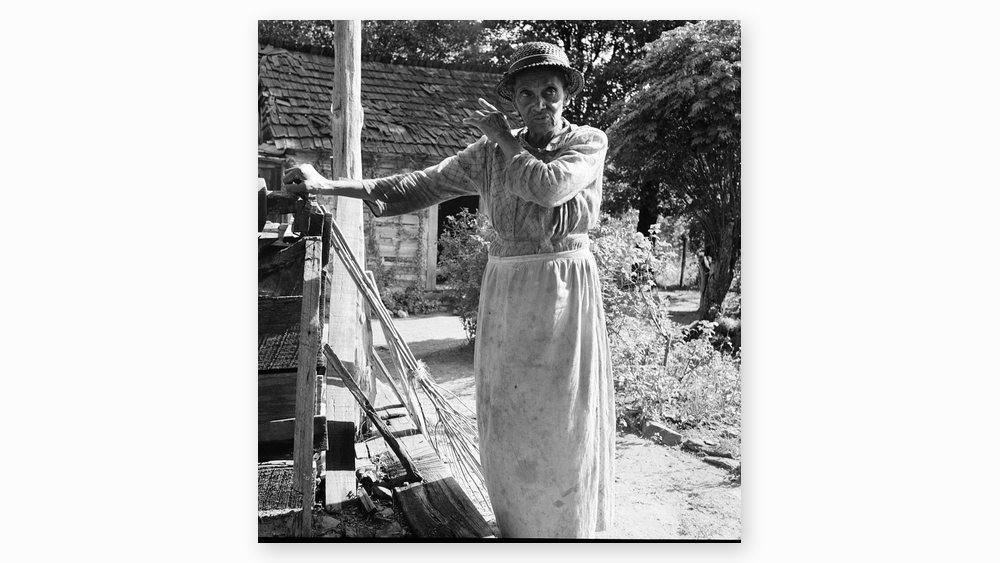
A woman at her farm gate.

Events and storylines

Named events and storylines the index follows in detail. Each has its own page.

The Burwell School and the Burwell householdHillsborough’s girls’ school, 1837–1857, and the enslaved people who worked in the household, Elizabeth Keckly among them Elizabeth Keckly in HillsboroughKeckly’s enslaved years in the Burwell household and her memoir’s testimony about them, including the abuse by schoolmaster William Bingham Mothers and the county court’s bindings, 1777–1868Mothers in the apprentice records: women who asked the court to bind their children to masters they chose, who swore complaints or sued out habeas corpus for them, and whose children the court returned to them or bound to them Hillsborough’s preservation bodies: the Historical Society and the Historic Hillsborough Commission, 1962–1964The two bodies that took up historic preservation in Hillsborough: the Hillsborough Historical Society, from its first public meeting in 1962 and its purchase of the William Read House, and the Historic Hillsborough Commission the legislature created in 1963 The 1915 sanitary survey of Orange CountyThe U.S. Public Health Service’s house-to-house sanitary survey of Orange County in 1915 and what the county did alongside it: Hillsboro’s privy ordinance, the women’s Sanitation League, the work through Black churches, privies at the schools, and the boards’ thanks The Chapel Hill Red Cross chapter, 1917–1919The Chapel Hill Red Cross chapter from its founding in May 1917 to its report of April 1919: its officers and workrooms, the dressings, comfort bags and Christmas packages it shipped, the War Fund drive, the conservation committee and the influenza work
Show all 12 events and storylines
Liberty Loans in Orange County, 1917–1919How Orange County bought war bonds in the five Liberty Loans: Paul C. Collins’s men’s committees and the county’s four banks, the bonfires at Efland and Hillsborough, the women’s committees under Harriet M. Berry, the honor flags, and the county’s totals in each loan The women’s legislative program, 1927The women’s legislative program of 1927 as Chapel Hill followed it: the League of Women Voters’ convention at the Carolina Inn, the Community Club’s bills and its letters to Orange County’s legislators, the child labor bill, and the $2,000 for the Efland home The Chapel Hill school as a University training school, 1926–1927How the Chapel Hill school became a training school of the University’s school of education in 1927: the new women faculty, the opening under E. R. Mosher, the school board’s borrowing, the parents’ protest over double sessions, and Mosher’s resignation Woollen Gymnasium, the Bowman Gray Pool and the first women’s dormitories, 1935–1941How the University built its new gymnasium, the Bowman Gray pool and its first dormitory for women with a PWA grant: the 1936 grant, the work begun in 1937, the presentation of the gymnasium, the pool’s opening and the naming for Charles T. Woollen Women’s hours, visitation and coed housing at UNC, 1965–1974How UNC’s rules on women students’ hours and on visits in the residence halls changed from 1965 to 1969: the nurses’ lie-in, women moving into Joyner and Connor and off campus, the march over closing hours, self-limiting hours, and the visitation petition, marches and open-house experiment Opening the Morehead awards to women, 1973–1977How the Morehead Foundation opened its undergraduate scholarships to women: the 1973 refusal of a Chapel Hill High nominee, the faculty women’s letter and the Faculty Council’s request, the threatened court challenge, the trustees’ 1974 vote and the first women scholars

More storylines

Other storylines that include this theme, in date order. Each has its own page.

StorylineSlavery in Orange County1758–2021 · 239 events · Enslaved people worked the county’s farms, households, courts and university from the first settlements, building Old East and South Building, appearing in the 1790 tax list and the 1860 census count of more than 5,000, and passing through the courts in the Kirkland suit of 1804 and State v. Mann in 1829. Emancipation in 1865 freed about 6,000 people; the recovery of their graves and names, from Margaret Lane Cemetery to the university’s list of 119, has continued since 1987. StorylineNaming the father: bastardy bonds and support awards in the county court, 1784–18181784–1818 · 34 events · When a single woman in Orange County had a child, the bastardy law aimed to keep the child from becoming a charge on the county: the man she named as father gave a bond and could be ordered to pay support, called the usual allowance of £27 by 1796. From 1784 to 1818 the county court took these bonds, set awards, sent for men who resisted and let juries decide when a man denied it. Some women gave the bond themselves, mothers sued to collect, the court sometimes paid others to keep a child, and some named men married the mother within days. StorylineChapel Hill's first inns and taverns, 1793–18051793–1805 · 7 events · The county court licensed Chapel Hill's first taverns as taverns at the University, beginning in 1793 with James Patterson, Old East's contractor, whose inn was the starting point of the cornerstone procession. William and Betsy Nunn bought it in 1795 and added a tavern, the trustees barred students from taverns without leave in 1796, and John Taylor Sr. opened a second tavern by 1799. Betsy Nunn ran the inn from about 1805 until her death, and it stayed in the Nunn family for more than half a century. StorylineFriends meetings and children born outside marriage, 1799–18281799–1828 · 7 events · The Friends meetings at Cane Creek and Spring held members to account for children born outside marriage, sometimes after the same cases had come before the county justices. In 1799 the Cane Creek women disowned Elizabeth Wells, who had named the father to Orange justices in October 1798, and in April 1803 accepted her written acknowledgment. The Spring women issued a testimony against Rachel Jackson in 1800, and Cane Creek one against Miriam Lamb in 1805. In December 1816 the Spring meeting disowned James Jackson after he was lawfully charged as a father. The disownings of Anna E. Culbertson in 1825 and Elizabeth Marshall in June 1828 close the run. StorylineHillsborough Presbyterian Church, 1815–18371815–1837 · 12 events · The first pastor of Hillsborough's Presbyterian church strained relations with his congregation by advocating religious education, Sunday schools and preaching for enslaved people. The brick church on West Tryon Street was built with money from a lottery the state authorized, and in September 1816 Mary W. Burke, eight others and the Rev. John Knox Witherspoon organized the church. In 1823 the session admonished two members for trading in enslaved people without punishing them. Witherspoon ended seventeen years as pastor in 1833. In 1834 six enslaved women were baptized, and in 1835 Robert Burwell began a thirteen-year pastorate; the church bought a manse, and a Sessions House was built for the Sunday school. StorylineProhibition and the liquor question, 1879–18921879–1892 · 13 events · Between 1879 and 1892 the sale of liquor in Orange County was argued over in the legislature, at the polls, before town and county boards and in court. In 1879 the legislature widened the ban on selling liquor around the university to four miles. Before the 1881 statewide prohibition vote, supporters organized the county under Rev. N. H. Cobb, with every minister, white and Black, a vice president. In 1882 Anderson Hill ran for the House as an Independent Prohibition candidate. Hillsborough's town board refused liquor licenses in 1890 and 1891, but the county commissioners licensed John U. Smith, and the town's suit against him was compromised and dismissed in 1892.
Show all 29 storylines
StorylineAdmitting women to the University, 1894–19781894–1978 · 18 events · The University opened its graduate and upper-level courses to women in 1897 but long kept them out of its first two years. In September 1897 four women registered, which The Tar Heel called the start of coeducation, and Sallie Walker Stockard took her degree with the class of 1898. Women joined the Philanthropic Society in 1930, and new women's dormitories opened in 1937 and 1939. In 1936 the Chapel Hill Rotary Club asked that local young women be let in, but in 1937 the trustees' executive committee reaffirmed that women should not be admitted to the freshman and sophomore classes. In March 1963 The News of Orange County reported that the university would admit 24 freshman women that fall. Women outnumbered men in the entering freshman class for the first time in 1975, by Pamela Dean's account, and in 1978, the Daily Tar Heel reported, they outnumbered men among all students. StorylineWomen students at the University, 1914–19211914–1921 · 8 events · Women were registered in every department and professional school of the University by the fall of 1916, and by 1921 they had two houses of their own. Cora Zeta Corpening enrolled in 1914 as what Covington's history calls the first woman candidate for a medical degree, and Margaret Berry of Hillsborough graduated from the law school in 1915, the first woman to do so according to the guide to her papers. In 1916 the News called the women's registration in all departments a first, and they organized a co-ed club. In 1921, after years of pleas from adviser Inez Stacy, the university gave women two houses, room for about forty-five of the sixty-five enrolled. StorylineOrange County's welfare superintendents, 1919–19611919–1961 · 7 events · Orange County's welfare department began under the school superintendent and worked for years with little staff. After a 1919 law required every county to have a welfare board, the commissioners and school board made school superintendent R. H. Claytor the first welfare superintendent. George H. Lawrence became the first full-time superintendent in 1928 and for years worked with only a part-time clerk. In 1954 Annie Strowd resigned weeks after the commissioners refused her department's requests for pay raises and a casework supervisor. Her successor, Jane Parker, left in 1956 for a Durham agency and returned in 1957 after the commissioners raised the salary. She retired in 1961, and Mrs. Creighton Bunn was superintendent by March. StorylineUNC national championships beyond women’s soccer1924 to present · 36 events · National titles won by Carolina teams other than women's soccer: the 1924 basketball team's later Helms recognition, men's basketball's six NCAA championships from 1957, women's basketball in 1994, and the field hockey, lacrosse, men's soccer and women's tennis titles since 1981. StorylineBaby clinics and the Junior Service League, 1930–19471930–1947 · 10 events · Free monthly clinics for babies, held separately for Black and white children, were opened by Chapel Hill's Junior Service League in 1940 and moved into the new Carrboro Health Center in 1947. An earlier clinic for Black babies had run for several weeks at Rock Hill Baptist Church in 1930. With the district health department, the League held clinics for children under two, for Black babies at the Orange County Training School and for white babies at the Carrboro school. It also began a free training school for Black household workers, with an employment agency. Dr. Robert Barrett Lawson and later Dr. Beryl Mason attended the clinics, and by 1944 Hillsborough had separate clinics of its own. StorylineChapel Hill women's peace organizing, 1935–19391935–1939 · 3 events · In September 1939, with war in Europe, Chapel Hill women organized to keep the United States out of it. The Chapel Hill branch of the Women's International League for Peace and Freedom, founded in 1935 by Charlotte Adams, sent Congressman Carl Durham a letter urging him to keep the arms embargo, put basic war materials on a cash-and-carry basis and hold war trade to peacetime levels, answering his statement that most people he had talked with favored repeal. That month other Chapel Hill women formed Mothers for Peace, with no dues, political aims or affiliations, and called on women across the country to write the President and their members of Congress and to fight war propaganda. StorylineHome demonstration and 4-H clubs in Orange County, 1935–19391935–1939 · 7 events · Home demonstration work, the teaching of homemaking to farm women and girls by a county agent, began in Orange in September 1935, when no county school but Hillsboro's taught home economics. Grace Holcombe, hired jointly by Orange and Chatham counties, led it. That month women of New Hope and Blackwood Station organized what the Weekly called the county's first club, and Fairfield women the second. Holcombe organized girls' 4-H clubs that fall, and by May 1936 there were seven clubs with 106 members and ten girls' 4-H clubs with 231. The boys' 4-H clubs were reorganized in 1938, Woodward Byars succeeded Holcombe by 1939, and by 1941 the county had 17 home demonstration clubs. StorylineChapel Hill's most valuable citizen award, 1935–19421935–1942 · 5 events · From 1935 the Carolina Theatre gave an annual trophy to Chapel Hill's most valuable citizen, chosen by a committee. The first winner, Mrs. R. B. Lawson, was cited for years of aid to the poor through the King's Daughters and volunteer relief work. Automobile dealer Bruce Strowd won in 1937 for his work for the town's schoolchildren, and on unemployment and the county welfare board. Harry F. Comer of the University YMCA won for 1938, and R. M. Grumman of the University extension division and Mrs. Grumman, until recently a librarian and teacher at the Carrboro school, in 1939. In January 1942 the trophy, then given by the Carolina and Pick theatres, went to Mrs. Robert H. Wettach. StorylineCurb markets and community canneries, 1937–19611937–1961 · 17 events · Orange County farm women opened a curb market in Carrboro in September 1937 with the county home demonstration agent and moved it to Chapel Hill the next January. Government-sponsored community canneries, where families came to can meats and vegetables, opened at White Cross in 1943 and at the Hillsborough school in 1944. The women's market's sellers took in $30,280 in its seventh year and $40,004 in its eighth, and in May 1945 Black farm families opened the Orange County Negro Curb Market on Franklin Street in Chapel Hill. Another cannery was being finished at Aycock School in 1947. The Chapel Hill women's market, in the old church building on North Columbia Street by 1954, marked its twentieth anniversary in October 1957. In August 1961 the market's 16 sellers from the county home demonstration clubs moved into a new block building beside Brady McLennan's Durham Road restaurant. StorylineChapel Hill before Pearl Harbor, 1940–19411940–1941 · 13 events · Chapel Hill and the University were preparing for war and sending aid to Europe well before Pearl Harbor. In February 1940 twenty University students began flight training, and in May President Frank Graham offered the University's faculty and laboratories to the government. In June a Chapel Hill branch of the Committee to Defend America by Aiding the Allies was organized, the American Legion post asked Congress for conscription, and citizens signed an appeal urging the United States into the war beside Britain. Relief committees sewed, shipped clothing and raised money for a mobile tea kitchen for England. Within days of Pearl Harbor, armed sentries guarded the airport, the University Lake dam and the power plant. StorylineThe Chapel Hill town election of 1949April–May 1949 · 6 events · A mass meeting at the Community Center nominated the Rev. J. H. Jones, a Black minister, for the Chapel Hill Board of Aldermen in April 1949, registration added 479 voters, 174 of them Black, and the League of Women Voters held a candidates' meeting. On May 3, with 1,442 of 1,726 registered voters at the polls, Edwin S. Lanier unseated Mayor Robert W. Madry, 811 to 589. Mrs. Roland McClamroch and Jones, whom the News called the town's first woman and first Black candidates for the board, each drew 607 votes and lost. At its first meeting the new board asked for zoning a mile beyond the town limits. StorylineDay care in Chapel Hill and Carrboro, 1952–19741952–1974 · 7 events · Day care in Chapel Hill and Carrboro grew from a center run by Victory Village's student council in 1952. In 1970 parents and children marched into South Building for a University day-care center, and Women's Liberation members opened the Community School for People Under Six for children of all races and incomes, which First Baptist Church evicted in 1972. Binkley church housed a program for disabled children from 1971, and in 1974 the Chapel Hill aldermen sought authority to fund day care. StorylineThe Orange County Historical Museum, 1956–19631956–1963 · 8 events · A Hillsboro Garden Club committee founded the Orange County Historical Museum in the upstairs courtroom of the 1845 courthouse. The committee, chaired by Mrs. Clarence D. Jones, began work in November 1956. In April 1957 the county commissioners let the club use the courtroom, which Christopher Crittenden of the State Department of Archives and History had advised keeping intact, and voted $250 for display cases. A Webb descendant gave the bookcase of Governor Thomas Burke's secretary, which the paper called the museum's first contribution. The museum opened in November 1957. The commissioners gave it register of deeds John Laws's desk in 1959, and in 1963 Hillsboro women who had spent months refurbishing the museum reopened it. StorylineWomen's complaints and affirmative action at UNC, 1970–19941970–1994 · 67 events · From 1970 UNC women challenged the University's limits on admitting women and its treatment of women employees, through Female Liberation's demands, a federal complaint by the Women's Equity Action League and later complaints by NOW and the Association of Women Students. The Faculty Council's 1973 report found gaps between men and women in hiring, pay and promotion. UNC's first affirmative action plan took effect in July 1973 but was rejected by HEW, and a revised plan followed in 1974; by that fall women made up 17.6 percent of the faculty. A federal agency upheld NOW's complaint in 1976, a religion professor lost her discrimination suit in 1978, and in 1981 Gillian Cell became UNC's first full-time affirmative action officer. In 1980 the Faculty Council's women's committee found no women hired as full professors since 1974, and in 1984 it reported that women in tenure-track posts had barely grown in a decade. Cell left the post in 1983 and in 1985 became dean of the College of Arts and Sciences. The University adopted a maternity leave policy in 1985, and in 1989 the women's committee reported that women held only 9 percent of full professorships. In 1990 and 1991 women in University housing maintenance and the School of Dentistry filed harassment grievances, and in 1992 the women's committee reported that all four full professorships awarded in 1990-91 went to men. In 1993 a state judge found sexual harassment in a Physical Plant grievance and the EEOC found sex discrimination in a tenure denial, and in 1994 the Faculty Council set goals for hiring women. StorylineAnswering sexual assault in Chapel Hill, 1971–19941971–1994 · 62 events · Women in Chapel Hill organized against sexual assault in the early 1970s: a 1971 rally asked for self-defense classes, a women's assault line opened in 1972 and students began an escort service from the Undergraduate Library. In 1974, as police reported more rapes, volunteers sponsored by NOW founded the rape crisis center that became the Orange County Rape Crisis Center. In 1978 the district attorney added a staff member to work with rape victims, and the rape crisis center hired its first paid worker with town funds. From 1980 students ran night escort services and marched to Take Back the Night, and in 1982 UNC put a written sexual harassment policy into effect. In 1984, as Chapel Hill police linked four rapes to one attacker, the student escort service extended its walks to nearby apartments. Take Back the Night marches returned in 1985, after a UNC graduate student was kidnapped from the Morehead Planetarium lot and killed, and in 1988 and 1989; students held a rape awareness week in 1986, and the escort service became SAFE Escort in 1987. In 1989 UNC made date rape and sexual and racial harassment offenses under the student code. Take Back the Night marches went on in 1990 and 1992. After a rape and two assaults on campus in the fall of 1992, UNC locked its residence halls around the clock and added lighting, and District Attorney Carl Fox, picketed over his acquaintance-rape guidelines, replaced them in November. In 1993 and 1994 Women Against Rape and others pressed the Honor Court, the Faculty Council approved a rape shield and then new sexual assault rules with complainants' rights, and Take Back the Night marches went on. StorylineHomecoming queens and the Carolina Pride Award, 1972–19931972–1993 · 8 events · In 1972 UNC's Student Legislature called the Homecoming Queen pageant demeaning to women and asked that it end. From 1976 Black students won the crown four years running, and in 1984 the Carolina Athletic Association introduced the Carolina Pride Award to replace the queen. In 1989 Black Student Movement vice president Tonya Blanks was crowned homecoming queen after a student vote. In 1990 a racist note was left on the car of the new homecoming queen, and in 1993 the BSM's candidate became the fifth Black queen in a row. StorylineTitle IX at UNC and in the Chapel Hill schools, 1973–19771973–1977 · 14 events · From 1973 UNC women used federal sex-discrimination rules to press for equal treatment, filing complaints over intramurals and tuition residency rules. Under Title IX the University set up a grievance committee, opened single-sex groups and a men's dormitory to women and raised the athletic fee to build women's sports, while a 1977 report counted three athletic grants for women against 257 for men. Chapel Hill High began a coeducational gym class in 1976. StorylineFounding women’s studies at UNC, 1974–19771974–1977 · 6 events · In 1974 a UNC committee on minorities recommended a women's studies curriculum, and the Faculty Council called for a study. A committee under Richard L. Simpson heard students and faculty in 1975, and that September the council approved its plan for a program. A search for a director followed, and in 1977 the University approved the program with Mary Turner Lane as director. StorylineThe AWS Women's Festivals, 1974–19781974–1978 · 5 events · In February 1974 the Association of Women Students held a two-week Women's Festival at UNC, which the Daily Tar Heel called the first on campus, with panels, films, plays and music. Gloria Steinem spoke on sex and race, Jane Fonda spoke against the Vietnam War, and Judge Elreta Alexander spoke on equal justice. The 1978 festival ran a week, with an ERA rally and a keynote by former U.S. Rep. Bella Abzug. StorylineThe Equal Rights Amendment campaign in Chapel Hill, 1975–19811975–1981 · 7 events · Chapel Hill's aldermen endorsed the Equal Rights Amendment in 1975, and an Orange-Chatham coalition opened a local ratification drive in 1976. Supporters picketed the 1977 unveiling of a bust of Sam Ervin, who had spoken against the amendment before the state Senate defeated it, and rallies in the Pit in 1978 heard Miriam Slifkin and state Sen. Kathy Sebo. In 1980 a campus group formed to oppose ratification, and in 1981 Betty Friedan and Phyllis Schlafly debated the amendment in Memorial Hall. StorylineThe Orange County Women's Center and the battered women's shelter, 1977–19881977–1988 · 19 events · A YWCA coalition began helping battered women in Durham and Chapel Hill in 1977, and in 1981 it opened a shelter house in Chapel Hill. An anonymous gift founded the Orange County Women's Center in 1979, which housed women's services and began peer counseling. After its board voted in 1982 to suspend operations unless money came in, an anonymous donor offered a $20,000 challenge grant to hire a director. From 1985 the center sought to move its offices to a house on Henderson Street; the Town Council approved the move in 1987 over Cobb Terrace neighbors' opposition, and a 1988 settlement of their suit upheld it with limits on the house's use. StorylineUNC women’s soccer national dynasty1981 to present · 29 events · Anson Dorrance, the program's head coach from its first varsity season in 1979 through 2023, led the Tar Heels to the 1981 AIAW national title and 21 NCAA titles, and his successor Damon Nahas added the 2024 NCAA title, for 23 national championships in all through the 2025 season. UNC won 22 of the 43 NCAA tournaments held from 1982 through 2024, and its teams went 103 consecutive games without a loss from 1986 to 1990. StorylineUNC housekeepers’ movement, 1990–19961990–1996 · 64 events · UNC's housekeepers, most of them Black women, objected to merit ratings and low pay in 1990 and formed the UNC Housekeepers Association in 1991. With lawyers Alan McSurely and William Morris, student groups and the Chapel Hill-Carrboro NAACP, they pressed grievances over pay, training and supervision. UNC refused to hear them as a group in 1992, so they took a group discrimination grievance to the state. A state judge certified it as a class action in September 1993, but a Superior Court judge dismissed it that November; the housekeepers appealed, and in 1994 the Center for Constitutional Rights pledged its help. A mediated settlement in 1996 brought back pay and career training.

Indexed works

Works about Women's Lives & History from library and archive catalogs. The most widely held appear first; novels are not shown here. Follow a link to find a copy or view the material.

Widely held

To Free A Family

Nathans, Sydney · 2012 · Harvard University Press

Sydney Nathans's biography of Mary Walker, an enslaved woman from Orange County who escaped to the North in the mid nineteenth century and spent the following decades in Cambridge, Massachusetts, working to free the family she had left behind. Chapter titles trace her flight, her years among Northern friends, a rescue plot, a long silence, and the reunion that gives the book its close. Published 2012 by Harvard University Press, 330 pages with 20 pages of plates, illustrations and maps.

Included because: Catalog heading in the Methodist record: Women slaves.

Reviewed in Choice Reviews Online (2012), Civil War Book Review (2012).

Miss Mary's Money

Jones, H. G. · 2014 · McFarland & Co.

H. G. Jones follows the fortune of Mary Ruffin Smith (1814-1885), the unmarried heiress whose Orange and Chatham County lands passed at her death to the University of North Carolina and the Episcopal Church. Chapters profile her grandfather Francis Jones, then trace the bequest through a quarrel among Episcopalians over Price Creek, the Chapel of the Cross and the university's buildings. A December 1885 New York Times report called the gift money; Jones shows it was land. Published by McFarland in 2014, 231 pages.

Included because: The record names this subject alongside a heading for the county or its towns.

The Woman Who Rang the Bell: The Story of Cornelia Spencer Phillips

Russell, Charles Phillips · 1949

Charles Phillips Russell's biography of Cornelia Phillips Spencer (1825-1908), the Chapel Hill writer remembered for ringing the bell of South Building when the university reopened in 1875 after its closure during Reconstruction. It doubles as a history of Chapel Hill and the university. Published by the University of North Carolina Press in 1949, 293 pages with illustrations.

Included because: Catalog heading in the Durham record: Spencer, Cornelia Phillips, 1825-1908.

Reviewed in Journal of American History (1949).

Old Days in Chapel Hill

Chamberlain, G. Hope Summerell · 1926

Hope Summerell Chamberlain's life and letters of Cornelia Phillips Spencer (1825 to 1908), published in 1926, which doubles as a picture of Chapel Hill and the university in the nineteenth century. It runs 325 pages with illustrations and portraits.

Included because: Catalog heading in the OCPL record: Spencer, Cornelia Phillips, 1825-1908.

Selected Papers of Cornelia Phillips Spencer

Spencer, Cornelia Phillips · 1953

Selected writings of Cornelia Phillips Spencer (1825 to 1908), the Chapel Hill writer who campaigned for the university's reopening after Reconstruction, published by the University of North Carolina Press in 1953. The 753 pages touch on Chapel Hill life, education and the university in the nineteenth century.

Included because: Catalog heading in the Durham record: Spencer, Cornelia Phillips, 1825-1908.

Reviewed in The Journal of Southern History (1954).

Jane Crow: The Life of Pauli Murray

Rosenberg, Rosalind · 2017

Rosalind Rosenberg's 2017 biography of Pauli Murray (1910-1985), lawyer, poet and Episcopal priest, raised in Durham. Its six parts follow a Southern childhood, the move to New York, the 1938 application to the University of North Carolina that was refused because Murray was Black (the chapter is titled 'Members of your race are not admitted'), law school and the coining of the phrase Jane Crow, the Cold War years, the push toward 'an NAACP for women', and a late-life ordination. 494 pages with portraits.

Included because: Catalog heading in the NC Cardinal record: Women.

Reviewed in The Journal of Southern History (2018).

Show 2 more

Well worth a shindy : the architectural and philosophical history of the Old Well at the University of North Carolina at Chapel Hill

Madry, Sarah Brandes · 2003 · iUniverse

Sarah Brandes Madry's history of the Old Well at the University of North Carolina at Chapel Hill, treating both its architecture and the ideas attached to it. It takes in drinking fountains and water use in Chapel Hill and the university's history, with a chapter on Edwin Anderson Alderman, the president under whom the well took its present form in 1897, and one on water at the university. Published by iUniverse in 2003, 399 pages with illustrations.

Included because: The record names this subject alongside a heading for the county or its towns.

Mrs. Lincoln and Mrs. Keckly: The Remarkable Story of the Friendship Between a First Lady and a Former Slave

Fleischner, Jennifer · 2003 · Broadway Books

Jennifer Fleischner's double biography of Mary Todd Lincoln and Elizabeth Keckley, the dressmaker who had been enslaved, including years in Hillsborough, before buying her freedom and becoming the First Lady's confidante. Published by Broadway Books in New York in 2003, 372 pages with illustrations and a map. Topics include enslaved women in Hillsborough and the United States, dressmakers and women's friendships in the nineteenth century.

Included because: Catalog heading in the UNC record: Enslaved women.

Recently indexed: Annabel Morris Buchanan : a profile of her contributions to folklore (1978) · Anti-religious invasion of higher education (1932) · [Appeal on behalf of project to establish home for aged women] (1875) · Ballot (1923) · The Betty Smith House : a Chapel Hill landmark (1984) · [Campus conversation on sexual assault website archives]

Search all 745 indexed works →

Start at OCPL

Books in OCPL’s Rebecca B. Wall Local History Collection whose titles, catalog subjects, or descriptions match this theme. The Friends’ recommended starting points are labelled. Books marked Wider context cover the broader subject rather than this theme itself.

Show 6 more
  • Foundational · REF 305.409 SMI North Carolina Women: Making History Smith, Margaret Supplee · 1999

    Margaret Supplee Smith and Emily Herring Wilson trace the lives of North Carolina women from the earliest Native settlements to the end of the Second World War, using more than two hundred photographs and documents. Smith, a Wake Forest art professor, had coordinated the North Carolina Museum of History's women's history project. Foreword by Doris Betts; UNC Press, 1999, 382 pages.

  • Foundational · NC 371.35 HAMMETT Ordinary Women Extraordinary Service to Family, Community, and North Carolina Hammett, Wilma · 2011

    Wilma Hammett, Jan Christensen and Joan Gosper wrote and compiled this illustrated book about North Carolina women whose service reached their families, communities and state. The North Carolina Family and Consumer Sciences Foundation published the 340 pages in 2011 with the foundation of the state's Extension and Community Association.

  • Wider context · 323.119 GRE Our Separate Ways: Women and the Black Freedom Movement in Durham, North Carolina Greene, Christina · 2005

    Christina Greene's history of Black and white women in Durham's freedom movement, from the fight against Jim Crow in the 1940s through the protests of 1957 to 1963, neighborhood organizing among poor residents, the War on Poverty, Black Power politics and a boycott. Revised from her 1996 Duke doctoral thesis, it was published by the University of North Carolina Press in 2005; 366 pages with bibliography and index.

  • Foundational · NC 973.745 NOR North Carolinians in the Era of the Civil War and Reconstruction 2008

    Paul D. Escott edits nine essays on North Carolinians from secession through Reconstruction: Piedmont disaffection, Wild's Raid and guerrilla war in the northeast, African Americans under Union occupation, soldiers and the 1864 governor's race, the war's end as seen by Chapel Hill writer Cornelia Phillips Spencer, Zebulon Vance and university president David L. Swain, women and the law, divorce at the 1868 constitutional convention, the roots of Jim Crow, and Vance's memory. UNC Press, 2008.

  • Wider context · NC 340.09 COL The Changing Face of Justice: A Look at the First 100 Women Attorneys in North Carolina Colin, Emily · 2004

    Portraits of the first hundred women admitted to practice law in North Carolina, by Emily Colin and Lynn P. Roundtree, published by the North Carolina Bar Association in 2004. The project began in 1997, when the association's Committee on Women in the Profession set out to identify the state's pioneering women lawyers. 108 pages in a large format, with photographs, references and an index.

  • Wider context · NC 305.409 KIE Southern Women in Revolution, 1776-1800: Personal and Political Narratives Kierner, Cynthia A. · 1998

    Cynthia A. Kierner prints and interprets 98 petitions that women sent to the legislatures of North and South Carolina between 1776 and 1800. Soldiers' widows sought back pay, wives of banished loyalists asked that their husbands be let home, deserted wives wanted separate estates, and freed Black women sought recognition of their freedom. An essay opens each of five chapters, and closing lists sort each state's petitions by subject. University of South Carolina Press, 1998.

In the chronology

A selection of 12 events from the 1,031 chronology entries for this theme, including highlights and examples from different years. See all 1,031 dated events in the chronology →

  1. Orange County begins with fifty taxable enslaved people When the county was organized its tax lists showed fifty enslaved Black taxables, thirty-five men and fifteen women, a small number for a county of small farms. Place: Orange CountyLefler and Wager, Orange County, 1752-1952 (1953), p. 95
  2. Burwell School for young women operates Robert and Margaret Anna Burwell operated their Hillsborough school for girls from 1837 to 1857. People: Margaret Anna Burwell, Robert Armistead Burwell, Elizabeth Hobbs Keckly Place: HillsboroughNCpedia
  3. Elizabeth Keckly purchases freedom for herself and her son Elizabeth Keckly purchased freedom for herself and her son in St. Louis, after earlier enslavement in Hillsborough. People: George Kirkland, Elizabeth Hobbs Keckly Place: St. Louis, Missouri; earlier Hillsborough connection · Also named: Elizabeth Keckly, James KecklyNCpedia
  4. Women enroll at UNC for the first time After the trustees opened UNC's post-graduate courses to women early in 1897, four women registered in September for the 1897–98 session, which The Tar Heel called the start of coeducation: Dixie Lee Bryant, Sallie Walker Stockard, Cecye Dodd and Mary MacRae. President Edwin Alderman let women enter junior and senior classes as well. People: Dixie Lee Bryant, Sallie Walker Stockard Place: Chapel Hill · Also named: Mary MacRae, Edwin AldermanSearch the index · The Tar Heel, September 24, 1897, p. 3: Co-Education (DigitalNC)
  5. Sallie Walker Stockard becomes UNC's first woman graduate Sallie Walker Stockard, a Guilford College graduate, entered UNC's senior class in the fall of 1897, the first year the university admitted women. She became the first woman to graduate from UNC when the class of 1898 received its degrees on June 1, 1898, and she earned a master's degree there in 1900. People: Sallie Walker Stockard Place: Chapel HillSearch the index · DigitalNC: Charlotte Daily Observer, June 1, 1898, page 4 (Chapel Hill, May 31)
  6. Elizabeth Cotten composes Freight Train At about age eleven, growing up near the railroad tracks in the settlement that became Carrboro, Elizabeth Cotten wrote "Freight Train." She played a right-handed guitar upside down, and the song became a folk standard after Folkways released her recording in 1958. People: Elizabeth “Libba” Cotten Place: CarrboroSearch the index · NC Department of Natural and Cultural Resources: Elizabeth Cotten 1893-1987 (G-129)
  7. District health department holds midwife classes across Orange County Classes for midwives were held at Efland and Hillsboro and began for those in and near Chapel Hill at the health department offices, with attendance required before a permit to practice would be issued. Health officer W. P. Richardson said 17 percent of births in the county were attended by midwives, against 31 percent statewide. People: William P. Richardson Place: Orange CountySearch the index · The Chapel Hill Weekly, August 21, 1936, p. 5 (classes for midwives)
  8. Orange County Negro Public Library dedicates its own building About 150 people attended an open house on May 27, 1951 dedicating the Orange County Negro Public Library's own building in Hillsborough, a structure bought from Camp Butner and put up with volunteer labor. Begun in 1942 by Marinda McPherson, the library had opened to the public in 1949 and now held more than 3,000 books. Place: Hillsborough · Also named: Marinda McPhersonThe News of Orange County (Hillsborough), May 31, 1951, p. 1 (Open House Officially Opens Community Library For Negro Citizens Here Sunday)
  9. Laurence E. Hensley is named supervising contractor for the Burwell School restoration The Historic Hillsborough Commission named Laurence E. Hensley of Durham supervising contractor for restoring the Burwell School. He was to work with A. L. Honeycutt Jr., restoration specialist of the State Department of Archives and History, and with the commission's restoration committee under James Webb of Greensboro, while an acquisitions committee headed by Mrs. George B. Daniel Jr. of Chapel Hill drew up a plan for furnishings. Place: Burwell School, Hillsborough · Also named: Laurence E. Hensley, A. L. Honeycutt Jr., James Webb, Mrs. George B. Daniel Jr.Internet Archive: "Historical News", North Carolina Historical Review 43 (1966), p. 377
  10. UNC Housekeepers organize for pay and respect UNC housekeepers formed the Housekeepers Association in 1991 and brought a class-action discrimination suit against the University over pay, advancement and treatment. Led by Marsha Tinnen and Barbara Prear, they signed a settlement with UNC on November 26, 1996, that brought raises, a career training program and monthly meetings with administrators. Place: Chapel Hill · Also named: Marsha Tinnen, Barbara PrearThe Daily Tar Heel, November 27, 1996, p. 1: UNC, Housekeepers near end of legal battle
  11. UNC women’s basketball wins the 1994 NCAA national championship Charlotte Smith’s last-second three-pointer gave UNC a 60–59 victory over Louisiana Tech. People: Sylvia Hatchell Place: Chapel Hill · Also named: Charlotte SmithSearch the index · NCAA championship history: Division I women’s basketball · Also: The Daily Tar Heel, April 4, 1994, p. 1; The Daily Tar Heel, April 27, 1994, p. 3
  12. UNC says a new residence hall will be named Jackson Hall for Blyden and Roberta Jackson UNC-Chapel Hill announced that one of two new residence halls, to be built on the site of the former Jackson Hall that housed undergraduate admissions, will be named Jackson Hall for Blyden and Roberta Jackson. The two halls will add about 730 beds. People: Roberta Bowles Hodges Jackson, Blyden Jackson Place: UNC-Chapel Hill, Chapel HillSearch the index · UNC-Chapel Hill: New residence hall to honor Blyden and Roberta Jackson

See all 1,031 dated events in the chronology →

Places in this theme

Buildings, schools, churches and other sites named in the dated events on this page, the most often named first. The map shows the 83 with a known location.

Map tiles © OpenStreetMap contributors. Site locations from the N.C. State Historic Preservation Office survey, Open Orange, Orange County GIS, OpenStreetMap and a few other published sources named on each site’s page; town and community pins show approximate locations.

Show 92 more

All places and the county map →

Research sources

Sources and research tools for this subject. Research guide: How to research with Orange County Indexed.

Background 7

Show all 7

Records of the time

Collections and databases 7

Show all 7

Local help

Picture: Farm Security Administration photographs, 1939–1940, Library of Congress; public domain. Image credits →

More to discover

Keep Reading Local

The Friends connect people with new library materials, local writers and publishers, and resources documenting Orange County.

Two mice reading back to back against a leaf, with the hand-lettered words Friends of the Orange County Public Library
Illustration by Caldecott Medalist Matthew Cordell, gifted to the Friends 2026