Skip to content

Theme

Black Life & Civil Rights

Community life, schools, segregation, activism, churches, and oral histories.

Black communities in Orange County built schools, churches, libraries, and neighborhoods such as Northside and Pine Knolls. Their cultural life includes George Moses Horton’s poetry and Elizabeth Cotten’s music. Political organizing has shaped the county through the freedom movement of the 1960s, campus workers’ strikes, and the elections of Howard Lee and Carrboro’s first Black officials. The storylines trace these achievements alongside histories of enslavement, racial-terror lynching, the killing of James Cates in 1970, and struggles to desegregate schools and the university.

1,048 indexed works are connected with this theme. 49 held at OCPL →

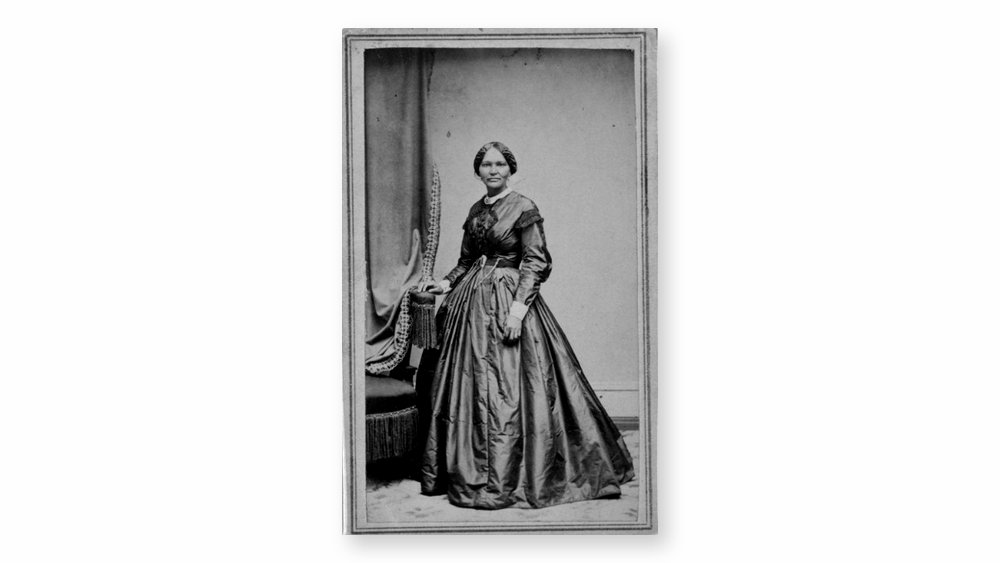
Elizabeth Keckly, 1861.

Events and storylines

Named events and episodes the index follows in detail. Each has its own page.

Show all 23 events and episodes
Rogers Road environmental justiceA historic Black community, the county landfill beside it, and the long campaign for sewer service and the Greene Tract Howard Lee’s election as mayor of Chapel Hill, 1969The first Black mayor of a majority-white Southern town since Reconstruction Carrboro’s Black political firstsFrom Braxton Foushee, the first Black alderman in 1969, and Robert Drakeford, the first Black mayor in 1977, to the first Black town manager and police chief and Barbara Foushee, the first Black woman mayor, in 2023 Historic Black neighborhoods of Chapel Hill and CarrboroNorthside, Pine Knolls, Tin Top and Pottersfield in Chapel Hill, the Lloyd–Broad neighborhood in Carrboro, and their churches, schools and businesses Racial-terror lynchings in Orange CountySix people are documented as lynched in Orange County: Washington Morrow, Thomas Jefferson Morrow, Daniel Morrow, Wright Malone and Cyrus Guy in 1869, and Manly McCauley in 1898. The county’s 2022 resolution apologized and approved markers without naming them Killing of James Cates, 1970The Chapel Hill man killed in the Pit at UNC in November 1970; headings are still being sought Elizabeth Keckly in HillsboroughKeckly’s enslaved years in the Burwell household and her memoir’s testimony about them, including the abuse by schoolmaster William Bingham Segregated schooling and the rise of Lincoln and Central High SchoolsThe Orange County Training School, Lincoln High in Chapel Hill, Central High in Hillsborough, and what desegregation took from them Desegregating the University of North Carolina, 1951–1955Five Black students began law school classes on June 22, 1951, after the courts barred the university from refusing them; the first Black undergraduates, the Frasier brothers and John Brandon, followed in 1955 The Chapel Hill civil-rights demonstrations, 1963–1964Sit-ins, marches, and mass arrests over segregated businesses, from the summer of 1963 through the Holy Week Fast of 1964 UNC food workers’ and housekeepers’ struggles, 1969 to 1996The Black cafeteria workers who led the two walkouts of 1969, Mary Smith and Elizabeth Brooks among them, with the Black Student Movement as their ally, and the housekeepers who organised in the 1990s The movement for a freestanding Black Cultural Center, 1991–1993Students, faculty, staff, and athletes campaigned for a building of its own, the struggle that led to the Sonja Haynes Stone Center Northside, Pine Knolls, and Tin TopChapel Hill’s historic Black neighborhoods as their residents tell them: the Marian Cheek Jackson Center’s Northside Stories, the churches, the schools, the businesses, and the pressure of a growing town UNC housekeepers’ movement, 1991–1996The Housekeepers Association’s campaign for pay, respect, and a grievance process, settled in 1996 Black workers and campus laborFrom the enslaved and hired laborers of the university’s first century to the staff of the affirmative-action era: the cooks, janitors, laundresses, and grounds crews whose work ran the campus, mostly unnamed in its records Segregation and access to medical careDurham’s Lincoln Hospital, separate clinics and hospital floors, and the steps to the desegregation of North Carolina Memorial Hospital in 1965 The Hargraves Center and Chapel Hill’s Negro Community CenterThe community center begun for Black residents of Chapel Hill in 1939, finished by the Navy as quarters for the B-1 Band, opened in 1945 under an all-Black board, and renamed for William M. Hargraves in 1973

Indexed works

Related works found in catalogs and archives across North Carolina, the most widely held first, novels aside. Each links to the institution that holds or provides it.

Widely held

To Free A Family

Nathans, Sydney · 2012 · Harvard University Press

Sydney Nathans's biography of Mary Walker, an enslaved woman from Orange County who escaped to the North in the mid nineteenth century and spent the following decades in Cambridge, Massachusetts, working to free the family she had left behind. Chapter titles trace her flight, her years among Northern friends, a rescue plot, a long silence, and the reunion that gives the book its close. Published 2012 by Harvard University Press, 330 pages with 20 pages of plates, illustrations and maps.

Why this is here: Catalog heading in the Methodist record: Women slaves.

Reviewed in Choice Reviews Online (2012), Civil War Book Review (2012).

Game Changers

Chansky, Art · 2016

Art Chansky's 2016 account of Dean Smith, Charlie Scott and the years that changed Chapel Hill as a Southern college town. Scott was the first Black scholarship player in the Carolina basketball program. Topics include civil rights, racism in sports and the university's twentieth-century history.

Why this is here: Catalog heading in the UNC record: Racism in sports.

The Free Men

Ehle, Jr., John Marsden · 1965

John Ehle's account of the civil rights demonstrations in Chapel Hill in 1963 and 1964 and the young people who led them, first published by Harper & Row in 1965. This reprint from Lewisville, North Carolina adds an afterword by Wayne King. Civil rights and race relations in Chapel Hill are its subjects. 340 pages with illustrations and portraits.

Why this is here: Catalog heading in the UNC record: Civil rights.

To Drink from the Well: The Struggle for Racial Equality at the Nation’s Oldest University

Kapur, Geeta · 2021

Geeta Kapur's history of race at the University of North Carolina at Chapel Hill, from the enslaved labor that built the campus through desegregation and the Black student protests that followed. Twelve chapters, with a foreword by William Barber II, move from the founding era and the Great Depression controversies to the state's response to integration and the turmoil of later decades; North Carolina Central University also figures. Published 2021 by Blair in Durham.

Why this is here: Catalog heading in the NC Cardinal record: Racism.

Frank Porter Graham and the 1950 Senate Race in North Carolina

Pleasants, Julian M.; Burns, Augustus M., III · 1990 · UNC Press

Julian M. Pleasants and Augustus M. Burns III on the 1950 Democratic Senate primary in North Carolina, in which Frank Porter Graham, the former president of the University of North Carolina, lost to Willis Smith after a campaign marked by race-baiting. Primaries, elections and race relations in the state are its subjects. Published by UNC Press in 1990, 356 pages with illustrations.

Why this is here: Catalog heading in the NCCU record: Race relations.

Reviewed in Choice Reviews Online (1991), The American Historical Review (1991), Journal of American History (1991), The Journal of Southern History (1992).

Ribbons of Color Along the Eno River

2021

Collected first-hand and second-hand stories from the Eno River valley as told from the standpoint of African Americans and Native people who have lived along the river in Orange and Durham counties, from prehistory to the present day. Issued by the Eno River Association in Durham as volume 10, number 2 of the Eno Journal, 2021, 106 pages with illustrations.

Why this is here: Catalog heading in the UNC record: African Americans.

Show 2 more

The Impact of Slavery on the Education of Blacks in Orange County, North Carolina 1619-1970

Moore, Rosetta Austin · 2015

Rosetta Austin Moore's survey of Black education in Orange County from the colonial era to 1970, in a revised edition published in 2015 through Lulu in Morrisville. After chapters on slavery nationally and on schooling for enslaved people in North Carolina, the book turns to the county: its formation, the growth of its schools, the arrival of free public schooling for all, and the schools and African American educators of the twentieth century. 265 pages with maps, portraits and facsimiles.

Why this is here: Catalog heading in the UNC record: Enslaved persons.

A Mind to Stay: White Plantation, Black Homeland

Nathans, Sydney · 2017

Sydney Nathans's history of a Black community in Hale County, Alabama, whose founders were enslaved people sent there before the Civil War from the Cameron family's plantations in Orange County, North Carolina. Instead of following the Great Migration out of the South, this group stayed, moved from bondage to owning the land they had worked, and held onto it across generations. Published 2017, 342 pages with plates and maps; this is the e-book edition.

Why this is here: Catalog heading in the NC State record: Freedmen.

Reviewed in Journal of American History (2017), Journal of Social History (2017), London review of books (2017), The Journal of the Civil War Era (2018), The Journal of Southern History (2018), Environmental History (2018), ˜The œAlabama review (2019), The Oral History Review (2019), ˜The œRegister - Kentucky Historical Society/˜The œregister of the Kentucky Historical Society (2020).

Recently indexed: Another trial of integration (1956) · Factors affecting the college choice of black students : an overview (1974) · Gratitude (1940) · Handbook of preparation (1939) · The Negro churches of Chapel Hill : a community study (1939) · A pen-picture of Wilson Caldwell, colored, late the janitor of the University of North Carolina (1941)

Search all 1,048 indexed works →

Start at OCPL

Books in OCPL’s Rebecca B. Wall Local History Collection whose titles, catalog subjects, or descriptions match this theme. The Friends’ recommended starting points are labelled.

  • Start here · 975.656 WOO When the Roll Is Called up Yonder: Black History in Hillsborough, North Carolina Wood, Peter H. · 2005

    Peter H. Wood's short history of Black Hillsborough, self-published in the town in 2005, 40 pages with illustrations and a map. It covers African Americans in Hillsborough, their history and their social life and customs, and is a brief starting point for the subject.

  • Foundational · NC 929.209 SCARLETT The Harris Family of Orange County, North Carolina: 318 Years of Black-American Indian Culture Scarlett, Beverly A. · 2019

    Beverly A. Scarlett traces the Harris family of Orange County across what her subtitle calls 318 years of Black-American Indian culture, a family history of mixed African American and Native descent in the county. Published through Lulu in Morrisville in 2019, 95 pages with illustrations, portraits and maps. It concerns both African American and Indigenous genealogy for Orange County.

  • Start here · 796.323 CHANSKY Game Changers: Dean Smith, Charlie Scott, and the Era That Transformed A Southern College Town Chansky, Art · 2016

    Art Chansky's 2016 account of Dean Smith, Charlie Scott and the years that changed Chapel Hill as a Southern college town. Scott was the first Black scholarship player in the Carolina basketball program. Topics include civil rights, racism in sports and the university's twentieth-century history.

Show 6 more
  • Foundational · 323.423 CHA Civilities and Civil Rights: Greensboro, North Carolina, and the Black Struggle for Freedom Chafe, William Henry · 1980

    William H. Chafe's study of race relations and the Black freedom struggle in Greensboro, where the 1960 sit-ins at the Woolworth's lunch counter opened the protest phase of the civil rights movement. Chafe, a Duke University historian, treats the city's story as the nation's struggle with racism in small. Oxford University Press published it in 1980, 436 pages with illustrations, notes and an index; it won the first Robert F. Kennedy Book Award in 1981.

  • Foundational · 371.009 MOORE The Impact of Slavery on the Education of Blacks in Orange County, North Carolina 1619-1970 Moore, Rosetta Austin · 2015

    Rosetta Austin Moore's survey of Black education in Orange County from the colonial era to 1970, in a revised edition published in 2015 through Lulu in Morrisville. After chapters on slavery nationally and on schooling for enslaved people in North Carolina, the book turns to the county: its formation, the growth of its schools, the arrival of free public schooling for all, and the schools and African American educators of the twentieth century. 265 pages with maps, portraits and facsimiles.

  • Foundational · NC 975.656 RIBBONS Ribbons of Color Along the Eno River: The History of African Americans and People of Color Living on the Eno 2021

    Collected first-hand and second-hand stories from the Eno River valley as told from the standpoint of African Americans and Native people who have lived along the river in Orange and Durham counties, from prehistory to the present day. Issued by the Eno River Association in Durham as volume 10, number 2 of the Eno Journal, 2021, 106 pages with illustrations.

  • Foundational · NC 975.656 HISTORIC Antebellum Hillsborough, Slavery, and Enslaved and Free People of Color Who Worked at the Burwell School, 1837-1857 Historic Hillsborough Commission (Hillsborough, N.C.) · 2019

    The Historic Hillsborough Commission's account of slavery in antebellum Hillsborough and of the enslaved and free people of color who worked at the Burwell School, the female school the Burwells kept in town, between 1837 and 1857. African American history in Hillsborough and the school's own history are its two threads. Published in 2019.

  • Foundational · NC 975.656 BOLDUC African Americans of Durham & Orange Counties: An Oral History Bolduc, Jean · 2016

    Jean Bolduc's 2016 collection of interviews with African American residents of Durham and Orange counties, presented as short biographies. The subjects are Floyd McKissick (1922-1991), the first African American admitted to UNC's law school, Walter Jackson, Brenda Stephens, Nate Davis, poet Jaki Shelton Green, Jackie Wagstaff, Diane Wright and Michelle Johnson, with a closing chapter on the Ku Klux Klan. 125 pages with illustrations.

  • Foundational · NC 929.375 MAL Freedmen's Marriage Records, Orange County, North Carolina, 1866-1868 Mallard, Shirley Jones · 2000

    Transcriptions by Shirley Jones Mallard of Orange County's freedmen's marriage records for 1866 to 1868, the registers in which formerly enslaved couples recorded marriages made under slavery and given legal standing after emancipation. For many African American families in the county these are the earliest records that name both partners. Compiled in 2000.

In the chronology

Other storylines that include this theme, earliest first. Each has its own page.

Cedar Grove and rural northern Orange1755–2013 · 80 events · The crossroads communities north of Hillsborough grew around Eno Presbyterian, organized in 1755, the Hughes Academy of 1845, the Pope farm of the 1870s and Ellis Store of 1923, with nearly half the county’s Black-owned farms in Cedar Grove Township by 1940. The Schley Grange brought telephones in 1948, the schools were consolidated and desegregated in the 1960s, and the branch library came and went between 2004 and 2010. Slavery in Orange County1758–2021 · 102 events · Enslaved people worked the county’s farms, households, courts and university from the first settlements, building Old East and South Building, appearing in the 1790 tax list and the 1860 census count of more than 5,000, and passing through the courts in the Kirkland suit of 1804 and State v. Mann in 1829. Emancipation in 1865 freed about 6,000 people; the recovery of their graves and names, from Margaret Lane Cemetery to the university’s list of 119, has continued since 1987. Public libraries in Orange County1822–2026 · 89 events · Orange County’s public libraries grew from the Franklin Library Society of 1822 and the free library counted at Hillsboro in 1910 to the Confederate Memorial Library of 1934, the Hyconeechee Regional Library of 1948, the Negro Public Library’s own building in 1951 and Chapel Hill’s town library in 1958. The county system that followed opened branches at Carrboro and Cedar Grove, a Main Library on Margaret Lane in 2010 and the Drakeford Library Complex in 2025, with the Friends of the library founded in 1981 along the way. The Burwell School and the Burwell household1837–1857 · 37 events · Anna Burwell opened a school for girls in Hillsborough in 1837 that ran until the family moved to Charlotte in 1857. In the same household Elizabeth Hobbs, later Elizabeth Keckly, was enslaved from 1835, beaten at Anna Burwell’s urging and subjected to years of sexual coercion before being sent back to Virginia in 1842; she bought her freedom in 1855. Farm labor in rural Orange County1859–2022 · 16 events · Tobacco spread from Washington Duke’s turn to the crop in 1859, and after emancipation many freedpeople worked the land as tenants and sharecroppers; the 1930 census counted tenants on about a third of the county’s farms. Farm Security Administration loans reached Black farmers from 1938, tenancy fell sharply in the 1950s, and by 2022 the census counted 36 migrant workers on the county’s farms. Binkley Baptist and the Community Church of Chapel Hill1953–1993 · 13 events · The Community Church of Chapel Hill formed in 1953 as an interracial congregation and started an integrated preschool in 1955; Binkley Baptist organized in 1958 under Robert Seymour. The Baptist association refused Binkley membership in 1966 over its open membership, the state and Southern conventions disassociated from it in 1992, and the Community Church joined the Unitarian Universalist Association in 1993.
Show all 8 storylines

Dated events connected with this theme: sixteen of 925, the highlights and a sample of the rest spread across the years, in date order. See all 925 dated events in the chronology →

Earliest first. Scroll sideways, or use the arrows.

16 dated events
  1. George Moses Horton begins selling poems to UNC students

    Life event · Chapel Hill

    By about age twenty, George Moses Horton, enslaved on a Chatham County farm, was carrying fruit to the UNC campus on Sundays, and students began paying him to compose love poems and acrostics. His first printed poem appeared in April 1829, the year The Hope of Liberty was published.

  2. Thomas Ruffin issues the State v. Mann decision

    Law, policy or court · Countywide

    Thomas Ruffin of Hillsborough, newly seated on the North Carolina Supreme Court, wrote the opinion in State v. Mann, overturning the conviction of John Mann of Edenton for shooting Lydia, an enslaved woman he had hired, as she fled a whipping. Ruffin held that a master's power must be absolute, and abolitionists later cited the ruling widely.

    People: Thomas Ruffin · Lydia

  3. Burwell School for young women operates

    Hillsborough

    Robert and Margaret Anna Burwell operated their Hillsborough school for girls from 1837 to 1857.

    Part of The Burwell School and the Burwell household · 37 events

    People: Margaret Anna Burwell · Robert Armistead Burwell · Elizabeth Hobbs Keckly

    Subject: Burwell School

  4. Elizabeth Keckly purchases freedom for herself and her son

    Slavery and freedom · St. Louis, Missouri; earlier Hillsborough connection

    Elizabeth Keckly purchased freedom for herself and her son in St. Louis, after earlier enslavement in Hillsborough.

    Part of Elizabeth Keckly in Hillsborough

    People: George Kirkland · Elizabeth Hobbs Keckly

  5. Washington Morrow, Thomas Jefferson Morrow and Daniel Morrow are lynched

    Violence or armed conflict · Countywide

    Early on August 7, 1869, about 100 disguised white men took Washington Morrow and his brother Nelson from the Hillsborough jail, where they were held on barn-burning charges, and shot Washington as they fled; he died of the wound. On October 14 a mob hanged their father, Thomas Jefferson Morrow, and their uncle, Daniel Morrow.

    Part of Racial-terror lynchings in Orange County · 17 events

    People: Washington Morrow · Daniel Morrow · Jefferson Morrow

    Subject: Orange County jail, Hillsborough

  6. Manly McCauley is lynched near Carrboro

    Violence or armed conflict · Carrboro

    Manly McCauley, an 18-year-old Black farmhand, left Milton Brewer's farm west of Chapel Hill with Brewer's wife on October 26, 1898. A posse caught them beyond Jonesboro, and on the way back masked men took McCauley from the officer holding him and hanged him. His body was found on November 6, about three miles west of Chapel Hill.

    Part of Racial-terror lynchings in Orange County · 17 events

    People: Manly McCauley

  7. Elizabeth Cotten composes Freight Train

    Publication, speech or performance · Carrboro

    At about age eleven, growing up near the railroad tracks in the settlement that became Carrboro, Elizabeth Cotten wrote "Freight Train." She played a right-handed guitar upside down, and the song became a folk standard after Folkways released her recording in 1958.

  8. Census counts tenants on about a third of Orange County farms

    Statistic or record · Orange County

    Tenants operated 643 of 1,870 Orange County farms in 1930 (34.4 percent), 718 of 1,956 in 1935 (36.7 percent) and 687 of 2,043 in 1940 (33.6 percent). Of the 1940 tenants, 514 were share tenants and croppers.

  9. The Navy B-1 Band serves at Chapel Hill

    Appointment, election or service · Chapel Hill

    The B-1 Band, 44 Black musicians sworn in at Raleigh on May 27, 1942 as the first African Americans to serve in the Navy at general rank, played for the Navy Pre-Flight School at UNC from July 1942 to April 1944. Barred from campus housing, they lived in the new Black community center on Roberson Street, now the Hargraves Center.

    Part of The Navy Pre-Flight School at Chapel Hill, 1942–1945 · 10 events

    Subject: Hargraves Community Center · Navy Pre-Flight School

  10. Journey of Reconciliation comes to Chapel Hill

    Protest or organizing · Chapel Hill

    Interracial riders testing segregation on interstate buses reached Chapel Hill on April 12, 1947. The next day police arrested four of them at the bus station and a white cab driver struck rider James Peck. Convicted in Orange County, Bayard Rustin, Igal Roodenko and Joe Felmet surrendered at the Hillsborough courthouse on March 21, 1949 to serve chain-gang sentences.

    Part of Journey of Reconciliation in Chapel Hill, 1947

    People: Bayard Rustin · George Houser · Igal Roodenko · Joseph A. Felmet

    Subject: Orange County Courthouse, Hillsborough

  11. Orange County Negro Public Library dedicates its own building

    Founding or opening · Hillsborough

    About 150 people attended an open house on May 27, 1951 dedicating the Orange County Negro Public Library's own building in Hillsborough, a structure bought from Camp Butner and put up with volunteer labor. Begun in 1942 by Marinda McPherson, the library had opened to the public in 1949 and now held more than 3,000 books.

    Part of The Orange County Negro Public Library and the struggle for equal library service, 1936–1960s

    Subject: Orange County Public Library

  12. Braxton Foushee becomes Carrboro’s first Black alderman

    Appointment, election or service · Carrboro

    Braxton Foushee was elected to the Carrboro Board of Aldermen in 1969, the first Black member of the town's governing board, and served until 1981. He pressed for paved roads and sidewalks in Black neighborhoods and counted bringing bus service to Carrboro as his proudest achievement.

    Part of Carrboro’s Black political firsts · 12 events

    People: Braxton Foushee

  13. UNC food workers' strike

    Protest or organizing · Chapel Hill

    On February 23, 1969 food service workers at UNC's Lenoir Hall left their counters and sat down at the cafeteria tables, and by the next morning nearly 100 dining hall employees had refused to report for work. The strike ended on March 21 when the University agreed to raise the hourly minimum from $1.60 to $1.80, pay roughly $180,000 in back wages, and appoint a Black supervisor.

    Part of UNC food workers’ and housekeepers’ struggles, 1969 to 1996 · 13 events

    People: Mary Smith · Elizabeth Brooks · J. Carlyle Sitterson · Robert W. Scott · Julius L. Chambers

    Subject: Lenoir Hall

  14. Howard Lee is elected mayor of Chapel Hill

    Appointment, election or service · Chapel Hill

    Howard N. Lee defeated Roland Giduz by about 400 votes on May 6, 1969, in the largest turnout for a Chapel Hill election to that date, becoming the town's first Black mayor. He was the first African American elected mayor of a predominantly white Southern town since Reconstruction.

    Part of Howard Lee’s election as mayor of Chapel Hill, 1969

    People: Howard N. Lee

  15. UNC foodworkers strike a second time

    Protest or organizing · Chapel Hill

    About 250 of UNC's 275 cafeteria workers, organized as the UNC Non-Academic Employees Union, struck SAGA Food Services on November 7, 1969 over pay, job reclassification, and the firing of workers for union activity. They voted on November 21 to affiliate with AFSCME, and the strike was settled in December after Ralph Abernathy visited the strikers and Black students from across the state threatened to converge on the campus.

    Part of UNC food workers’ and housekeepers’ struggles, 1969 to 1996 · 13 events

    People: J. Carlyle Sitterson · Mary Smith · Elizabeth Brooks

  16. James Cates is killed outside the UNC Student Union

    Violence or armed conflict · Chapel Hill

    James Lewis Cates Jr., 22, a Black Chapel Hill resident, was stabbed outside the UNC Student Union shortly before 2 a.m. during an all-night dance, in a clash with members of Durham's Storm Troopers motorcycle gang, and died at North Carolina Memorial Hospital. Three white men charged in his death were acquitted by an all-white jury in 1971.

    Part of Killing of James Cates, 1970 · 18 events

Places in this theme

Buildings, schools, churches and other sites named in the dated events on this page, the most often named first. The map shows the 80 with a known location.

Map tiles © OpenStreetMap contributors. Site locations from the N.C. State Historic Preservation Office survey, Open Orange and OpenStreetMap; town and community pins mark the middle of their mapped buildings.

Show 89 more

All places and the county map →

Research sources

Background context 19

Background from selected state and local sources

Show all 19

Read contemporary evidence 7

Newspapers, photographs, and records of the time

Show all 7

Search beyond the index 12

Other catalogs, databases, and guides worth searching

Show all 12

Additional research sources

Other catalogs to search and local organizations that can help.

Background reading at OCPL

Held in OCPL’s Rebecca B. Wall Local History Collection. Selected because their titles or catalog subjects provide wider historical context for this theme; they may not discuss the Orange County theme directly.

  • Background reading · Rebecca Wall Collection Upbuilding Black Durham: Gender, Class, and Black Community Development in the Jim Crow South Brown, Leslie · 2008

    Leslie Brown's history of Black Durham, the community Booker T. Washington and W. E. B. Du Bois both admired in the 1910s, from emancipation to the civil rights era. Drawing on interviews and family stories, Brown puts African American women at the center and argues that conflicts of gender and class among Black Durhamites fed their activism. UNC Press, 2008, in the John Hope Franklin series; 451 pages with maps.

    Subjects in the Library of Congress catalog record: African Americans -- North Carolina -- Durham -- History; African Americans -- North Carolina -- Durham -- Social conditions; African American women -- North Carolina -- Durham -- History OCPL call number: NC 305.896 BRO
  • Background reading · Rebecca Wall Collection Race and Politics in North Carolina, 1872-1901: The Black Second Anderson, Eric · 1981

    Eric Anderson's political history of North Carolina's Second Congressional District, the Black Second, from 1872 to 1901. The district, where most counties had Black majorities, sent four Black Republicans to Congress: John A. Hyman, James E. O'Hara, Henry P. Cheatham and George H. White, who left in 1901 after the state's disfranchisement amendment of 1900. Louisiana State University Press published the study in 1981, with a bibliography and an index.

    Subjects in the Library of Congress catalog record: African Americans -- North Carolina -- Politics and government; North Carolina -- Politics and government -- 1865-1950; North Carolina -- Race relations -- Political aspects OCPL call number: NC 305.896 AND
  • Background reading · Rebecca Wall Collection Our Separate Ways: Women and the Black Freedom Movement in Durham, North Carolina Greene, Christina · 2005

    Christina Greene's history of Black and white women in Durham's freedom movement, from the fight against Jim Crow in the 1940s through the protests of 1957 to 1963, neighborhood organizing among poor residents, the War on Poverty, Black Power politics and a boycott. Revised from her 1996 Duke doctoral thesis, it was published by the University of North Carolina Press in 2005; 366 pages with bibliography and index.

    Subjects in the Library of Congress catalog record: Durham (N.C.) -- Race relations; African Americans -- Civil rights -- North Carolina -- Durham -- History -- 20th century; Civil rights movements -- North Carolina -- Durham -- History -- 20th century OCPL call number: 323.119 GRE

Search the Wall Collection for related books →

Picture: Public domain. Image credits →

More to discover

Keep Reading Local

The Friends connect people with new library materials, local writers and publishers, and resources documenting Orange County.

Two mice reading back to back against a leaf, with the hand-lettered words Friends of the Orange County Public Library
Illustration by Caldecott Medalist Matthew Cordell, gifted to the Friends 2026