Skip to content

Local figure

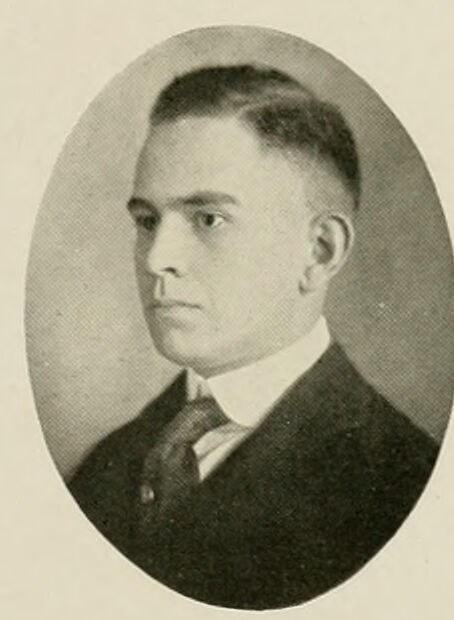
Herman G. Baity

Herman G. Baity headed sanitary engineering at the University of North Carolina in Chapel Hill from 1928, was dean of its School of Engineering from 1930 to 1936, and chaired the department in the School of Public Health until 1955. He later directed sanitary engineering for the World Health Organization before returning to Chapel Hill in 1962.

Source: NCpedia: Baity, Herman Glenn

1895–1975 · Dates from the Library of Congress · On the Friends’ Local Authors roster → · Library of Congress authority record ↗

2 works about Herman G. Baity are indexed here.

Herman G. Baity, Yackety Yack, 1917

Life and Orange County connections

Storylines this person is part of, in date order. Each has its own page.

StorylineOrange County’s PWA school building program, 1935–19361935–1936 · 29 events · In 1935 Orange County sought Public Works Administration money for school buildings, with the government to grant 45 per cent, and the size of the county's own share decided how much got built. A $471,000 application was approved, but the commissioners limited the county's share to $150,000, cutting the program to $272,000. When bids ran above estimates they raised the share to $190,000 and cut the new Hillsboro school for Black children and the Training School addition. The school board kept the Training School on its site despite a petition from some of Chapel Hill's Black residents. By May 1936 ten projects were under way, and the new Chapel Hill high school opened in October 1936. StorylineThe Institute of Government’s building, 1935–19391935–1939 · 6 events · Albert Coates's first plan for an Institute of Government building collapsed when the Public Works Administration rescinded its grant in the summer of 1936. The University trustees had offered a site south of the Carolina Inn in 1935, and Coates had won extensions and let a contract, but the promised materials and cash never fully came through. With the campus site no longer available, he arranged to buy lots on the north side of Franklin Street facing Graham Memorial and borrowed to clear them in 1938. A gift from Will Reynolds paid for the land, gifts from Gordon and Bowman Gray covered half the building's cost, and Jefferson Standard Life lent the rest. The building opened in November 1939. StorylineWilliamsburging Franklin Street, 1940–19421940–1942 · 4 events · Durham attorney J. L. Morehead urged Chapel Hill to make its Franklin Street business block as handsome as the campus, pointing to the business street of Colonial Williamsburg. Louis Graves's Chapel Hill Weekly reported the plan favorably in March 1940, and later accounts credit his paper with the campaign. In 1941 a Town Meeting committee under John M. Booker asked the aldermen for a Town Planning Commission and a consulting architect to pass on building designs. By November the commission was at work, and architect Archie Davis gave owners watercolors showing how to remodel. One building in its block followed the plan: the new Carolina Theatre, with a Colonial front from Davis's sketches, which opened on October 15, 1942. StorylineThe new Carolina Theatre, 1941–19421941–1942 · 6 events · A federal order halting construction of theatres stopped work on Chapel Hill's new Carolina Theatre on June 6, 1942, with the building about 85 percent complete. In 1941 Wilby-Kincey, which ran the Carolina and Pick theatres, had bought a Franklin Street lot for a fireproof theatre with 1,200 seats. At the urging of its local manager, E. Carrington Smith, the chain agreed to follow a Colonial front approved by the town's new planning commission, and ground was broken in December 1941. Smith applied for permission to finish, and the theatre at 108 East Franklin Street opened on October 15, 1942. The older house became The Village, showing the Navy Pre-Flight School's free movies for cadets.

Dated events connected with this person, in date order. See these 22 dated events in the chronology →

During their lifetime

  1. Herman G. Baity serves as dean of UNC's School of Engineering Baity, head of sanitary engineering since 1928, became acting dean of the School of Engineering after Dean Gustave M. Braune died in November 1930, and the trustees elected him dean on June 9, 1931. He held the deanship until 1936, when the sanitary engineering department moved to the School of Public Health, and chaired it there until 1955. People: Gustave M. Braune Place: Chapel Hill · Also mentions: School of Public HealthSearch the index · NCpedia: Baity, Herman Glenn · Also: Chapel Hill Weekly, February 13, 1931, p. 1; Chapel Hill Weekly, June 12, 1931, p. 1; Chapel Hill Weekly, November 28, 1930, p. 5
  2. Chapel Hill votes $35,000 in bonds to enlarge its sewage disposal plant In August 1930 the aldermen authorized enlarging the sewage disposal plant in Strowd's low grounds, at up to $35,000 shared equally by the town and the University, on H. G. Baity's recommendation of a digester, a larger sludge bed, a sedimentation plant and chlorination. On August 13 they unanimously rejected damage claims of $12,500 and $5,000 from two neighbors on the Durham road who complained of odors and flies; Jack Sparrow later dropped his claim. People: Herman G. Baity Place: Sewage disposal plant, Strowd's low grounds, Bolin Creek, Chapel Hill · Also named: Jack SparrowThe Chapel Hill Weekly, August 15, 1930, p. 1
  3. State health officer James M. Parrott plans a Chapel Hill training school that would also serve as Orange County's health department Working with university officials, the State Board of Health drew up a plan for a training school for county health workers at Chapel Hill. Because Orange County had no full-time health officer, the school's director would fill that post and the county nurse, sanitary officer and health secretary would teach, but the Rockefeller Foundation could find no money for it. People: Herman G. Baity, Frank Porter Graham Place: Chapel Hill; Orange County · Also named: James M. ParrottRobert Rodgers Korstad, Dreaming of a Time: The School of Public Health, The University of North Carolina at Chapel Hill, 1939-1989 (1990), scan p. 29
  4. Chapel Hill calls for bids to rebuild its Bolin Creek sewage plant The town of Chapel Hill advertised for bids, to be opened June 25, to improve and reconstruct its sewage treatment plant on Bolin Creek east of the town limits. The specifications by H. G. Baity, consulting sanitary engineer, called for a sludge collector and pump, a gas holder, a chlorinator, sludge heating and a fence around the works. People: Herman G. Baity, Zeb P. Council, John M. Foushee Place: Sewage treatment plant, Bolin Creek, east of Chapel Hill · Also mentions: Bolin CreekThe Chapel Hill Weekly, June 5, 1931, p. 5
  5. The McClelland Company finishes building Chapel Hill's new sewage disposal plant in Strowd's lowgrounds The McClelland Company of Charlotte, general contractor, finished its part of the town's new sewage disposal plant about 300 yards below the Durham road bridge, and installation of the equipment was set to begin. The plant, costing about $25,000 and paid for by bonds carried by sewer rentals, had a primary clarifier, a control house and a digester, used the gas from the sewage for heating, and was expected in use by October 1. People: Herman G. Baity, Arthur R. Hollett Place: Strowd's lowgrounds below the Durham road bridge, Chapel HillSearch the index · The Chapel Hill Weekly, September 11, 1931, p. 1
  6. The federal Public Works office for North Carolina opens in Phillips Hall under Herman G. Baity Herman G. Baity, on leave as dean of the University's school of engineering, set up the state engineer's office of the Federal Emergency Administration of Public Works in the east end of Phillips Hall and began taking applications for construction grants from counties and towns. The state advisory committee that passed on the applications held most of its sessions there, and W. J. Miller became acting dean of engineering. People: Herman G. Baity Place: Phillips Hall, UNC, Chapel Hill · Also named: William J. MillerSearch the index · The Chapel Hill Weekly, September 8, 1933, p. 1
  7. The Dogwood Festival is incorporated Chapel Hill's Dogwood Festival, first held in 1933, was chartered by the state as a non-stock corporation to promote folk music, drama, dancing, games, crafts and the protection of native dogwoods. Russell M. Grumman was president, Joseph Hyde Pratt vice-president and Felix Grisette secretary-treasurer. People: Russell M. (Russell Marvin) Grumman, Joseph Hyde Pratt, Phillips Russell, Herman G. Baity Place: Chapel Hill · Also named: Felix GrisetteSearch the index · The Chapel Hill Weekly, February 16, 1934, p. 1
  8. Orange County applies for federal aid to build new schools in Chapel Hill, Hillsboro and Carrboro The county commissioners filed a $471,000 application with the Public Works Administration for school buildings designed by H. D. Carter: a $180,500 enlargement of Chapel Hill's white school and a $54,000 school for Chapel Hill's Black children, white and Black schools in Hillsboro costing $213,000 together, and a two-room addition to the Carrboro school. The government would grant 45 per cent of the cost and lend the rest at 4 per cent. People: H. D. Carter, Herman G. Baity, Gilbert W. Ray Place: Chapel Hill, Hillsboro and Carrboro · Also mentions: Carrboro schoolSearch the index · The Chapel Hill Weekly, July 5, 1935, p. 1
  9. The PWA approves Orange County's $472,727 school building program The Public Works Administration approved Orange County's application for new school buildings, raising its cost to $472,727, of which $212,727 was to be an outright grant and $260,000 a 30-year loan at 4 per cent. The plan called for white and Black schools in both Chapel Hill and Hillsboro; state PWA director Herman G. Baity received the word on August 8. People: Herman G. Baity Place: Orange County schools, Chapel Hill and HillsboroughSearch the index · The Chapel Hill Weekly, August 9, 1935, p. 1
  10. Governor Ehringhaus and local officials meet in Memorial Hall to protest PWA rejections Called together by state PWA director Herman G. Baity, Governor Ehringhaus, other state officers and several hundred county and town officials met in Memorial Hall after Washington stiffened its rules and approved only about $600,000 of some $20,000,000 in North Carolina projects. They named the Governor, Senators Bailey and Reynolds and Congressman Doughton to press the state's case, and many gave Baity power to amend their applications. People: Herman G. Baity, J. C. B. Ehringhaus Place: Memorial Hall, UNC, Chapel HillSearch the index · The Chapel Hill Weekly, September 6, 1935, p. 1
  11. Trustees offer land and the PWA approves a grant for an Institute of Government building University trustees agreed to give the Institute a site valued at $15,000 on the western edge of the campus south of the Carolina Inn, the building to go to the university if the Institute ended. The Public Works Administration approved $55,498 for labor, one of 52 grants from 300 applications in the state, toward a building then estimated at $123,000. People: Albert Coates, Frank Porter Graham, Herman G. Baity Place: UNC campus south of the Carolina Inn, Chapel HillSearch the index · Howard E. Covington Jr., The Good Government Man: Albert Coates and the Early Years of the Institute of Government (2018), p. 161
  12. Herman G. Baity brings sanitary engineering into the Division of Public Health After the trustees voted to move the School of Engineering from Chapel Hill to State College in Raleigh, Baity, who had opposed the move, resigned as state director of the Public Works Administration and joined the Division of Public Health as professor of sanitary engineering. He brought the sanitary engineering program with him and kept his assistants, his laboratory and the right to grant advanced degrees. People: Frank Porter Graham Place: University of North Carolina, Chapel HillSearch the index · Robert Rodgers Korstad, Dreaming of a Time: The School of Public Health, The University of North Carolina at Chapel Hill, 1939-1989 (1990), scan p. 39 · Also: Chapel Hill Weekly, September 25, 1936, p. 5
Show all 20 dated events
  1. The PWA withdraws its grant for the Institute of Government building Coates won two thirty-day extensions, the first from President Roosevelt at Senator Josiah Bailey's request, and in February 1936 was allowed to let a contract on his word that the money was in hand. The promised materials and cash never fully came through, and in the summer of 1936 PWA administrator H. G. Baity rescinded the grant; a brief revival by Interior Secretary Harold Ickes in 1937 also failed. People: Albert Coates, Herman G. Baity Place: UNC campus south of the Carolina Inn, Chapel Hill · Also named: Josiah Bailey, Harold IckesSearch the index · Howard E. Covington Jr., The Good Government Man: Albert Coates and the Early Years of the Institute of Government (2018), p. 168
  2. President Graham names a University faculty committee on national defense Graham appointed Francis Bradshaw, H. G. Baity, C. P. Spruill and Robert E. Coker to work with a trustees' committee named by Governor Hoey on ways the University could help the state and nation prepare for defense. Proposals under study included military training, airport facilities and an aviation department, an inventory of technical skills, and defense research. People: Frank Porter Graham, Herman G. Baity, C. P. (Corydon Perry) Spruill, R. E. Coker Place: University of North Carolina, Chapel Hill · Also named: Francis BradshawSearch the index · The Chapel Hill Weekly, June 28, 1940, p. 1
  3. Coker, Baity and Bradshaw lay out the Mason Farm Road Development south of Chapel Hill William C. Coker, Herman G. Baity and Francis F. Bradshaw bought an 18-acre tract on both sides of the Mason Farm road, half a mile or so short of Morgan's Creek, divided it into 12 lots of an acre or more, and recorded restrictions in Hillsborough requiring houses costing at least $6,000, set 60 feet back, and barring apartment houses. Two lots had been sold by September 6. People: William Chambers Coker, Herman G. Baity, Francis Foster Bradshaw Place: Mason Farm Road, south of Chapel Hill · Also mentions: Morgan's CreekSearch the index · The Chapel Hill Weekly, September 6, 1940, p. 1
  4. Chapel Hill appoints its first town planning commission After more than a year of urging by the Chapel Hill Weekly, a Town Meeting on April 4, 1941 named a committee of John M. Booker (chairman), W. D. Carmichael Jr., Clyde Eubanks, Joseph Hyde Pratt and H. G. Baity to study the look of the business section. Its report, taken up at a Town Meeting on April 21, asked the mayor and aldermen to appoint a five-member Town Planning Commission to plan for stream-valley land, zoning and parking and to have a consulting architect pass on the designs of new and remodeled buildings. The aldermen then created the commission by ordinance, and by November it was at work with Baity as chairman and Pratt, Collier Cobb Jr., L. J. Phipps and J. P. Harland as members. It set the Colonial Revival look of downtown for the next decade. People: William D. Carmichael Jr., Herman G. Baity, Joseph Hyde Pratt, Clyde Eubanks, John M. Booker, Collier Cobb Jr., Luther James Phipps Place: Chapel Hill · Also named: J. P. Harland, W. D. Carmichael Jr.Search the index · NC State Historic Preservation Office: Chapel Hill Town Hall, National Register nomination (OR0327), p. 10 · Also: Chapel Hill Weekly, April 11, 1941, p. 1; Chapel Hill Weekly, April 18, 1941, p. 4; Chapel Hill Weekly, November 28, 1941, p. 6
  5. The planning commission persuades a theatre chain to give the new Carolina Theatre a Colonial front Chapel Hill's new planning commission, chaired by H. G. Baity, approved sketches by Durham architect Archie Davis for a Colonial front on the new Carolina Theatre to be built beside the Texaco station on Franklin Street, and the chain building it agreed to follow them at the urging of its local manager, E. Carrington Smith. Construction was to begin in December and end the next summer; the company had bought its steel that summer to stay ahead of federal priorities. People: Herman G. Baity, Archie Royal Davis, E. Carrington Smith Place: Franklin Street beside the Texaco station, Chapel Hill · Also named: Archie Davis · Also mentions: Carolina Theatre, Franklin StreetSearch the index · The Chapel Hill Weekly, November 28, 1941, p. 1
  6. Chapel Hill Legion post receives a plaque for its members serving in both world wars At the American Legion divisional meeting in Chapel Hill, D. M. Horner gave the Chapel Hill post a plaque naming its present and past members who served in the First World War and were again on active duty. L. J. Phipps presented it and H. A. Whitfield accepted. People: Luther James Phipps, Herman G. Baity, Henry A. Whitfield, John P. Graff Place: Chapel Hill · Also named: D. M. HornerThe Chapel Hill Weekly, April 2, 1943, p. 6
  7. Chapel Hill aldermen hire an engineer to plan a larger sewer system The aldermen voted to have the mayor and town manager sign a contract with Durham engineer Gilbert C. White for surveys and plans for a larger sewer system and an incinerator, paid from $10,700 advanced by the Federal Works Agency. University trustees promised to seek half the cost, and Dr. H. G. Baity said the sewage plant was running over capacity. People: Herman G. Baity Place: Town hall, Chapel Hill · Also named: Gilbert C. WhiteSearch the index · The News of Orange County (Hillsborough), February 28, 1946, p. 1
  8. Herman G. Baity, sanitary engineer and former UNC engineering dean, dies Herman Glenn Baity, 79, professor emeritus of sanitary engineering at the School of Public Health and former chief of sanitary engineering for the World Health Organization in Geneva, died in Chapel Hill after a long illness. A Davie County native, he was the first to earn UNC's doctor of sanitary engineering degree, later headed civil engineering and served as dean of engineering, and had come home to Chapel Hill in 1962. People: Herman G. Baity Place: Chapel Hill · Also mentions: School of Public HealthSearch the index · The Daily Tar Heel, April 8, 1975, p. 2

After their death in 1975

Later events: estates and burials, and the buildings, honors and histories that remember them.

  1. UNC dedicates the Herman G. Baity Environmental Laboratory The School of Public Health dedicated McGavran-Greenberg Hall and the Herman G. Baity Environmental Laboratory, with Chancellor Paul Hardin giving the dedication. People: Michel A. Ibrahim, Edward G. McGavran, Paul Hardin III Place: Chapel Hill · Also named: Paul Hardin · Also mentions: School of Public HealthSearch the index · epidemiolog.net: History of the Gillings School of Global Public Health
  2. Baity Hill graduate and family housing opens on former Baity land UNC completed the Baity Hill housing complex in 2005 on land once owned by Herman G. and Elizabeth Chesley Baity, whose family home stands on the grounds. It replaced Odum Village. Place: Chapel Hill · Also named: Elizabeth Chesley Baity · Also mentions: Odum VillageSearch the index · UNC A to Z: Baity Hill Graduate and Family Housing

People named in the same events

People named in the same dated entries as Herman G. Baity, those sharing the most entries first. Each line links one of the shared entries in the chronology, where its source is cited. A shared entry shows these people in the same event, not how well they knew each other.

Show 11 more

Indexed works

Works about or by Herman G. Baity. Each links to the institution that holds or provides it. Background reading appears below.

Presentation of the Herman G. Baity portrait to the University of North Carolina : April 24, 1966, Chapel Hill, North Carolina.

Coates, Albert · 1966 · University of North Carolina at Chapel Hill

Printed program from the presentation of a portrait of engineer Herman G. Baity (1895-1975) to the University of North Carolina on April 24, 1966. Contains Harold B. Gotaas's statement of presentation, Albert Coates's 'A portrait in words' sketching Baity's life and work, and Baity's own remarks titled 'A voice from the tomb'. Published in Chapel Hill by the university, 29 pages with illustrations.

Included because: Catalog heading in the NC Cardinal record: Baity, Herman G.

Dedication, McGavran-Greenberg Hall, Herman G. Baity Environmental Engineering Laboratory, May 4, 1990, 2:00 pm

University of North Carolina at Chapel Hill. School of Public Health · 1990

The program for the dedication of McGavran-Greenberg Hall and the Herman G. Baity Environmental Engineering Laboratory at the School of Public Health, University of North Carolina at Chapel Hill, held on May 4, 1990 at two in the afternoon. Edward G. McGavran and Herman G. Baity are the figures the buildings honor.

Included because: Catalog heading in the UNC record: Baity, Herman G., 1895-1975.

UNC

Places in this person’s story

Buildings, schools, churches and other sites named in the dated events on this page, the most often named first. The map shows the 5 with a known location.

Map tiles © OpenStreetMap contributors. Site locations from the N.C. State Historic Preservation Office survey, Open Orange, Orange County GIS, OpenStreetMap and a few other published sources named on each site’s page; town and community pins show approximate locations.

All places and the county map →

Research sources

Sources and research tools for this person. For ready-made searches of other catalogs, see Search further. Research guide: Trace a family through historical records.

Background

Records of the time

Collections and databases

  • NC LIVE: prepared search for Herman G Baity Library card Search NC LIVE for this subject and Orange County. You can change the search terms. Sign in through your North Carolina library to access the materials.
  • Ancestry Library Edition In the libraryOrange County Public Library Census, birth, death and marriage records, and more, free on the public computers at OCPL libraries

Local help

Search further

Search other catalogs and collections for this name. Results may include other people with the same name and have not been reviewed by the Friends.

Books about Herman G. Baity

Books by Herman G. Baity

Find copies at other libraries

Photographs, papers, and newspapers

Historical records and collections

Catalog searches use the Library of Congress name heading: Baity, Herman G., 1895-1975. Historical-record searches use the person’s name and may include namesakes. Links open in a new tab.

Found a book OCPL doesn’t own? You can often borrow it through interlibrary loan at OCPL.

Picture: Herman G. Baity, Yackety Yack, 1917. Public domain. Yackety Yack, 1917 (University of North Carolina yearbook); via the Internet Archive

More to discover

Keep Reading Local

The Friends connect people with new library materials, local writers and publishers, and resources documenting Orange County.

Two mice reading back to back against a leaf, with the hand-lettered words Friends of the Orange County Public Library
Illustration by Caldecott Medalist Matthew Cordell, gifted to the Friends 2026
