Skip to content

Key local figure

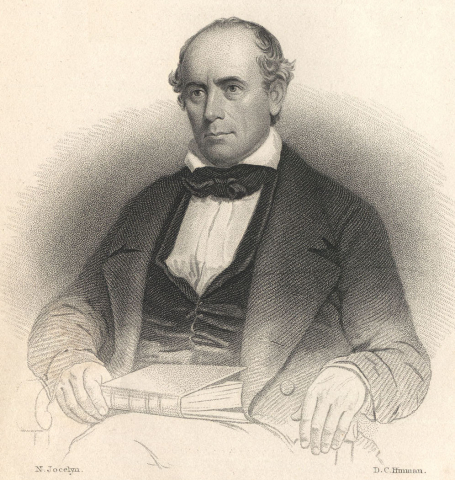
Elisha Mitchell

Elisha Mitchell (1793–1857) came to Chapel Hill in January 1818 as the university's professor of mathematics and natural philosophy and from 1825 taught chemistry, geology and mineralogy. He acquired enslaved people after arriving and in 1848 preached a sermon defending slavery as property held under God's law. He died in 1857 while measuring the Black Mountains.

Source: Documenting the American South: Elisha Mitchell, 19 Aug. 1793-27 June 1857

1793–1857 · Dates from the Library of Congress · On the Friends’ Local Authors roster → · Library of Congress authority record ↗

20 works about Elisha Mitchell are indexed here, as are 2 works by Mitchell. 2 held at OCPL →

Elisha Mitchell
Elisha Mitchell

Life and Orange County connections

Storylines this person is part of, in date order. Each has its own page.

StorylineChapel Hill's town government and its codes, 1829–18591829–1859 · 17 events · Chapel Hill's early town codes governed its streets and policed its Black residents, enslaved and free. On February 19, 1829 the commissioners adopted fifteen ordinances that divided white men into patrol companies, made white and Black men liable to work the streets, and barred enslaved people from the streets on Sundays and at night without a written pass. An act of 1851 incorporated the town under five elected commissioners. A revised code of March 19, 1859 fixed the village limits at about 839 acres, ordered officers to check the status of Black residents who claimed to be free, and barred Black people from the country from the streets after 4 p.m. on tax and election days. StorylineChapel Hill's first newspapers: the Harbinger and the Columbian Repository, 1832–18361832–1836 · 6 events · Chapel Hill's first newspapers had trouble keeping going. William B. Crittenden proposed a Harbinger in 1832 but seems not to have started it. Isaac C. Patridge began his weekly Harbinger on August 27, 1833, under the supervision of the University professors, covering the sciences and arts and leaning on Elisha Mitchell and William Hooper for its contents. Its press also issued Joseph A. Hill's address attacking heavy corporal punishment. After one year Patridge said the paper would stop for some weeks while he decided whether to take a partner or retire. In 1836 Hugh McQueen started the Columbian Repository, which backed Hugh L. White for president; short of printers, it stopped that summer and returned in September with new workmen. StorylineJoseph Caldwell’s last years and the choice of David L. Swain, 1833–18371833–1837 · 9 events · When illness forced President Joseph Caldwell to ask for help in December 1833, the trustees gave the senior professor, Elisha Mitchell, power to act in his place. Caldwell died on January 27, 1835, and a Hillsborough town meeting agreed to wear crape for thirty days. Mitchell was named president pro tem, and the trustees put off electing a president until December while raising the president's salary. That November Caldwell's body was taken up so that the artist Alfred S. Waugh could make a plaster cast of his face. In January 1836 former governor David L. Swain moved to Chapel Hill as president. A sandstone shaft the trustees raised to Caldwell in 1837 soon crumbled and never bore a name. StorylineThe death of Elisha Mitchell and the University’s mourning, 1857–18581857–1858 · 9 events · Elisha Mitchell, for nearly forty years a professor at the University, fell to his death from a cliff on June 27, 1857 while crossing the Black Mountains alone, and the village and the University mourned him together. The townspeople met in the University Chapel, agreed to wear mourning for thirty days and walked in procession to give his family their resolutions; the students agreed to wear mourning too, and the village commissioners recorded the loss of a fellow commissioner. The trustees voted his widow the rest of his half-year salary and bought his books, apparatus and mineral cabinet. Two professors and his son took up his teaching, and in January 1858 the trustees elected W. J. Martin to his chair. StorylineBuilding Memorial Hall, 1883–18851883–1885 · 16 events · Memorial Hall began with a promise from Governor Thomas J. Jarvis at the June 1883 commencement, when Gerrard Hall overflowed, and with a planned monument to the late president David L. Swain. The board ordered a large hall instead of an obelisk, and the cornerstone was laid on September 25, 1883. Work stopped that winter because the architect, Samuel Sloan, had underestimated the cost; Kemp P. Battle and George T. Winston canvassed the state for memorial tablets, and work resumed in the spring. After Sloan died in 1884 his chief carpenter finished the hall, with Paul C. Cameron advancing funds without security. It was dedicated on June 3, 1885, with the state's bill for its prison brick still unpaid.

Dated events connected with this person, in date order. See these 54 dated events in the chronology →

During their lifetime

  1. Elisha Mitchell arrives in Chapel Hill as professor of mathematics Elisha Mitchell, a Yale graduate from Connecticut, arrived at the University of North Carolina in January 1818 as professor of mathematics and natural philosophy. He taught at Chapel Hill until his death in 1857, moving to chemistry, geology and mineralogy in 1825. Place: University of North Carolina, Chapel HillIn the index: University of North Carolina, Chapel Hill · Documenting the American South: Elisha Mitchell, 19 Aug. 1793-27 June 1857
  2. Trustees vote to raise Old East a story and build Old West At Caldwell's urging, and against the faculty's plea to spend on books and apparatus, the board voted to enlarge Old East, build Old West to match and start a new chapel, borrowing from banks against Tennessee land sales. Architect William Nichols ran the work, and the South Building's Prayer Hall became a chemistry laboratory. People: Joseph Caldwell, Elisha Mitchell, William Nichols Place: Old WestSearch the index · Documenting the American South: Kemp P. Battle, History of the University of North Carolina, vol. I (1907), p. 280
  3. Elisha Mitchell is ordained by the Presbytery of Orange at Hillsborough In 1821 the Presbytery of Orange, meeting in Hillsborough, ordained Professor Elisha Mitchell, who had been licensed to preach by the Congregational Church. Place: HillsboroughSearch the index · Documenting the American South: Elisha Mitchell, 19 Aug. 1793-27 June 1857 · Also: Hillsborough Recorder, September 19, 1821, p. 3
  4. Bethlehem Presbyterian Church is organized Elisha Mitchell, Elijah Graves and Samuel Child led the organization of Bethlehem Presbyterian Church, which built its first church the next year. People: Elisha Mitchell, John Knox Witherspoon, Elijah Graves, Samuel Child Place: Bethlehem Presbyterian ChurchSearch the index · Lefler and Wager, Orange County, 1752-1952 (1953), p. 295
  5. The synod forms the Education Society of North Carolina at Hillsborough During its session at Hillsborough the Synod of North Carolina formed the Education Society of North Carolina to help poor and pious young men study for the ministry, and adopted its constitution. Joseph Caldwell was chosen president, Frederick Nash a vice president, Dr. James Webb treasurer and Shepard K. Kollock secretary, with Elisha Mitchell among the managers. People: Joseph Caldwell, Frederick Nash, James Webb, Elisha Mitchell Place: Hillsborough · Also named: Shepard K. KollockSearch the index · Hillsborough Recorder, October 9, 1822, p. 3
  6. Professor Denison Olmsted is hired to make the state's geological survey The Board of Agriculture, created in 1822, was allowed in 1823 to employ someone to survey the state's geology and minerals at $250 a year. It chose Olmsted, whose published report Battle thought probably the first of any state, and Elisha Mitchell later carried on the work. People: Denison Olmsted, Elisha Mitchell Place: Chapel HillSearch the index · Documenting the American South: Kemp P. Battle, History of the University of North Carolina, vol. I (1907), p. 289
  7. Faculty and Orange County trustees expel two students who attacked professors Two students, drunk from the village grog shop and armed with a club and a pistol, went out after members of the faculty and assaulted two of them. The trustees living in Orange County were called to sit with the faculty, and the two were expelled. People: Elisha Mitchell, Duncan Cameron, Thomas Ruffin, James Webb, Francis L. Hawks Place: Chapel HillSearch the index · Documenting the American South: Kemp P. Battle, History of the University of North Carolina, vol. I (1907), p. 298
  8. Elisha Mitchell publishes his study of the beetle that girdles hickory twigs Professor Elisha Mitchell of the university published a natural-history account of the insect he called Lamia amputator, which saws off hickory and persimmon twigs to lay its eggs. He described watching the beetle at work and finding the ground under the hickories by the university covered with the cut limbs each fall. Place: University of North Carolina, Chapel HillSearch the index · Hillsborough Recorder, May 26, 1824, p. 3
  9. Trustees adopt by-laws creating a resident superintendent and a student uniform On Bartlett Yancey's motion the trustees created a superintendent of university property living at Chapel Hill, who was to receive and pay out all student money, and they prescribed a plain uniform dress and forbade boots. Chapel Hill merchant Thomas H. Taylor was appointed; in January 1829 the office passed to the faculty, who chose Elisha Mitchell. People: Elisha Mitchell, Thomas H. Taylor Place: Chapel Hill · Also named: Bartlett YanceySearch the index · Documenting the American South: Kemp P. Battle, History of the University of North Carolina, vol. I (1907), p. 302
  10. Fever outbreak kills three university students A serious sickness, which Battle identifies as typhoid fever, struck the university in August and September 1825 and three students died, among them William H. Beard and Zenas Johnston. The acting president urged the trustees to engage a resident physician. People: Elisha Mitchell Place: Chapel Hill · Also named: William H. Beard, Zenas JohnstonSearch the index · Documenting the American South: Kemp P. Battle, History of the University of North Carolina, vol. I (1907), p. 301
  11. Elisha Mitchell moves from mathematics to the chair of chemistry, mineralogy and geology When Denison Olmsted resigned in December 1825 to teach at Yale, Mitchell moved from mathematics and natural philosophy to Olmsted's chair of chemistry, mineralogy and geology, and James Phillips took over mathematics. The memoir says the new post widened Mitchell's field trips across the state. People: Denison Olmsted, James Phillips Place: University of North Carolina, Chapel HillSearch the index · A Memoir of the Rev. Elisha Mitchell (1858), scan p. 14 · Also: Battle, History of the University of North Carolina, vol. I
  12. Students organize a temperance society Some students formed a Temperance Society in the summer of 1829, and Battle credits it with reducing drinking of spirits at the college. At its request Elisha Mitchell gave an address on intemperance in 1831 that was printed. People: Elisha Mitchell Place: Chapel HillSearch the index · Documenting the American South: Kemp P. Battle, History of the University of North Carolina, vol. I (1907), p. 340
Show all 47 dated events
  1. Friends of education organize the North Carolina Institute of Education at Chapel Hill During commencement week a meeting adopted a constitution on Benjamin M. Smith's motion, elected Simmons J. Baker president and made professors Elisha Mitchell, William Hooper and James Phillips its executive committee. The Institute met at the next few commencements and enrolled about 130 members before it lapsed. People: Elisha Mitchell, James Phillips, Walter A. Norwood, William James Bingham Place: Chapel Hill · Also named: Benjamin M. Smith, Simmons J. Baker, William HooperSearch the index · Documenting the American South: Kemp P. Battle, History of the University of North Carolina, vol. I (1907), p. 339
  2. George E. Badger gives the commencement address to the literary societies At the 1833 commencement, held without the ailing President Caldwell, George E. Badger, chosen by the Dialectic Society, delivered the annual address before the two literary societies at Chapel Hill. People: George E. Badger, Elisha Mitchell Place: Chapel HillSearch the index · Documenting the American South: Kemp P. Battle, History of the University of North Carolina, vol. I (1907), p. 353 · Also: The Harbinger (Chapel Hill), September 24, 1833, p. 3
  3. Isaac C. Partridge publishes The Harbinger Isaac C. Partridge's weekly The Harbinger, one of the county's first literary periodicals, began at Chapel Hill on August 27, 1833, after a prospectus that January, and ran for about a year. It covered the sciences and arts and leaned on professors Elisha Mitchell and William Hooper for its contents. People: Elisha Mitchell Place: Chapel Hill · Also named: Isaac C. Partridge, William Hooper · Also mentions: The HarbingerSearch the index · The Harbinger (Chapel Hill), August 27, 1833, first number · Also: Lefler and Wager, Orange County, 1752-1952
  4. Trustees make the senior professor Caldwell's deputy and add an adjunct professor When Caldwell's illness first forced him to ask for help, the trustees gave the professor of longest standing, Elisha Mitchell, power to act in the president's place and created an adjunct professorship of natural philosophy and astronomy, filled by Walker Anderson. Mitchell served as acting president until Swain arrived. People: Joseph Caldwell, Elisha Mitchell, Walker Anderson Place: Chapel HillSearch the index · Documenting the American South: Kemp P. Battle, History of the University of North Carolina, vol. I (1907), p. 357
  5. Dr. Walter A. Norwood closes his medicine shop and moves to Hillsborough Norwood gave up his Franklin Street shop and left for Hillsborough. Elisha Mitchell owned the land and building by the end of the year and soon sold them on credit to Isaac Partridge for a hotel. People: Elisha Mitchell, Walter A. Norwood Place: Norwood's medicine shop, west half of Lot #14, Franklin Street, Chapel Hill · Also mentions: Franklin StreetSearch the index · Bernard Lee Bryant Jr., Occupants and Structures of Franklin Street, Chapel Hill (1998; Chapel Hill Historical Society, 1999), scan p. 69
  6. Chapel Hill elects its town commissioners for 1834 Village voters chose five commissioners: Professor Elisha Mitchell, a doctor, T. H. Taylor, William McCauley and John Hutchins. People: Elisha Mitchell, Thomas H. Taylor, William McCauley Place: Chapel Hill · Also named: John HutchinsSearch the index · The Harbinger (Chapel Hill), February 13, 1834, p. 3
  7. Elisha Mitchell speaks to the North Carolina Institute of Education on common schools During commencement week the North Carolina Institute of Education met on Wednesday morning, and that afternoon Professor Elisha Mitchell addressed its members and the public on common schools, with the governor and a number of trustees present for the week. Place: Chapel HillSearch the index · Hillsborough Recorder, July 9, 1834, p. 3
  8. Elisha Mitchell becomes acting president of the university after Caldwell's death Senior professor Elisha Mitchell was appointed president of the University of North Carolina pro tem after Joseph Caldwell's death, so that classes went on without a break. People: Joseph Caldwell Place: University of North Carolina, Chapel HillSearch the index · Hillsborough Recorder, February 6, 1835, p. 3
  9. Elisha Mitchell advertises a reward for two men who escaped from slavery A notice in the Hillsborough Recorder signed by E. Mitchell, the University professor, offered a $50 reward for the return of two Black men who had fled, one marked by a scar on his right leg. The Daily Tar Heel printed the notice in 1993 from historian Freddie Parker's study of runaway advertisements. People: Elisha Mitchell Place: Chapel Hill (notice printed in the Hillsborough Recorder)Search the index · The Daily Tar Heel, February 23, 1993, p. 3
  10. Trustees put off electing a university president and keep Elisha Mitchell in charge The university trustees, meeting in Raleigh to choose a successor to Joseph Caldwell, postponed the election until December, left Professor Elisha Mitchell as acting president, raised the president's salary to 2,000 dollars and appointed William H. Owen of Caswell tutor of languages. People: Elisha Mitchell, Joseph Caldwell Place: Raleigh (University of North Carolina business) · Also named: William H. OwenSearch the index · Hillsborough Recorder, July 3, 1835, p. 3
  11. Trustees ask Elisha Mitchell and William McPheeters to compare the university with leading colleges The board named Professor Elisha Mitchell and the Rev. Dr. William McPheeters to study the courses of the leading American colleges and report what the university should change to match them. They found little difference in the terms of admission, and no change was made. People: William McPheeters, Elisha Mitchell Place: Chapel HillSearch the index · Documenting the American South: Kemp P. Battle, History of the University of North Carolina, vol. I (1907), p. 428
  12. Isaac C. Partridge leaves Chapel Hill and his struggling University Hotel Partridge, whose newspaper The Harbinger had already failed, ran off to New York and left the hotel, still unpaid for, in the hands of Elisha Mitchell. People: Elisha Mitchell Place: University Hotel, Franklin Street, Chapel Hill · Also named: Isaac C. Partridge · Also mentions: The HarbingerSearch the index · Bernard Lee Bryant Jr., Occupants and Structures of Franklin Street, Chapel Hill (1998; Chapel Hill Historical Society, 1999), scan p. 69
  13. Elisha Mitchell builds stone walls around the campus To keep out the cattle that ran at large, Mitchell, who had charge of the grounds, began in 1838 to quarry stone on university land and build rock walls around the campus buildings. By about the end of 1843 he had put up 212 rods of wall, and the trustees settled his account in 1844. Professors and villagers copied the walls around their own lots. Place: Chapel HillSearch the index · Documenting the American South: Kemp P. Battle, History of the University of North Carolina, vol. I (1907), p. 444 · Also: Elisha Mitchell to David L. Swain, December 3, 1844
  14. Matthew McCauley Jr. sells Elisha Mitchell a lot on West Franklin Street Professor Elisha Mitchell bought a West Franklin Street lot from Matthew McCauley in 1838 and sold it in 1847 to Patterson H. McDade. People: Matthew McCauley Jr., Elisha Mitchell, Patterson H. McDade Place: Chapel Hill · Also named: Matthew McCauleySearch the index · Bernard Lee Bryant Jr., Occupants and Structures of Franklin Street, Chapel Hill (1998; Chapel Hill Historical Society, 1999), scan p. 81
  15. Elisha Mitchell preaches the university's first baccalaureate sermon At the 1839 commencement Mitchell, chosen by the faculty, preached the first of the baccalaureate sermons to the graduating class. The choice of preacher was later given to the senior class. Place: Gerrard HallSearch the index · Documenting the American South: Kemp P. Battle, History of the University of North Carolina, vol. I (1907), p. 456
  16. Fresh Treat riot and a textbook rebellion bring dismissals In the fall of 1840 a drinking feast paid for by new students turned into a riot in which tutors' windows were broken, faculty were stoned, classrooms were wrecked and professors' horses were ridden, and soon after all the blackboards were burned. Several students were dismissed, three more for defying James Phillips's rule against books in recitation, and the trustees approved a faculty resolution to prosecute serious outrages in the courts. People: James Phillips, David L. Swain, Elisha Mitchell Place: Chapel HillSearch the index · Documenting the American South: Kemp P. Battle, History of the University of North Carolina, vol. I (1907), p. 464
  17. Elisha Mitchell shows his chemistry class an electromagnet On October 6, 1841, Ruffin W. Tomlinson wrote, Professor Elisha Mitchell showed the senior class experiments with an electromagnet he had just received from Philadelphia, the first shown to any class at the university. The village ladies attended. Place: South Building, University of North Carolina, Chapel Hill · Also named: Ruffin W. TomlinsonSearch the index · Internet Archive: Ruffin Wirt Tomlinson, Journal (1841-1842), ed. John L. Sanders, North Carolina Historical Review 30 (1953), p. 108
  18. University buys the Vienna cabinet of minerals Through John Randolph Clay, the American secretary of legation at Vienna, the university bought for about $1,500 a mineral collection that the curator of the emperor's cabinet valued at over 3,000 florins; Mitchell reported the invoice and insurance in November 1841. The trustees gave Clay an honorary master's degree in 1845. People: Elisha Mitchell Place: Chapel Hill · Also named: John Randolph ClaySearch the index · Documenting the American South: Kemp P. Battle, History of the University of North Carolina, vol. I (1907), p. 442
  19. Mitchell demonstrates electromagnetic motion at commencement When the 1842 society orator could not come, Elisha Mitchell showed the audience electromagnetic apparatus the university had just bought in Boston and produced rapid motion by magnetism alone. He judged that the cost of copper and zinc would keep it from competing with steam. Place: Gerrard HallSearch the index · Documenting the American South: Kemp P. Battle, History of the University of North Carolina, vol. I (1907), p. 475
  20. Students kill two of Professor Mitchell's hogs and leave them in the chapel On the night of January 29, 1842, students killed two hogs belonging to Elisha Mitchell and left them in the chapel, with a dead dog in the tutors' pen, for morning prayers. A few days later the culprits mailed Mitchell a polite letter with ten dollars, and he sent six back through his servant Dave. On May 2 the faculty dismissed a freshman, J. P. Barnes, for killing the hogs and carrying them into the old chapel, Person Hall. Place: University of North Carolina, Chapel Hill · Also named: J. P. Barnes · Also mentions: Person HallSearch the index · Internet Archive: Ruffin Wirt Tomlinson, Journal (1841-1842), ed. John L. Sanders, North Carolina Historical Review 30 (1953), p. 242
  21. The university's Vienna mineral cabinet arrives at Chapel Hill The cabinet of minerals bought in Vienna through John Randolph Clay arrived on February 10, 1842, Ruffin W. Tomlinson wrote, at a cost of twelve to fifteen hundred dollars, and Elisha Mitchell opened the boxes at once to show specimens. The same day college duties were suspended so students could skate, though the ice proved too thin. People: Elisha Mitchell Place: University of North Carolina, Chapel Hill · Also named: John Randolph Clay, Ruffin W. TomlinsonSearch the index · Internet Archive: Ruffin Wirt Tomlinson, Journal (1841-1842), ed. John L. Sanders, North Carolina Historical Review 30 (1953), p. 245
  22. Students celebrate Washington's birthday, and the faculty punishes the drinking With college duties suspended at the seniors' request, students formed a procession at the South Building door on February 22, 1842 and marched to the chapel for an oration by Thomas J. Morisey of Sampson County, with John L. Meares as marshal. Faculty members dined at the boarding houses to keep order, but the diarist James L. Dusenberry wrote that more than a third of the college was drunk. After students in a West Building room cursed and threatened Elisha Mitchell that afternoon, the faculty on February 24 and 25 dismissed two students and suspended others for three weeks. People: Elisha Mitchell Place: University of North Carolina, Chapel Hill · Also named: Thomas J. Morisey, John L. MearesSearch the index · Internet Archive: Ruffin Wirt Tomlinson, Journal (1841-1842), ed. John L. Sanders, North Carolina Historical Review 30 (1953), p. 247
  23. Measles spreads through Chapel Hill households Measles went through the village in February 1845. Charles Phillips was laid up with it, and at the Mitchell house ten people were waiting to come down with it. People: Charles Phillips, Elisha Mitchell Place: Chapel HillSearch the index · Hope Summerell Chamberlain, Old Days in Chapel Hill (1926), scan p. 74
  24. Helen Caldwell dies and is buried with her husband at his monument Helen Hogg Caldwell, widow of President Caldwell and a leader of village society, died at Chapel Hill on October 30, 1846 while visiting John DeBerniere Hooper. Caldwell's remains were taken up on October 31 and laid beside hers at the base of his monument, with the president and faculty as pallbearers. People: Joseph Caldwell, John DeBerniere Hooper, Elisha Mitchell, Helen Hogg Caldwell Place: Chapel Hill · Also named: Helen CaldwellSearch the index · Documenting the American South: Kemp P. Battle, History of the University of North Carolina, vol. I (1907), p. 502
  25. President James K. Polk returns to Chapel Hill for the university commencement Polk came from Raleigh by carriage with Sarah Polk and a large party, lodged at the hotel where Nancy Hilliard had built an annex for his stay, was greeted by Elisha Mitchell, the only professor left from his own student days, visited the college room he had lived in, and stayed through commencement on June 3. People: James K. Polk, Elisha Mitchell, Nancy Hilliard Place: Chapel Hill · Also named: Sarah Childress Polk, Sarah PolkSearch the index · Internet Archive: Milo Milton Quaife, ed., The Diary of James K. Polk during His Presidency, 1845 to 1849, vol. 3 (1910), pp. 44-48 · Also: Documenting the American South: Kemp P. Battle, History of the University of North Carolina, vol. I; NC Digital Collections: M. Ruth Little, The Town and Gown Architecture of Chapel Hill, 1795-1975; Open Orange: James K. Polk
  26. The Presbyterian church on Franklin Street is finished and dedicated Built with money and effort from James and Charles Phillips, Elisha Mitchell and President Swain, the small Presbyterian church on the old Grand Avenue ground was completed and formally dedicated. Lucy Phillips Russell, writing from the church records in 1936, said it was dedicated free of debt on Sunday, September 23, 1849, when Rev. John A. Gretter of Greensboro preached the dedicatory sermon. People: James Phillips, Charles Phillips, Elisha Mitchell, David L. Swain Place: Presbyterian Church, East Franklin Street, Chapel Hill · Also named: John A. GretterSearch the index · Bernard Lee Bryant Jr., Occupants and Structures of Franklin Street, Chapel Hill (1998; Chapel Hill Historical Society, 1999), scan p. 91 · Also: Chapel Hill Weekly, April 24, 1936, p. 3
  27. Elisha Mitchell builds the stone wall around the Presbyterian churchyard Elisha Mitchell gave the stone wall around the churchyard and Cornelia Phillips its stone pillars and gates, among the gifts that fitted out the new church in the year or so after its dedication. People: Cornelia Phillips Spencer Place: Chapel Hill Presbyterian Church, Chapel HillSearch the index · Cornelia Phillips Spencer, The Presbyterian Church in Chapel Hill (1897), scan p. 11
  28. The General Assembly passes an act incorporating Chapel Hill under five commissioners Chapter 330 of the 1850-51 session laws, ratified January 29, 1851, made Manuel Fetter, Jesse Hargrave, Patterson H. McDade, Elisha Mitchell and Jones Watson the commissioners of Chapel Hill, with five commissioners to be elected each February after. They were to choose a magistrate of police, treasurer, constable and clerk and fix the town's bounds. People: Elisha Mitchell, Jones Watson, Manuel Fetter, Jesse Hargrave, Patterson H. McDade Place: Chapel HillSearch the index · Laws of the State of North Carolina, session of 1850-51 (1851), chapter 330, pp. 730-731 · Also: Lefler and Wager, Orange County, 1752-1952; The Daily Tar Heel, October 12, 1993, p. 18
  29. Copper ore is found on two farms southwest of Chapel Hill Fine specimens of copper ore were found on the lands of Mr. Williams and Mr. Atwater about four miles southwest of Chapel Hill, a specimen from the Williams land was tested by Professor Mitchell of the university, and a company was expected to form to open the find. People: Elisha Mitchell Place: About four miles southwest of Chapel HillSearch the index · Hillsborough Recorder, April 13, 1853, p. 2
  30. The faculty vote 12 to 1 to disown Hedrick's published views Called together by President Swain, the faculty resolved that Hedrick's letter broke the university's custom of keeping out of party politics and that no other member shared his opinions, while expressing personal regard for him. Instructor H. Herrisse cast the only vote against, saying no one suspected the faculty of Republicanism. People: Benjamin Sherwood Hedrick, David L. Swain, Elisha Mitchell, James Phillips, Charles Phillips, Fordyce M. Hubbard Place: University of North Carolina, Chapel Hill · Also named: H. HerrisseSearch the index · J. G. de Roulhac Hamilton, Benjamin Sherwood Hedrick (1910), scan p. 19
  31. Trustees buy Elisha Mitchell's books and minerals after his death Elisha Mitchell, senior professor, died on June 27, 1857, in a fall while surveying the Black Mountains. The trustees paid his salary to the year's end, let his family keep their house rent-free for six months, and bought his books for $3,500 and his apparatus and mineral cabinet for $1,000. Place: Chapel HillSearch the index · Documenting the American South: Kemp P. Battle, History of the University of North Carolina, vol. I (1907), p. 683
  32. E. J. Mallett serves as intendant of Chapel Hill over five commissioners Chapel Hill's town government in April 1857 was led by Intendant E. J. Mallett, with commissioners P. H. McDade, Calvin Scott, Elisha Mitchell, John H. Watson and a fifth whose name the print garbles. J. Watson was town constable. People: Patterson H. McDade, Elisha Mitchell, John H. Watson Place: Chapel Hill · Also named: E. J. Mallett, Calvin ScottSearch the index · The Chapel Hill Gazette, April 18, 1857, p. 2
  33. Professor Elisha Mitchell is killed in a fall on the Black Mountains Elisha Mitchell, for nearly forty years a professor at the university in Chapel Hill, fell to his death from a cliff into a pool on a branch of the Caney River while crossing the Black Mountains alone on June 27. Searchers found his body on July 7, and he was buried at Asheville on July 10. Place: Black Mountains, Yancey County (professor at Chapel Hill)Search the index · Hillsborough Recorder, July 15, 1857, p. 2
  34. Chapel Hill's commissioners enter resolutions on the death of their fellow commissioner Elisha Mitchell The village board recorded its loss of Mitchell, who sat with them as a commissioner, and ordered the resolutions entered in the village journals. Copies went to his family and the Chapel Hill Gazette. People: Patterson H. McDade, Hugh B. Guthrie, John H. Watson Place: Board of Commissioners, Chapel HillSearch the index · A Memoir of the Rev. Elisha Mitchell (1858), scan p. 47
  35. Chapel Hill citizens hold a town meeting in the University Chapel to mourn Elisha Mitchell Once word came that Mitchell had died on Black Mountain, the townspeople met in the University Chapel, adopted resolutions on his forty years as a resident and agreed to wear mourning for thirty days. They then walked in procession to his house to give the resolutions to his family, and the town's stores closed for the meeting. People: Jones Watson, Francis L. Hawks, Samuel (Samuel Field) Phillips, David L. Swain Place: University Chapel, University of North Carolina, Chapel HillSearch the index · A Memoir of the Rev. Elisha Mitchell (1858), scan p. 34

After their death in 1857

Later events: estates and burials, and the buildings, honors and histories that remember them.

  1. University trustees elect William J. Martin to Elisha Mitchell's chair Meeting in Raleigh with eleven members present, the university trustees elected Prof. W. J. Martin of Washington College, Pennsylvania, a native of Richmond, to succeed Elisha Mitchell as professor of chemistry, mineralogy and geology. He was chosen over several other candidates. People: William Joseph Martin, Elisha Mitchell Place: Raleigh, for the University of North Carolina at Chapel HillSearch the index · Hillsborough Recorder, January 13, 1858, p. 2
  2. Professor William J. Martin buys the Franklin and Boundary corner and builds a house Martin, who replaced Elisha Mitchell on the faculty and later served as a Confederate colonel, bought the northeast corner of Franklin and Boundary streets from Charles Phillips and built his home there soon after. He resigned his chair in the fall of 1867 and moved to Tennessee. People: Elisha Mitchell, Charles Phillips, William Joseph Martin Place: Martin house, northeast corner of Franklin and Boundary streets, Chapel HillSearch the index · Bernard Lee Bryant Jr., Occupants and Structures of Franklin Street, Chapel Hill (1998; Chapel Hill Historical Society, 1999), scan p. 107
  3. A marble monument is set over the Mitchell family graves in the old Mitchell garden A marble monument was placed over the graves of Elisha Mitchell's family members buried in the garden of his former home, then lived in by Alexander McIver's family. Mrs. McIver and Spencer agreed the dead belonged in the village graveyard. People: Alexander McIver Place: Mitchell house garden (then the McIver home), Chapel HillSearch the index · Hope Summerell Chamberlain, Old Days in Chapel Hill (1926), scan p. 203
  4. Venable co-founds the Elisha Mitchell Scientific Society Venable was a co-founder and the first president of the Elisha Mitchell Scientific Society, a society of university scientists named for the geologist Elisha Mitchell. People: Francis Preston Venable, Elisha Mitchell Place: Chapel HillSearch the index · UNC Libraries: F.P. Venable Papers, 1838-1946
  5. Trustees pay for Memorial Hall tablets to Caldwell, Swain, Mitchell and Phillips Besides the subscribed tablets, the trustees put up tablets at their own cost to presidents Joseph Caldwell and David L. Swain and professors Elisha Mitchell and James Phillips, in tribute to the long-serving officers. Governor Scales told the dedication crowd that the hall, first meant as Swain's memorial alone, had been redesigned so these names stood beside his. People: Joseph Caldwell, David L. Swain, Elisha Mitchell, James Phillips Place: Memorial Hall, UNC, Chapel HillSearch the index · University of North Carolina, Memorial Hall Inaugural Proceedings, Wednesday, June 3, 1885 (1885), scan p. 10
  6. A rock wall is built around the Mitchell children's graves behind the infirmary A rock wall was being built around the small burial plot under the trees behind the University infirmary where four of Professor Elisha Mitchell's children had been buried more than a century before; a single marble shaft gives their names and dates. The Mitchells had lived in a house on the site of Swain Hall, a few yards south. Place: Behind the University infirmary, UNC campus, Chapel Hill · Also mentions: Swain HallSearch the index · The Chapel Hill Weekly, September 20, 1940, p. 5
  7. UNC moves the Mitchell family graves from the campus to the Old Chapel Hill Cemetery Four graves of Elisha Mitchell's infant sons and grandsons, in the old Mitchell garden near the center of campus, were exhumed under archaeologist Joffre Coe to make room for the expansion of the university's television and communications work. They were reburied in the Horace Williams plot in the Old Chapel Hill Cemetery with the Rev. Vance Barron officiating. Place: Behind Swain Hall, East Cameron Avenue, to the Old Chapel Hill Cemetery, Chapel Hill · Also named: Joffre L. Coe, Vance Barron, Joffre Coe, Horace Williams · Also mentions: Old Chapel Hill CemeterySearch the index · The Chapel Hill Weekly, February 9, 1961, p. 1 · Also: Chapel Hill Weekly, February 9, 1961, p. 3

People named in the same events

People named in the same dated entries as Elisha Mitchell, those sharing the most entries first. Each line links one of the shared entries in the chronology, where its source is cited. A shared entry shows these people in the same event, not how well they knew each other.

Show 22 more

Indexed works

Works about or by Elisha Mitchell. Each links to the institution that holds or provides it. Background reading appears below.

By Elisha Mitchell

Arguments for temperance: a sermon addressed to the students of the University of North-Carolina, March 13th, 1831, and published by their request

Mitchell, Elisha · 2004 · University Library, UNC-Chapel Hill

Elisha Mitchell's sermon on temperance, preached to the students of the University of North Carolina on March 13, 1831 and printed at their request. Mitchell, the professor for whom Mount Mitchell is named, addresses alcohol and the temperance societies then forming. This is the 2004 electronic edition transcribed for Documenting the American South, within the University Library's collection on the first century of the state university.

A lecture on the subject of common schools : delivered before the North Carolina Institute of Education, at Chapel Hill, June 26, 1834

Mitchell, Elisha, 1793-1857; Patridge, Isaac C. · 1834 · Printed by Isaac C. Patridge

Elisha Mitchell's lecture on common schools, delivered before the North Carolina Institute of Education at Chapel Hill on June 26, 1834 and printed there by Isaac C. Patridge. Mitchell taught at the University of North Carolina, and the pamphlet deals with education and with the addresses connected to the university. A Chapel Hill imprint of 1834.

UNC

About Elisha Mitchell

Putting Down Roots

Burk, William R. · 2023

William R. Burk's history of botany at the University of North Carolina, from its early natural scientists such as Denison Olmsted and Elisha Mitchell through later figures including George Francis Atkinson, Joseph Austin Holmes and Henry Van Peters Wilson, closing with a chapter on the Department of Botany itself. Published in Fort Worth in 2023.

Included because: Catalog heading in the UNC record: Mitchell, Elisha, 1793-1857.

Chapel Hill and Elisha Mitchell the Botanist

McVaugh, Rogers; McVaugh, Michael R.; Ayers, Mary · 1996

Elisha Mitchell, the University of North Carolina professor for whom Mount Mitchell is named, as botanist and as observer of early Chapel Hill, in a study by Rogers McVaugh, Michael R. McVaugh and Mary Ayers. It covers Mitchell's botanical knowledge, the plants of Chapel Hill and the town's historical geography. Published by the Botanical Garden Foundation in Chapel Hill in 1996, 122 pages with illustrations and maps.

Included because: Catalog heading in the UNC record: Mitchell, Elisha, 1793-1857.

Elisha Mitchell centennial : UNC-Chapel Hill, April 8-9, 1983

1983

Program for the meeting that convened in Chapel Hill on April 8 and 9, 1983, marking the centennial of the Elisha Mitchell Scientific Society, the state scientific society named for the university professor who died surveying the mountain that now carries his name.

Included because: Its title names this person.

UNC

A funeral oration at the re-interment of the remains of the Rev. Elisha Mitchell, D.D. : late professor of chemistry, mineralogy, and geology in the University of North Carolina : on Mount Mitchell, June 15, 1858

Otey, James Hervey, 1800-1863 · 1858 · J.M. Henderson

James Hervey Otey's funeral oration delivered on Mount Mitchell on June 15, 1858, at the reinterment of Elisha Mitchell, the University of North Carolina professor of chemistry, mineralogy and geology who died in 1857. J. M. Henderson printed it at Chapel Hill, and it is a primary document of the reburial.

Included because: Catalog heading in the UNC record: Mitchell, Elisha, 1793-1857.

UNC

A memoir of the Rev. Elisha Mitchell ... : together with the tributes of respect to his memory, by various public meetings and literary associations, and the addresses delivered at the re-interment of his remains

1858 · J. M. Henderson

Printed at Chapel Hill in 1858 by J. M. Henderson, this memorial volume for Elisha Mitchell, the university professor who died in 1857, gathers tributes paid by public meetings and literary associations together with the addresses given when his remains were reinterred. A memoir by Professor Charles Phillips opens the book at pages 5 to 12. Eighty eight pages with a portrait plate.

Included because: Catalog heading in the Methodist record: Mitchell, Elisha.

A vindication of the propriety of giving the name "Mt. Mitchell" to the highest peak of "Black Mountain" : an address delivered 16th June, 1858

Swain, David L. (David Lowry), 1801-1868 · 1858 · J.M. Henderson

David L. Swain, then president of the University of North Carolina, argues for naming the highest peak of the Black Mountain after Elisha Mitchell, in an address delivered on June 16, 1858, the day after the reinterment. J. M. Henderson printed it at Chapel Hill, covering both Mitchell and the history of the mountain that took his name.

Included because: Catalog heading in the UNC record: Mitchell, Elisha, 1793-1857.

UNC
Show 6 more about Elisha Mitchell

Catalogue of books and instruments belonging to Dr. E. Mitchell : late professor in the University of North Carolina, for sale at his late residence

1857 · Printed at the "Gazette" Office

A sale catalogue of the books and scientific instruments left by Elisha Mitchell, the university professor who died in 1857, offered at his late residence in Chapel Hill and printed at the Gazette office there. It lists a working scientific library of the period, including science textbooks, and it is a source for teaching and collecting at the university.

Included because: Catalog heading in the UNC record: Mitchell, Elisha, 1793-1857.

UNC

Titles from Elisha Mitchell library as identified by Michael McVaugh.

2014 · University of North Carolina at Chapel Hill Libraries, North Carolina Collection

A list of 61 unnumbered leaves, issued in 2014 by the North Carolina Collection at the University of North Carolina at Chapel Hill Libraries, naming titles from the personal library of Elisha Mitchell (1793-1857) as identified by Michael McVaugh.

Included because: Catalog heading in the UNC record: Mitchell, Elisha, 1793-1857.

UNC

Elisha Mitchell and the Elisha Mitchell Scientific Society, North Carolina Academy of Science, and Journal of the Elisha Mitchell Scientific Society

William David Webster · 2002

William David Webster's history of Elisha Mitchell, the UNC professor, and of the scientific society, academy and journal that carry his name, written for the North Carolina Academy of Science's centennial meeting.

Included because: Catalog heading in the OpenAlex record: Mitchell, Elisha, 1793-1857.

Pinckney Cotesworth Harrington papers, 1829-1893, Franklin County, Mississippi.

Harrington, Pinckney Cotesworth · 1991

A microfilm edition, issued at Bethesda, Maryland in 1991 with a printed reel guide, of the Pinckney Cotesworth Harrington papers of 1829 to 1893 from Franklin County, Mississippi. The papers cover plantations and social conditions, enslaved people, the Confederate army and the Civil War. Elisha Mitchell of the University of North Carolina is represented. In Davis Library at UNC.

Included because: Catalog heading in the UNC record: Mitchell, Elisha, 1793-1857.

UNC

Elisha Mitchell's books and the University of North Carolina Library

McVaugh, M. R. (Michael Rogers), 1938- · 1990

M. R. McVaugh on the books of Elisha Mitchell, the University of North Carolina professor who lived from 1793 to 1857, and on what became of them in the university library. Published in 1990 for the Friends of the Library and issued together with pieces by William D. Ilgen, Fred Chappell, Michael McFee and H. G. Jones.

Included because: Catalog heading in the UNC record: Mitchell, Elisha, 1793-1857.

UNC

Life story of Elisha Mitchell, D.D., 1793-1857 : professor in the University of North Carolina from 1818 until his death in 1857

Chamberlain, Hope Summerell · 1990 · University Library, University of North Carolina at Chapel Hill

Hope Summerell Chamberlain's life of her grandfather Elisha Mitchell, 1793 to 1857, who taught at the University of North Carolina from 1818 until his death. Written for the family, as the typescript says, and reproduced on microfilm by the university library in 1990. Topics include Mitchell as a botanist in Chapel Hill and the university's early faculty and history.

Included because: Catalog heading in the UNC record: Mitchell, Elisha, 1793-1857.

UNC

Search all 20 indexed works →

Start at OCPL

Books in OCPL’s Rebecca B. Wall Local History Collection whose titles, catalog subjects, or descriptions match this person. The Friends’ recommended starting points are labelled.

  • Rebecca Wall Collection · NC 580.9 BURK Putting Down Roots: Foundations of Botany at Carolina : With A Concluding Chapter on the History of the Department of Botany Burk, William R. · 2023

    William R. Burk's history of botany at the University of North Carolina, from its early natural scientists such as Denison Olmsted and Elisha Mitchell through later figures including George Francis Atkinson, Joseph Austin Holmes and Henry Van Peters Wilson, closing with a chapter on the Department of Botany itself. Published in Fort Worth in 2023.

  • Rebecca Wall Collection · NC 580.92 MCV Chapel Hill and Elisha Mitchell, the Botanist McVaugh, Rogers · 1996

    Elisha Mitchell, the University of North Carolina professor for whom Mount Mitchell is named, as botanist and as observer of early Chapel Hill, in a study by Rogers McVaugh, Michael R. McVaugh and Mary Ayers. It covers Mitchell's botanical knowledge, the plants of Chapel Hill and the town's historical geography. Published by the Botanical Garden Foundation in Chapel Hill in 1996, 122 pages with illustrations and maps.

Places in this person’s story

Buildings, schools, churches and other sites named in the dated events on this page, the most often named first. The map shows the 9 with a known location.

Map tiles © OpenStreetMap contributors. Site locations from the N.C. State Historic Preservation Office survey, Open Orange, Orange County GIS, OpenStreetMap and a few other published sources named on each site’s page; town and community pins show approximate locations.

All places and the county map →

Records of enslaved people

3 records, 1819 to 1840, name Elisha Mitchell as a party to the sale, gift, trust or other transfer of enslaved people. Each record lists the people named in it, with their ages and family ties.

Search all records of enslaved people in Orange County →

Deeds

20 deeds, 1818 to 1852, in the county’s deed books name Elisha Mitchell as a party, from Mark Chilton’s published abstracts. Each links to the deed-book page at the Register of Deeds.

Show all 20 deeds

Search every historic deed →

Wills

2 wills and papers in the county’s will books name Elisha Mitchell, from Ruth Herndon Shields’s abstracts. Each shows the role and the year.

Search the wills →

Research sources

Sources and research tools for this person. For ready-made searches of other catalogs, see Search further. Research guide: Trace a family through historical records.

Background

Records of the time

Collections and databases

  • NC LIVE: prepared search for Elisha Mitchell Library card Search NC LIVE for this subject and Orange County. You can change the search terms. Sign in through your North Carolina library to access the materials.
  • Ancestry Library Edition In the libraryOrange County Public Library Census, birth, death and marriage records, and more, free on the public computers at OCPL libraries

Local help

Search further

Search other catalogs and collections for this name. Results may include other people with the same name and have not been reviewed by the Friends.

Books about Elisha Mitchell

Books by Elisha Mitchell

Find copies at other libraries

Photographs, papers, and newspapers

Historical records and collections

Catalog searches use the Library of Congress name heading: Mitchell, Elisha, 1793-1857. Historical-record searches use the person’s name and may include namesakes. Links open in a new tab.

Found a book OCPL doesn’t own? You can often borrow it through interlibrary loan at OCPL.

Picture: Elisha Mitchell. Public domain

More to discover

Keep Reading Local

The Friends connect people with new library materials, local writers and publishers, and resources documenting Orange County.

Two mice reading back to back against a leaf, with the hand-lettered words Friends of the Orange County Public Library
Illustration by Caldecott Medalist Matthew Cordell, gifted to the Friends 2026
