Skip to content

Theme

Health, Medicine & Care

From patent medicines and country doctors to hospitals, clinics, and the public-health campaigns that changed the county.

Country doctors and patent medicines gave way to a district health department, midwife classes, polio vaccination and, from 1952, North Carolina Memorial Hospital and the medical center at Chapel Hill. The storylines follow the 1918 influenza, segregation in medical care, rural public health, COVID-19 and health care across languages.

1,111 works about Health, Medicine & Care are indexed here. 1 held at OCPL →

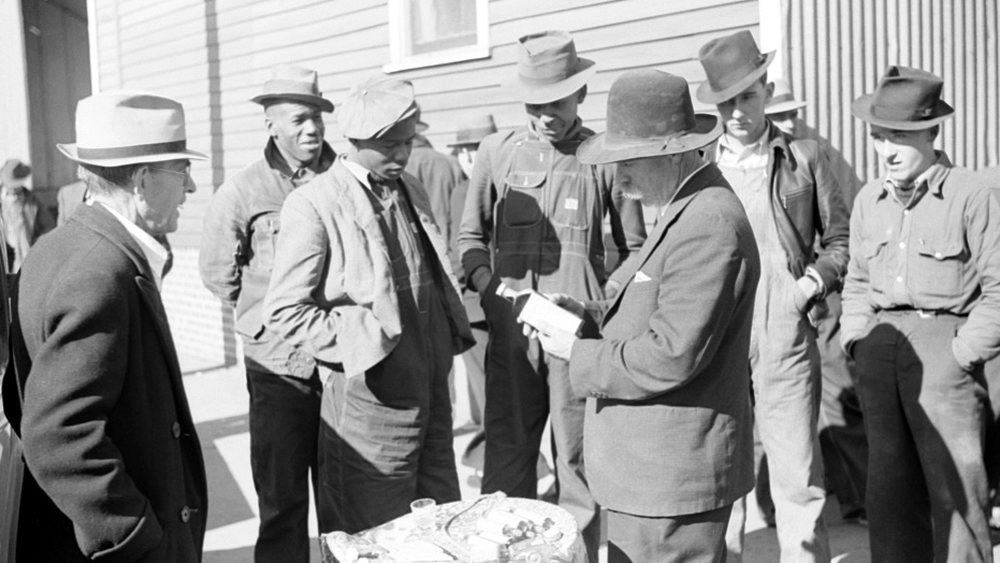
Men gathered around a table.

Events and storylines

Named events and episodes the index follows in detail. Each has its own page.

Show all 22 events and episodes
Health care across language and immigrationClinics, interpreters, traditional medicine, and the barriers between newcomers and care Black community health clubs, 1944–1947The health clubs Black residents of Chapel Hill and Hillsboro organized during and after the Second World War: house-to-house surveys, clean-up campaigns, and the Hillsboro club’s community center Fluoridating Chapel Hill’s and Hillsboro’s water, 1951–1964How Chapel Hill and Hillsboro came to add fluoride to their water: Chapel Hill’s 1951 vote, the Lions Club campaign and Hillsboro’s start in 1960, the University’s postal poll, the lawsuit that held Chapel Hill back, and the aldermen’s pressure until fluoridation began in 1964 The 1915 sanitary survey of Orange CountyThe U.S. Public Health Service’s house-to-house sanitary survey of Orange County in 1915 and what the county did alongside it: Hillsboro’s privy ordinance, the women’s Sanitation League, the work through Black churches, privies at the schools, and the boards’ thanks The Chapel Hill Red Cross chapter, 1917–1919The Chapel Hill Red Cross chapter from its founding in May 1917 to its report of April 1919: its officers and workrooms, the dressings, comfort bags and Christmas packages it shipped, the War Fund drive, the conservation committee and the influenza work The Graham Memorial, 1918–1932The University’s memorial to President Edward Kidder Graham, who died of influenza in 1918: the memorial service, the student, town and county drives for a $150,000 student building, his collected addresses and his son’s care, and the building’s completion as the student union in 1931 Chapel Hill’s nurse for Black residents, 1924–1941The public health nurse who worked among Chapel Hill’s Black residents from 1924: her hiring by the Community Club, the seal money, town share and Black residents’ share that paid her, her clinics and classes, and the canvasses Black citizens organized for her salary Relief in Orange County as the Depression deepens, 1929–1933How Orange County met the needs of its poor as hard times arrived in 1929 and 1930: George H. Lawrence’s warnings, the commissioners’ matching health fund, the county home study, the Kiwanis and King’s Daughters relief and the Daily Tar Heel’s fund The Carrboro school as a community center: night school and clinics, 1929–1933The Carrboro school as a meeting place for the whole community from 1929: the group commencement and health clinics, the dental clinic, the night school for adults and its honors, the parent-teacher meetings and recitals, and a library for grown people The University’s medical building, 1937–1939The University’s new medical building from William deB. MacNider’s appointment as dean in 1937 to the formal opening in December 1939: the PWA grant, the choice of a site on the Pittsboro road, the move of medicine and public health, and the building’s cost The University’s PWA building program of 1938–1941The University’s second round of PWA building, from the 1938 special legislative session to the buildings finished in 1940: the dining hall, the new dormitories, the Carolina Inn addition, the power plant on West Cameron Avenue and the rebuilt Bynum Gymnasium, Alumni Building and Gerrard Hall Social Security comes to Orange County, 1937–1938How the Social Security programs came to Orange County in 1937: the new welfare board and superintendent, the welfare fund and the higher county tax rate, the first checks to the aged, dependent children and the blind, the growing caseload, and the child welfare service of 1938 The hard winter of 1935–1936Chapel Hill’s winter of 1935-36, the coldest since 1899 by the town’s weather records: the snow and ice from before Christmas, the 6-degree morning in January, the foot of snow in February, and the colds and influenza that closed the school Chapel Hill’s milk supply in wartime, 1942–1945Chapel Hill’s wartime milk disputes: the aldermen’s 1942 suspension of the milk ordinance and the Navy’s ban on 17 places, the 1943 fight over Durham Dairy Products’ shipped-in milk and the company’s withdrawal, the return to all Grade A, and the dairy farmers’ cooperative plant of 1945 The Caldwell Institute at Hillsborough, 1845–1851How Orange Presbytery’s Caldwell Institute came from Greensboro to Hillsborough: the town’s welcome in 1845, the refitted academy building handed over in 1846, the charter of 1847, enrollment that peaked at 100, the close in 1850 and the academy revived under Huske and Graves Hillsborough as the southern army’s base after Camden, 1780How Hillsborough served as the southern army’s base in 1780: de Kalb’s halt, Gates’s regrouping of the army after Camden, the General Assembly and its Board of War, the courthouse and church turned to army use, the crowded town, the march to Salisbury and Greene’s arrival

Indexed works

Works about Health, Medicine & Care from library and archive catalogs. The most widely held appear first; novels are not shown here. Follow a link to find a copy or view the material.

Widely held

Medicine at Chapel Hill

McLendon, William Woodard · 2012 · Dept. of Medicine, School of Medicine, University of North Carolina

History of the Department of Medicine at the UNC School of Medicine, compiled by William W. McLendon and published by the department in 2012. After a section of historical perspective, the book covers the deans, founding faculty and department chairs, then the subspecialty divisions, offshoot departments, teaching and research, with appendices. Much of it is biographical, profiling the physicians who built clinical medicine in Chapel Hill. 478 pages with illustrations.

Included because: Catalog heading in the UNC record: Medical colleges.

The School of Pharmacy of the University of North Carolina

Noble, Alice · 1961

Alice Noble's history of the School of Pharmacy at the University of North Carolina, published by the University of North Carolina Press in 1961. It runs 237 pages with illustrations and portraits.

Included because: Catalog heading in the UNC record: Pharmacy colleges.

Legends and Legacies

Kagarise, Mary Jane · 1997 · Dept. of Surgery, UNC School of Medicine

Mary Jane Kagarise's history of the Department of Surgery at the University of North Carolina at Chapel Hill across its first four decades, 1952 to 1993, with biographies of the surgeons on its faculty. Published by the department in 1997 in a first edition of 461 pages with illustrations, some in color. Topics include surgery and medical colleges in Chapel Hill and biography of the department's faculty.

Included because: Catalog heading in the UNC record: Surgery.

Reviewed in The American Journal of Surgery (1998).

Dreaming of a time: the School of Public Health : the University of North Carolina at Chapel Hill, 1939-1989

Korstad, Robert Rodgers · 1990

Robert Korstad's history of the School of Public Health at the University of North Carolina over its first fifty years, 1939 to 1989, published by the university in 1990. It runs 192 pages with illustrations.

Included because: Catalog heading in the UNC record: History of Medicine.

NC Digital Collections record courtesy of the North Carolina Department of Natural and Cultural Resources.

Norma Berryhill Lectures

Blythe, William Brevard ; Denny, Jr., Floyd W. ; McLendon, William Woodard · 2000 · Medical Foundation of North Carolina, Inc.

Two volumes collecting the Norma Berryhill Lectures, an annual address at the UNC School of Medicine named for the wife of its long-serving dean, W. Reece Berryhill. Volume one gathers the lectures from 1985 to 1999, edited by Floyd W. Denny, Jr., William B. Blythe and William W. McLendon; volume two, edited by McLendon and Elizabeth B. Dreesen, continues through 2008. Published by the Medical Foundation of North Carolina, with illustrations and portraits.

Included because: Catalog heading in the Duke record: Schools, Medical -- History.

Obstetrics and gynecology at the University of North Carolina at Chapel Hill : the first half century

2000

Departmental history of obstetrics and gynecology at the University of North Carolina at Chapel Hill covering its first fifty years, published by the department in 2000. The history covers medical schools, medical education and the teaching of obstetrics in North Carolina. First edition, xvii and 366 pages with illustrations and portraits.

Included because: Catalog heading in the NC State record: Schools, Medical -- history -- North Carolina.

Show 2 more

A record of the war activities in Orange County, North Carolina, 1917-1919

Cameron, Annie Sutton · 2002 · Academic Affairs Library, University of North Carolina at Chapel Hill

Annie Sutton Cameron compiled this account of Orange County's part in the First World War in 1919 as historian for the county's Council of Defense, at the request of its chairman J.S. Webb. It covers the Council and the Home Guard, drives for war bonds and overseas relief, Red Cross work, patriotic observances, the influenza epidemic and women's war work, with registers of the county's soldiers. Published online in 2002 by the UNC library in Documenting the American South's North Carolinians and the Great War.

Included because: Catalog heading in the UNC record: Influenza.

Self-study summary report

University of North Carolina at Chapel Hill · 1975

Summary of the University of North Carolina at Chapel Hill's twelve-volume institutional self-study, edited by C. Hugh Holman and dated January 15, 1974, issued in 1975. Topics include the university's accreditation, history and statistics, including the School of Public Health. ix and 546 pages with charts, some folded.

Included because: Catalog heading in the UNC record: Public health.

Recently indexed: The ... report of the North Carolina Memorial Hospital (1981) · 25th anniversary (1975) · 50 years of change and challenge, 1940-1990 (1989) · A.M. Wednesday (1984) · Accreditation as one force in professionalization : the accreditation of schools of public health by the American Public Health Association (1973) · Adolescent health issues : what is our role? (1990)

Search all 1,111 indexed works →

Start at OCPL

Books in OCPL’s Rebecca B. Wall Local History Collection whose titles, catalog subjects, or descriptions match this theme. The Friends’ recommended starting points are labelled. Books marked Wider context cover the broader subject rather than this theme itself.

  • Foundational · NC 617.097 KAGARISE Legends and Legacies: A Look Inside : Four Decades of Surgery at the University of North Carolina at Chapel Hill, 1952-1993 Kagarise, Mary Jane · 1997

    Mary Jane Kagarise's history of the Department of Surgery at the University of North Carolina at Chapel Hill across its first four decades, 1952 to 1993, with biographies of the surgeons on its faculty. Published by the department in 1997 in a first edition of 461 pages with illustrations, some in color. Topics include surgery and medical colleges in Chapel Hill and biography of the department's faculty.

  • Wider context · NC 610.711 CAR The Story of Medicine at Wake Forest University Carpenter, Coy Cornelius · 1970

    Coy C. Carpenter (1900 to 1971), the dean who in 1939 helped arrange the Bowman Gray gift that moved Wake Forest's medical school, tells its history from the two-year school opened on the college campus at Wake Forest in 1902 to the Bowman Gray School of Medicine, opened beside North Carolina Baptist Hospital in Winston-Salem in 1941. Published in 1970 by the University of North Carolina Press; 79 pages with portraits.

  • Wider context · NC 615.321 BOU Herbal Remedies of the Lumbee Indians Boughman, Arvis Locklear · 2003

    Arvis Locklear Boughman and Loretta O. Oxendine, both Lumbee, describe more than a hundred plants and herbs that Lumbee people in Robeson County have used as teas, poultices and salves for ailments from asthma to high blood pressure. A glossary, a table of ailments and treatments, and interviews with healers and elders on health and memory follow, and the authors warn against treating oneself. McFarland, 2003; 181 pages with a bibliography and index.

Show 3 more

In the chronology

Other storylines that include this theme, in date order. Select a title to open its page or chronology entry.

St. Matthew’s Episcopal Church, Hillsborough, 1823–18541752–1824 · 25 events · From 1752 St. Matthew's Parish was Orange County's established Anglican church, with chapels at New Hope and St. Mary's and, from about 1768, a church in Hillsborough. Its rector, George Micklejohn, preached to Tryon's troops in 1768 and stayed loyal to the Crown in 1776. Its church served as an army hospital, an academy and the meeting place of the 1788 convention, and in 1797 the Assembly ordered the ruinous building sold. Episcopal worship came back through St. Jude's and St. Mary's in 1818 and 1819, and in 1824 the reorganized parish left the old lot to the Presbyterians. Elm Grove school district, 1846–19221846–1922 · The Elm Grove school district, about five and a half miles south of Hillsborough, built a log schoolhouse with a rock chimney in 1846 and 1847, under a contract said to be for $80, and John Latta taught the first school there. In 1896 the district put up a new schoolhouse near the old one, but in 1903 its voters rejected a special tax for a graded school, 19 to 16. Twelve pupils served in the World War while the district's women sewed, knitted and canvassed for the soldiers, and two former pupils died of influenza at Camp Greenleaf in October 1918. In March 1922 influenza and grippe closed the school for a week. Rock Hill Baptist Church, 1877–19531877–1953 · Louis H. Hackney became pastor of Rock Hill Baptist Church on Franklin Street in January 1877, when he was barely twenty-two, and held the pastorate for sixty years. The congregation celebrated the end of his fiftieth year in 1927 and honored him again in 1934. In the spring of 1937 a rift divided the church, partly over salary owed to Hackney: he retired, and a group following the assistant pastor, Rev. John Jones, bought a lot for a church of its own. Hackney died that December. Under the Rev. J. R. Manley the congregation began a brick church on North Roberson Street in 1952, held its first services there in 1953 and took the name First Baptist Church. Eno Presbyterian Church moves to Cedar Grove, 1879–18991879–1899 · After wind-driven woods fires burned Eno Presbyterian Church at its old site near the river in 1893, the congregation moved to Cedar Grove. Its frame church, built in 1878, had hosted Orange Presbytery in 1879, a meeting the Chapel Hill Ledger called the best attended since the war. In October 1893 the pastor, W. F. Wilhelm, died at Hillsborough after a long fever, and every business in town closed for his funeral. At Cedar Grove the congregation built its new church from 1897 to 1899, and the elder Robert W. Anderson became the first burial in its cemetery in 1898. H. S. Bradshaw was installed as pastor on the last day of 1899. The Bingham School at Mebane after the 1890 fire, 1890–19131890–1913 · 12 events · After fire destroyed the Bingham School's academy building near Mebane on December 24, 1890, and Robert Bingham moved his school to Asheville in 1891, the old grounds became home to a school backed by William Bingham's family, which ended in court over the Bingham name. Orange Presbytery leased them for a Presbyterian High School opening in 1893, with William Bingham's widow paying most of its costs, by the 1905 catalogue's account. In 1897 Preston Lewis Gray, married to William Bingham's daughter, took over and called it the William Bingham School. Robert Bingham sought an injunction, but in April 1898 Judge W. A. Hoke ruled that the family could call their school the Bingham School. Julian S. Carr's Occoneechee Farm, 1891–19231891–1923 · By 1896 Julian S. Carr's Occoneechee Farm held nearly all of the registered cattle and hogs that put Orange first in the state's register of blooded stock. The Durham industrialist bought Poplar Hill, the house James Hogg had built about 1794 on the Eno, in 1891 and renamed it. He gave the Norwood Mineral Spring a marble basin and spring house and built a large stock barn, a gate wall and a model sheep fold. The State Dairymen's Association met there in 1896, and a Farmers' Institute in 1906 drew several hundred people. Wind, lightning and a 1918 storm destroyed barns, and Carr rebuilt. On November 22, 1923 the farm was sold at auction in small farms.
Show all 21 storylines
Eubanks Drug Store, Chapel Hill, 1897–19641897–1964 · Clyde Eubanks, a Chapel Hill druggist since 1892, bought the drugstore when Dr. Roberson died in 1897. In 1901 he moved it into a new building he had put up, and in 1914 into another on his own lot about a hundred yards west. Carl Durham went to work at the store in 1913 and came back as a pharmacist after serving in the Navy Hospital Corps. In 1949 the North Carolina Pharmaceutical Association gave Eubanks its Mortar and Pestle Award. He sold the property to North Carolina National Bank and in 1964, on the eve of his retirement at 93, was named Merchant of the Year. Ben Courts then took over the store. The UNC pharmacy school under Howell and Beard, 1897–19311897–1931 · An earlier College of Pharmacy, begun in 1880, had been short-lived, and in March 1897 the university trustees set up a chair of pharmacy and elected Edward Vernon Howell, beginning the department that became the School of Pharmacy. In 1901 the department, with Howell as dean, was formally incorporated into the university and its laboratory and lecture space was doubled. Howell died on February 14, 1931 after seventeen days of pneumonia, and the Weekly's editor, his neighbor, wrote of the Halloween parties he gave the village children. J. Grover Beard, a 1909 graduate long on the pharmacy faculty, was named acting dean, and the trustees' executive committee ratified his appointment on March 19, 1931. Smallpox and the county's first pest house, 1899–19001899–1900 · With no pest house, a building for isolating contagious patients, Orange County had to quarantine each smallpox patient at home when the disease came in 1899 and 1900. In 1899 Hillsborough quarantined itself against an outbreak in Alamance County. In 1900 a University medical student caught smallpox and recovered, and in February Postmaster J. Clyde Cheek of Hillsborough was found to have it; his house was cut off, everyone there was vaccinated, and no other town case followed. Cases then turned up among Black workmen building a telephone line. On Dr. C. D. Jones's advice, the commissioners bought 15 acres that had belonged to William Wheaton, a Black landowner, and ordered a two-room pest house built at once. The University builds under Venable, 1900–19091900–1909 · Under Francis P. Venable, elected president in 1900, the University spent a decade building. Julian S. Carr paid for the Carr Building, a dormitory, and in 1900-01 the University finished its water works, sewer system and heating plant and completed the Alumni Building and the Mary Ann Smith Dormitory. After Professor Charles Baskerville described the crowded chemistry laboratories, the legislature in 1905 gave $50,000 for a chemical laboratory, finished in 1906. Judge William Preston Bynum gave a gymnasium, and the trustees agreed to buy the University Inn for dormitories. A new president's house, an infirmary and the YMCA building followed in 1907, Davie Hall opened in 1908, and in 1909 Gerrard Hall was refitted so that daily chapel could resume. Women students at the University, 1914–19211914–1921 · Women were registered in every department and professional school of the University by the fall of 1916, and by 1921 they had two houses of their own. Cora Zeta Corpening enrolled in 1914 as what Covington's history calls the first woman candidate for a medical degree, and Margaret Berry of Hillsborough graduated from the law school in 1915, the first woman to do so according to the guide to her papers. In 1916 the News called the women's registration in all departments a first, and they organized a co-ed club. In 1921, after years of pleas from adviser Inez Stacy, the university gave women two houses, room for about forty-five of the sixty-five enrolled. Orange County's welfare superintendents, 1919–19611919–1961 · Orange County's welfare department began under the school superintendent and worked for years with little staff. After a 1919 law required every county to have a welfare board, the commissioners and school board made school superintendent R. H. Claytor the first welfare superintendent. George H. Lawrence became the first full-time superintendent in 1928 and for years worked with only a part-time clerk. In 1954 Annie Strowd resigned weeks after the commissioners refused her department's requests for pay raises and a casework supervisor. Her successor, Jane Parker, left in 1956 for a Durham agency and returned in 1957 after the commissioners raised the salary. She retired in 1961, and Mrs. Creighton Bunn was superintendent by March. School dental clinics in Orange County, 1920–19401920–1940 · From 1920 to 1940 Orange County schoolchildren received free or reduced-fee dental care through clinics backed by the State Board of Health, civic clubs and the Red Cross. In January 1920 state school dentist A. M. Schultz treated 75 children free at Chapel Hill High School, then set up a county clinic at Hillsboro. From about 1928 Dr. J. P. Jones ran a clinic for Chapel Hill school children for the Kiwanis Club. By May 1935 a clinic at the Chapel Hill school for Black children had treated 340 children, with Black residents raising $100 of its cost. From 1936 Dr. I. A. Daves of the State Board of Health toured the county's Black schools, reaching every one by 1940. Chapel Hill and its dogs, 1923–19481923–1948 · For a quarter century Chapel Hill and Orange County contended with stray dogs and repeated outbreaks of rabies, answering each with muzzles, leashes, quarantines and the shooting of dogs at large. In 1926 an outbreak put fifteen people under the Pasteur treatment, a course of rabies vaccine injections, and the aldermen ordered loose dogs muzzled and leashed or shot. Police shot loose dogs in 1929, and from 1932 a town pound killed unclaimed dogs. The county began vaccinating dogs in 1936, and outbreaks brought quarantines in 1937, 1940 and 1941. In 1948, with about 8,000 dogs thought unvaccinated, the commissioners ordered vaccination checks in every community. The county home for the aged and infirm, 1924–19411924–1941 · Grand juries urged Orange County to replace its county home for the aged and infirm, far from the county seat, and the home closed in 1941 once most of its residents qualified for old age assistance. In 1924 a grand jury asked for a modern home on the highway nearer Hillsboro, and in August 1928 another condemned the buildings as unfit for human habitation. That October George Lawrence described them in the Chapel Hill Weekly: two narrow brick buildings north of Efland, heated by fireplaces and lit by kerosene, with no plumbing. At the closing the last residents were boarded with relatives and friends at county expense, and on October 4, 1941 the county auctioned the home and its farm. Consolidating the University, 1931–19361931–1936 · 17 events · In 1931 the legislature merged the University, State College and the North Carolina College for Women into one University of North Carolina, and by 1936 the trustees had divided the work among the three campuses. They put the schools under one president, electing Frank P. Graham in November 1932, and in 1934 provided a dean of administration at each unit. In June 1935 they voted 58 to 11 for Graham's plan to combine the engineering schools at State College, move its science and business work to Chapel Hill and center graduate work there. In 1936 the University faculty voted 80 to 19 to send the trustees resolutions against moving the engineering school, but the trustees refused to reconsider. Founding the University's public health program, 1935–19401935–1940 · At State Health Officer Carl Reynolds's urging, medical school dean Charles Mangum reached out to Milton J. Rosenau of Harvard. Under a December 13, 1935 agreement among the university, the State Board of Health and the Public Health Service, the medical school opened a Division of Public Health under Rosenau as the training center for an eight-state sanitary district. In the summer of 1936 Herman G. Baity joined the division as professor of sanitary engineering, and forty-six students enrolled that fall. The division became the School of Public Health in 1940, and that year Rosenau offered the headship of a new Department of Public Health Nursing to Ruth Hay. The Hospital Saving Association, 1935–19511935–1951 · The Hospital Saving Association of North Carolina, known as the Chapel Hill Blue Cross plan, grew out of a 1933-1934 study of hospital care for people of small means. Incorporated in March 1935 with Dr. Isaac H. Manning, the longtime medical dean, as president, it set up headquarters in the South Building and began enrolling members in 1936. By 1938 membership was near 60,000. That April it was among the first hospital insurance plans approved under the American Hospital Association's new standards, and the only approved plan in the state. In 1951 it moved to large new quarters on West Franklin Street, and by the late 1960s it had become Blue Cross and Blue Shield. Chapel Hill men lost in the Second World War, 19431943 · Three men from Chapel Hill and its neighborhood died in the Second World War in the late summer and fall of 1943. Technical Sergeant Bynum G. Crabtree, a Flying Fortress crewman with the Eighth Bomber Command, was killed on August 19 when his plane was shot down over Flushing, Holland, on his thirteenth mission; the Army gave him the Air Medal with two oak leaf clusters after his death. Second Lieutenant Marshall Reid Cheek, an Army Air Forces navigator, was reported missing after combat operations in the Pacific and later reported to have died on August 22. Vernon Strowd Hogan, 27, a Navy third-class gunner's mate, died in November in a base hospital in the South Pacific, probably of wounds. The Hillsboro Health Club and its community center, 1945–19471945–1947 · 6 events · Meeting with county health department leaders in May 1945, Black parents and teachers in Hillsboro organized to improve health conditions, with Roosevelt Warner as chairman. University of Virginia researchers came that July to study the Health Club for a book, and by November it was restoring the old Odd Fellows Hall as a community center, where it gave a banquet for returning Black veterans in March 1946. The county library for Black readers moved into the center that April, and in 1947 Agnes Johnson Whitted taught a kindergarten there. The Chapel Hill Fire Department, 1951–19641951–1964 · In 1951 the Chapel Hill aldermen stopped the town fire department from answering calls outside the town limits unless a fire endangered property in town, and in 1956 the town agreed to protect the suburban Greater Chapel Hill Fire District in return for its 10-cent fire tax. A reorganization had made J. S. Boone full-time chief by 1955. A 100-foot aerial ladder truck arrived in 1959, and a second station opened in Glen Lennox. In 1962 James Stewart was promoted to chief, and Boone, a town fireman for 34 years, became assistant chief at his own request. In 1963 the department moved into a new $80,000 central fire station, and Boone retired in January 1964.

A selection of 12 events from the 937 chronology entries for this theme, including highlights and examples from different years. See all 937 dated events in the chronology →

  1. Tryon's army camps on the south bank of the Eno opposite Hillsborough Marching west from New Bern, Tryon's army entered Orange by an old road past Patterson's and camped across the Eno from the town on May 9. A hospital and a supply depot were set up at Hillsborough, and on May 11 the army marched through town and west along the later Graham road. People: William Tryon, Edmund Fanning, John AsheNash, Hillsboro, Colonial and Revolutionary (1903), p. 23
  2. Influenza epidemic strikes Chapel Hill Spanish influenza swept the University in early October 1918, putting the campus and its student soldiers under a three-week quarantine. By October 23 about 300 students had been ill and three had died, and President Edward Kidder Graham died of influenza and pneumonia on October 26. People: Edward Kidder GrahamThe Tar Heel, October 23, 1918, p. 1
  3. Trustees ask $350,000 to start a four-year medical college, and the legislature ignores it With the joint plan dead, the trustees heard delegations from Raleigh, Charlotte, Greensboro and Durham, chose no site, and voted to ask the General Assembly for $350,000 toward a four-year medical college. The legislature did not act; in June 1923 the trustees voted for a four-year program at Chapel Hill. People: Harry Woodburn Chase, John Sprunt HillSearch the index · Howard E. Covington Jr., Fire and Stone: The Making of the University of North Carolina under Presidents Edward Kidder Graham and Harry Woodburn Chase (2018), pp. 256-257
  4. District health department holds midwife classes across Orange County Classes for midwives were held at Efland and Hillsboro and began for those in and near Chapel Hill at the health department offices, with attendance required before a permit to practice would be issued. Health officer W. P. Richardson said 17 percent of births in the county were attended by midwives, against 31 percent statewide.Search the index · The Chapel Hill Weekly, August 21, 1936, p. 5 (classes for midwives)
  5. Muirhead Construction Company of Durham gets the contract for the Carolina Inn addition and a medical students' dormitory After bids were opened March 1, the contract for a southward addition to the Carolina Inn and a nearby housekeeping dormitory for medical and graduate students, both designed by Watts Carr in the style of the existing Inn, went to the Muirhead Construction Company of Durham. The project, about $400,000 in all, was to add 117 rooms; the dormitory was to be ready for students and the Inn addition by about December 1.Search the index · The Chapel Hill Weekly, March 17, 1939, p. 1
  6. North Carolina Memorial Hospital opens North Carolina Memorial Hospital opened to patients on Tuesday, September 2, 1952, without a formal ceremony, as the core of the new University Medical Center. Its opening allowed the UNC School of Medicine to grow from a two-year program into a four-year school.The Chapel Hill Weekly, September 5, 1952, p. 1 · Also: UNC Libraries: Office of the Dean of the School of Medicine of the University of North Carolina at Chapel Hill Records, 1905-2020
  7. County commissioners name R. Hume Claytor to the county's new post of dog warden Under a new local dog-control act, the county commissioners offered R. Hume Claytor the new post of dog warden at $3,000 a year with a county truck, and he accepted the following week. The act made the warden the county's rabies control officer, put a county dog pound under his care and ended the county's payment of claims for stock killed by stray dogs.Search the index · The News of Orange County (Hillsborough), March 12, 1953, p. 1
  8. James Cates is killed outside the UNC Student Union James Lewis Cates Jr., 22, a Black Chapel Hill resident, was stabbed outside the UNC Student Union shortly before 2 a.m. during an all-night dance, in a clash with members of Durham's Storm Troopers motorcycle gang, and died at North Carolina Memorial Hospital. Three white men charged in his death were acquitted by an all-white jury in 1971. People: James L. Cates Jr.The Daily Tar Heel, November 22, 1970, p. 1
  9. Severe drought creates a local water crisis A drought from August 1976 to January 1977 forced Chapel Hill and UNC to buy more water from Durham, ban unnecessary water use and cut campus services. By August 1977 University Lake was lower still, and the new Orange Water and Sewer Authority kept conservation rules and used federal drought aid to buy Durham water.The Daily Tar Heel, August 25, 1977, p. 63: Droughts not new to Chapel Hill
  10. Deah Barakat, Yusor Abu-Salha and Razan Abu-Salha are killed in Chapel Hill On February 10, 2015, a neighbor shot and killed Deah Barakat, 23, his wife Yusor Abu-Salha, 21, and her sister Razan Abu-Salha, 19, in the couple's Chapel Hill condominium. He pleaded guilty to three counts of first-degree murder in June 2019 and received three consecutive life sentences without parole. People: Deah Barakat, Yusor Abu-SalhaWUNC: North Carolina Man Pleads Guilty To Killing 3 Muslim Students (June 12, 2019)
  11. COVID-19 transforms Orange County Orange County, Chapel Hill and Carrboro declared states of emergency on March 13, 2020, and the county and its three towns ordered residents to stay home from March 27. UNC moved undergraduate classes online in August 2020 after campus clusters. The county emergency, extended more than a dozen times, expired on May 1, 2022.Chapelboro: Orange County: COVID-19 State of Emergency Will Officially Expire (May 1, 2022)
  12. El Futuro launches Mentes Fuertes, a Spanish-language mental health program in Orange County Four Spanish-speaking community health workers began leading free ten-session psychoeducation groups at the Orange County Rape Crisis Center, St. Thomas More and Holy Family Catholic Church. By March 2024, 48 participants had enrolled.INDY Week: A New Community Mental Health Program Supports Latino Residents in Orange County

See all 937 dated events in the chronology →

Places in this theme

Buildings, schools, churches and other sites named in the dated events on this page, the most often named first. The map shows the 66 with a known location.

Map tiles © OpenStreetMap contributors. Site locations from the N.C. State Historic Preservation Office survey, Open Orange, Orange County GIS and OpenStreetMap; town and community pins show approximate locations.

Show 95 more

All places and the county map →

Research sources

Sources and research tools for this subject.

Background 9

Show all 9

National Register files

Records of the time

Collections and databases 9

Show all 9

Local help

Picture: Farm Security Administration photographs, 1939–1940, Library of Congress; public domain. Image credits →

More to discover

Keep Reading Local

The Friends connect people with new library materials, local writers and publishers, and resources documenting Orange County.

Two mice reading back to back against a leaf, with the hand-lettered words Friends of the Orange County Public Library
Illustration by Caldecott Medalist Matthew Cordell, gifted to the Friends 2026