Charles M. Jones and the Chapel Hill Presbyterian Church, 1941–1953
In 1953 a commission of Orange Presbytery removed Charles M. Jones as pastor of the Chapel Hill Presbyterian Church, though his congregation had voted to keep him. By Frank Porter Graham's account, Jones sheltered the riders of both races who tested bus segregation in 1947. In November 1952 the presbytery's Judicial Commission called for a clean break, holding that he and the church had not always been true to the denomination's standards. The congregation voted 156 to 14 not to dismiss him. In February 1953 the commission dissolved the pastoral relationship, though its chairman said there were no charges or censures against Jones. After the General Assembly's commission upheld it, Jones asked to be divested of office without censure.
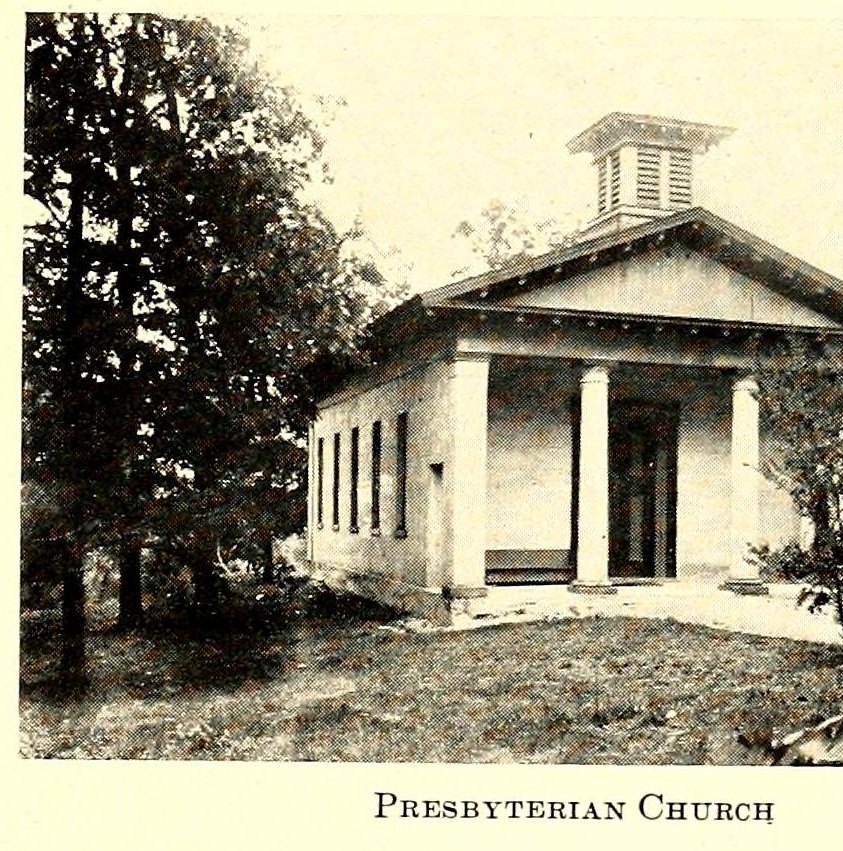
University Presbyterian Church, Chapel Hill, published 1912Kemp P. Battle, History of the University of North Carolina, volume II, 1912; Internet Archive · Public domain · Source
Rev. Charles M. Jones preached his first sermon as regular pastor of the Chapel Hill Presbyterian Church on June 1, 1941. According to Frank Porter Graham, Jones took into his home, as a refuge from threats of violence, the riders of both races who were testing the law requiring separate seats on buses in April 1947, and his home was once stoned. On November 21, 1952 the Judicial Commission of Orange Presbytery wrote Jones that a clean break should be made between him and the church, holding that he and the church had not always been true to the denomination's standards. Jones declined to resign. On December 14 the congregation voted 156 to 14 not to dismiss him or its officers. On January 20, 1953 the presbytery voted 54 to 21 to give the commission the final say, after Graham, an elder, spoke for Jones. On February 17 the commission ordered the pastoral relationship dissolved as of March 1 and removed the church's officers; its chairman said there were no charges or censures against Jones. A Synod commission ordered a new hearing in June, but a week later the General Assembly's commission upheld the dissolution and told the presbytery to give Jones a trial if he wanted one. On July 6 Jones declined the trial and asked to be divested of office without censure.
Reading on the places and people in this storyline
No indexed work is about this storyline itself yet. These are about the sites and people its dated events name, those named most often first, so they may discuss the storyline only in part. Follow a link to find a copy or view the material.
Mark Pryor's biography of the Rev. Charles M. Jones (1906-1993), minister of the Presbyterian church in Chapel Hill. It explores his life in relation to civil rights work, race relations and the religious response to racism in the town. Published by Writer's Showcase, San Jose, in 2002, xii and 398 pages with illustrations.
The first hundred years : the Chapel Hill Presbyterian Church, 1849-1949.
1950 · Charles M. Jones
The Chapel Hill Presbyterian Church marked its centennial with this history, published in 1950 and covering the congregation from 1849 to 1949. Thirty-nine illustrated pages at 23 centimeters. The history also concerns the religious aspects of the Civil War.
Oral history interview with Charles M. Jones, July 21, 1990: interview A-0335, Southern Oral History Program Collection (#4007)
Jones, Charles Miles · 2006 · University Library, UNC-Chapel Hill
The Rev. Charles M. Jones (1906-1993), minister of Chapel Hill's Presbyterian church in the late 1940s, and his wife Dorcas talk with John Egerton in a Southern Oral History Program interview recorded July 21, 1990. Jones spends most of the hour on the disputes his stand on race provoked, when the regional presbytery objected to his conduct of the church, and his dealings with university president Frank Porter Graham. Published online in 2006 by the UNC-Chapel Hill Library in Documenting the American South.
The controversy between Charles Miles Jones and Orange Presbytery, 1952-53 : thesis
Johnston, Edward F., 1879-1919 · 1995 · Thesis for the University of Virginia
A thesis on the controversy between Charles Miles Jones and Orange Presbytery in 1952 and 1953, the dispute that ended his ministry at the Chapel Hill Presbyterian Church. The text was reprinted in 1995 with excerpts from Jones' sermons added for the dedication of the Charles M. Jones Community Building on September 24 of that year. One volume of various pagings, with a portrait.
Oral history interview with Charles M. Jones, November 8, 1976: interview B-0041, Southern Oral History Program Collection (#4007)
Jones, Charles Miles · 2008 · University Library, UNC-Chapel Hill
A longer Southern Oral History Program interview with Presbyterian minister Charles M. Jones (1906-1993), recorded November 8, 1976, by Joseph A. Herzenberg. Jones traces his civil rights work in Chapel Hill from the 1930s into the 1960s. He characterizes town and university leaders, Frank Porter Graham among them, as cautiously liberal on race, willing to allow a little integration at performances and student activities, and describes the church's place in the town's social conflicts. Published online in 2008 in Documenting the American South.
Half-hour video from GK Productions, released in Chapel Hill in 2001, centered on Charles M. Jones, the minister whose Presbyterian congregation and the later Community Church of Chapel Hill both figure in it, along with civil rights movements and racism in the town. Color with black and white sequences.
Ruark, Henry Gibbons, 1908-1970 · 1953 · Christian Century Foundation
Henry Gibbons Ruark's article on the case of Orange Presbytery against Charles Miles Jones of the Chapel Hill Presbyterian Church, printed in the Christian Century for March 18, 1953 and detached from that issue. Two pages. The dispute belongs to Presbyterian church history in North Carolina, and the presbytery takes its name from the county.
A statement by Charles M. Jones on the occasion of his withdrawing from the Presbyterian ministry : delivered at the summer meeting, Orange Presbytery, Synod of North Carolina, Presbyterian Church of the United States, held at New Hope Presbyterian Church, Chapel Hill, North Carolina, July 6, 1953.
Jones, Charles Miles, 1906-1993 · 1953 · C.M. Jones
Charles Miles Jones set out his reasons for leaving the Presbyterian ministry in this statement, delivered to the summer meeting of Orange Presbytery at New Hope Presbyterian Church in Chapel Hill on July 6, 1953. Jones had served the Chapel Hill Presbyterian Church. He printed it himself in 1953, 22 pages.
H. G. Jones follows the fortune of Mary Ruffin Smith (1814-1885), the unmarried heiress whose Orange and Chatham County lands passed at her death to the University of North Carolina and the Episcopal Church. Chapters profile her grandfather Francis Jones, then trace the bequest through a quarrel among Episcopalians over Price Creek, the Chapel of the Cross and the university's buildings. A December 1885 New York Times report called the gift money; Jones shows it was land. Published by McFarland in 2014, 231 pages.
Church in the Old Fields: Hawfields Presbyterian Church and Community in North Carolina
Turner, Herbert Snipes · 1962
Herbert Snipes Turner's history of Hawfields Presbyterian Church and its community from 1738 to 1960. Hawfields lies in what is now Alamance County, land that was part of Orange County until 1849, and the book gives a place to Henry Pattillo, the congregation's eighteenth-century minister. Published by the University of North Carolina Press in 1962, 297 pages with illustrations.
A Historical Sketch of New Hope Church, in Orange County, N.C
Craig, D. I. · 1891
Rev. D. I. Craig's history of New Hope Church, a Presbyterian congregation in Chapel Hill Township, Orange County, printed at Reidsville in 1891. A closing family history section covers the Strayhorn, Craig, Blackwood and Kirkland families.
Rosalind Rosenberg's 2017 biography of Pauli Murray (1910-1985), lawyer, poet and Episcopal priest, raised in Durham. Its six parts follow a Southern childhood, the move to New York, the 1938 application to the University of North Carolina that was refused because Murray was Black (the chapter is titled 'Members of your race are not admitted'), law school and the coining of the phrase Jane Crow, the Cold War years, the push toward 'an NAACP for women', and a late-life ordination. 494 pages with portraits.
A congregational history of New Hope Presbyterian Church in Orange County, written by Barbara A. Murphy and published in 2006 by Chapel Hill Press. Chapters take up the five successive church buildings, the land itself, the ministers who served, the cemeteries, members who went to war, the church's organization, its music, gifts and memorials, and its outreach to the surrounding community. It also covers Presbyterian experience of the Civil War. 126 pages with illustrations and portraits.
A history of Orange United Methodist Church in Chapel Hill since 1832, prepared by the congregation's History Committee and edited by Margaret A. Blanchard with Julia Blackwood, Mildred Stout, Wiley Williams, Kay Creech, Andrea Stark and Shirley Mallard. Published by Taylor Publishing of Dallas in 1992, 161 pages with illustrations, some in color, a facsimile, maps and portraits.
Gardner, Andrew · 2023 · The University of Tennessee Press
Andrew Gardner's history of Binkley Memorial Baptist Church in Chapel Hill, named for Olin T. Binkley, covering the years between the late 1950s and the 2010s and tracing how a congregation with Southern Baptist roots came to be known for liberal Christianity. Published by the University of Tennessee Press in 2023, 213 pages with illustrations.
Samuel Tilden Habel's centennial monograph on the Baptist Church at Chapel Hill, covering its first hundred years from 1854 to 1954. It pairs a narrative of the congregation with membership lists. Published by the church in Chapel Hill in 1954, 58 pages plus sixteen pages of plates with illustrations, portraits and facsimiles.
A History of the Chapel Hill Baptist Church, 1854-1924
Howell, Almonte Charles · 1945
A. C. Howell's history of the Baptist church in Chapel Hill from 1854 to 1924, published in 1945. Thirty-two pages with one plate; the story touches the Baptist State Convention of North Carolina as well as the congregation itself.
The Church of the Atonement and the Chapel of the Cross at Chapel Hill
Henderson, Archibald · 1938
Archibald Henderson's history of the Episcopal congregation in Chapel Hill, the Church of the Atonement and the Chapel of the Cross, as the title names them. A short work of Chapel Hill church history and of the Episcopal Church in North Carolina, published in Hartford, Connecticut, by the Church Missions Publishing Company in 1938, 57 pages with illustrations and portraits. One copy carries the author's presentation inscription to the North Carolina State Library.
An Historical Address Delivered in Saint Matthew's Church, Hillsboro, N.C., on Sunday, August 24, 1924
Cheshire, Joseph Blount · 1925
Address by Bishop Joseph Blount Cheshire at St. Matthew's Church in Hillsborough on 24 August 1924, marking the parish's hundredth anniversary. Printed in Durham in 1925 at the vestry's order, with a foreword by the rector. Cheshire discusses George Micklejohn, William Mercer Green and Moses Ashley Curtis.
The first parish register of the Chapel of the Cross (1842-1881)
2024 · Chapel Hill Historical Society
Transcription of the first register kept by Chapel of the Cross, the Episcopal parish on Franklin Street in Chapel Hill, with its entries from 1842 to 1881. Published by the Chapel Hill Historical Society in 2024 with an introduction and a bibliography, 142 pages with illustrations and portraits.
Each dated event above names its source, the place to start. For finding more on an event across newspapers, records and histories, see the research guide Follow an event across several accounts. Ask at the North Carolina Room of the Orange County Public Library for help with local sources.
Cite or share
Friends of the Orange County Public Library. “Charles M. Jones and the Chapel Hill Presbyterian Church, 1941–1953.” Orange County Indexed, https://focplnc.org/orange-county-books/storylines/charles-m-jones-presbyterian-storyline-1941/. Accessed October 22, 2026.