Skip to content

Storyline · 1970–1993

Honoring Martin Luther King Jr. in Chapel Hill, 1970–1993

Mayor Howard Lee proclaimed a Martin Luther King Day in Chapel Hill in January 1970, though UNC declined to close, and the aldermen named the day again in 1973. UNC's Faculty Council struck King's name from a proposed yearly observance in 1977, but a King Memorial Lecture began in 1978 and a campus-wide celebration in 1982. In 1984 Chapel Hill made King's birthday a town holiday. Andrew Young, Max Robinson and Randall Robinson were among the King Memorial Lecture speakers of the 1980s, Carrboro's mayor proclaimed a King Day in 1981, and King's daughters Yolanda and Bernice spoke at UNC's celebrations in 1984 and 1989. UNC held classes on the first federal King holiday in 1986 but, after students petitioned, closed for it in 1988 under new state legislation. Rallies and marches on Franklin Street marked the holiday in 1987 and 1988, and Maya Angelou and June Jordan spoke at UNC in 1988 and 1989. In 1991 a King holiday gathering at the post office opposed the Persian Gulf war and UNC's tenth annual celebration brought C.T. Vivian, and in 1992 an NAACP march and a service at First Baptist Church marked the day. In 1993 UNC housekeepers held a Unity Day dinner in King's honor.

1970–1993 Filed under Black Life & Civil Rights 46 dated events

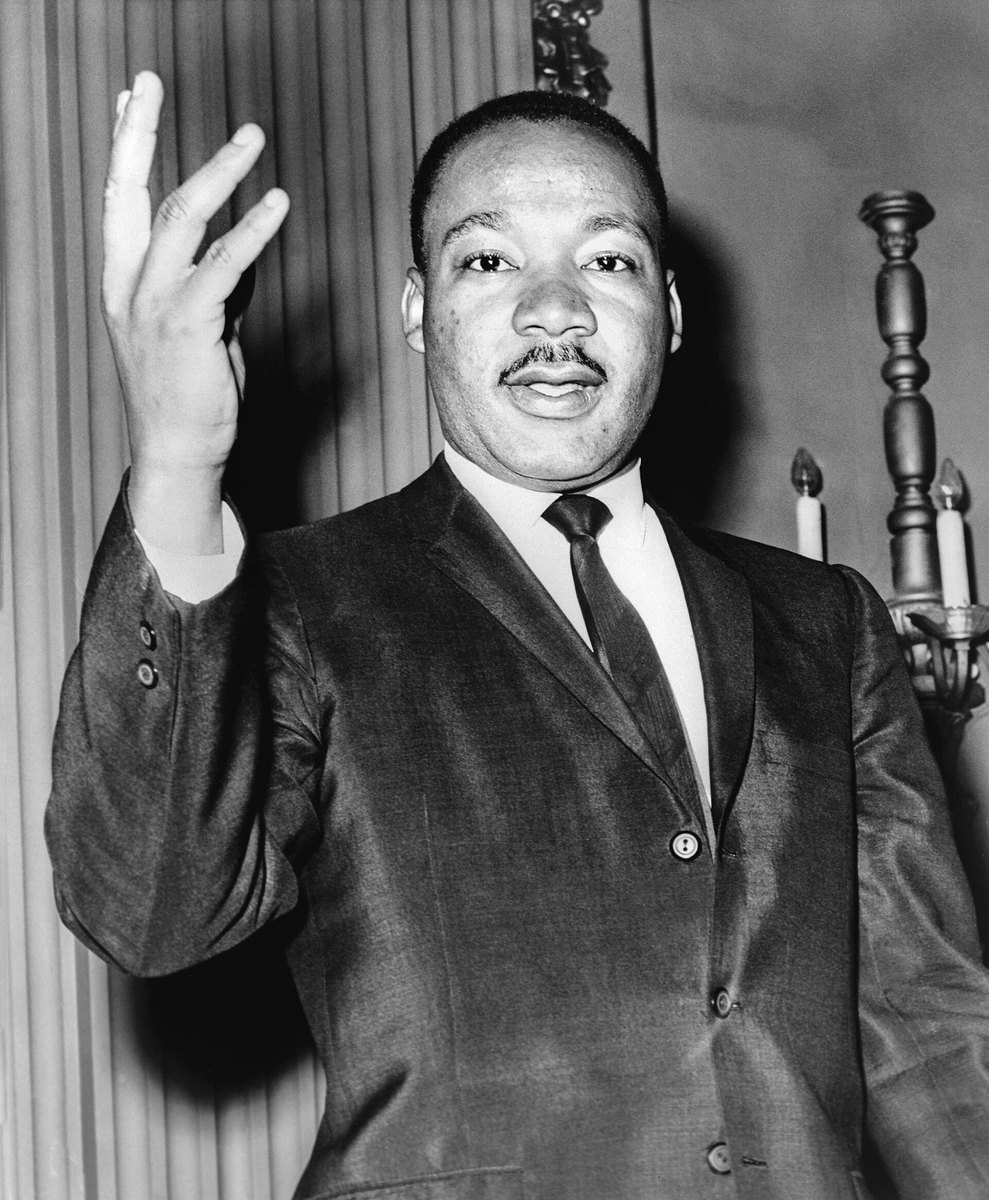
Martin Luther King Jr., 1964
Martin Luther King Jr., 1964Dick DeMarsico, New York World-Telegram & Sun; via Wikimedia Commons · No known copyright restrictions · Source

Mayor Howard Lee proclaimed January 15, 1970, King's birthday, as Martin Luther King Day in Chapel Hill and asked residents to remember his work, though the town held no official functions. Chancellor J. Carlyle Sitterson, on a faculty committee's advice, turned down the food workers' union local's request to close the University for the day, saying it had no policy of holidays honoring great men. Lee named March 24 a day of tribute to King, and that night the YM-YWCA showed the documentary King: A Filmed Record, Montgomery to Memphis in Memorial Hall as part of its one-night national premiere, with tickets benefiting the Martin Luther King Jr. Special Fund; Upward Bound started a King memorial fund for needy students. In January 1973 the Board of Aldermen named Monday, January 15 Martin Luther King Day, asking for a moment of silence at noon, and a march from St. Joseph CME Church to Memorial Hall and a memorial service were set for Sunday, January 14, with the Rev. Marion Phillips of the Presbyterian Church of Reconciliation as principal speaker. On April 4, 1974, the sixth anniversary of King's killing, about 100 people attended the Black Student Movement's service in the Great Hall, where the Rev. Phillip Cousin of St. Joseph AME Church in Durham preached.

On March 18, 1977 UNC's Faculty Council, by 21 to 19, asked Chancellor N. Ferebee Taylor to find a way for the University to recognize each year the cause of racial equality and its leaders, after members struck an annual observance of King's birthday and his name from the recommendation of the Committee on the Status of Minorities and the Disadvantaged, chaired by Charles E. Daye. On April 19, 1978 Vernon Jordan, president of the National Urban League, spoke in Memorial Hall as the first annual Martin Luther King Memorial Lecturer, arguing that reverse discrimination was not a real issue while white men still held most jobs. On March 12, 1979 the Rev. Martin Luther King Sr. gave UNC's second annual Martin Luther King Jr. Memorial Lecture, titled Misplaced Values, in Memorial Hall and urged Black students to protest injustice. On December 3 Coretta Scott King, a Carolina Forum lecturer sponsored by the Carolina Union, spoke in Memorial Hall on Human Rights: Challenge of the Future, urging the mostly student audience to vote and saying she backed President Carter for reelection. On January 30, 1980 former U.N. Ambassador Andrew Young gave the Memorial Lecture, sponsored by the Carolina Forum and the Established Lectures Committee, to a capacity crowd; he backed a national holiday for King's birthday, and BSM chairperson William Bynum gave him a plaque. Carrboro Mayor Bob Drakeford proclaimed January 15, 1981, King's birthday, as Martin Luther King Day, and on campus the Rally for Justice Committee, the Black Student Movement and the School of Public Health held services and a noon vigil in the Pit, where a law student criticized Congress for not making the day a national holiday. On April 14 the Rev. Jesse Jackson of Operation PUSH gave the fourth annual Martin Luther King Jr. Memorial Lecture, telling a Memorial Hall audience that young Black people should stretch their talents for extraordinary gains, keep up a strong resistance movement, and study technology, business and other fields to build a Black economy. On January 28, 1982, at what Black Ink called UNC's first campus-wide King celebration, Prezell Robinson, president of St. Augustine's College, spoke in Great Hall, and Chancellor Christopher Fordham accepted BSM chairperson Wende Watson's pledge to start a Martin Luther King Jr. Scholarship Fund. On February 12 federal appeals judge A. Leon Higginbotham gave the fifth Memorial Lecture, telling about 200 people in Memorial Hall about race and the American legal process and staging an imagined dialogue between King and Thomas Jefferson on the Constitution, legislatures and judges. On January 16, 1983 Max Robinson of ABC News gave the lecture to a full Memorial Hall, closing a three-day celebration of King's birthday that also had a talk by history professor Nell Painter and a BSM program with the Opeyo Dancers and Ebony Readers, and urged students to take King's ideas off the shelf and talk honestly about race on campus. On September 22 the University announced that James Baldwin had canceled his appearance as speaker of the sixth annual lecture, set for September 28, because of a sudden illness; he had canceled a year earlier for the same reason, and no replacement was named. In 1984, on Council member Bill Thorpe's initiative, Chapel Hill made King's birthday an official town holiday; the Carrboro Citizen later wrote that it was the first town in North Carolina to do so. On January 15, 1984 Yolanda King, King's daughter, spoke on "His Legacy" in Memorial Hall at a birthday celebration sponsored by the Black Student Movement, Alpha Phi Alpha, the Chancellor's Office, the African and Afro-American Studies curriculum, the Carolina Union and Student Government, telling the audience that her father's dream was unfinished; before she spoke, Vice Chancellor Harold Wallace presented the second Martin Luther King Jr. scholarship. On February 13 the Town Council voted 6 to 3 against Winston Broadfoot's proposal to end the Friday after Thanksgiving as a paid holiday for town employees to offset the King holiday, which the town had begun observing two years before the national holiday took effect. Broadfoot said one holiday cost the town almost $30,000, and Jonathan Howes said raising the question was cheap of the council. On April 4, the anniversary of King's death, nine groups, among them the BSM, the Black Law Students Association, the Campus Y, the Campus Governing Council and the Democratic Socialists of America, held "MLK: The Dream Today," opening with a noon rally in the Pit with the BSM Gospel Choir, then holding sessions in the Union on race relations at UNC, the Klan in North Carolina and apartheid, and handing out black-and-white ribbons. The day closed with Atlanta Mayor Andrew Young's speech to about 350 people in Memorial Hall.

On January 22, 1985 Randall Robinson, executive director of the Black American lobby TransAfrica, gave what the Daily Tar Heel called UNC's seventh annual Martin Luther King Jr. Memorial Speech, in Rosenau Hall, charging that the Reagan administration's embrace of South Africa had fostered apartheid and that American companies profited from it; TransAfrica had been active in ten weeks of demonstrations at the South African embassy in Washington. On King's birthday in 1986 Robinson gave the King Memorial Lecture to about 800 people in Memorial Hall, saying the United States had tolerated apartheid while fixed on fighting communism and urging American corporations to leave South Africa and Congress to impose sanctions; a BSM candlelight vigil came before it, and Chancellor Christopher Fordham presented the University's fourth Martin Luther King Jr. scholarship. North Carolina did not recognize the new federal holiday, and UNC held classes on January 20, 1986, the first federal King holiday; Vice Chancellor Harold Wallace said a planning committee drawn from the BSM, student government, the Campus Y and Afro-American Studies had chosen to mark the day instead with the January 15 lecture and candlelight service, and that a proposal to cancel classes in later years could go to the academic calendar committee. In Carrboro, Black Ink reported, some town and state employees had the day off under legislation originated by Hilliard Caldwell, while twelve-month employees had to take a personal holiday; Caldwell said the cost of closing drew some opposition but the public reacted well. On February 6 W. Wilson Goode, Philadelphia's first Black mayor and a native of Seaboard, North Carolina, gave what Black Ink called the King Memorial Lecture to about 100 people in Hill Hall, saying the Constitution's promises of education, jobs and freedom were not reaching all Americans; asked about divestment, he said Philadelphia had divested at a cost of $11 million but would not say whether UNC should. During Black Awareness Week that fall about 1,000 students signed a petition asking University officials to recognize the King holiday, and BSM president Camille Roddy delivered it with a letter faulting the administration's lack of effort. On October 29 Student Congress voted 14 to 4 for a resolution asking the University to cancel classes and hold observances on the holiday, January 19, 1987, after amending it by a vote of 9-8-2 to call off classes for the whole day instead of three hours; supporters noted that North Carolina was one of three states without a state King holiday. On the holiday about 130 people rallied at the Franklin Street post office and marched under police escort to First Baptist Church, where the Rev. J. R. Manley led a prayer; the UNC Anti-Apartheid Support Group and the Orange County Rainbow Coalition of Conscience sponsored the event, which the Daily Tar Heel called Chapel Hill's first community celebration of the holiday and which joined King's memory to the call for divestment from South Africa. On campus, UNC's sixth annual Martin Luther King Jr. birthday celebration, planned by the BSM with other groups, ran January 15 to 20, with a rally in the Pit, Chicago's Kuumba Theatre in The Heart of the Blues in Memorial Hall on January 17 and Alpha Phi Alpha's King program with attorney Melvin Watt on January 18. On January 19 Floyd McKissick, one of the first Black students at UNC, told about 300 people in Memorial Hall that Black Americans still suffered from the residuals of slavery. On March 23, 1987 Robinson gave the 1986-87 King Memorial Lecture to about 200 people in Memorial Hall, urging students to keep pressing the trustees to divest from companies in South Africa.

Following recent state legislation, UNC revised its 1987-88 calendar to close classes and offices on Monday, January 18, 1988 for King's birthday, and on Good Friday; Registrar Dave Lanier said the classes missed would not be made up. That day the Orange County Rainbow Coalition held its second annual Martin Luther King Celebration of Unity and Conscience, a rally of about 200 people at the Franklin Street post office where speakers addressed racism at UNC, the lower test scores of Black pupils in the Chapel Hill-Carrboro schools and the shortage of affordable student housing, followed by a march to First Baptist Church chanting against high rents; more than 250 people attended the memorial service there, sponsored by the South Orange Black Caucus, with the Rev. Joseph Bethea of the Raleigh District of the United Methodist Church as speaker. On January 19 Maya Angelou spoke, sang and recited to a capacity crowd in Memorial Hall in a Carolina Union Forum program, part of UNC's seventh annual King birthday celebration, urging her audience to fight racism and to find heroes; the Martin Luther King Jr. Scholarship was presented before she spoke. During the celebration a panel of faculty, alumni and townspeople sponsored by the Campus Y's Students for the Advancement of Race Relations, "Then & Now: Segregation in the United States," heard law professor Daniel Pollitt trace the marches, sit-ins and meetings that desegregated Chapel Hill, an alumnus recall entering UNC as one of its early Black undergraduates in 1957, and historian Nell Painter warn that progress on race could not be taken for granted. On January 22 the National Black Touring Circuit gave a free performance in Memorial Hall of "I Have a Dream," a three-hour musical drama on King's life built from his speeches and more than 25 hymns and spirituals, sponsored by the BSM, the Carolina Union Performing Arts Committee and Student Government. On April 4, the twentieth anniversary of King's assassination, people gathered for a candlelight vigil with readings in his memory in front of the Franklin Street post office.

On January 17, 1989 UNC students, faculty and staff joined hands in a chain encircling Polk Place as a symbol of unity, part of the week-long eighth annual Martin Luther King Jr. Birthday Celebration. During that week the Theta Pi chapter of Alpha Kappa Alpha held its annual candlelight vigil with remarks by Sonja Stone, followed by an address on "Choices" by Bernice King, King's youngest child, who urged students to take responsibility for their lives. Bernice King's address was in Memorial Hall on January 19, and Greensboro sit-in leader Franklin McCain spoke in the Union auditorium on January 22. On April 6 poet and essayist June Jordan, an English professor at Stony Brook, gave the Martin Luther King Jr. Memorial Lecture to about 100 people in Hamilton Hall, reading her essay "The Mountain and the Man Who Was Not God," which praised King's leadership for social and economic justice while faulting his neglect of the women of the civil rights movement.

On the King holiday, January 21, 1991, about 100 people met at the Franklin Street post office to honor King and denounce the Persian Gulf war as contrary to his teachings; speakers for the Chapel Hill Coalition for Peace in the Middle East, the Community Church and the Orange County Greens spoke of the large share of African Americans among the troops and urged support for the Greens' sanctuary resolution. UNC's tenth annual Martin Luther King Jr. Birthday Celebration ran January 20 to 27. On January 24 the Campus Y's "A Show of Hands for Peace and Unity" brought about 150 students, faculty and administrators to Polk Place, where Chancellor Paul Hardin, Vice Chancellor Donald Boulton and Hillsborough Mayor Horace Johnson spoke and the crowd sang "Lift Every Voice and Sing" and "We Shall Overcome" holding hands. Hardin tied the gathering to the fall's racial incidents and the statue debate, and Johnson, who was Black, called himself proof that King's dream was alive in Hillsborough. On January 25 civil rights veteran C.T. Vivian spoke on "Racial Bigotry Is Everybody's Problem" in Memorial Hall, in a lecture cosponsored by the Chancellor's Committee for the celebration, the Black Student Movement and the Carolina Union Forum Committee, and the Martin Luther King Jr. Scholarship was presented the same evening. In October Helen Suzman, the retired South African member of Parliament and four-time Nobel Peace Prize nominee, gave the Martin Luther King Jr. Memorial Lecture to more than 250 people in Memorial Hall, saying the end of apartheid could not now be stopped while arguing that economic sanctions hurt Black South Africans most.

On the holiday in 1992, January 20, about 50 Black and white residents gathered at the Franklin Street post office for a March for Peace and Justice in King's memory and marched behind Chapel Hill-Carrboro NAACP president James Brittian to St. Paul African Methodist Episcopal Zion Church for an NAACP service. Speakers included Fred Battle, the Rev. George Allison of the Northern Orange NAACP, and Joe Straley and Gwen Jones of the Orange County Human Relations Committee, and Michelle Thomas of the Black Student Movement renewed the call for a free-standing Black cultural center. That day about 100 people attended a community service honoring King at First Baptist Church, where Roosevelt Wilkerson, president of the Orange County Black Caucus, moderated and Wendelin Jo Watson, chaplain of the Black Interdenominational Student Association, called on Black and white residents to fix an unjust "system" together. By February the Kappa Alpha Psi fraternity, which had made the scholarship drive a service project, had raised that year's $500 Martin Luther King scholarship, which still needed a $10,000 endowment to become permanent. On King's birthday, January 15, 1993, UNC housekeepers held a Unity Day dinner in his honor, where Black Cultural Center director Margo Crawford spoke on what King would say about their fight for decent wages and respect from supervisors.

Towns
Chapel Hill, Carrboro
Sites
4
People with pages
18

The events, date by date

Every statement above comes from these dated entries in the chronology. Each links to its source.

  1. Mayor Howard Lee proclaims Martin Luther King Day in Chapel Hill Mayor Howard Lee proclaimed January 15, 1970, King's birthday, as Martin Luther King Day and asked residents to remember his work, though the town held no official functions. Chancellor J. Carlyle Sitterson, on a faculty committee's advice, turned down the food workers' union local's request to close the University for the day, saying it had no policy of holidays honoring great men. People: Howard N. Lee, J. Carlyle Sitterson, Elizabeth Brooks Place: Chapel HillSearch the index · The Daily Tar Heel, January 15, 1970, p. 1
  2. Mayor Howard Lee sets aside a day of tribute to Martin Luther King Jr. Mayor Howard Lee named March 24 a day of tribute to Martin Luther King Jr. in Chapel Hill, and that night the YM-YWCA showed the documentary King: A Filmed Record, Montgomery to Memphis in Memorial Hall as part of its one-night national premiere, with $5 tickets benefiting the Martin Luther King Jr. Special Fund. Upward Bound started a King memorial fund for needy students in connection with the showing. People: Howard N. Lee Place: Memorial Hall, UNC, Chapel Hill · Also named: Martin Luther King Jr.Search the index · The Daily Tar Heel, March 20, 1970, p. 1
  3. Chapel Hill aldermen declare January 15 Martin Luther King Day The Board of Aldermen passed a resolution naming Monday, January 15, Martin Luther King Day, asking for a moment of silence at noon and calling on citizens to return to the ideals Dr. King espoused. A commemorative march from St. Joseph CME Church to Memorial Hall and a memorial service were set for Sunday, January 14, with the Rev. Marion Phillips of the Presbyterian Church of Reconciliation as principal speaker. Place: Municipal Building, Chapel Hill · Also named: Marion Phillips · Also mentions: Memorial HallSearch the index · The Daily Tar Heel, January 12, 1973, p. 2
  4. The Black Student Movement holds an ecumenical service on the anniversary of Martin Luther King Jr.'s death About 100 people attended the BSM's service in the Great Hall marking the sixth anniversary of King's killing, at which the Rev. Phillip Cousin of St. Joseph AME Church in Durham preached on the need for vision to change the world. Place: Great Hall, Carolina Union, Chapel Hill · Also named: Phillip CousinThe Daily Tar Heel, April 8, 1974, p. 1
  5. UNC's Faculty Council asks for yearly recognition of the racial-equality cause and a merit scholarship for Black students By a 21-19 vote the Faculty Council asked Chancellor N. Ferebee Taylor to find a way for the University to recognize each year the cause of racial equality and its leaders, after members struck from the recommendation an annual observance of Martin Luther King Jr.'s birthday and his name. It then voted unanimously to ask officials to seek private money for a scholarship for Black students awarded without regard to need, which supporters likened to a 'black Morehead'; both came from the Committee on the Status of Minorities and the Disadvantaged, chaired by Charles E. Daye, along with calls to hire more Black, minority and women faculty. People: Charles E. Daye, James Dickson Phillips, E. M (Elie Maynard) Adams, N. Ferebee Taylor Place: University, Chapel HillSearch the index · The Daily Tar Heel, March 21, 1977, p. 1
  6. Vernon Jordan gives UNC's first Martin Luther King Memorial Lecture Vernon Jordan, president of the National Urban League, spoke in Memorial Hall as the first annual Martin Luther King Memorial Lecturer and argued that reverse discrimination was not a real issue while white men still held most jobs. Place: Memorial Hall, University, Chapel Hill · Also named: Vernon JordanSearch the index · Black Ink (Black Student Movement, UNC), August 18, 1978, p. 11
  7. Martin Luther King Sr. gives the second Martin Luther King Jr. Memorial Lecture The Rev. Martin Luther King Sr. gave UNC's second annual Martin Luther King Jr. Memorial Lecture, titled Misplaced Values, in Memorial Hall and urged Black students to protest injustice. Place: Memorial Hall, University, Chapel Hill · Also named: Martin Luther King Sr.Search the index · Black Ink (Black Student Movement, UNC), February 28, 1979, p. 2 · Also: The Daily Tar Heel, March 14, 1979, p. 1
  8. Coretta Scott King lectures on human rights in Memorial Hall Coretta Scott King spoke in Memorial Hall on Human Rights: Challenge of the Future, as a Carolina Forum lecturer sponsored by the Carolina Union. She urged the mostly student audience to vote and said she backed President Carter for reelection. Place: Memorial Hall, University, Chapel Hill · Also named: Coretta Scott King · Also mentions: Carolina UnionSearch the index · Black Ink (Black Student Movement, UNC), January 7, 1980, p. 1 · Also: The Daily Tar Heel, December 4, 1979, p. 1; The Daily Tar Heel, November 20, 1979, p. 4
  9. Andrew Young gives the Martin Luther King Jr. Memorial Lecture Former U.N. Ambassador Andrew Young gave the Martin Luther King Jr. Memorial Lecture, sponsored by the Carolina Forum and the Established Lectures Committee, to a capacity crowd. He backed a national holiday for King's birthday, and BSM chairperson William Bynum gave him a plaque. Place: University, Chapel Hill · Also named: Andrew Young, William BynumSearch the index · Black Ink (Black Student Movement, UNC), February 25, 1980, p. 1
  10. Carrboro Mayor Bob Drakeford proclaims Martin Luther King Day Carrboro Mayor Bob Drakeford proclaimed January 15, 1981, King's birthday, as Martin Luther King Day. On campus the Rally for Justice Committee, the Black Student Movement and the School of Public Health held services and a noon vigil in the Pit, where a law student criticized Congress for not making the day a national holiday. Place: Carrboro · Also named: Bob Drakeford · Also mentions: School of Public HealthSearch the index · The Daily Tar Heel, January 16, 1981, p. 1
  11. Jesse Jackson gives the fourth annual Martin Luther King Jr. Memorial Lecture The Rev. Jesse Jackson of Operation PUSH told a Memorial Hall audience that young Black people should stretch their talents for extraordinary gains, keep up a strong resistance movement, and study technology, business and other fields to build a Black economy. People: Jesse Jackson Place: Memorial Hall, University, Chapel HillSearch the index · Black Ink (Black Student Movement, UNC), April 21, 1981, p. 3 · Also: The Daily Tar Heel, April 15, 1981, p. 1; The Daily Tar Heel, February 24, 1981, p. 3
  12. UNC holds a campus-wide Martin Luther King Jr. birthday celebration Prezell Robinson, president of St. Augustine's College and the United Negro College Fund, told the gathering in Great Hall that the nation was pulling back from civil rights and that education was the surest way up. Chancellor Fordham accepted BSM chairperson Wende Watson's pledge to start a Martin Luther King Jr. Scholarship Fund for a junior committed to civil rights. Black Ink called it the first annual campus-wide King celebration; the Daily Tar Heel counted about 100 people at the event, sponsored by the Martin Luther King Planning Committee and the Office of University Affairs, and called it the third King birthday observance on campus that year. Place: Great Hall, Carolina Union, University, Chapel Hill · Also named: Prezell Robinson, Christopher Fordham, Wende WatsonBlack Ink (Black Student Movement, UNC), February 11, 1982, p. 4 · Also: The Daily Tar Heel, February 1, 1982, p. 3
Show all 46 dated events
  1. Judge A. Leon Higginbotham gives the fifth Martin Luther King Jr. Memorial Lecture Federal appeals judge A. Leon Higginbotham told about 200 people in Memorial Hall about race and the American legal process, staging an imagined dialogue between King and Thomas Jefferson on the Constitution, legislatures and judges. Place: Memorial Hall, University, Chapel Hill · Also named: A. Leon HigginbothamSearch the index · Black Ink (Black Student Movement, UNC), February 23, 1982, p. 1
  2. ABC News anchor Max Robinson gives the Martin Luther King Jr. Memorial Lecture Max Robinson of ABC News gave the annual King Memorial Lecture to a full Memorial Hall, closing a three-day celebration of King's birthday that also had a talk by history professor Nell Painter and a BSM program with the Opeyo Dancers and Ebony Readers. He urged students to take King's ideas off the shelf and talk honestly about race on campus. Place: Memorial Hall, University, Chapel Hill · Also named: Max Robinson, Nell PainterSearch the index · Black Ink (Black Student Movement, UNC), January 27, 1983, p. 6
  3. James Baldwin cancels the King memorial lecture at UNC because of illness On September 22, 1983, the University announced that James Baldwin had canceled his appearance as speaker of the sixth annual Martin Luther King Jr. Memorial Lecture, set for September 28 in Memorial Hall, because of a sudden illness; he had canceled a year earlier for the same reason, and no replacement was named. Place: Memorial Hall, University, Chapel Hill · Also named: James BaldwinSearch the index · The Daily Tar Heel, September 23, 1983, p. 3
  4. Chapel Hill makes Martin Luther King Jr.'s birthday a town holiday On Council member Bill Thorpe's initiative, Chapel Hill made the birthday of Martin Luther King Jr. an official town holiday, the first town in North Carolina and one of the first municipalities in the nation to do so. People: Bill Thorpe, Martin Luther King Jr. Place: Chapel HillSearch the index · The Carrboro Citizen: Chapel Hill council member Bill Thorpe dies (October 2, 2008) · Also: The Daily Tar Heel, February 16, 1984, p. 3; The Daily Tar Heel, January 20, 1987, p. 3
  5. Yolanda King speaks in Memorial Hall at UNC's celebration of her father's birthday On January 15, 1984, Yolanda King, daughter of Martin Luther King Jr., spoke in Memorial Hall on "His Legacy" at a birthday celebration sponsored by the Black Student Movement, Alpha Phi Alpha, the Chancellor's Office, the African and Afro-American Studies curriculum, the Carolina Union and Student Government, telling the audience that her father's dream was unfinished. Before she spoke, Vice Chancellor Harold Wallace presented the second Martin Luther King Jr. scholarship. Place: Memorial Hall, University, Chapel Hill · Also named: Yolanda King, Harold Wallace, Martin Luther King Jr. · Also mentions: Carolina UnionThe Daily Tar Heel, January 16, 1984, p. 1
  6. Chapel Hill Town Council refuses to drop a Thanksgiving holiday to pay for the new King holiday The council voted 6-3 against Winston Broadfoot's proposal to end the Friday after Thanksgiving as a paid holiday for town employees to offset the Martin Luther King Jr. holiday, which Chapel Hill had begun observing in 1984, two years before the national holiday took effect. Broadfoot said one holiday cost the town almost $30,000; Jonathan Howes said raising the question was cheap of the council. People: Jonathan Howes Place: Chapel Hill · Also named: Winston BroadfootSearch the index · The Daily Tar Heel, February 16, 1984, p. 3
  7. A student coalition holds a day against racism on the anniversary of King's death Nine groups, among them the Black Student Movement, the Black Law Students Association, the Campus Y, the Campus Governing Council and the Democratic Socialists of America, held 'MLK: The Dream Today', opening with a noon rally in the Pit with the BSM Gospel Choir and speeches, then Union sessions on race relations at UNC, the Klan in North Carolina, with the film '88 Seconds in Greensboro', and apartheid, and handing out black-and-white ribbons. The day closed with Atlanta Mayor Andrew Young's speech to about 350 people in Memorial Hall. Place: The Pit and Carolina Union, University, Chapel Hill · Also named: Andrew Young · Also mentions: Memorial Hall, Campus YThe Daily Tar Heel, April 5, 1984, p. 1
  8. TransAfrica's Randall Robinson gives UNC's seventh King memorial speech Randall Robinson, executive director of the Black American lobby TransAfrica, gave UNC's seventh annual Martin Luther King Jr. Memorial Speech, charging that the Reagan administration's embrace of South Africa had fostered apartheid and that American companies profited from it, and calling on the United States to oppose the South African government. TransAfrica had been active in ten weeks of demonstrations at the South African embassy in Washington. Place: Rosenau Hall, University, Chapel Hill · Also named: Randall RobinsonSearch the index · The Daily Tar Heel, January 23, 1985, p. 1
  9. TransAfrica's Randall Robinson gives the King Memorial Lecture in Memorial Hall On King's birthday Randall Robinson, executive director of TransAfrica, told about 800 people in Memorial Hall that the United States had tolerated apartheid while fixed on fighting communism, and urged American corporations to leave South Africa and Congress to impose sanctions. A BSM candlelight vigil came before the lecture, and Chancellor Christopher Fordham presented the university's fourth Martin Luther King Jr. scholarship. Place: Memorial Hall, University, Chapel Hill · Also named: Randall Robinson, Christopher FordhamSearch the index · Black Ink (Black Student Movement, UNC), January 28, 1986, p. 1 · Also: The Daily Tar Heel, January 16, 1986, p. 1
  10. Carrboro gives town employees the first federal King holiday Black Ink reported that in Carrboro some town and state employees had January 20, 1986 off under legislation originated by Hilliard Caldwell, while twelve-month employees had to take a personal holiday. Caldwell said the cost of closing drew some opposition but the public reacted well. People: Hilliard Caldwell Place: CarrboroBlack Ink (Black Student Movement, UNC), January 28, 1986, p. 6
  11. UNC holds classes on the first federal King holiday North Carolina did not recognize the new federal holiday, and the university did not suspend classes on January 20, 1986. Vice Chancellor Harold Wallace said a planning committee drawn from the BSM, student government, the Campus Y and Afro-American Studies had chosen instead to mark the day with the January 15 lecture and candlelight service, and that a proposal to cancel classes in later years could go to the academic calendar committee. Place: University, Chapel Hill · Also named: Harold Wallace · Also mentions: Campus YBlack Ink (Black Student Movement, UNC), January 28, 1986, p. 1
  12. Philadelphia mayor W. Wilson Goode gives the King Memorial Lecture in Hill Hall W. Wilson Goode, Philadelphia's first Black mayor and a native of Seaboard, North Carolina, told about 100 people in Hill Hall that the Constitution's promises of education, jobs and freedom were not reaching all Americans. Asked about divestment, he said Philadelphia had divested at a cost of $11 million but would not say whether UNC should. Place: Hill Hall, University, Chapel Hill · Also named: W. Wilson GoodeSearch the index · Black Ink (Black Student Movement, UNC), February 11, 1986, p. 1
  13. Student Congress asks UNC to cancel classes on the King holiday UNC's Student Congress voted 14-4 for a resolution asking the University to cancel classes and hold observances on the Martin Luther King Jr. holiday, after amending it 9-8-2 to call off classes for the whole day instead of three hours. Supporters noted that North Carolina was one of three states without a state King holiday. Place: Carolina Union, University, Chapel HillThe Daily Tar Heel, October 30, 1986, p. 1
  14. About 1,000 students petition UNC to observe the King holiday During Black Awareness Week some 1,000 students signed a petition asking university officials to recognize the Martin Luther King Jr. holiday, and BSM president Camille Roddy delivered it with a letter faulting the administration's lack of effort. Student Congress then voted 14 to 4 for a resolution asking that classes be cancelled on January 19, 1987. Place: University, Chapel Hill · Also named: Camille RoddyBlack Ink (Black Student Movement, UNC), December 2, 1986, p. 1
  15. About 130 people rally and march down Franklin Street on the King holiday About 130 people rallied at the Franklin Street post office on the Martin Luther King Jr. holiday and marched under police escort to First Baptist Church, where the Rev. J. R. Manley led a prayer. The UNC Anti-Apartheid Support Group and the Orange County Rainbow Coalition of Conscience sponsored the event, which the Daily Tar Heel called Chapel Hill's first community celebration of the holiday and which joined King's memory to the call for divestment from South Africa. People: Bill Thorpe, Fred Battle, R. D. Smith Place: Franklin Street post office to First Baptist Church, Chapel Hill · Also named: J. R. ManleySearch the index · The Daily Tar Heel, January 20, 1987, p. 3
  16. Floyd McKissick gives the King lecture during UNC's sixth annual King celebration The sixth annual Martin Luther King Jr. birthday celebration, planned by the BSM with other groups, ran January 15-20, 1987, with a rally in the Pit, Chicago's Kuumba Theatre in The Heart of the Blues in Memorial Hall on January 17, and Alpha Phi Alpha's King program with attorney Melvin Watt on January 18. On January 19 Floyd McKissick, one of the first Black students at UNC, told about 300 people in Memorial Hall that Black Americans still suffered from the residuals of slavery. Place: Memorial Hall, University, Chapel Hill · Also named: Floyd McKissick, Melvin WattSearch the index · Black Ink (Black Student Movement, UNC), February 5, 1987, p. 1 · Also: The Daily Tar Heel, January 15, 1987, p. 15
  17. TransAfrica's Randall Robinson gives the 1986-87 King Memorial Lecture Randall Robinson, director of TransAfrica, gave the 1986-87 Martin Luther King Jr. Memorial Lecture to about 200 people in Memorial Hall, urging UNC students to keep pressing the trustees to divest from companies in South Africa. Place: Memorial Hall, Chapel Hill · Also named: Randall RobinsonSearch the index · The Daily Tar Heel, March 24, 1987, p. 1
  18. About 200 people rally at the Franklin Street post office and march to First Baptist Church on the King holiday The Orange County Rainbow Coalition held its second annual Martin Luther King Celebration of Unity and Conscience, a rally at the Franklin Street post office where speakers addressed racism at UNC, the lower test scores of Black pupils in the Chapel Hill-Carrboro schools and the shortage of affordable student housing, followed by a march to First Baptist Church chanting against high rents. More than 250 people attended the memorial service there, sponsored by the South Orange Black Caucus, with Rev. Joseph Bethea of the Raleigh District of the United Methodist Church as speaker. People: Yonni Chapman Place: Franklin Street post office and First Baptist Church, Chapel Hill · Also named: Joseph Bethea · Also mentions: Chapel Hill-Carrboro schoolsSearch the index · The Daily Tar Heel, January 19, 1988, p. 1
  19. UNC closes classes and offices for the King holiday under a revised calendar Following recent state legislation, the university revised its 1987-88 calendar to close classes and offices on Monday, January 18, 1988 for Martin Luther King Jr.'s birthday and on Good Friday, April 1. Registrar Dave Lanier said classes missed on January 18 would not be made up. Place: University, Chapel Hill · Also named: Dave LanierBlack Ink (Black Student Movement, UNC), November 17, 1987, p. 1
  20. Maya Angelou speaks in Memorial Hall for UNC's King birthday celebration Maya Angelou spoke, sang and recited to a capacity crowd in Memorial Hall in a Carolina Union Forum program that was part of UNC's seventh annual Martin Luther King birthday celebration, urging her audience to fight racism and to find heroes. The Martin Luther King Jr. Scholarship was presented before she spoke. Place: Memorial Hall, UNC, Chapel Hill · Also named: Maya AngelouSearch the index · The Daily Tar Heel, January 20, 1988, p. 1
  21. National Black Touring Circuit stages 'I Have a Dream' in Memorial Hall The National Black Touring Circuit gave a free performance of 'I Have a Dream,' a three-hour musical drama on Martin Luther King Jr.'s life built from his speeches and more than 25 hymns and spirituals, in Memorial Hall. The Black Student Movement, the Carolina Union Performing Arts Committee and Student Government sponsored it as part of the King birthday celebration week. Place: Memorial Hall, UNC, Chapel Hill · Also named: Martin Luther King Jr.Search the index · The Daily Tar Heel, January 25, 1988, p. 7
  22. Panel recalls segregation and desegregation in Chapel Hill for the King celebration 'Then & Now: Segregation in the United States,' a panel of UNC faculty, alumni and townspeople sponsored by the Campus Y's Students for the Advancement of Race Relations, heard law professor Daniel Pollitt trace the marches, sit-ins and meetings that desegregated Chapel Hill, alumnus David Dansby recall entering UNC as one of its early Black undergraduates in 1957, and historian Nell Painter warn that progress on race could not be taken for granted. Place: UNC, Chapel Hill · Also named: Daniel Pollitt, Nell Painter, David DansbySearch the index · The Daily Tar Heel, January 21, 1988, p. 1
  23. A candlelight vigil at the Franklin Street post office marks 20 years since King's assassination On the twentieth anniversary of the assassination of Martin Luther King Jr., people gathered Monday night for a candlelight vigil in front of the Franklin Street post office in Chapel Hill, with readings in his memory. Place: Franklin Street post office, Chapel Hill · Also named: Martin Luther King Jr.Search the index · The Daily Tar Heel, April 5, 1988, p. 1
  24. Students, faculty and staff join hands around Polk Place for Martin Luther King Jr.'s birthday On January 17, 1989 UNC students, faculty and staff joined hands in a chain that encircled Polk Place as a symbol of unity, part of the week-long eighth annual Martin Luther King Jr. Birthday Celebration, which also brought Bernice King to Memorial Hall on January 19 and Greensboro sit-in leader Franklin McCain to the Union auditorium on January 22. Place: Polk Place, University, Chapel Hill · Also named: Bernice King, Franklin McCain · Also mentions: Memorial HallSearch the index · The Daily Tar Heel, January 18, 1989, p. 1
  25. Bernice King speaks during UNC's Martin Luther King Jr. week During the week marking Martin Luther King Jr.'s birthday, the Theta Pi chapter of Alpha Kappa Alpha held its annual candlelight vigil with remarks by Sonja Stone, followed by an address on 'Choices' by Bernice King, King's youngest child, who urged students to take responsibility for their lives. People: Sonja Haynes Stone Place: University, Chapel Hill · Also named: Bernice King, Sonja StoneSearch the index · Black Ink (Black Student Movement, UNC), February 9, 1989, p. 3
  26. June Jordan gives UNC's Martin Luther King Jr. Memorial Lecture Poet and essayist June Jordan, an English professor at Stony Brook, read her essay "The Mountain and the Man Who Was Not God" to about 100 people in Hamilton Hall, praising King's leadership for social and economic justice while faulting his neglect of the women of the civil rights movement. Place: Hamilton Hall, University, Chapel Hill · Also named: June Jordan · Also mentions: The MountainSearch the index · The Daily Tar Heel, April 7, 1989, p. 1
  27. About 100 people gather at the Franklin Street post office on King's birthday to oppose the gulf war About 100 people met at the Franklin Street post office on the Martin Luther King Jr. holiday to honor King and denounce the Persian Gulf war as contrary to his teachings. Speakers for the Chapel Hill Coalition for Peace in the Middle East, the Community Church and the Orange County Greens spoke of the large share of African Americans among the troops and urged support for the Greens' sanctuary resolution. Place: Franklin Street Post Office, Chapel Hill · Also mentions: Franklin Street post officeSearch the index · The Daily Tar Heel, January 22, 1991, p. 1
  28. About 150 people join hands in Polk Place for the King birthday celebration The Campus Y's "A Show of Hands for Peace and Unity" brought about 150 students, faculty and administrators to Polk Place, where Chancellor Paul Hardin, Vice Chancellor Donald Boulton and Hillsborough Mayor Horace Johnson spoke and the crowd sang "Lift Every Voice and Sing" and "We Shall Overcome" holding hands. Hardin tied the gathering to the fall's racial incidents and the statue debate, and Johnson, who is Black, called himself proof that King's dream was alive in Hillsborough. Place: Polk Place, University, Chapel Hill · Also named: Paul Hardin, Donald Boulton, Horace JohnsonSearch the index · The Daily Tar Heel, January 25, 1991, p. 1
  29. C.T. Vivian gives the King birthday celebration lecture in Memorial Hall Civil rights veteran C.T. Vivian spoke on "Racial Bigotry Is Everybody's Problem" in Memorial Hall during UNC's tenth annual Martin Luther King Jr. Birthday Celebration, January 20-27, in a lecture cosponsored by the Chancellor's Committee for the celebration, the Black Student Movement and the Carolina Union Forum Committee. The Martin Luther King Jr. Scholarship was presented the same evening. Place: Memorial Hall, University, Chapel Hill · Also named: C.T. VivianSearch the index · Black Ink (Black Student Movement, UNC), January 14, 1991, p. 3 · Also: The Daily Tar Heel, January 28, 1991, p. 1
  30. Helen Suzman gives UNC's Martin Luther King Jr. Memorial Lecture Helen Suzman, the retired South African member of Parliament and four-time Nobel Peace Prize nominee, told more than 250 people in Memorial Hall that the end of apartheid could not now be stopped, while arguing that economic sanctions hurt Black South Africans most. The paper said the lecture series was established at UNC in 1970. Place: Memorial Hall, University, Chapel Hill · Also named: Helen SuzmanSearch the index · The Daily Tar Heel, October 23, 1991, p. 3
  31. About 50 people march from Chapel Hill to Carrboro on King Day About 50 Black and white residents gathered at the Franklin Street post office on January 20, 1992, for the 10th annual March for Peace and Justice in memory of Martin Luther King Jr., then marched behind Chapel Hill-Carrboro NAACP president James Brittian to St. Paul African Methodist Episcopal Zion Church for an NAACP service. Speakers included Fred Battle, the Rev. George Allison of the Northern Orange NAACP, Joe Straley and Gwen Jones of the Orange County Human Relations Committee, and Michelle Thomas of the Black Student Movement renewed the call for a free-standing Black cultural center. People: James Brittian, Fred Battle, Joe Straley Place: Franklin Street post office to St. Paul AME Zion Church · Also named: George Allison, Gwen Jones, Michelle Thomas · Also mentions: Franklin Street post officeSearch the index · The Daily Tar Heel, January 21, 1992, p. 1
  32. First Baptist Church holds a community King Day service About 100 people attended a community service honoring Martin Luther King Jr. at First Baptist Church in Chapel Hill on January 20, 1992. Roosevelt Wilkerson, president of the Orange County Black Caucus, moderated, and Wendelin Jo Watson, chaplain of the Black Interdenominational Student Association, called on Black and white residents to fix an unjust "system" together. Place: First Baptist Church, North Roberson Street, Chapel Hill · Also named: Roosevelt Wilkerson, Wendelin Jo WatsonSearch the index · The Daily Tar Heel, January 21, 1992, p. 3
  33. Kappa Alpha Psi raises the money for UNC's 1992 Martin Luther King scholarship The Kappa Alpha Psi fraternity made the Martin Luther King scholarship drive a service project and raised this year's $500 award; the scholarship still needed a $10,000 endowment to become permanent. Place: University, Chapel HillThe Daily Tar Heel, February 17, 1992, p. 3
  34. UNC housekeepers hold a Unity Day celebration of Martin Luther King Jr. UNC housekeepers held a Unity Day dinner honoring Martin Luther King Jr. on his birthday, January 15, 1993. Black Cultural Center director Margo Crawford spoke on what King would say about their fight for decent wages and respect from supervisors, and the center's office manager played. Place: University, Chapel Hill · Also named: Margo Crawford · Also mentions: Black Cultural CenterBlack Ink (Black Student Movement, UNC), February 10, 1993, p. 9

Places in this storyline

Buildings, schools, churches and other sites named in the dated events on this page, the most often named first. The map shows them all.

Map tiles © OpenStreetMap contributors. Site locations from the N.C. State Historic Preservation Office survey, Open Orange, Orange County GIS, OpenStreetMap and a few other published sources named on each site’s page; town and community pins show approximate locations.

All places and the county map →

People in this storyline

People with a page of their own whom the dated events above name, those named most often first.

Reading on the places and people in this storyline

No indexed work is about this storyline itself yet. These are about the sites and people its dated events name, those named most often first, so they may discuss the storyline only in part. Follow a link to find a copy or view the material.

About Memorial Hall · named in 9 of this story’s entries

The Carolina Union Proudly Presents: Memories of the Tech Crew of Memorial Hall

Madry, Scott · 2021

Scott Madry's recollections of the student tech crew at Memorial Hall, the University of North Carolina's auditorium in Chapel Hill, presented under the banner of the Carolina Union, the campus student union. Published in Chapel Hill in 2021.

UNC

The transformation of Memorial Hall, 2002-2005 : the University of North Carolina at Chapel Hill : limited edition prints from the photographic documentary

Carter, Catharine · 2005 · The University of North Carolina at Chapel Hill

Catharine Carter photographed the rebuilding of Memorial Hall at the University of North Carolina between 2002 and 2005, and twelve of the images were issued in 2005 as limited edition lithographic prints, numbered and signed by her, in a portfolio with text and illustrations.

UNC

A guide to the tablets of Memorial Hall at the University of North Carolina at Chapel Hill

Wooten, Patrick S. · 1992

Patrick S. Wooten's 1992 guide to the memorial tablets in Memorial Hall at the University of North Carolina at Chapel Hill, identifying the people commemorated there. Subjects include university biography, alumni and Confederate rosters, so the volume doubles as a name list for anyone tracing individuals honored on the walls. One volume in various foliations with illustrations.

UNC

Memorial Hall : its tablets and memories : acceptance of tablets memorializing Col. Robert Bingham, Ambassador Robert Worth Bingham and Senator Matt W. Ransom

Winston, Robert W. (Robert Watson), 1860-1944 · 1939

Robert W. Winston's 1939 address on Memorial Hall at the University of North Carolina and the memorial tablets set in its walls, given when tablets honoring Colonel Robert Bingham, Ambassador Robert Worth Bingham and Senator Matt W. Ransom were accepted. Printed at Chapel Hill, it records how those tablets came to be placed in the hall.

UNC

About Hill Hall · named in one of this story’s entries

Library, U.N.C., Chapel Hill, N.C.

1905 · R. W. Foister, Chapel Hill, N.C

R. W. Foister of Chapel Hill published this postcard of the university library among the campus trees, about 1905. The building is the one now known as Hill Hall.

Carnegie Library, U.N.C., Chapel Hill, N.C.

The Carnegie Library at the University of North Carolina in Chapel Hill, on an undated card. Andrew Carnegie's library grants paid for hundreds of such buildings.

About First Baptist Church, Chapel Hill · named in one of this story’s entries

A comparative analysis of the structure and function of a white and a Negro Baptist church

Marcus, Laura Hearne · 1951

Laura Hearne Marcus compares two Orange County Baptist congregations in this 1951 study: Carrboro Baptist Church and Rock Hill Baptist Church in Chapel Hill, one white and one African American. Structure, membership and the function of each church are her subjects, with attention to the buildings themselves. One hundred thirty-nine leaves closing with a bibliography.

UNC

Rock Hill Baptist Church: Church Class 1890: photographs (Chapel Hill Historical Society)

1890

Class of students posed outside the Rock Hill Baptist Church building in 1890, in a print and its negative. Part of the churches series in the Chapel Hill Historical Society's Prints and Photographs Collection.

Rock Hill Baptist Church: Rev Lewis H. Hackney: photographs (Chapel Hill Historical Society)

Head and shoulders portrait of the Rev. Lewis H. Hackney of Rock Hill Baptist Church. Undated. From the churches series of the Chapel Hill Historical Society's Prints and Photographs Collection.

About Howard N. Lee · named in 2 of this story’s entries

The Courage to Lead: One Man's Journey in Public Service

Lee, Howard N. · 2008 · Cotton Patch Press

Howard N. Lee (born 1934) tells his own story, from a farm childhood in Lithonia, Georgia, through college, army service in Korea at Camp Casey and the move from Savannah that planted him in Chapel Hill, to his election as mayor of Chapel Hill in 1969 and his later run for Congress and years in the state legislature. Published by Cotton Patch Press of Chapel Hill in 2008, 199 pages with plates.

Oral history interview with Edwin Caldwell, March 2, 2001: interview K-0202, Southern Oral History Program Collection (#4007)

Caldwell, Edwin · 2006 · University Library, UNC-Chapel Hill

Edwin Caldwell, Jr. reviews a life in Chapel Hill politics in a three-hour Southern Oral History Program interview recorded March 2, 2001, by Oliver White. A skilled organizer, Caldwell worked in the campaign that made Howard Lee the town's first Black mayor in 1969, ran for office more than once without winning, and became a local political power. The conversation also covers race relations, the Chapel Hill-Carrboro school board and the Church of Reconciliation. Published online in 2006 in Documenting the American South.

Oral history interview with Rebecca Clark, June 21, 2000: interview K-0536, Southern Oral History Program Collection (#4007)

Clark, Rebecca · 2006 · University Library, UNC-Chapel Hill

Interview recorded June 21, 2000 with Rebecca Clark (1915-2009), a Black Chapel Hill resident, for the Southern Oral History Program at UNC. Clark, educated in Chapel Hill's segregated schools, describes working life under segregation and the economic discrimination she met in it. Topics also include Lincoln High School, school integration, and Howard Lee, elected mayor of Chapel Hill in 1969. Interview K-0536 in collection #4007.

My life of breaking barriers, building bridges, and making history

Lee, Howard, 1934- · 2021 · North Caroliniana Society

Howard N. Lee's account of his own career, published in 2021 by the North Caroliniana Society with the society award given to him that year, together with tributes from Angela Lee, Valerie Foushee and others. Lee became mayor of Chapel Hill in 1969, the town's first Black mayor.

UNC
Wider background: Black Life & Civil Rights · the most widely held histories of the theme this storyline is filed under; they may not discuss it

To Free A Family

Nathans, Sydney · 2012 · Harvard University Press

Sydney Nathans's biography of Mary Walker, an enslaved woman from Orange County who escaped to the North in the mid nineteenth century and spent the following decades in Cambridge, Massachusetts, working to free the family she had left behind. Chapter titles trace her flight, her years among Northern friends, a rescue plot, a long silence, and the reunion that gives the book its close. Published 2012 by Harvard University Press, 330 pages with 20 pages of plates, illustrations and maps.

Reviewed in Choice Reviews Online (2012), Civil War Book Review (2012).

The Free Men

Ehle, Jr., John Marsden · 1965

John Ehle's account of the civil rights demonstrations in Chapel Hill in 1963 and 1964 and the young people who led them, first published by Harper & Row in 1965. This reprint from Lewisville, North Carolina adds an afterword by Wayne King. Civil rights and race relations in Chapel Hill are its subjects. 340 pages with illustrations and portraits.

To Drink from the Well: The Struggle for Racial Equality at the Nation’s Oldest University

Kapur, Geeta · 2021

Geeta Kapur's history of race at the University of North Carolina at Chapel Hill, from the enslaved labor that built the campus through desegregation and the Black student protests that followed. Twelve chapters, with a foreword by William Barber II, move from the founding era and the Great Depression controversies to the state's response to integration and the turmoil of later decades; North Carolina Central University also figures. Published 2021 by Blair in Durham.

Frank Porter Graham and the 1950 Senate Race in North Carolina

Pleasants, Julian M.; Burns, Augustus M., III · 1990 · UNC Press

Julian M. Pleasants and Augustus M. Burns III on the 1950 Democratic Senate primary in North Carolina, in which Frank Porter Graham, the former president of the University of North Carolina, lost to Willis Smith after a campaign marked by race-baiting. Primaries, elections and race relations in the state are its subjects. Published by UNC Press in 1990, 356 pages with illustrations.

Reviewed in Choice Reviews Online (1991), The American Historical Review (1991), Journal of American History (1991), The Journal of Southern History (1992).

Ribbons of Color Along the Eno River

2021

Collected first-hand and second-hand stories from the Eno River valley as told from the standpoint of African Americans and Native people who have lived along the river in Orange and Durham counties, from prehistory to the present day. Issued by the Eno River Association in Durham as volume 10, number 2 of the Eno Journal, 2021, 106 pages with illustrations.

Show 6 more

The Impact of Slavery on the Education of Blacks in Orange County, North Carolina 1619-1970

Moore, Rosetta Austin · 2015

Rosetta Austin Moore's survey of Black education in Orange County from the colonial era to 1970, in a revised edition published in 2015 through Lulu in Morrisville. After chapters on slavery nationally and on schooling for enslaved people in North Carolina, the book turns to the county: its formation, the growth of its schools, the arrival of free public schooling for all, and the schools and African American educators of the twentieth century. 265 pages with maps, portraits and facsimiles.

A Mind to Stay: White Plantation, Black Homeland

Nathans, Sydney · 2017

Sydney Nathans's history of a Black community in Hale County, Alabama, whose founders were enslaved people sent there before the Civil War from the Cameron family's plantations in Orange County, North Carolina. Instead of following the Great Migration out of the South, this group stayed, moved from bondage to owning the land they had worked, and held onto it across generations. Published 2017, 342 pages with plates and maps; this is the e-book edition.

Reviewed in Journal of American History (2017), Journal of Social History (2017), London review of books (2017), The Journal of the Civil War Era (2018), The Journal of Southern History (2018), Environmental History (2018), ˜The œAlabama review (2019), The Oral History Review (2019), ˜The œRegister - Kentucky Historical Society/˜The œregister of the Kentucky Historical Society (2020).

African Americans of Durham and Orange counties : an oral history

Bolduc, Jean · 2016 · The History Press

Jean Bolduc's collection of oral history interviews with Black residents of Durham and Orange counties, published by The History Press in 2016, 125 pages with photographs and portraits. The narrators are the poet Jaki Shelton Green, civil rights lawyer Floyd McKissick, Walter Jackson, Nate Davis, Brenda Stephens, Diane Wright, Jackie Wagstaff and Michelle Johnson, and a closing chapter deals with the Ku Klux Klan. The interviews document Black life and race relations in the two counties across the twentieth century.

Sitting In and Speaking Out: Student Movements in the American South, 1960-1970

Turner, Jeffrey A. · 2010 · The University of Georgia Press

Jeffrey A. Turner's study of student activism on Southern campuses between 1960 and 1970, arguing that the region's own movement has been overshadowed by attention to national groups such as SDS. Nine chapters move from the 1960 sit-ins through white students and desegregation, the rise of student power, Black Power on Black and white campuses, and the war's effect on the region. Chapel Hill is among the campuses treated. Published 2010, 366 pages, online edition.

Reviewed in Choice Reviews Online (2011), Journal of American History (2012).

Rogers Road

Pearce, Emily Eidenier · 2009

Emily Eidenier Pearce's history of Rogers Road, the historically African American neighborhood on the edge of Chapel Hill and Carrboro, and of what happened to it after Orange County opened its landfill next door in 1972. Drawing on interviews with residents, the book records the neighborhood's origins, family life, churches and customs, and then the environmental and social burdens of decades beside the landfill. Privately issued in 2009, 298 pages with illustrations, maps and portraits.

A Traitor and a Scoundrel: Benjamin Hedrick and the Cost of Dissent

Smith, Michael Thomas · 2003 · University of Delaware Press ; London : Associated University Presses

Michael Thomas Smith's biography of Benjamin Sherwood Hedrick, the University of North Carolina chemistry professor dismissed in 1856 after he declared support for the antislavery presidential candidate John C. Fremont. Published by University of Delaware Press in 2003, 216 pages with illustrations. Topics include abolitionists and dissenters in North Carolina, the antislavery movement in the state, and the university's biography before 1962.

Reviewed in The Journal of Southern History (2005).

Research this storyline

Each dated event above names its source, the place to start. For finding more on an event across newspapers, records and histories, see the research guide Follow an event across several accounts. Ask at the North Carolina Room of the Orange County Public Library for help with local sources.

Cite or share

Friends of the Orange County Public Library. “Honoring Martin Luther King Jr. in Chapel Hill, 1970–1993.” Orange County Indexed, https://focplnc.org/orange-county-books/storylines/king-honors-storyline-1970/. Accessed October 22, 2026.

How to cite what you find

Suggest a correction or a source →

See these events in the full chronology All storylines

Two mice reading back to back against a leaf, with the hand-lettered words Friends of the Orange County Public Library
Illustration by Caldecott Medalist Matthew Cordell, gifted to the Friends 2026