Skip to content

Theme

Business, Shops & Commerce

Main Street merchants, general stores, banks, hotels, and the local economy from tavern days to downtown revivals.

Taverns and general stores, the Hillsborough tobacco market, banks, hotels and Main Street merchants make up the county’s commercial record, and Research Triangle Park remade its economy after 1959. The works here trace that local economy from tavern days to downtown revivals.

895 works about Business, Shops & Commerce are indexed here. 11 held at OCPL →

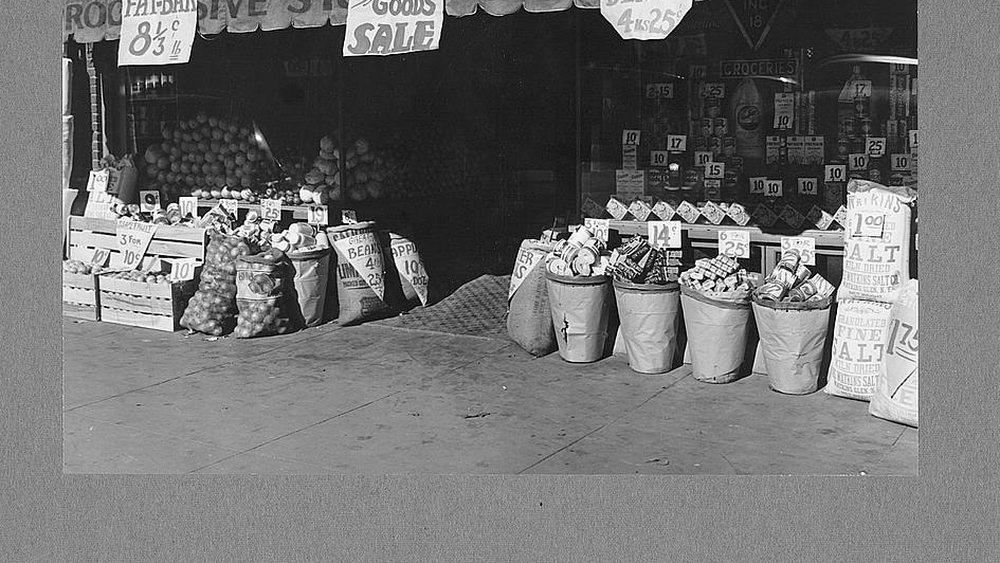
A grocery storefront and its price signs.

Events and storylines

Named events and storylines the index follows in detail. Each has its own page.

Research Triangle Park and the county’s transformationThe park of 1959 and the commuting, housing, and growth pressure that remade rural Orange County into a university region Durham’s rise while part of Orange, 1850s–1881Durham’s Station on the North Carolina Railroad, the tobacco factories and warehouses that made the town, its incorporation in 1869, and its growth until Durham County was formed from Orange in 1881 Telephones in Hillsborough and the countryside, 1883–1964Hillsborough’s first telephone line, the Morris Telephone Company’s exchanges from 1906 and its dial system of 1947, and the rural lines that reached Schley, Calvander, Efland and western Orange Orange County’s dairy cooperatives, 1944–1955The Latta Cooperative Dairy at Hillsborough and the Farmers Cooperative Dairy at Chapel Hill, their milk plants, and their 1949 merger ABC stores and liquor by the drink in Orange County, 1938–1978Orange County’s long argument over legal liquor: the 1938 defeat, the refusals to call a vote in the 1950s, the 1959 election that approved county ABC stores, and the stores at Hillsboro, Eastgate, Carr and the interstate The Walker Milling building on Court Square, 1963–1964The Walker Milling Co. building, a three-story landmark on Court Square in Hillsborough: the mill’s closing in 1963, the county’s purchase of the property to protect its land needs around the courthouse, and the 1964 demolition that historical groups asked the commissioners to stop
Show all 30 events and storylines
The Osbunn Theater, Hillsborough’s movie house, 1949–1963Hillsborough’s movie house on West King Street from 1949 to 1963: W. M. Chance’s neon marquee, the operators who ran the theater after his death, and its closing in 1963, when the building was to become a discount store and the town was left without a theater Chapel Hill’s federal post office, 1911–1922Chapel Hill’s road to a federal post office building: the postal savings bank of 1911, John Nolen’s advice on a site, the McNider lot, the bids and contract, the contractor’s death, the 1920 move to Franklin Street, and the crowded office by 1922 Liberty Loans in Orange County, 1917–1919How Orange County bought war bonds in the five Liberty Loans: Paul C. Collins’s men’s committees and the county’s four banks, the bonfires at Efland and Hillsborough, the women’s committees under Harriet M. Berry, the honor flags, and the county’s totals in each loan Chapel Hill’s movie houses and the Pickwick fire, 1916–1924The picture shows of Chapel Hill and Carrboro from the Tar Heel Theatre and the Pickwick in 1916 to Henry Guthrie’s picture house, the parish-house shows for children, the Pickwick fire and rebuilding in 1924, and the Standard, opened by and for Black residents Building the Chapel Hill Methodist church, 1924–1926How Chapel Hill’s Methodists built their James Gamble Rogers church on East Franklin Street: the building contract of 1924, the groundbreaking and cornerstone in 1925, the first services in May 1926, and the old Rosemary Street church’s new life as a garage The failure of the Chapel Hill Insurance and Realty Company, 1927–1930The receivership of the bankrupt Chapel Hill Insurance and Realty Company: the auction in front of the post office, the sale of its insurance business, John Sprunt Hill’s store deeds, the debts cut to $370,000, and the low bids for the Strowd farm and Franklin Street stores Chapel Hill’s first airports, 1928–1934Charlie Lee Martindale’s airfield north of Chapel Hill from 1928 to 1931: the first passenger flights, the North State Aircraft Company’s hangar and lessons, the Legion’s roof marker, the longer runways, Southern Airways, and the field’s place on the federal air maps Fire protection after the Pickard Hotel fire, inside and beyond the town limits, 1928–1944Chapel Hill’s fire protection after the Pickard Hotel burned in January 1928: the full-time fireman, the new water mains and lower insurance rates, then the Kenfield house fire beyond the town limits in 1929 and the neighbors’ meeting on protection outside town Chapel Hill’s business failures, 1930The run of Chapel Hill store failures in the first months of 1930: the Patterson Brothers drugstore, Moore-Johnson Hardware and S. Berman’s store, the civic clubs’ buy-at-home campaign, the University Cafeteria’s sale, and the businesses that took the empty stores Gas comes to Chapel Hill, 1930How piped gas reached Chapel Hill from Durham in 1930: the aldermen’s franchise to the Durham Gas Company, the count of signed customers, the company’s Franklin Street office, the ditchers laying mains through town, and the turning on of the gas in July The 1933 bank holiday in Orange CountyThe national bank holiday of March 1933 in Chapel Hill and Carrboro: the Bank of Chapel Hill’s closing and reopening, the merchants who kept taking checks, the University’s postponed recess, and the closing of the bank’s Carrboro branch that April Beer, repeal and the 1933 liquor voteOrange County and the end of Prohibition: the first legal beer sold in Chapel Hill in May 1933, the county’s beer licenses, the repeal and dry candidates, the November vote in which only Chapel Hill went wet, and the county’s 1938 vote against ABC stores The 1939 law ending University merchandisingHow a 1939 state law forbidding the University to sell merchandise in competition with citizens moved its coal and appliance trade to Bennett and Blocksidge, with their new Carrboro coal yard, and the Carolina Sports Shop John Kenfield opened that fall The new Carolina Theatre, 1941–1942How Chapel Hill got its new Carolina Theatre on Franklin Street: the theatre chain’s purchase of the lot in 1941, the planning commission’s Colonial front by Archie Davis, the groundbreaking, the wartime halt of 1942, the October opening and the old house renamed The Village Hillsborough’s downtown fires of 1888 and the rebuildingHow downtown Hillsborough burned twice in 1888 and was rebuilt: the March fire that took eight wooden buildings near the court house, the new buildings for Israel Turner and S. T. Smith, the November fire that burned the Recorder office, and H. L. Parish’s new brick store The Bellevue Manufacturing Company, 1904–1919How the Bellevue Manufacturing Company built its cotton mill in West Hillsborough: the land bought for the site, the incorporation under Shepperd Strudwick in 1904, the knitting mill, spinning plant and railroad siding of 1905, and the ginghams and electric power that followed Person Hall and the Main Building (South Building), 1796–1814How the University finished its first chapel and its Main Building, later South Building: Thomas Person’s gift and Person Hall, Charles Gerrard’s Tennessee lands, the Masonic cornerstone of 1798, the roofless walls, the lotteries, William Polk’s appeal, Joseph Caldwell’s subscription tours and the students’ move in 1814 Selling the county’s farm produce, 1923–1926How Orange County farmers sold their cream, eggs and poultry through the Chapel Hill school’s agriculture teachers: the cream routes to the Burlington creamery, the first pure-bred egg shipments, the marketing truck of 1924 with its county-paid driver and school-board fund, and the producers’ reports of 1926 The Franklin Street vending ban, 1970–1974How Chapel Hill banned selling on Franklin Street’s sidewalks from 1970 to 1974: the merchants’ complaint about the flower ladies, the 1970 ban that spared flowers, the young vendors’ guild and lawsuit, the 1971 ban on all street selling and the flower ladies’ move into an alley, and the board’s refusal to reopen the sidewalks The energy crisis in Chapel Hill, 1973–1974How Chapel Hill and Carrboro lived through the fuel shortages of 1973 and 1974: the gas station protests and limits, the University’s energy cuts and holiday closing, the town’s energy task force, the stations running dry, set pumping hours, the attorney general’s suits and the push for more gasoline Saving Carr Mill, 1975–1978How residents saved Carrboro’s former Alberta textile mill from demolition and it became Carr Mill: the 1975 petition and National Register nomination, the partnership that took on its reuse, the town’s 1976 permit and its amendments, and the shopping village, offices and farmers’ market of 1977 and 1978 The Downtown Commission, the downtown trolleys and Streetscape, 1988–1994How Chapel Hill and Carrboro set out to revive their downtowns in 1988 and 1989: the Main Street pledge, the Downtown Commission and its first directors, the sidewalk vendors, Chapel Hill’s downtown tax district, Carrboro’s refusals, and the trolleys that began running on Franklin Street in 1989 Internationalist Books and the killing of Bob Sheldon, 1991–1993How Internationalist Books on West Rosemary Street went on after its founder, Bob Sheldon, was shot in the store in February 1991: the mourning and vigils, the friends’ committee and reward, the reopening with volunteers, the passing of the store to its board and the march a year later Leasing and renovating the Carolina Inn, 1991–1994How the University handed the Carolina Inn to an outside operator between 1991 and 1994: the end of University management, the bidding, the Doubletree lease, the trustees’ renovation plan, the Alumni House demolition, the first profitable year and the inn’s closing for renovation

More storylines

Other storylines that include this theme, in date order. Each has its own page.

StorylineThomas Hart of Hartford, 1757–17821757–1782 · 20 events · Thomas Hart held land, office, mills and trade in colonial Orange, which shows how one man's interests could run together, and why he became unpopular with the Regulators. Granted land on the Eno from 1757, he built Hartford and bought the mill that became Hart's Mill. As sheriff from 1763 he was excused from taxes by the Assembly and found short in his account, and the Regulators whipped him in the 1770 court riot. He supplied Tryon's troops, then sat for Orange in the first Provincial Convention, the Third Provincial Congress and the state Senate before moving to Maryland in 1780 and leaving Hartford to Jesse Benton. StorylineGuns, powder and paper at Hillsborough, 1775–17781775–1778 · 6 events · During the Revolution the Hillsborough merchant William Johnston apparently produced gunpowder, lead and rifle flints at his Snow Hill plantation northeast of the town. In 1776 Nathaniel Rochester was named to a commission to set up a gun factory near Hillsborough and led a wagon train to Philadelphia to get iron for it. On April 24, 1776 the Provincial Congress told three commissioners in each district to set up a public works for muskets and bayonets, gather gunsmiths and pay no more than 5 pounds a gun, and for Hillsborough District it named Johnston, Thomas Burke and Ambrose Ramsey, with up to 1,000 pounds to spend. On November 14, 1777 a notice in the North Carolina Gazette announced a newly built paper mill near Hillsborough and asked households to save linen rags for it. John Hogan owned the mill, a mile and a half northeast of town. In 1778 the Continental officer Absalom Tatom took charge of the state's arsenal at Hillsborough as assistant quartermaster. That summer the gun factory shut down: its shop sat beside a creek on Burke's land about two miles northeast of town, and a dry summer left the creek too low to drive its wheel. The drought slowed the paper mill as well, and the Assembly gave Hogan more time to earn the state's premium for paper. StorylineGeneral Assembly sessions at Hillsborough, 1778–17841782–1789 · 18 events · An act of the April 1782 session, held at Hillsborough, directed that future General Assemblies meet there until a proper place was fixed for the seat of government. With the war over, the April 1783 session, also at Hillsborough, repealed it. That year a post route opened between Hillsborough and Richmond, part of a push to make the town the permanent seat of government. Its backers pressed the question from session to session, and in 1785 a bill to fix the capital at Hillsborough lost 41 to 37. In November 1786, meeting at Fayetteville, the Assembly ordered the state treasurer and comptroller to take their offices and records to Hillsborough, to be convenient to most of the state's people; the comptroller was slow, and the order was repeated a year later. The treasurer's office was kept in a confiscated store known as the Blue House, though its records were carted to Tarboro and back in 1787 and 1788. On August 2, 1788 the convention meeting there fixed the seat of government at Isaac Hunter's in Wake County, and on August 4 it adjourned. On November 10, 1789 the House of Commons voted to pay John Armstrong of Orange County three pounds for taking the Treasury's books and papers from Hillsborough to Fayetteville, and five pounds each to nine men of the Orange Company of Horse who guarded the money on the road. StorylineChapel Hill's first inns and taverns, 1793–18051793–1805 · 7 events · The county court licensed Chapel Hill's first taverns as taverns at the University, beginning in 1793 with James Patterson, Old East's contractor, whose inn was the starting point of the cornerstone procession. William and Betsy Nunn bought it in 1795 and added a tavern, the trustees barred students from taverns without leave in 1796, and John Taylor Sr. opened a second tavern by 1799. Betsy Nunn ran the inn from about 1805 until her death, and it stayed in the Nunn family for more than half a century. StorylineSteward's Hall and the University commons, 1797–18191797–1819 · 5 events · On December 9, 1797 Pleasant Henderson, who had moved from Mt. Pleasant to Chapel Hill that year, was chosen steward of the University of North Carolina, following John Taylor in the post; a UNC Libraries exhibit records that he enslaved nineteen people. Complaints about the food at Steward's Hall under Taylor and Henderson helped fuel the student uprising of 1799, and in 1801 Henderson's house was stoned. He did not reapply, gave up the stewardship in 1802, declined the trusteeship he was elected to, and went into business as Henderson and Searcy; he kept his Chapel Hill residence while clerk of the House of Commons from 1807 to 1830. In 1808 thirty-eight students, John Branch among them, petitioned the faculty over too little butter and beef often unsound and full of vermin. The faculty found the wording defiant and had it rewritten, and suspended John R. Stokes and Elias Foord for refusing to sign the milder version. Board at the hall rose from $30 a year in 1795 to $95 in 1818. In 1819 the trustees ended the old commons and rented Steward's Hall to Mrs. Burton, who had to feed students for no more than $9 a month the first year and allow the commencement ball in the dining room free, and students could board where they chose. StorylineThe Eagle Hotel and University Inn site, 1799–19941799–1994 · 11 events · By 1799 John Taylor Sr. had put up a tavern on Franklin Street, and the lot stayed in the hotel trade as the Eagle Hotel, the Chapel Hill Hotel and the University Inn. Nancy Hilliard added an annex for President Polk's 1847 visit. The University agreed to buy the inn in 1906, fire destroyed its main building in 1921 and Graham Memorial took the site, and in 1993 and 1994 UNC archaeologists dug up its foundations.
Show all 38 storylines
StorylineChapel Hill grows from a college village to a town, 1800–18191800–1819 · 14 events · Between 1800 and 1819 stores, houses and shops went up on Franklin Street, and in 1819 the General Assembly named commissioners for the town of Chapel Hill. Along the way John McCauley opened one of the first stores by 1803, James Hogg built a ten-room house in 1804, and Thomas H. Taylor, Christopher Barbee, Thompson and Trice and Edward Robson added a shoe store, a smithy, a store and the post office. The county court licensed stores to retail spirits in 1817 and 1818, and a student of the class of 1818 remembered about a dozen houses on the main street. StorylineHillsborough's tobacco market: factories and warehouses, 1877–18911877–1891 · 17 events · Hillsborough built up a tobacco market of warehouses and factories between 1877 and 1891, though the firms behind it dissolved or changed hands again and again. Pogue's warehouse held its opening sale in 1877, and in 1882 Major H. P. Jones received what the Observer called the first cablegram ever sent to Hillsborough, a Liverpool order for his Tar Heel smoking tobacco. In 1886 the Hookers' Central Warehouse gave the town a second warehouse. The Webb & Co. firm dissolved in 1887, A. A. Springs assigned his business in 1888, and Hooker & Crisp dissolved in 1889. E. A. Rosemond bought the Central Warehouse and in 1891 opened his warehouse at prices that pleased the farmers. StorylineThe Farmers' Alliance in Orange County, 1887–18951887–1895 · 16 events · Orange County farmers began organizing in 1887 and within a year had joined the Farmers' Alliance. Bingham Township farmers formed a club at Oaks that June, and in September an Orange County Club organized under Alex. McIver, though small attendance soon led it to put off a farmers' institute. After the Alliance's state organizer spoke at Hillsborough in March 1888, chapters formed quickly, and on May 18 delegates created the County Alliance under Sheriff John Knox Hughes. It opened an exchange in Hillsborough in 1890 and in 1891 endorsed the sub-treasury plan and all the Alliance demands. In 1893 a county committee called a bill to repeal the State Alliance charter a scheme to destroy the order. StorylineThe News, Chapel Hill's weekly that became the News of Orange County, 1893–19441893–1944 · 6 events · A Chapel Hill weekly founded in 1893 became Hillsborough's countywide paper. Begun as The Chapel Hill News and later renamed The News, it had a larger office and press in Chapel Hill by 1917, and in 1935 the Chapel Hill Weekly reported that it had moved to Hillsboro. In January 1944 W. B. Thompson and his wife sold its name, mailing right and good will to J. Roy Parker, an Ahoskie publisher on the university faculty. Parker renamed it The News of Orange County, remade it as a countywide weekly with journalism students as reporters. In November 1944, after ten months of printing about 150 miles away, it came off its own press in Hillsboro. StorylineEubanks Drug Store, Chapel Hill, 1897–19641897–1964 · 7 events · Clyde Eubanks, a Chapel Hill druggist since 1892, bought the drugstore when Dr. Roberson died in 1897. In 1901 he moved it into a new building he had put up, and in 1914 into another on his own lot about a hundred yards west. Carl Durham went to work at the store in 1913 and came back as a pharmacist after serving in the Navy Hospital Corps. In 1949 the North Carolina Pharmaceutical Association gave Eubanks its Mortar and Pestle Award. He sold the property to North Carolina National Bank and in 1964, on the eve of his retirement at 93, was named Merchant of the Year. Ben Courts then took over the store. StorylineThe Bank of Chapel Hill, 1899–19311899–1931 · 7 events · Founded in 1899 with $2,500 paid in, the Bank of Chapel Hill was, in Lefler and Wager's county history, the county's first bank after the Civil War. Julian S. Carr was elected president, and it opened for business that July. It moved into a new building on Franklin Street in 1914. In 1919 it raised its capital to open a bank in the mill town of Carrboro, and the Bank of Carrboro took in more than $30,000 in deposits on its first day. In 1925 it bought the assets of Chapel Hill's second bank, the Peoples Bank. After the bank failures of 1930, the federal government named it depository for postal savings at the Chapel Hill post office in 1931. StorylineTelephones in Chapel Hill, 1901–19921901–1992 · 39 events · Telephone service in Chapel Hill grew from one professor's telephone in 1901 to an automatic dial system owned by the University. Bryant lists Professor Eben Alexander as the first in town to have a telephone, number 1 in 1901, and by Battle's account Professor Joshua W. Gore had the first long-distance line set up that session. In 1922 more than eighty citizens protested a rate increase to the state Corporation Commission. In 1925 the University bought the Chapel Hill Telephone Company to keep it from outside buyers. In 1927 it ordered dial equipment to replace the overloaded manual board, and between December 1927 and January 1928 the town changed over to automatic service, with new numbers and higher rates. The University-owned company opened a Campus exchange in 1969 and planned one-party service in the early 1970s, and in 1974 a state commission recommended selling it to Southern Bell. Southern Bell bought the system in 1977. The towns fought its higher installation charges and asked it to pay taxes on the property, and in 1978 residents opposed its plan to enlarge the Rosemary Street exchange beside the Old Methodist Church. In 1981 Southern Bell switched Chapel Hill to an electronic system, Chapel Hill telephone workers joined the 1983 national strike, and in 1984, after the AT&T breakup, UNC replaced its dormitory telephones with modular jacks. In 1988 Bingham Township residents petitioned to join a toll-free Triangle calling region and calls between Chapel Hill and Pittsboro became local, and in 1989 a trial of flat-rate calling across the Triangle began. In 1990 and 1991 the county commissioners and the Town Council pressed for flat-rate and toll-free calling, in 1992 half-price calling across the Triangle began as an experiment, and Southern Bell switched its Chapel Hill office to digital equipment. StorylineShepperd Strudwick and Hillsborough's new enterprises, 1902–19091902–1909 · 13 events · Shepperd Strudwick, who brought his family back to Hillsborough about 1902, stood at the head of one new enterprise after another. Ralph Adams Cram designed his new house at the corner of Churton and Union. In 1904 a new Business Men's Association elected him president, and he became president of the Bellevue Manufacturing Company, a cotton mill in west Hillsborough. In 1905 voters made him a town commissioner on a ticket understood to favor licensing barrooms. In 1907 the new Hillsboro Clay Manufacturing Company chose him president and treasurer for a brick plant, and by 1909 the Observer listed him at the head of the clay company and the Bellevue mill. StorylineFoister’s camera shop on Franklin Street, 1911–19891911–1989 · 4 events · Robert W. Foister began selling cameras on Franklin Street in 1911 from a section of E. A. Brown's store. After a 1925 fire he moved across the street, and from 1926 Bayard Wootten made portraits in a studio over his store. Foister's Camera Store had closed by April 1989, one of the closings a downtown merchant blamed on falling foot traffic. StorylineSunday closing and Sunday beer sales in Chapel Hill and Carrboro, 1916–19751916–1975 · 13 events · Chapel Hill's aldermen let drug stores keep set Sunday hours in 1916, and in April 1923 they closed the town's stores on Sunday, leaving cafes and drug stores two short windows to sell drinks and tobacco, soon lengthened. In 1924 the Carrboro aldermen turned down the Methodist and Baptist churches' call to stop all Sunday trade and set Sunday hours instead, after more than half the town's voters petitioned against it. In 1928 Chapel Hill's mayor heard charges against druggists who had sold cigarettes during church hours, and in 1933 the aldermen ordered the grocery stores closed on Sundays. Chapel Hill stopped late-night beer sales in 1942, and the county banned Sunday beer sales in 1946. Both towns repealed their Sunday bans on beer and wine in 1971, but Carrboro restored its ban in 1974, and a court dismissed merchants' suit against it. In December 1975 a newly elected Carrboro board repealed it again. StorylineThe Orange County Building and Loan Association, 1916–19611916–1961 · 8 events · Lending to members to buy or improve real estate, a Chapel Hill building and loan association grew from a 1916 subscription drive into a savings and loan with record assets of $7.3 million. Its own later reports gave March 1, 1920 as the date of its organization. By 1928 it had lent $375,075 for 97 homes without a single foreclosure, and by 1932 it had lent $710,000 on 199 homes, most of them in Chapel Hill, while its president said it had foreclosed only one mortgage. Its assets grew elevenfold after 1950, and in 1959 it bought the Goldston property for a new office. In 1961 it took the name Orange County Savings and Loan Association. StorylineThe Chapel Hill Hardware Company and its successors, 1917–19301917–1930 · 4 events · The Chapel Hill Hardware Company came through a receivership in 1917, but its Franklin Street store was lost in the Depression. Run by H. C. Wills and his sons, the company shut its doors on June 11, 1917, and R. L. Strowd was appointed receiver. By September it had been relieved of the receivership and had reopened on a cash basis under H. C. Wills. By April 1928 T. M. Johnson and his son-in-law Ralph M. Moore had bought out the company and reopened the store as the Moore-Johnson Hardware Company. In 1930 the successor store failed, one of several Franklin Street businesses lost in the Depression, and Orange Hardware took it over. StorylineHenry Guthrie's West Franklin Street property and Black-owned businesses, 1918–19241918–1924 · 5 events · Black-owned businesses grew up around West Franklin Street, where Black families were settling, while Henry "Buddy" Guthrie's property there suffered fire and debt. About 1918 Guthrie opened a picture house. In October 1923 the Black merchant Van Nunn finished a new store on Rosemary Street. That November fire destroyed Guthrie's garage behind the theatre for Black patrons, with four automobiles of Black residents, the second fire on his property in that block in about a month, the News said. On July 4, 1924 the Standard, a movie house owned by and run for Black residents, opened on West Franklin Street. That month a trustee advertised the Guthries' land for sale after they fell behind on the note. StorylineThe Hill Bakery, 1921–19541921–1954 · 5 events · The Hill Bakery supplied most of Chapel Hill's bread for over thirty years, under a line of owners. William B. Neal started it in 1921 and in 1925 sold it to his assistants, Charles B. Guthrie and W. V. Stuart, leaving for Florida; he came back in 1927 and was managing it again by April. Mrs. W. B. Neal ran the bakery after her husband died in 1935, and she sold it to Robert A. Reinhardt of Waynesboro, Virginia, who came to run it in 1945; Bryant's Franklin Street survey spells his name Rhinehart and places the sale in 1943. In 1954 he sold it to Thell Jernigan, and Thell's Bakery stayed in business into the mid-1980s. StorylineHillsboro's improvements, 1922–19231922–1923 · 5 events · In 1922 and 1923 Hillsboro gained a new bridge, a new school and paved streets. On February 8, 1922 the State Highway Commission let a reinforced concrete bridge over the Eno to contractor George W. Kane for $30,651.20; it was the main way into town from the south until 1964. That September the town's new $100,000 brick school on West Tryon Street was nearly ready, and by early 1923 it housed grades one through eleven of the consolidated Hillsboro schools. Paving the streets with bond money cost Main Street some of its old elms and maples, to the regret of some citizens, and in April the Carolina Playmakers performed in the school's new auditorium. StorylineWalker's Funeral Home, 1922–19631922–1963 · 4 events · A Hillsborough family business opened in 1922 by Houston J. Walker and his son Allen H. Walker Sr. grew over four decades into a funeral firm with branches in Chapel Hill and Mebane. The Walkers began with a Model T Ford and a Reo hearse. In 1936 the firm bought and remodeled a building at 120 West Franklin Street in Chapel Hill, and in January 1937 the Weekly reported the branch finished and open, with I. M. Walker as manager and day-and-night ambulance service. A Mebane branch followed in 1945. On its 41st anniversary in 1963 the firm dedicated the chapel in its brick building on North Churton Street in Hillsborough, honoring Houston J. Walker and his late wife. StorylineAuctioning land into house lots, 1923–19251923–1925 · 7 events · From 1923 to 1925 farms and fields around Chapel Hill and Carrboro were cut into house lots. The Chapel Hill Insurance and Realty Company opened Forest Hills on the Pittsboro road and lots on North Street in 1923. In 1924 the Durham Auction Company sold the Lloyd field in Carrboro and part of the old Purefoy land at sales with bands and free dinners, and W. C. Coker's woods east of the campus were laid out in large lots. In 1925 the realty company bid in most of Robert L. Strowd's farm east of town at auction and began selling lots there as Davie Woods. StorylineThe Sorrell building theatre: Carolina, Village and Varsity, 1927–19801927–1980 · 10 events · W. B. Sorrell's building on the north side of Franklin Street opened in 1927 with the Carolina Theatre between his optometry shop and Jeff's Campus Confectionery. The theatre became the Village in 1942, when a new Carolina opened across the street, and the Varsity in 1951. After pickets in 1961 it agreed to admit Black University students. Fire gutted it in November 1966, and it reopened in September 1967. StorylineRural electrification and Piedmont Electric, 1933–19641933–1964 · 40 events · Rural power in Orange County began in 1933 with a three-mile federally funded line from Chapel Hill to Calvander, carried on to Orange Grove with farmers' donations. The Piedmont Electric Membership Corporation, a cooperative formed under the Rural Electrification Administration, was incorporated in 1938 and energized its first lines from a Hillsborough substation in 1939. It took bids for 150 miles of new lines in 1945, had 1,271 members in 1947, when its manager reckoned that 65 percent of Orange farms had electricity, and built its Hillsborough headquarters in 1949 with an REA loan; by 1953 it ran about 1,100 miles of line. At its silver anniversary meeting in June 1964 Piedmont Electric reported 6,300 members in six counties, against 356 in three counties in 1939. StorylineChapel Hill's most valuable citizen award, 1935–19421935–1942 · 5 events · From 1935 the Carolina Theatre gave an annual trophy to Chapel Hill's most valuable citizen, chosen by a committee. The first winner, Mrs. R. B. Lawson, was cited for years of aid to the poor through the King's Daughters and volunteer relief work. Automobile dealer Bruce Strowd won in 1937 for his work for the town's schoolchildren, and on unemployment and the county welfare board. Harry F. Comer of the University YMCA won for 1938, and R. M. Grumman of the University extension division and Mrs. Grumman, until recently a librarian and teacher at the Carrboro school, in 1939. In January 1942 the trophy, then given by the Carolina and Pick theatres, went to Mrs. Robert H. Wettach. StorylineRationing and price control in Chapel Hill and Hillsborough, 1942–19451942–1945 · 9 events · From 1942 to 1945 local boards and volunteers ran wartime rationing and price control in Chapel Hill and Hillsborough. Early in 1942 the Chapel Hill board could allot only a handful of tires, and a run on sugar led grocers to limit each customer. The board's Community Service Committee, chaired by Guion Griffis Johnson, ran a program the Office of Price Administration called a model for the Southeast, and in October 1943 some 1,225 volunteers issued 9,947 copies of War Ration Book No. 4. The OPA penalized a market for selling above ceiling prices, thieves robbed the Hillsboro ration board office of coupons in 1945, and the Hillsborough board closed its office after November 30, 1945. StorylineRestoring the Colonial Inn, 1946–19471946–1949 · 6 events · Col. Paul Henderson bought the worn Colonial Inn at auction in April 1946 for $11,800, and that May more than 100 Hillsboro citizens and firms petitioned the Federal Housing Administration for the permits and materials to restore it. Work began in July, and the inn reopened on May 1, 1947 as Hillsboro's first hotel in several years, managed by Martin Henderson. Henderson's daughter Josephine Humphries painted murals of four town landmarks in its private dining room in 1948, and in 1949 the commissioners cut the inn's tax value after Martin Henderson reported that it had lost $12,000 the year before. StorylineInterstate 85 comes to northern Orange County, 1955–19621955–1962 · 22 events · Rebuilding US 70 to interstate standards through northern Orange County meant a road that would bypass Efland, Hillsboro and University Station, and at a 1957 hearing landowners on the new route and businesses on old Highway 70 protested. In 1956 the Highway Commission had decided to rebuild the road as a limited-access highway, with the new federal road act paying 90 percent, and federal officials approved a route south of Hillsboro. Contracts for the stretch south of Hillsboro were let in November 1957. Near the new Interstate 85 James Freeland built a motel, the General Sherman Restaurant and the county's fourth ABC store, a government liquor store, in 1960 and 1961, and in 1962 the Dixie Motor Inn. StorylineDaniel Boone Village, Hillsborough, 1966–19781966–1978 · 8 events · James J. Freeland's Daniel Boone Village grew from an inn and restaurant at the South Churton Street exit of I-85 in 1966 into an amusement park with a railroad, rides, rinks, an amphitheater and a wax museum by the early 1970s. The rides were gone by the end of the decade and a shopping center replaced the park's north end, while Freeland moved old buildings to the village and the Big Barn hosted campus parties. StorylineThe Cat’s Cradle and the “Chapel Hill sound” of the 1990s1969–2020 · 35 events · The Cat’s Cradle opened in 1969, Merge Records was founded in 1989, and by 1992 Superchunk, Polvo, Archers of Loaf and the clubs of Franklin Street had national magazines asking whether Chapel Hill was the next Seattle. The Cradle moved to Carrboro in 1993, Ben Folds Five and the Squirrel Nut Zippers followed, and Merge’s anniversary festivals and the Cradle’s 50th year in 2019 marked a scene that outlived the label hunt. StorylineUniversity Mall comes to Estes Drive, 1972–19731972–1973 · 4 events · University Mall was built on Estes Drive in 1972 and 1973 while the state planned to widen the road in front of it. The Chapel Hill aldermen let it open before the widening was done, with a temporary third lane, and the mall opened on August 2, 1973 with room for about 60 stores. StorylineThe ArtSchool and the ArtsCenter in Carrboro, 1974–19941974–1994 · 34 events · Jacques Menache began the ArtSchool in Carrboro in 1974 with painting and drawing classes on East Main Street, and it added a gallery, dance, drama and the Gallery Theatre. It leased space in Carr Mill Mall late in 1978. In 1986 a partnership formed with Menache bought the former Piggly Wiggly shopping center on East Main Street, and the school, renamed The Arts Center, opened its new building there in July 1987. Menache resigned in 1988 and Aubrey Bowie became director. In 1990, behind on its rent, the center sued its landlord, banks foreclosed on a $150,000 loan its guarantors had backed, and a task force cut its debt to $240,000. Chapel Hill, Carrboro, Orange County and Glaxo gave it money in 1990 and 1991, and in 1992 activists charged it with neglecting minority artists. In 1994 the center began a $900,000 drive to buy its building, and Carrboro pledged $15,000 a year for ten years. StorylineNew hotels and the room tax in Chapel Hill, 1979–19871979–1987 · 9 events · In 1979 Chapel Hill approved the 148-room Hotel L'Europe on the bypass. In 1985 the Planning Board approved a Hampton Inn nearby and the 80-room Siena Hotel on the former Brady's Restaurant site, where neighbors objected until an agreement was reached in 1986. The Hampton Inn opened in January 1987, a 3 percent room tax took effect that July over the University's opposition, and the Siena was set to open that fall. StorylineCommunity development block grants in Chapel Hill, Carrboro and the county, 1981–19841981–1984 · 8 events · In 1981 HUD approved a $1 million block grant for Orange County's North Fairview community. Under the state-administered grants that followed, the state turned down Chapel Hill's 1982 application because the Housing Authority had been slow to spend earlier money, then in 1983 funded sewer lines and paving in University Heights and a Carrboro business loan. In 1984 Chapel Hill planned for a new federal entitlement grant and Carrboro applied to rebuild the Lloyd and Broad Street area. StorylineThe University Village shopping center on N.C. 54, 1988–19911988–1991 · 4 events · East-West Partners withdrew its 1988 plan for an eight-screen theater and retail complex on N.C. 54 after town staff found too little parking and unsafe entrances. A smaller design without the theaters, which neighbors had opposed, won Planning Board approval and, in March 1989, a council permit with a Prestwick Road entrance to keep traffic off Hamilton Road. Construction began in March 1991. StorylineFranklin Street’s changing storefronts, 1990–19941990–1994 · 42 events · Between 1990 and 1992 Franklin Street lost the Carolina Blue and White movie house, Baskin-Robbins, Top of the Hill and University Printery, while The Parlor, Aunt Louise's Bookshop for Children and Mediterranean Deli opened and the old Fowler's grocery became a shopping center. A February 1991 fire gutted the Scott Building at Franklin and Henderson streets and left Hector's in a lawsuit with its landlord. In 1992 the council approved a new building for the Top of the Hill corner. In 1993 and 1994 The Intimate Bookshop reopened in a rebuilt store after a 1992 arson fire, the Hector's building was restored for a cafe and an arcade, west-end merchants organized against crime, and a new Top of the Hill building filled the corner of Franklin and Columbia streets. StorylineThe Midway Development Commission, 1992–19931992–1993 · 5 events · In 1992 the Midway Development Commission asked Chapel Hill for money to revitalize the largely Black business and church district on the Chapel Hill-Carrboro line. The town granted it $6,000 in 1993, and it incorporated that March. A teen center it backed closed that fall after a police memo linked it to a downtown beating, though the chief later said he had no indication anyone from the center was involved.

Indexed works

Works about Business, Shops & Commerce from library and archive catalogs. The most widely held appear first; novels are not shown here. Follow a link to find a copy or view the material.

Widely held

Papa D

Danziger, Edward G. · 1967

Edward G. Danziger's memoir of love and cooking, published by J. F. Blair in 1967. Danziger (1893 to 1972) ran Danziger's Old World Restaurant in Chapel Hill, and the book tells his life as a restaurateur in the town.

Included because: Catalog heading in the Durham record: Restaurants -- North Carolina -- Chapel Hill.

The Research Triangle: From Tobacco Road to Global Prominence

Rohe, William M. · 2011 · University of Pennsylvania Press

William M. Rohe's history of Research Triangle Park and the region around it, published by the University of Pennsylvania Press in 2011. Topics include regional planning and the economic and social conditions of the Research Triangle Park region, one corner of which is Chapel Hill and the university. 298 pages with illustrations and maps.

Included because: Catalog heading in the OCPL record: Research Triangle Park (N.C.) -- History.

The Black family in slavery and freedom, 1750-1925

Gutman, Herbert G. (Herbert George), 1928-1985 · 1976 · Pantheon Books

Herbert G. Gutman's 1976 history of African American families from 1750 to 1925, published by Pantheon Books in New York, 664 pages with 38 leaves of plates. Its Orange County connection is the Bennehan and Cameron family plantations, Stagville and Fairntosh: the book discusses the people enslaved by Richard Bennehan (1743-1825) and the Camerons, and follows family ties among them under slavery and after emancipation. Subjects include African American families and enslaved persons in Orange County.

Included because: The record names this subject alongside a heading for the county or its towns.

Reviewed in The Journal of Southern History (1977), The William and Mary Quarterly (1977), The American Historical Review (1977), Journal of American History (1977), The History Teacher (1977), Political Science Quarterly (1977), Journal of Black Psychology (1978), Journal of Social History (1978), Civil War history (1978), Signs (1978).

William Terry Couch and the Politics of Academic Publishing

Shiflett, Orvin Lee · 2015 · McFarland & Company, Inc., Publishers

Orvin Lee Shiflett's biography of William Terry Couch, 1901 to 1988, the editor who built up UNC Press at Chapel Hill over four decades in publishing, with a subtitle that calls his career a lightning rod for controversy. Chapters treat culture in the South, a case history in book publishing, objectivity and social science and 'The Sainted Book Burners'. It bears on scholarly publishing and university presses in the twentieth century. McFarland, 2015, 268 pages with illustrations.

Included because: The record names this subject alongside a heading for the county or its towns.

A Generosity of Spirit: The Early History of the Research Triangle Park

Link, Albert N. · 1995 · Research Triangle Foundation of North Carolina

Albert N. Link's early history of Research Triangle Park, published in 1995 by the Research Triangle Foundation of North Carolina. Topics include research parks, research institutes and industrial research in the state, with the park's own history at the center. 149 pages with illustrations and maps.

Included because: Catalog heading in the Chapel Hill PL record: Research Triangle Park (N.C.) -- History.

The recipe : have a seat at our table

Council, Annette Marie · 2005 · NP Press

Annette Marie Council's book about her family and Mama Dip's Country Kitchen, the Chapel Hill restaurant, published by NP Press in 2005. Subjects include African Americans in Chapel Hill, the restaurant's history and family biography. Fourteen introductory pages and 223 pages of text with illustrations, part local history and part family account.

Included because: Catalog heading in the UNC record: Restaurants.

Show 2 more

From seed to harvest

Link, Albert N. · 2002 · Research Triangle Foundation of North Carolina

Albert N. Link's history of the Research Triangle Park, the research park founded to draw on the universities at Chapel Hill, Durham and Raleigh, published in 2002 by the Research Triangle Foundation of North Carolina in 278 pages with illustrations. Topics include research parks, research institutes and industrial research in North Carolina and the history of the park itself.

Included because: Catalog heading in the NC Cardinal record: Research Triangle Park (N.C.) -- History.

Many Missions: Research Triangle Institute's First 31 Years

Larrabee, Charles X. · 1991

Charles X. Larrabee's history of the Research Triangle Institute over its first thirty one years, published in 1991. Topics include research institutes and research parks in North Carolina and the history of Research Triangle Park, the research district that lies between Chapel Hill, Durham and Raleigh.

Included because: Catalog heading in the OCPL record: Research Triangle Park (N.C.) -- History.

Recently indexed: 'Varsity banking (1959) · The Bull's Head Book Shop (1928) · Every book for rent or sale (1938) · The Franklin Street gourmet (1986) · A guide to automotive repairs in Chapel Hill (1973) · Mr. Merchant, here is vital information : the University of North Carolina program to aid retailing (1949)

Search all 895 indexed works →

Start at OCPL

Books in OCPL’s Rebecca B. Wall Local History Collection whose titles, catalog subjects, or descriptions match this theme. The Friends’ recommended starting points are labelled. Books marked Wider context cover the broader subject rather than this theme itself.

  • Rebecca Wall Collection · NC 975.656 GAD Celebrating A Triangle Millennium Gaddy, Charlie · 1999

    Large-format pictorial volume marking the turn of the millennium in the Triangle, compiled by Charlie Gaddy and published in 1999 by Towery of Memphis. Its 399 pages of illustrations, many in color, cover the Chapel Hill, Durham and Raleigh regions, with profiles of area business enterprises and an index. Topics include the civilization and pictorial record of all three regions.

  • Start here · NC 975.601 WAR Indian Communities on the North Carolina Piedmont, A.D. 1000 to 1700 Ward, H. Trawick · 1993

    H. Trawick Ward and R. P. Stephen Davis, Jr. present the archaeology of Siouan-speaking communities on the North Carolina Piedmont from about A.D. 1000 to 1700, including sites along the Eno near Hillsborough, with attention to trade, social change and the spread of cultural practices. Published by the Research Laboratories of Anthropology at the University of North Carolina in 1993, 466 pages with illustrations and maps.

  • Foundational · NC 338.476 GLA The Textile Industry in North Carolina: A History Glass, Brent D. · 1992

    A history of North Carolina's textile industry by Brent D. Glass, published in 1992 by the state Division of Archives and History; xiv and 119 illustrated pages with a bibliography and index. Glass, a public historian with a doctorate from Chapel Hill, later directed the Smithsonian's National Museum of American History.

Show 6 more
  • Wider context · NC 381.109 WOO All in A Day's Work: Historic General Stores of Macon and Surrounding Counties of North Carolina Woody, Londa L. · 2000

    General stores of Macon County and neighboring counties in the mountains of southwestern North Carolina, described by Londa L. Woody with illustrations by Gail Wood. Published by Parkway Publishers of Boone in 2000, 79 pages.

  • Rebecca Wall Collection · NC 929.209 SAN The Cameron Plantation in Central North Carolina (1776-1973) and Its Founder Richard Bennehan Sanders, Charles Richard · 1974

    Charles Richard Sanders's short history of the Cameron plantation in central North Carolina from 1776 to 1973 and of its founder Richard Bennehan, whose lands became Stagville and Fairntosh. It covers the Bennehan and Cameron families and their connection with the University of North Carolina at Chapel Hill. Published by the author in Durham in 1974, 79 pages with a plate and illustrations.

  • Wider context · NC 910.4 HUG The Carolina Pirates and Colonial Commerce, 1670-1740 Hughson, Shirley Carter · 1894

    Shirley Carter Hughson's study of piracy along the Carolina coast and of colonial trade from 1670 to 1740, in both North and South Carolina. It appeared in 1894 as numbers 5 to 7 of the twelfth series of the Johns Hopkins University Studies in Historical and Political Science, edited by Herbert B. Adams; 134 pages.

  • Wider context · NC 975.655 ROHE The Research Triangle: From Tobacco Road to Global Prominence Rohe, William M. · 2011

    William M. Rohe's history of Research Triangle Park and the region around it, published by the University of Pennsylvania Press in 2011. Topics include regional planning and the economic and social conditions of the Research Triangle Park region, one corner of which is Chapel Hill and the university. 298 pages with illustrations and maps.

  • Wider context · 641.509 PROSPERO Chefs of the Triangle: Their Lives, Recipes, and Restaurants Prospero, Ann · 2009

    Ann Prospero profiles Research Triangle cooks and restaurants, including recipes from each kitchen. Combining biography and cookbook, it covers a region that includes Chapel Hill. Published by John F. Blair in 2009, 224 pages with illustrations.

  • Rebecca Wall Collection · NC 607.2 LAR Many Missions: Research Triangle Institute's First 31 Years Larrabee, Charles X. · 1991

    Charles X. Larrabee's history of the Research Triangle Institute over its first thirty one years, published in 1991. Topics include research institutes and research parks in North Carolina and the history of Research Triangle Park, the research district that lies between Chapel Hill, Durham and Raleigh.

In the chronology

A selection of 12 events from the 1,439 chronology entries for this theme, including highlights and examples from different years. See all 1,439 dated events in the chronology →

  1. An order in Council grants Henry McCulloh's associates warrants for 1,200,000 acres along the Yadkin, Eno and Catawba On a petition from Henry McCulloh, Murray Crymble, James Huey and others, Arthur Dobbs among them, an order in Council allowed them warrants for 1,200,000 acres in the back country, to be located chiefly along the Yadkin, the Eno and the Catawba. Under the grant McCulloh was to settle substantial people on the land to carry on the potash trade and raise hemp and other naval stores. People: Henry McCulloh, Arthur Dobbs Place: Eno River (later Orange County) · Also named: Murray Crymble, James HueySearch the index · Internet Archive: R. D. W. Connor, William K. Boyd and J. G. de Roulhac Hamilton, History of North Carolina (1919), vol. 1, p. 165
  2. The county tax list counts 36 white polls and 82 taxable enslaved people in Hillsborough town Orange County's 1790 tax list returned 2,272 polls and 406,106 acres across its eight districts, with a separate list for Hillsborough town showing 36 white polls against 82 black polls. William Hooper was charged for 22 of them, John Taylor for 10 and Francis Childs for 5. People: William Hooper, Walter Alves Place: Orange County · Also named: John Taylor, Francis ChildsDocumenting the American South: List of taxpayers in Orange County in 1790
  3. Suit by William Kirkland and others leads to the sale of Hannah and her children Legal proceedings brought by William Kirkland, Catlett Campbell, Jacob Greer and Isaac Mordecai against Robert Bell placed Hannah and her children Jenny and David in the hands of the sheriff. Sheriff Samuel Turrentine sold the three at public auction at the Hillsborough Market House to Duncan Cameron for 200 pounds. People: Duncan Cameron, William Kirkland Place: Hillsborough, Market House · Also named: Catlett Campbell, Jacob Greer, Isaac Mordecai, Robert Bell, Samuel Turrentine, David, Hannah, JennyOn These Grounds (UNC Libraries): 1804, Sale of Hannah, Jenny, and David
  4. The North Carolina Railroad is chartered and built The General Assembly chartered the North Carolina Railroad in 1849, after Senate speaker Calvin Graves cast the deciding vote. The state built the 223-mile line from Goldsboro to Charlotte between 1851 and 1856, running it through Hillsborough, and the first train ran its full length in January 1856. Place: Hillsborough · Also named: Calvin Graves · Also mentions: North Carolina RailroadIn the index: North Carolina Railroad Company · Documenting the American South: Railroads in North Carolina
  5. E. H. Pogue & Co. hold the opening sale at the Hillsboro Tobacco Warehouse The Hillsboro Tobacco Warehouse, run by E. H. Pogue & Co., held its opening sale on Tuesday, January 5, 1886, and the Observer reported a heavy break with good prices. Three days earlier Pogue and fourteen other men had incorporated the Orange County Tobacco Association to buy and sell leaf tobacco. People: E. H. Pogue Place: HillsboroughSearch the index · Orange County Observer (Hillsborough), January 9, 1886, p. 3 (opening sale report and notice of incorporation)
  6. Josiah Turner moves his saddle and harness shop from Hillsborough to Durham Saddle and harness maker Josiah Turner closed his Hillsborough shop and reopened opposite the post office in Durham, inviting his Orange County customers to follow. Place: Hillsborough · Also named: Josiah TurnerSearch the index · Orange County Observer (Hillsborough), March 29, 1890, p. 3
  7. The University of North Carolina Press is founded On June 12, 1922, university librarian Louis Round Wilson, nine other faculty members and three trustees founded the University of North Carolina Press, the first university press in the South. Its first book, William C. Coker's study of water molds, appeared in 1923, and William T. Couch became director in 1932. People: William T. Couch, Louis Round Wilson Place: Chapel Hill · Also named: William C. CokerUNC Research: Local Ink, Inc. (July 20, 2020) · Also: The Daily Tar Heel, April 23, 1981, p. 2; The Daily Tar Heel, December 7, 1990, p. 1
  8. Fire destroys Ralph Pendergraft's Chevrolet agency on West Franklin Street The frame building of the Chevrolet dealership Pendergraft had opened at Franklin and Roberson streets burned. A small brick building went up on the site and later housed a grocery and an auto service. Place: Pendergraft Chevrolet Agency, SW corner of West Franklin and Roberson streets, Chapel Hill · Also named: Ralph PendergraftSearch the index · Bernard Lee Bryant Jr., Occupants and Structures of Franklin Street, Chapel Hill (1998; Chapel Hill Historical Society, 1999), scan p. 231 · Also: Chapel Hill Weekly, May 18, 1928, p. 1
  9. The State Banking Commission turns down a Durham Bank and Trust branch in Chapel Hill Meeting in Raleigh, the State Banking Commission voted unanimously against the Durham Bank and Trust Company's application to open a branch in Chapel Hill, ending a two-month campaign by the Durham bank. The Bank of Chapel Hill, the town's only bank since 1899, had argued that the town could not support two banks, and most of the 40 people who spoke at an October 3 hearing in Chapel Hill opposed the branch. Place: Raleigh; Chapel Hill · Also mentions: Bank of Chapel HillSearch the index · The News of Orange County (Hillsborough), October 19, 1950, p. 1
  10. Carrboro Farmers’ Market is established After organizing and planning in 1977, the Carrboro Farmers' Market began business in 1978, once the town amended its permit in February 1978 to allow the market at Carr Mill. The Daily Tar Heel reported that the Carrboro Farm and Craft Market opened on Saturday, August 5, 1978, with local produce, arts and crafts, open Saturdays from 7:30 a.m. behind the Sidetrack and next to the rescue squad. Place: Carrboro · Also mentions: Carr MillSearch the index · Carrboro Farmers’ Market — Mission & History · Also: Margaret A. Thomas, Carr Mill, Carrboro, North Carolina; The Daily Tar Heel, July 27, 1978, p. 2; The Daily Tar Heel, August 24, 1978, p. 10
  11. Tropical Storm Chantal floods Orange County Chantal dropped up to 10 inches of rain on Orange County on the night of July 6, 2025. Chapel Hill crews made more than 50 water rescues around Camelot Village and Eastgate Crossing, Carrboro's Weatherhill Pointe flooded, and the Eno at Hillsborough set a record crest on July 7. The county declared an emergency that day. Place: Chapel HillSearch the index · Orange County, NC Emergency Operations Center: Tropical Storm Chantal Executive Summary #8 (September 4, 2025)
  12. Dual Supply puts up a going-out-of-business sign Dual Supply, the downtown hardware store at 115 West King Street, began a closing sale set to run until the shop closed at the end of September 2026. Place: 115 West King Street, HillsboroughSearch the index · Chapelboro.com, September 3, 2026 (Brighton McConnell)

See all 1,439 dated events in the chronology →

Places in this theme

Buildings, schools, churches and other sites named in the dated events on this page, the most often named first. The map shows the 96 with a known location.

Map tiles © OpenStreetMap contributors. Site locations from the N.C. State Historic Preservation Office survey, Open Orange, Orange County GIS, OpenStreetMap and a few other published sources named on each site’s page; town and community pins show approximate locations.

Show 131 more

All places and the county map →

Research sources

Sources and research tools for this subject. Research guide: How to research with Orange County Indexed.

Background 10

Show all 10

National Register files

Historic sites, markers, and maps

Records of the time

Collections and databases 8

Show all 8

Local help

Background reading at OCPL

Books from OCPL’s Rebecca B. Wall Local History Collection that provide broader context. They may not discuss Business, Shops & Commerce directly.

  • Background reading · Rebecca Wall Collection Belk: A Century of Retail Leadership Covington, Howard E. · 1988

    Howard E. Covington Jr. tells the first hundred years of the Belk department store chain, from the store William Henry Belk opened in Monroe in 1888 as the New York Racket, renamed Belk Brothers when his brother, Dr. John Belk, became his partner, to the local partnerships through which the business grew. Published by UNC Press in 1988; 308 pages, illustrated, with an index.

    Subjects in the Library of Congress catalog record: Belk Stores Services -- History; Department stores -- United States -- History; Retail trade -- United States -- History OCPL call number: NC 381 COV

Search the Wall Collection for related books →

Picture: Farm Security Administration photographs, 1939–1940, Library of Congress; public domain. Image credits →

More to discover

Keep Reading Local

The Friends connect people with new library materials, local writers and publishers, and resources documenting Orange County.

Two mice reading back to back against a leaf, with the hand-lettered words Friends of the Orange County Public Library
Illustration by Caldecott Medalist Matthew Cordell, gifted to the Friends 2026