Skip to content

Storyline · 1775–1778

Guns, powder and paper at Hillsborough, 1775–1778

During the Revolution the Hillsborough merchant William Johnston apparently produced gunpowder, lead and rifle flints at his Snow Hill plantation northeast of the town. In 1776 Nathaniel Rochester was named to a commission to set up a gun factory near Hillsborough and led a wagon train to Philadelphia to get iron for it. On April 24, 1776 the Provincial Congress told three commissioners in each district to set up a public works for muskets and bayonets, gather gunsmiths and pay no more than 5 pounds a gun, and for Hillsborough District it named Johnston, Thomas Burke and Ambrose Ramsey, with up to 1,000 pounds to spend. On November 14, 1777 a notice in the North Carolina Gazette announced a newly built paper mill near Hillsborough and asked households to save linen rags for it. John Hogan owned the mill, a mile and a half northeast of town. In 1778 the Continental officer Absalom Tatom took charge of the state's arsenal at Hillsborough as assistant quartermaster. That summer the gun factory shut down: its shop sat beside a creek on Burke's land about two miles northeast of town, and a dry summer left the creek too low to drive its wheel. The drought slowed the paper mill as well, and the Assembly gave Hogan more time to earn the state's premium for paper.

1775–1778 Filed under Work, Labor & Industry 6 dated events

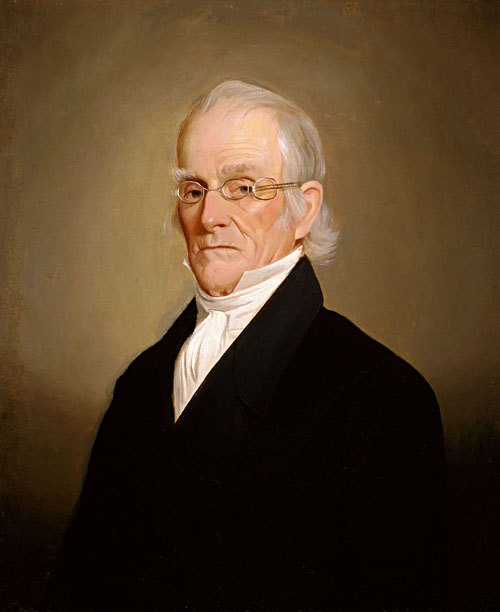
Nathaniel Rochester, a commissioner of the Hillsborough gun factory, in a portrait of 1831
Nathaniel Rochester, a commissioner of the Hillsborough gun factory, in a portrait of 1831Portrait of 1831; via Wikimedia Commons · Public domain · Source
Towns
Hillsborough
Sites
1
People with pages
5

The events, date by date

Every statement above comes from these dated entries in the chronology. Each links to its source.

  1. William Johnston produces gunpowder, lead and flints at Snow Hill During the Revolution Hillsborough merchant William Johnston apparently produced gunpowder, lead and rifle flints at his Snow Hill plantation northeast of the town. People: William Johnston Place: Snow HillSearch the index · NCpedia: Johnston, William (Dictionary of North Carolina Biography)
  2. Rochester is named to a commission to set up a gun factory near Hillsborough The commission was to establish a gun factory near Hillsborough, and Rochester led a wagon train to Philadelphia to obtain iron for it. Illness later that year ended his military service. People: Nathaniel Rochester Place: HillsboroughSearch the index · NCpedia (Dictionary of North Carolina Biography): Rochester, Nathaniel
  3. The Provincial Congress orders a public musket factory for Hillsborough District under Johnston, Burke and Ramsey The congress told three commissioners in each district to set up a public works for muskets and bayonets, gather gunsmiths and pay no more than 5 pounds a gun. For Hillsborough District it named William Johnston, Thomas Burke and Ambrose Ramsey, with up to 1,000 pounds to spend. People: William Johnston, Thomas Burke Place: Hillsborough District · Also named: Ambrose RamseySearch the index · North Carolina Provincial Congress, Journal of the Proceedings of the Provincial Congress of North Carolina, Held at Halifax, April 4, 1776 (1831), scan p. 37
  4. John Hogan's paper mill opens near Hillsborough A notice in the North Carolina Gazette announced a newly built paper mill near Hillsborough ready to work and asked households to save linen rags for it. John Hogan owned the mill, a mile and a half northeast of town; drought hampered it in 1778, and the Assembly gave him more time to earn the state's premium for paper. People: Colonel John Hogan Place: Paper mill northeast of HillsboroughSearch the index · DigitalNC: The North-Carolina Gazette (New Bern), November 14, 1777, p. 4 · Also: Lefler and Wager, Orange County, 1752-1952; Nash, Hillsboro, Colonial and Revolutionary

  5. Absalom Tatom becomes assistant quartermaster and keeper of the arsenal at Hillsborough During the Revolution, Continental officer Absalom Tatom takes charge of the state's arsenal at Hillsborough as assistant quartermaster. People: Absalom Tatom Place: HillsboroughSearch the index · Lefler and Wager, Orange County, 1752-1952 (1953), p. 339
  6. Drought shuts down the state gun factory near Hillsborough The factory's shop sat beside a creek on Thomas Burke's land about two miles northeast of town, and a dry summer left the creek too low to drive its wheel. The dry spell slowed the paper mill as well, and the Assembly gave John Hogan more time to earn the paper bounty. People: Thomas Burke, Colonel John Hogan Place: HillsboroughSearch the index · Lefler and Wager, Orange County, 1752-1952 (1953), p. 48 · Also: Nash, Hillsboro, Colonial and Revolutionary

Places in this storyline

Buildings, schools, churches and other sites named in the dated events on this page, the most often named first.

All places and the county map →

People in this storyline

People with a page of their own whom the dated events above name, those named most often first.

Reading on the places and people in this storyline

No indexed work is about this storyline itself yet. These are about the sites and people its dated events name, those named most often first, so they may discuss the storyline only in part. Follow a link to find a copy or view the material.

About William Johnston · named in 2 of this story’s entries

Eno.

2001 · The Eno River Association

Issue of Eno, the journal of the Eno River Association, published in 2001 and devoted to the Little River, the Eno tributary that runs along the Orange and Durham county line. Pieces cover the country above the Little River Reservoir, lore of the colonial Trading Path near the river, the eighteenth-century entrepreneur William Johnston, and the river's plants from Lewis's heartleaf to yellow-flowered trillium. 72 pages with illustrations.

About Thomas Burke · named in 2 of this story’s entries

Thomas Burke, Restless Revolutionary

Watterson, John Sayle · 1980 · University Press of America

John Sayle Watterson's biography of Thomas Burke, the Irish-born Hillsborough lawyer who sat in the Continental Congress and served as governor of North Carolina during the Revolution, published by University Press of America in 1980. Topics include the state's politics and government from 1775 to 1783 and the Continental Congress. 288 pages with maps.

Reviewed in Journal of American History (1980), The Journal of Southern History (1981).

The Battle at Lindley's Mill

Dunaway, Stewart E. · 2009

Stewart E. Dunaway's account of the Battle of Lindley's Mill, fought in September 1781 after the Loyalist David Fanning raided Hillsborough and carried off Governor Thomas Burke. Burke, Fanning and the Lindley family, whose mill gave the fight its name, are the people at its center, with the Revolutionary campaigns in North Carolina as the frame. Published in 2009.

Governor Alexander Martin (2nd Administration) Correspondence: January 12-November 27, 1792

Wolcott, Oliver, Jr. · 1792

Governor Alexander Martin's correspondence from his second administration, 12 January to 27 November 1792, with some items from 1791, in 121 images. Oliver Wolcott Jr. is among the writers. Matters include taxation, tobacco, liquor, military pensions, debts and the army's clothing accounts, with William Blount, Benjamin Hawkins, Richard Caswell and Hillsborough named.

NC Digital Collections record courtesy of the North Carolina Department of Natural and Cultural Resources.

Governors' Papers: Alexander Martin, Correspondence, April 1791

Thomas, Abishai · 1791

April 1791 letters of Governor Alexander Martin, eight images, including correspondence from Abishai Thomas. Martin was elected governor six times. Hillsborough and Orange County figure in the month's business.

NC Digital Collections record courtesy of the North Carolina Department of Natural and Cultural Resources.

About Colonel John Hogan · named in 2 of this story’s entries

Hogan genealogy: the descendants of Colonel John Hogan and Mary Lloyd Hogan of Orange County, NC and Montgomery County, TN / by Cleo Greer Hogan and Charles Edw

Hogan, Cleo G. · 1998 · C.G. Hogan and C.E. Hogan

Cleo Greer Hogan and Charles Edward Hogan's genealogy of the descendants of Colonel John Hogan (about 1745-1792) and Mary Lloyd Hogan of Orange County, North Carolina, and Montgomery County, Tennessee. Self-published in 1998 in one illustrated volume with various pagings, it follows the family from the Orange County Piedmont to Tennessee.

Wider background: Work, Labor & Industry · the most widely held histories of the theme this storyline is filed under; they may not discuss it

Johnston and Robson Mill History, New Hope Creek (Orange Co., N.C.)

Dunaway, Stewart E. · 2010

Stewart E. Dunaway's history of the two mills George Johnston built on New Hope Creek in Orange County, the first in 1793 and the second in 1820, the earlier of which he sold to the Englishman William Robson. Self-published in 2010, 256 pages with illustrations, maps and facsimiles. Topics include gristmills in Orange County and the Blackwood, Johnston, Robinson and Robson families, so the volume serves both mill history and genealogy.

Mrs. Lincoln and Mrs. Keckly: The Remarkable Story of the Friendship Between a First Lady and a Former Slave

Fleischner, Jennifer · 2003 · Broadway Books

Jennifer Fleischner's double biography of Mary Todd Lincoln and Elizabeth Keckley, the dressmaker who had been enslaved, including years in Hillsborough, before buying her freedom and becoming the First Lady's confidante. Published by Broadway Books in New York in 2003, 372 pages with illustrations and a map. Topics include enslaved women in Hillsborough and the United States, dressmakers and women's friendships in the nineteenth century.

History of Patterson Mill, New Hope Creek, Orange County, NC

Dunaway, Stewart E. · 2010

Stewart E. Dunaway's 2010 study of Patterson Mill, a gristmill site on New Hope Creek where Orange County meets Chatham County. The book pairs a short genealogy of the Patterson family with a close survey of what remains of the mill on land now inside Duke Forest, supported by maps, facsimile documents and illustrations across 176 pages. Self-published in a second issue dated October 10, 2010.

A Generosity of Spirit: The Early History of the Research Triangle Park

Link, Albert N. · 1995 · Research Triangle Foundation of North Carolina

Albert N. Link's early history of Research Triangle Park, published in 1995 by the Research Triangle Foundation of North Carolina. Topics include research parks, research institutes and industrial research in the state, with the park's own history at the center. 149 pages with illustrations and maps.

From seed to harvest

Link, Albert N. · 2002 · Research Triangle Foundation of North Carolina

Albert N. Link's history of the Research Triangle Park, the research park founded to draw on the universities at Chapel Hill, Durham and Raleigh, published in 2002 by the Research Triangle Foundation of North Carolina in 278 pages with illustrations. Topics include research parks, research institutes and industrial research in North Carolina and the history of the park itself.

Sheer Resilience : An Untold Story of A Free Community of Color in Orange County, N.C

Scarlett, Beverly A. · 2024

Beverly A. Scarlett's 2024 study of a free community of color in nineteenth-century Orange County, drawing on apprenticeship and freedmen's records among other county sources.

Show 6 more

Working for A Living

Orange County Historical Museum (N.C.) · 2024

Exhibit publication from the Orange County Historical Museum for its special exhibit on working life, shown in Hillsborough from March to December 2024 and concerned with the county's trades and industrial arts. Produced by the museum in 2024, it documents Orange County and Hillsborough history through the work people did.

The East Asian collection of the University of North Carolina at Chapel Hill

Bolick, Hsi-Chu · 2010

Hsi-Chu Bolick's 2010 account of the East Asian collection at the University of North Carolina at Chapel Hill, printed as an article running from page 280 to page 292 with illustrations and portraits. Topics include East Asian libraries in Chapel Hill, library resources for East Asia, and the university's cooperation with Duke in building the collection.

UNC

The water mills of Bolin and Morgan creeks, Orange County, North Carolina

Chilton, Mark · 2008 · The author

Mark Chilton's short account of the water mills that once stood on Bolin and Morgan creeks in Orange County, prepared to accompany a talk given to the Chapel Hill Historical Society on January 27, 2008. Seven unnumbered pages with a folded plate, color illustrations and a map.

UNC

I raised my hand to volunteer : students protest in 1960s Chapel Hill.

2007 · University of North Carolina at Chapel Hill

Account of student protest in 1960s Chapel Hill, published by the University of North Carolina at Chapel Hill in 2007 with illustrations. It draws together the civil rights movement and segregation in the town, discrimination in restaurants, academic freedom and university autonomy, protest against the Vietnam War, Students for a Democratic Society and the Black Student Movement on campus.

UNC

Making Carrboro home : user alteration of company space

Lachenman, Sara Regan · 2005

Sara Regan Lachenman's 2005 thesis on how the people living in Carrboro's company built housing altered it to suit themselves. It takes up domestic architecture, working class housing and the social side of the textile industry in the town, with 158 pages of text and illustrations.

UNC

The treatment of African American girls in progressive era North Carolina's juvenile justice system (1890-1930)

Brice, Tanya Smith · 2003

Tanya Smith Brice studies how North Carolina's juvenile justice system treated African American girls between 1890 and 1930, naming among its institutions the North Carolina Industrial School for Negro Girls at Efland in Orange County. Health and hygiene, juvenile delinquency and the state's social conditions are among its subjects. A 2003 typescript of 89 leaves with a bibliography on the closing pages.

UNC

Research this storyline

Each dated event above names its source, the place to start. For finding more on an event across newspapers, records and histories, see the research guide Follow an event across several accounts. Ask at the North Carolina Room of the Orange County Public Library for help with local sources.

Cite or share

Friends of the Orange County Public Library. “Guns, powder and paper at Hillsborough, 1775–1778.” Orange County Indexed, https://focplnc.org/orange-county-books/storylines/guns-powder-paper-storyline-1775/. Accessed October 22, 2026.

How to cite what you find

Suggest a correction or a source →

See these events in the full chronology All storylines

Two mice reading back to back against a leaf, with the hand-lettered words Friends of the Orange County Public Library
Illustration by Caldecott Medalist Matthew Cordell, gifted to the Friends 2026