Skip to content

Theme

Growth, Land & Planning

Farmland becoming subdivisions, the fights over water, roads, and zoning, and how the county decided what it would become.

Farmland became subdivisions after Research Triangle Park opened in 1959, and the county has fought since over water, roads, landfills, zoning and the rural buffer. The storylines follow the Cane Creek Reservoir, the Rogers Road landfill, University Lake and OWASA, campus expansion and the effort to keep housing affordable.

900 works about Growth, Land & Planning are indexed here. 23 held at OCPL →

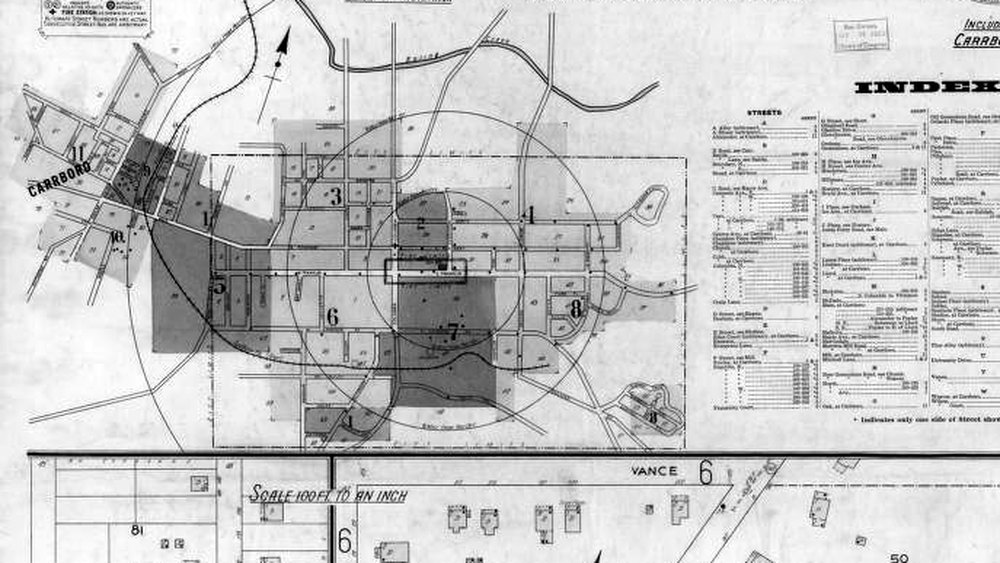
The 1925 Sanborn fire insurance map of Chapel Hill and Carrboro.

Events and storylines

Named events and storylines the index follows in detail. Each has its own page.

Show all 56 events and storylines
Cedar Grove and rural northern OrangeThe crossroads communities north of Hillsborough: Cedar Grove, Efland, Caldwell, their farms, stores, churches, and schools, and the families who held the land Preserving affordable housingPublic housing, the community land trust, and the campaigns to keep long-time residents in place UNC expansion and neighborhood changeThe university’s growth into the streets around it: land taking, campus planning, student housing pressure, and the neighborhoods that changed Durham’s rise while part of Orange, 1850s–1881Durham’s Station on the North Carolina Railroad, the tobacco factories and warehouses that made the town, its incorporation in 1869, and its growth until Durham County was formed from Orange in 1881 Glen Lennox: the sewer fight and the apartment village, 1949–1981William Muirhead’s FHA-insured apartments on the Raleigh road, Judge John T. Manning’s challenge to Chapel Hill’s sewer terms, and the Glen Lennox neighborhood that followed Paving the rural roads, 1949Governor Kerr Scott’s 1949 secondary road bonds in Orange County: township road committees, the miles allotted to each township, and the first paving contracts Chapel Hill’s zoning reaches the countryside, 1948–1955Chapel Hill’s first planning and zoning board and ordinance, its push to zone a mile and more beyond its limits, the rural opposition and the seats given to county members, and the perimeter ordinance adopted in 1955 Hillsborough’s water and the new Eno dam, 1949–1956Hillsborough’s water plant and rates after the war, the 1954 drought that left the town days from empty, and the bonds and new Eno River dam that followed Interstate 85 comes to northern Orange County, 1955–1962The rebuilding of US 70 as a limited-access interstate road south of Hillsborough: the route decisions and the hearing that drew protests, the contracts and second lanes, and the motels, restaurants and liquor store that grew up at the new interchanges White Cross School: merger votes, Black families’ transfers and the closing, 1958–1961The western Orange school district that three times voted not to join the Chapel Hill schools: the merger elections, the long bus rides of its Black pupils, their families’ requests to attend White Cross School, and the county board’s decision to close it Chapel Hill’s schools leave West Franklin Street, 1963–1969How the Chapel Hill schools sold their downtown tract on West Franklin Street and moved out: the search for new sites, the $1 million sale, the coed dormitory and shops that took the land, and the new junior high and integrated high school Orange County’s first county-wide zoning plan, 1960–1967Orange County’s plan to zone its rural areas: the County Planning Board the commissioners created in 1960, the 1962 hearings where Eno Township residents and the Farm Bureau opposed its draft ordinance, the board’s promise to simplify it, and the 1967 ordinance for Chapel Hill Township Carrboro seeks its own zoning authority, 1962–1963Carrboro’s move in 1962 and 1963 to zone its own suburbs instead of through the Chapel Hill district planning board: the wider house lots the town required, its decision to seek separate authority from the General Assembly, and the bill its town attorney drew The Towne House apartments fight, 1961The 1961 dispute over the Towne House, a planned 104-unit apartment project off East Rosemary Street in Chapel Hill: the neighbors’ rezoning, the resignation of the whole district planning board, the new board named in its place and the aldermen’s refusal of a permit Hillsboro’s sewage treatment plant, 1958–1964How Hillsborough came to treat its sewage instead of emptying it raw into the Eno River: the 1958 engineer’s study that found mill dye wastes in the river, the state’s order, the 1962 bond vote and federal grant, and the plant that opened in 1964 Chapel Hill’s federal post office, 1911–1922Chapel Hill’s road to a federal post office building: the postal savings bank of 1911, John Nolen’s advice on a site, the McNider lot, the bids and contract, the contractor’s death, the 1920 move to Franklin Street, and the crowded office by 1922 Planning the University’s growth and the south quadrangle, 1917–1922How the University planned its postwar growth and turned it southward: John Nolen’s campus studies and 1919 plan, the trustees’ decision to build toward the south end, the consulting architects, and the first dormitories behind South Building, among them Steele and Mangum Chapel Hill’s first town manager and its improvements, 1922–1931Chapel Hill’s first year under a town manager, E. M. Knox: the 1922 improvement bonds, new sidewalks, sewers and street trees, the aldermen’s ordinances on bicycles, chickens and Sunday closing, the Town Club’s call for a town plan, and the books balanced in 1923 Chapel Hill’s sewers and the Bolin Creek plant, 1923–1944How Chapel Hill extended its sewers in the 1920s: the small bond issues, engineer W. C. Olsen’s plan for a Bolin Creek interceptor and disposal plant, the plant site, a downstream owner’s suit, the Church Street lines, and the 1926 contest with Carrboro for ditch diggers Paving Chapel Hill’s streets, 1924–1931How Chapel Hill paved its streets from 1924: the owners’ petitions for curb and gutter, Franklin and Columbia streets paved curb to curb, the Ziegler Brothers contracts with the University and the state, new parking rules, the West Franklin plan, and the street bonds Rebuilding Franklin Street’s business block, 1922–1927How Chapel Hill remade the Franklin Street business block: E. M. Knox’s first sidewalks and street trees, the 1927 traffic beacon and street bonds, the paved center strip and moved curb, the fight over the block’s trees, the ride-seeker ordinance and the new post lamps The failure of the Chapel Hill Insurance and Realty Company, 1927–1930The receivership of the bankrupt Chapel Hill Insurance and Realty Company: the auction in front of the post office, the sale of its insurance business, John Sprunt Hill’s store deeds, the debts cut to $370,000, and the low bids for the Strowd farm and Franklin Street stores The fraternity house boom and the University’s land, 1922–1930The big fraternity houses built in Chapel Hill from 1922 to 1930: the Columbia Street and Cameron Avenue courts, the trustees’ stand against selling University land, the Phi Delta Theta fire, the new fraternity colony on the Pittsboro highway, and the Daily Tar Heel’s count Chapel Hill’s first zoning ordinance at work, 1928–1933Chapel Hill’s first zoning ordinance, adopted in June 1928, and its board of adjustment at work: the residence and business zones, the order to clear the village of billboards by 1930, and the ruling that let the Acacia fraternity rebuild in a residence zone Fire protection after the Pickard Hotel fire, inside and beyond the town limits, 1928–1944Chapel Hill’s fire protection after the Pickard Hotel burned in January 1928: the full-time fireman, the new water mains and lower insurance rates, then the Kenfield house fire beyond the town limits in 1929 and the neighbors’ meeting on protection outside town Gas comes to Chapel Hill, 1930How piped gas reached Chapel Hill from Durham in 1930: the aldermen’s franchise to the Durham Gas Company, the count of signed customers, the company’s Franklin Street office, the ditchers laying mains through town, and the turning on of the gas in July Lowering the Franklin Street sidewalk and the Texaco corner, 1930–1931How a Texaco station at Franklin and Columbia streets cost the south side of Franklin Street its old elms in 1930: the aldermen’s conditions, the lowered sidewalk and its grass strip, the station’s building, and the sugar maples planted in 1931 Building University Lake, 1930–1932How the University dammed Morgan Creek to make University Lake: the earlier water line, the 1930 drought, the start of work in 1931, the end of Matthew McCauley’s old mill dam, the rising water and fish stocking of 1932, and the lake’s first filling West Franklin Street paving and its Black homeowners, 1926–1941How Chapel Hill paved West Franklin Street on assessments and what the debt meant for its Black homeowners: the 1926 street program and contract, the bonds of 1927 and 1928, the relief committee, the Duke legal aid clinic, and the federal home loans of 1934 Chapel Hill’s PWA sewers, incinerator and streets, 1936–1937Chapel Hill’s PWA-aided town works of 1936 and 1937: the $21,000 grant, the bonds sold at the lowest rate the town had paid, the southwest sewer and pumping station, the new incinerator in Strowd’s Lowgrounds, the higher tax rate and the street surfacing Chapel Hill’s Franklin Street post office, 1937–1984How Chapel Hill’s new federal post office went up in two halves on the old site at Franklin and Henderson streets: the contract of July 1937, the steam shovel and the crowds that watched it, the move into the rear section and the opening in July 1938 Chapel Hill’s 1938 town hall and its later uses, 1938–1989How Chapel Hill built its town hall at Rosemary and Columbia streets with PWA help: the grant and the bond vote of 1938, John M. Booker’s call for a Franklin Street site, the contract, the move-in and dedication of 1939, the Roberson portrait and the old buildings cleared The new Carolina Theatre, 1941–1942How Chapel Hill got its new Carolina Theatre on Franklin Street: the theatre chain’s purchase of the lot in 1941, the planning commission’s Colonial front by Archie Davis, the groundbreaking, the wartime halt of 1942, the October opening and the old house renamed The Village Chapel Hill’s street bonds and the state streets, 1937–1941How Chapel Hill paid for hard-surfaced streets from 1937 to 1941: the last of the PWA street surfacing, the $16,000 curb-and-gutter bonds the debt-limitation amendment put to a vote, the 1941 street and fire apparatus bonds, and the state’s taking over of three streets The drought and forest fires of fall 1941The dry fall of 1941 in and around Chapel Hill: the drought and October heat that pushed the pipeline from University Lake to its limit, the University power plant cut loose from Duke Power to escape the power curtailment, and the forest fires fought by the Black CCC crews Eastwood Lake, 1939–1941How Eastwood Lake northeast of Chapel Hill took shape from 1939 to 1941: the masonry dam on Booker Creek built for W. S. Crawford’s residential development, the filling of the lake, the roads and home sites opened in 1940 and the public bathing beach of 1941 The University’s building program, 1923–1925How the University spent the building money the legislature gave it in 1923: the trustees’ division of the fund, Old East and Old West rebuilt inside their old walls, the new roads and the three dormitories across the Raleigh road, the Tin Can, the Swain Hall fire, Venable Hall and the first building for women students Droughts, the Durham lines and Hillsborough water, 1968–1990How Chapel Hill, Carrboro and the University got through the drought of 1968: University Lake’s fall to its lowest level, the emergency pipeline from Durham, the ban on lawn watering and car washing, Carrboro’s protest of a higher water rate and the rains that refilled the lake Selling the University’s utilities, 1970–1977How the University came to sell the water, electric, telephone and sewer systems it ran for Chapel Hill and Carrboro: the 1970 rate fights and Carrboro’s water suit, the state study commission, the bids of 1974 and the choice of Southern Bell and Duke Power, and the water and sewer systems’ passing to OWASA Taxing the University’s property, 1974–1980How Orange County, Chapel Hill and Carrboro tried to tax University property from 1974 to 1979: the first assessments under the revised state law, the claims on the Carolina Inn, the airport and the utilities, the towns’ complaint about Southern Bell, and the 1979 rulings of the Property Tax Commission and Superior Court Saving Carr Mill, 1975–1978How residents saved Carrboro’s former Alberta textile mill from demolition and it became Carr Mill: the 1975 petition and National Register nomination, the partnership that took on its reuse, the town’s 1976 permit and its amendments, and the shopping village, offices and farmers’ market of 1977 and 1978 Town elections and bond votes, 1979–1989How Chapel Hill, Carrboro, Hillsborough and Orange County voted in 1979: the Town Council’s bond questions and the open space fight, the mayor’s race Joe Nassif won, the council, aldermen, commissioners and school board races, the county’s rejected $20.4 million bond package and the new council’s first acts Building and opening the Dean E. Smith Center, 1978–1989How UNC built its Student Activities Center between 1978 and 1984: the arena plan for the Baity land, the 1980 approvals by the trustees and the Town Council, the gift and loan that paid for it, the 1982 student seating fight, and the reviews of its steel and cracked beams in 1983 and 1984 Rosemary Square and the Rosemary Street deck, 1985–1994How Chapel Hill tried to turn its Rosemary Street parking lot into Rosemary Square between 1985 and 1989: the contract with the Fraser Company, the approvals and Jim Wallace’s opposition, the residents’ suit settled by the N.C. Supreme Court, five extensions, the unsold condominium-hotel units and the developers’ withdrawal in April 1989 The Downtown Commission, the downtown trolleys and Streetscape, 1988–1994How Chapel Hill and Carrboro set out to revive their downtowns in 1988 and 1989: the Main Street pledge, the Downtown Commission and its first directors, the sidewalk vendors, Chapel Hill’s downtown tax district, Carrboro’s refusals, and the trolleys that began running on Franklin Street in 1989 UNC’s land use plans, the Horace Williams tract and the joint town-University committee, 1987–1994How UNC’s 1987 land use plan met opposition and a joint town-University committee reworked its roads: the crowded June hearing, the committee’s votes against a loop road through Battle Park and against taking private property, the Pittsboro Street extension fight, the 1988 acceptance and the 1989 town-gown committee South Loop Road and Odum Village, 1990–1992How UNC’s plan for a South Loop road through part of Odum Village, its married-student housing, met resistance from 1990 to 1992: the search for replacement housing, the residents’ and housing advocates’ campaigns, the Chapel Hill Town Council’s refusals to put the road on the thoroughfare plan and Hardin’s renewed push UNC’s Cameron Avenue power plant and its neighbors, 1986–1994How UNC’s new coal-fired power plant on Cameron Avenue, approved by the Chapel Hill Town Council in 1986 to replace the 1940 plant, drew complaints from its neighbors over noise, dust and light and citations and fines from state regulators as it was tested in 1991 and 1992 Searching for a new county landfill site, 1989–1992How Chapel Hill, Carrboro and Orange County searched for a site for a new county landfill between 1989 and 1992: the search committee and the Landfill Owners Group, the 15 areas cut to four, the Duke Forest and Eubanks Road fights, the hearings and the 1992 vote to drill test holes The Meadowmont plan, 1994How East West Partners brought its Meadowmont plan for the DuBose property on N.C. 54 to Chapel Hill in 1994, from the first filing and Pete DuBose’s death through two public hearings and the council’s review committee

More storylines

Other storylines that include this theme, in date order. Each has its own page.

StorylineRoads and bridges to the new University, 1793–18171793–1817 · 33 events · Beginning in 1793 the county court ordered roads to tie the seat of the University to the surrounding country: toward ferries on the Haw River, toward the Chatham line and to Hillsborough. In August 1794, on a memorial from the trustees John Haywood and Alexander Mebane, it ordered a road from the east end of Franklin Street, a name already in use, and later roads from that street to the New Hope road and the old Raleigh road. On the road to Raleigh it ordered bridges over New Hope Creek in 1802 and Ben's Creek in 1807 and had both repaired or rebuilt in 1816 and 1817. Juries were still adjusting the Haw River ferry roads in the 1810s. StorylineChapel Hill grows from a college village to a town, 1800–18191800–1819 · 14 events · Between 1800 and 1819 stores, houses and shops went up on Franklin Street, and in 1819 the General Assembly named commissioners for the town of Chapel Hill. Along the way John McCauley opened one of the first stores by 1803, James Hogg built a ten-room house in 1804, and Thomas H. Taylor, Christopher Barbee, Thompson and Trice and Edward Robson added a shoe store, a smithy, a store and the post office. The county court licensed stores to retail spirits in 1817 and 1818, and a student of the class of 1818 remembered about a dozen houses on the main street. StorylineHistoric Rogers Road neighborhood1840–2021 · 25 events · The Rogers-Eubanks area grew from Black-owned farms and sawmills after emancipation, and in 1972 the county landfill was placed beside it. Residents organized through RENA and the Rogers-Eubanks Coalition from 2007, the landfill closed in 2013, and the neighborhood won a community center in 2014 and the sewer extension in 2019. StorylineChapel Hill's volunteer fire company, 1898–19311898–1931 · 22 events · From about 1898 a volunteer company fought Chapel Hill's fires, at first with two hand reels and hose lent by the University, and more than once a building burned where no hydrant was near. In 1921 the town built a brick municipal building and fire house and received an American La France motor truck. In June 1922, with the nearest hydrant almost half a mile away, fire destroyed the Orange County Training School, the county's school for Black students. In 1923 the company hosted the state's firemen at a barbecue, and the state association elected Chief John L. Foister its president. After officers missed an alarm, the aldermen put a full-time fireman on duty in 1928. In 1931 the bricklayer John Johnson became, by the Weekly's account, the only Black member of a white fire company in North Carolina. StorylineBattle Park and the Battle Park Association, 1914–19331914–1933 · 6 events · Kemp Battle's paths through Battle Park were restored from 1931 by volunteers who were then put in charge of the land around University Lake as well. Students cleaned the park's trails during Community Service Week in 1914, and by 1917 an open-air theatre stood on a hillside there. In 1931 a meeting at Colonel Joseph Hyde Pratt's home launched the Battle Park Association, and citizens working without pay under Pratt cleared paths and built bridges, opening about three miles of trail that year. In 1933 the association was incorporated, and the University trustees put it in charge of both Battle Park and the land around the new University Lake, where it ran motorboat rides to pay for more improvements. StorylineAuctioning land into house lots, 1923–19251923–1925 · 7 events · From 1923 to 1925 farms and fields around Chapel Hill and Carrboro were cut into house lots. The Chapel Hill Insurance and Realty Company opened Forest Hills on the Pittsboro road and lots on North Street in 1923. In 1924 the Durham Auction Company sold the Lloyd field in Carrboro and part of the old Purefoy land at sales with bands and free dinners, and W. C. Coker's woods east of the campus were laid out in large lots. In 1925 the realty company bid in most of Robert L. Strowd's farm east of town at auction and began selling lots there as Davie Woods.
Show all 36 storylines
StorylineChapel Hill against billboards and street banners, 1924–19621924–1962 · 9 events · From 1924 to 1962 Chapel Hill's clubwomen, Boy Scouts and aldermen worked to clear billboards and advertising signs from the village and the highways into town. In 1924 the Community Club protested commercial sign-boards, and in 1925 the Boy Scouts took down nearly all the signs on the Durham highway to the county line. Under the 1928 zoning ordinance the board of adjustment ordered every billboard removed by 1930, but the town attorney found the ban invalid. In 1932 the aldermen resolved to help remove billboards at curves. After billboard companies ignored the 1955 zoning ordinance's deadline, the town in 1962 reached an agreement with General Outdoor Advertising to take down its billboards in the suburban zoning district. StorylineExtending Chapel Hill's town limits and a new charter, 1924–19271924–1927 · 3 events · In 1924 Chapel Hill's aldermen named a committee to study extending the town limits, which new homes had spread past, and to consider a modern charter. A charter amendment of 1925 enlarged the board to six aldermen with staggered terms. The extension was dropped in 1927, when Town Manager E. M. Knox's survey showed that the services a larger town would need would cost far more than its new taxes. StorylineEast of Chapel Hill: the Strowd farm, the DuBose estate and Paul Green's Greenwood, 1925–19511925–1951 · 14 events · Between 1925 and 1951 farmland on Chapel Hill's eastern edge became estates and home colonies, beginning with the auction of lots from Robert L. Strowd's farm in April 1925. The realty company that bid in the remaining land went bankrupt, and its receivers auctioned the farm in 1928. In 1931 St. Pierre DuBose of Durham bought 308 acres on the new Nelson-Raleigh highway and built a country house. In 1933 four University economics professors bought 42 acres of the old Strowd farm for a home colony, and Paul Green arranged to buy about 200 acres. In 1938 Green offered lots there as Greenwood, where the illustrator William Meade Prince later lived and worked until his death in 1951. StorylineStreet trees of Chapel Hill, 1927–19351927–1935 · 3 events · Chapel Hill's aldermen decided in 1927 that the business block would keep its trees, though some merchants wanted it bare. On November 7 they refused a petition from five property owners to remove the trees and, with W. C. Coker's advice, voted to keep the existing ones, replace those already cut and plant new ones in the new sidewalk. At a crowded hearing on November 14 Moody Durham spoke for the merchants, but the board reaffirmed the policy. In late 1935 crews set out 200 willow oaks along the village streets, in what the Weekly called the largest tree-planting in the town's history, with saplings from the University and labor from the WPA. StorylineOrange County's property revaluations, 1930–19631930–1963 · 13 events · Orange County passed over a general revaluation of property for taxes in 1937 and postponed one in 1945, and when it hired professional appraisers, the county's valuation rose by about 89 percent. Assessors were appointed in 1930 for a 1931 revaluation. In 1937 the commissioners chose a review of the tax lists instead of a general revaluation, and in 1945 the wartime labor shortage postponed another. In 1947 a board of assessors inspected nearly every tract, and the valuation was raised. In 1952 the commissioners hired the J. M. Cleminshaw Company to revalue all property at market value, and some 40 citizens protested its values in 1954. In 1963 Associated Surveys of Greensboro began the next ten-year revaluation. StorylineWilliamsburging Franklin Street, 1940–19421940–1942 · 4 events · Durham attorney J. L. Morehead urged Chapel Hill to make its Franklin Street business block as handsome as the campus, pointing to the business street of Colonial Williamsburg. Louis Graves's Chapel Hill Weekly reported the plan favorably in March 1940, and later accounts credit his paper with the campaign. In 1941 a Town Meeting committee under John M. Booker asked the aldermen for a Town Planning Commission and a consulting architect to pass on building designs. By November the commission was at work, and architect Archie Davis gave owners watercolors showing how to remodel. One building in its block followed the plan: the new Carolina Theatre, with a Colonial front from Davis's sketches, which opened on October 15, 1942. StorylineCarrboro’s school and the Chapel Hill district, 1950–19591950–1959 · 52 events · In 1950 Carrboro's school committeemen told the county board that Carrboro preferred to stay in the county school unit rather than join a larger Chapel Hill tax district. By 1953 the school was crowded and a grand jury called its building extremely shabby; a state survey team recommended a new site and a merger with the Chapel Hill unit. The state split the Carrboro-White Cross district in 1954, and the county bought a site behind the new Carrboro Methodist Church, later enlarged to about 18 acres. After flooded rooms and a fallen ceiling in 1955, Carrboro parents debated the merger, and the district committee voted to stay in the county unit. In August 1958 Carrboro voters approved joining the Chapel Hill district, 713 to 303; the new elementary school opened, and in 1959 the old building was sold to the town. StorylineFire protection for the countryside, 1951–19641951–1964 · 17 events · When Chapel Hill's fire department stopped answering most calls outside town in January 1951, people in the countryside began arranging fire protection of their own. Rural residents around Hillsboro, whose truck already stayed near town, formed the Orange Fire Protective Association, raised money by memberships and had a truck by March 1951, crewed by the town's volunteer firemen. Carrboro offered contracts to property owners around town in 1954. Around Chapel Hill, voters approved a tax-supported fire district 188 to 9 in 1955, and in 1956 Chapel Hill agreed to protect the district in return for its fire tax. In 1964 the county set up an Orange Fire Commission to regulate the departments receiving county aid. StorylineParking in Chapel Hill and on campus, 1956–19921956–1992 · 72 events · Chapel Hill's downtown parking passed from a merchants' lot to town meters and town lots. In June 1956 an association of East Franklin Street businesses opened what the News called the town's first customer parking lot. In 1958, after heated debate, the aldermen passed an ordinance for about 375 meters on business-district streets, and they voted to put meter money in the general fund, though Alderman Roland Giduz wanted it kept to buy land for off-street parking. In 1962 the town agreed to buy the Hanson property on East Rosemary Street for a lot for about 30 cars, and after deeds recorded in 1963 it began building a 70-car lot there, which opened in 1964. In 1965 the University zoned parking on the campus and began towing, and the town banned parking on South Road and let the police tow illegally parked cars. Street meter income later fell. In 1977 the town banned weekday parking on 41 streets near the campus; a court barred its free permits for residents after a law student sued, and the aldermen adopted a narrower permit ordinance in 1978. Voters turned down a Rosemary Street parking deck in 1979, and after court rulings limited towing in 1982 the town required hearings and police supervision for tows and raised its fines. In 1984 the council opened talks with the Fraser Company on Rosemary Square, a deck with a hotel-condominium on the Rosemary Street lot. From 1985 Chapel Hill and Carrboro raised parking fines and changed their towing and street rules, and the University raised permit prices nearly every year while it planned a parking deck on the Craige lot; after protests over paying for it with permit fees, the trustees raised fees in 1989 to help repay a 1,600-space deck. The Craige deck opened in September 1991. In 1991 and 1992 Chapel Hill limited commuter parking on McCauley Street, let downtown developers offer transportation plans instead of parking, eased its towing rules and began ticketing cars parked on sidewalks, and Carrboro raised its parking fines to $25. StorylineChapel Hill's annexations, 1959–19601959–1960 · 5 events · Chapel Hill roughly tripled in area in the decade after 1950 through about a dozen annexations, and 1959 and 1960 brought a run of them. In October 1959 the school board voted to join owners seeking annexation of the Estes Hills School area and to seek annexation of the Northside and Lincoln school properties. In 1960 the town took in the 48-acre Northside School neighborhood, about 95 acres of Estes Hills at the request of every residential owner, the Coker Hills subdivision and the University's proposed fraternity court, and the 50-acre Ridgefield Extension, whose developer was paying for its own water and sewer lines and paving. StorylineChapel Hill's Open Spaces plan, 1965–19691965–1969 · 4 events · In 1965 a mayor's committee proposed protecting about 1,100 acres along Chapel Hill's creeks and hillsides as open space, and the aldermen endorsed the plan in principle. In 1968 and 1969 Mayor Sandy McClamroch broke tie votes to approve the Bolin Meadows subdivision on land the plan meant to keep undeveloped and to rezone a tract near Colonial Heights for apartments. StorylineThe Bell's hamburger stand and the appearance commission, 19651965 · 3 events · In 1965 the Bell's chain of Charlotte planned a walk-in hamburger stand on the lot beside the Baptist church at Franklin and Columbia streets. The aldermen urged the owners not to build it, the church appealed the building permit, and the General Assembly let Chapel Hill create an appearance commission, though not in time to reach the stand. By May Bell's was reported to be negotiating a sale of the lot to the church. StorylineLosing old Franklin Street buildings, and the Preservation Society, 19661966 · 7 events · In 1966 fire twice gutted the Patterson Building on East Franklin Street, which the Daily Tar Heel had called the only building left of the original town, and its ruins were torn down. The Mary Manning house, where Arthur Nash had boarded, was razed, the Presbyterians sold their 1840s manse, and old buildings on West Franklin Street came down for a shopping center. In September about 50 citizens met at Town Hall to form a Chapel Hill Preservation Society and a committee to save the manse. StorylineSaving the Eno1966 to present · 16 events · The Association for the Preservation of the Eno River Valley, formed in 1966 to stop Durham's reservoir plans, won Eno River State Park and has kept adding land to it. StorylineOrange County's school and water bonds, 1966–19671966–1967 · 3 events · In the fall of 1966 the Orange County commissioners postponed a $3 million school bond election, expecting it to fail, and a $650,000 water and sewer bond vote was moved to December. In 1967 voters approved $3 million in school bonds, $1 million for the county schools and $2 million for Chapel Hill's. StorylineFiber Industries and New Hope Creek, 19691969 · 4 events · In the summer of 1969 Fiber Industries asked Orange County to rezone 450 acres near New Hope Creek for a $100 million plant. Chapel Hill's aldermen called the site unfortunate, and UNC and Duke scientists warned of pollution, but the county planning board recommended the rezoning. The company withdrew its request in August, and commissioners chairman Carl Smith blamed its opponents, among them Mayor Howard Lee. StorylineThe NCNB building and plaza, 1970–19731970–1973 · 6 events · In 1970 North Carolina National Bank planned a six-story building on East Franklin Street, and after more than 1,200 citizens petitioned against its height, the bank switched to a three-story Franklin Street front joined to an office building on Rosemary Street. The bank moved in by 1972, and in January 1973 a shopping corridor opened through the new NCNB Plaza between the two streets. StorylineThe University’s landfills and hazardous waste, 1970–19821970–1982 · 5 events · The University ended the towns' free use of its landfill in 1972, leaving Chapel Hill without garbage pickup while a restraining order held up the Eubanks Road site. In 1980 radioactive waste from a UNC lab went out with the trash to the Eubanks Road landfill. In 1982 UNC planned a new hazardous waste building and registered its two old waste landfills under the Superfund law. StorylinePlanning downtown Chapel Hill's renewal, 1972–19741972–1974 · 6 events · In 1972 Chapel Hill's aldermen set up a committee to study downtown, which counted its stores and commercial space in 1973 and hired a Raleigh planning firm as new shopping centers threatened downtown trade. In 1974 the board received the committee's report, calling for walkways, new buildings and a redevelopment corporation, and named aldermen to carry it out. StorylineCable television in Orange County, 1972–19941972–1994 · 46 events · Chapel Hill adopted a cable television ordinance in 1972, and Alert Cable TV began serving Hillsborough in 1974. Carrboro's aldermen first approved an Alert franchise in 1975, but after delays over utility poles and sites refused for its equipment, service there began only in August 1979. That November Chapel Hill gave its franchise to Village Cable, and the county moved toward a cable ordinance and advisory committee of its own. Village Cable began serving Chapel Hill in 1980 and won the franchise for most of rural Orange County, and in the years after the town disputed its rates, its adult channels and its stock gift to its foundation. In 1984 Carrboro gave Alert Cable a 15-year franchise with a ban on obscene programs. In 1985 Chapel Hill let Village Cable raise its rates 10 percent a year, and in 1986 the Village Companies sold it to Carolina Cable. In 1992 Chapel Hill named a cable advisory committee and opened its review of Carolina Cable's franchise, which ran to 1994, with a hearing on residents' complaints. Cablevision took over Chapel Hill's service in 1992; in 1993 and 1994 both towns sought federal authority over its rates while Chapel Hill bargained over a franchise renewal amid residents' complaints. StorylineChapel Hill's greenways, 1975–19911975–1991 · 12 events · Chapel Hill set aside its first greenway money in 1975 and by 1977 had approved a seven-mile path around town. Volunteers built the Tanyard Branch greenway in 1985, the year the town created a Greenways Commission, and in 1986 residents called a plan for stream easements vague and hurried. The council funded new trails in 1986 and 1988 while the county dropped a rural trails project, and in 1989 Chapel Hill joined a study of the New Hope Corridor greenway. In 1990 neighbors objected to paving the Bolin Creek greenway, whose first phase the council approved in 1991, and that fall the towns and the county heard comment on the New Hope Corridor open space plan. StorylineChapel Hill's planning area, the joint planning agreement, the rural buffer and Southern Village, 1976–19931976–1993 · 29 events · In 1976 Chapel Hill asked Orange County to enlarge the town's planning district, and in 1978 it sought to extend the district north of the airport. County residents and the county planning board opposed the move, and the commissioners offered a smaller area if the town allowed mobile homes there. The town asked for more in 1979, then for legislation, and the two boards deadlocked that March. From 1980 the towns, the county and OWASA worked toward joint planning: Chapel Hill adopted an agreement in 1981 and a joint planning area with the county in 1983, and the three governments signed the Joint Planning Agreement, with its Rural Buffer, in 1987. Carrboro joined the joint planning process in 1986, and both towns adopted the agreement in October 1987 after hearings at which many residents objected. From December 1987 the leaders of the towns and the county met together, and in 1988 Chapel Hill endorsed an Orange County Assembly of Local Governments. In 1992 Chapel Hill sent its plan for the southern area back for affordable housing rules, and the three governments agreed at a joint hearing to amend the joint land use plan for part of it. In July 1993 the council approved Southern Village, a 312-acre community for 1,388 homes off U.S. 15-501. StorylineCarrboro’s farmers’ market and the Town Commons, 1977–19961977–1996 · 9 events · Planning for a Carrboro farmers' market began in 1977, and the market opened in August 1978 in a Carr Mill parking lot, and a permanent open-air shelter was built with a state grant. In 1988 and 1989 Carrboro's aldermen paid to keep the market's leased site and planned a town commons beside Town Hall as its permanent home. A 1993 grant paid for new shelters, Carrboro broke ground beside Town Hall in 1994, and the market moved to the Town Commons in 1996. StorylineCurbing drive-in businesses in Carrboro and Chapel Hill, 1980–19821980–1982 · 9 events · In 1980 Carrboro's aldermen fought a Wendy's drive-in at Main and Greensboro streets, first in court and then with a zone for drive-in restaurants that a judge struck down; the restaurant opened that September under a restraining order. Chapel Hill barred most drive-in businesses that April, repealed the ban in September and then could not agree on standards, and in 1982 it granted Wendy's a drive-in window on the bypass. StorylineChapel Hill's growth debate and its density limits, 1981–19871981–1987 · 26 events · Chapel Hill had regulated density by floor area ratios since 1981 and added limits on dwellings per acre in 1983, and in 1984 a court upheld its denial of the Oxford Hills apartments. In 1984 Chapel Hill residents worried about water, traffic and open space formed the Alliance of Neighborhoods, and a town task force warned that developments already approved would strain water and roads. The Alliance's petition for a six-month moratorium on new development drew 3,835 signatures, but in November the council turned it down and set hearings on growth rules instead. In 1985 and 1986 the council tightened its Development Ordinance, lowered its density caps and adopted a new land use plan, and it issued no apartment permits in 1986 as a glut left more than 1,300 apartments vacant. StorylineChapel Hill’s sign rules and the neon ban, 1985–19891985–1989 · 6 events · In 1985 Chapel Hill tightened its sign rules, limiting new signs to 8 feet and banning pole signs, and by 1987 the owners of about 230 nonconforming signs had been given three years to comply. As the grace period ended in 1989, downtown merchants and the copy shop Copytron pressed the town to allow neon, and merchants brought a petition with more than 1,600 signatures. On June 12, 1989 the Town Council voted 6 to 2 to lift the neon ban. StorylineNorthside residents and the town, 1987–19881987–1988 · 6 events · In 1987 and 1988 Northside residents spoke against a mental health day center on Carr Street, a proposed Pittsboro Street extension and a rezoning off West Rosemary Street, saying such changes threatened their neighborhood. After a Black child drowned at the A. D. Clark pool in 1987, the Concerned Black Citizens pressed the town to hire Black lifeguards, and the council agreed to changes. StorylineChapel Hill’s parks and open space bonds, 1988–19921988–1992 · 10 events · In 1988 the Chapel Hill Town Council spent $1 million in 1986 bond money on 50 acres south of town for a community park. After putting off a $5 million parks and open space bond, it backed a $9 million bond in 1989, and voters approved the bonds that year. The town added 28 acres to the park and approved its master plan in 1990, bought Merritt Pasture in 1991, and in 1992 funded park repairs, a parks and greenways plan and a park in North Forest Hills. StorylineThe University Place condominiums, 1991–19931991–1993 · 4 events · In 1991 Northside residents and student environmentalists opposed University Place, a student condominium complex off Clark Road, and the Chapel Hill Town Council denied its permit. The Bradley Company sued, and in 1993 the N.C. Court of Appeals reversed the denial; the town sought review by the state Supreme Court. StorylineHurricane Fran, September 19961996–1998 · 13 events · Hurricane Fran crossed the county overnight on 5 to 6 September 1996, felling thousands of trees, cutting power to about 29,000 Chapel Hill customers and pushing the Eno at Hillsborough to its highest recorded flow. Chapel Hill declared an emergency, OWASA issued a boil-water advisory, UNC suspended classes for a campus cleanup, and Duke Forest spent two years salvaging timber.

Indexed works

Works about Growth, Land & Planning from library and archive catalogs. The most widely held appear first; novels are not shown here. Follow a link to find a copy or view the material.

Widely held

American Indians in North Carolina: Geographic Interpretations

Ross, Thomas E. · 1999 · Karo Hollow Press

Thomas E. Ross's geographic study of American Indians in North Carolina. It examines Native peoples' history, cultural assimilation, and social and economic conditions across the state, with statistics. Published by Karo Hollow Press in 1999, eleven preliminary pages and 242 pages with illustrations and maps.

Included because: Catalog heading in the NC Cardinal record: Indians of North America -- North Carolina -- Economic conditions -- Statistics. -- Indigenous peoples.

Chapel Hill, N.C. History of Town Lots (1790-1930s)

Dunaway, Stewart E. · 2014

Deed transcripts for the town lots of Chapel Hill and adjoining land from 1790 to the 1930s, compiled by Stewart E. Dunaway. Each transcript keeps only the working facts: grantor and grantee, price, acreage and the metes and bounds of the parcel. Self-published in 2014 as Issue 1G, 702 pages with maps and facsimiles.

Included because: Catalog heading in the OCPL record: Land Use -- North Carolina -- Chapel Hill -- History.

Hillsborough, North Carolina : history of town lots : the complete reference guide

Dunaway, Stewart E. · 2016

Stewart E. Dunaway worked through Hillsborough, N.C., lot by lot, giving each town lot a synopsis of its history, a plat showing where it sits and transcripts of the deeds he could locate for it. The second issue runs to 720 pages with illustrations, maps and facsimiles.

Included because: Catalog heading in the UNC record: City planning.

Hillsborough, North Carolina History of Town Lots

Dunaway, Stewart E. · 2015 · Stewart E. Dunaway

Stewart E. Dunaway's 2015 addendum to his history of Hillsborough's town lots, adding deed records arranged by lot number and further town history, with the expansion of the 1890s covered for the first time. Self-published in North Carolina as version 1.0, 446 pages with illustrations, facsimiles and maps. Topics include deeds, court records, land titles and real property in Hillsborough.

Included because: Catalog heading in the UNC record: City planning.

Hillsborough District Court Civil Action Concerning Land (1778-1806)

Dunaway, Stewart E. · 2011

Stewart E. Dunaway's abstracts of civil suits over land heard in the Hillsborough District Superior Court between 1778 and 1806. The district covered Orange, Wake, Granville, Caswell, Person, Chatham and Randolph counties, and the papers concern boundaries, ownership and disputed tracts. Published through Lulu in 2011, 337 pages with illustrations, maps and facsimiles.

Included because: Catalog heading in the UNC record: Land use.

The Research Triangle: From Tobacco Road to Global Prominence

Rohe, William M. · 2011 · University of Pennsylvania Press

William M. Rohe's history of Research Triangle Park and the region around it, published by the University of Pennsylvania Press in 2011. Topics include regional planning and the economic and social conditions of the Research Triangle Park region, one corner of which is Chapel Hill and the university. 298 pages with illustrations and maps.

Included because: Catalog heading in the OCPL record: Research Triangle Park (N.C.) -- History.

Show 2 more

North Carolina Land Grant Entry Book ... Orange County

Dunaway, Stewart E. · 2010

Stewart E. Dunaway's two-volume edition of the Orange County land entry book, the register in which settlers first claimed vacant land from the state before a grant was surveyed and issued. Volume one covers the first thousand entries, all made in 1778; volume two runs from 1779 to 1795. Each entry is reproduced from the original in the State Archives with an abstract of its contents. Self-published through Lulu in a second version dated 2010, two volumes at 28 cm with facsimiles and maps.

Included because: Catalog heading in the Durham record: Land Use -- North Carolina -- Orange County.

The school that Jack built : city and regional planning at the University of North Carolina at Chapel Hill, 1945-2012

Kaiser, Edward J. (Edward John) · 2013

Edward J. Kaiser's history of the Department of City and Regional Planning at the University of North Carolina at Chapel Hill from 1945 to 2012, published by the department in 2013. The title nods to John A. Parker, 1909 to 2001, who figures in the book. One hundred eighty-six pages with illustrations and portraits at 28 cm.

Included because: Catalog heading in the UNC record: City planning.

Recently indexed: Against fluoridation of water at the university (1952) · Annual report for (1984) · [Appeal on behalf of project to establish home for aged women] (1875) · Building zone ordinance for the town of Chapel Hill (1928) · The campus as a work of art (1991) · Campus beautiful (1919)

Search all 900 indexed works →

Start at OCPL

Books in OCPL’s Rebecca B. Wall Local History Collection whose titles, catalog subjects, or descriptions match this theme. The Friends’ recommended starting points are labelled.

  • Foundational · NC 307.1 HIL Hillsborough, North Carolina Subdivision Regulations 1968 1968

    The subdivision regulations adopted by the Town of Hillsborough in 1968, an 18-leaf document setting the rules for dividing land within the town. Subjects include city planning and land subdivision law for Hillsborough. A companion to the general development plan of the same year, and a small source for the town's planning history.

  • Foundational · NC 307.1 HIL Hillsborough, North Carolina General Development Plan 1968-1988 1968

    Hillsborough's general development plan for the twenty years from 1968 to 1988, prepared for the town's planning commission with a federal urban planning grant from the Department of Housing and Urban Development. Issued in Hillsborough in 1968, 110 pages with maps, some in color.

  • Foundational · NC 333.3 DUNAWAY Chapel Hill, N.C. History of Town Lots (1790-1930s) Dunaway, Stewart E. · 2014

    Deed transcripts for the town lots of Chapel Hill and adjoining land from 1790 to the 1930s, compiled by Stewart E. Dunaway. Each transcript keeps only the working facts: grantor and grantee, price, acreage and the metes and bounds of the parcel. Self-published in 2014 as Issue 1G, 702 pages with maps and facsimiles.

Show 6 more
  • Foundational · NC 333.3 DUNAWAY Hillsborough, North Carolina History of Town Lots: The Complete Reference Guide Dunaway, Stewart E. · 2013

    Stewart E. Dunaway worked through Hillsborough, N.C., lot by lot, giving each town lot a synopsis of its history, a plat showing where it sits and transcripts of the deeds he could locate for it. The second issue runs to 720 pages with illustrations, maps and facsimiles.

  • Foundational · NC 929.375 HILLSBOR Hillsborough District Court Civil Action Concerning Land (1778-1806) 2011

    Stewart E. Dunaway's abstracts of civil suits over land heard in the Hillsborough District Superior Court between 1778 and 1806. The district covered Orange, Wake, Granville, Caswell, Person, Chatham and Randolph counties, and the papers concern boundaries, ownership and disputed tracts. Published through Lulu in 2011, 337 pages with illustrations, maps and facsimiles.

  • Foundational · NC 333.76 FRA The Couch Tract of the Durham Division of the Duke Forest: A History of Agricultural Land-use Patterns 1750-1950 Frankel, Rachel · 1984

    Rachel Frankel's Duke University honors paper of 1984 on the Couch tract in the Durham Division of Duke Forest, a history of agricultural land use from 1750 to 1950. The Couch family, family farms and rural land use in Orange County are its subjects. A photocopied typescript, 97 leaves with maps and a bibliography.

  • Foundational · NC 363.69 HIS Historic Preservation Element: Orange County Comprehensive Plan ; Orange County, North Carolina Orange County (N.C.) · 1996

    The historic preservation element of Orange County's comprehensive plan, prepared for the county Historic Preservation Commission and Planning Department by the Jaeger Company of Gainesville, Georgia, and adopted on 1 April 1996. Partly financed by National Park Service funds through the state Division of Archives and History, it sets county policy on historic buildings and sites and their conservation. 59 pages plus 50 unnumbered, with illustrations and maps, some folded and in color.

  • Rebecca Wall Collection · NC 333.3 DUNAWAY Hillsborough, North Carolina History of Town Lots: Addendum 2015 Dunaway, Stewart E. · 2015

    Stewart E. Dunaway's 2015 addendum to his history of Hillsborough's town lots, adding deed records arranged by lot number and further town history, with the expansion of the 1890s covered for the first time. Self-published in North Carolina as version 1.0, 446 pages with illustrations, facsimiles and maps. Topics include deeds, court records, land titles and real property in Hillsborough.

  • Rebecca Wall Collection · NC 929.375 EJECTMEN Orange County N. C. Ejectments 2015

    Ejectment suits were the legal route for disputing who held title to a tract of land, and the case files often include plats and drawings of the property. Stewart E. Dunaway gathered Orange County's ejectment cases from the state archives and reproduced them in facsimile, with maps, in a self-published volume issued through Lulu in 2015 (issue 2).

In the chronology

A selection of 12 events from the 1,461 chronology entries for this theme, including highlights and examples from different years. See all 1,461 dated events in the chronology →

  1. Orange County is created The colonial assembly formed Orange County from portions of Bladen, Granville, and Johnston counties. Its original boundaries were far larger than those of present-day Orange County. It has long been said to be named for William of Orange, King William III of England; William S. Powell's North Carolina Gazetteer, quoted in the supplementary notes to later printings of Corbitt's Formation of the North Carolina Counties, argues for the infant William V of Orange, then stadholder and a grandson of George II. People: William S. Powell Place: CountywideNCpedia · Also: Internet Archive: David Leroy Corbitt, The Formation of the North Carolina Counties, 1663-1943
  2. The North Carolina Railroad is chartered and built The General Assembly chartered the North Carolina Railroad in 1849, after Senate speaker Calvin Graves cast the deciding vote. The state built the 223-mile line from Goldsboro to Charlotte between 1851 and 1856, running it through Hillsborough, and the first train ran its full length in January 1856. Place: Hillsborough · Also named: Calvin Graves · Also mentions: North Carolina RailroadIn the index: North Carolina Railroad Company · Documenting the American South: Railroads in North Carolina
  3. Chapel Hill aldermen urge the owners not to build a hamburger stand beside the Baptist church The Board of Aldermen unanimously adopted a resolution, introduced by Alderman Roland Giduz, urging the owners of the lot next to the Baptist church at Franklin and Columbia Streets not to build the walk-in restaurant planned there by the Bell's chain of Charlotte. Town Attorney J. Q. LeGrand said nothing in the zoning ordinance could stop it. People: Roland Giduz Place: Corner of West Franklin and South Columbia Streets, Chapel Hill · Also named: J. Q. LeGrandSearch the index · The Daily Tar Heel, March 11, 1965, p. 1
  4. The Association for the Preservation of the Eno River Valley forms Residents who had begun organizing in 1965 against plans to dam the Eno for a water-supply reservoir formed the Association for the Preservation of the Eno River Valley on October 14, 1966. Led by Margaret and Holger Nygard, it began the campaign that preserved the river corridor in Durham and Orange counties. People: Margaret Nygard, Holger Nygard Place: Eno RiverEno River Association: ERA Through the Eras, Beginnings of the Eno River Association
  5. Eno River State Park is created After years of citizen opposition to damming the Eno for a reservoir, Governor James Holshouser accepted the first tracts for Eno River State Park in June 1973, including 90 acres donated by Dr. and Mrs. Frederick Bernheim. The first 1,000 acres opened to the public in 1975 along the river in Orange and Durham counties. People: Margaret Nygard Place: Eno River · Also named: James Holshouser · Also mentions: Orange and Durham countiesEno River Association: ERA Through the Eras, Creation of the Eno River State Park and West Point on the Eno City Park · Also: The Daily Tar Heel, November 6, 1973, p. 3
  6. Chapel Hill Transit begins service Chapel Hill's municipal bus system began running on August 1, 1974, after Mayor Howard Lee and UNC Chancellor Ferebee Taylor cut the ribbon, with eight town, campus and park-and-ride routes. Carrboro was not yet served. People: Howard N. Lee Place: Chapel Hill · Also named: Ferebee TaylorSearch the index · The Daily Tar Heel: bus system opening day ceremony, August 26, 1974 · Also: The Daily Tar Heel, August 26, 1974, p. 11; The Daily Tar Heel, November 8, 1976, p. 1; The Daily Tar Heel, September 5, 1984, p. 4
  7. Bob Drakeford is elected mayor of Carrboro Robert "Bob" Drakeford, a Carrboro alderman since 1975 and a Carrboro Community Coalition candidate, won the mayor's race on November 8, 1977, with 57 percent of the vote over John Boone. He was the town's first Black mayor and served until 1983. Place: Carrboro · Also named: Robert Bob Drakeford, John BooneThe Daily Tar Heel, November 9, 1977, p. 1
  8. State commission grants OWASA condemnation power for the third time After a second hearing in late 1982, the Environmental Management Commission reissued OWASA's certificate in March 1983, a Wake County Superior Court judge sent it back, and on October 13 the commission reinstated OWASA's power of eminent domain. Mike Teer, by then president of the Cane Creek Conservation Authority, said the group would appeal. Place: Raleigh · Also named: Mike TeerThe Daily Tar Heel: OWASA wins Cane Creek right, October 14, 1983
  9. Orange County Rural Buffer is established Orange County adopted the Orange County-Chapel Hill-Carrboro Joint Planning Area Land Use Plan and map on August 19, 1986, designating a low-density Rural Buffer. The three governments signed the Joint Planning Agreement on November 2, 1987, and the county dates the buffer to 1988. Place: CarrboroSearch the index · Town of Chapel Hill: Joint Planning Agreement (Orange County, Chapel Hill, Carrboro), November 2, 1987, as amended · Also: The Daily Tar Heel, October 28, 1987, p. 3; The Daily Tar Heel, November 11, 1987, p. 3
  10. Hurricane Fran strikes Orange County Hurricane Fran came ashore on the night of September 5, 1996 and crossed to the Triangle overnight. In Chapel Hill winds topped 70 mph, falling trees caused about 29,000 power outages and UNC cancelled classes, and the Eno at Hillsborough hit a record flow. No one in Orange County was killed. Place: CountywideThe Daily Tar Heel: front page, September 9, 1996
  11. Occoneechee Mountain becomes a State Natural Area At the urging of the Eno River Association and The Nature Conservancy, the state began buying land on Occoneechee Mountain just south of Hillsborough, with the Conservancy purchasing 96 acres for the state. The 124-acre Occoneechee Mountain State Natural Area was dedicated on July 20, 1999, with a blessing from an Occaneechi tribal member. Place: Hillsborough · Also mentions: Occoneechee Mountain State Natural AreaSearch the index · Eno River Association: Occoneechee Mountain State Natural Area
  12. UNC announces a campus extension at Carolina North The university announced plans for a mixed-use extension on about 230 acres around the former Horace Williams Airport, with student and workforce housing, research space and retail, calling it the largest expansion since 1793; groundbreaking is expected in summer 2027. Place: Horace Williams tract, Chapel HillUNC-Chapel Hill: UNC-Chapel Hill announces plans to develop campus extension in Carolina North

See all 1,461 dated events in the chronology →

Places in this theme

Buildings, schools, churches and other sites named in the dated events on this page, the most often named first. The map shows the 60 with a known location.

Map tiles © OpenStreetMap contributors. Site locations from the N.C. State Historic Preservation Office survey, Open Orange, Orange County GIS, OpenStreetMap and a few other published sources named on each site’s page; town and community pins show approximate locations.

Show 61 more

All places and the county map →

Research sources

Sources and research tools for this subject. Research guide: How to research with Orange County Indexed.

Background

National Register files

Historic sites, markers, and maps

Records of the time

Collections and databases 9

Show all 9

Local help

Background reading at OCPL

Books from OCPL’s Rebecca B. Wall Local History Collection that provide broader context. They may not discuss Growth, Land & Planning directly.

  • Background reading · Rebecca Wall Collection Planning Legislation in North Carolina 1982

    A loose-leaf collection of North Carolina's statutes on city planning, redevelopment and regional planning, compiled and annotated by Philip P. Green Jr. for the Institute of Government in Chapel Hill. This 13th edition of 1982 continues a guide the Institute had been issuing since at least 1959.

    Subjects in the Library of Congress catalog record: City planning and redevelopment law -- North Carolina; Regional planning -- Law and legislation -- North Carolina OCPL call number: NC 348.026 PLA
  • Background reading · Rebecca Wall Collection Favored by Fortune: George W. Watts & the Hills of Durham Covington, Howard E. · 2004

    Four generations of a Durham family in Howard E. Covington Jr.'s collective biography: George Washington Watts, John Sprunt Hill (his son-in-law), and the two George Watts Hills, father and son. Their interests ran from the American Tobacco Company to Central Carolina Bank, Watts Hospital and the Carolina Inn at Chapel Hill, and they pressed for credit unions, better highways and Research Triangle Park. Published by the UNC Library at Chapel Hill in 2004; 372 pages and 48 pages of plates.

    Subjects in the Library of Congress catalog record: Watts, George Washington, 1851-1921; Hill, John Sprunt, 1869- -- Family; Hill family OCPL call number: NC 338.097 COV
  • Background reading · Rebecca Wall Collection Habits of Industry: White Culture and the Transformation of the Carolina Piedmont Tullos, Allen · 1989

    Allen Tullos follows the Carolina Piedmont's turn from farms to cotton mills, setting the stories of entrepreneurial families such as the Dukes, Loves and Tompkinses beside the recollections of the white men and women who went into the mills. Oral histories, many recalling the Depression years, carry much of the account, with attention to mill paternalism and the region's religious life. UNC Press, 1989; 419 pages with illustrations.

    Subjects in the Library of Congress catalog record: Industries -- North Carolina -- History; North Carolina -- Economic conditions; Families -- North Carolina -- History OCPL call number: NC 338.097 TUL

Search the Wall Collection for related books →

Picture: Public domain. Image credits →

More to discover

Keep Reading Local

The Friends connect people with new library materials, local writers and publishers, and resources documenting Orange County.

Two mice reading back to back against a leaf, with the hand-lettered words Friends of the Orange County Public Library
Illustration by Caldecott Medalist Matthew Cordell, gifted to the Friends 2026