Indexed works
Works about or by William Hooper. Each links to the institution that holds or provides it. Background reading appears below.
By William Hooper
William Hooper (1742-1790) Papers
Hooper, William, 1742-1790 · 1773
Papers of William Hooper, lawyer, legislator for New Hanover and Orange counties and delegate to the Continental Congress from 1774 to 1777, dated 1773 to 1810. They include a March 1776 letter from Commissary General Joseph Trumbull on the siege of Boston, a letter about medicines and one from the loyalist Mary Middleton about a vessel. Hooper signed the Declaration of Independence and later lived in Hillsborough. State Archives of North Carolina, PC.1141.
William Hooper papers, 1770-1822
Hooper, William, 1742-1790 · 1770
Papers of William Hooper (1742-1790) covering 1770 to 1822, part of the Southern Historical Collection at UNC, collection 352-z, with a microfilm copy made by the university library in 1974. Topics include North Carolina politics and government during the Revolution, on Sir James Henry Craig, on Archibald Maclaine Hooper and on the 'Hillsboro recorder', the Hillsborough newspaper.
William Hooper Papers
Hooper, William, 1742-1790 · 1763
Papers of William Hooper (1742 to 1790), lawyer, legislator and one of North Carolina's signers of the Declaration of Independence, who spent his last years in Hillsborough. The 62 images include letters touching on the siege of Boston and on politics, a manuscript sketch of his life, a copy of a proclamation by General Jethro Sumner, and copies of the obituary of Judge Alfred Moore. The earliest item is dated 1763.
NC Digital Collections record courtesy of the North Carolina Department of Natural and Cultural Resources.
About William Hooper
William Hooper's Hillsborough years, 1782-1790
Engstrom, Mary Claire, 1906-1997 · 1974 · National Society of the Daughters of the American Revolution
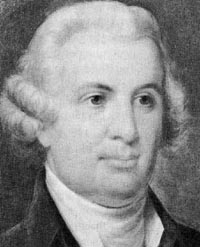
Mary Claire Engstrom's article on the last years of William Hooper, one of the North Carolina signers of the Declaration of Independence, who moved to Hillsborough in 1782 and died there in 1790. Four pages with a portrait, detached from the February 1974 issue of the Daughters of the American Revolution magazine.
Included because: Catalog heading in the UNC record: Hooper, William, 1742-1790.
Address by Edwin A. Alderman ... on the life of William Hooper, "the prophet of American independence" : Guilford Battle Ground, July 4, 1894
Alderman, Edwin Anderson, 1861-1931 · 1894 · University Press
Edwin A. Alderman's Fourth of July address of 1894 at the Guilford Battle Ground, on the life of William Hooper, the North Carolina signer of the Declaration of Independence who died in 1790. The University Press at Chapel Hill printed it for the Guilford Battle Ground Company. It touches the Hooper family and state politics during the Revolution.
Included because: Catalog heading in the UNC record: Hooper, William, 1742-1790.
The Nash-Hooper House
1950 · Artvue Post Card Co., New York, N.Y
Artvue postcard of the Nash-Hooper House in Hillsborough from about the 1950s. Francis Nash built the house around 1772, and William Hooper, a signer of the Declaration of Independence, lived there from about 1782 to 1790. The card calls it the only surviving North Carolina home of a signer and mentions its place in Inglis Fletcher's Carolina novels.
Included because: Their name appears in the record.
Mary Claire Engstrom photographic collection, 1930s-1979 (bulk 1950s-1976).
Engstrom, Mary Claire, 1906-1997 · 1934
Photographs gathered by Mary Claire Engstrom (1906-1997), dated from the 1930s to 1979 with most falling between the 1950s and 1976, about 2,140 items in 4.4 linear feet in UNC's North Carolina Collection. Subjects include historic buildings in Hillsborough and Orange County, the Alexander Dixon House, the Nash Hooper Graham House, Bingham School, Nash and Kollock School, the Hillsboro' Military Academy, Carrboro views, and the Old Chapel Hill Cemetery.
Included because: Catalog heading in the UNC record: Hooper, William, 1742-1790.
Home of William Hooper, Hillsboro, N.C.
1905 · Artvue Post Card Co., New York, N.Y
Artvue postcard of the William Hooper house in Hillsborough, a two-story home with a front porch and two chimneys, from about 1905 to 1915. The card names Hooper as one of the three North Carolina signers of the Declaration of Independence.
Included because: Their name appears in the record.
August-September, 1780: Joint Select Committees (Reports of and messages concerning)
North Carolina. General Assembly · 1780
Reports and messages of joint select committees from August and September 1780, when the General Assembly met at Hillsborough after the defeat at Camden. Committees worked on supplies and provisions for the army and the adjustment of public claims. Horatio Gates, Richard Caswell, Abner Nash, William Hooper, hospitals, surgeons, cavalry and wagons all appear. 88 pages.
Included because: Catalog heading in the NC Digital Collections record: Hooper, William, 1742-1790.
NC Digital Collections record courtesy of the North Carolina Department of Natural and Cultural Resources.
Show 3 more about William Hooper
Governors' Papers: Richard Caswell, Correspondence, July 1777
Bonner, Henry · 1777
Governor Richard Caswell's letters for July 1777, 115 images, with Henry Bonner among the writers. William Hooper, William Churchill Houston, Hardy Murfree and John Rutledge are named, and the counties concerned include Anson, Bladen, Camden, Chatham and Orange.
Included because: Catalog heading in the NC Digital Collections record: Hooper, William, 1742-1790.
NC Digital Collections record courtesy of the North Carolina Department of Natural and Cultural Resources.
HOOPER. William Hooper Family Bible Records
North Carolina. Division of Archives and History · 1742
Hooper family Bible entries covering 1742 to 1939, one of the Bible Records at the State Archives of North Carolina in Raleigh. Subjects include William Hooper together with John DeBerniere Hooper and William Wilberforce Hooper, Mary Jane Kearney, Ben C. Alston and the Alston family. The family has connections to Orange and Warren counties.
Included because: Catalog heading in the State Archives of NC record: Hooper, William.
William Hooper (1742-1790) Papers, 1773-1810
1742
Finding aid for a small group of William Hooper papers, 1773 to 1810. Hooper (1742 to 1790) was a lawyer, a legislator for New Hanover and Orange counties and a delegate to the Continental Congress from 1774 to 1777. The papers include Commissary General Joseph Trumbull's March 1776 letter on the siege of Boston, one about ordering medicines, and a letter from the loyalist Mary Middleton about a vessel.
Included because: Their name appears in the record.
NC Digital Collections record courtesy of the North Carolina Department of Natural and Cultural Resources.
Search all 14 indexed works →
Records of enslaved people
7 records, 1784 to 1788, name William Hooper as a party to the sale, gift, trust or other transfer of enslaved people. Each record lists the people named in it, with their ages and family ties.
- Agreement, 25 September 1784Judah and Jack
- Sale, 25 September 1784Molly
- Agreement, 25 September 1784Tom, Pat and Alfred
- Deed (sale or gift not stated), 25 September 1784Molly
- Deed (sale or gift not stated), 28 August 1788Judah, Jack and Tom
- Deed (sale or gift not stated), 28 August 1788Judy, Jack and Molly
- Sale, 28 August 1788Doll and Nancy
Search all records of enslaved people in Orange County →
Wills
3 wills and papers in the county’s will books name William Hooper, from Ruth Herndon Shields’s abstracts. Each shows the role and the year.
Search the wills →
Research sources
Sources and research tools for this person. For ready-made searches of other catalogs, see Search further. Research guide: Trace a family through historical records.
Historic sites, markers, and maps
Records of the time 7
- State Archives catalog: 40 collections naming William HooperState Archives of North Carolina Collection descriptions for manuscripts, county records, and state records held by the State Archives of North Carolina
- DigitalNC newspapers: 143 Orange County pages naming William Hooper Searchable pages from historic Orange County newspapers
- NCpedia: William Hooper (public-domain image) In 1774, William Hooper led the charge for a provincial congress, or assembly, to coordinate the colony’s response to the “Intolerable Acts” of Parliament. He represented North Carolina at the Continental Congress in Philadelphia that fall, and two years later would sign the Declaration of Indepe…
- Colonial Records of North Carolina, volume 10 (1775–1776)Colonial and State Records of North Carolina Hooper in the provincial congresses of 1775 and 1776
- Orange County Register of Deeds: sales of enslaved people naming William HooperOrange County Register of Deeds: Slave Records 7 records, 1784 to 1788, naming him as seller, buyer or trustee of enslaved people: Deed Book 2/455, 2/457, 2/458, 4/62, 4/63, 4/65; Will Book A/316.
- Grave recorded at the Caldwell-Hooper gravesite on McCorkle PlaceCemetery Census Listed in the county cemetery survey, grave by grave, at Cemetery Census
Show all 7
Collections and databases
- NC LIVE: prepared search for William Hooper Library card Search NC LIVE for this subject and Orange County. You can change the search terms. Sign in through your North Carolina library to access the materials.
- Ancestry Library Edition In the libraryOrange County Public Library Census, birth, death and marriage records, and more, free on the public computers at OCPL libraries