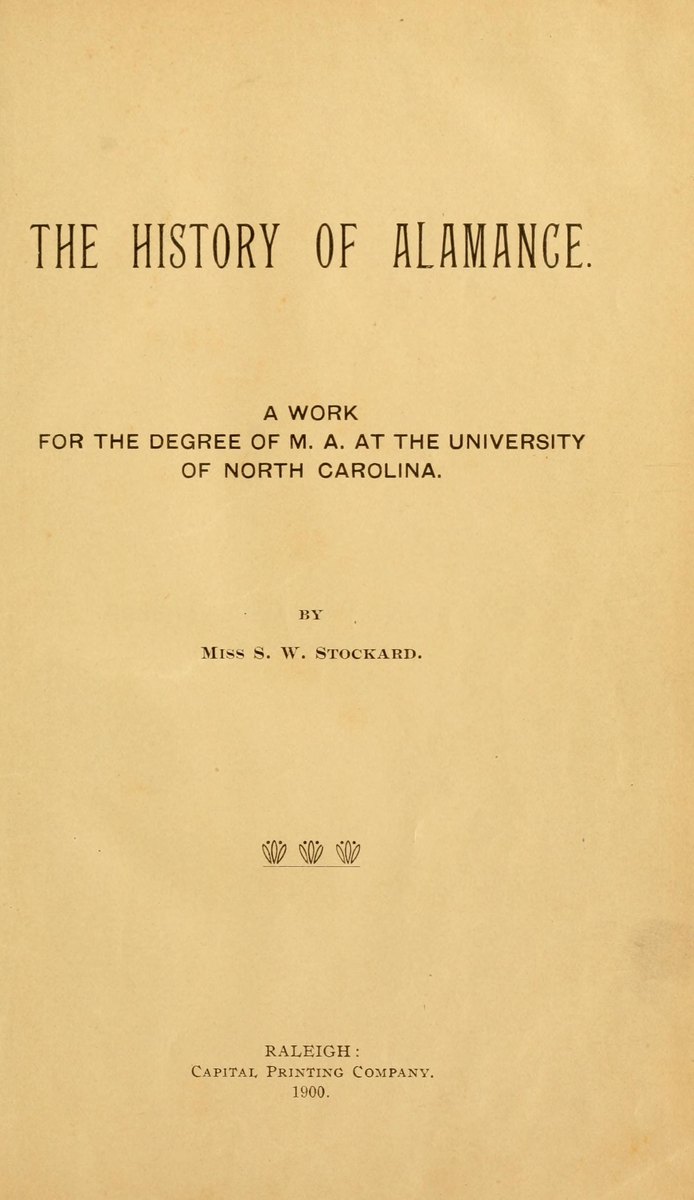
Dixie Lee Bryant, head of science at the State Normal and Industrial School in Greensboro, taught physical geography and botany at the university's 1894 Summer School for Teachers and Students. Early in 1897 President Edwin Alderman persuaded the trustees to admit women to post-graduate courses, though they voted down a motion to open the whole university to them; the 1897 catalogue opened all graduate courses to women, and Alderman took the vote to cover junior and senior courses as well. In September 1897 four women, Bryant, Sallie Walker Stockard, Cecye Dodd and Mary MacRae, registered for the 1897–98 session, which The Tar Heel called the start of coeducation. Stockard, a Guilford College graduate who had entered the senior class that fall, received her degree with the class of 1898 on June 1, 1898, and earned a master's degree there in 1900.
In April 1930 the Philanthropic Society voted to admit women, and three co-eds, Katharine Wells, Virginia Douglas and Beatrice Crisfield, joined; the Weekly called it the first time women had been admitted. By October 1933 both the Dialectic Senate and the Philanthropic Assembly had amended their constitutions to admit women. The University opened Graham dormitory to 30 women students in the fall of 1934 after Spencer Hall was full, and in 1935 it made Archer House a women's residence again.
On May 20, 1936 the Chapel Hill Rotary Club asked the trustees to let qualified young women within commuting distance attend in their first two years, which the trustees' rules forbade, and the Kiwanis Club and the Parent-Teacher Association endorsed it. On May 3, 1937 the trustees' executive committee reaffirmed that Chapel Hill girls, like other women, should not be admitted to the freshman and sophomore classes. A ruling that spring opened the summer terms to all men and women eligible for freshman work. The first new women's dormitory, built with Public Works Administration money and later named Alderman, was occupied by September 1937, and two more opened in September 1939. In March 1963 The News of Orange County reported that the university would admit 24 freshman women to its non-professional departments or schools that fall.
In the fall of 1975, for the first time in the University's history by Pamela Dean's account, women outnumbered men in the entering freshman class, 54 to 46 percent in a later count. Dean records that the Chapel Hill Newspaper warned that fewer of the state's future leaders would be university men, and that Joan Scott answered that women's studies could build alumnae loyalty. In March 1978, expecting the entering class to be 54 to 55 percent female, housing officials turned three floors of Morrison and one of Hinton James into alternating men's and women's suites; admissions said more women than men had applied and been accepted. Women made up 57 percent of the freshmen admitted that fall, 1,802 of 3,157, a share officials called an all-time high, and it was the third year in a row that women outnumbered men in the dormitories. In October 1978 figures from Chancellor N. Ferebee Taylor's office showed women were 50.9 percent of all students at Chapel Hill: 54.1 percent of undergraduates, about half of graduate students and 26 percent of law, medical and dental students. The Daily Tar Heel reported it was the first time women outnumbered men.
Reading on the places and people in this storyline
No indexed work is about this storyline itself yet. These are about the sites and people its dated events name, those named most often first, so they may discuss the storyline only in part. Follow a link to find a copy or view the material.
The Dialectic and Philanthropic Societies: virtus, libertas et scientia, 1795
Brigman, Brian · 1988
Brian Brigman's short illustrated pamphlet on the Dialectic and Philanthropic Societies, the debating societies founded at the University of North Carolina in 1795, with the Latin phrase virtus, libertas et scientia in its subtitle. Published by the societies themselves in Chapel Hill in 1988, eleven unnumbered pages with portraits.
The Dialectic and Philanthropic Societies portraits, 1795-1868
Reckford, Joseph K. L. · 1981 · Univ. of NC
Joseph K. L. Reckford's honors essay in American Studies at the University of North Carolina, submitted in 1981, reproduces the portraits acquired between 1795 and 1868 by the Dialectic and Philanthropic Societies, the university's two debating societies, and adds selected biographical data on the sitters. 211 pages with a short bibliography.
"And they talked. Always they talked" : 215 years of the Dialectic and Philanthropic Societies
Cherry, Kevin · 2011 · University of North Carolina at Chapel Hill
Kevin Cherry's lecture on 215 years of the Dialectic and Philanthropic Societies, the student debating societies at the University of North Carolina, delivered on April 7, 2011 in Wilson Library for the Gladys Hall Coates University History Lecture series. Seventeen pages as published online, covering student oratory and society life at Chapel Hill from the 1790s onward.
The growth of the library of the Philanthropic Society at the University of North Carolina, Chapel Hill, 1797-1822
Murphy, Evangeline Burbank, 1947- · 1979 · University of North Carolina at Chapel Hill
Evangeline Burbank Murphy traces the growth of the library built up by the Philanthropic Society at the University of North Carolina between 1797 and 1822, in a thesis the university issued in 1979. Subjects include academic libraries in Chapel Hill and the society and the university library of the 1793 to 1962 period. Seventy three leaves.
Report of Hon. Kemp P. Battle, President of the University of N.C. on the state of the University and the Normal School.
Battle, Kemp P. · 1878 · Daily and Weekly News Steam Book and Job Print
University president Kemp P. Battle's report to the trustees, dated January 15, 1878, on the condition of the University of North Carolina and on the 1877 session of its normal school, held in Chapel Hill to train teachers. Includes a report by secretary Dugger and a list of the normal students with their post offices. Printed in Raleigh by the Daily and Weekly News steam book and job print, 31 pages, online.
Report of Hon. Kemp P. Battle, President of the University of N.C. on the State of the University and the Normal School [1878]
University of North Carolina (1793-1962) · 1878 · University of North Carolina at Chapel Hill
Report by Kemp P. Battle, president of the University of North Carolina, on the state of the university and the Normal School, dated 1878 and printed at Chapel Hill. Part of DigitalNC's North Carolina Yearbooks collection.
Report on the winter "Summer School" held at the University of North Carolina, January 19 to March 2, 1941
Leavitt, Sturgis E. (Sturgis Elleno), 1888-1976 · 1941 · S.E. Leavitt
Sturgis E. Leavitt reports, on 9 April 1941, on the winter session the University of North Carolina held from 19 January to 2 March of that year, a summer school run out of season. It deals with the university's Inter-American Institute and with foreign students at Chapel Hill. Printed by Leavitt himself.
U.N.C. Summer School Group -- 1909
1907
Real photo postcard of a University of North Carolina summer school class posed on the steps of Alumni Hall, the men in suits and the women in long dresses. The caption gives 1909, while a pencil note on the back reads 1907 to 1912.
About Archer House · named in one of this story’s entries
Archer House: photographs (Chapel Hill Historical Society)
The Archer House burning, with a crowd gathered at the side to watch it go down. Two undated photographs in the Chapel Hill Historical Society's Prints and Photographs Collection.
Putting Down Roots
Burk, William R. · 2023
William R. Burk's history of botany at the University of North Carolina, from its early natural scientists such as Denison Olmsted and Elisha Mitchell through later figures including George Francis Atkinson, Joseph Austin Holmes and Henry Van Peters Wilson, closing with a chapter on the Department of Botany itself. Published in Fort Worth in 2023.
Wider background: Women's Lives & History · the most widely held histories of the theme this storyline is filed under; they may not discuss it
To Free A Family
Nathans, Sydney · 2012 · Harvard University Press
Sydney Nathans's biography of Mary Walker, an enslaved woman from Orange County who escaped to the North in the mid nineteenth century and spent the following decades in Cambridge, Massachusetts, working to free the family she had left behind. Chapter titles trace her flight, her years among Northern friends, a rescue plot, a long silence, and the reunion that gives the book its close. Published 2012 by Harvard University Press, 330 pages with 20 pages of plates, illustrations and maps.
Reviewed in Choice Reviews Online (2012), Civil War Book Review (2012).
Miss Mary's Money
Jones, H. G. · 2014 · McFarland & Co.
H. G. Jones follows the fortune of Mary Ruffin Smith (1814-1885), the unmarried heiress whose Orange and Chatham County lands passed at her death to the University of North Carolina and the Episcopal Church. Chapters profile her grandfather Francis Jones, then trace the bequest through a quarrel among Episcopalians over Price Creek, the Chapel of the Cross and the university's buildings. A December 1885 New York Times report called the gift money; Jones shows it was land. Published by McFarland in 2014, 231 pages.
The Woman Who Rang the Bell: The Story of Cornelia Spencer Phillips
Russell, Charles Phillips · 1949
Charles Phillips Russell's biography of Cornelia Phillips Spencer (1825-1908), the Chapel Hill writer remembered for ringing the bell of South Building when the university reopened in 1875 after its closure during Reconstruction. It doubles as a history of Chapel Hill and the university. Published by the University of North Carolina Press in 1949, 293 pages with illustrations.
Reviewed in Journal of American History (1949).
Old Days in Chapel Hill
Chamberlain, G. Hope Summerell · 1926
Hope Summerell Chamberlain's life and letters of Cornelia Phillips Spencer (1825 to 1908), published in 1926, which doubles as a picture of Chapel Hill and the university in the nineteenth century. It runs 325 pages with illustrations and portraits.
Selected Papers of Cornelia Phillips Spencer
Spencer, Cornelia Phillips · 1953
Selected writings of Cornelia Phillips Spencer (1825 to 1908), the Chapel Hill writer who campaigned for the university's reopening after Reconstruction, published by the University of North Carolina Press in 1953. The 753 pages touch on Chapel Hill life, education and the university in the nineteenth century.
Reviewed in The Journal of Southern History (1954).
Jane Crow: The Life of Pauli Murray
Rosenberg, Rosalind · 2017
Rosalind Rosenberg's 2017 biography of Pauli Murray (1910-1985), lawyer, poet and Episcopal priest, raised in Durham. Its six parts follow a Southern childhood, the move to New York, the 1938 application to the University of North Carolina that was refused because Murray was Black (the chapter is titled 'Members of your race are not admitted'), law school and the coining of the phrase Jane Crow, the Cold War years, the push toward 'an NAACP for women', and a late-life ordination. 494 pages with portraits.
Reviewed in The Journal of Southern History (2018).
Show 6 more
Well worth a shindy : the architectural and philosophical history of the Old Well at the University of North Carolina at Chapel Hill
Madry, Sarah Brandes · 2003 · iUniverse
Sarah Brandes Madry's history of the Old Well at the University of North Carolina at Chapel Hill, treating both its architecture and the ideas attached to it. It takes in drinking fountains and water use in Chapel Hill and the university's history, with a chapter on Edwin Anderson Alderman, the president under whom the well took its present form in 1897, and one on water at the university. Published by iUniverse in 2003, 399 pages with illustrations.
Mrs. Lincoln and Mrs. Keckly: The Remarkable Story of the Friendship Between a First Lady and a Former Slave
Fleischner, Jennifer · 2003 · Broadway Books
Jennifer Fleischner's double biography of Mary Todd Lincoln and Elizabeth Keckley, the dressmaker who had been enslaved, including years in Hillsborough, before buying her freedom and becoming the First Lady's confidante. Published by Broadway Books in New York in 2003, 372 pages with illustrations and a map. Topics include enslaved women in Hillsborough and the United States, dressmakers and women's friendships in the nineteenth century.
The Book of Burwell Students
Engstrom, Mary Claire · 1979 · Historic Hillsborough Commission
Mary Claire Engstrom's biographical register of the young women who attended the Burwell School in Hillsborough, subtitled lives of educated women in the antebellum South. The school was kept by Margaret Anna Burwell and her husband, and the book bears on women's education in nineteenth-century North Carolina. Published by the Historic Hillsborough Commission, 1979, 256 pages with illustrations and portraits.
The last ninety days of the war in North-Carolina
Spencer, Cornelia Phillips · 2005 · University Library, UNC-Chapel Hill
Cornelia Phillips Spencer's account of the closing weeks of the Civil War in North Carolina, reissued in 2005 as an electronic edition by the University Library at UNC-Chapel Hill. Topics include the 1865 campaigns, Sherman's march through the Carolinas, Stoneman's raid, and the history of Chapel Hill and the university in the nineteenth century, where Spencer, 1825 to 1908, spent her working life.
More than petticoats
Cohn, Scotti · 2000 · TwoDot
Scotti Cohn's short biographies of notable North Carolina women, including Harriet Jacobs, Charlotte Hawkins Brown, Annie Lowrie Alexander and Cornelia Phillips Spencer of Chapel Hill. Published by Twodot in 2000, 198 pages with illustrations.
First Women of Orange County
1994 · Orange County Women's History Month Committee
A Women's History Month project of 1993 and 1994 from the Orange County Women's History Month Committee, profiling women who were firsts in the county. Published in Chapel Hill in 1994, 13 pages plus unnumbered leaves with illustrations, facsimiles and portraits.