Skip to content

Theme

Literature & Publishing

Thomas Wolfe, Paul Green, and the writers, presses, and bookstores that made the county a literary place.

George Moses Horton sold poems to students in 1818, the Hillsborough Recorder began in 1820, Thomas Wolfe and Paul Green wrote at Chapel Hill, and UNC Press was founded in 1922. The records here are the writers, presses and bookstores that made the county a literary place.

841 indexed works are connected with this theme. 77 held at OCPL →

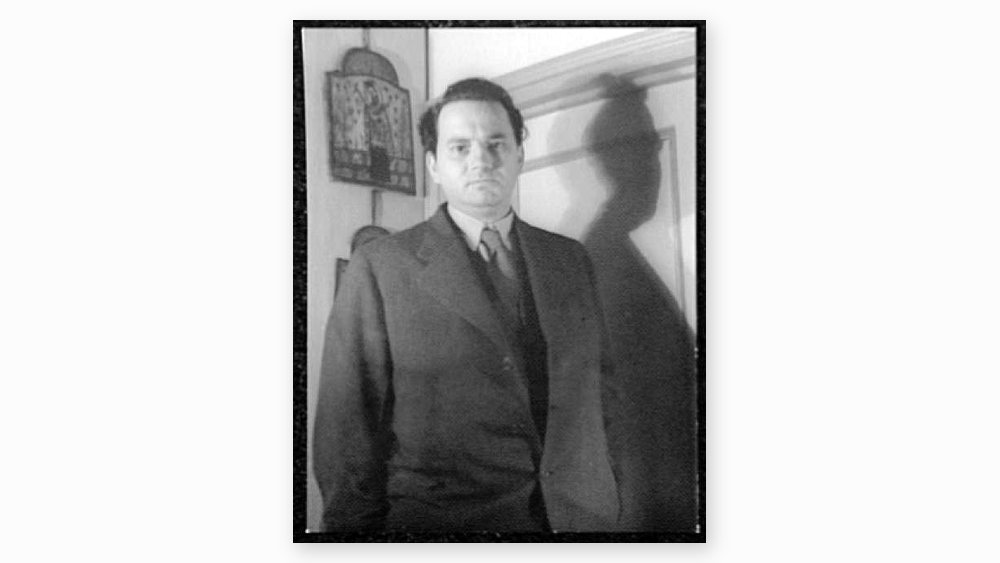
Thomas Wolfe, 1937, by Carl Van Vechten.

Indexed works

Related works found in catalogs and archives across North Carolina, the most widely held first, novels aside. Each links to the institution that holds or provides it.

Widely held

Game Changers

Chansky, Art · 2016

Art Chansky's 2016 account of Dean Smith, Charlie Scott and the years that changed Chapel Hill as a Southern college town. Scott was the first Black scholarship player in the Carolina basketball program. Topics include civil rights, racism in sports and the university's twentieth-century history.

Why this is here: Catalog heading in the Chapel Hill PL record: North Carolina Authors.

William Friday

Link, William A. · 1995

Biography of William C. Friday, president of the University of North Carolina system, by historian William A. Link, published by UNC Press in 1995 with the subtitle power, purpose, and American higher education. It covers Friday's career and the history of the university at Chapel Hill and statewide. Part of the Rebecca B. Wall Local History Collection.

Why this is here: Catalog heading in the Chapel Hill PL record: North Carolina Authors.

The Free Men

Ehle, Jr., John Marsden · 1965

John Ehle's account of the civil rights demonstrations in Chapel Hill in 1963 and 1964 and the young people who led them, first published by Harper & Row in 1965. This reprint from Lewisville, North Carolina adds an afterword by Wayne King. Civil rights and race relations in Chapel Hill are its subjects. 340 pages with illustrations and portraits.

Why this is here: Catalog heading in the Chapel Hill PL record: North Carolina Authors.

Chapel Hill in Plain Sight

Athas, Daphne · 2010 · Eno Publishers

Twelve essays by novelist Daphne Athas (1923-2020) on the Chapel Hill she knew across the twentieth century. Subjects include Carrboro as 'the Paris of the Piedmont', philosopher Horace Williams, Betty Smith writing in Chapel Hill, Junius Scales, Ab Abernethy and the Intimate Bookshop, Richard Wright's visit, and a set of Chapel Hill murders. Published 2010, 243 pages with illustrations.

Why this is here: Catalog heading in the UNC record: Authors, American.

The Woman Who Rang the Bell: The Story of Cornelia Spencer Phillips

Russell, Charles Phillips · 1949

Charles Phillips Russell's biography of Cornelia Phillips Spencer (1825-1908), the Chapel Hill writer remembered for ringing the bell of South Building when the university reopened in 1875 after its closure during Reconstruction. It doubles as a history of Chapel Hill and the university. Published by the University of North Carolina Press in 1949, 293 pages with illustrations.

Why this is here: Catalog heading in the Durham record: Spencer, Cornelia Phillips, 1825-1908.

Reviewed in Journal of American History (1949).

Hark the Sound of Tar Heel Voices

Barefoot, Daniel W. · 2008

Daniel W. Barefoot arranges first-hand recollections of the University of North Carolina by decade, from the 'infant university' of the 1790s through the Civil War years when promise turned to despair, the rebuilding of the 1870s, the 'frosh' life of the 1880s, wartime fame in the 1940s, the controversies of the 1960s and the bicentennial of the 1990s. Thomas Wolfe's student years appear among the voices. Published by John F. Blair of Winston-Salem in 2008, 257 pages.

Why this is here: Catalog heading in the Chapel Hill PL record: North Carolina Authors.

Show 2 more

To Hate Like This Is to Be Happy Forever

Blythe, Will · 2006 · Harper Collins

Will Blythe's account of the Duke and North Carolina basketball rivalry, described in its subtitle as thoroughly obsessive, intermittently uplifting and occasionally unbiased. Blythe writes as a Chapel Hill partisan, and the book treats sports rivalries, basketball fans and the social side of the game in North Carolina. Published by HarperCollins in New York in 2006, first edition, 357 pages.

Why this is here: Catalog heading in the Chapel Hill PL record: North Carolina Authors.

Piedmont Plantation: The Bennehan-Cameron Family and Lands in North Carolina

Anderson, Jean Bradley · 1985 · Historic Preservation Society of Durham

Jean Bradley Anderson's history of the Bennehan and Cameron families and their plantations, Stagville and Fairntosh, on lands that lay in Orange County until Durham County was formed from it in 1881. Published by the Historic Preservation Society of Durham in 1985, the book follows plantation life and ownership across several generations, with genealogical tables, a map, portraits, a bibliography and an index; 227 pages plus plates.

Why this is here: Catalog heading in the Chapel Hill PL record: North Carolina Authors.

Reviewed in South Atlantic Quarterly (1987).

Recently indexed: The "poet of man," (1859) · AACR 2 headings : a five-year projection of their impact on catalogs (1982) · The acquisition of the Stephen B. Weeks Collection of Caroliniana (1965) · An analysis of the book publications of the University of North Carolina Press, 1922-1952 (1956) · Annual report (1987)

Search all 841 indexed works →

Start at OCPL

Books in OCPL’s Rebecca B. Wall Local History Collection whose titles, catalog subjects, or descriptions match this theme. The Friends’ recommended starting points are labelled. Books marked Wider context cover the broader subject rather than this theme itself.

  • Foundational · 975.656 TWENTY 27 Views of Chapel Hill: A Southern University Town in Prose & Poetry 2011

    Twenty-seven writers contribute essays, short stories and poems about Chapel Hill to this 2011 anthology from Eno Publishers of Hillsborough, issued under Daniel Wallace's name. Among them are Wells Tower, Jock Lauterer, Mildred 'Mama Dip' Council on a life of cooking, Paul Cuadros on the cooks of Franklin Street, William Leuchtenburg on presidential visits, Karen L. Parker, Bland Simpson, Elizabeth Spencer, Daphne Athas and Lawrence Naumoff. 235 pages with illustrations.

  • Foundational · 975.656 TWENTY 27 Views of Hillsborough: A Southern Town in Prose & Poetry 2010

    Hillsborough seen by twenty-seven writers in essays, fiction and poems collected by Eno Publishers in 2010. Allan Gurganus writes on renovating old houses, David Payne and Beverly A. Scarlett on the Eno, Brooks Graebner on the courthouse and the churches, Nancy Goodwin keeps a gardener's journal, and Lee Smith offers scenes from 'On Agate Hill'; Randall Kenan, Michael Malone, Hal Crowther, Jill McCorkle, Craig Nova and Jaki Shelton Green also appear. 210 pages.

  • Start here · NC BIO GREEN ADA Paul Green of Chapel Hill Adams, Agatha Boyd · 1951

    Biographical study of the playwright Paul Green by Agatha Boyd Adams, edited by Richard Walser and issued by the university library in 1951 in its Library Extension Publication series. Topics include his drama at Chapel Hill and his writing on slavery. A slim book of 116 pages with a portrait.

Show 6 more
  • Foundational · NC 810.8 REH Chapel Hill Carousel: Edited by Jessie Rehder Rehder, Jessie · 1967

    Jessie Rehder, who taught creative writing at the University of North Carolina, assembled this 1967 anthology of fiction and prose by writers connected with Chapel Hill for UNC Press. Among the pieces are Wallace Kaufman's 'Regard me well', a piece by Frances Gray Patton anatomizing the Southern belle, and early groundwork by Reynolds Price for his first novel; Thomas Wolfe also figures in it. 215 pages.

  • Foundational · NC 305.409 WHE Where My Feet Have Taken Me: A Collection of Short Stories by Women and Girls Living in Orange County, NC 2005

    A collection of short stories written by women and girls living in Orange County, N.C., published in 2005 for Women's History Month.

  • Wider context · NC 810.997 WAL Young Readers' Picturebook of Tar Heel Authors Walser, Richard Gaither · 1966

    A picture book of North Carolina writers for young readers by Richard Walser, with brief biographical and bibliographical notes, published by the State Department of Archives and History for use in the schools. First issued in 1957 as Picturebook of Tar Heel Authors; this third edition, revised and enlarged, appeared in 1966, 70 pages. Walser taught English at North Carolina State from 1946.

  • Wider context · NC 810 WRITING Writing Civil Rights: The Pursuit of Justice in African American Literature : A Collection of Student Reflections, Summer 2011 2011

    Reflections by incarcerated students at Orange Correctional Center in Hillsborough, written for a Stepping Stones seminar on the pursuit of justice in African American literature that Patrick Elliot Alexander and Allison Curseen taught from June 20 to August 22, 2011. Writings by Pauli Murray and Martin Luther King Jr. figure in the 54-page collection.

  • Wider context · NC 810.8 LIV A Living Culture in Durham: A Collection of Writings by Durham Area Authors 1987

    An anthology of poetry and prose by writers of Durham and its surroundings, edited by Judy Hogan with Mary Ellen Priestley and Margaret Stephens and illustrated with Ted Bodenheimer's photographs. Hogan founded Carolina Wren Press, the Durham publisher that issued the 478-page collection in 1987, and helped found the North Carolina Writers' Network.

  • Wider context · NC 027.575 WEE Libraries and Literature in North Carolina in the Eighteenth Century Weeks, Stephen Beauregard · 1896

    First printed in the American Historical Association's annual report for 1895, Stephen B. Weeks's study of libraries and writing in eighteenth-century North Carolina fills pages 171 to 267 of that report and was issued separately by the Government Printing Office in 1896. It ends with a bibliography.

In the chronology

Storylines in this theme, earliest first. Each has its own page.

Dated events connected with this theme, earliest first. See these 214 dated events in the chronology →

  1. Herman Husband publishes a second part of An Impartial Relation Husband followed his Impartial Relation with A Continuation, the second part, "printed for the Author." It argued that jurors were judges of law as well as fact and set out the Regulators' later dealings with the courts, including his own fee suits and sworn statements from his neighbors.Search the index · Internet Archive: Archibald Henderson, ed., "Hermon Husband's Continuation of the Impartial Relation", North Carolina Historical Review 18 (1941), p. 50
  2. Provincial Congress at Hillsborough orders its journal printed by James Davis The congress meeting at Hillsborough directed that its proceedings be delivered to James Davis, the province's printer and a delegate for the town of New Bern, who was desired to print them and send a copy to each member. It also named a committee to state and settle his account for services done as printer to the province. People: Willie Jones, Thomas PersonSearch the index · Documenting the American South: Minutes of the Provincial Congress of North Carolina, August 20 to September 10, 1775
  3. George Moses Horton begins selling poems to UNC students By about age twenty, George Moses Horton, enslaved on a Chatham County farm, was carrying fruit to the UNC campus on Sundays, and students began paying him to compose love poems and acrostics. His first printed poem appeared in April 1829, the year The Hope of Liberty was published.Search the index · Documenting the American South: Richard Walser, George Moses Horton, 1798?-ca. 1880 (Dictionary of North Carolina Biography)
  4. The Hillsborough Recorder begins publication Dennis Heartt began publishing the weekly Hillsborough Recorder in February 1820, at three dollars a year. The paper ran until 1879, and its surviving issues are a main record of nineteenth-century Hillsborough and Orange County. People: Dennis HearttDigitalNC: The Hillsborough Recorder, March 1, 1820 (Vol. 1, No. 4)
  5. The Hillsborough Recorder calls slavery a misfortune and urges colonization Editor Dennis Heartt wrote that slavery harmed the state but argued against freeing people to remain in North Carolina. He proposed sending free Black people to Africa at public expense and asked the legislature to act. People: Dennis HearttLefler and Wager, Orange County, 1752-1952 (1953), p. 103-104
  6. Parson Weems sells books at Chapel Hill and Hillsborough In the winter of 1821-1822 Mason Locke Weems, the book peddler and author of the Life of Washington, worked the piedmont with his boxes of books, stopping at Halifax, Murfreesboro, Greensboro, Raleigh, Chapel Hill and Hillsborough.Search the index · Internet Archive: North Carolina Historical Review 29 (1952), p. 18
  7. Caroline Lee Hentz befriends and tutors the poet George Moses Horton in Chapel Hill While her husband Nicholas Hentz taught languages at the university, Caroline Lee Hentz befriended the enslaved poet George Moses Horton, tutored him in grammar and helped edit his work. She sent some of his poems to the Lancaster Gazette in her Massachusetts hometown, which printed them in 1829. People: George Moses Horton, Nicholas Marcellus HentzSearch the index · The Carolina Story: Caroline Lee Hentz (1800-1856)
  8. George Moses Horton publishes The Hope of Liberty George Moses Horton’s The Hope of Liberty was published in Raleigh, with supporters hoping sales could finance his freedom.Search the index · NCpedia
  9. Anne Royall publishes a hostile account of Chapel Hill The traveling writer Anne Royall visited Chapel Hill in 1829 and in her Southern Tour, published in 1830, charged that the president's wife, Helen Caldwell, ruled the university. Battle answers with the faculty's account of the student she defended, who had been dismissed for disorder at a Sunday service. People: Joseph Caldwell, Helen Hogg CaldwellSearch the index · Documenting the American South: Kemp P. Battle, History of the University of North Carolina, vol. I (1907), p. 336
  10. The Recorder shop prints Letters on Popular Education The Hillsborough Recorder office printed Letters on Popular Education Addressed to the People of North Carolina in 1832. People: Dennis HearttLefler and Wager, Orange County, 1752-1952 (1953), p. 127
  11. Peter Dromgoole disappears from Chapel Hill Peter Pelham Dromgoole came to Chapel Hill in January 1833, failed the university's entrance examination and studied under a tutor. That spring, after bitter letters with his father, he vanished from his lodgings, leaving most of his belongings and a debt to a Chapel Hill merchant.Search the index · NCpedia: Dromgoole, Peter Pelham
  12. Isaac C. Partridge publishes The Harbinger Isaac C. Partridge's weekly The Harbinger, one of the county's first literary periodicals, began at Chapel Hill on August 27, 1833, after a prospectus that January, and ran for about a year. It covered the sciences and arts and leaned on professors Elisha Mitchell and William Hooper for its contents. People: Elisha MitchellSearch the index · DigitalNC: The Harbinger (Chapel Hill), August 27, 1833, first number · Also: Lefler and Wager, Orange County, 1752-1952
Show all 214 dated events
  1. George Moses Horton's The Hope of Liberty is reprinted in Philadelphia and Boston The 1829 collection by the enslaved Chapel Hill poet came out in a second edition in Philadelphia in 1837 and a third in Boston in 1838.Search the index · Lefler and Wager, Orange County, 1752-1952 (1953), p. 99
  2. The Hillsborough Recorder predicts North Carolina will become a rival of northern cotton mills Editor Dennis Heartt told Recorder readers that northern manufacturers would not much longer be able to count North Carolina as a market for cotton goods, and should instead expect the state to become a formidable competitor. People: Dennis HearttInternet Archive: North Carolina Historical Review 34 (1957), p. 144
  3. Hillsborough Literary Association forms with Dennis Heartt as secretary A Literary Association was formed at a meeting in the Presbyterian session house in Hillsborough on the evening of January 20, 1842, after a preliminary meeting the night before, with Frederick Nash as president; James S. Smith, Cadwallader Jones and Robert Burwell as vice presidents; Dennis Heartt as secretary; and Walter A. Norwood as treasurer. Heartt, a charter member, had helped organize it. People: Frederick Nash, Cadwallader Jones, Robert Armistead Burwell, James Strudwick Smith, Walter A. NorwoodSearch the index · DigitalNC: Wilmington Chronicle, February 9, 1842, page 2 · Also: Hillsborough Recorder, January 27, 1842, p. 3
  4. The Recorder begins reprinting Herman Husband's account of the Regulation Dennis Heartt began reprinting in the Recorder, from the Greensborough Patriot, Herman Husband's rare account of the Regulation in Orange so that subscribers could read and keep it, praising the Regulators' spirit of liberty. The Patriot's copy had come through the Rev. Mr. Caruthers from a Regulator's granddaughter living in Indiana. People: Dennis Heartt, Herman HusbandSearch the index · Hillsborough Recorder, February 8, 1844, p. 3
  5. Dennis Heartt prints The Poetical Works of George M. Horton Dennis Heartt printed The Poetical Works of George M. Horton, the Colored Bard of North-Carolina at Hillsborough in 1845, with Horton's autobiography prefixed to the poems. It was the second book by Horton, who was still enslaved when it appeared. People: George Moses HortonSearch the index · Documenting the American South: The Poetical Works of George M. Horton (Hillsborough: D. Heartt, 1845)
  6. Students circulate the Literary Trumpet, a handwritten paper William M. Howerton edited the Literary Trumpet, a pen-and-ink paper for private circulation, with a lady as nominal co-editor. Battle calls it the first of the university's informal student sheets.Search the index · Documenting the American South: Kemp P. Battle, History of the University of North Carolina, vol. I (1907), p. 586
  7. George Moses Horton gives the students' Fourth of July oration at Chapel Hill Students left on the Hill over the summer vacation met and chose George Moses Horton, the enslaved poet they called the North Carolina bard, to give a Fourth of July oration. On July 4, 1849 they formed a procession at about eleven o'clock and led him to the stage. Thomas M. Garrett wrote that he spoke about five minutes and that the applause lasted about fifteen.Search the index · Internet Archive: Thomas Miles Garrett, Diary (1849), ed. John Bowen Hamilton, North Carolina Historical Review 38 (1961), p. 243
  8. The 1850 census finds Dennis Heartt's printers and apprentices living at Heartsease The 1850 census listed editor Dennis Heartt's household at Heartsease with his two daughters, his son Edwin with his wife and small daughter, two young printers, and four boys aged eleven to eighteen entered as students who were probably apprentices at the Hillsborough Recorder. People: Dennis HearttNC State Historic Preservation Office: Heartsease, National Register nomination (OR0009), p. 5
  9. Students revive the University Magazine At a student meeting Jeremiah J. Slade moved to re-establish the magazine, and the first number appeared in February 1852 with editors from both literary societies and William D. Cooke of Raleigh as publisher. It ran until June 1861, the societies agreeing in 1859 to cover its deficits. People: Zebulon B. VanceSearch the index · Documenting the American South: Kemp P. Battle, History of the University of North Carolina, vol. I (1907), p. 632
  10. The Hillsborough Recorder calls for a plank road from Hillsborough to Milton An editorial regretted that no one had asked the last legislature to charter a company to build a plank road from Hillsborough to Milton by way of Roxboro or Yanceyville. It hoped a stock company would form under the general act of 1850-51 while a charter was sought.Lefler and Wager, Orange County, 1752-1952 (1953), p. 184
  11. Elizabeth Keckly purchases freedom for herself and her son Elizabeth Keckly purchased freedom for herself and her son in St. Louis, after earlier enslavement in Hillsborough. People: George Kirkland, Elizabeth Hobbs KecklyNCpedia
  12. New poems by George Moses Horton appear in the Chapel Hill Gazette George Moses Horton's poem 'What Is Time' was printed in the Chapel Hill Gazette on May 9, 1857, and a courting poem he wrote for a young gentleman to send his sweetheart followed on May 16. The paper introduced him as the enslaved author of Horton's Poems, held by Hall Horton of Chatham County.Search the index · The Chapel Hill Gazette, May 9, 1857, p. 2 · Also: The Chapel Hill Gazette, May 16, 1857, p. 3
  13. Charles P. Mallett keeps the University Bookstore on Franklin Street Mallett's University Bookstore was one of four businesses the book first maps in 1858, along with Andrew Mickle's dry goods, John R. Hutchins's clothing store and C. Gottenburg's mattress shop. All may have opened before 1853. People: Andrew MickleSearch the index · Bernard Lee Bryant Jr., Occupants and Structures of Franklin Street, Chapel Hill (1998; Chapel Hill Historical Society, 1999), scan p. 99
  14. The Recorder endorses Vance but refuses to print soldiers' charges against Holden Dennis Heartt printed resolutions from the men of Dickson's Battery backing Governor Vance but left out two: one that denounced W. W. Holden and one he read as scorning every man not in the army as a coward. He wrote that Holden sought an honorable peace and that no evidence made him a traitor, and he kept that stand when Raleigh papers objected. People: Dennis Heartt, W. W. Holden, Zebulon B. VanceHillsborough Recorder, April 20, 1864, p. 2
  15. Cornelia Phillips Spencer publishes The Last Ninety Days of the War in North-Carolina Encouraged by her friend, former governor David L. Swain, Spencer published her first book, an account of the war's last months in North Carolina that describes Wheeler's Confederate cavalry passing through Chapel Hill and the town's occupation by Union cavalry in April 1865. People: David L. SwainSearch the index · Documenting the American South: Cornelia Phillips Spencer, The Last Ninety Days of the War in North-Carolina
  16. Dennis Heartt gives up the Hillsborough Recorder after nearly fifty years In the Recorder of January 11, 1869, Dennis Heartt announced that his connection with the paper would end with that number, thirteen months short of fifty years after its first issue. An 1899 history of the paper says he sold it to Capt. C. N. B. Evans of the Milton Chronicle.Search the index · DigitalNC: The Hillsborough Recorder, January 11, 1869, page 2
  17. John D. Cameron becomes editor and publisher of the Recorder John Donald Cameron took over the Recorder from the Evans family, who kept only their Milton Chronicle. His masthead in January 1879 read 'J. D. Cameron, Editor and Proprietor', New Series Vol. 7, Old Series Vol. 58.DigitalNC: The Durham Recorder (Durham, N.C.) Historic Issues
  18. Fuller's Sea-Gift, the first novel set partly in Chapel Hill, is published Fuller turned his student years into Sea-Gift, which follows John Smith through the university and the Civil War and draws on the Dromgoole duel legend of Piney Prospect. Students later called it the Freshman's Bible.Search the index · Documenting the American South: Edwin W. Fuller (Edwin Wiley), 1847-1876
  19. Cornelia Phillips Spencer learns on her fiftieth birthday that the university will reopen A telegram from Raleigh on March 20, 1875, reported that the legislature had passed a bill letting the closed University of North Carolina reorganize with some state support. Spencer, whose letters to state leaders had pressed for the reopening, and a few friends entered South Building and tolled the college bell to celebrate.Search the index · Documenting the American South: Cornelia Phillips Spencer, 20 Mar. 1825-11 Mar. 1908 (Dictionary of North Carolina Biography)
  20. John D. Cameron moves the Recorder from Hillsborough to Durham, ending fifty-nine years of publication in the county seat Cameron carried the paper fifteen miles east to the tobacco town, where it continued as the Durham Recorder, published every Wednesday. The last issue under the Hillsborough title in the digitized run is March 5, 1879; the first Durham issue there is July 2, 1879.DigitalNC: The Durham Recorder (Durham, N.C.) Historic Issues
  21. Stephen B. Weeks publishes a register of the Philanthropic Society Stephen Beauregard Weeks, class of 1886, published a 72-page catalogue of Philanthropic Society members since 1795, with a short history of the society and notes on members' careers.Search the index · Documenting the American South: Kemp P. Battle, History of the University of North Carolina, vol. II (1912), p. 799
  22. Stephen B. Weeks teaches as the university's instructor in English For the 1887-88 session the university made Stephen B. Weeks, who had just taken his master's degree, its instructor in English, while Claudius Dockery became instructor in Latin.Search the index · Documenting the American South: Kemp P. Battle, History of the University of North Carolina, vol. II (1912), p. 399
  23. The revived Hillsboro Recorder moves Dennis Heartt's old press into its office The new Hillsboro Recorder reported that it had just moved the press and some wood type Dennis Heartt brought from Connecticut for the first Recorder of 1820 out of a Hillsborough cellar, where they had sat since 1867, and into its own office. People: Dennis Heartt, Frederick N. Strudwick, Calvin E. ParishDigitalNC: The Charlotte Democrat, October 14, 1887, p. 1 · Also: Hillsboro Recorder, October 13, 1887, p. 2; Hillsboro Recorder, October 6, 1887, p. 3
  24. Stephen B. Weeks receives the university's first doctorate in English At the 1888 commencement Weeks was the one candidate for the Doctor of Philosophy, with a thesis on 'The Maid of France and Schiller Versus Shakespeare.' It was the first doctorate given in English at the university.Search the index · Documenting the American South: Kemp P. Battle, History of the University of North Carolina, vol. II (1912), p. 396
  25. Students found the Order of Gimghoul after hearing the Dromgoole story Five undergraduates founded a secret society after hearing university president Kemp Battle tell the Dromgoole story. They first called it the Order of Dromgoole and later shortened the name to Gimghoul. People: Kemp Plummer BattleIn the index: University of North Carolina, Chapel Hill · UNC-Chapel Hill: Carolina ghost stories: Gimghoul Castle
  26. Thomas Hume leads the university Shakespeare Club's study of All's Well That Ends Well In the 1890-91 session Dr. Thomas Hume chaired a Shakespeare Club meeting on All's Well That Ends Well, gave a paper on the play's mixed styles and closed with notes on new books. Other members gave papers on the plot's source in Boccaccio and on its characters.Search the index · Documenting the American South: Kemp P. Battle, History of the University of North Carolina, vol. II (1912), p. 452
  27. William James Battle publishes a register of the Dialectic Society The Dialectic Society catalogue, edited by William James Battle, was published in 1890. Its 168 pages hold a history of the society, members' recollections and sketches of members since 1795. People: Richard H. BattleSearch the index · Documenting the American South: Kemp P. Battle, History of the University of North Carolina, vol. II (1912), p. 799
  28. The Tar Heel publishes its first issue The first issue of The Tar Heel, volume 1, number 1, appeared on Thursday, February 23, 1893, as a weekly published under the auspices of the University Athletic Association, with Charles Baskerville as editor in chief. The student paper took the name The Daily Tar Heel in 1929. People: Charles BaskervilleIn the index: Daily Tar Heel · The Tar Heel, February 23, 1893, p. 1 (DigitalNC)
  29. Frank Nash returns to Hillsborough to live and write After breakdowns in health ended most of his Tarboro law practice, Frank Nash moved back to Hillsborough, where he had grown up at the Nash-Kollock school. He stayed about twenty years and began writing historical romances and local history.Search the index · NCpedia: Nash, Francis (Frank) (Dictionary of North Carolina Biography)
  30. The University Magazine issues its Golden Jubilee number In 1894 the University Magazine marked fifty years since its first issue with a Golden Jubilee number, prepared largely by faculty editor Collier Cobb and filled with articles on the university's history. People: Collier Cobb, Kemp Plummer Battle, George Tayloe Winston, Stephen B. WeeksSearch the index · Documenting the American South: Kemp P. Battle, History of the University of North Carolina, vol. II (1912), p. 739
  31. President Winston ends support and the University Magazine stops In 1895 President George T. Winston decided the university was not getting enough for its subscription, and the University Magazine stopped publishing until it was revived a few years later. People: George Tayloe WinstonSearch the index · Documenting the American South: Kemp P. Battle, History of the University of North Carolina, vol. II (1912), p. 739
  32. Stephen B. Weeks speaks on the university in the Civil War at its centennial At the centennial anniversary exercises Weeks gave a long prepared address, 'The University of North Carolina in the Civil War,' in Memorial Hall on the evening of June 5, after Henry A. London; Alfred Moore Waddell and Adolphus H. Eller had reviewed earlier periods of the university's history that morning. People: Alfred Moore Waddell, Henry Armand LondonSearch the index · Documenting the American South: Kemp P. Battle, History of the University of North Carolina, vol. II (1912), p. 518 · Also: The News and Observer (Raleigh), June 6, 1895, p. 1
  33. The University Magazine is revived The student literary magazine, suspended under President Winston, resumed in 1897 with S. S. Lamb as editor in chief, supported by the university and the two literary societies.Search the index · Documenting the American South: Kemp P. Battle, History of the University of North Carolina, vol. II (1912), p. 569
  34. Sallie Walker Stockard becomes UNC's first woman graduate Sallie Walker Stockard, a Guilford College graduate, entered UNC's senior class in the fall of 1897, the first year the university admitted women. She became the first woman to graduate from UNC when the class of 1898 received its degrees on June 1, 1898, and she earned a master's degree there in 1900. People: Sallie Walker StockardSearch the index · DigitalNC: Charlotte Daily Observer, June 1, 1898, page 4 (Chapel Hill, May 31)
  35. Frank Nash publishes Hillsboro, Colonial and Revolutionary Nash collected his articles on the town from the Charlotte Observer and the North Carolina Booklet into a book, printed in Raleigh by Edwards & Broughton. It was reprinted in 1953.Search the index · NCpedia: Nash, Francis (Frank) (Dictionary of North Carolina Biography) · Also: Orange County Observer (Hillsborough), May 7, 1903, p. 3
  36. Phillips Russell graduates from the university and helps found the Golden Fleece Russell edited the student paper the Tar Heel and was one of the founders of the honorary society Golden Fleece before graduating in 1904.Search the index · NCpedia: Russell, Charles Phillips
  37. Edward Kidder Graham organizes the Odd Number Club for student writers Members met monthly to hear poems, sketches and prose by one another, kept ties with like clubs at Tennessee, Georgia, Virginia, Texas and Vanderbilt, and worked to build up campus journalism.Search the index · Howard E. Covington Jr., Fire and Stone: The Making of the University of North Carolina under Presidents Edward Kidder Graham and Harry Woodburn Chase (2018), p. 48
  38. James Finch Royster joins the university's English department James Finch Royster came to the university's English department in the fall of 1907 and taught there for seven years.Search the index · NCpedia: Royster, James Finch (A. C. Howell, Dictionary of North Carolina Biography)
  39. The University Dramatic Club stages a student show On May 1, 1907, the University Dramatic Club acted a student-written show with a mock sermon and a burlesque faculty meeting. L. W. Parker was the club president.Documenting the American South: Kemp P. Battle, History of the University of North Carolina, vol. II (1912), p. 824
  40. Frank Nash serves as mayor of Hillsborough During Nash's four years as mayor the town laid its first concrete sidewalks, and plans for a public library began to take shape.Search the index · NCpedia: Nash, Francis (Frank) (Dictionary of North Carolina Biography)
  41. Edwin Greenlaw joins the UNC faculty Greenlaw, a Renaissance scholar, came to the University of North Carolina in the fall of 1913 at the age of 39.Search the index · NCpedia: Greenlaw, Edwin Almiron
  42. Edwin Greenlaw heads UNC's English department Appointed chairman of the English department in June 1914, Greenlaw built it from eight faculty members to 37 by 1925, when he left for Johns Hopkins.Search the index · NCpedia: Greenlaw, Edwin Almiron
  43. Edwin Greenlaw becomes managing editor of Studies in Philology Greenlaw took over the university's journal Studies in Philology in 1915 and reorganized it as a quarterly.Search the index · NCpedia: Greenlaw, Edwin Almiron
  44. Frederick Koch's first playwriting class meets with twelve women and Thomas Wolfe Koch's new playwriting course, English 31, opened in the fall of 1918 with thirteen students. Twelve were women students; Thomas Wolfe was the only man, since most male students were then in army uniform. People: Frederick H. Koch, Thomas WolfeArchibald Henderson (ed.), Pioneering a People's Theatre (1945), scan p. 20
  45. The Carolina Playmakers are organized Frederick H. Koch organized the Carolina Playmakers at UNC. People: Frederick H. KochUNC A to Z: Carolina Playmakers
  46. The university buys Stephen B. Weeks's North Carolina library After Weeks died in May 1918, the university bought his collection of about 9,000 books and pamphlets on North Carolina. The purchase roughly doubled the North Carolina Collection's book holdings and became its nucleus.Search the index · NCpedia: Historical Collections
  47. Carolina Playmakers present their first bill The first bill included Thomas Wolfe’s The Return of Buck Gavin, with Wolfe in the title role. People: Thomas WolfeNCpedia — Thomas Clayton Wolfe
  48. A thunderstorm halts Esther Wake at Cameron Park during the homecoming University Summer School students staged Adolph Vermont's play Esther Wake, on the early history of Hillsborough and Orange County, at Cameron Park for more than 5,000 people. A heavy thunderstorm stopped it in the second act. People: Albert Coates, N. W. Walker, Adolph VermontDocumenting the American South: A Record of the War Activities in Orange County, North Carolina, 1917-1919, p. 114
  49. Archibald Henderson heads UNC's mathematics department Henderson succeeded his uncle, William Cain, as head of the mathematics department in 1920 and led it until he retired in 1948. He built up its graduate program and departmental library.Search the index · Documenting the American South: Archibald Henderson, 17 July 1877-6 Dec. 1963
  50. James Finch Royster returns as Kenan Professor of English Philology After seven years in Texas, Royster accepted the Kenan Professorship of English Philology, which he held until his death. Covington says President Chase recruited him back from Austin. People: Harry Woodburn ChaseSearch the index · NCpedia: Royster, James Finch (A. C. Howell, Dictionary of North Carolina Biography)
  51. Koch publishes the first volume of Carolina Folk Plays Henry Holt published Carolina Folk Plays, First Series, five one-act plays written and staged by Koch's Chapel Hill students, with his introduction on folk playmaking. Further series followed in 1924, 1928 and 1931. People: Frederick H. KochArchibald Henderson (ed.), Pioneering a People's Theatre (1945), scan p. 115 · Also: Internet Archive catalog: Carolina folk-plays
  52. The University of North Carolina Press is founded On June 12, 1922, university librarian Louis Round Wilson, nine other faculty members and three trustees founded the University of North Carolina Press, the first university press in the South. Its first book, William C. Coker's study of water molds, appeared in 1923, and William T. Couch became director in 1932. People: William T. Couch, Louis Round WilsonUNC Research: Local Ink, Inc. (July 20, 2020)
  53. Louis Graves founds the Orange Printshop in Chapel Hill Graves set up the Orange Printshop in 1923 alongside his Chapel Hill Weekly and leased it to W. M. Pugh in 1940. It printed books and magazines and set a record for delivering the state Session Laws.Search the index · Lefler and Wager, Orange County, 1752-1952 (1953), p. 285
  54. The Chapel Hill Weekly publishes its first issue Louis Graves published the first issue of his newspaper, the Chapel Hill Weekly, on March 2, 1923. He owned and edited it until 1954.Search the index · NCpedia: Graves, Louis
  55. Hatcher Hughes wins the Pulitzer Prize for Drama Hatcher Hughes, a UNC graduate and former instructor in English there, won the Pulitzer Prize for Drama for Hell-Bent fer Heaven, a play about a mountain preacher. He was then teaching at Columbia University in New York.Search the index · The Pulitzer Prizes: Hatcher Hughes
  56. A. C. Howell serves as the university's first secretary of the faculty Almonte Charles Howell, an English professor at the University of North Carolina, was the first secretary of the faculty, holding the post for twenty years.Search the index · UNC Libraries: A. C. Howell Papers, circa 1945-1967 (#4465)
  57. Playmakers Theatre opens The Carolina Playmakers dedicated their theatre in the remodeled Smith Hall, the 1850s building later used as a library and law school, on Monday, November 23, 1925, with talks by Frederick Koch and President Harry W. Chase and three new folk plays. People: Frederick H. KochThe Tar Heel, November 24, 1925: dedication of the Carolina Playmakers Theatre
  58. Chase keeps the University Press from publishing Collier Cobb's book on evolution Geologist Collier Cobb had a manuscript on evolution in hand at the University of North Carolina Press. Chase wrote him that the book was good but that putting it out under the university's imprint would read to enemies as a challenge while the antievolution fight was still on. It was never published by the press. People: Harry Woodburn Chase, Collier CobbHoward E. Covington Jr., Fire and Stone: The Making of the University of North Carolina under Presidents Edward Kidder Graham and Harry Woodburn Chase (2018), pp. 346-352
  59. Elizabeth Janet Gray joins the UNC library staff Elizabeth Janet Gray, later Elizabeth Gray Vining, came to Chapel Hill in 1926 as an assistant cataloger at the University library, after library school at Drexel. Friends in town knew her as Betty Gray.Search the index · Haverford College Quaker and Special Collections (Philadelphia Area Archives): Elizabeth Gray Vining papers
  60. Hope Summerell Chamberlain's Old Days in Chapel Hill is published Chamberlain's life and letters of Cornelia Phillips Spencer, illustrated with her own drawings, was published in 1926. The University of North Carolina Press was still advertising it in the Chapel Hill Weekly in 1927 and 1930. People: Cornelia Phillips SpencerSearch the index · UNC Libraries finding aid: Hope Summerell Chamberlain Papers, 1888-1951
  61. T. Felix Hickerson publishes Highway Curves and Earthworks UNC civil engineering professor Thomas Felix Hickerson, who laid out the curving roads of Rocky Ridge Farm, first published his road design text in 1926. Later issued as Route Location and Design, it was used in engineering programs at some 83 colleges.Search the index · NC State Historic Preservation Office: Rocky Ridge Farm Historic District, National Register nomination (OR0303), p. 19
  62. William T. Couch joins the University of North Carolina Press as assistant director Couch, who had moved to the Chapel Hill area in 1917, began at the press in 1926 as assistant director under Louis Round Wilson and took over as director in 1932. People: Louis Round WilsonIn the index: University of North Carolina at Chapel Hill · UNC Libraries: William T. Couch Papers, 1926-1988 finding aid
  63. The Student Council removes the Carolina Magazine editors over the story 'Slaves' Just as classes began, the council voted to remove the editor and assistant editor for printing a story with a hint of interracial sex. On appeal, a faculty committee Chase appointed called publication bad taste and poor judgment but not misconduct, and set the council's action aside. Durham textile executive Kemp Lewis protested; Chase defended the committee. People: Harry Woodburn ChaseSearch the index · Howard E. Covington Jr., Fire and Stone: The Making of the University of North Carolina under Presidents Edward Kidder Graham and Harry Woodburn Chase (2018), pp. 361-362
  64. Paul Green wins the Pulitzer Prize for In Abraham’s Bosom Paul Green received the 1927 Pulitzer Prize for Drama for In Abraham’s Bosom. People: Paul GreenThe Pulitzer Prizes
  65. Howard Mumford Jones opens the Bull's Head Bookshop in Murphey Hall English professor Howard Mumford Jones announced the Bull's Head Book Store, a non-profit shop for modern novels and short stories in his office at 214 Murphey Hall. It later moved to the YMCA building, the ground floor of the university library and, in 1968, the Daniels Building.Search the index · DigitalNC: The Tar Heel, February 12, 1927, page 1
  66. UNC library worker Elizabeth Janet Gray sells her first book Gray, a member of the University library staff, signed a contract with Doubleday, Page & Co. for Meredith's Ann, a story for girls set in the New Hampshire mountains. She went on to write several more books while living in Chapel Hill.Search the index · DigitalNC: The Chapel Hill Weekly, February 4, 1927, page 1
  67. Press governors object to Paul Green's introduction to Congaree Sketches Called before Chase and the press's board, assistant editor William T. Couch heard Royster and the others condemn Green's introduction, which said neither race could leave the ditch until whites gave Blacks a hand. Couch pointed out that some 150 advance copies were already out, and the book went out as printed. Six months later, at Chase's order, unsold copies went to a commercial publisher, which reprinted it without Green's introduction. People: William T. Couch, Paul Green, Harry Woodburn Chase, James Finch RoysterHoward E. Covington Jr., Fire and Stone: The Making of the University of North Carolina under Presidents Edward Kidder Graham and Harry Woodburn Chase (2018), pp. 366-367
  68. The Carolina Magazine prints an issue of work by Black writers, including Langston Hughes's 'Mulatto' The student magazine's 'Negro Number' carried only work by African American writers. Hughes's 'Mulatto' drew none of the reaction that the story 'Slaves' had caused the fall before, though both dealt with the same subject.Search the index · Howard E. Covington Jr., Fire and Stone: The Making of the University of North Carolina under Presidents Edward Kidder Graham and Harry Woodburn Chase (2018), p. 365
  69. The Playmakers publish the first issue of The Carolina Play-Book The Carolina Playmakers began The Carolina Play-Book, a small quarterly on building a native theatre, in March 1928. It was one of three American theatre journals shown at the Century of Progress Exposition in Chicago.Archibald Henderson (ed.), Pioneering a People's Theatre (1945), scan p. 18
  70. A regional conference on the drama meets in the Playmakers Theatre Drama critics, producers and teachers met at the Playmakers Theatre on April 4 and 5, 1928 for what the Tar Heel called the first Eastern Regional Conference on the Drama, held as its Southern division; the state's own drama festival followed on April 6 and 7. Henderson's book counts it as one of two Chapel Hill drama meetings of more than state importance.Archibald Henderson (ed.), Pioneering a People's Theatre (1945), scan p. 18 · Also: The Tar Heel, April 5, 1928, p. 1
  71. The university gives Robert W. Winston an honorary Doctor of Laws UNC conferred an honorary LL.D. on Robert Watson Winston, class of 1879, in 1929, while he was living and writing in Chapel Hill after his return as a freshman.Search the index · UNC Libraries, North Carolina Miscellany: Honorary Degrees Awarded by the University of North Carolina at Chapel Hill, 1799 to present
  72. The Playmakers stage Loretto Carroll Bailey's mill play Job's Kinfolks, their first original full-length play Job's Kinfolks, a three-act play about mill workers by Loretto Carroll Bailey, ran for three nights in November 1929. It heads the book's list of original full-length plays produced by the Playmakers. People: Loretto Carroll BaileyArchibald Henderson (ed.), Pioneering a People's Theatre (1945), scan p. 110 · Also: The Daily Tar Heel, November 9, 1929, p. 2
  73. Howard Mumford Jones leaves Chapel Hill for the University of Michigan Howard Mumford Jones, a member of the university's English faculty since coming from the University of Texas in 1925, left for the University of Michigan in 1930 and handed his syndicated book-review column, The Literary Lantern, to Paul Green and his wife. People: Paul GreenIn the index: University of Michigan · DigitalNC: The Chapel Hill Weekly, May 23, 1930, page 1
  74. Phillips Russell returns to Chapel Hill to teach creative writing After years as a newspaperman in New York and London, Russell came back in 1931 and taught writing at the university for twenty-five years, first in the English department and then in the School of Journalism. The Atlantic Monthly called his class, often held outdoors under the trees, one of the four best in the country.Search the index · NCpedia: Russell, Charles Phillips
  75. Contempo and the Intimate Bookshop begin in Chapel Hill Milton Abernethy, Anthony Buttitta and three other young men distributed the first issue of Contempo, a four-page review of ideas and personalities, in Chapel Hill on April 27, 1931. They also ran the Intimate Bookshop from a dormitory room; by June it had moved above the Cavalier Cafeteria, and Contempo was later headquartered there. People: Milton AbernethyIn the index: Intimate Bookshop (Chapel Hill, N.C.) · The Daily Tar Heel, April 28, 1931, page 1: New Literary Organ Appears on Campus
  76. Langston Hughes reads in Gerrard Hall after Contempo prints "Christ in Alabama" Milton Abernethy of Contempo invited Langston Hughes to Chapel Hill and printed his Scottsboro poem "Christ in Alabama" in the issue dated December 1, timed to appear days before the visit. Hughes spoke and read to students and townspeople in Gerrard Hall on the night of November 19, 1931. People: Guy Benton Johnson, Langston HughesSearch the index · DigitalNC: The Daily Tar Heel, November 21, 1931, page 1 (Negro Lecturer Gives Humorous History of Life)
  77. President Frank Porter Graham refuses to cancel Langston Hughes's Chapel Hill reading After Contempo printed Hughes's "Christ in Alabama" and his Scottsboro essay, Graham and town officials received a flood of letters calling Hughes sacrilegious and demanding the engagement be canceled. Graham did not interfere, and the reading went on as planned. People: Frank Porter GrahamSearch the index · UNC Libraries, A Right to Speak and to Hear: Contempo and Langston Hughes
  78. The Playmakers stage Strike Song, a new play about Southern mill workers Loretto Carroll Bailey's Strike Song, a full-length play about Southern mill people written with her husband J. O. Bailey, was produced for three nights in December 1931. Henderson calls it her most ambitious work. People: Loretto Carroll Bailey, J. O. (James Osler) BaileyArchibald Henderson (ed.), Pioneering a People's Theatre (1945), scan p. 110 · Also: The Daily Tar Heel, December 1, 1931, p. 4
  79. William T. Couch becomes director of the University of North Carolina Press William T. Couch served as director of the University of North Carolina Press from 1932 until he resigned in 1945 to direct the University of Chicago Press.Search the index · Internet Archive: "Historical News", North Carolina Historical Review 24 (1947), p. 276
  80. Harry Davis organizes the Junior Carolina Playmakers, a children's theatre Harry E. Davis, the Playmakers' technical director, started the Junior Carolina Playmakers in 1933 to give plays for child audiences, including two he wrote himself.Archibald Henderson (ed.), Pioneering a People's Theatre (1945), scan p. 92
  81. Milton Abernethy moves the Intimate Bookshop across Henderson Street Abernethy, who began selling books from his dormitory and had moved over the Carolina Cafeteria in 1931, took the shop into the west end of Hoot Patterson's old store.Search the index · Bernard Lee Bryant Jr., Occupants and Structures of Franklin Street, Chapel Hill (1998; Chapel Hill Historical Society, 1999), scan p. 245
  82. Elizabeth Janet Gray publishes Jane Hope, a novel set in Chapel Hill Viking Press issued Jane Hope, a novel for young readers set in Chapel Hill, whose heroine comes from Philadelphia to live with her grandparents. The Chapel Hill Weekly noted that the author had absorbed the village's history, with a chapter on the Buchanan commencement.Search the index · DigitalNC: The Chapel Hill Weekly, September 29, 1933, page 1
  83. Shelby Foote arrives in Chapel Hill to enroll at UNC Shelby Foote came to Chapel Hill in fall 1935 to register at UNC despite having been turned down, following his Greenville friends Walker and LeRoy Percy. He stayed two years and contributed nine stories to Carolina Magazine. People: Walker PercySearch the index · Carolina Alumni: Shelby Foote '39, Noted Civil War Historian, Dies at 88
  84. Paul Green finishes a small writing retreat on his land east of Chapel Hill Playwright Paul Green finishes a small building for study and writing on the tract he had bought about two years earlier beyond the Strowd farm, between the Durham and Raleigh roads. He meant to build a family house near it later.Search the index · DigitalNC: Chapel Hill Weekly, April 5, 1935, p. 5 · Also: Chapel Hill Weekly, May 1, 1936, p. 1
  85. Paul Green joins the Playmakers staff as professor of dramatic art Paul Green, one of the early Playmakers, formally joined the staff in 1936 as literary adviser and professor of dramatic art, teaching graduate seminars in playwriting and in ideas in drama. By 1945, when Henderson's book appeared, he was dividing his time between Chapel Hill and Hollywood. People: Paul GreenArchibald Henderson (ed.), Pioneering a People's Theatre (1945), scan p. 94
  86. The university creates a Department of Dramatic Art under Koch In the spring of 1936 drama courses were split off from the English department into a new Department of Dramatic Art headed by Koch, with a full graduate program. A master's student could submit an original play in place of a research thesis. People: Frederick H. KochArchibald Henderson (ed.), Pioneering a People's Theatre (1945), scan p. 18
  87. Paul and Elizabeth Green sell their village home and lay out a new house east of town Paul and Elizabeth Green sell their home in the Glen to Mr. and Mrs. J. Manson Valentine and, with advice from a landscape architect, site a family house, gardens and outbuildings on their tract east of the village, hoping to move in by September. People: Elizabeth Lay GreenSearch the index · DigitalNC: Chapel Hill Weekly, May 1, 1936, p. 1
  88. Hope Summerell Chamberlain talks about Old Days in Chapel Hill at the Bull's Head Bookshop The Bull's Head Bookshop on the ground floor of the University Library announced a Tuesday afternoon talk by Chamberlain about her book, with autographed copies on sale for $1.35.Search the index · DigitalNC: The Chapel Hill Weekly, October 9, 1936, page 2 (Bull's Head Bookshop notice)
  89. Betty Smith edits a collection of plays with Frederick Koch and Robert Finch Smith coedited Plays for Schools and Little Theatres with Koch and Finch in 1937 and wrote a catalog of one-act plays. People: Frederick H. KochSearch the index · NCpedia: Smith, Betty
  90. The Lost Colony premieres Paul Green's pageant-drama The Lost Colony opened at the Waterside Theatre on Roanoke Island on Sunday evening, July 4, 1937, and the Chapel Hill Weekly reported that it scored a hit. The production had Chapel Hill roots: Green was a Chapel Hill playwright, Samuel Selden of the Carolina Playmakers directed, and Frederick Koch's Playmakers were in the company. People: Paul Green, Samuel SeldenDigitalNC: The Chapel Hill Weekly, July 9, 1937, p. 1 (Green Play Makes Hit)
  91. Daphne Athas's family moves to Chapel Hill Athas came to Chapel Hill as a teenager in 1938 with her Greek family, who during the Depression traded a large Massachusetts home for a small house on Merritt Mill Road. She spent most of the rest of her life in Orange County.Search the index · INDY Week: Daphne Athas' memoir of 70 years in Chapel Hill and Carrboro
  92. UNC Press publishes These Are Our Lives The University of North Carolina Press at Chapel Hill published These Are Our Lives in 1939, life histories gathered by Federal Writers' Project workers in North Carolina, Tennessee and Georgia, with a preface by W. T. Couch.Search the index · UNC Libraries: Federal Writers' Project Papers, 1936-1940 finding aid
  93. UNC Press publishes Charles S. Mangum Jr.'s The Legal Status of the Negro The University of North Carolina Press in Chapel Hill published The Legal Status of the Negro by Charles S. Mangum Jr.Search the index · DigitalNC: The Chapel Hill Weekly, June 13, 1952, p. 3 (New Book by Charles Mangum About Legal Status of Tenant Farmer in the Southeast) · Also: Open Library catalog: The legal status of the Negro
  94. Daphne Athas graduates from UNC Athas graduated from the university in 1943 after studying writing with Betty Smith and Phillips Russell. People: Betty Smith, Phillips RussellSearch the index · The Carolina Story: Daphne Athas (Carolina's Literary History)
  95. Elizabeth Janet Gray wins the Newbery Medal Gray received the 1943 John Newbery Medal for Adam of the Road, a story of 13th-century England, a decade after she left Chapel Hill. She was then living in the Germantown section of Philadelphia.Search the index · DigitalNC: The Chapel Hill Weekly, August 29, 1947, page 4
  96. A Tree Grows in Brooklyn, written in Chapel Hill, is published Smith wrote the novel in a one-room house on North Street in Chapel Hill, rising about half past five and working against the chimney wall to keep warm. Harper published it on 17 August 1943 and it sold more than 150,000 copies within two weeks.Search the index · NCpedia: Smith, Betty
  97. Charles S. Mangum Jr. sells the old Mangum house on East Rosemary Street to Betty Smith Charles S. Mangum Jr. inherited the old Mangum house at East Rosemary and Hillsborough streets from his aunt, Mary Elizabeth Mangum Wilson, who died in 1944, and sold it that year to the novelist Betty Smith. People: Betty SmithSearch the index · DigitalNC: The Chapel Hill Weekly, November 17, 1958, p. 3 (A Look Back at the Old Mangum Place on Rosemary Street)
  98. Coates publishes his first history of the Institute of Government, paid for by DeWitt Wallace In place of a speaking tour, Coates wrote a 76-page account of how the Institute grew out of his law classroom, issued under the Popular Government name in the National University Extension Association's studies series. Wallace paid for 30,000 copies for national distribution, and on the advice of Louis R. Wilson and W. T. Couch, Coates took out the profanity before it went to press. People: William T. Couch, Louis Round WilsonSearch the index · Howard E. Covington Jr., The Good Government Man: Albert Coates and the Early Years of the Institute of Government (2018), p. 199
  99. The Playmakers present the 100th program in their experimental series of new plays On December 12, 1944 the Playmakers gave the 100th program in their Experimental Series, the evenings where student plays were staged and the audience then talked back to the author.Archibald Henderson (ed.), Pioneering a People's Theatre (1945), scan p. 18
  100. William T. Couch leaves the University of North Carolina Press Couch resigned in August 1945, after thirteen years as director, to lead the University of Chicago Press.In the index: University of North Carolina at Chapel Hill · UNC Libraries: William T. Couch Papers, 1926-1988 finding aid
  101. Thomas J. Wilson III becomes director of the University of North Carolina Press Dr. Thomas J. Wilson III became director of the University of North Carolina Press in January 1946, succeeding W. T. Couch. He stayed little more than a year, resigning in 1947 to become director of the Harvard University Press. People: William T. CouchSearch the index · Internet Archive: "Historical News", North Carolina Historical Review 24 (1947), p. 276
  102. Orville Campbell starts the Colonial Press in Carrboro Established in 1947, the Colonial Press did commercial printing for the university and state agencies and had 20 workers by 1953. Its owner also wrote the football song All the Way Choo-Choo.Search the index · Lefler and Wager, Orange County, 1752-1952 (1953), p. 284
  103. The University of North Carolina Press marks its twenty-fifth anniversary The University of North Carolina Press celebrated its twenty-fifth anniversary on March 13, 1947, with an open house.Search the index · Internet Archive: "Historical News", North Carolina Historical Review 24 (1947), p. 276
  104. Lambert Davis is named director of the University of North Carolina Press Lambert Davis, an editor at Harcourt, Brace & Company of New York, was appointed director of the University of North Carolina Press, succeeding Dr. T. J. Wilson III, who had left to direct the Harvard University Press.Search the index · Internet Archive: "Historical News", North Carolina Historical Review 26 (1949), p. 120
  105. Writer Peter Taylor buys the old Laws house on East King Street Short story writer Peter Taylor, then teaching English at the Woman's College in Greensboro, bought the Ed Laws house on East King Street. The paper reported the purchase when he won a Guggenheim Fellowship in April 1950.Search the index · DigitalNC: The News of Orange County, April 20, 1950, p. 1 · Also: Hillsborough Historic District National Register Additional Documentation (2014)
  106. The Southern Part of Heaven is published William Meade Prince wrote and illustrated The Southern Part of Heaven, a book about growing up in Chapel Hill. Its title became a common nickname for the town.Search the index · NCpedia: Prince, William Meade
  107. John Ehle teaches in UNC's radio, television and motion pictures department Ehle, an Asheville native who came to Chapel Hill after infantry service in World War II and graduated from UNC in 1949, taught in the university's Communications Center, later the Department of Radio, Television, and Motion Pictures, from 1951 to 1963. He published his first books while teaching there.Search the index · UNC Libraries: John Ehle Papers, 1918-1993 (#04555), finding aid
  108. Manly Wade Wellman settles in Chapel Hill The writer Manly Wade Wellman, who had moved to Pinebluff, North Carolina, after the Second World War, relocated to Chapel Hill, where he lived for the rest of his life.Search the index · UNC Libraries: Manly Wade Wellman Letters, 1972 (#3948-z)
  109. Howard Mumford Jones gives the address at the dedication of the university library addition Howard Mumford Jones, a former member of the university's English faculty then at Harvard, gave the principal address, on the library in higher education, at the dedication of the $1.6 million addition to the university library, held in Memorial Hall. People: Robert B (Robert Bingham) Downs, Charles E. RushSearch the index · DigitalNC: The Daily Tar Heel, April 18, 1952, page 1
  110. UNC Press publishes Mangum's study of tenant farmer law The University of North Carolina Press published The Legal Status of the Tenant Farmer in the Southeast by Charles S. Mangum Jr. of Chapel Hill, a 22-chapter treatise on farm tenancy law that closed with proposed reforms.Search the index · DigitalNC: The Chapel Hill Weekly, June 13, 1952, p. 3 (New Book by Charles Mangum About Legal Status of Tenant Farmer in the Southeast)
  111. The Orange Printshop reprints Frank Nash's Hillsboro, Colonial and Revolutionary The Orange Printshop of Chapel Hill reissued Frank Nash's Hillsboro: Colonial and Revolutionary, first published in 1903, adding an index and a biographical sketch of the author by Judge John J. Parker.Search the index · Internet Archive: North Carolina Historical Review 31 (1954), p. 108
  112. Louis Graves sells the Chapel Hill Weekly After 31 years as its editor and owner, Louis Graves sold the Chapel Hill Weekly in 1954 to the Chapel Hill Publishing Company. He stayed on as contributing editor through 1960.Search the index · UNC Libraries: Louis and Mildred Graves Papers, 1814; 1876-1992
  113. Fumiko Seki lives in Chapel Hill and records the town's color line Fumiko Seki came to Chapel Hill when her husband received a Rockefeller Foundation fellowship to study at UNC. As a mother, wife and student she watched how residents kept the color line and met Black students, and she later described the town in her memoir Chaperu hiru monogatari.Search the index · Sophia University, Faculty of Foreign Studies: A College Town in Black and White: The Color Line and Fumiko Seki's Days in Chapel Hill, North Carolina, 1955-1957
  114. Charles E. Maddry publishes his autobiography Charles E. Maddry, pastor of Hillsboro's First Baptist Church and former head of North Carolina Baptist work and of the Southern Baptist Foreign Mission Board, published Charles E. Maddry: An Autobiography, which began with his boyhood on an Orange County farm and his walk to the Canada school in Chapel Hill, where he cut wood to pay his tuition. Phillips Russell reviewed it in the paper. People: Phillips RussellSearch the index · The News of Orange County (Hillsborough), June 9, 1955, p. 2
  115. The University of North Carolina Press publishes Hiroshima Diary Hiroshima Diary, the first eyewitness account of the atomic bombing and its aftermath, by Dr. Michihiko Hachiya, director of the Hiroshima Communications Hospital, was published by the University Press in August 1955 in a translation by Dr. Warner Wells, assistant professor of surgery at the university's medical school in Chapel Hill. The book became a best seller, and by 1957 author and translator had given their royalties to found the Hiroshima Yurin Scholarship Foundation for orphans attending Japanese high schools. People: Warner WellsSearch the index · Internet Archive: "Historical News", North Carolina Historical Review 34 (1957), p. 310
  116. Max Steele becomes a lecturer at the university Novelist Max Steele, a 1946 UNC graduate, began his teaching career as a lecturer at the university in 1956.Search the index · UNC Libraries, Southern Historical Collection: Max Steele Papers, 1693-2004
  117. O. B. Hardison Jr. teaches in the English department Hardison, a Renaissance specialist with UNC bachelor's and master's degrees, joined the English department in 1957 and edited Studies in Philology. He left in 1969 to direct the Folger Shakespeare Library.Search the index · UNC English and Comparative Literature 225th Anniversary Timeline: 1957, O.B. Hardison, Jr. joins the Department of English
  118. Howell's The Kenan Professorships is named one of the best Southern books of The Kenan Professorships, written by UNC English professor A. C. Howell and published by the University Press with illustrations by William Meade Prince and Adrian Lamb, was chosen for design among 25 best Southern books of 1956. People: William Meade PrinceSearch the index · Daily Tar Heel (DigitalNC): January 13, 1957, page 1
  119. The Intimate Bookshop moves into the old Berman Department Store on East Franklin Street After Sam Berman's death, Paul and Isabel Smith moved their bookshop into the store his department store had used, the 119 East Franklin building it kept for forty years. People: Paul Smith (Intimate Bookshop), Isabel SmithSearch the index · Bernard Lee Bryant Jr., Occupants and Structures of Franklin Street, Chapel Hill (1998; Chapel Hill Historical Society, 1999), scan p. 303
  120. William S. Powell becomes curator of the North Carolina Collection Powell, who had joined the university library's North Carolina Collection in 1951, was named its curator after Mary Lindsay Thornton retired. People: Mary Lindsay ThorntonIn the index: University of North Carolina, Chapel Hill · NCpedia: Powell, William S.
  121. Edward and Elizabeth Waugh publish The South Builds Architect Edward Waugh and his wife Elizabeth published The South Builds with the University of North Carolina Press in 1960, a survey of new Southern architecture that favored modern buildings suited to the region's climate. People: Edward W. WaughSearch the index · NC Digital Collections: M. Ruth Little, The Town and Gown Architecture of Chapel Hill, 1795-1975 (2004), p. 85
  122. Manly Wade Wellman teaches creative writing at the university Wellman taught creative writing classes in the Evening College of the University of North Carolina and was known for helping new writers.Search the index · NC Department of Natural and Cultural Resources: Sci-Fi and Horror Master Manly Wade Wellman
  123. The university funds a research assistant for William S. Powell's North Carolina gazetteer The University of North Carolina Research Council approved a grant, effective July 1, 1960, so that William S. Powell, librarian of the North Carolina Collection, could have a research assistant for compiling a gazetteer of the state. George W. Stevenson Jr., a student from Kinston, took the work. The trustees had also named Powell to a five-year term on the board of governors of the University Press.Search the index · Internet Archive: "Historical News", North Carolina Historical Review 37 (1960), p. 601
  124. The university starts a fine arts degree program and has John Knowles as its first writer-in-residence A report on the arts to the North Carolina Literary and Historical Association noted that the University at Chapel Hill had started a Fine Arts Degree program and, besides its creative writing program, had a writer-in-residence for the first time, the novelist John Knowles.Search the index · Internet Archive: North Carolina Historical Review 41 (1964), p. 237
  125. Allen A. and Pauline O. Lloyd publish a history of the town of Hillsborough Pharmacist Allen A. Lloyd published a 200-page, illustrated History of the Town of Hillsborough, with his wife Pauline O. Lloyd named as co-author, after working on it since 1945. He paid about $2,500 to print it and sold copies at James Pharmacy, which he ran.Search the index · DigitalNC: The News of Orange County, April 2, 1964, p. 23
  126. Paul and Isabel Smith sell the Intimate Bookshop to Wallace Kuralt The Smiths sold the East Franklin bookshop to Kuralt but kept running a rare-book department inside the store until the end of 1968. People: Isabel SmithSearch the index · Bernard Lee Bryant Jr., Occupants and Structures of Franklin Street, Chapel Hill (1998; Chapel Hill Historical Society, 1999), scan p. 323
  127. Harper and Row publishes John Ehle's The Free Men, an account of the Chapel Hill protests Ehle's nonfiction book traced the 1963–1964 civil rights campaign in Chapel Hill through three of its leaders, John Dunne, Pat Cusick and Quinton Baker, from the first pickets at a cafe to mass arrests and long prison sentences. People: Pat Cusick, John Dunne, Quinton BakerSearch the index · DigitalNC: The Carolina Times, March 27, 1965, page 9 (John Ehle's Book, The Free Men, to Be Published by Harper and Row)
  128. Max Steele returns to UNC as writer-in-residence Max Steele came back to UNC-Chapel Hill in 1966 as writer-in-residence. He was made an associate professor in 1968 and a full professor in 1972.Search the index · UNC Libraries, Southern Historical Collection: Max Steele Papers, 1693-2004
  129. Time magazine names Hardison one of the country's outstanding college teachers Time magazine featured Hardison, then teaching English at Chapel Hill, as one of the country's outstanding college instructors.Search the index · UNC English and Comparative Literature 225th Anniversary Timeline: 1957, O.B. Hardison, Jr. joins the Department of English
  130. Carolyn Kizer is a visiting writer-in-residence at UNC Poet Carolyn Kizer was one of four writers-in-residence UNC brought to campus for the 1967–68 year, meeting informally with classes and student writers and giving a public address. During the residency she directed the student publication project of a new English course on little magazines. People: David MaddenSearch the index · DigitalNC: The Daily Tar Heel, September 12, 1967, page 16
  131. Louis D. Rubin Jr. teaches English at UNC-Chapel Hill Rubin came to UNC from Hollins College in 1967 and taught English for twenty-two years, retiring from teaching in 1989 as University Distinguished Professor.In the index: University of North Carolina, Chapel Hill · UNC Libraries, Southern Historical Collection: Louis D. Rubin Jr. Papers, circa 1929-1996
  132. Max Steele directs the UNC Creative Writing Program After Jessie Rehder died in 1967, Max Steele became director of UNC's Creative Writing Program and led it until 1986. Writers he mentored include Randall Kenan, Jill McCorkle and Lawrence Naumoff. People: Randall Kenan, Jill McCorkleSearch the index · The Daily Tar Heel: Obituaries (Max Steele, 2005)
  133. Sylvia Wilkinson teaches creative writing at UNC Novelist Sylvia Wilkinson was a lecturer in creative writing and visiting writer at UNC-Chapel Hill from 1967 to 1970, the years in which she published A Killing Frost and Cale.Search the index · Encyclopedia.com: Wilkinson, Sylvia J. (Writers Directory 2005)
  134. Daphne Athas teaches creative writing at UNC Athas taught creative writing at UNC from 1968 until she retired from teaching in 2009. In the 1970s she took over the stylistics course Glossolalia, known for its annual student performances, and her students included Randall Kenan, Michael Parker and Sarah Dessen. People: Randall KenanSearch the index · UNC Libraries: Daphne Athas Papers, 1970s-2000s (#70101), finding aid
  135. Albert Coates publishes What the University of North Carolina Meant to Me Coates's collection of autobiographical pieces followed him from a Smithfield boyhood through his student years and law teaching to the building of the Institute, with long sections on his work with the FBI and with the University's Extension Division.Search the index · Howard E. Covington Jr., The Good Government Man: Albert Coates and the Early Years of the Institute of Government (2018), p. 277
  136. Blyden Jackson joins UNC's English department and becomes its first tenured Black professor Blyden Jackson joined the UNC-Chapel Hill English department in 1969 and became the university's first tenured Black faculty member. He established the study of African American literature at Carolina and later served as assistant dean of the Graduate School, working to recruit Black faculty and students. People: Louis D. Rubin Jr.Search the index · Carolina Story: Blyden (1910-2000) and Roberta Jackson (1920-1999) and Jackson Hall
  137. The class of 1966 unveils a bronze Thomas Wolfe memorial beside Person Hall An 850-pound bronze relief of an angel, designed by art professor Richard Kinnaird from an idea of Armistead Maupin, was unveiled at the northeast corner of Person Hall. It moved to New East in 1972 and later to a courtyard between Murphey and Greenlaw halls. People: Thomas WolfeSearch the index · Commemorative Landscapes of North Carolina: Thomas Wolfe Memorial, UNC (Chapel Hill) · Also: Carolina Story virtual museum
  138. Lollipop Power incorporates and publishes its first children's book Lollipop Power, a Chapel Hill collective formed from a 1969 consciousness-raising group to offer children's books free of rigid sex roles, incorporated and published its first book.Search the index · Lambda (Carolina Gay and Lesbian Association, UNC), November 1985, p. 7
  139. Carolyn Kizer joins the UNC English faculty to head poetry writing Kizer joined UNC's English department on February 1, 1970, as a visiting lecturer, to develop a poetry curriculum and head the poetry side of the creative writing program under Max Steele. She remained UNC's poet-in-residence until 1974. People: Louis D. Rubin Jr., Max SteeleSearch the index · DigitalNC: The Daily Tar Heel, January 14, 1970, page 3
  140. Daphne Athas publishes Entering Ephesus, a novel set in Carrboro and Chapel Hill Her coming-of-age novel, set in Carrboro and Chapel Hill during World War II among intellectuals, poor southerners and Greek immigrants, was named one of the ten best novels of the year by Time magazine.Search the index · UNC Department of English and Comparative Literature: Remembering Daphne Athas
  141. Phillips Russell publishes These Old Stone Walls Russell's last book, a collection of stories and historical anecdotes about Chapel Hill, appeared in 1972, two years before he died.Search the index · NCpedia: Russell, Charles Phillips
  142. Powell moves from the North Carolina Collection to the history faculty Powell left the North Carolina Collection to teach North Carolina history on the UNC faculty, where he stayed until 1986 and taught more than 6,000 students.In the index: University of North Carolina, Chapel Hill · UNC News Archives: Noted historian William Powell left his mark on state (April 16, 2015)
  143. Blyden Jackson and Louis D. Rubin Jr. publish Black Poetry in America English professors Blyden Jackson and Louis D. Rubin Jr. published Black Poetry in America, two critical essays of 98 pages meant to open Black poetry to teachers and general readers. People: Louis D. Rubin Jr.Search the index · Black Ink (Black Student Movement, UNC), October 1974, p. 3
  144. Carolyn Kizer and Po Fei Huang read Chinese poems in Greenlaw Hall Kizer, then UNC's poet-in-residence, and Po Fei Huang, director of East Asian language and literature at Yale, read and chanted Chinese poems and translations in 101 Greenlaw as part of a week of programs on East Asia.Search the index · DigitalNC: The Daily Tar Heel, March 25, 1974, page 1
  145. Annie Dillard wins the Pulitzer Prize for General Nonfiction Dillard won the 1975 Pulitzer Prize for General Nonfiction for Pilgrim at Tinker Creek, drawn from her private writings about the surroundings of her home in Roanoke, Virginia. This was years before she lived in Hillsborough.Search the index · Annie Dillard: Curriculum vitae
  146. Alex Haley speaks in Memorial Hall about tracing his African ancestors Alex Haley, co-author of The Autobiography of Malcolm X, spoke in Memorial Hall during the BSM's fourth annual Black Arts Cultural Festival about the book he was finishing on his family's descent from an African ancestor, already being considered for a television series.Search the index · Black Ink (Black Student Movement, UNC), April 1975, p. 5
  147. The Carrboro Bicentennial Commission publishes Mack Watts's Carrboro Yesterday and Today For the 1976 Bicentennial the town's commission issued Mack Watts's local history, Carrboro Yesterday and Today. The 1983 inventory drew on it for the Weaver House and other early sites and names Watts among the memoir writers who sharpened local interest in the town's past.Search the index · Town of Carrboro: Brown, McSwain and Florin, Carrboro, N.C.: An Architectural and Historical Inventory (1983), p. 25
  148. Lee Smith teaches creative writing at UNC-Chapel Hill Novelist Lee Smith taught creative writing at UNC-Chapel Hill as a lecturer from 1978 to 1981, before joining NC State.In the index: University of North Carolina, Chapel Hill · NC State University Libraries: Lee Marshall Smith Papers, 1956-2019
  149. Playwright Paul Green is buried in the Old Chapel Hill Cemetery Paul Green (1894-1981), the dramatist who wrote the outdoor drama The Lost Colony, was buried in the cemetery.Search the index · NC State Historic Preservation Office: Old Chapel Hill Cemetery, National Register nomination (OR0496), p. 24
  150. Louis Rubin and Shannon Ravenel start the press that became Algonquin Books of Chapel Hill Rubin, then a UNC English professor, and editor Shannon Ravenel formed Bright Leaf Press, Inc., working from a garage at Rubin's home with money for a first printing of 1,500 copies. As Algonquin Books of Chapel Hill it went on to publish Clyde Edgerton, Dori Sanders and Jill McCorkle. People: Shannon Ravenel, Clyde Edgerton, Jill McCorkleSearch the index · UNC Libraries, Southern Historical Collection: Algonquin Books of Chapel Hill Records, 1982-2017
  151. Shanklin's Press prints Irene Oliver Pender's History of Orange County Schools Shanklin's Press of Hillsborough, the Black-owned print shop run by the family of Thomas Shanklin, published Irene Oliver Pender's A History of Orange County Schools: 1752-1983. The shop began in the family home in the 1960s and later moved to Cornelius Street.Search the index · North Carolina State Historic Preservation Office: Hillsborough Historic District Additional Documentation (National Register documentation, about 2013)
  152. Annie Dillard reads at UNC during a two-week campus visit Dillard spent two weeks in Chapel Hill in March 1983 as a preliminary event of the student-run Fine Arts Festival, giving a poetry reading on March 16 and leading afternoon seminars. The festival's organizer later said she was shocked by the size of the audiences for Dillard and Robert Bly.Search the index · DigitalNC: The Daily Tar Heel, February 23, 1983, page 4
  153. Algonquin Books of Chapel Hill publishes Jill McCorkle's first two novels on the same day Algonquin Books of Chapel Hill brought out Jill McCorkle's first two novels, The Cheerleader and July 7th, simultaneously in 1984, four years after she graduated from the university in creative writing.Search the index · UNC Libraries, Southern Historical Collection: Jill McCorkle Papers, 1970s-2003
  154. UNC gives John Ehle its Distinguished Alumnus Award The university's 1984 citation honored Ehle as a writer and for his work, beginning as special assistant to Governor Terry Sanford in 1963 and 1964, on the School of the Arts, the School of Science and Mathematics and the Governor's School. People: Terry SanfordSearch the index · UNC Faculty Governance: Distinguished Alumna and Alumnus Award, past recipients
  155. Carolyn Kizer wins the Pulitzer Prize for Poetry Kizer won the 1985 Pulitzer Prize for Poetry for her collection Yin: New Poems, more than a decade after she left her UNC post.Search the index · Indiana University Lilly Library: Kizer, C. mss., 1825-2006
  156. Charles Kuralt gives the UNC spring commencement address Kuralt, who had edited the Daily Tar Heel as a student, returned to Chapel Hill to deliver the University's spring commencement address in 1985. He told the graduates that the influence of the University of North Carolina at Chapel Hill moves outward to the farthest corners of the state.Search the index · UNC-Chapel Hill: 225 years of Tar Heels, Charles Kuralt
  157. Lollipop Power, the Chapel Hill children's book collective, begins closing down Lollipop Power, a Chapel Hill collective that grew from a 1969 consciousness-raising group and had published 19 non-sexist children's books since 1970, was closing for lack of members and rising costs. Its list included two books by Jane Severance about children of lesbian mothers, When Megan Went Away (1979) and Lots of Mommies (1983).Search the index · Lambda (Carolina Gay and Lesbian Association, UNC), November 1985, p. 7
  158. Elizabeth Spencer teaches in UNC's creative writing program Spencer and her husband John Rusher moved from Montreal to Chapel Hill in 1986, and she joined UNC's Creative Writing Program as a visiting writer that fall, teaching until 1992. She lived in Chapel Hill for the rest of her life.Search the index · UNC English and Comparative Literature: Elizabeth Spencer, Author and Former UNC Visiting Writer, Dies at 98
  159. The Emily Dickinson Centennial Conference holds sessions at Bolin Brook Farm Sessions of the Emily Dickinson Centennial Conference met at Bolin Brook Farm, the Andrews home near Calvander, in April 1986. The Andrewses often opened the property to meetings and house tours. People: Roberta C. AndrewsSearch the index · NC Historic Preservation Office: Heather Fearnbach, Troy M. and Roberta C. Andrews House, National Register nomination (draft, 2026)
  160. Six writers read at the Hardback Cafe to raise money against the Shearon Harris nuclear plant Joe Ashby Porter, Jill McCorkle, Clyde Edgerton, Lee Smith, Garrett Epps and Elizabeth Spencer read from their work at a $50-a-plate benefit dinner at the Hardback Cafe, raising over $2,000 for the Coalition for Alternatives to Shearon Harris. Organizers turned away 30 ticket requests because of the room's fire-code limit. People: Lee Smith, Clyde Edgerton, Jill McCorkleSearch the index · DigitalNC: The Daily Tar Heel, July 24, 1986, page 1
  161. Jill McCorkle reads To Kill a Mockingbird at a Banned Books Week protest in the Pit For National Banned Books Week, UNC students and faculty read from challenged books in the Pit, in a program sponsored by the Bull's Head Bookstore with national bookseller and library associations. Jill McCorkle, then a creative writing lecturer, read from To Kill a Mockingbird with a student, Greg Meyjes; Elizabeth Spencer and Thadious M. Davis also read. People: Elizabeth SpencerSearch the index · DigitalNC: The Daily Tar Heel, September 26, 1986, p. 1 (Readers take banned books off the shelf and into the Pit)
  162. Doug Marlette wins the Pulitzer Prize for Editorial Cartooning Doug Marlette won the 1988 Pulitzer Prize for Editorial Cartooning for work he did at The Charlotte Observer and The Atlanta Constitution. By then he was working for the Constitution in Atlanta.Search the index · Poynter: Today in Media History: Who won the 1988 Pulitzer Prizes?
  163. Jill McCorkle speaks in the Carolina Union's Southern Writers Series at Gerrard Hall Jill McCorkle, author of The Cheerleader, July 7th and Tending to Virginia, gave a free evening talk in Gerrard Hall as the third speaker in the Carolina Union Forum Committee's Southern Writers Series. People: Clyde EdgertonSearch the index · DigitalNC: The Daily Tar Heel, December 4, 1989, p. 3 (Southern writer to speak)
  164. Louis Rubin hands Algonquin Books to Shannon Ravenel and Robert Rubin A year after Workman Publishing of New York bought Algonquin, Rubin turned control over to his son Robert and to Shannon Ravenel, who moved the St. Louis office to Chapel Hill. People: Shannon RavenelSearch the index · UNC Libraries, Southern Historical Collection: Algonquin Books of Chapel Hill Records, 1982-2017
  165. Paul Jones helps create SunSITE at UNC Paul Jones of UNC's Office of Information Technology was instrumental in creating SunSITE, an Internet server and digital library at the university, in 1992.Search the index · UNC Libraries, Southern Historical Collection: Paul Jones Papers (#4787), 1978-2000s
  166. Shelby Foote receives the Charles Frankel Prize The National Endowment for the Humanities gave Shelby Foote the Charles Frankel Prize, the award now called the National Humanities Medal, as novelist, historian and principal commentator of the PBS documentary The Civil War.Search the index · National Endowment for the Humanities: Charles Frankel Prize
  167. UNC awards Shelby Foote an honorary Doctor of Letters UNC-Chapel Hill conferred the honorary degree of Doctor of Letters on Shelby Foote, a UNC student from 1935 to 1937, for his fiction and his three-volume narrative history of the Civil War.Search the index · UNC Faculty Governance: honorary degree citation, Shelby Dade Foote (1992)
  168. The Black Cultural Center holds a reception for alumnus Randall Kenan UNC's Black Cultural Center held a reception for Kenan, a 1985 graduate, on the publication of his story collection Let the Dead Bury Their Dead; the Bull's Head Bookshop held an autograph party for the book the same day.Search the index · DigitalNC: The Daily Tar Heel, April 22, 1992, page 1
  169. Jill McCorkle leaves her UNC creative writing lecturership to teach at Harvard The Daily Tar Heel reported that Jill McCorkle, a lecturer in the English department's creative writing program who taught honors writing courses for first-year students and seniors, would leave the university that fall to teach at Harvard.Search the index · DigitalNC: The Daily Tar Heel, May 18, 1992, p. 3 (UNC lecturer/author to teach at Harvard)
  170. Shelby Foote becomes UNC's first Morgan Family Writer-in-Residence Shelby Foote spent the fall 1993 semester at UNC as the university's first Morgan Family Writer-in-Residence.Search the index · Carolina Alumni: Shelby Foote '39, Noted Civil War Historian, Dies at 88
  171. Perry Deane Young speaks at Chapel Hill High School after gay-authored books are pulled from a reading list After four gay- and lesbian-authored books were pulled from an English teacher’s multicultural reading list at Chapel Hill High School, Young and author Susan Johnson spoke at an evening program there and joined a panel. The Orange Lesbian and Gay Association and Many Voices, One Community sponsored it. People: Mike NelsonIn the index: Chapel Hill High School (Chapel Hill, N.C.) · DigitalNC: The Daily Tar Heel, January 28, 1994, p. 3 (Authors Promote Sexual Orientation in CHHS’ Multicultural Curriculum)
  172. Poet Alan Shapiro joins the UNC English faculty Poet Alan Shapiro began teaching at UNC-Chapel Hill in 1995. He became Kenan Distinguished Professor of English and Creative Writing and later retired as professor emeritus.Search the index · UNC College of Arts and Sciences: English professor's book of poems was a 2015 Pulitzer finalist
  173. Randall Kenan returns to UNC as a visiting professor Kenan, who decided on a writing career in UNC English classes, came back to Chapel Hill in 1995 as a visiting professor, and read that February in the Second Sunday series at Wilson Library.Search the index · DigitalNC: The Daily Tar Heel, February 17, 1995, page 1
  174. Annie Dillard is UNC's Morgan Family Writer-in-Residence Dillard spent a week at UNC in the English department's Morgan Family Writer-in-Residence program, meeting creative writing students and giving a free public reading in Memorial Hall on February 1. The Daily Tar Heel reported a full house.Search the index · DigitalNC: The Daily Tar Heel, February 2, 1995, page 3
  175. Allan Gurganus is a visiting scholar at UNC's Institute for the Arts and Humanities Gurganus spent 1996 as a visiting fellow of UNC's Institute for the Arts and Humanities and presented at the institute's symposium Echoes of Home, Imitations of Return in Hill Hall that October.Search the index · DigitalNC: The Daily Tar Heel, February 6, 1997, page 3
  176. Perry Deane Young writes a column for the Chapel Hill Herald Young, a Vietnam War correspondent and author, wrote a column for the Chapel Hill Herald from 1996 to 2003.Search the index · UNC Libraries: Perry Deane Young Papers, 1954-2004 (finding aid)
  177. Allan Gurganus and Marly Youmans sign books to fund a Habitat for Humanity house Hillsborough novelist Allan Gurganus and Carrboro author Marly Youmans signed books at the Intimate Bookshop in Eastgate, with 15 percent of the evening's sales going to a new Habitat for Humanity house sponsored by seven fraternities and sororities and four parishes.Search the index · DigitalNC: The Daily Tar Heel, October 21, 1996, page 3
  178. Wallace Kuralt closes the Intimate Bookshop's East Franklin Street store Forced to cut back, Kuralt gave up all but one of his Intimate Bookshops, and the one he kept was not the long-time store at 119 East Franklin. The empty building was to be remodeled for a Sephora cosmetics shop.Search the index · Bernard Lee Bryant Jr., Occupants and Structures of Franklin Street, Chapel Hill (1998; Chapel Hill Historical Society, 1999), scan p. 385
  179. Annie Dillard joins the Rubin writers panel at the North Carolina Literary Festival At the North Carolina Literary Festival at UNC, Dillard sat on a panel of writers who had studied under Louis Rubin, with Lee Smith, Katie Letcher Lyle, Margaret Gibson, Sylvia Wilkinson and Elizabeth Seydel Morgan, in Hamilton Hall. People: Lee Smith, Louis D. Rubin Jr., Sylvia WilkinsonSearch the index · DigitalNC: The Daily Tar Heel, March 31, 1998, page 15
  180. Elizabeth Spencer reads in Memorial Hall at the North Carolina Literary Festival Spencer gave a program in Memorial Hall on the Saturday of the North Carolina Literary Festival at UNC, sponsored by the Center for the Study of the American South.Search the index · DigitalNC: The Daily Tar Heel, March 31, 1998, page 15
  181. Jeffery Beam writes Song of the University Worker for the trustees Beam, then vice chair of the UNC-Chapel Hill Employee Forum, wrote the poem for the forum's presentation to the university's Board of Trustees on May 28, 1998.Search the index · UNC-Chapel Hill Employee Forum: Song of the University Worker
  182. Paul Jones becomes director of ibiblio.org at UNC After directing MetaLab from 1997, Paul Jones became director of ibiblio.org, the university's public digital library, in 1999. The same year he became a clinical associate professor in UNC's schools of journalism and of information and library science.Search the index · ibiblio.org: Paul Jones, Curriculum Vitae
  183. Jeffery Beam receives a Provost's Public Service Award The UNC-Chapel Hill Center for Public Service gave Beam, assistant to the biology librarian in the Botany Library, a 2000 Office of the Provost Public Service Award.Search the index · UNC Libraries: Jeffery Beam Papers (#4888), Biographical information
  184. Doug Marlette teaches at UNC as a Distinguished Visiting Professor of journalism Hillsborough cartoonist Doug Marlette served as a Distinguished Visiting Professor in UNC's School of Journalism and Mass Communication, teaching courses on the editorial cartoon and on humor writing.Search the index · The Carrboro Citizen: Doug Marlette dies in crash (July 12, 2007)
  185. Doug Marlette's novel The Bridge, set in a fictional Hillsborough, stirs the town's writers Marlette's first novel, The Bridge, is set in the fictional town of Eno, modeled on Hillsborough, where he lived and worked. Some of Hillsborough's writers took offense at characters based on them, and the manager of the Bull's Head Bookshop in Chapel Hill cancelled a reading. People: Allan GurganusSearch the index · INDY Week: Bridge too far (December 12, 2001)
  186. Shannon Ravenel leaves Algonquin's editorial directorship for her own imprint Ravenel stepped down as editorial director of Algonquin Books of Chapel Hill to choose books for Shannon Ravenel Books, an imprint within Algonquin, by then a division of Workman Publishing.Search the index · South Carolina Encyclopedia: Ravenel, Shannon
  187. Elizabeth Spencer gives the Thomas Wolfe Prize lecture at UNC Spencer received UNC's third Thomas Wolfe Prize, given by the English department to writers with distinguished bodies of work, and gave the free public Thomas Wolfe Lecture in the Hanes Art Center auditorium.Search the index · DigitalNC: The Daily Tar Heel, October 2, 2002, page 2
  188. Randall Kenan teaches creative writing on the UNC faculty Kenan joined UNC's English and Comparative Literature faculty full time in 2003 and taught fiction, nonfiction and food writing until his death in August 2020 at his home in Hillsborough.Search the index · UNC College of Arts and Sciences: Carolina mourns the passing of “master storyteller” Randall Kenan
  189. Jeffery Beam forms the Save the West House Coalition Beam, an assistant in the Couch Biology Library, organized faculty and town residents to keep West House, the 1935 house behind Hanes Art Center, from demolition for the planned Arts Common.Search the index · DigitalNC: The Daily Tar Heel, January 21, 2004, p. 3 (Employee mobilizes to preserve West House)
  190. Allan Gurganus speaks at the Festival for a Better Future rally on McCorkle Place Gurganus was a featured speaker, with law dean Gene Nichol and state Senator Ellie Kinnaird, at the Festival for a Better Future, a pre-election rally sponsored by several campus organizations on McCorkle Place. People: Ellie KinnairdSearch the index · DigitalNC: The Daily Tar Heel, October 22, 2004, page 3
  191. Lee Smith, Randall Kenan and Allan Gurganus gather with other authors at Brick Alley Books Kenan, Lee Smith and Allan Gurganus shared stories at a gathering of authors at Brick Alley Books in Hillsborough. The Daily Tar Heel used the evening to report on the town as a home for writers, quoting Smith, Gurganus, Kenan, poet laureate Mike Troy and photographer Elizabeth Matheson. People: Lee Smith, Allan GurganusSearch the index · DigitalNC: The Daily Tar Heel, December 3, 2007, page 1
  192. Flyleaf Books opens Flyleaf Books, an independent bookstore in the Midtown Market shopping center on Martin Luther King Jr. Boulevard in Chapel Hill, opened in November 2009 with a soft opening set for November 16. Jamie Fiocco, Sarah Carr and Land Arnold ran the store, and its grand opening followed on January 9, 2010.Search the index · INDY Week: A conversation with the operators of Flyleaf Books, a new bookstore in Chapel Hill (November 11, 2009)
  193. Annie Dillard receives the National Humanities Medal President Barack Obama presented Dillard with the 2014 National Humanities Medal at a White House ceremony for her reflections on human life and nature.Search the index · NEH: President Obama Awards 2014 National Humanities Medal (September 3, 2015) · Also: Butler Eagle
  194. Chapel Hill creates a poet laureate post and names CJ Suitt the first The Chapel Hill Town Council voted to launch a poet laureate program, initiated by council members Rachel Schaevitz and Allen Buansi, and appointed CJ Suitt as the first. He took up the role in January 2020, and the town stretched the two-year term to three because of the pandemic.Search the index · Orange County Arts Commission: More Than Words: Chapel Hill's First Poet Laureate, CJ Suitt
  195. Tressie McMillan Cottom joins the faculty of UNC’s School of Information and Library Science Sociologist and author Tressie McMillan Cottom joined the UNC School of Information and Library Science as an associate professor and became a senior faculty researcher in the Center for Information, Technology and Public Life.Search the index · UNC-Chapel Hill: Carolina’s McMillan Cottom awarded “genius grant”
  196. Daphne Athas dies in Chapel Hill Athas died in Chapel Hill on July 28, 2020. She had long lived in Carrboro in a small cabin she built with friends and into her late 80s was a familiar sight biking across town.Search the index · Literary Hub: Remembering Daphne Athas: Writer, Reader, Teacher, Mentor, Adventurer, Friend
  197. Tressie McMillan Cottom wins a MacArthur Fellowship The MacArthur Foundation named McMillan Cottom a 2020 fellow for her work as a sociologist, writer and public scholar on race, gender, education and digital technology, including her books Lower Ed and Thick. She was an associate professor at UNC’s School of Information and Library Science.Search the index · UNC-Chapel Hill: Carolina’s McMillan Cottom awarded “genius grant”
  198. Daniel Wallace gives UNC's Winter Commencement address Novelist and English professor Daniel Wallace was the speaker at UNC's Winter Commencement in the Dean E. Smith Center.Search the index · UNC-Chapel Hill: Daniel Wallace to give Winter Commencement address
  199. Lee Smith launches her novel Silver Alert at the Main Library in Hillsborough The Orange County Public Library held a reading and signing at its Main Library on West Margaret Lane to launch Lee Smith's novel Silver Alert.Search the index · Orange County Public Library: Lee Smith Book Reading & Signing
  200. A $10 million gift creates the O.B. Hardison Scholarship at UNC Stephen Israel, a 1966 graduate whose life was changed by Hardison's courses, gave $10 million for undergraduate humanities scholarships named for his former professor.Search the index · UNC College of Arts and Sciences: New UNC humanities scholarship formed by $10 million gift
  201. Kathleen DuVal wins the Bancroft Prize UNC historian Kathleen DuVal won the Bancroft Prize for Native Nations: A Millennium in North America. She was the Carl W. Ernst Distinguished Professor in UNC's history department.Search the index · UNC College of Arts and Sciences: Kathleen DuVal wins Bancroft and Cundill prizes for her book Native Nations
  202. Kathleen DuVal wins the Pulitzer Prize for History UNC historian Kathleen DuVal won the 2025 Pulitzer Prize in History for Native Nations: A Millennium in North America, a history of Native American nations over a thousand years. She taught early American and American Indian history at UNC-Chapel Hill.Search the index · The Pulitzer Prizes: Kathleen DuVal

Places in this theme

Buildings, schools, churches and other sites named in the dated events on this page, the most often named first. The map shows the 15 with a known location.

Map tiles © OpenStreetMap contributors. Site locations from the N.C. State Historic Preservation Office survey, Open Orange and OpenStreetMap; town and community pins mark the middle of their mapped buildings.

Show 13 more

All places and the county map →

Research sources

Resources picked for this theme, each with a note on what it holds.

Background 6

Show all 6

Historic sites, markers, and maps

Records of the time

Collections and databases 14

Show all 14

Local help 5

Show all 5

Picture: Library of Congress. Image credits →

More to discover

Keep Reading Local

The Friends connect people with new library materials, local writers and publishers, and resources documenting Orange County.

Two mice reading back to back against a leaf, with the hand-lettered words Friends of the Orange County Public Library
Illustration by Caldecott Medalist Matthew Cordell, gifted to the Friends 2026