Skip to content

Key local figure

Louis Graves

Louis Graves, born in Chapel Hill in 1883, became the university's first journalism professor in 1921 and published the first issue of his Chapel Hill Weekly on March 2, 1923. He left the university in 1924 and edited the paper until 1954, writing its editorials and the "Chapel Hill Chaff" columns.

Source: NCpedia: Graves, Louis

1883–1965 · Dates from the Library of Congress · On the Friends’ Local Authors roster → · Library of Congress authority record ↗

9 works about Louis Graves are indexed here, as are 2 works by Graves.

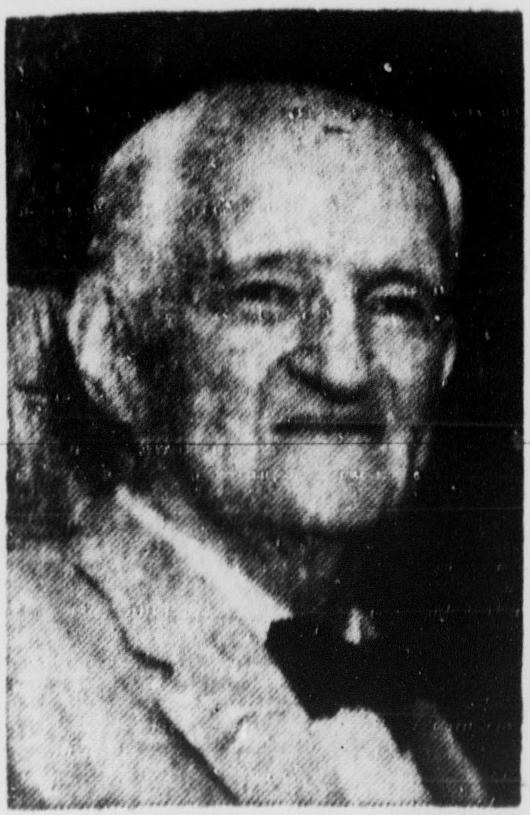
Louis Graves, newspaper photograph, 1962

Life and Orange County connections

Storylines this person is part of, in date order. Each opens its own page, with its events date by date.

Dated events connected with this person, in date order. See these 39 dated events in the chronology →

  1. John W. Canada starts the Canada School in Chapel Hill Soon after graduating from the university in 1896, John W. Canada organized a private school in Chapel Hill that prepared students for college. He ran it with his brother Charles, Sallie Wilson and a Miss Hendon until he left for Texas soon after 1900. People: Louis Graves, Charles Edward Maddry, John William Canada Place: Chapel Hill · Also named: Charles S. Canada, Sallie WilsonSearch the index · Lefler and Wager, Orange County, 1752-1952 (1953), p. 143
  2. Edward Kidder Graham marries Susan Williams Moses at the Chapel of the Cross Moses, a daughter of school reformer Edward Pearson Moses, had studied at the university from 1898 to 1901 and headed Latin and Greek at Sweet Briar College; the reception was on the porch of Eben Alexander's house next door. The couple lived at Bulrushes, a shingled house at the east edge of the campus that Graham and Louis Graves had built on a lot they bought. People: Edward Kidder Graham, Louis Graves Place: Chapel of the Cross, Chapel Hill · Also named: Susan Williams MosesSearch the index · Howard E. Covington Jr., Fire and Stone: The Making of the University of North Carolina under Presidents Edward Kidder Graham and Harry Woodburn Chase (2018), p. 55
  3. Louis Graves reports that Orange County has the state's biggest illicit distilling Writing in the New Republic, Graves said North Carolina led the country in illicit still capacity and that Orange County, home of the University, had the largest distilling operations in the state, ahead of Wilkes. Place: Orange CountySearch the index · Howard E. Covington Jr., Fire and Stone: The Making of the University of North Carolina under Presidents Edward Kidder Graham and Harry Woodburn Chase (2018), p. 262
  4. Louis Graves becomes the university's first journalism professor Louis Graves came back to Chapel Hill in 1921 as the University of North Carolina's first professor of journalism. He resigned in 1924 to give his time to his newspaper. Place: Chapel HillSearch the index · NCpedia: Graves, Louis
  5. Town officials present the new fire truck and fire station to Chapel Hill's volunteer firemen At a banquet at the fire station given by Chief John L. Foister and the firemen for the town officials and University heads, the officials formally presented the new fire truck and new fire station to the fire company. Mayor W. S. Roberson, President H. W. Chase and Louis Graves spoke, and the domestic science department of the Chapel Hill school prepared the dinner. People: W. S. Roberson, Harry Woodburn Chase, Louis Graves, John Lee Foister Place: Fire station, Columbia Street, Chapel Hill · Also mentions: Chapel Hill schoolSearch the index · The News (Chapel Hill), December 22, 1921, p. 5
  6. The Chapel Hill Weekly publishes its first issue Louis Graves published the first issue of his newspaper, the Chapel Hill Weekly, on Thursday, March 1, 1923. He owned and edited it until 1954. Place: Chapel HillSearch the index · NCpedia: Graves, Louis · Also: Chapel Hill Weekly, February 24, 1928, p. 1; Chapel Hill Weekly, February 25, 1927, p. 1; Chapel Hill Weekly, May 10, 1923, p. 1; Chapel Hill Weekly, March 6, 1931, p. 1; Chapel Hill Weekly, February 26, 1937, p. 1; Chapel Hill Weekly, March 1, 1923, p. 1; The Daily Tar Heel, September 24, 1991, p. 3
  7. Louis Graves founds the Orange Printshop in Chapel Hill Graves set up a printing plant in the basement of the new Strowd Building, and the Chapel Hill Weekly was first printed there in its issue of April 19, 1923, after its first seven issues had been printed in Durham. Run as the Orange Printshop with self-help student printers, it advertised its opening for outside work in May. Graves leased it to W. M. Pugh in 1940. It printed books and magazines and set a record for delivering the state Session Laws. Place: Chapel Hill · Also named: W. M. Pugh · Also mentions: Orange PrintshopSearch the index · Lefler and Wager, Orange County, 1752-1952 (1953), p. 285 · Also: Chapel Hill Weekly, February 24, 1928, p. 3; Chapel Hill Weekly, February 26, 1937, p. 1; Chapel Hill Weekly, April 19, 1923, p. 1; Chapel Hill Weekly, May 10, 1923, p. 2; Chapel Hill Weekly, November 1, 1923, p. 4
  8. Work begins on a brick building for the Chapel Hill Weekly and the Orange Printshop Workmen began clearing ground on Rosemary Street behind the hardware store and the People's Bank for a one-story brick building with a fireproof roof for the Chapel Hill Weekly and its printer, the Orange Printshop, which had worked since May 1923 in the basement under Sutton and Alderman's drugstore. Charles Martindale was the builder, and the paper hoped to move in by October 1. People: Louis Graves Place: Rosemary Street behind the People's Bank, Chapel Hill · Also named: Charles Martindale · Also mentions: Orange Printshop, Rosemary StreetSearch the index · The Chapel Hill Weekly, July 10, 1924, p. 1
  9. Gerald W. Johnson heads the university's newly independent journalism department After Louis Graves left in 1924, the university expanded journalism into an independent department with Johnson, an editorial writer, at its head. He left for the Baltimore Evening Sun in 1926. People: Gerald W. Johnson, Louis Graves Place: Chapel HillSearch the index · Carolina Story: Gerald W. Johnson (1890-1980) · Also: Chapel Hill Weekly, June 13, 1924, p. 7; Chapel Hill Weekly, September 4, 1924, p. 3; Chapel Hill Weekly, September 18, 1924, p. 4
  10. The Chapel Hill Weekly's printshop moves into its own brick building After a year and four months in the flood-prone basement of the Strowd building, the Weekly's printing plant moved into a new one-story brick building on Rosemary Lane behind the hardware store, adding equipment from a closed Burlington printing company. People: Louis Graves Place: Rosemary Lane, Chapel HillSearch the index · The Chapel Hill Weekly, February 25, 1927, p. 1
  11. The Orange Printshop moves into a new brick building off Rosemary Street The Orange Printshop, which printed Louis Graves's Chapel Hill Weekly, moved into a new brick building made for it on the lot behind Patterson Brothers drug store. It added new presses and machinery with the move. People: Louis Graves Place: Rosemary Street, behind the Bank of Chapel Hill, Chapel Hill · Also mentions: The Orange PrintshopSearch the index · The Tar Heel, September 27, 1924, p. 4 · Also: Chapel Hill Weekly, March 12, 1925, p. 5
  12. Chapel Hill board of adjustment lets a Durham theatre take over a billboard permit On January 4, 1929, Chapel Hill's board of adjustment, which could relax the 1928 zoning ordinance's ban on signs for business not done on the premises, ruled that the Auditorium theatre of Durham could use the posting space on the former Berman store at Franklin and Columbia streets as the Carolina Theatre had before. Louis Graves, a member, dissented, and his motion to remove every nonconforming sign after April 1 died for want of a second. People: Louis Graves, E. Carrington Smith Place: Former Berman store, Franklin and Columbia streets, Chapel Hill · Also mentions: Carolina Theatre, Franklin and Columbia streetsSearch the index · The Chapel Hill Weekly, January 11, 1929, p. 1
Show all 39 dated events
  1. The Summer School board lets students wear pajama suits about the campus On July 31, 1929, about twenty summer-school students who had begun wearing pajama-style suits on campus and in the village paraded before the Summer School's administrative board in the South Building, which saw no objection so long as nothing offended decency. The fashion followed editor Louis Graves's long campaign for cooler men's summer clothes and W. O. Saunders's pajama walk in Elizabeth City. People: Louis Graves, R. B. House, Charles T. Woollen, Addison Hibbard Place: South Building, UNC, Chapel HillSearch the index · The Chapel Hill Weekly, August 2, 1929, p. 1
  2. Chapel Hill's board of adjustment bars banners across Franklin Street On August 27, 1929, Chapel Hill's zoning board of adjustment refused permission for a banner across Franklin Street advertising a merchants' trade week and resolved unanimously against any banners across the street in future, for shows, reunions or any other occasion, as marring the look of the town. People: Dudley Dewitt Carroll, Louis Graves, Clarence Pickard, Carl T. Durham Place: Franklin Street, Chapel HillSearch the index · The Chapel Hill Weekly, August 30, 1929, p. 1
  3. Chapel Hill aldermen bar new apartment houses from the Residence A zones Amending the 1928 zoning ordinance, the aldermen forbade building or converting apartment houses in the Residence A zones, except that an owner living in a house might add one more family unit. Neighbors had objected at a hearing two days earlier to a plan to turn the former Acacia house at Franklin and Boundary streets into apartments, which the old wording allowed. People: Louis Graves, Carl T. Durham Place: Town Hall, Chapel HillSearch the index · The Chapel Hill Weekly, May 19, 1933, p. 1
  4. Chapel Hill widens and gravels Church Street in its Black neighborhood The town government began improving Church Street, the main street of Chapel Hill's Black section, widening it several feet, laying a gravel surface and providing drainage after the Consolidated Service Plants moved electric poles and hydrants six to eight feet east. The week before, the Weekly had written that Black residents had not been fairly treated in the care of streets in the northwest part of town. People: Louis Graves, John L. Caldwell Place: Church Street, Chapel HillThe Chapel Hill Weekly, January 11, 1935, p. 1
  5. The Orange Printshop and the Chapel Hill Weekly finish a brick addition on Rosemary Lane A 60-by-32-foot brick addition with a fireproof roof, designed by H. D. Carter and built by Brodie Thompson, went up in front of the old building of the Orange Printshop and the Chapel Hill Weekly on Rosemary Lane, giving room for offices, paper stock and student editors. The shop held an open house on September 13 with its presses and linotypes running. People: H. D. Carter, Brodie Thompson, Louis Graves Place: Orange Printshop, Rosemary Lane, Chapel Hill · Also mentions: Rosemary LaneSearch the index · The Chapel Hill Weekly, August 23, 1935, p. 3
  6. University trustees bar women from the freshman and sophomore classes at Chapel Hill Under a trustees' rule that came with consolidation, the University stopped admitting women to the first two years at Chapel Hill, except in pharmacy, and stopped admitting new engineering students. Louis Graves protested that daughters of faculty and townspeople who could not afford to go elsewhere were shut out; the fall enrollment of 2,778 included 283 women. People: Louis Graves Place: University of North Carolina, Chapel HillSearch the index · The Chapel Hill Weekly, September 20, 1935, p. 2
  7. Chapel Hill committee declines a state historical marker opposite the campus A committee of Mayor John M. Foushee, Aldermen Clyde Eubanks and R. J. M. Hobbs, and planning commission members Carl Durham and Louis Graves voted unanimously to decline the State Historical Commission's offer of an aluminum highway marker on Franklin Street naming the University as the first state university to open its doors. After marking out the sign's size, three and a half by three feet, on the bank's directors' table, they judged it too large for the front of the campus. People: Clyde Eubanks, Richard Junius Mendenhall Hobbs, Louis Graves, John M. Foushee, Carl T. Durham Place: Board room of the Bank of Chapel Hill, Chapel Hill · Also mentions: Franklin StreetSearch the index · The Chapel Hill Weekly, November 22, 1935, p. 1
  8. Black West Franklin Street owners stay on by indulgence in homes the town took for paving assessments Louis Graves reported that the Black owners along West Franklin Street, assessed $7.70 a front foot for paving and curbing eight or ten years before, had been sold out for nonpayment: the town held certificates of sale whose time for redemption had run out and let the families stay only by indulgence. Painter Rick Taylor's 1936 bill showed $2,508 in street assessments on property valued at $3,600. Recorder L. J. Phipps answered by proposing a special act to let the town carry the cost by a general tax, and H. V. Wilson urged the town to act. People: Luther James Phipps, H. V. Wilson, Louis Graves Place: West Franklin Street, Chapel Hill · Also named: Rick TaylorThe Chapel Hill Weekly, December 11, 1936, p. 1
  9. John M. Booker proposes a Franklin Street site for the new town hall In a letter dated June 28 and printed in the Chapel Hill Weekly on July 1, professor John M. Booker proposed that the town buy the lots west of the Presbyterian Church on Franklin Street for the new town hall, set the hall back in line with the church, and make it part of a civic center with the post office and the Village Apartments. He did not offer to buy a lot himself. Late in July he urged the aldermen to plan buildings in advance, and editor Louis Graves backed the idea and called for town planning. People: Louis Graves, John M. Booker Place: Franklin Street, Chapel Hill · Also mentions: Village ApartmentsSearch the index · NC State Historic Preservation Office: Chapel Hill Town Hall, National Register nomination (OR0327), p. 8 · Also: Chapel Hill Weekly, July 1, 1938, p. 2; Chapel Hill Weekly, July 29, 1938, p. 2
  10. John M. Booker calls for town-sponsored planning in Chapel Hill After voters approved financing for the new town hall 211 to 27 on July 23, John M. Booker urged the aldermen to plan the town's buildings in advance rather than one at a time. In a longer letter to the Chapel Hill Weekly, printed August 5, he faulted the rush with which the town hall was planned and proposed planning as a town concern, with town meetings open to all citizens. Editor Louis Graves took up the call. People: John M. Booker, Louis Graves Place: Chapel HillSearch the index · NC State Historic Preservation Office: Chapel Hill Town Hall, National Register nomination (OR0327), p. 8 · Also: Chapel Hill Weekly, July 8, 1938, p. 2; Chapel Hill Weekly, July 29, 1938, p. 2; Chapel Hill Weekly, August 5, 1938, p. 2
  11. Louis Graves organizes the Ada Edwards League to rebuild a Black widow's burned farmhouse When the house of Ada Edwards, a Black widow farming near Bethel church about five miles from Chapel Hill with seven dependent children, burned with nearly everything in it, Louis Graves organized an Ada Edwards League in the Weekly to raise money, food and clothing. With P. L. Burch and George Lawrence as a committee, the fund bought groceries, clothes and roofing for the log house she was rebuilding with a grown son and white and Black neighbors; Pi Beta Phi, the Red Cross and the Movie Guild were among the donors. People: Louis Graves, George H. Lawrence, Peter L. Burch Place: Near Bethel church, about five miles from Chapel Hill · Also named: George LawrenceSearch the index · The Chapel Hill Weekly, November 25, 1938, p. 1
  12. Louis Graves writes against a movement to oust Town Manager J. L. Caldwell Before the May town election the Weekly's editor reported talk that some backers of L. J. Phipps wanted a new board to dismiss Caldwell, as a group had hoped the aldermen elected in 1937 would. Graves wrote that those aldermen had kept him after studying the town's records. People: John L. Caldwell, Louis Graves, Luther James Phipps Place: Chapel HillSearch the index · The Chapel Hill Weekly, April 28, 1939, p. 1 (The Movement to Get Caldwell)
  13. Chapel Hill men organize a faculty club to occupy the Archer house Ninety-nine men signed up for a faculty club open to townsmen as well as faculty, and 72 mailed ballots elected directors W. A. Olsen, L. B. Rogerson, George McKie, Clarence Heer, Louis Graves, Oliver Cornwell, J. M. Lear and R. H. Wettach. The club was to take over the Archer house on Columbia Street in July, with members' meals served in a room at the Carolina Inn. People: George McKie, Louis Graves, L. B. Rogerson, Robert H. Wettach Place: Archer house, Columbia Street, Chapel Hill · Also named: W. A. Olsen, Clarence Heer, Oliver Cornwell, J. M. Lear · Also mentions: Carolina Inn, Columbia StreetSearch the index · The Chapel Hill Weekly, June 9, 1939, p. 1
  14. Citizens buy land for a Negro Community Center Ten Chapel Hill men, among them Louis Graves, R. B. House and Paul Wager, signed a $1,500 note at the Bank of Chapel Hill to buy about five acres of the old Craig place at the west end of Rosemary Lane for a Black community center. The project grew out of concerns raised by the Negro Civic Club. People: William Chambers Coker, Louis Graves, R. B. House Place: Chapel Hill · Also named: Paul Wager · Also mentions: Bank of Chapel Hill, Rosemary LaneThe Chapel Hill Weekly, October 6, 1939, p. 2 (People of Both Races Combine Efforts to Establish a Community Center for Negroes)
  15. Ralph H. Graves is buried in Chapel Hill Ralph H. Graves, a New York editor and newspaper syndicate agent born in Chapel Hill, died at his home in Garden City, Long Island, on December 1, 1939. After a funeral there, a burial service was held at the Chapel Hill cemetery on the afternoon of Tuesday, December 5. People: Ralph H. Graves (1878-1939), Louis Graves, Ernest Graves Place: Chapel Hill · Also mentions: Chapel Hill cemeterySearch the index · The Chapel Hill Weekly, December 8, 1939, p. 2 (Ralph Henry Graves)
  16. Louis Graves sells the Orange Printshop business to W. M. Pugh Weekly editor Louis Graves sold the Orange Printshop's name, good will and stock to William M. Pugh, who had managed it for him for twelve years, and leased him the printing plant and building, keeping only the Weekly's two offices. The shop had 27 people on its payroll in mid-December 1939 and went on printing the Weekly. Place: Orange Printshop, Chapel Hill · Also named: William M. PughSearch the index · The Chapel Hill Weekly, January 5, 1940, p. 1
  17. Louis Graves's Weekly takes up J. L. Morehead's call to give Franklin Street a Williamsburg look Durham attorney J. L. Morehead, for years the attorney and financial adviser of the town government, urged the mayor, the aldermen and other citizens to make the Franklin Street business block as handsome as the campus and residential streets, pointing to the business street of Colonial Williamsburg as proof it could be done, and Louis Graves's Chapel Hill Weekly reported his plan favorably on March 22, 1940. Later accounts credit Graves's paper with the campaign. Joseph Hyde Pratt, John M. Booker, W. D. Carmichael Jr., Collier Cobb Jr. and George Watts Hill backed the plan, and architect Archie Davis gave the planning commission watercolors showing owners how to remodel. People: Joseph Hyde Pratt, William D. Carmichael Jr., George Watts Hill, Archie Royal Davis, John M. Booker, Collier Cobb Jr., John Lindsay Morehead Place: Franklin Street, Chapel Hill · Also named: Archie Davis, W. D. Carmichael Jr. · Also mentions: Franklin Street business blockSearch the index · NC Digital Collections: M. Ruth Little, The Town and Gown Architecture of Chapel Hill, 1795-1975 (2004), p. 68 · Also: Chapel Hill Weekly, March 22, 1940, p. 1; Chapel Hill Weekly, March 22, 1940, p. 2
  18. The University gives Louis Graves an honorary degree At the commencement exercises in Kenan Stadium the University conferred honorary degrees on four alumni: Louis Graves, editor of the Chapel Hill Weekly; Leslie Weil of Goldsboro, a trustee for 26 years; William A. Devin; and James A. Gray. Graves later wrote in his column of lending scissors on the platform to cut the string on the diplomas. People: James Alexander Gray Place: Kenan Stadium, Chapel Hill · Also named: Leslie Weil, William A. DevinSearch the index · The Chapel Hill Weekly, June 13, 1941, p. 6
  19. Architect H. D. Carter, designer of some 200 Chapel Hill buildings, dies Harry Dennis Carter, who came from New England for the University's postwar building program as assistant to architect Arthur C. Nash and then practiced on his own for more than fifteen years, died at the Veterans' Hospital in Roanoke, Virginia, and his funeral was held in the Chapel Hill Episcopal church. Louis Graves wrote that Carter had designed about 200 Chapel Hill buildings, perhaps 175 of them homes, and Nash credited his steady use of the Colonial style with giving the village its architectural unity. People: H. D. Carter, Arthur Cleveland Nash, Louis Graves Place: Chapel Hill (died at Roanoke, Virginia)Search the index · The Chapel Hill Weekly, October 17, 1941, p. 2
  20. Black volunteers plaster the main hall of the Negro Community Center Four Black plasterers gave their skill and labor, working nights, to plaster the main room of the unfinished Negro Community Center near the west end of Rosemary Lane so that it could be used as an auditorium and day nursery before the building was done, while Black women served suppers to the workers. A week earlier Louis Graves had reported the stone building roofed with a bank loan and credit, about $24,200 having gone into it, $16,000 from the WPA and $5,950 from local givers, with $2,250 still owed. People: Louis Graves, Paul W. Wager Place: Negro Community Center, Rosemary Lane, Chapel Hill · Also mentions: Rosemary LaneThe Chapel Hill Weekly, March 6, 1942, p. 2
  21. A carnival sponsored by the Chapel Hill American Legion post plays on the Airport Road A traveling carnival brought by the Chapel Hill post of the American Legion played for a week on the Airport Road just outside town, closing on October 9, and its strip act and gambling games drew many protests; the Weekly reported the Legion's share at about $700. The University's president had power to bar such shows within five miles but did not learn of it in time, and editor Louis Graves, a Legion member, criticized the post for bringing it. People: Louis Graves Place: Airport Road, Chapel HillThe Chapel Hill Weekly, October 15, 1943, p. 1
  22. Hillsboro's push for a vote on liquor stores collapses A move to get a special act letting Hillsboro voters decide on ABC liquor stores fell apart before the town board met on February 6. Three commissioners had promised to allow a vote, but the News reported that two of them changed their minds in the face of expected pressure from ministers, and supporters did not bring the matter up. People: Collier Cobb Jr., Louis Graves Place: Town board, HillsboroughSearch the index · The News of Orange County (Hillsborough), February 8, 1951, p. 1
  23. County commissioners drop a bill to zone along the new Durham boulevard On February 5 a Chapel Hill delegation asked the commissioners to seek power to zone 1,000 feet on each side of the new Durham-Chapel Hill boulevard. In two closed sessions the following week the board decided against it after the Institute of Government advised that the whole county would have to be zoned and that zoning one strip might be judged discriminatory. People: Collier Cobb Jr., Paul W. Wager, Richard Junius Mendenhall Hobbs, Louis Graves Place: Orange County Courthouse, Hillsborough · Also mentions: Institute of GovernmentSearch the index · The News of Orange County (Hillsborough), February 15, 1951, p. 1
  24. Louis Graves sells the Chapel Hill Weekly After 31 years as its editor and owner, Louis Graves sold the Chapel Hill Weekly in 1954 to the Chapel Hill Publishing Company. He stayed on as contributing editor through 1960. Place: Chapel HillSearch the index · UNC Libraries: Louis and Mildred Graves Papers, 1814; 1876-1992
  25. The Orange Printshop closes after 39 years The Orange Printshop, founded by Louis Graves in 1923 with the Chapel Hill Weekly, stopped work at the close of business on August 15, 1962. W. M. Pugh had run it as lessee since the 1940s, and the building had just been sold to the Bank of Chapel Hill. People: Louis Graves Place: East Rosemary Street, Chapel Hill · Also named: William M. Pugh, W. M. Pugh · Also mentions: Bank of Chapel Hill, The Orange PrintshopSearch the index · The News of Orange County (Hillsborough), August 23, 1962, p. 5 · Also: Chapel Hill Weekly, October 31, 1962, p. 14
  26. Chapel Hill Weekly founder Louis Graves is buried in the Old Chapel Hill Cemetery Louis Graves (1883-1965), founder, publisher and editor of the Chapel Hill Weekly, was buried in the cemetery. Place: Old Chapel Hill Cemetery, South Road (NC 54) and Country Club Road, Chapel HillSearch the index · NC State Historic Preservation Office: Old Chapel Hill Cemetery, National Register nomination (OR0496), p. 23
  27. Louis Graves, founder of the Chapel Hill Weekly, dies Louis Graves, founder and longtime editor of the Chapel Hill Weekly, died in Chapel Hill at 81. A 1902 University graduate and former New York Times reporter, he had come back in 1921 to teach journalism and direct the University News Bureau, and edited the Weekly until he sold it in 1954; his column "Chapel Hill Chaff" was widely quoted. People: Louis Graves Place: Chapel HillSearch the index · The Daily Tar Heel, February 2, 1965, p. 1

People named in the same events

People named in the same dated entries as Louis Graves, those sharing the most entries first. Each line links one of the shared entries in the chronology, where its source is cited. A shared entry shows these people in the same event, not how well they knew each other.

Show 23 more

Indexed works

Works about or by Louis Graves. Each links to the institution that holds or provides it. Background reading appears below.

By Louis Graves

Some facts about Chapel Hill and the University of North Carolina.

Graves, Louis, 1883-1965 · 1940

Four leaves of facts and figures about Chapel Hill and the University of North Carolina, drawn from the Chapel Hill Weekly of September 13, 1940, with authorship attributed to the paper's editor, Louis Graves. The copies are bound in handmade booklets with handwritten titles. In the North Carolina Collection at UNC.

UNC

Louis and Mildred Graves papers, 1814 ; 1876-1992.

Graves, Louis, 1883-1965 · 1814

Louis Graves (1883-1965) and Mildred Moses Graves left roughly 7,700 items in eleven linear feet, a single 1814 document and then a run from 1876 to 1992, in the Southern Historical Collection at UNC, collection 4010. Graves edited the Chapel Hill Weekly, and topics include North Carolina newspapers and their editors alongside family photographs, travel diaries and the social life of the Graves and Moses families.

UNC

About Louis Graves

Arthur Ruhl writes of The Chapel Hill weekly in The New York herald-tribune.

Ruhl, Arthur, 1876-1935 · 1927

Arthur Ruhl's 1927 New York Herald Tribune piece about the Chapel Hill Weekly and its editor Louis Graves, 1883 to 1965.

Included because: Catalog heading in the UNC record: Graves, Louis, 1883-1965.

UNC

Graves, Louis and Julia Graves: photographs (Chapel Hill Historical Society)

1914

Posed 1914 photograph of Louis Graves and Julia Graves, from the Chapel Hill Historical Society's Prints and Photographs Collection (CHHS.002).

Included because: Their name appears in the record.

Graves, Louis: photographs (Chapel Hill Historical Society)

1910

Four photographs of Louis Graves, founding editor of the Chapel Hill Weekly, dated 1910 to 1914: a newspaper portrait, a copy of his World War I identification card, an outdoor candid, and Graves reading his own paper. From the Chapel Hill Historical Society's Prints and Photographs Collection (CHHS.002).

Included because: Their name appears in the record.

Graves, Louis (Chapel Hill Historical Society vertical file)

Louis Graves, founding editor of the Chapel Hill Weekly, is the subject of newspaper clippings and a report in this undated folder from box 4 of the Individuals and Families series, CHHS.001 Vertical File Collection.

Included because: Their name appears in the record.

Graves, Louis and Ernest Graves: photographs (Chapel Hill Historical Society)

Louis Graves and Ernest Graves posed with other young men from the area, possibly students, in an undated photograph from the Chapel Hill Historical Society's Prints and Photographs Collection (CHHS.002).

Included because: Their name appears in the record.

Graves, Louis and Mildred Moses Graves: photographs (Chapel Hill Historical Society)

Posed photographs of Louis Graves and Mildred Moses Graves, undated, together with a negative of one of the prints. From the Chapel Hill Historical Society's Prints and Photographs Collection (CHHS.002).

Included because: Its title names this person.

Show 2 more about Louis Graves

Graves, Louis and Ralph Henry Graves: photographs (Chapel Hill Historical Society)

Undated portraits of Louis Graves and Ralph Henry Graves, gathered in one photograph from the Chapel Hill Historical Society's Prints and Photographs Collection (CHHS.002).

Included because: Their name appears in the record.

Graves, Louis and Walter Prichard Eaton: photographs (Chapel Hill Historical Society)

Louis Graves and Walter Prichard Eaton outdoors among trees, an undated candid photograph from the Chapel Hill Historical Society's Prints and Photographs Collection (CHHS.002).

Included because: Their name appears in the record.

Places in this person’s story

Buildings, schools, churches and other sites named in the dated events on this page, the most often named first. The map shows the 6 with a known location.

Map tiles © OpenStreetMap contributors. Site locations from the N.C. State Historic Preservation Office survey, Open Orange, Orange County GIS, OpenStreetMap and a few other published sources named on each site’s page; town and community pins show approximate locations.

All places and the county map →

Research sources

Sources and research tools for this person. For ready-made searches of other catalogs, see Search further. Research guide: Trace a family through historical records.

Records of the time

Collections and databases

Local help

Search further

Search other catalogs and collections for this name. Results may include other people with the same name and have not been reviewed by the Friends.

Books about Louis Graves

Books by Louis Graves

Find copies at other libraries

Photographs, papers, and newspapers

Historical records and collections

Catalog searches use the Library of Congress name heading: Graves, Louis, 1883-1965. Historical-record searches use the person’s name and may include namesakes. Links open in a new tab.

Found a book OCPL doesn’t own? You can often borrow it through interlibrary loan at OCPL.

Picture: Louis Graves, newspaper photograph, 1962. No known copyright restrictions. The Chapel Hill Weekly, 1962; Library of Congress

More to discover

Keep Reading Local

The Friends connect people with new library materials, local writers and publishers, and resources documenting Orange County.

Two mice reading back to back against a leaf, with the hand-lettered words Friends of the Orange County Public Library
Illustration by Caldecott Medalist Matthew Cordell, gifted to the Friends 2026