Skip to content

Theme

Arts, Music & Performance

Painters, potters, players, and bandleaders, from the Carolina Playmakers and Kay Kyser to the clubs of Carrboro.

The Carolina Playmakers began folk drama at Chapel Hill in 1918, Elizabeth Cotten wrote Freight Train in Carrboro, and the clubs of Chapel Hill and Carrboro made a music scene that reached the world through the Cat’s Cradle in the 1990s. The storylines follow the Playmakers and UNC Press, the local music scene and the Chapel Hill sound.

1,170 works about Arts, Music & Performance are indexed here. 13 held at OCPL →

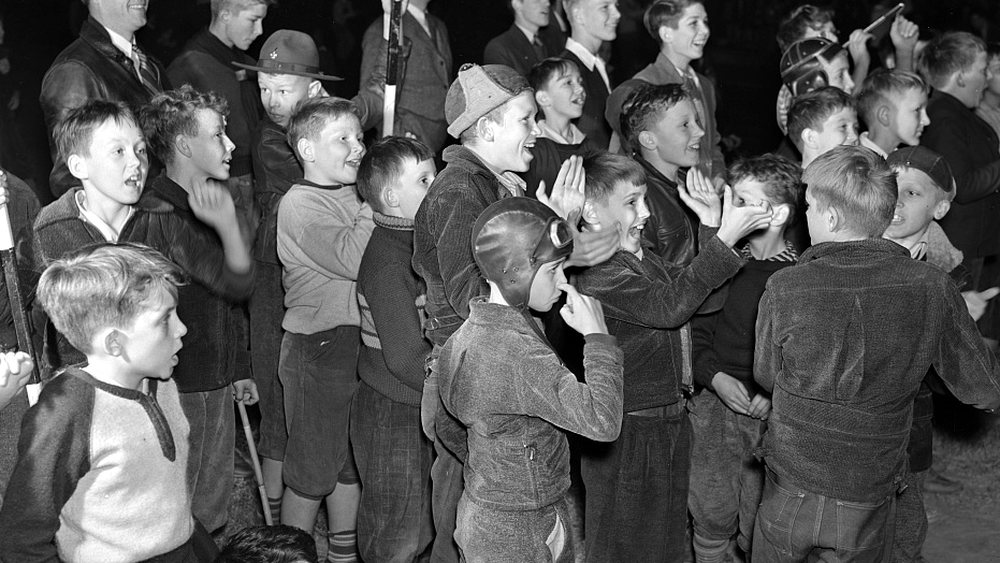
Boys at a night rally, Chapel Hill, 1939.

Events and storylines

Named events and storylines the index follows in detail. Each has its own page.

Show all 11 events and storylines
Chapel Hill’s Dogwood Festival, 1933–1935Chapel Hill’s Dogwood Festival from its first year in 1933 to its third in 1935: the folk music, dancing and crafts, the 1934 charter and second festival, the Cherokee ball game on Emerson Field, and the state Scout Jubilee held with it Rebuilding the Forest Theatre in stone, 1939–1943How the Forest Theatre in Battle Park was rebuilt in local stone with WPA labor: the approval of 1939, the work begun under Al Bell in 1940, the first public event and first Playmakers play in 1941, and President Graham’s dedication in May 1943 Protest and support during the Persian Gulf war, 1990–1991How Chapel Hill, Carrboro and UNC answered the Persian Gulf war in 1990 and 1991: the post office vigils, the Franklin Street march and the Polk Place protest, the CBS town meeting, the sanctuary votes, the rallies for the troops, and the Peace Village in the Pit until after the cease-fire The Bicentennial of UNC and Chapel Hill, 1993–1994How UNC and Chapel Hill marked their 200th year in 1993 and 1994: the town’s markers, mural, books and exhibits, the University’s convocation with President Clinton, its lectures, music and open house, and the town’s Chapel Hill Revisited day, through the commencement that closed the Observance The Grateful Dead at the Smith Center, 1993–1994How the Grateful Dead’s 1993 shows at the Smith Center led to a drug checkpoint, a near-riot and a chancellor’s ban, how fans rallied to bring the band back, and how Chancellor Hardin lifted the ban in 1994

More storylines

Other storylines that include this theme, in date order. Each has its own page.

StorylineSmith Hall becomes the Playmakers Theatre, 1850–19821850–1982 · 9 events · Alexander Jackson Davis designed Smith Hall, built from 1850 to 1852 as the university's library and ballroom and named for Benjamin Smith. The Carolina Playmakers made it their theatre in 1925, and it reopened after a 1938 fire. It became a National Historic Landmark in 1974, and a federally funded restoration reopened it in January 1982. StorylineStudent loan funds at the University, 1879–19321879–1932 · 5 events · When the state's budget cut threatened to drive students out of the University in January 1932, town and campus groups gave to a student loan fund whose beginnings went back to 1879. That year Charles F. Deems sent $300 to start a loan fund in memory of his son Theodore, killed at Gettysburg, and William H. Vanderbilt later added $10,000 through him. In 1906 Dr. Martin's will left more than $7,000 for loans to poor students. In 1932 Mayor Zeb Council named a citizens' committee, the sponsors of a concert by Amelita Galli-Curci gave their share of the receipts, and the campus Janitors' Association, facing a wage cut, gave five dollars. By early February about $7,000 had been raised. StorylineFoister’s camera shop on Franklin Street, 1911–19891911–1989 · 4 events · Robert W. Foister began selling cameras on Franklin Street in 1911 from a section of E. A. Brown's store. After a 1925 fire he moved across the street, and from 1926 Bayard Wootten made portraits in a studio over his store. Foister's Camera Store had closed by April 1989, one of the closings a downtown merchant blamed on falling foot traffic. StorylineBattle Park and the Battle Park Association, 1914–19331914–1933 · 6 events · Kemp Battle's paths through Battle Park were restored from 1931 by volunteers who were then put in charge of the land around University Lake as well. Students cleaned the park's trails during Community Service Week in 1914, and by 1917 an open-air theatre stood on a hillside there. In 1931 a meeting at Colonel Joseph Hyde Pratt's home launched the Battle Park Association, and citizens working without pay under Pratt cleared paths and built bridges, opening about three miles of trail that year. In 1933 the association was incorporated, and the University trustees put it in charge of both Battle Park and the land around the new University Lake, where it ran motorboat rides to pay for more improvements. StorylineThe Chapel Hill Community Chorus, 1921–19311921–1931 · 3 events · Chapel Hill twice organized a community chorus that drew on the University and the town alike. On November 29, 1921 members of the Community Club's music department formed the Chapel Hill Community Chorus under Paul J. Weaver, open to faculty, students and townspeople and planning at least two free public concerts a year. In October 1929 George H. Lawrence organized a new community chorus of 120 voices, which sang Handel's Messiah under Harold S. Dyer in the Methodist church on December 16 before more than 1,200 people. By October 30, 1931 its executive committee had judged any project impractical for the near future, and the chorus suspended its activities for the year. StorylineHillsboro's improvements, 1922–19231922–1923 · 5 events · In 1922 and 1923 Hillsboro gained a new bridge, a new school and paved streets. On February 8, 1922 the State Highway Commission let a reinforced concrete bridge over the Eno to contractor George W. Kane for $30,651.20; it was the main way into town from the south until 1964. That September the town's new $100,000 brick school on West Tryon Street was nearly ready, and by early 1923 it housed grades one through eleven of the consolidated Hillsboro schools. Paving the streets with bond money cost Main Street some of its old elms and maples, to the regret of some citizens, and in April the Carolina Playmakers performed in the school's new auditorium.
Show all 13 storylines
StorylineAmateur theatre outside the Playmakers, 1929–19331929–1933 · 4 events · Alongside the Carolina Playmakers, faculty families, Hillsboro residents and Chapel Hill children formed their own theatre groups between 1929 and 1933. About 1929 drama professor Preston Farrar built a house on Laurel Hill Road with indoor and outdoor stages, and in November 1931 a community dramatic club, mostly faculty members and their wives, formed there, planning to read a modern play each month. In January 1932 a play-producing group for Hillsboro was launched in Clem Strudwick's studio, with Frederick H. Koch and Irene Fussler advising. That April Harry E. Davis, the Playmakers' technical director, staged his own Cinderella with about 35 children, and the cast organized as the Junior Playmakers, who gave plays for child audiences into 1933. StorylineThe Movie Guild and Sunday movies in Chapel Hill, 1931–19371931–1937 · 4 events · Sunday movies in Chapel Hill ran for years as charity benefits under an informal understanding before the aldermen legalized them in 1937. By January 1931 a Movie Guild with Paul Green as president was showing educational and artistic films to members on Sunday afternoons at the Carolina Theatre for local charities. In 1935 its directors gave one Sunday show's proceeds toward the American Legion post's log hut and added a Sunday night picture after church services, and they reported money spent on relief, school lunches and other needs. The 1937 rules allowed Sunday shows outside the evening church hour and required the Guild to report its receipts and spending each year. StorylineThe North Carolina Symphony in Chapel Hill, 1932–19741932–1974 · 8 events · Founded in Chapel Hill in 1932 as the start of a planned full-time state orchestra, the North Carolina Symphony folded for lack of money and was revived under Benjamin Swalin. Backers of Lamar Stringfield's plan formed the North Carolina Symphony Society in President Frank Porter Graham's office, and fifty-three musicians played its opening concert in Hill Music Hall under Stringfield. In 1934 a federal relief grant brought about forty musicians to Chapel Hill for summer concerts. After the orchestra folded, a 1939 meeting set out to revive it with Swalin as conductor. In 1946, after an expansion campaign let Swalin hire professional players, the Daily Tar Heel's critic called it the most capable musical organization then playing in the state. A 1966 Ford Foundation grant aimed to make it a full-time orchestra, and in 1974 its board voted to move it from Chapel Hill to Raleigh. StorylineOrange County’s bicentennial, 1952–19531952–1953 · 7 events · In August 1952 the county commissioners named a committee under L. J. Phipps to plan the county's 200th anniversary, and in September they named 55 people to committees for programs, finance, publicity, exhibits and a pageant. Lefler and Wager's county history came off the press on October 1, 1953. The bicentennial week of October 7 through 13 opened with the laying of the new courthouse's cornerstone and brought parades in Hillsborough and Chapel Hill, Garden Club tours of old homes, and six showings of the pageant The Road to Orange. In January 1954 the commissioners paid about $9,000 in unpaid bicentennial bills. StorylineThe Hillsboro Exchange Club’s community park, 1954–19581954–1958 · 6 events · Hillsboro's Exchange Club built a community park and paid for it partly with yearly minstrel shows, blackface stage comedy built on demeaning caricatures of Black people. In 1954 the town leased the club twelve acres north of the town cemetery, and in 1955 the club approved buying about seven acres a mile south of town on the Chapel Hill road, a site recommended by design students from State College. The 1955 minstrel show raised about $600 for the park, and the 1958 show drew 900 to 1,000 people. Work on a $5,000 miniature golf course began in April 1956, and on May 15 the club dedicated the park to the youth and recreation of the town and county. StorylineThe ArtSchool and the ArtsCenter in Carrboro, 1974–19941974–1994 · 34 events · Jacques Menache began the ArtSchool in Carrboro in 1974 with painting and drawing classes on East Main Street, and it added a gallery, dance, drama and the Gallery Theatre. It leased space in Carr Mill Mall late in 1978. In 1986 a partnership formed with Menache bought the former Piggly Wiggly shopping center on East Main Street, and the school, renamed The Arts Center, opened its new building there in July 1987. Menache resigned in 1988 and Aubrey Bowie became director. In 1990, behind on its rent, the center sued its landlord, banks foreclosed on a $150,000 loan its guarantors had backed, and a task force cut its debt to $240,000. Chapel Hill, Carrboro, Orange County and Glaxo gave it money in 1990 and 1991, and in 1992 activists charged it with neglecting minority artists. In 1994 the center began a $900,000 drive to buy its building, and Carrboro pledged $15,000 a year for ten years. StorylineRenovating the Ackland Art Museum, 1985–19911985–1991 · 6 events · In 1985 the UNC trustees approved a $2.8 million renovation of the Ackland Art Museum. The museum moved out its collection in 1988, and the University-paid $3 million work, finished in April 1990, roughly doubled its gallery space. The Ackland reopened in December 1990 on the Day Without Art, received grants for a paper conservation laboratory, and opened more renovated galleries in March 1991.

Indexed works

Works about Arts, Music & Performance from library and archive catalogs. The most widely held appear first; novels are not shown here. Follow a link to find a copy or view the material.

Widely held

PlayMakers Repertory Company: a history

2021

Fifty-year history of PlayMakers Repertory Company, the professional theater founded in 1975 by Tom Haas with Arthur Housman on the campus of UNC Chapel Hill. Chapters by Bobbi Owen, Cecelia Moore and Gregory Kable follow the company leader by leader: Haas, David Rotenberg and Gregory Boyd, Milly S. Barranger and David Hammond, Joseph Haj and Vivienne Benesch. Appendices list productions, Department of Dramatic Art faculty, MFA graduates and administrators since 1975. Published by the department in 2021, 168 pages, online edition.

Included because: Catalog heading in the UNC record: Theater.

Our Noise: The Story of Merge Records, the Indie Label That Got Big and Stayed Small

Cook, John · 2009 · Algonquin Books of Chapel Hill

John Cook's history of Merge Records, the independent label that Mac McCaughan and Laura Ballance of Superchunk built in Chapel Hill. Chapters follow the label year by year from 1987 to 2009 and pause for profiles of Butterglory, Neutral Milk Hotel, the Magnetic Fields, Spoon, Lambchop and the Arcade Fire, ending on how it managed to stay small. Advance reading copy of the first edition, published in Chapel Hill in 2009, 289 pages with twelve pages of plates.

Included because: Catalog heading in the UNC record: Alternative rock music.

Step It Up and Go: The Story of North Carolina Popular Music

Menconi, David · 2020

David Menconi's history of popular music in North Carolina, from the working-class roots of the state's traditions to the Chapel Hill and Carrboro rock scene of recent decades. Menconi, who covered music for the Raleigh News and Observer for nearly thirty years, builds the book on interviews and reporting, and Black musicians' contributions run through it. First issued in print by UNC Press in 2020; this is the online edition, 329 pages with illustrations.

Included because: Catalog heading in the NC Cardinal record: Music.

Reviewed in The Journal of Southern History (2022).

The Ackland Art Museum: a handbook published in honor of the Museum's twenty-fifth anniversary (1958-1983)

Ackland Art Museum · 1983

A handbook to the Ackland Art Museum at the University of North Carolina, published by the museum in 1983 for its twenty-fifth anniversary. It combines a catalog of the collection with a history of the museum, which opened in 1958. Includes a bibliography on pages xviii to xx. 170 pages with illustrations, 22 cm.

Included because: Catalog heading in the UNC record: Ackland Art Museum.

Woody Durham: A Tar Heel Voice

Durham, Woody; Lucas, Adam · 2012 · John F. Blair, Publisher

Memoir of Woody Durham, who called University of North Carolina football and basketball on the radio from 1971 until he retired in 2011, written with Adam Lucas. Four decades of Tar Heel games as heard from the broadcast booth. Subjects include radio broadcasters and sportscasters, North Carolina, biography.

Included because: Catalog heading in the OCPL record: Performing Arts.

The Forgotten First

Albright, Alex · 2013 · R.A. Fountain

Alex Albright's history of the B-1 band, the group of Black musicians drawn largely from students and graduates of North Carolina A&T who became the first Black sailors of the modern Navy to serve above the rank of messman, and the first of more than a hundred Black Navy bands in wartime. The band was posted to the Navy Pre-Flight School at Chapel Hill, the book's Orange County link. Published by R.A. Fountain in 2013, 194 pages with illustrations and portraits.

Included because: Catalog heading in the UNC record: African American musicians.

Show 2 more

Frederick Henry Koch

Selden, Samuel ; Sphangos, Mary Tom · 1954 · University of North Carolina Library

Brief biography of Frederick Henry Koch (1877-1944), founder of the Carolina Playmakers at the University of North Carolina, by Samuel Selden and Mary Tom Sphangos, with notes by Jonathan Daniels and others. It reprints Koch's own essay 'Folk playmaking' on pages 59 to 68. Published by the University of North Carolina Library in 1954, viii and 92 pages with illustrations and a portrait.

Included because: Catalog heading in the Duke record: Carolina Playmakers.

Reviewed in Educational Theatre Journal (1956).

Catalogue Of The Collection, The William Hayes Ackland Memorial Art Center

Hertzman, Gay Mahaffy · 1971 · Herzig Somerville Ltd.

Gay Mahaffy Hertzman's 1971 catalogue of the collection of the William Hayes Ackland Memorial Art Center, the university art museum in Chapel Hill now called the Ackland Art Museum, printed by Herzig Somerville. William Hayes Ackland (1855 to 1940) left the bequest that founded the museum.

Included because: Catalog heading in the NC Cardinal record: Ackland Art Museum.

Recently indexed: The 100 best art towns in America : a guide to galleries, museums, festivals, lodging, and dining (2005) · The 1986 Clef Hangers (1986) · 'Neath the oaks (1897) · The Ackland Art Center (1966) · [Ackland Art Museum website archives] · Ackland highlights (1978)

Search all 1,170 indexed works →

Start at OCPL

Books in OCPL’s Rebecca B. Wall Local History Collection whose titles, catalog subjects, or descriptions match this theme. The Friends’ recommended starting points are labelled. Books marked Wider context cover the broader subject rather than this theme itself.

  • Foundational · 708.156 MILLER Hillsborough Artists Cooperative and Skylight Gallery, 1990-2020 Miller, Jennifer E. · 2021

    Jennifer E. Miller's account of the Hillsborough Artists Cooperative and its Skylight Gallery across their first thirty years, 1990 to 2020. Topics include art in Hillsborough for that period and the history of both the cooperative and the gallery. Published in 2021, it records a local institution in the town's art scene that would otherwise leave little written trace.

  • Wider context · 738.097 HEW The Potter's Eye: Art and Tradition in North Carolina Pottery Hewitt, Mark · 2006

    Catalog of a North Carolina Museum of Art exhibition of the state's pottery, shown from October 2005 to March 2006. Mark Hewitt, the English-born potter who lives in Pittsboro, writes on the salt-glaze and alkaline-glaze traditions, their older sources and their twentieth-century course, and Nancy Sweezy profiles six working potters, among them Ben Owen III, Pam Owens and Hewitt himself. Color photographs by Jason Dowdle; 274 pages.

  • Wider context · 738.097 JAMES North Carolina Art Pottery: 1900-1960 : Identification & Value Guide : Seagrove, Catawba Valley, Pisgah Forest and More James, A. Everette · 2003

    North Carolina art pottery made from 1900 to 1960, pictured in color with market values, from the potteries of Seagrove, the Catawba Valley, Pisgah Forest and elsewhere, in a collector's guide by A. Everette James with Rodney Leftwich. Charlotte Brown wrote the foreword. Collector Books of Paducah, Kentucky, published it in 2003: 303 pages with maps and a bibliography.

Show 6 more
  • Wider context · NC 738.309 BROWN The Remarkable Potters of Seagrove: The Folk Pottery of A Legendary North Carolina Community Brown, Charlotte Vestal · 2006

    Seagrove, the Randolph County community where traditional pottery has been made for more than a century, and many of its best known potters are profiled by Charlotte Vestal Brown, who then directed North Carolina State University's Gallery of Art and Design. Lark Books published the book in 2006, illustrated in color throughout, with a bibliography and an index; 144 pages.

  • Wider context · NC 704 NINE Nine From North Carolina: An Exhibition of Women Artists 1989

    Catalog of a 1989 to 1990 traveling exhibition of nine North Carolina women artists, organized by the North Carolina State Committee of the National Museum of Women in the Arts and curated by Christie Taylor. The artists are Clara Couch, Carolyn DeMeritt, Paula Garrett, Maud Gatewood, Gina Gilmour, Bryant Holsenbeck, Jan Brooks Loyd, Elizabeth Matheson and Patricia Rieger, with essays by Doris Betts, Jane Kessler and Caroline Hickman. It runs 49 pages with color plates.

  • Foundational · NC 975.656 ORANGE Working for A Living: A Special Exhibit by the Orange County Historical Museum, March-December 2024 Orange County Historical Museum (N.C.) · 2024

    Exhibit publication from the Orange County Historical Museum for its special exhibit on working life, shown in Hillsborough from March to December 2024 and concerned with the county's trades and industrial arts. Produced by the museum in 2024, it documents Orange County and Hillsborough history through the work people did.

  • Start here · NC DVD BIO THOMPSON LIF The Life and Times of Joe Thompson 2004

    Joe Thompson, the African American fiddler from Orange County, is the subject of this 2004 production by Iris Thompson Chapman with Linda DiLorenzo, Alton Chewning and Calvin Allen. Topics include string band and folk music in North Carolina and Thompson's own life, 1918 to 2012. It is part of the library's Wall Local History Collection, and a note flags it as audio or visual special collections material.

  • Start here · NC BIO GREEN ADA Paul Green of Chapel Hill Adams, Agatha Boyd · 1951

    Biographical study of the playwright Paul Green by Agatha Boyd Adams, edited by Richard Walser and issued by the university library in 1951 in its Library Extension Publication series. Topics include his drama at Chapel Hill and his writing on slavery. A slim book of 116 pages with a portrait.

  • Foundational · NC 709.756 FOU Art in North Carolina: Episodes and Developments, 1585-1970 Foushee, Ola Maie · 1972

    Ola Maie Foushee's history of the arts in North Carolina from 1585 to 1970, printed in Chapel Hill by Heritage Printers in 1972; 238 pages with illustrations.

In the chronology

A selection of 12 events from the 535 chronology entries for this theme, including highlights and examples from different years. See all 535 dated events in the chronology →

  1. A sacred music society forms and an organ is ordered for the university chapel The Raleigh Register reported a new society for the study of sacred music at the university and an organ, paid for by private gifts, already built in New York. The trustees later paid $50 to bring it to Chapel Hill. Place: Person HallSearch the index · Documenting the American South: Kemp P. Battle, History of the University of North Carolina, vol. I (1907), p. 230
  2. Elizabeth Cotten composes Freight Train At about age eleven, growing up near the railroad tracks in the settlement that became Carrboro, Elizabeth Cotten wrote "Freight Train." She played a right-handed guitar upside down, and the song became a folk standard after Folkways released her recording in 1958. People: Elizabeth “Libba” Cotten Place: CarrboroSearch the index · NC Department of Natural and Cultural Resources: Elizabeth Cotten 1893-1987 (G-129)
  3. The Carolina Playmakers are organized Frederick H. Koch organized the Carolina Playmakers at UNC. People: Frederick H. Koch Place: Chapel Hill · Also mentions: Carolina PlaymakersUNC A to Z: Carolina Playmakers
  4. Paul Green wins the Pulitzer Prize for In Abraham’s Bosom Paul Green received the 1927 Pulitzer Prize for Drama for In Abraham’s Bosom. People: Paul Green Place: Chapel HillThe Pulitzer Prizes · Also: Chapel Hill Weekly, May 6, 1927, p. 1; Chapel Hill Weekly, March 23, 1928, p. 1; The Daily Tar Heel, March 16, 1994, p. 3
  5. Lamar Stringfield's opera The Mountain Song is read in the Playmakers Theatre Lamar Stringfield conducted the faculty chamber orchestra in a reading of his one-act opera about western North Carolina moonshiners, with his own libretto and the parts read by Carolina Playmakers; Urban T. Holmes was to sing the moonshiners' song. The Weekly called it the first opera by an American composer on the folk life and music of American people. People: Lamar Stringfield Place: Playmakers Theatre, UNC, Chapel Hill · Also named: Urban T. Holmes · Also mentions: Carolina PlaymakersSearch the index · The Chapel Hill Weekly, April 3, 1931, p. 2
  6. The Navy B-1 Band serves at Chapel Hill The B-1 Band, 44 Black musicians sworn in at Raleigh on May 27, 1942 as the first African Americans to serve in the Navy at general rank, played for the Navy Pre-Flight School at UNC from July 1942 to April 1944. Barred from campus housing, they lived in the new Black community center on Roberson Street, now the Hargraves Center. Place: Chapel Hill · Also mentions: Hargraves Center, Navy Pre-Flight School, Roberson StreetSearch the index · UNC-Chapel Hill: Pioneers of integration (May 25, 2017) · Also: Chapel Hill Weekly, August 7, 1942, p. 1
  7. A federal appeals court awards the Ackland Trust to the university at Chapel Hill After Duke refused Ackland's bequest, the U.S. Circuit Court of Appeals for the District of Columbia ruled for UNC-Chapel Hill over Rollins College, citing the university's finances, its graduate arts program and its nearness to Duke. The North Carolina Historical Review had reported in 1944 that the court awarded the trust to the university in October 1943. People: William Hayes Ackland Place: Washington, D.C.Search the index · Ackland Art Museum: Mr. Ackland's Final Resting Place · Also: Internet Archive: North Carolina Historical Review 21; The Daily Tar Heel, October 3, 1983, p. 4
  8. The ArtSchool moves across the street into larger quarters at Carr Mill Mall Having outgrown the single room across the street where Jacques Menache began teaching painting and drawing to 36 students in 1974, the ArtSchool began moving into larger quarters at Carr Mill Mall in 1979. By that fall it had 550 students, a professional mime troupe, poets' and actors' cooperatives and a theater, the Daily Tar Heel reported in 1981. Place: Carr Mill Mall, Carrboro · Also named: Jacques Menache · Also mentions: ArtSchoolSearch the index · The Daily Tar Heel, November 24, 1981, p. 1
  9. Afro-One starts a Chapel Hill class under the Black Cultural Center's artist-in-residence program Black Cultural Center director Margo Crawford arranged a Chapel Hill chapter of Afro-One, the West African dance, drama and drum company Patricia Reid-Bookhart had founded in Willingboro, New Jersey. Taught by a student who had trained with the company, the class of about fifteen met twice a week in the basement of Teague Residence Hall and prepared to dance at the 1990 Kwanzaa. Place: Teague Residence Hall, University, Chapel Hill · Also named: Margo Crawford, Patricia Reid-Bookhart · Also mentions: Black Cultural CenterSearch the index · Black Ink (Black Student Movement, UNC), November 19, 1990, p. 3 · Also: The Daily Tar Heel, September 27, 1991, p. 5
  10. WXYC makes the first internet radio simulcast WXYC streamed its radio broadcast over the internet on November 7, 1994. People: Paul Jones Place: Chapel Hill · Also mentions: WXYCUNC · Also: The Daily Tar Heel, December 7, 1994, p. 1
  11. The Sonja Haynes Stone Center celebrates its grand opening After more than a decade of organizing, the freestanding Sonja Haynes Stone Center for Black Culture and History opened in Coker Woods with a four-day celebration. A Friday candlelight procession from the Old Chapel Hill Cemetery preceded Saturday's dedication by Chancellor James Moeser before more than 500 guests. People: Sonja Haynes Stone, James Moeser Place: Chapel Hill · Also mentions: Old Chapel Hill Cemetery, Sonja Haynes Stone CenterThe Daily Tar Heel: Set in Stone, August 23, 2004, p. 1
  12. Merge Records marks 35 years with four shows at Cat's Cradle Merge celebrated its 35th anniversary with four shows at Cat's Cradle in Carrboro, the club that had held its earlier anniversary festivals, in the same year the label was named to the North Carolina Music Hall of Fame. People: Laura Ballance, Mac McCaughan Place: Carrboro · Also mentions: Cat's CradleSearch the index · WUNC: These are the essential Merge Records albums to know as the Durham label celebrates 35 years

See all 535 dated events in the chronology →

Places in this theme

Buildings, schools, churches and other sites named in the dated events on this page, the most often named first. The map shows the 57 with a known location.

Map tiles © OpenStreetMap contributors. Site locations from the N.C. State Historic Preservation Office survey, Open Orange, Orange County GIS, OpenStreetMap and a few other published sources named on each site’s page; town and community pins show approximate locations.

Show 56 more

All places and the county map →

Research sources

Sources and research tools for this subject. Research guide: How to research with Orange County Indexed.

Background 5

Show all 5
  • The ArtsCenter: Our New Home Describes the new Roberson Street building and the fundraising campaign behind it, including its studios, venues and youth spaces.

National Register files

Records of the time

Collections and databases 7

Show all 7

Local help 7

Show all 7

Picture: Farm Security Administration photographs, Library of Congress; public domain. Image credits →

More to discover

Keep Reading Local

The Friends connect people with new library materials, local writers and publishers, and resources documenting Orange County.

Two mice reading back to back against a leaf, with the hand-lettered words Friends of the Orange County Public Library
Illustration by Caldecott Medalist Matthew Cordell, gifted to the Friends 2026