Skip to content

Theme

Churches & Faith

Congregations, places of worship, revivals, and the communities they helped sustain.

Congregations of every denomination raised the county’s meeting houses and churches, held its revivals and anchored its communities, Black and white; the freedpeople’s churches after emancipation and the Holy Week Fast of 1964 show the churches in the county’s public life. The works here are congregational histories and church records.

643 works about Churches & Faith are indexed here. 20 held at OCPL →

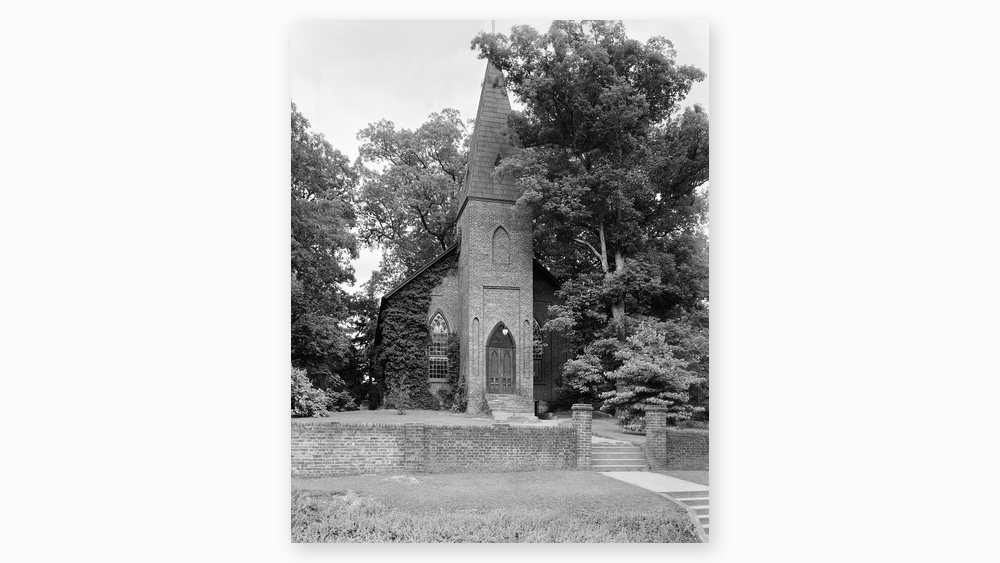
A brick church behind its churchyard wall.

Events and storylines

Named events and storylines the index follows in detail. Each has its own page.

Show all 24 events and storylines
The 1915 sanitary survey of Orange CountyThe U.S. Public Health Service’s house-to-house sanitary survey of Orange County in 1915 and what the county did alongside it: Hillsboro’s privy ordinance, the women’s Sanitation League, the work through Black churches, privies at the schools, and the boards’ thanks Carrboro’s first public schools and school taxes, 1898–1927Carrboro’s schools from a mill house on Center Street to a brick graded school: the frame Carrboro Public School of about 1908, the $25,000 bond vote of 1920, the new building of 1921, and the old schoolhouse’s move to the Methodists Building the Chapel Hill Baptist Church, 1921–1924How the Chapel Hill Baptists built their church at Franklin and Columbia streets facing the campus: the site and the state board’s money, the contract and groundbreaking, Frank Milburn’s design, the formal opening in 1923, and Eugene I. Olive’s arrival as pastor Building the Chapel Hill Methodist church, 1924–1926How Chapel Hill’s Methodists built their James Gamble Rogers church on East Franklin Street: the building contract of 1924, the groundbreaking and cornerstone in 1925, the first services in May 1926, and the old Rosemary Street church’s new life as a garage St. Matthew’s Episcopal Church, Hillsborough, 1823–1854How Hillsborough’s Episcopalians organized St. Matthew’s parish and built its brick church: Thomas Ruffin’s gift of land, the church of 1825 and 1826 and its consecration, William Mercer Green’s rectorship, the gallery for Black worshippers, the conventions held there and Ruffin’s deed of 1854 Building the Orange County courthouse, 1842–1846How Orange County built the courthouse that still stands in Hillsborough: the justices’ refusal of 1842, the $8,000 tax of 1844, John Berry’s contract and the Masonic cornerstone, the old wooden courthouse sold and moved, and the town clock set in the new cupola The Caldwell Institute at Hillsborough, 1845–1851How Orange Presbytery’s Caldwell Institute came from Greensboro to Hillsborough: the town’s welcome in 1845, the refitted academy building handed over in 1846, the charter of 1847, enrollment that peaked at 100, the close in 1850 and the academy revived under Huske and Graves Benjamin Hedrick, the scientific school and his dismissal, 1851–1862How Benjamin Hedrick went from first honors to the University’s chair of agricultural chemistry in its new scientific school, and how his 1856 support for Fremont led to effigy burnings, the faculty’s disavowal, his dismissal by the trustees and, in 1862, his removal from the Presbyterian roll The death of Elisha Mitchell and the University’s mourning, 1857–1858How Chapel Hill and the University marked the death of Professor Elisha Mitchell on the Black Mountains in June 1857: the town meeting, the commissioners’ and students’ resolutions, the faculty’s sermon and eulogy, the care of his widow, his books and cabinet, and his successor Chapel Hill Methodists build on Franklin Street, 1878–1889How Chapel Hill’s Methodists moved to Franklin Street: the lot bought from the Longs in 1878, the women’s festival of 1881, the vote to build in 1885, the church raised under the Rev. Mr. Griffith, the old church sold to the American Missionary Association and the dedication of 1889 New Hope Presbyterian Church’s divided session, 1884–1890How New Hope Presbyterian Church came through a divided session: Pleasant H. Dalton’s installation and departure, the year without a pastor, James L. Currie’s short pastorate, the estate case, the presbytery’s removal of all six elders in 1889 and James E. Fogartie’s joint pastorate The Bingham School at Mebane after the 1890 fire, 1890–1913How a school carried on at the old Bingham School grounds near Mebane after the 1890 fire and the move to Asheville: the Presbyterian High School, Herbert Bingham’s brief charge, Preston Lewis Gray’s William Bingham School, the 1898 fight over the name and the later enrollments The test of allegiance in Orange County, 1775–1782How Orange County’s Revolutionary authorities used the oath of allegiance: the 1775 efforts to win over former Regulators and people of scruple, Michael Holt’s oath, the Loyalist estates inventoried, the county court’s citations of suspects and merchants, the sixty-day orders to leave and the 1782 commissioner of confiscated estates Robert H. Chapman’s presidency of the University, 1812–1816How Robert H. Chapman’s four years as president of the University unfolded: Joseph Caldwell’s step back to teaching, Chapman’s Bible study and the Chapel Hill Presbyterians, the raids on his property, the Shepard rebellion of 1816, the powder bomb, his resignation and Caldwell’s return Orange Methodist Church’s new building, 1923–1925How Orange Methodist Church north of Chapel Hill built its present church: the 1923 homecoming that opened the campaign, S. J. Brockwell’s gift of the framing lumber, the opening of June 1924 before about a thousand people, and the 1925 homecoming that cleared the debt Chapel Hill after the killing of Martin Luther King Jr., April 1968How Chapel Hill and the University answered the killing of Martin Luther King Jr. in April 1968: the Black Student Movement’s memorial service and march, the mayor’s proclamation and the early closing downtown, the vigil and memorial services, the mourning walkout of April 9 and the proposed King committee Protest and support during the Persian Gulf war, 1990–1991How Chapel Hill, Carrboro and UNC answered the Persian Gulf war in 1990 and 1991: the post office vigils, the Franklin Street march and the Polk Place protest, the CBS town meeting, the sanctuary votes, the rallies for the troops, and the Peace Village in the Pit until after the cease-fire Herzenberg’s tax case, the recall law and two resignations, 1992–1993How the Chapel Hill Town Council changed in 1992 and 1993: Joe Herzenberg’s guilty plea for failing to file state taxes and the council’s censure, Art Werner’s election as mayor pro tem, Roosevelt Wilkerson’s resignation over a letter signed with the mayor’s name, Barbara Powell’s appointment and Herzenberg’s resignation

More storylines

Other storylines that include this theme, in date order. Each has its own page.

StorylineNew Hope Presbyterian Church, 1740–18401740–1840 · 35 events · When Orange Presbytery called in 1820 for long-vacant churches to be reorganized, New Hope Presbyterian Church had no roll of members, and it reorganized with four elders and ten members. Elijah Graves, then teaching at Hillsborough, had preached there from 1818 as stated supply, a minister serving without being installed as pastor, and he returned from 1825 to 1831 after Shepherd K. Kollock ended his connection. A revival in 1831 and 1832 added at least seventy communicants. George W. Ferrill was pastor from 1833 until 1836, and that August James Phillips, a university mathematics professor, began preaching at New Hope, which he served until 1865, longer than any other minister. Four more elders were ordained in 1840. StorylineHugh McAden, Henry Pattillo and the first Presbyterian congregations, 1753–17901753–1790 · 19 events · Orange County's Presbyterian settlers had congregations before they had ministers. Hugh McAden preached on the Eno and at the Hawfields in 1755 and 1756, and the settlements asked Hanover Presbytery for preachers, but none came regularly until Henry Pattillo became pastor of the Hawfields, Eno and Little River churches in 1765. Pattillo and his fellow ministers condemned the Regulators in 1768 and he preached to Tryon's troops; in 1770 they formed Orange Presbytery, which first met at Hawfields. In 1775 the Provincial Congress sent Pattillo to win former Regulators to the American cause, and about 1790 the old Pattillo field was split into two pastoral charges. StorylineThe Hawfields, Cross Roads, Eno and Little River churches, 1780–18211780–1821 · 16 events · Between 1780 and 1821 the Presbyterian churches of western Orange split into two pastoral charges and went through the revival that began at Cross Roads. Hawfields moved west about 1780, Cross Roads was gathered from its neighbors, and about 1790 Hawfields and Cross Roads took one pastor while Eno and Little River took another. Opponents of James McGready burned his pulpit at Stony Creek in 1796. Under William D. Paisley, pastor from 1801, a Cross Roads communion in March 1801 set off what a 1966 article calls the Great Revival in the state, and crowds camped at Hawfields. Paisley also kept a grammar school before leaving in 1818. StorylineThe Great Revival in Orange County, 1800–18051800–1805 · 5 events · In 1800 a great camp-meeting revival was held at New Hope: people came from long distances and camped on the church grounds for days, and the revival spread into other neighborhoods. In 1801 William D. Paisley took charge of the Hawfields and Cross Roads Presbyterian churches near present Mebane. At a general communion at Cross Roads in March 1801, before a large crowd, the congregation broke into the outcries and physical frenzy of the western camp meetings just as an ordinary service was ending, and the ministers present let the demonstration run its course. A 1966 article in the North Carolina Historical Review dates the start of the Great Revival in North Carolina from this meeting. The revival reached Hawfields, where people from long distances camped on the church grounds in their wagons for several days. The Hawfields church historian credits Paisley with organizing that meeting, and Foote and the 1966 article call it the first camp meeting in North Carolina, though the accounts differ on its date. At New Hope, D. I. Craig thought the revival did much to prompt the building of a third church. It went up in 1805 with a high pulpit at the west end and a gallery at the east end for Black worshippers, and it stood until fire destroyed it in 1862. StorylineHillsborough Presbyterian Church, 1815–18371815–1837 · 12 events · The first pastor of Hillsborough's Presbyterian church strained relations with his congregation by advocating religious education, Sunday schools and preaching for enslaved people. The brick church on West Tryon Street was built with money from a lottery the state authorized, and in September 1816 Mary W. Burke, eight others and the Rev. John Knox Witherspoon organized the church. In 1823 the session admonished two members for trading in enslaved people without punishing them. Witherspoon ended seventeen years as pastor in 1833. In 1834 six enslaved women were baptized, and in 1835 Robert Burwell began a thirteen-year pastorate; the church bought a manse, and a Sessions House was built for the Sunday school. StorylineThe Orange County Bible Society, 1822–18461822–1846 · 6 events · In 1828 the Orange County Bible Society resolved to supply every household in the county that had no Bible. Hillsborough people had formed the society on January 7, 1822 as an auxiliary of the American Bible Society. Early in 1828 a committee visited every Hillsborough family and found one household without a Bible, which it supplied within the hour; that summer the managers turned to the whole county and named Dennis Heartt agent to collect gifts. In October 1829 the society reported about a thousand families in the county without a Bible and resolved to supply them through paid agents. In September 1846 citizens organized a new county Bible society at Hillsborough under Giles Mebane.
Show all 20 storylines
StorylineChapel Hill's congregations build their churches, 1840–18591840–1859 · 17 events · Between 1842 and 1859 Chapel Hill's Episcopalians, Presbyterians, Methodists and Baptists built churches in the village, with enslaved people among the builders and the worshippers. From about 1843 the Methodists met above Jesse Hargrave's store in a room Charles F. Deems named Bethesda. People William Mercer Green enslaved worked on the Episcopal church, consecrated as the Chapel of the Holy Cross in 1848 with a wooden gallery for enslaved worshippers. The Presbyterians dedicated a small church in 1849 and the Methodists their first church in 1853. A Baptist branch of Mount Carmel opened its brick meeting house in 1855, and its first baptisms were of five people enslaved by William Barbee. In 1859 the Presbyterians installed their first pastor. StorylineRock Hill Baptist Church, 1877–19531877–1953 · 11 events · Louis H. Hackney became pastor of Rock Hill Baptist Church on Franklin Street in January 1877, when he was barely twenty-two, and held the pastorate for sixty years. The congregation celebrated the end of his fiftieth year in 1927 and honored him again in 1934. In the spring of 1937 a rift divided the church, partly over salary owed to Hackney: he retired, and a group following the assistant pastor, Rev. John Jones, bought a lot for a church of its own. Hackney died that December. Under the Rev. J. R. Manley the congregation began a brick church on North Roberson Street in 1952, held its first services there in 1953 and took the name First Baptist Church. StorylineProhibition and the liquor question, 1879–18921879–1892 · 13 events · Between 1879 and 1892 the sale of liquor in Orange County was argued over in the legislature, at the polls, before town and county boards and in court. In 1879 the legislature widened the ban on selling liquor around the university to four miles. Before the 1881 statewide prohibition vote, supporters organized the county under Rev. N. H. Cobb, with every minister, white and Black, a vice president. In 1882 Anderson Hill ran for the House as an Independent Prohibition candidate. Hillsborough's town board refused liquor licenses in 1890 and 1891, but the county commissioners licensed John U. Smith, and the town's suit against him was compromised and dismissed in 1892. StorylineEno Presbyterian Church moves to Cedar Grove, 1879–18991879–1899 · 6 events · After wind-driven woods fires burned Eno Presbyterian Church at its old site near the river in 1893, the congregation moved to Cedar Grove. Its frame church, built in 1878, had hosted Orange Presbytery in 1879, a meeting the Chapel Hill Ledger called the best attended since the war. In October 1893 the pastor, W. F. Wilhelm, died at Hillsborough after a long fever, and every business in town closed for his funeral. At Cedar Grove the congregation built its new church from 1897 to 1899, and the elder Robert W. Anderson became the first burial in its cemetery in 1898. H. S. Bradshaw was installed as pastor on the last day of 1899. StorylineCotton Chapel and St. Joseph CME, 1898–19381898–1938 · 4 events · When the mortgage on Cotton Chapel, a Black Methodist church in Chapel Hill, was foreclosed in 1933, the congregation was left with no place to worship. Chapel Hill members of the CME church who had worshipped at Hamlet Chapel in Pittsboro had formed it in 1898, naming it for its founder, Henry Cotton. Its pastor, the Rev. J. S. Miller, appealed through the Weekly for help in buying a new site and building again. Between 1933 and 1938 Henry Baldwin, Margaret Burnette and Kennon Cheek mortgaged their homes for the down payment on a lot on Rosemary Street, where a frame church went up under Miller and was dedicated as St. Joseph CME Church. StorylineUniversity students' night schools and social work, 1910–19161910–1916 · 4 events · About 1911, asked for help by the young Black workers who cut firewood and carried water in the dormitories, students began teaching them reading and arithmetic in what were called moonlight schools. Under Frank Porter Graham at the campus YMCA those classes grew to take in history, English, debating, home sanitation and the Bible. The YMCA had already organized Sunday schools enrolling 321 pupils. On November 1, 1915 it opened night moonlight schools in six schoolhouses within four miles of Chapel Hill, with 54 student teachers and about 300 pupils, and students also ran a night school at Carrboro and two for Black pupils. Fifteen students carried the night schools on in the fall of 1916. StorylineWalker's Funeral Home, 1922–19631922–1963 · 4 events · A Hillsborough family business opened in 1922 by Houston J. Walker and his son Allen H. Walker Sr. grew over four decades into a funeral firm with branches in Chapel Hill and Mebane. The Walkers began with a Model T Ford and a Reo hearse. In 1936 the firm bought and remodeled a building at 120 West Franklin Street in Chapel Hill, and in January 1937 the Weekly reported the branch finished and open, with I. M. Walker as manager and day-and-night ambulance service. A Mebane branch followed in 1945. On its 41st anniversary in 1963 the firm dedicated the chapel in its brick building on North Churton Street in Hillsborough, honoring Houston J. Walker and his late wife. StorylineOrange Methodist Church, 1925–19401925–1940 · 4 events · At a homecoming in June 1925 Orange Church, about three miles north of Chapel Hill, took up a collection on its $800 building debt, and when pledges fell short S. J. Brockwell gave the last $500. In the spring of 1934 members built the Hut, a two-room log building at the edge of the church grove, under Brockwell's direction, for community events and church suppers. In April 1940 Mr. and Mrs. Brockwell, as a surprise gift through the church's two missionary societies, had the church painted inside and out, given electric light fixtures and its seats redone. StorylineThe old Methodist church at Henderson Street and Rosemary Lane, 1926–19381926–1938 · 3 events · The long-closed 1853 Methodist church at Rosemary and Henderson streets in Chapel Hill found a series of new uses after 1926. That July it became an automobile repair station, the Club Service Motor Co., with a platform built from the rear door to Henderson Street for cars. In December 1934 the American Legion post announced a bargain with Lueco Lloyd to buy the building, once the church of the Rev. Adolphus W. Mangum, and make it a memorial hut, but by March 1935 the post gave up the plan as more than it could pay for. In January 1938 the Orange County Women's Market, a farm women's market, reopened there on Saturdays. StorylineABC stores and liquor by the drink in Orange County, 1938–19781938–1978 · 35 events · After Orange County voters turned down ABC (Alcoholic Beverage Control) liquor stores in 1938, efforts to bring the question back failed for years; in 1955 the commissioners refused the Chapel Hill PTA's request for a countywide vote. In September 1958, on petitions with 1,049 names, the board set the county's first liquor vote since 1938. Despite a dry campaign through the churches, the county voted for the stores on February 3, 1959, carried by the Chapel Hill precincts and by Hillsboro. Stores opened in 1959 and 1961, and in 1964 the ABC board voted for a second Chapel Hill-area store over opposition from university officials, ministers and the Carrboro town board. The state board turned down the West Rosemary Street site chosen for it in January 1965. Orange County voted for liquor by the drink in a 1973 statewide referendum that failed, and when a 1978 state law allowed a local vote, the county approved mixed drinks; Chapel Hill restaurants began serving them that November. StorylineA Lutheran congregation in Chapel Hill, 1942–19461942–1946 · 4 events · The first Lutheran congregation in Orange County, by Lefler and Wager's account, grew from services that the Rev. Dorus P. Rudisill, assigned by the Lutheran Synod of North Carolina, led in Chapel Hill, first in the evening at the Methodist church, then from 1942 in Memorial Hall and the Graham Memorial. In 1946 St. John's Lutheran Church of Cherryville gave a lot at East Rosemary Street and Pickard Lane for a $75,000 church, and on July 21 Holy Trinity Lutheran Church was organized with 34 charter members. That September the Rev. E. C. Cooper arrived to succeed Rudisill, with more than $50,000 raised, and the church building was consecrated on January 6, 1952. StorylineThe Inter-Church Council's housing work, 1963–19661963–1966 · 3 events · The Inter-Church Council, formed in 1963, was building homes on Community Chest money by 1965. In 1966 students from Morrison Residence College and the Nurses Dormitory finished a nine-room house it had begun for a Black family near the Carrboro town dump, and Adelaide Walters began her years as chair of its housing committee. StorylineThe Bell's hamburger stand and the appearance commission, 19651965 · 3 events · In 1965 the Bell's chain of Charlotte planned a walk-in hamburger stand on the lot beside the Baptist church at Franklin and Columbia streets. The aldermen urged the owners not to build it, the church appealed the building permit, and the General Assembly let Chapel Hill create an appearance commission, though not in time to reach the stand. By May Bell's was reported to be negotiating a sale of the lot to the church. StorylineThe Muslim Student Association’s mosque plan, 1989–19901989–1990 · 3 events · In 1989 the Muslim Student Association sought to build a mosque with a dome and prayer tower on Stephens Street in Chapel Hill. Neighbors objected to noise and traffic, but in January 1990 the Planning Board found the plans met the zoning rules. When a pledged gift fell through, the association could not buy the lot by its March deadline.

Indexed works

Works about Churches & Faith from library and archive catalogs. The most widely held appear first; novels are not shown here. Follow a link to find a copy or view the material.

Widely held

Miss Mary's Money

Jones, H. G. · 2014 · McFarland & Co.

H. G. Jones follows the fortune of Mary Ruffin Smith (1814-1885), the unmarried heiress whose Orange and Chatham County lands passed at her death to the University of North Carolina and the Episcopal Church. Chapters profile her grandfather Francis Jones, then trace the bequest through a quarrel among Episcopalians over Price Creek, the Chapel of the Cross and the university's buildings. A December 1885 New York Times report called the gift money; Jones shows it was land. Published by McFarland in 2014, 231 pages.

Included because: The record names this subject alongside a heading for the county or its towns.

Church in the Old Fields: Hawfields Presbyterian Church and Community in North Carolina

Turner, Herbert Snipes · 1962

Herbert Snipes Turner's history of Hawfields Presbyterian Church and its community from 1738 to 1960. Hawfields lies in what is now Alamance County, land that was part of Orange County until 1849, and the book gives a place to Henry Pattillo, the congregation's eighteenth-century minister. Published by the University of North Carolina Press in 1962, 297 pages with illustrations.

Included because: Catalog heading in the UNC record: Church history.

Reviewed in The Journal of Southern History (1963).

A Historical Sketch of New Hope Church, in Orange County, N.C

Craig, D. I. · 1891

Rev. D. I. Craig's history of New Hope Church, a Presbyterian congregation in Chapel Hill Township, Orange County, printed at Reidsville in 1891. A closing family history section covers the Strayhorn, Craig, Blackwood and Kirkland families.

Included because: Catalog heading in the UNC record: Church history.

Jane Crow: The Life of Pauli Murray

Rosenberg, Rosalind · 2017

Rosalind Rosenberg's 2017 biography of Pauli Murray (1910-1985), lawyer, poet and Episcopal priest, raised in Durham. Its six parts follow a Southern childhood, the move to New York, the 1938 application to the University of North Carolina that was refused because Murray was Black (the chapter is titled 'Members of your race are not admitted'), law school and the coining of the phrase Jane Crow, the Cold War years, the push toward 'an NAACP for women', and a late-life ordination. 494 pages with portraits.

Included because: Catalog heading in the Duke record: Episcopal Church.

Reviewed in The Journal of Southern History (2018).

Journey to New Hope

Murphy, Barbara A. · 2006

A congregational history of New Hope Presbyterian Church in Orange County, written by Barbara A. Murphy and published in 2006 by Chapel Hill Press. Chapters take up the five successive church buildings, the land itself, the ministers who served, the cemeteries, members who went to war, the church's organization, its music, gifts and memorials, and its outreach to the surrounding community. It also covers Presbyterian experience of the Civil War. 126 pages with illustrations and portraits.

Included because: Catalog heading in the UNC record: Presbyterians.

Facing Tomorrow, Understanding Yesterday

1992

A history of Orange United Methodist Church in Chapel Hill since 1832, prepared by the congregation's History Committee and edited by Margaret A. Blanchard with Julia Blackwood, Mildred Stout, Wiley Williams, Kay Creech, Andrea Stark and Shirley Mallard. Published by Taylor Publishing of Dallas in 1992, 161 pages with illustrations, some in color, a facsimile, maps and portraits.

Included because: Catalog heading in the UNC record: Church history.

Show 2 more

Binkley: A Congregational History

Gardner, Andrew · 2023 · The University of Tennessee Press

Andrew Gardner's history of Binkley Memorial Baptist Church in Chapel Hill, named for Olin T. Binkley, covering the years between the late 1950s and the 2010s and tracing how a congregation with Southern Baptist roots came to be known for liberal Christianity. Published by the University of Tennessee Press in 2023, 213 pages with illustrations.

Included because: Catalog heading in the UNC record: Baptists.

Centennial Monograph

Habel, Samuel Tilden · 1954 · The Baptist Church

Samuel Tilden Habel's centennial monograph on the Baptist Church at Chapel Hill, covering its first hundred years from 1854 to 1954. It pairs a narrative of the congregation with membership lists. Published by the church in Chapel Hill in 1954, 58 pages plus sixteen pages of plates with illustrations, portraits and facsimiles.

Included because: Catalog heading in the UNC record: Church history.

Recently indexed: Adolphus Williamson Mangum : memorial address delivered in the chapel of the university, Sunday, May 31st, 1891 (1891) · The Chapman family, or, The descendants of Robert Chapman : one of the first settlers of Say-Brook, Conn. : with genealogical notes of William Chapman, who settled in New London, Conn., Edward Chapman, who settled at Windsor, Conn., John Chapman, of Stonington, Conn., and Rev. Benjamin Chapman, of Southington, Conn. : [extracts relating to Robert Hett Chapman] (1854) · Directory of students of Methodist preference and affiliation at the University of N.C. : 1926-27 (1926) · Dr. James Phillips (1882) · The early settlements of the Moravians in North Carolina (1900) · Explain two plans for teaching Bible in university : University Y.M.C.A. has definite program if churches cannot unite (1924)

Search all 643 indexed works →

Start at OCPL

Books in OCPL’s Rebecca B. Wall Local History Collection whose titles, catalog subjects, or descriptions match this theme. The Friends’ recommended starting points are labelled.

  • Start here · REF 275.6 LLO History of the Churches of Hillsborough, N.C. Ca., 1766-1962 Lloyd, Pauline O. · 1962

    Pauline O. Lloyd's history of the churches of Hillsborough from about 1766 to 1962, nearly two centuries of the town's congregations, with attention to the church buildings themselves. Published in Hillsborough in 1962, 151 pages with illustrations, maps and portraits, and a bibliography on the final page.

  • Foundational · NC 285 MURPHY Journey to New Hope: The History of New Hope Presbyterian Church, 1756-2006 Murphy, Barbara A. · 2006

    A congregational history of New Hope Presbyterian Church in Orange County, written by Barbara A. Murphy and published in 2006 by Chapel Hill Press. Chapters take up the five successive church buildings, the land itself, the ministers who served, the cemeteries, members who went to war, the church's organization, its music, gifts and memorials, and its outreach to the surrounding community. It also covers Presbyterian experience of the Civil War. 126 pages with illustrations and portraits.

  • Foundational · NC 285 ELL History of Eno Presbyterian Church, Cedar Grove, North Carolina Ellis, A. A. · 1980

    A 1980 edition, issued by the church, of A. A. Ellis's history of Eno Presbyterian Church at Cedar Grove, Orange County. Twenty unnumbered pages with illustrations and portraits. Ellis's original history of the congregation appeared in 1955.

Show 6 more
  • Rebecca Wall Collection · NC 286.06 MOU Mount Adar Baptist Church, 1889-1989 1989

    The centennial history of Mount Adar Baptist Church at Cedar Grove in northern Orange County, marking 1889 to 1989 under the motto a century of remembrance, a future of vision. Prepared by a centennial committee co-chaired by Nancy Rogers and Jackie Oakley and published by the church in 1989, 36 unnumbered pages with illustrations. Topics include Baptists in North Carolina and church history for Cedar Grove.

  • Rebecca Wall Collection · NC 285.175 LITTLE Little River Presbyterian Church History 1986

    A history of Little River Presbyterian Church in Orange County, compiled in 1986. Topics include the church's history, Orange County church history and Orange County genealogy, along with the Presbyterian Church in North Carolina. A source for family historians with Presbyterian ancestors in the county.

  • Rebecca Wall Collection · NC 275.6 NORTH Fall Tour Of Historic Churches And Sites North Carolina Presbyterian Historical Society · 1983

    A tour booklet from the North Carolina Presbyterian Historical Society's fall tour of 1983, covering historic churches and sites in Hillsborough. Church buildings in Hillsborough are its subject, so church architecture and local history are its ground.

  • Foundational · NC 289.6 HAINES Forged in the Spirit: Quaker Pioneers on the Eno Haines, Nancy Learned · 2026

    Nancy Learned Haines tells the story of the Quaker families who left Pennsylvania around 1750 for the Eno River valley near Hillsborough, where they farmed, traded and built a school, and asks how a community committed to peace fared through the unrest of the colonial years. Published by Pleasant Green Books in 2026, 122 pages with bibliography and index. Subjects include Quakers in North Carolina and the history of Hillsborough, Orange County and the Eno River valley.

  • Foundational · NC 289.6 ENG Early Quakers in the Eno River Valley: Ca. 1750-1847 Engstrom, Mary Claire · 1989

    Mary Claire Engstrom's history of the Quaker settlers of the Eno River valley from about 1750 to 1847, in the country that is now Orange and Durham counties. Published by the Association for the Preservation of the Eno River Valley in Durham in 1989, 73 pages with illustrations, maps and portraits.

  • Rebecca Wall Collection · NC 287 BLA Facing Tomorrow, Understanding Yesterday: A History of Orange United Methodist Church Since 1832, Chapel Hill, North Carolina 1992

    A history of Orange United Methodist Church in Chapel Hill since 1832, prepared by the congregation's History Committee and edited by Margaret A. Blanchard with Julia Blackwood, Mildred Stout, Wiley Williams, Kay Creech, Andrea Stark and Shirley Mallard. Published by Taylor Publishing of Dallas in 1992, 161 pages with illustrations, some in color, a facsimile, maps and portraits.

In the chronology

A selection of 12 events from the 1,347 chronology entries for this theme, including highlights and examples from different years. See all 1,347 dated events in the chronology →

  1. Settlers from Pennsylvania and Virginia come down the Great Wagon Road into the Haw and Eno country From the 1740s families moving south from Pennsylvania, Maryland and western Virginia along the Great Wagon Road took up land in the Piedmont backcountry that became Orange County in 1752. Quaker families reached the Cane Creek country by this route, and German and Scotch-Irish families entered the colony the same way. Place: Orange CountySearch the index · NCpedia: Great Wagon Road
  2. The county tax list counts 36 white polls and 82 taxable enslaved people in Hillsborough town Orange County's 1790 tax list returned 2,272 polls and 406,106 acres across its eight districts, with a separate list for Hillsborough town showing 36 white polls against 82 black polls. William Hooper was charged for 22 of them, John Taylor for 10 and Francis Childs for 5. People: William Hooper, Walter Alves Place: Orange County · Also named: John Taylor, Francis ChildsDocumenting the American South: List of taxpayers in Orange County in 1790
  3. The new St. Matthew's vestry decides not to claim the old parish church from the Presbyterians When St. Matthew's was organized, some vestrymen proposed asserting the parish's colonial title to the old church lot at Churton and Tryon, then used by the Presbyterians. Thomas Ruffin argued that pressing the claim would set neighbors against each other and offered his own land for a new church and churchyard instead. People: Thomas Ruffin Place: St. Matthew's Episcopal Church, Hillsborough (old church lot at Churton and Tryon streets)Search the index · Joseph Blount Cheshire, An Historical Address Delivered in Saint Matthew's Church, Hillsboro, N.C. (1925), scan p. 25
  4. Thomas Ruffin deeds St. Matthew's Church the land he had given by word around 1820 Thomas Ruffin's deed of April 10, 1854 formally conveyed 1 1/3 acres to St. Matthew's Church, land he had given verbally around 1820. The tract was later enlarged for the church, parish house and walled cemetery. People: Thomas Ruffin Place: St. Matthew's Episcopal Church, 210 St. Mary's Road, HillsboroughSearch the index · NC State Historic Preservation Office: Hillsborough Historic District Additional Documentation, National Register (OR0077ad, 2014), 210 St. Mary's Road, St. Matthew's Episcopal Church
  5. Charles F. Deems preaches the commencement sermon and receives an honorary degree At the 1877 commencement, Deems, then pastor of the Church of the Strangers in New York, preached the baccalaureate sermon, and the university conferred on him the honorary Doctor of Laws. People: Charles F. Deems Place: Chapel HillSearch the index · Documenting the American South: Kemp P. Battle, History of the University of North Carolina, Volume II · Also: Hillsborough Recorder, June 13, 1877, p. 3
  6. The Orange County Sunday School Convention meets at Hillsborough Seventeen delegates of the county's Sunday schools met in convention at the Hillsborough Methodist church with Rev. W. F. Wilhelm in the chair, heard addresses by Revs. G. W. Harman and W. B. North, and chose delegates to the state convention at Charlotte. People: Joseph A. Harris, Joshua W. Gore, W. S. Roberson, W. F. Wilhelm Place: Methodist church, Hillsborough · Also named: G. W. Harman, W. B. NorthSearch the index · Orange County Observer (Hillsborough), March 2, 1889, p. 3
  7. County school superintendent John C. Hocutt becomes pastor of Hillsborough Baptist Church The Rev. John C. Hocutt, county superintendent of schools, became pastor of the Hillsborough Baptist church, preaching there on October 13 and from January 1908 on the second Sunday of each month. On a Thursday night in October he baptized seven converts in the church pool. People: John C. Hocutt Place: Hillsborough Baptist Church, HillsboroughSearch the index · Orange County Observer (Hillsborough), October 10, 1907, p. 3
  8. Black church choirs hold a song festival at the Orange County Training School Choirs from Rock Hill Baptist Church, Mount Sinai and Markham's Chapel gathered in the auditorium of the Orange County Training School and sang from noon until after three o'clock. Principal B. L. Bozeman gave the welcome and W. C. Lasater of Durham responded. People: Bruce L. Bozeman Place: Orange County Training School auditorium, Chapel Hill · Also named: W. C. Lasater · Also mentions: Rock Hill Baptist ChurchThe Chapel Hill Weekly, December 4, 1925, p. 3
  9. Hillsboro and Carrboro greet the Japanese surrender with horns, sirens and church services When word of Japan's surrender came at 7 p.m. on August 14, Hillsboro answered with car horns, a trumpet blown from an ice truck and the fire siren, but within half an hour people were thronging to the churches. In Carrboro people gathered in the Methodist church, and services of thanksgiving were held in its Baptist and Methodist churches. The News found more worship than celebration across the county, unlike the bonfires and snake dancing on Franklin Street in Chapel Hill. Place: Hillsboro and Carrboro · Also mentions: Franklin StreetSearch the index · The News of Orange County (Hillsborough), August 16, 1945, p. 1
  10. Carrboro Baptist Church finishes its new parsonage Carrboro Baptist Church's new seven-room parsonage, with a large basement and a study for the pastor, was nearly finished at the corner of Poplar Street and the Lindsay Street Extension, and the Rev. Henry Stokes and his family moved in that day. Place: Poplar Street and Lindsay Street Extension, Carrboro · Also named: Henry StokesSearch the index · The News of Orange County (Hillsborough), February 24, 1955, p. 4
  11. The school board deeds the St. Mary's School lot back to the Episcopal Diocese With the St. Mary's school long merged into Hillsborough's and its buildings used as the St. Mary's Grange meeting place, the Orange County Board of Education returned the two acres and the buildings to the diocesan trustees. Place: St. Mary's Chapel, St. Mary's Road, east of HillsboroughSearch the index · Hugh Conway Browning, Information Related to St. Mary's Chapel (1996), scan p. 61
  12. Carrboro unveils a truth plaque naming Green Cordal and Benjamin Craig The Town of Carrboro unveiled its second truth plaque at the former freedmen's school site on North Merritt Mill Road, next to St. Paul AME Church. The text reads that Green Cordal and Benjamin Craig, freed from bondage, purchased this land for a Freedman School and church, and that with funds from the Society of Friends they built a schoolhouse that served hundreds of free Black children and adults. People: Green Cordal, Benjamin Craig, Jacquelyn Gist Place: Carrboro · Also mentions: St. Paul AME ChurchSearch the index · Chapelboro.com: Second 'Truth Plaque' Unveiled at Former Freedmen's School in Carrboro

See all 1,347 dated events in the chronology →

Places in this theme

Buildings, schools, churches and other sites named in the dated events on this page, the most often named first. The map shows the 113 with a known location.

Map tiles © OpenStreetMap contributors. Site locations from the N.C. State Historic Preservation Office survey, Open Orange, Orange County GIS, OpenStreetMap and a few other published sources named on each site’s page; town and community pins show approximate locations.

Show 116 more

All places and the county map →

Research sources

Sources and research tools for this subject. Research guide: How to research with Orange County Indexed.

Background 13

Show all 13

National Register files

Historic sites, markers, and maps 5

Show all 5

Records of the time

Collections and databases 11

Show all 11

Local help

Background reading at OCPL

Books from OCPL’s Rebecca B. Wall Local History Collection that provide broader context. They may not discuss Churches & Faith directly.

  • Background reading · Rebecca Wall Collection Religion and the American Revolution in North Carolina Calhoon, Robert M. · 1976

    Number 11 in the North Carolina Bicentennial Pamphlet Series, Robert M. Calhoon's study of religion in North Carolina during the American Revolution rests on period sources and ends with a bibliography. The state Division of Archives and History published it in Raleigh in 1976; 81 pages with illustrations.

    Subjects in the Library of Congress catalog record: North Carolina -- History -- Revolution, 1775-1783 -- Religious aspects -- Sources OCPL call number: NC 261.7 CAL
  • Background reading · Rebecca Wall Collection Ambivalent Churchmen and Evangelical Churchwomen: The Religion of the Episcopal Elite in North Carolina, 1800-1860 Rankin, Richard · 1993

    Religious life among North Carolina's Episcopal elite from 1800 to 1860, studied by Richard Rankin, who contrasts the men's ambivalence toward the church with the evangelical devotion of the women and follows the Diocese of North Carolina through the period. Published by the University of South Carolina Press in 1993; xv and 203 pages with illustrations, notes and an index.

    Subjects in the Library of Congress catalog record: Episcopal Church Diocese of North Carolina -- History -- 19th century; Anglican Communion -- North Carolina -- History -- 19th century; Evangelicalism -- Episcopal Church -- History -- 19th century OCPL call number: NC 283.756 RAN
  • Background reading · Rebecca Wall Collection Jubilee, Again and Again: A History of Walnut Grove United Methodist Church, 1841-1991 Parker, Mike · 1991

    Walnut Grove United Methodist Church at Walnut Grove, North Carolina, over its first 150 years, 1841 to 1991, in a history by Mike Parker, printed in 1991; illustrated and unpaged.

    Subjects in the OCPL catalog record: Walnut Grove United Methodist Church (Walnut Grove, N.C.); North Carolina -- Church history OCPL call number: NC 285 JUB
  • Background reading · Rebecca Wall Collection Our Heritage and Our Hope: A History of Pullen Memorial Baptist Church, 1884-1984 Crook, Roger H. · 1985

    Roger H. Crook's history of Pullen Memorial Baptist Church in Raleigh through its first hundred years, 1884 to 1984, published by the church's history committee in 1985. The congregation began in 1884 as a First Baptist Church mission, was organized as Fayetteville Street Baptist Church, and took the name of its lay leader John T. Pullen after his death in 1913.

    Subjects in the Library of Congress catalog record: Pullen Memorial Baptist Church (Raleigh, N.C.) -- History; Raleigh (N.C.) -- Church history OCPL call number: NC 286.175 CROOK

Search the Wall Collection for related books →

Picture: Library of Congress photograph, late 1930s; public domain. Image credits →

More to discover

Keep Reading Local

The Friends connect people with new library materials, local writers and publishers, and resources documenting Orange County.

Two mice reading back to back against a leaf, with the hand-lettered words Friends of the Orange County Public Library
Illustration by Caldecott Medalist Matthew Cordell, gifted to the Friends 2026