Skip to content

Theme

Wars & Military Service

Soldiers, militia, veterans, pensions, and the county in wartime.

Orange County men marched to Alamance in 1771, hosted and fought Cornwallis in 1781 and served in every war that followed; Chapel Hill trained Navy pilots in the Second World War and struck against the Vietnam War in 1970. The records here run from militia rolls and pensions to memorials, Silent Sam among them.

1,522 works about Wars & Military Service are indexed here. 18 held at OCPL →

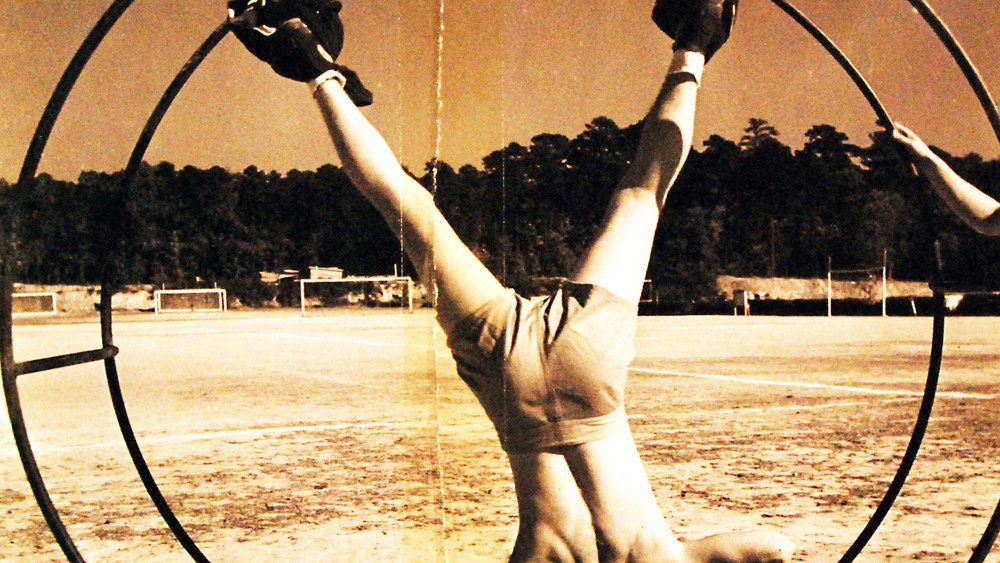
A cadet on the exercise wheel at the Navy Pre-Flight School, Chapel Hill, November 1942.

Events and storylines

Named events and storylines the index follows in detail. Each has its own page.

Show all 26 events and storylines
UNC’s student strike against the Vietnam War, May 1970After the invasion of Cambodia and the Kent State killings, some 6,000 students joined a strike that suspended business as usual on campus Orange County in the First World War, 1917–1919The draft and the county’s soldiers, the Red Cross and the Liberty Loan drives, the university in wartime, and the men who did not come home Orange County’s home front in the Second World WarWar bond drives and Red Cross work, scrap and rationing, farm labor and prisoners of war, the Carrboro munitions plant, and the end of the war in the county Veterans’ organizations in Orange County, 1943–1958The American Legion posts at Chapel Hill, Hillsborough and Carrboro and the Black veterans’ posts, and the VFW, Marine Corps League and other groups formed after the Second World War Orange County’s first draft, 1917Orange County’s part in the first draft of the First World War: registration day in June 1917, the exemption board, the printed list of registrants, the county’s quota of 141, the first men summoned and sent to Camp Jackson, and the Labor Day dinners Battery C, Orange County’s National Guard artillerymen, 1917The Chapel Hill, Carrboro and Hillsboro men who filled out a Durham National Guard field artillery battery in July 1917: the recruiting, the Red Men’s send-off at Carrboro, their leaving for camp at Trinity College, and the Red Cross comfort bags The Chapel Hill Red Cross chapter, 1917–1919The Chapel Hill Red Cross chapter from its founding in May 1917 to its report of April 1919: its officers and workrooms, the dressings, comfort bags and Christmas packages it shipped, the War Fund drive, the conservation committee and the influenza work Liberty Loans in Orange County, 1917–1919How Orange County bought war bonds in the five Liberty Loans: Paul C. Collins’s men’s committees and the county’s four banks, the bonfires at Efland and Hillsborough, the women’s committees under Harriet M. Berry, the honor flags, and the county’s totals in each loan Hillsboro’s memorial high school, 1919–1941How Hillsboro got a new high school meant to honor the county’s First World War dead: the county board’s $20,000 offer in 1919, the 1921 bond election and plans, and the brick school on West Tryon Street finished in 1922 The Horace Williams Airport, 1940–2018How the University turned Chapel Hill’s small airfield into the Horace Williams Airport: the 1940 purchase and Williams’s land gift, the civilian pilot training, the WPA grading, the hangar fire of 1941, the new road from North Columbia Street and the wartime flights over the field Selective service in Orange County, 1940–1946How the draft worked in Orange County from 1940 to the end of the war: the draft board and its first registration, the first volunteers sent to Fort Bragg, the later registrations, the Chapel Hill examining board, the farm deferments and the final count of men drafted The new Carolina Theatre, 1941–1942How Chapel Hill got its new Carolina Theatre on Franklin Street: the theatre chain’s purchase of the lot in 1941, the planning commission’s Colonial front by Archie Davis, the groundbreaking, the wartime halt of 1942, the October opening and the old house renamed The Village Chapel Hill’s milk supply in wartime, 1942–1945Chapel Hill’s wartime milk disputes: the aldermen’s 1942 suspension of the milk ordinance and the Navy’s ban on 17 places, the 1943 fight over Durham Dairy Products’ shipped-in milk and the company’s withdrawal, the return to all Grade A, and the dairy farmers’ cooperative plant of 1945 Orange County and the Mexican War, 1846–1848How Orange County raised men for the Mexican War: the volunteers of the Hawfields and 47th regiments, John Cameron’s Orange Volunteers and their send-off from Hillsborough, the company broken up at Smithville, the army recruiting station and the dinner for the returned volunteers The Hillsborough Military Academy, 1858–1861How Charles C. Tew of South Carolina built a military school on the west end of Hillsborough: the land bought in 1858, the opening in January 1859, the barracks cornerstone, the Commandant’s House, the cadets’ registers and Tew’s departure for Fort Macon in April 1861 Building Memorial Hall, 1883–1885How a proposed monument to David L. Swain became Memorial Hall: Governor Jarvis’s promise at the 1883 commencement, the prison brick, the winter halt, the canvass for memorial tablets, the architect’s death, Paul C. Cameron’s loan and the dedication of June 3, 1885 Hillsborough as the southern army’s base after Camden, 1780How Hillsborough served as the southern army’s base in 1780: de Kalb’s halt, Gates’s regrouping of the army after Camden, the General Assembly and its Board of War, the courthouse and church turned to army use, the crowded town, the march to Salisbury and Greene’s arrival The test of allegiance in Orange County, 1775–1782How Orange County’s Revolutionary authorities used the oath of allegiance: the 1775 efforts to win over former Regulators and people of scruple, Michael Holt’s oath, the Loyalist estates inventoried, the county court’s citations of suspects and merchants, the sixty-day orders to leave and the 1782 commissioner of confiscated estates Opposing the Vietnam War in Chapel Hill, 1965–1973How students, faculty and townspeople in Chapel Hill opposed the Vietnam War from 1965 to 1969: the early silent walks and fasts, the Wednesday vigil at the post office, the speakers and debates, draft counseling and draft resistance, the Dow Chemical sit-in and the Moratorium day of October 1969 Protest and support during the Persian Gulf war, 1990–1991How Chapel Hill, Carrboro and UNC answered the Persian Gulf war in 1990 and 1991: the post office vigils, the Franklin Street march and the Polk Place protest, the CBS town meeting, the sanctuary votes, the rallies for the troops, and the Peace Village in the Pit until after the cease-fire

More storylines

Other storylines that include this theme, in date order. Each has its own page.

StorylineThomas Hart of Hartford, 1757–17821757–1782 · 20 events · Thomas Hart held land, office, mills and trade in colonial Orange, which shows how one man's interests could run together, and why he became unpopular with the Regulators. Granted land on the Eno from 1757, he built Hartford and bought the mill that became Hart's Mill. As sheriff from 1763 he was excused from taxes by the Assembly and found short in his account, and the Regulators whipped him in the 1770 court riot. He supplied Tryon's troops, then sat for Orange in the first Provincial Convention, the Third Provincial Congress and the state Senate before moving to Maryland in 1780 and leaving Hartford to Jesse Benton. StorylineThomas Burke of Hillsborough, 1772–17891772–1789 · 15 events · Thomas Burke went from a Hillsborough law practice to the Continental Congress and the governor's office, and Orange County sent him to each stage of the Revolution. Douglass credits him with drafting Orange's 1776 instructions to the Halifax Congress, and he sat on the committee whose report empowered the delegates to join in declaring independence. The Assembly at Hillsborough cleared him in 1778 in his quarrel with Congress. Elected governor in 1781, he was captured in David Fanning's raid, broke his parole to return, and died near Hillsborough in 1783. In 1789 the court let his executor sell four people the estate held in slavery. StorylineOrange County's militia in the Revolution, 1775–17791775–1779 · 17 events · Orange County had to field a Revolutionary militia in a district the Council of Safety thought full of disaffected persons. The Provincial Congress named the county's officers in 1775, and in February 1776 Orange men held Cross Creek while Nathaniel Rochester took about 500 retreating Loyalists prisoner. In April 1776 the congress split the militia into Northern and Southern regiments under John Butler and James Saunders. Asked for 500 men against the Cherokee, Orange met a quota of 300. By 1778 the county owed the state's troops 73 hats and 146 pairs of shoes, and in 1779 Hillsborough became an army depot as Orange militia fought at Stono Ferry. StorylineGuns, powder and paper at Hillsborough, 1775–17781775–1778 · 6 events · During the Revolution the Hillsborough merchant William Johnston apparently produced gunpowder, lead and rifle flints at his Snow Hill plantation northeast of the town. In 1776 Nathaniel Rochester was named to a commission to set up a gun factory near Hillsborough and led a wagon train to Philadelphia to get iron for it. On April 24, 1776 the Provincial Congress told three commissioners in each district to set up a public works for muskets and bayonets, gather gunsmiths and pay no more than 5 pounds a gun, and for Hillsborough District it named Johnston, Thomas Burke and Ambrose Ramsey, with up to 1,000 pounds to spend. On November 14, 1777 a notice in the North Carolina Gazette announced a newly built paper mill near Hillsborough and asked households to save linen rags for it. John Hogan owned the mill, a mile and a half northeast of town. In 1778 the Continental officer Absalom Tatom took charge of the state's arsenal at Hillsborough as assistant quartermaster. That summer the gun factory shut down: its shop sat beside a creek on Burke's land about two miles northeast of town, and a dry summer left the creek too low to drive its wheel. The drought slowed the paper mill as well, and the Assembly gave Hogan more time to earn the state's premium for paper. StorylineElm Grove school district, 1846–19221846–1922 · 5 events · The Elm Grove school district, about five and a half miles south of Hillsborough, built a log schoolhouse with a rock chimney in 1846 and 1847, under a contract said to be for $80, and John Latta taught the first school there. In 1896 the district put up a new schoolhouse near the old one, but in 1903 its voters rejected a special tax for a graded school, 19 to 16. Twelve pupils served in the World War while the district's women sewed, knitted and canvassed for the soldiers, and two former pupils died of influenza at Camp Greenleaf in October 1918. In March 1922 influenza and grippe closed the school for a week. StorylineThe Orange Guards, 1855–19281855–1928 · 15 events · The Orange Guards, Hillsborough's volunteer company, went to war in 1861 and outlived it by decades. Formed in 1855 after a visit from Raleigh's Independent Guards, with sixty-two men under Dr. Pride Jones as captain, the company was incorporated by the General Assembly in 1859, which exempted members from jury duty and road work. On April 20, 1861 it left for Fort Macon, and as Company G of the 27th North Carolina it lost men at Sharpsburg and Bristoe Station. Old soldiers revived it in 1875 under Captain Halcott P. Jones, and nearly thirty men signed the roll to reorganize it in 1894. In 1928 the University of North Carolina Press published its Descriptive Book, edited by H. M. Wagstaff.
Show all 18 storylines
StorylineThe end of the Civil War in Orange County, 1865April 1865 · 31 events · In April 1865 David L. Swain and William A. Graham pressed for peace from Hillsborough as Johnston's army fell back through the county. Wheeler's cavalry fought Union pursuers at New Hope Creek on April 14, Union troops occupied Chapel Hill on April 17 under orders to protect the university, and Sherman and Johnston met at the Bennitt farm on the Hillsborough road, then in Orange County, where Johnston surrendered on April 26. StorylineKirk-Holden War connections, 1870October 1869–March 1871 · 49 events · Governor Holden named Orange County in his October 1869 warning about Klan violence, Hillsborough men were named in a Klan plot against Senator T. M. Shoffner, and Kirk's militia arrested Josiah Turner Jr. at Hillsborough in August 1870. Orange men Frederick N. Strudwick, William A. Graham and John W. Graham then helped bring, prosecute and decide Holden's impeachment. StorylineThe Anderson Chapter, UDC, and the Confederate graves at Hillsborough, 1899–19121899–1912 · 6 events · Fourteen Hillsborough women organized a chapter of the United Daughters of the Confederacy in October 1899 and spent its first years marking and honoring the county's Confederate dead. Named for Gen. George Burgwyn Anderson, a Hillsborough native who died of a wound received at Sharpsburg, the chapter under Mrs. Robina Webb held Memorial Day in 1901 with flags and flowers on soldiers' graves. It helped feed veterans at an Efland picnic in 1902 and raised money in 1906 to mark graves. By June 1908 it had marked the graves it could identify and published the names. In July 1912 it appealed to the men of Orange for a monument to the county's Confederate soldiers. StorylineThe American Legion's hut, 1934–19441934–1944 · 5 events · The Chapel Hill post of the American Legion first planned to make the old Methodist church into its memorial hut, then built a log hut on Rosemary Lane. In December 1934 the post announced a bargain to buy the church for $3,750, but by March 1935 it had given up the plan, finding the work would cost more than it could raise. It then planned a log hut on a Rosemary Lane lot from trees given by country members. Legionnaires did much of the building, and a crew of Black masons filled the cracks between the logs. The first meeting in the hut came on March 19, 1937, and in 1944 the post burned the mortgage. StorylineChapel Hill before Pearl Harbor, 1940–19411940–1941 · 13 events · Chapel Hill and the University were preparing for war and sending aid to Europe well before Pearl Harbor. In February 1940 twenty University students began flight training, and in May President Frank Graham offered the University's faculty and laboratories to the government. In June a Chapel Hill branch of the Committee to Defend America by Aiding the Allies was organized, the American Legion post asked Congress for conscription, and citizens signed an appeal urging the United States into the war beside Britain. Relief committees sewed, shipped clothing and raised money for a mobile tea kitchen for England. Within days of Pearl Harbor, armed sentries guarded the airport, the University Lake dam and the power plant. StorylineOrange County's war loan drives, 1942–19451942–1945 · 12 events · From farm families pledging a pig or an acre of crops in 1942 to the Victory Loan of 1945, Orange County kept buying war bonds, and it passed its quota in each drive from the Fourth War Loan on. In 1942 rural families pledged $50,000 in bonds and stamps for the year. The Fourth War Loan of 1944, under county chairman J. Maryon Saunders of Chapel Hill, passed its $540,000 quota by mid-February, helped by a $25,000 county investment, though E bond sales lagged. The county went over in the Fifth and Sixth loans, and in 1945 the Seventh closed at $1,308,000 against a $574,000 quota. Saunders counted $6,120,000 in bonds bought in the seven drives he led. StorylineCarrboro’s Mill No. 7: munitions plant to woolen mill, 1942–19551942–1950s · 25 events · In 1942 National Munitions Corporation turned Carrboro's empty Mill No. 7 into a shell-loading plant for Navy anti-aircraft ammunition. It grew to more than 500 workers, won the Army-Navy E award in January 1943 and renewals after it, and closed on August 17, 1945, when the Navy canceled its contracts. Pacific Mills of Boston had bought the old Mill No. 4 building that January and opened Carrboro Woolen Mills there in April 1945; it bought Mill No. 7 as well, with the deed filed in May 1946, and in 1947 the government sued National Munitions over excessive war profits. Pacific Mills later closed the Carrboro woolen operation, in the mid-1950s by one account and the early 1960s by another. StorylineBlack Chapel Hill on the home front, 1942–19441942–1944 · 9 events · From 1942 to 1944 Chapel Hill's Black residents carried on their own home-front work, from civil defense and scrap collection to bond sales and gardens. By 1943 twelve Black men trained for fire protection had civil defense arm bands, and the Orange County Training School had collected 22,075 pounds of scrap; its Jeep campaign sold more in stamps and bonds than the $900 cost of an Army jeep. Black residents began a Victory Garden campaign and formed a Citizens Service Corps. In 1944 Black veterans of both world wars formed an American Legion post, and a federally funded day nursery for children of Black working mothers opened at the Training School. StorylineChapel Hill men lost in the Second World War, 19431943 · 3 events · Three men from Chapel Hill and its neighborhood died in the Second World War in the late summer and fall of 1943. Technical Sergeant Bynum G. Crabtree, a Flying Fortress crewman with the Eighth Bomber Command, was killed on August 19 when his plane was shot down over Flushing, Holland, on his thirteenth mission; the Army gave him the Air Medal with two oak leaf clusters after his death. Second Lieutenant Marshall Reid Cheek, an Army Air Forces navigator, was reported missing after combat operations in the Pacific and later reported to have died on August 22. Vernon Strowd Hogan, 27, a Navy third-class gunner's mate, died in November in a base hospital in the South Pacific, probably of wounds. StorylineHousing Chapel Hill’s student veterans, 1945–19461945–1946 · 10 events · In July 1945 Mayor R. W. Madry named a citizens' committee to study Chapel Hill's postwar housing, and that fall residents formed a corporation to build homes. As returning veterans filled the university in 1946, the trustees approved five dormitories, a trailer camp opened on the old high school site, the federal government put up the prefabricated houses of Victory Village on the south campus for about 350 student families, and federal rent control took effect in Orange County on July 1. That summer the town named a Veterans Housing Commission to bring in surplus demountable houses for married veterans, and Chapel Hill's churches opened nursery schools for their children. StorylineThe Rural Progress Program and its successors, 1951–19591951–1959 · 21 events · Orange County joined the state Rural Progress campaign in September 1951, aiming to add $1,000 to each farm family's income and to improve every home and community. County workers enlisted more than 100 white neighborhood leaders and Black captains to survey farm families, and Lincoln High's agriculture department began the program among Black families around Chapel Hill. Separate prize nights for white and Black farm families followed each year. Orange was named the state's County of the Year in December 1953 and won the division for Black families in February 1954. Successor programs followed in 1955 and 1957, and Cedar Grove won the silver loving cup for Black families in 1957 and 1958. StorylineSexual orientation policy and anti-gay harassment at UNC and in the towns, 1990–19931990–1993 · 13 events · Chancellor Paul Hardin added sexual orientation to UNC's nondiscrimination policy in 1990, and in 1991 the student code took in harassment based on sexual orientation while housing studied gay and lesbian students' needs. In 1992 the career office agreed to ask recruiters about their policies and Hardin signed a statement against the military's gay ban. That summer the association's cube notices were defaced twice, once with a death threat. Carrboro added sexual orientation to its employment policy in December 1990, and in 1993, after a student rally, Carolina Dining Services added it to its own policy while the Chapel Hill council debated a charter clause.

Indexed works

Works about Wars & Military Service from library and archive catalogs. The most widely held appear first; novels are not shown here. Follow a link to find a copy or view the material.

Widely held

Hillsboro, Colonial and Revolutionary

Nash, Frank · 1953

Francis Nash's history of Hillsborough in colonial and Revolutionary times, first published in 1903 and reprinted in 1953 by Edwards & Broughton with an index and a sketch of the author. Topics include the Regulator Insurrection of 1766 to 1771, the Revolution and local genealogy.

Included because: Catalog heading in the Wake Forest record: North Carolina -- History -- Revolution, 1775-1783.

The Cloudbuster Nine

Keene, Anne R. · 2018

Anne R. Keene's history of the Cloudbusters, the baseball team of the Navy Pre-Flight School at the University of North Carolina in Chapel Hill during the Second World War, on which Ted Williams played in 1943. The chapters move from a batboy's trunk of keepsakes through the pre-flight training program to the players' lives after the war, and Keene's own family is part of the story. Published by Sports Publishing in New York in 2018, 340 pages with sixteen pages of plates.

Included because: Catalog heading in the UNC record: Veterans.

Some Neglected History of North Carolina: Being an Account of the Revolution of the Regulators

Fitch, William Edward · 1905 · Neale Pub. Co.

William Edward Fitch's account of the Regulator movement and the Battle of Alamance of 1771, which his subtitle calls the first battle of the American Revolution, published by Neale in 1905 in a second edition. Hillsborough, the Orange County seat, was the scene of the Regulators' 1770 courthouse riot and of the hangings that followed Alamance. 307 pages with nine leaves of plates, folding maps and a portrait.

Included because: Catalog heading in the NC Cardinal record: North Carolina -- History -- Revolution, 1775-1783.

Hearts Torn Asunder: Trauma in the Civil War's Final Campaign in North Carolina

Dollar, Ernest · 2022

Ernest Dollar examines the mental toll of the Civil War's last weeks in North Carolina on Confederate and Union soldiers and on civilians, using letters, diaries and later accounts. After chapters on each group, the narrative follows the days from April 10 to early May 1865 as Sherman's army moved through the central counties, Chapel Hill and Hillsborough among them; an epilogue considers how the trauma colored later memory of the conflict's end. Published 2022, 265 pages.

Included because: Catalog heading in the NC Cardinal record: North Carolina -- History -- Civil War, 1861-1865 -- Campaigns.

Reviewed in Civil War Book Review (2023).

Journey to New Hope

Murphy, Barbara A. · 2006

A congregational history of New Hope Presbyterian Church in Orange County, written by Barbara A. Murphy and published in 2006 by Chapel Hill Press. Chapters take up the five successive church buildings, the land itself, the ministers who served, the cemeteries, members who went to war, the church's organization, its music, gifts and memorials, and its outreach to the surrounding community. It also covers Presbyterian experience of the Civil War. 126 pages with illustrations and portraits.

Included because: Catalog heading in the UNC record: Civil war -- Religious aspects -- Presbyterians.

The Forgotten First

Albright, Alex · 2013 · R.A. Fountain

Alex Albright's history of the B-1 band, the group of Black musicians drawn largely from students and graduates of North Carolina A&T who became the first Black sailors of the modern Navy to serve above the rank of messman, and the first of more than a hundred Black Navy bands in wartime. The band was posted to the Navy Pre-Flight School at Chapel Hill, the book's Orange County link. Published by R.A. Fountain in 2013, 194 pages with illustrations and portraits.

Included because: Catalog heading in the UNC record: United States. Navy.

Show 2 more

Dispatches from William Tryon to the Earl of Hillsborough numbered 59-67, enclosing documents concerning the Regulators

2019 · Adam Matthew Digital

Numbered dispatches 59 through 67 from Governor William Tryon to the Earl of Hillsborough, with enclosures about the Regulators, whose protests broke into riot at Hillsborough in 1770. Reproduced by Adam Matthew Digital in 2019 from Colonial Office CO 5/302. The papers touch on the council and assembly, naval stores and trade, oaths, militia and provincial troops, judges, sheriffs and juries, voting, currency, Cherokee affairs, clergy, quitrents and land, and name officials such as Richard Caswell, Richard Henderson, Maurice Moore and Hugh Waddell.

Included because: The record names this subject alongside a heading for the county or its towns.

Letters and dispatches from William Tryon to the Earl of Hillsborough, October 1768 - May 1769

2019 · Adam Matthew Digital

Governor William Tryon's correspondence with the Earl of Hillsborough for the months from October 1768 to May 1769, just after Tryon marched militia to Hillsborough to protect the court from the Regulators. Adam Matthew Digital reproduced the file, Colonial Office CO 5/301, in 2019. Topics include legislation, Anglican clergy, soldiers' wages, sheriffs, land and quitrents, trade and currency, taxes and education, the Catawba and the boundary line, roads, a murder case, punishment and prison, and people such as Richard Caswell, James Hasell and John Rutherford.

Included because: The record names this subject alongside a heading for the county or its towns.

Recently indexed: North Carolina troops, 1861-1865: a roster, volumes 1-4 (microfilm) · 1937 in memoriam, World War II (1948) · Address by Edwin A. Alderman ... on the life of William Hooper, "the prophet of American independence" : Guilford Battle Ground, July 4, 1894 (1894) · The Administrative Committee of the Program of Peace Committee (1940) · Back the attack with war bonds : your September bond purchases will help make Orange County make its 3rd war loan quota (1942) · Biographical sketch of General J. Johnston Pettigrew (1886)

Search all 1,522 indexed works →

Start at OCPL

Books in OCPL’s Rebecca B. Wall Local History Collection whose titles, catalog subjects, or descriptions match this theme. The Friends’ recommended starting points are labelled. Books marked Wider context cover the broader subject rather than this theme itself.

Show 6 more
  • Wider context · NC 973.745 RAIFORD The 4th North Carolina Cavalry in the Civil War: A History and Roster Raiford, Neil Hunter · 2003

    Neil Hunter Raiford's history of the 4th North Carolina Cavalry, formed from seven partisan ranger companies raised in 1862 in fifteen counties. Using official records, letters and diaries, he follows the regiment from the Blackwater skirmishes and the Battle of Whitehall through Brandy Station, Gettysburg and the defense of Petersburg to Appomattox. A roster with biographical and service details on each soldier fills more than half the book. McFarland, 2003; 294 pages with maps.

  • Wider context · NC 929.375 ALM North Carolina, 1890 Civil War Veterans Census: A Census of Veterans of the Union Armed Forces and Their Widows, Containing Also Information on Other U.S. Veterans and Many Confederate Veterans Almasy, Sandra L. · 1990

    The North Carolina returns of the 1890 federal census of Union veterans and their widows, as compiled by Sandra L. Almasy. The schedules also name other U.S. veterans and many Confederates. Published at Joliet, Illinois, in 1990; 316 pages with indexes.

  • Start here · 975.603 BAR The Civil War in North Carolina Barrett, John Gilchrist · 1963

    John G. Barrett's military history of the Civil War inside North Carolina, where eleven battles and seventy-three skirmishes were fought. Chapters follow the secession crisis, the 1861 fighting on the Outer Banks, Burnside's coastal expedition, Pickett's failure at New Bern, war in the mountains, Fort Fisher, Sherman's entry into the state, Averasboro and Bentonville, and Stoneman's raid, ending with the surrender at the Bennett farmhouse. Published in 1963, 484 pages with maps; reissued in 1995.

  • Foundational · NC 973.745 NOR North Carolinians in the Era of the Civil War and Reconstruction 2008

    Paul D. Escott edits nine essays on North Carolinians from secession through Reconstruction: Piedmont disaffection, Wild's Raid and guerrilla war in the northeast, African Americans under Union occupation, soldiers and the 1864 governor's race, the war's end as seen by Chapel Hill writer Cornelia Phillips Spencer, Zebulon Vance and university president David L. Swain, women and the law, divorce at the 1868 constitutional convention, the roots of Jim Crow, and Vance's memory. UNC Press, 2008.

  • Wider context · NC 973.71 PERRY Civil War Courts-martial of North Carolina Troops Perry, Aldo S. · 2012

    Some 450 North Carolina Confederates, most of them deserters, are traced through their service records and military trials by Aldo S. Perry, a retired IBM project engineer in Raleigh; Confederate courts sentenced more North Carolina soldiers to death than those of any other state. Organized by army, corps, division and brigade, the book follows trials, executions and escapes, and argues that wider use of execution would have strengthened the Confederacy. McFarland, 2012.

  • Wider context · NC 973.917 LEM North Carolina's Role in World War II Lemmon, Sarah McCulloh · 1964

    Sarah McCulloh Lemmon, who headed the history and political science department at Meredith College, wrote this short account of the Second World War in North Carolina for the State Department of Archives and History. It covers the road to war, the state's military part and life on the home front. Published in 1964, 68 pages with illustrations, portraits and a bibliography, and reprinted several times.

In the chronology

A selection of 12 events from the 1,046 chronology entries for this theme, including highlights and examples from different years. See all 1,046 dated events in the chronology →

  1. Mark Morgan sits in the General Assembly for Orange County Mark Morgan, a justice of the peace and militia officer who had settled on Morgan Creek near present Chapel Hill, was a member of the colonial General Assembly for Orange County for the 1753-54 session. People: Mark Morgan Place: Orange CountySearch the index · MosaicNC (NC Office of Archives and History): Morgan, Mark
  2. Battle of Alamance Governor William Tryon's militia defeated the Regulators at Alamance. James Few, captured on the field, was hanged at Tryon's camp the next day. People: William Tryon, Herman Husband, Robert Palmer, James Few Place: Present-day Alamance County; then Orange CountyNCpedia
  3. Hillsborough forms the Orange Guards volunteer company Stirred by a visit from the Independent Guards of Raleigh on October 27, Hillsborough men formed a volunteer company of sixty-two members called the Orange Guards. They chose Dr. Pride Jones captain, Josiah H. Webb first lieutenant, Henry K. Nash ensign, William Johnston Freeland orderly sergeant, Dr. William Strudwick surgeon and Frederick N. Strudwick judge advocate. People: Pride Jones, Frederick N. Strudwick, Henry Kollock Nash Place: Hillsborough · Also named: Josiah H. Webb, William Johnston Freeland, William StrudwickSearch the index · Hillsborough Recorder, November 7, 1855, p. 2
  4. Swain returns to Chapel Hill with word of Lee's surrender Swain got back to Chapel Hill on the morning of Saturday, April 15, and found Wheeler's cavalry camped in the village. He brought the first sure news of Lee's surrender to the troopers there, some of them former students of the university. People: David L. Swain Place: Chapel HillCornelia Phillips Spencer, The Last Ninety Days of the War in North-Carolina (1866), scan p. 175
  5. The Orange County Red Cross grants New Hope Church a branch The chapter's executive committee read and granted New Hope Church's application to form a Red Cross branch on September 7, 1917, and filed Cedar Grove's certificate of organization at the same meeting. By December New Hope was sending surgical dressings to Hillsborough for shipment with Cedar Grove's. Place: New Hope Church, Orange CountySearch the index · State Archives of North Carolina, Military Collection, WWI Papers, Box 2, Folder 37: Orange County Red Cross History (typescripts, 1918-1919), scan 6
  6. Hillsborough builds the Confederate Memorial Library Federal relief crews began a new library on Churton Street in Hillsborough in December 1933, with local money, including $7,000 from the Hillsborough United Daughters of the Confederacy, paying for materials. The cornerstone of the Confederate Memorial Public Library was laid on July 13, 1934, and the building became the Orange County Historical Museum in 1983. Place: Hillsborough · Also mentions: Churton StreetThe Chapel Hill Weekly, July 20, 1934, p. 3 (Laying of Cornerstone)
  7. Chapel Hill women's war relief workshop ships its first Red Cross quota The Community Workshop that the war relief committee under Mrs. Frank P. Graham had set up in the basement of the University dining hall sent a box of garments to Red Cross headquarters in New York on September 4, ahead of the deadline: 10 women's and 20 girls' dresses, 40 layettes, 15 sweaters and 5 shawls. About 40 women did the work, with Carrboro Girl Scouts making babies' caps, and that fall the workshop took on a second, larger quota. Place: University dining hall basement, later Swain Hall basement, Chapel Hill · Also named: Mrs. Frank P. GrahamThe Chapel Hill Weekly, September 6, 1940, p. 1
  8. The Navy B-1 Band serves at Chapel Hill The B-1 Band, 44 Black musicians sworn in at Raleigh on May 27, 1942 as the first African Americans to serve in the Navy at general rank, played for the Navy Pre-Flight School at UNC from July 1942 to April 1944. Barred from campus housing, they lived in the new Black community center on Roberson Street, now the Hargraves Center. Place: Chapel Hill · Also mentions: Hargraves Center, Navy Pre-Flight School, Roberson StreetSearch the index · UNC-Chapel Hill: Pioneers of integration (May 25, 2017) · Also: Chapel Hill Weekly, August 7, 1942, p. 1
  9. University establishes a war training college The University announced a war training college, with Francis F. Bradshaw as dean and Guy B. Phillips as executive secretary, to train men and women for Army, Navy, civil service and civilian defense work and to grant special A.B. and M.A. degrees in war training. Two weeks later it was named to run a pre-induction program for high school boys beginning February 1, 1943. People: Francis Foster Bradshaw, R. B. House Place: University of North Carolina, Chapel Hill · Also named: Guy B. PhillipsSearch the index · The Chapel Hill Weekly, November 13, 1942, p. 1
  10. Chapel Hill agriculture teacher W. F. Lathan goes into the Army William Fields Lathan was among the Orange County registrants sent to camp for induction into the Army on August 14, 1944. In July 1946 he was still in the service, and the county expected him back at Chapel Hill High as agriculture teacher on August 1. People: William F. Lathan Place: Orange CountySearch the index · The News of Orange County (Hillsborough), August 17, 1944, p. 3
  11. Fire guts the front of the American Legion hut in Hillsboro Fire that apparently began in a defective flue above the furnace gutted the front bar area of American Legion Post 85's building on North Churton Street on a Saturday evening, with smoke and water damage through the lower floor estimated at $6,000 to $8,000. The post spent more than $5,000 on repairs and reopened the hut at the end of February 1959. Place: American Legion hut, North Churton Street, Hillsborough · Also mentions: North Churton StreetThe News of Orange County (Hillsborough), December 25, 1958, p. 1
  12. The Navy ROTC Naval Armory at UNC-Chapel Hill is listed in the National Register On February 7, 2024 the National Park Service listed the Navy ROTC Naval Armory at UNC-Chapel Hill in Chapel Hill in the National Register of Historic Places. Place: Navy Reserve Officers Training Corps (NROTC) Naval Armory at UNC-Chapel Hill, Chapel HillSearch the index · NC State Historic Preservation Office: North Carolina Listings in the National Register of Historic Places, Orange County · Also: NC State Historic Preservation Office: Navy Reserve Officers Training Corps (NROTC) Naval Armory at UNC-Chapel Hill, National Register nomination (OR1541)

See all 1,046 dated events in the chronology →

Places in this theme

Buildings, schools, churches and other sites named in the dated events on this page, the most often named first. The map shows the 84 with a known location.

Map tiles © OpenStreetMap contributors. Site locations from the N.C. State Historic Preservation Office survey, Open Orange, Orange County GIS, OpenStreetMap and a few other published sources named on each site’s page; town and community pins show approximate locations.

Show 99 more

All places and the county map →

Research sources

Sources and research tools for this subject. Research guide: How to research with Orange County Indexed.

Background 8

Show all 8

National Register files

Historic sites, markers, and maps

  • NC DNCR: Pre-Flight School (G-140)NC Dept. of Natural and Cultural Resources State marker account of why the Navy chose Chapel Hill for a pre-flight school and what it meant for the university.

Records of the time 12

Show all 12

Collections and databases 9

Show all 9

Local help

Picture: Official U.S. Navy photograph, National Museum of the U.S. Navy; public domain. Image credits →

More to discover

Keep Reading Local

The Friends connect people with new library materials, local writers and publishers, and resources documenting Orange County.

Two mice reading back to back against a leaf, with the hand-lettered words Friends of the Orange County Public Library
Illustration by Caldecott Medalist Matthew Cordell, gifted to the Friends 2026