Skip to content

Local figure

William Tryon

Governor William Tryon led the army that defeated the Regulators at Alamance on May 16, 1771. At Hillsborough in June 1771 twelve Regulators were condemned for high treason; Tryon pardoned six and ordered the other six hanged there on June 19, among them Benjamin Merrill, Captain Messer, Robert Matear and James Pugh.

Source: NC Department of Natural and Cultural Resources: Regulators Hanged (G-23)

1729–1788 · Dates from the Library of Congress · Library of Congress authority record ↗

142 works about William Tryon are indexed here, as is one work by Tryon.

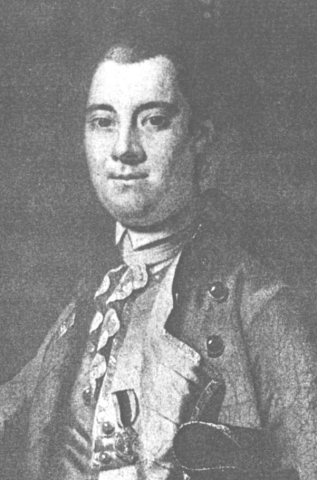
Portrait reputedly of William Tryon

Life and Orange County connections

Storylines this person is part of, in date order. Each has its own page.

StorylineSt. Matthew's Parish and Hillsborough's old church, 1752–18241752–1824 · 26 events · From 1752 St. Matthew's Parish was Orange County's established Anglican church, with chapels at New Hope and St. Mary's and, from about 1768, a church in Hillsborough. Its rector, George Micklejohn, preached to Tryon's troops in 1768 and stayed loyal to the Crown in 1776. Its church served as an army hospital, an academy and the meeting place of the 1788 convention, and in 1797 the Assembly ordered the ruinous building sold. Episcopal worship came back through St. Jude's and St. Mary's in 1818 and 1819, and in 1824 the reorganized parish left the old lot to the Presbyterians. StorylineThe sheriff and the taxes: Orange County's sheriffs, 1752–17771752–1777 · 19 events · In colonial Orange County the sheriff collected the taxes, and how sheriffs and their deputies collected them became a grievance that fed the Regulation. The governor chose sheriffs from names the county court sent him, beginning with Alexander Mebane, who returned 1,113 tithables for 1752 and 1753. Thomas Hart's short account and the Assembly bill excusing him from taxes, deputies' seizures of deer skins and livestock, and Tyree Harris's extra charge on late payers came before the 1768 depositions and the rescue of a seized horse at Hillsborough. Regulators whipped Sheriff John Lea in 1769. In 1777 the first court under statehood named Mebane's son sheriff. StorylineHugh McAden, Henry Pattillo and the first Presbyterian congregations, 1753–17901753–1790 · 19 events · Orange County's Presbyterian settlers had congregations before they had ministers. Hugh McAden preached on the Eno and at the Hawfields in 1755 and 1756, and the settlements asked Hanover Presbytery for preachers, but none came regularly until Henry Pattillo became pastor of the Hawfields, Eno and Little River churches in 1765. Pattillo and his fellow ministers condemned the Regulators in 1768 and he preached to Tryon's troops; in 1770 they formed Orange Presbytery, which first met at Hawfields. In 1775 the Provincial Congress sent Pattillo to win former Regulators to the American cause, and about 1790 the old Pattillo field was split into two pastoral charges. StorylineSamuel Strudwick’s claim to the Haw Old Fields, 1754–17881754–1788 · 7 events · Samuel Strudwick held a mortgage claim to 30,000 acres of the Haw Old Fields, but the land was already held by settlers, and from 1754 to 1788 he struggled to make his title good against them. Those he met in 1766 agreed to recognize it; by 1768 his tenants had formed an association to hold the land against him, and after the Revolution settlers took state patents on nearly all of the tract, even his own house. Strudwick appealed to the Assembly and to Thomas Burke in 1780, and when the lawsuits ended in 1788 he had lost about a third of the property. StorylineThe Hillsborough district superior court, 1767–18061767–1806 · 18 events · The district superior court made Hillsborough a court town, and in the Regulator years it became the place where the Regulators' quarrel with the county officers was fought out. Set at Hillsborough by an act of 1767, it first sat in March 1768. Its September 1768 term tried William Butler and Herman Husband and found Edmund Fanning guilty; later terms threw out the Regulators' bills, and in September 1770 about 150 Regulators broke up the court. Shut by the court-law quarrel after 1772, it sat again on March 24, 1778, and Hillsborough kept its hold on the circuit until the act of 1806. StorylineBattle of Alamance, May 1771 (site now in Alamance County)April–May 1771 · 17 events · In the spring of 1771 Governor William Tryon marched militia against the Regulators, raising Orange County companies, buying supplies at Hillsborough and camping across the Eno from the town. After the Presbyterian minister David Caldwell went between the camps, Tryon's army defeated the Regulators at Alamance Creek on May 16, 1771.

Dated events connected with this person, in date order. See these 53 dated events in the chronology →

  1. The Regulator movement organizes in Orange County Orange County farmers first organized in 1766 to question county officers about taxes and fees, a Sandy Creek effort that Herman Husband led and that lapsed in 1767. In early 1768 a new association, soon called the Regulation, pledged to pay no taxes or fees beyond what the law allowed. People: Herman Husband, Edmund Fanning, William Tryon Place: Countywide · Also mentions: Sandy CreekColonial and State Records of North Carolina, vol. 7, pp. 671-672: Regulators' Advertisement No. 4
  2. Governor Tryon reports that Hillsborough has hardly twenty families Writing to the colonial secretary about the town's new name, Tryon put its resident households at scarcely twenty but predicted it would soon be the leading inland town of the province. People: William Tryon Place: HillsboroughNash, Hillsboro, Colonial and Revolutionary (1903), p. 9 · Also: Lefler and Wager, Orange County, 1752-1952
  3. George Micklejohn is sent to St. Matthew's Parish in Hillsborough Governor William Tryon sent the Rev. George Micklejohn, a Society for the Propagation of the Gospel missionary first assigned to Rowan County, to St. Matthew's Parish in Orange County. People: George Micklejohn, William Tryon Place: HillsboroughSearch the index · St. Matthew's Episcopal Church, Hillsborough: Allen Cronenberg, A Brief History of St. Matthew's Parish, 1752-2017 (2018)
  4. The governor's Council thanks Edmund Fanning and his men for their conduct against the Regulators After Tryon read the Council his cold reply to the Regulators' petition, which forbade further meetings and told them to let the taxes be collected, Fanning was called into the room and formally thanked with his men for their behavior in the recent troubles. People: Edmund Fanning, William Tryon Place: New Bern or Brunswick (Council)Internet Archive: Bassett, The Regulators of North Carolina (1765-1771) (1896), p. 171
  5. Thomas Hart and Francis Nash tell Fanning they cannot raise the troops he ordered Edmund Fanning, away at Halifax, had ordered Captain Thomas Hart to raise 500 men for the defense of the county. On April 17, 1768, Hart and Francis Nash wrote back that they could not raise them, that feeling against Fanning ran high, and that Strudwick's tenants were meeting in revolt at the Haw Fields. Fanning passed their report to Governor Tryon on April 23, and it was read in council at Wilmington four days later. People: Thomas Hart, Francis Nash, Edmund Fanning, William Tryon Place: HillsboroughInternet Archive: Durward T. Stokes, "Thomas Hart in North Carolina", North Carolina Historical Review 41 (1964), p. 328
  6. Edmund Fanning writes Governor Tryon that Orange is in revolt Two weeks after Regulators rescued a seized horse at Hillsborough, Fanning reported people across the county binding themselves by oath to refuse taxes, and said he and other officers expected an attack. People: Edmund Fanning, William Tryon, Thomas Lloyd (died 1792), Thomas Hart, Francis Nash, James Thackston, John Gray Place: HillsboroughLefler and Wager, Orange County, 1752-1952 (1953), p. 31
  7. Tryon orders the Regulators home and puts seven counties' militia on alert Answering Fanning, the governor issued one proclamation to the people and another to militia officers in Bute, Halifax, Granville, Rowan, Mecklenburg, Cumberland and Johnston counties to stand ready to march to his aid. People: William Tryon, Edmund Fanning Place: Orange CountyLefler and Wager, Orange County, 1752-1952 (1953), p. 32
  8. Regulators at George Sally's resolve to settle their disputes by arbitration According to Husband, the meeting at George Sally's resolved that if the governor would not help them, they would stay out of the courts altogether and leave their differences to arbitration rather than riot, and passed round a subscription paper for it. Rednap Howell carried the paper to Brunswick, where Tryon read it, grew angry and ordered him to burn it. People: Rednap Howell, William Tryon, Herman Husband Place: George Sally's, Orange County; BrunswickInternet Archive: Hermon Husband, An Impartial Relation (1770), ed. William K. Boyd, North Carolina Historical Review 3 (1926), p. 304
  9. James Hunter and Rednap Howell present the Regulators' petition to Tryon at Brunswick The petition, Advertisement Number Nine, carried 474 names, 31 of them written in German. Tryon told the Regulators to give up their name and pay their taxes, but he also warned officers against excess fees and had the lawful fees published. People: James Hunter, William Tryon, Rednap Howell Place: BrunswickLefler and Wager, Orange County, 1752-1952 (1953), p. 34
  10. Governor Tryon arrives at Hillsborough and stays into August Tryon came to Hillsborough in early July 1768 and stayed until mid-August, hoping the county would submit, while the Regulators went on refusing their taxes. He left for Salisbury on August 17. People: William Tryon Place: HillsboroughInternet Archive: Bassett, The Regulators of North Carolina (1765-1771) (1896), p. 174
  11. James Hunter and John Low deliver a Regulator letter to Governor Tryon at Hillsborough Hunter and John Low waited on Governor Tryon at Hillsborough with a letter from the Regulators. Tryon told them he would answer it on August 17, after consulting his Council. People: James Hunter, William Tryon Place: Hillsborough · Also named: John LowSearch the index · Documenting the American South: Colonial and State Records of North Carolina, Journal of William Tryon's journey to Hillsborough (Jun 20 to Oct 2, 1768)
  12. Eight Regulator leaders meet Governor Tryon at Hillsborough and are refused a committee to examine the county's taxes A week after their letter was delivered, eight principal Regulators met Tryon in Hillsborough and asked that their grievances be settled by a committee reviewing the county's tax accounts. Tryon refused, telling them the law was the only channel for redress, and the next day sent a letter to the inhabitants south of the Haw. People: William Tryon Place: HillsboroughDocumenting the American South, Colonial and State Records: Journal of William Tryon's journey to Hillsborough, including orders to the militia, June 20 to October 2, 1768
Show all 53 dated events
  1. Sheriff John Lea brings the Regulators Tryon's demand for a 1,000 pound bond On the day set for settling accounts, the former sheriff stayed away and the new sheriff, John Lea, brought a severe letter from Tryon, endorsed by three councillors at Hillsborough. It demanded that twelve leading Regulators meet him at Salisbury by August 25 and give a 1,000 pound bond that no one would try to rescue Butler and Husband at the September court; Tryon left for Salisbury the same day. People: William Tryon, William Butler (Regulator), Herman Husband Place: Orange County · Also named: John LeaInternet Archive: Bassett, The Regulators of North Carolina (1765-1771) (1896), p. 175
  2. Presbyterian ministers, among them Henry Pattillo of Orange, write against the Regulation While Tryon toured Rowan and Mecklenburg to raise troops, Presbyterian ministers Hugh McAden, James Creswell, Henry Pattillo and David Caldwell sent him a letter of loyalty condemning the Regulators, and the pastors also wrote to the colony's Presbyterians telling them to keep out of the movement. The letter was read to the Rowan militia and helped raise volunteers for the march on Hillsborough. People: Henry Pattillo, David Caldwell, William Tryon, Hugh McAden Place: Rowan and Mecklenburg counties · Also named: James CreswellInternet Archive: Bassett, The Regulators of North Carolina (1765-1771) (1896), p. 176
  3. Tryon musters about 400 militia at Hillsborough and swears them to allegiance When the town was thought to be in danger, Tryon called out the militia but could gather only about 400 men, to whom he gave an oath of allegiance to the King and the provincial government before sending them home. People: William Tryon Place: HillsboroughInternet Archive: Bassett, The Regulators of North Carolina (1765-1771) (1896), p. 175
  4. Tryon's army gathers at Hillsborough to guard the superior court Tryon reached Hillsborough on September 19 with 195 Rowan and 310 Mecklenburg volunteers, and two days later 699 Orange and 120 Granville militia joined them. With gentlemen volunteers, artillery and officers the force came to 1,461 men, a quarter of the Assembly among its officers. People: William Tryon, Edmund Fanning, Thomas Lloyd (died 1792), Thomas Hart Place: HillsboroughInternet Archive: Bassett, The Regulators of North Carolina (1765-1771) (1896), p. 177
  5. At the Hillsborough camp, Robert Palmer is named one of six lieutenants general Palmer, whom Governor Tryon had made adjutant general of the militia marching on Hillsborough, was named a lieutenant general of the army in orders issued at the Hillsborough camp on September 20, 1768. The same orders posted a town guard of a hundred men, with the court house and market house as guard rooms. People: Robert Palmer, William Tryon, John Rutherford, John Sampson, Benjamin Heron, Samuel Strudwick, John Ashe Place: HillsboroughSearch the index · Documenting the American South, Colonial and State Records: Journal of William Tryon's journey to Hillsborough, including orders to the militia, June 20 to October 2, 1768
  6. Regulators gather within a mile of Hillsborough, face Tryon's militia and disperse With the superior court sitting under guard of more than a thousand militia, armed Regulators appeared within a mile of Hillsborough on September 22: upwards of eight hundred by Tryon's journal, about 3,700 by Husband's Impartial Relation. A council of war set terms: surrender nine leaders, lay down arms and promise to pay taxes. The Regulators asked for the night to answer and by the next morning had dispersed, about thirty coming in to give up their arms. People: William Tryon, Griffith Rutherford Place: HillsboroughDocumenting the American South, Colonial and State Records: Journal of William Tryon's journey to Hillsborough, including orders to the militia, June 20 to October 2, 1768 · Also: Internet Archive: Hermon Husband, An Impartial Relation
  7. Tryon sends troops out to arrest the Regulator leaders The day after the Regulators dispersed, Tryon sent a body of troops to seize the men he most wanted. Some gave themselves up and others resisted, but all who were taken were soon let go because no true bill could be found against them. People: William Tryon Place: Orange CountyInternet Archive: Bassett, The Regulators of North Carolina (1765-1771) (1896), p. 179
  8. Tryon hands John Rutherford command of the army at Hillsborough Made a lieutenant general on September 20 to lead the right wing, the Orange Brigade, Rutherford took command of the whole army at the Hillsborough camp when Tryon's illness worsened, and ordered the next day's sermons to the troops. People: John Rutherford, William Tryon Place: HillsboroughSearch the index · Colonial and State Records of North Carolina, vol. 7, pp. 831-834: Journal of William Tryon's journey to Hillsborough, June 20 to October 2, 1768
  9. George Micklejohn preaches to Tryon's militia at Hillsborough Before Governor Tryon and the troops raised against the Regulators, Micklejohn preached on the important duty of subjection to the civil powers. Tryon had the sermon printed and distributed, and it cost Micklejohn favour with opponents of royal authority. People: George Micklejohn, William Tryon Place: HillsboroughSearch the index · NCpedia: Micklejohn, George (Dictionary of North Carolina Biography)
  10. The last of Tryon's militia leave Hillsborough The troops stayed in town through the court term, began to be discharged on September 28, and the last detachment marched away on October 2. The expedition cost the province 4,844 pounds. People: William Tryon Place: HillsboroughInternet Archive: Bassett, The Regulators of North Carolina (1765-1771) (1896), p. 179
  11. Samuel Devinney and John Philip Hartzo are convicted over the horse rescue Each was fined 25 pounds and given three months in jail, but Tryon soon freed the prisoners and put off collecting their fines for three months. People: William Tryon, Samuel Devinney Place: Hillsborough · Also named: John Phillip HartzoLefler and Wager, Orange County, 1752-1952 (1953), p. 35
  12. William Butler is convicted of riot at the Hillsborough superior court With Governor Tryon's militia in Hillsborough for the September 1768 term, the superior court tried the Regulator cases. Herman Husband was acquitted; William Butler was found guilty on two counts and sentenced to a fine of 50 pounds and six months in prison, but Tryon released him and suspended the fines. People: William Butler (Regulator), Herman Husband, William Tryon, Samuel Devinney Place: HillsboroughSearch the index · Documenting the American South: John Spencer Bassett, The Regulators of North Carolina (1765-1771)
  13. Tyree Harris reports the Regulators ready to pay their taxes Writing to Tryon, Tyree Harris said that on recent visits to the Regulators in their homes he had found them willing to pay their taxes. People: William Tryon, Tyree Harris Place: Orange CountyInternet Archive: Bassett, The Regulators of North Carolina (1765-1771) (1896), p. 179
  14. The Assembly issues 20,000 pounds in paper money to pay the troops raised at Hillsborough The Assembly that met in November 1768 first proposed 30,000 pounds in paper to pay the militia gathered at Hillsborough and other debts; after the governor and upper house objected it passed a 20,000 pound issue that was not legal tender. Tryon said he signed it because the militia would not turn out again unpaid. People: William Tryon Place: New Bern (Assembly)Internet Archive: Bassett, The Regulators of North Carolina (1765-1771) (1896), p. 185
  15. Orange County inhabitants petition for a public inspection at Hillsborough Francis Nash and twenty five other inhabitants petitioned Governor Tryon and the legislature for a public inspection station at Hillsborough. They argued that having to haul tobacco and hemp at least a hundred miles overland to be inspected discouraged farmers from growing crops their soil suited. People: Francis Nash, William Tryon Place: HillsboroughSearch the index · Documenting the American South: Colonial and State Records of North Carolina, Volume 08, Page 80a
  16. Governor Tryon buys county land and two Hillsborough lots Tryon bought a large tract in the county and two lots in the town, and put up a house on the lots. His private secretary, Isaac Edwards, also bought and built in Hillsborough. People: Isaac Edwards Place: HillsboroughSearch the index · Nash, Hillsboro, Colonial and Revolutionary (1903), p. 10
  17. Tryon issues a general pardon for the 1768 disturbances The proclamation extended to fines and forfeitures for everyone involved in the Orange County troubles of the year before. People: William Tryon Place: Orange CountyLefler and Wager, Orange County, 1752-1952 (1953), p. 35 · Also: Nash, Hillsboro, Colonial and Revolutionary
  18. Tryon makes Hillsborough a borough and market town Hillsborough became a borough, with its own member in the Assembly, and a chartered market town. Edmund Fanning sat for the new borough when the Assembly met at New Bern that December. People: Edmund Fanning Place: HillsboroughSearch the index · Nash, Hillsboro, Colonial and Revolutionary (1903), p. 10 · Also: Lefler and Wager, Orange County, 1752-1952
  19. Tryon's Council orders a proclamation against the Hillsborough rioters and defers the Assembly Meeting at New Bern on the Hillsborough dispatches, the Council heard the Attorney General's opinion that pulling down Fanning's house and the assaults amounted to a riot, and ordered a proclamation requiring every justice of the peace to pursue the persons who assembled at Hillsborough on September 24 and 25. It advised putting off the Assembly to November 30. People: William Tryon, Edmund Fanning Place: New Bern (Council Chamber)Documenting the American South, Colonial and State Records: Minutes of the North Carolina Governor's Council, October 16 and 18, 1770
  20. The Assembly expels Orange County's member Herman Husband and the Council orders his arrest The House of Assembly resolved that Husband, a principal promoter of the late riots in Orange County and publisher of a seditious letter printed over James Hunter's name, be expelled. The same day the Council unanimously advised his arrest and the Chief Justice issued a warrant; he lay in the New Bern jail until a grand jury found no bill on February 8, 1771. People: Herman Husband, James Hunter, William Tryon, Martin Howard Place: New BernDocumenting the American South, Colonial and State Records: Minutes of the North Carolina Governor's Council, December 20, 1770
  21. Governor Tryon's army buys supplies at Ralph McNair's Hillsborough store On his expedition against the Regulators, Governor William Tryon bought supplies at McNair's Hillsborough store, including Delft bowls and gilt tin cups. People: Ralph McNair, William Tryon Place: HillsboroughSearch the index · NCpedia: MacNair, Ralph (Claiborne T. Smith Jr., Dictionary of North Carolina Biography, 1991)
  22. Regulator leader Thomas Person is held in irons at Hillsborough After the Battle of Alamance, Governor Tryon had Thomas Person seized and held in irons in Hillsborough for three weeks, during which he was marched to the gallows and back. He was released without trial. People: Thomas Person, William Tryon Place: HillsboroughSearch the index · NCpedia: Person, Thomas
  23. Guilford County is formed from Orange and Rowan Governor Tryon assented to the act creating Guilford County from parts of Rowan and Orange, a bill Edmund Fanning had brought in. Tryon told the Earl of Hillsborough the new county was meant to divide the Regulator districts. People: William Tryon, Edmund Fanning Place: western Orange CountyColonial and State Records of North Carolina, vol. 8, pp. 385-479: Minutes of the Lower House of the General Assembly, January 1771 · Also: Lefler and Wager, Orange County, 1752-1952
  24. Four Orange County militia companies march with Tryon against the Regulators When Tryon's eastern column gathered on the march from New Bern, Orange and Dobbs each supplied four companies, the largest contingents in a force of 917 rank and file and 151 officers. Two Orange companies were later left to guard Hillsborough when the army moved on to Alamance. People: William Tryon Place: Johnston Court House and HillsboroughInternet Archive: Bassett, The Regulators of North Carolina (1765-1771) (1896), p. 201
  25. Thomas Hart contracts to supply provisions for Tryon's campaign against the Regulators Hart accepted Governor Tryon's offer to victual the militia raised to suppress the Regulators, on the terms on which he had supplied the troops at Hillsborough in 1768. His department covered nearly a thousand men from eleven counties including Orange. People: Thomas Hart, William Tryon Place: Orange CountySearch the index · Documenting the American South: Colonial and State Records of North Carolina, Letter from William Tryon to Thomas Hart (Apr 13, 1771)
  26. Robert Howe serves as quartermaster general of Tryon's army against the Regulators Governor Tryon's order book for the 1771 campaign against the Regulators, which took his army through Hillsborough to the Battle of Alamance and back to the Hillsborough camp, names Colonel Robert Howe quartermaster general. People: Robert Howe, William Tryon Place: Orange CountySearch the index · Documenting the American South, Colonial and State Records: Order Book for William Tryon's regiment in the military campaign against the Regulators, May 1 to June 20, 1771 (vol. 8, pp. 659-676)
  27. Tryon's army camps on the south bank of the Eno opposite Hillsborough Marching west from New Bern, Tryon's army entered Orange by an old road past Patterson's and camped across the Eno from the town on May 9. A hospital and a supply depot were set up at Hillsborough, and on May 11 the army marched through town and west along the later Graham road. People: William Tryon, Edmund Fanning, John Ashe Place: Eno River opposite HillsboroughNash, Hillsboro, Colonial and Revolutionary (1903), p. 23
  28. Tryon's army halts at Colonel Mebane's for Sunday worship on the march to Alamance Leaving Hillsborough on May 11, Tryon stopped on Sunday at Colonel Mebane's for divine service, then marched to the Haw River, where 23 mounted men under Captain Bullock joined as his only cavalry. He ordered his troops not to take property and reached Alamance Creek on May 14. People: William Tryon Place: Colonel Mebane's, Haw River and Alamance Creek (then Orange County) · Also named: Colonel Mebane, Captain BullockInternet Archive: Bassett, The Regulators of North Carolina (1765-1771) (1896), p. 202
  29. David Caldwell goes between Tryon's camp and the Regulators before the Battle of Alamance At the request of his parishioners, some of them Regulators, Caldwell visited Governor Tryon's camp on May 15 with Alexander Martin to urge mild measures. On the morning of the battle he was riding along the Regulator lines urging the men to go home when the order to fire was given. People: David Caldwell, William Tryon, Alexander Martin Place: Alamance battlefield (then Orange County)Search the index · Documenting the American South: William Henry Foote, Sketches of North Carolina (1846)
  30. Willie Jones is made Tryon's aide-de-camp on the march into Orange County Jones marched into Orange County with Governor William Tryon's colonial militia and was appointed Tryon's aide-de-camp on May 15, 1771, the day before Tryon defeated the Regulators at Alamance. Several days later he was sent to raid the plantation of the Regulator leader Herman Husband. People: Willie Jones, Herman Husband, William Tryon Place: Orange CountySearch the index · NCpedia: Jones, Willie
  31. Battle of Alamance Governor William Tryon's militia defeated the Regulators at Alamance. James Few, captured on the field, was hanged at Tryon's camp the next day. People: William Tryon, Herman Husband, Robert Palmer, James Few Place: Present-day Alamance County; then Orange CountyNCpedia
  32. Governor Tryon kills Robert Thompson as the Battle of Alamance opens According to an anonymous open letter to Governor William Tryon printed in 1771, Tryon himself killed Robert Thompson at the beginning of the battle; Thompson had been his prisoner and was escaping to fight against him. The writer, a hostile critic of Tryon, accepted that killing as self-defense while condemning the hanging of James Few after the battle as an execution without judge or jury. People: William Tryon, James Few Place: Alamance battleground, then in Orange County (now Alamance County) · Also named: Robert ThompsonInternet Archive: D. L. Corbitt (ed.), "Historical Notes", North Carolina Historical Review 3 (1926), p. 497
  33. Tryon proclaims a pardon for Regulators who come into camp, lay down their arms and take the oath From the camp Tryon offered the King's free pardon for all treasons and rebellions to anyone who came in by May 21, surrendered his arms, swore allegiance, promised to pay his taxes and submitted to the law, excepting the outlawed leaders and the prisoners already in camp. Further proclamations on May 21, 24 and 31 and June 11 extended the terms. People: William Tryon Place: Tryon's camp on Alamance Creek (then Orange County)Documenting the American South, Colonial and State Records: Proclamation by William Tryon concerning a pardon for rioters, May 17, 1771
  34. Tryon's army camps a week at Sandy Creek after Alamance Five days after the battle the army marched to Sandy Creek, the home district of Husband and many Regulators, and stayed a week, taking supplies from the people and giving them the oath of allegiance. It moved west on May 29. People: William Tryon Place: Sandy Creek (then Orange County, now Randolph County)Internet Archive: Bassett, The Regulators of North Carolina (1765-1771) (1896), p. 204
  35. Colonel John Ashe commands the guard left at Hillsborough When Tryon's army marched west from its camp across the Eno in May 1771, two of the four Orange County companies under Edmund Fanning stayed behind as a guard for Hillsborough under Colonel John Ashe. They rejoined the army before the Battle of Alamance. People: John Ashe, Edmund Fanning, William Tryon Place: HillsboroughSearch the index · Internet Archive: Nash, Hillsboro, Colonial and Revolutionary (1903), p. 23
  36. Tryon offers 100 pounds and a thousand acres for Husband, Hunter, Howell and Butler, dead or alive Marching back toward Hillsborough, Tryon proclaimed from Bethabara that Herman Husband, James Hunter, Rednap Howell and William Butler stood outlawed and liable to be shot by anyone, and offered one hundred pounds and one thousand acres of land to whoever brought any of them into his or General Waddell's camp. People: William Tryon, Herman Husband, James Hunter, William Butler (Regulator), Rednap Howell Place: Bethabara · Also named: Hugh WaddellDocumenting the American South, Colonial and State Records: Proclamation by William Tryon concerning a reward for the capture of Regulator leaders, June 9, 1771
  37. Tryon's army returns to Hillsborough with its Regulator prisoners The army came back on June 14 and the next day marched through town with drums beating and oak sprigs in their hats before camping a mile east. The special court of oyer and terminer, opened May 30 and adjourned to await the prisoners, then resumed and tried fourteen men for treason. People: William Tryon, Martin Howard, Richard Henderson, Maurice Moore Place: HillsboroughNash, Hillsboro, Colonial and Revolutionary (1903), p. 23
  38. Regulators are tried and executed at Hillsborough After the Battle of Alamance, Regulator prisoners were tried at Hillsborough and twelve were condemned for treason. Six were pardoned; on June 19 Governor Tryon's army marched the others to a gallows east of town and hanged them, among them Benjamin Merrill, Robert Messer, Robert Matear and James Pugh. James Few had been hanged at camp on May 17. People: William Tryon, James Few Place: Hillsborough · Also named: Benjamin Merrill, Robert Matear, James PughNC Department of Natural and Cultural Resources: Regulators Hanged (G-23)
  39. Tryon takes leave of his army at Hillsborough and hands the command to Colonel Ashe Having received at Hillsborough camp the King's command to go at once to govern New York, Tryon thanked the officers and men for their conduct through the campaign, gave the army to Colonel John Ashe to march to Colonel Bryan's and disband by counties, and ordered the artillery escorted to New Bern and the horses taken in battle sold for the public. He reached New Bern on June 24 and sailed on the 30th. People: William Tryon, John Ashe Place: HillsboroughDocumenting the American South, Colonial and State Records: Order Book for William Tryon's regiment in the military campaign against the Regulators, May 1 to June 20, 1771
  40. Governor Tryon's army turns its horses onto the Few farm's crops Back at Hillsborough in mid-June 1771 after the Battle of Alamance, Governor William Tryon's army turned its horses onto the wheat, barley and oats of the Few farm a mile east of town, where William Few Sr. had given bond for Regulator leaders. The family left for Georgia that winter. People: William Few, William Tryon Place: Eno River · Also named: William Few Sr.Search the index · Nash, Hillsboro, Colonial and Revolutionary (1903), Appendix C, p. 94 · Also: NCpedia: Few, William, Jr.; Colonial and State Records of North Carolina, vol. 8, pp. 574-600: Tryon's order book in the campaign against the Regulators
  41. Tryon, now governor of New York, asks the King's free pardon for the six reprieved Regulators Writing from Fort George in New York, Tryon named the six men convicted of high treason at the Hillsborough court in June whose executions he had suspended at the army officers' request, James Stewart, James Emmerson, William Brown, Forester Mercer, James Copeland and Harmon Cox, and repeated his request that the King grant them a free pardon. People: William Tryon Place: Fort George, New York · Also named: James Stewart, James Emmerson, William Brown, Forester Mercer, James Copeland, Harmon CoxDocumenting the American South, Colonial and State Records: Letter from William Tryon to Wills Hill, Marquis of Downshire, December 14, 1771

People named in the same events

People named in the same dated entries as William Tryon, those sharing the most entries first. Each line links one of the shared entries in the chronology, where its source is cited. A shared entry shows these people in the same event, not how well they knew each other.

Show 22 more

Indexed works

Works about or by William Tryon. Each links to the institution that holds or provides it. Background reading appears below.

By William Tryon

Governor William Tryon: Proclamation of Tryon, October 3, 1768

Tryon, William, 1729-1788 · 1768

Proclamation issued by Governor William Tryon on 3 October 1768, on two images, during the Regulator crisis in Orange County. Hillsborough is among the places it concerns.

NC Digital Collections record courtesy of the North Carolina Department of Natural and Cultural Resources.

About William Tryon

On the Important Duty of Subjection to the Civil Powers

Micklejohn, George · 1768

George Micklejohn's sermon on the duty of subjection to the civil powers, preached at Hillsborough in Orange County on Sunday, September 25, 1768, before Governor William Tryon and the troops he had raised against the Regulators. The full title calls the rising the late insurrection. Online reproduction of the original, 15 pages plus one unnumbered page.

Included because: Their name appears in the record.

Dispatches from Josiah Martin to the Earl of Dartmouth numbered 21-24, enclosing copies of legislation

2019 · Adam Matthew Digital

Governor Josiah Martin's numbered dispatches 21 through 24 to the Earl of Dartmouth, with copies of North Carolina legislation enclosed, reproduced by Adam Matthew Digital in 2019 from Colonial Office file CO 5/303 part 2. Subjects include finance and currency, debt and the courts, judges' wages, the council and assembly, voting and taxes, oaths, litigation, sheriffs, inheritance, prisoners, Irish settlers, customs, quitrents, land grants, surveying and mortgages. Names include Arthur Dobbs, William Dry, Willie Jones, John Rutherford and Wills Hill, Earl of Hillsborough.

Included because: Catalog heading in the NC State record: Tryon, William.

Dispatches from William Tryon to the Earl of Hillsborough numbered 59-67, enclosing documents concerning the Regulators

2019 · Adam Matthew Digital

Numbered dispatches 59 through 67 from Governor William Tryon to the Earl of Hillsborough, with enclosures about the Regulators, whose protests broke into riot at Hillsborough in 1770. Reproduced by Adam Matthew Digital in 2019 from Colonial Office CO 5/302. The papers touch on the council and assembly, naval stores and trade, oaths, militia and provincial troops, judges, sheriffs and juries, voting, currency, Cherokee affairs, clergy, quitrents and land, and name officials such as Richard Caswell, Richard Henderson, Maurice Moore and Hugh Waddell.

Included because: Catalog heading in the NC State record: Tryon, William.

Letters and dispatches from William Tryon to the Earl of Hillsborough, October 1768 - May 1769

2019 · Adam Matthew Digital

Governor William Tryon's correspondence with the Earl of Hillsborough for the months from October 1768 to May 1769, just after Tryon marched militia to Hillsborough to protect the court from the Regulators. Adam Matthew Digital reproduced the file, Colonial Office CO 5/301, in 2019. Topics include legislation, Anglican clergy, soldiers' wages, sheriffs, land and quitrents, trade and currency, taxes and education, the Catawba and the boundary line, roads, a murder case, punishment and prison, and people such as Richard Caswell, James Hasell and John Rutherford.

Included because: Catalog heading in the NC State record: Tryon, William.

Letters from William Tryon to the Lords Commissioners, enclosing legislation and accounts of the ship 'Brigantine Fox'

2019 · Adam Matthew Digital

Letters from Governor William Tryon to the Lords Commissioners in London, with enclosed legislation and the accounts of the ship Brigantine Fox, reproduced by Adam Matthew Digital in 2019 from Colonial Office file CO 5/300. They show the range of a governor's business: council appointments, judges and courts, assembly acts, cotton manufacturing, poverty, naval stores, rice, tobacco and indigo, currency, the Tuscarora, education, marriage, debt and customs. Hillsborough is among the places named, and people include William Johnston, Richard Henderson, Cornelius Harnett and Samuel Strudwick.

Included because: Catalog heading in the Duke record: Tryon, William.

Biographical history of North Carolina from colonial times to the present

Ashe, Samuel A. · 1905 · C.L. Van Noppen

Samuel A. Ashe's eight volume set of North Carolina biographies, published by C.L. Van Noppen from 1905 and running from the colonial period forward. The sketches take in governors, judges and public men, among them William Tryon, Frederick Nash, Richard Henderson and Matt W. Ransom. Genealogists use the set as a name source for families across the state, Orange County included.

Included because: Catalog heading in the NC Cardinal record: Tryon, William, 1729-1788.

Show 6 more about William Tryon

Correspondence between Governor Martin and the Earl of Dartmouth, relative to improving public business and the resignation of John Bungwin

1773

Governor Josiah Martin wrote to the Earl of Dartmouth in 1773 about putting the province's public business in better order and about the resignation of John Bungwin from office, with appointments, customs, trade and the colony's finances in the same file. James Hasell and William Tryon are named. Orange County enters through the Earl of Hillsborough, whose title the county seat took.

Included because: Catalog heading in the NC State record: Tryon, William.

Dispatches from Josiah Martin to the Earl of Dartmouth, enclosing copies of petitions and legislation

1773

Dispatches of 1773 from Governor Josiah Martin to the Earl of Dartmouth, enclosing copies of petitions and acts. The topics range widely: dissenting clergy and marriage, courts and debt, land sales, a church building, indigo, prisons, bridges, epidemics and schooling. Charlotte, Salisbury, Halifax and Wilmington are among the places. The Orange County thread is the Earl of Hillsborough's name, which the town carries.

Included because: Catalog heading in the Duke record: Tryon, William.

Representations for the King respecting four acts passed in North Carolina, the establishment of a Post Office, the disallowing of Queen's College in Charlotte Town, and additional instructions for the Governor

1773

Four North Carolina acts come before the king in this 1773 set of representations, along with the establishment of a post office, the disallowing of Queen's College at Charlotte Town, and added instructions to the governor. Riot and law and order, Presbyterian marriage, fines and seizures all figure. Josiah Martin, Bamber Gascoyne and Soame Jenyns are named. The Earl of Hillsborough gives the county link.

Included because: Catalog heading in the Duke record: Tryon, William.

Correspondence and papers shared between Josiah Martin and the Earl of Hillsborough regarding rents, recent land patents, and the return of officers and men in the garrison of Fort Johnston

1772

Josiah Martin, then governor of North Carolina, corresponded with the Earl of Hillsborough in 1772 about quitrents, recently issued land patents, and the muster return of officers and men garrisoning Fort Johnston on the Cape Fear. Land speculation, marriage licences and tobacco also come up. The Orange County link is the Earl's title, borrowed for the county seat. Filed at CO 5/315.

Included because: Catalog heading in the NC State record: Tryon, William.

Correspondence of Josiah Martin and the Earl of Hillsborough, including an enclosed letter by Mr. M. Howard, relating to instructions for trade, an embargo placed upon wheat and grain, and criminal activity in North Carolina

1772

Governor Josiah Martin's correspondence with the Earl of Hillsborough in 1772, taking in instructions for trade, an embargo laid on wheat and grain, and crime in the province. Companion letters in the file deal with pardons for convicts, a vessel detained by the Spanish at Veracruz, legislation for the trial of pirates and a new tax on liquors. The Orange County link is the Earl's name, carried by Hillsborough.

Included because: Catalog heading in the NC State record: Tryon, William.

Dispatches from Thomas Hutchinson to the Earl of Hillsborough

1772

Thomas Hutchinson's 1772 dispatches to the Earl of Hillsborough, written from Massachusetts Bay and covering local government, colonial disaffection, judges, juries and trials, charters and boundaries. Lord William Campbell, William Tryon and Josiah Martin appear, with Boston, Cambridge and Providence among the places. The Orange County connection is the earl for whom Hillsborough was named.

Included because: Catalog heading in the Duke record: Tryon, William.

Search all 142 indexed works →

Start at OCPL

Books in OCPL’s Rebecca B. Wall Local History Collection whose titles, catalog subjects, or descriptions match this person. The Friends’ recommended starting points are labelled.

  • Rebecca Wall Collection · NC BIO TRYON POW The Correspondence of William Tryon and Other Selected Papers Tryon, William · 1980

    The letters and papers of William Tryon, royal governor of North Carolina until 1771, edited by William S. Powell in two volumes, 1758 to 1767 and 1768 to 1818. They cover the Regulator troubles, from the riots at Hillsborough, the Orange County seat, to the battle of Alamance in 1771 and the hangings that followed. Tryon, builder of the New Bern palace, later governed New York. Division of Archives and History, 1980; indexed.

Places in this person’s story

Buildings, schools, churches and other sites named in the dated events on this page, the most often named first. The map shows the 2 with a known location.

Map tiles © OpenStreetMap contributors. Site locations from the N.C. State Historic Preservation Office survey, Open Orange, Orange County GIS, OpenStreetMap and a few other published sources named on each site’s page; town and community pins show approximate locations.

All places and the county map →

Research sources

Sources and research tools for this person. For ready-made searches of other catalogs, see Search further. Research guide: Trace a family through historical records.

Background

Records of the time 8

Show all 8

Collections and databases

  • NC LIVE: prepared search for William Tryon Library card Search NC LIVE for this subject and Orange County. You can change the search terms. Sign in through your North Carolina library to access the materials.
  • Ancestry Library Edition In the libraryOrange County Public Library Census, birth, death and marriage records, and more, free on the public computers at OCPL libraries

Local help

Search further

Search other catalogs and collections for this name. Results may include other people with the same name and have not been reviewed by the Friends.

Books about William Tryon

Books by William Tryon

Find copies at other libraries

Photographs, papers, and newspapers

Historical records and collections

Catalog searches use the Library of Congress name heading: Tryon, William, 1729-1788. Historical-record searches use the person’s name and may include namesakes. Links open in a new tab.

Found a book OCPL doesn’t own? You can often borrow it through interlibrary loan at OCPL.

Picture: Portrait reputedly of William Tryon. Public domain

More to discover

Keep Reading Local

The Friends connect people with new library materials, local writers and publishers, and resources documenting Orange County.

Two mice reading back to back against a leaf, with the hand-lettered words Friends of the Orange County Public Library
Illustration by Caldecott Medalist Matthew Cordell, gifted to the Friends 2026
