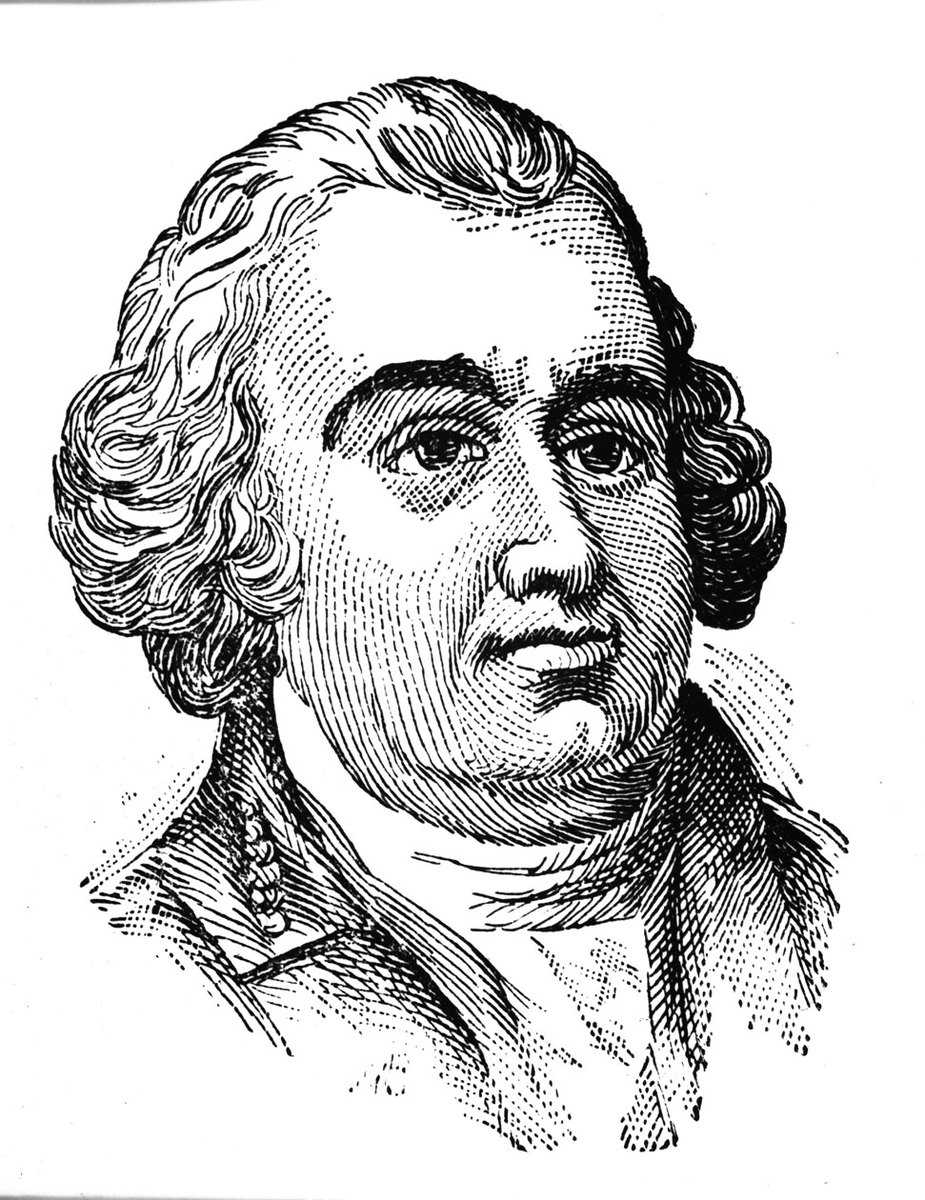
Thomas Burke, born in Ireland and trained as a physician, had practiced law in Virginia before he was admitted as an attorney at Hillsborough on March 23, 1772; he later lived two miles northeast of town. In April 1775 Orange sent him with John Kinchen and Francis Nash to the second Provincial Congress at New Bern, and in August he sat for Orange in the Third Provincial Congress at Hillsborough. In 1776 Orange gave its delegates to the Halifax Congress written instructions asking for a two-house legislature, freedom of religion and a constitution ratified by the people; Douglass found the only known copy in Burke's hand and credits him with drafting it. Burke and Kinchen sat on the committee whose report, adopted on April 12, 1776, empowered the colony's delegates at Philadelphia to join in declaring independence. After the Congress voided Orange's October return, a new election on December 10 returned Burke with four others, and on December 20 he was chosen for the Continental Congress, where apart from April to August 1778 he served until April 1781.
Elected to the Assembly from Orange in late 1777, Burke sat on the committee that recommended ratifying only seven of the thirteen Articles of Confederation. Congress referred his conduct to the state after he walked out to break a quorum, and on August 14, 1778 the Assembly at Hillsborough adopted a report that he was answerable only to North Carolina. Home in 1780, he took up his neighbors' complaints against troops plundering around Hillsborough. On June 25, 1781 the Assembly elected him governor, and on September 12 David Fanning's Loyalists captured him in a raid on Hillsborough. He left his parole on James Island and resumed his duties at Hillsborough in late January 1782; his breach of parole drew criticism from many constituents. Burke died at Tyaquin, his farm near Hillsborough, on December 2, 1783. On August 29, 1789 the county court gave his executor, James Hogg, leave to sell four people the estate held in slavery, Flora, Cate, Peter and Fran, to pay its debts.
Reading on the places and people in this storyline
No indexed work is about this storyline itself yet. These are about the sites and people its dated events name, those named most often first, so they may discuss the storyline only in part. Follow a link to find a copy or view the material.
About Thomas Burke · named in 15 of this story’s entries
Thomas Burke, Restless Revolutionary
Watterson, John Sayle · 1980 · University Press of America
John Sayle Watterson's biography of Thomas Burke, the Irish-born Hillsborough lawyer who sat in the Continental Congress and served as governor of North Carolina during the Revolution, published by University Press of America in 1980. Topics include the state's politics and government from 1775 to 1783 and the Continental Congress. 288 pages with maps.
Reviewed in Journal of American History (1980), The Journal of Southern History (1981).
The Battle at Lindley's Mill
Dunaway, Stewart E. · 2009
Stewart E. Dunaway's account of the Battle of Lindley's Mill, fought in September 1781 after the Loyalist David Fanning raided Hillsborough and carried off Governor Thomas Burke. Burke, Fanning and the Lindley family, whose mill gave the fight its name, are the people at its center, with the Revolutionary campaigns in North Carolina as the frame. Published in 2009.
Governor Alexander Martin (2nd Administration) Correspondence: January 12-November 27, 1792
Wolcott, Oliver, Jr. · 1792
Governor Alexander Martin's correspondence from his second administration, 12 January to 27 November 1792, with some items from 1791, in 121 images. Oliver Wolcott Jr. is among the writers. Matters include taxation, tobacco, liquor, military pensions, debts and the army's clothing accounts, with William Blount, Benjamin Hawkins, Richard Caswell and Hillsborough named.
NC Digital Collections record courtesy of the North Carolina Department of Natural and Cultural Resources.
Governors' Papers: Alexander Martin, Correspondence, April 1791
Thomas, Abishai · 1791
April 1791 letters of Governor Alexander Martin, eight images, including correspondence from Abishai Thomas. Martin was elected governor six times. Hillsborough and Orange County figure in the month's business.
NC Digital Collections record courtesy of the North Carolina Department of Natural and Cultural Resources.
About Thomas Hart · named in 2 of this story’s entries
Jesse Benton Letters (1780-1790)
Dunaway, Stewart E. · 2009 · lulu.com
Stewart E. Dunaway's transcription of letters exchanged between Jesse Benton and Thomas Hart from 1780 to 1790, concerning Hart's affairs at Hartford, his place at Hillsborough. The letters concern the economic and social conditions of Hillsborough in the eighteenth century and the Revolution in North Carolina. Self-published through lulu.com in 2009, 68 pages with illustrations and facsimiles, and part of the library's Wall Local History Collection.
The history of Maddock's Mill - Hillsborough, NC : including owners Thomas Hart, Rev. James Frazier, Jesse Benton, Catlett Campbell
Dunaway, Stewart E. · 2022
History of Maddock's Mill at Hillsborough and of its owners Thomas Hart, Rev. James Frazier, Jesse Benton and Catlett Campbell. Stewart E. Dunaway published it in 2022 through Lulu, 174 pages with illustrations, maps and facsimiles, appending Benton and Hart family histories.
Jesse Benton letters (1780-1790) : Hartford, Hillsborough, NC.
Benton, Jesse · 2009 · S.E. Dunaway
Letters written between 1780 and 1790 by Jesse Benton, a lawyer at Hillsborough, to Thomas Hart, the owner of the Hartford mill complex, edited by Stewart Dunaway and published in 2009. Sixty eight pages with illustrations, facsimiles and a plan. The correspondence falls in the Revolutionary and early federal years.
Jesse Benton Papers: Hartford, Hillsborough, N.C., 1780-1790
Dunaway, Stewart E. · 1991 · S.E. Dunaway
Stewart E. Dunaway's earlier compilation of the Jesse Benton papers from Hartford at Hillsborough, covering 1780 to 1790, self-published in 1991, 68 pages with illustrations. Alongside the correspondence of Benton and Thomas Hart, it covers the Revolutionary War campaigns in North Carolina, including the battles of Hart's Mill and Lindley's Mill in 1781, both fought in what was then Orange County. Dunaway reissued the letters in 2009.
William Hooper's Hillsborough years, 1782-1790
Engstrom, Mary Claire, 1906-1997 · 1974 · National Society of the Daughters of the American Revolution
Mary Claire Engstrom's article on the last years of William Hooper, one of the North Carolina signers of the Declaration of Independence, who moved to Hillsborough in 1782 and died there in 1790. Four pages with a portrait, detached from the February 1974 issue of the Daughters of the American Revolution magazine.
Address by Edwin A. Alderman ... on the life of William Hooper, "the prophet of American independence" : Guilford Battle Ground, July 4, 1894
Alderman, Edwin Anderson, 1861-1931 · 1894 · University Press
Edwin A. Alderman's Fourth of July address of 1894 at the Guilford Battle Ground, on the life of William Hooper, the North Carolina signer of the Declaration of Independence who died in 1790. The University Press at Chapel Hill printed it for the Guilford Battle Ground Company. It touches the Hooper family and state politics during the Revolution.
August-September, 1780: Joint Select Committees (Reports of and messages concerning)
North Carolina. General Assembly · 1780
Reports and messages of joint select committees from August and September 1780, when the General Assembly met at Hillsborough after the defeat at Camden. Committees worked on supplies and provisions for the army and the adjustment of public claims. Horatio Gates, Richard Caswell, Abner Nash, William Hooper, hospitals, surgeons, cavalry and wagons all appear. 88 pages.
NC Digital Collections record courtesy of the North Carolina Department of Natural and Cultural Resources.
Governors' Papers: Richard Caswell, Correspondence, July 1777
Bonner, Henry · 1777
Governor Richard Caswell's letters for July 1777, 115 images, with Henry Bonner among the writers. William Hooper, William Churchill Houston, Hardy Murfree and John Rutledge are named, and the counties concerned include Anson, Bladen, Camden, Chatham and Orange.
NC Digital Collections record courtesy of the North Carolina Department of Natural and Cultural Resources.
Wider background: Politics & Government · the most widely held histories of the theme this storyline is filed under; they may not discuss it
William Friday
Link, William A. · 1995
Biography of William C. Friday, president of the University of North Carolina system, by historian William A. Link, published by UNC Press in 1995 with the subtitle power, purpose, and American higher education. It covers Friday's career and the history of the university at Chapel Hill and statewide. Part of the Rebecca B. Wall Local History Collection.
The Story of the Institute of Government, The University of North Carolina at Chapel Hill
Coates, Albert McKinley · 1981
Albert Coates's own account of the Institute of Government at the University of North Carolina, which he founded, subtitled 'out of a classroom in Chapel Hill' and published in 1981. The 303 pages trace the institute's history and its role in educating North Carolina's public officials.
Communists on Campus
Billingsley, William J. · 1999 · University of Georgia Press
William J. Billingsley's history of the Speaker Ban Law, the 1963 North Carolina statute that barred known Communists from speaking on state campuses, and the fight over it at the University of North Carolina in Chapel Hill. The subtitle sets the scope: race, politics and the public university in sixties North Carolina. It treats academic freedom, anti-communist movements and free speech in the state. University of Georgia Press, 1999, 308 pages with eight pages of plates.
Reviewed in Academe (2000), The American Historical Review (2001), The Journal of Southern History (2001), Journal of American History (2001), The Journal of Politics (2001).
Frank Porter Graham and the 1950 Senate Race in North Carolina
Pleasants, Julian M.; Burns, Augustus M., III · 1990 · UNC Press
Julian M. Pleasants and Augustus M. Burns III on the 1950 Democratic Senate primary in North Carolina, in which Frank Porter Graham, the former president of the University of North Carolina, lost to Willis Smith after a campaign marked by race-baiting. Primaries, elections and race relations in the state are its subjects. Published by UNC Press in 1990, 356 pages with illustrations.
Reviewed in Choice Reviews Online (1991), The American Historical Review (1991), Journal of American History (1991), The Journal of Southern History (1992).
The Age of Orange: Political and Intellectual Leadership in North Carolina, 1752-1861
Blackwelder, Ruth · 1961
Ruth Blackwelder's study of political and intellectual leadership in Orange County and North Carolina from 1752 to 1861, published in Charlotte by W. Loftin in 1961. Topics include state politics and government, intellectual life before the Civil War, and county genealogy. It runs 216 pages with illustrations and a bibliography. Part of the Wall Local History Collection.
Hillsboro, Colonial and Revolutionary
Nash, Frank · 1953
Francis Nash's history of Hillsborough in colonial and Revolutionary times, first published in 1903 and reprinted in 1953 by Edwards & Broughton with an index and a sketch of the author. Topics include the Regulator Insurrection of 1766 to 1771, the Revolution and local genealogy.
Show 6 more
The Good Government Man
Covington, Jr., Howard E. · 2010
Howard E. Covington Jr.'s biography of Albert Coates (1896-1989), the law professor who founded the Institute of Government at the University of North Carolina and led it through its early years. Topics include Coates as a law teacher and the institute's history as a center for the study of public administration in Chapel Hill. Published in 2010 by the University Library at Chapel Hill, 322 pages with 32 pages of plates.
Frank Porter Graham: A Southern Liberal
Ashby, Warren H. · 1981 · Blair
Warren Ashby's biography of Frank Porter Graham (1886-1972), president of the University of North Carolina from 1930 to 1949 and later a United States senator. Published by Blair in 1981, x and 386 pages with sixteen leaves of plates and a bibliography.
Reviewed in The American Historical Review (1981), Journal of American History (1981).
Orange County, 1752-1952
Lefler, Hugh Talmage; Wager, Paul W. · 1953
Hugh Talmage Lefler and Paul W. Wager's history of Orange County across its first two centuries, 1752 to 1952, prepared for the county's bicentennial. It covers government and politics, biography and the county's families, and doubles as a genealogical reference. Published in Chapel Hill by the Orange Printshop in 1953, 389 pages with illustrations and an index; this copy is a later reprint.
Reviewed in The Journal of Southern History (1954).
A Traitor and a Scoundrel: Benjamin Hedrick and the Cost of Dissent
Smith, Michael Thomas · 2003 · University of Delaware Press ; London : Associated University Presses
Michael Thomas Smith's biography of Benjamin Sherwood Hedrick, the University of North Carolina chemistry professor dismissed in 1856 after he declared support for the antislavery presidential candidate John C. Fremont. Published by University of Delaware Press in 2003, 216 pages with illustrations. Topics include abolitionists and dissenters in North Carolina, the antislavery movement in the state, and the university's biography before 1962.
Reviewed in The Journal of Southern History (2005).
The Papers Of Willie Person Mangum
Mangum, Willie Person · 1950 · State Dept. of Archives and History
The papers of Willie Person Mangum, 1792 to 1861, a lawyer, judge and United States senator from the part of Orange County that later became Durham County. Five volumes of correspondence published by the State Department of Archives and History beginning in 1950, arranged by date from 1807 to 1894, with illustrations, portraits and folding maps. A source for antebellum North Carolina and national politics, the Whig Party and the Mangum family.
Reviewed in The Journal of Southern History (1951), Journal of American History (1951), The Journal of Southern History (1953), Journal of American History (1953), The Journal of Southern History (1954), The Journal of Southern History (1955), The Journal of Southern History (1957), Journal of American History (1957), The American Historical Review (1957).
An Historical Address Delivered in Saint Matthew's Church, Hillsboro, N.C., on Sunday, August 24, 1924
Cheshire, Joseph Blount · 1925
Address by Bishop Joseph Blount Cheshire at St. Matthew's Church in Hillsborough on 24 August 1924, marking the parish's hundredth anniversary. Printed in Durham in 1925 at the vestry's order, with a foreword by the rector. Cheshire discusses George Micklejohn, William Mercer Green and Moses Ashley Curtis.