Skip to content

Key local figure

Edmund Fanning

Edmund Fanning (1737 to 1818) was a Hillsborough town commissioner, Crown prosecutor, Orange County public register and militia colonel, and assemblyman for Orange and then Hillsborough. Regulators fired shots through his roof in 1768 and leveled his house in the September 1770 riot. He commanded the left wing of Tryon's front line at Alamance in 1771.

Source: NCpedia: Fanning, Edmund

1739–1818 · Dates from the Library of Congress · Library of Congress authority record ↗

20 works about Edmund Fanning are indexed here. 1 held at OCPL →

Edmund Fanning
Edmund Fanning

Life and Orange County connections

Storylines this person is part of, in date order. Each has its own page.

StorylineSamuel Strudwick’s claim to the Haw Old Fields, 1754–17881754–1788 · 7 events · Samuel Strudwick held a mortgage claim to 30,000 acres of the Haw Old Fields, but the land was already held by settlers, and from 1754 to 1788 he struggled to make his title good against them. Those he met in 1766 agreed to recognize it; by 1768 his tenants had formed an association to hold the land against him, and after the Revolution settlers took state patents on nearly all of the tract, even his own house. Strudwick appealed to the Assembly and to Thomas Burke in 1780, and when the lawsuits ended in 1788 he had lost about a third of the property. StorylineThomas Hart of Hartford, 1757–17821757–1782 · 20 events · Thomas Hart held land, office, mills and trade in colonial Orange, which shows how one man's interests could run together, and why he became unpopular with the Regulators. Granted land on the Eno from 1757, he built Hartford and bought the mill that became Hart's Mill. As sheriff from 1763 he was excused from taxes by the Assembly and found short in his account, and the Regulators whipped him in the 1770 court riot. He supplied Tryon's troops, then sat for Orange in the first Provincial Convention, the Third Provincial Congress and the state Senate before moving to Maryland in 1780 and leaving Hartford to Jesse Benton. StorylineThe Hillsborough district superior court, 1767–18061767–1806 · 18 events · The district superior court made Hillsborough a court town, and in the Regulator years it became the place where the Regulators' quarrel with the county officers was fought out. Set at Hillsborough by an act of 1767, it first sat in March 1768. Its September 1768 term tried William Butler and Herman Husband and found Edmund Fanning guilty; later terms threw out the Regulators' bills, and in September 1770 about 150 Regulators broke up the court. Shut by the court-law quarrel after 1772, it sat again on March 24, 1778, and Hillsborough kept its hold on the circuit until the act of 1806.

Dated events connected with this person, in date order. See these 39 dated events in the chronology →

  1. Edmund Fanning settles in Hillsborough Fanning, a New York-born Yale graduate, came to Hillsborough and soon became register of deeds for Orange County, the office whose fees made him the Regulators' chief target. People: Edmund Fanning Place: HillsboroughM. C. S. Noble (University of North Carolina Bureau of Extension), The Teaching of County Geography (1915), scan p. 35 · Also: Internet Archive
  2. Edmund Fanning qualifies as register of Orange County Fanning, a lawyer who came to the county town in 1762, qualified as register in March 1763. He went on to buy several town lots and build a large house on the later site of the Masonic Lodge. People: Edmund Fanning Place: HillsboroughNash, Hillsboro, Colonial and Revolutionary (1903), p. 6
  3. The Assembly passes a bill excusing Thomas Hart and others from paying taxes On November 20, 1764, the Assembly passed a bill excusing Thomas Hart, then sheriff of Orange, and others from paying taxes, which the Regulators did not forget. Eli Caruthers later recorded the Regulators' story that Edmund Fanning, who owed his seat to Hart, carried a bill giving Hart a thousand pounds for losses as sheriff that he never suffered. People: Thomas Hart, Edmund Fanning Place: Orange CountyInternet Archive: Durward T. Stokes, "Thomas Hart in North Carolina", North Carolina Historical Review 41 (1964), p. 327
  4. Edmund Fanning drags John Pyle from his horse in a Hillsborough street According to Philip Jackson, as John Pyle swore in 1770, after Fanning's militiamen had been in town under arms over the Stamp Act, Fanning received a letter advising him to lay down his commission or keep his men from opposing the King's laws. Judging Pyle the author, Fanning stopped him in the street, seized his bridle and pulled him head first off his horse, and Pyle afterward paid some costs in the affair. People: Edmund Fanning Place: Hillsborough · Also named: John Pyle, Philip JacksonInternet Archive: Hermon Husband, A Continuation of the Impartial Relation (1770), ed. Archibald Henderson, North Carolina Historical Review 18 (1941), p. 70
  5. The Regulator movement organizes in Orange County Orange County farmers first organized in 1766 to question county officers about taxes and fees, a Sandy Creek effort that Herman Husband led and that lapsed in 1767. In early 1768 a new association, soon called the Regulation, pledged to pay no taxes or fees beyond what the law allowed. People: Herman Husband, Edmund Fanning, William Tryon Place: Countywide · Also mentions: Sandy CreekColonial and State Records of North Carolina, vol. 7, pp. 671-672: Regulators' Advertisement No. 4
  6. James Watson brings Edmund Fanning's answer to the Regulators' meeting at Maddock's Mill When none of the county's officers came to the meeting, Watson arrived alone late in the day with word from Fanning that he considered it an insurrection. The delegates drew up Regulator Advertisement Number Three in his presence; Watson called it just and reasonable and promised to give copies to the county officials. People: James Watson, Edmund Fanning Place: Orange CountySearch the index · Lefler and Wager, Orange County, 1752-1952 (1953), pp. 30-31 · Also: Colonial and State Records of North Carolina 7:251-252, Regulators' Advertisement No. 3, minutes of the meeting of October 10, 1766
  7. Edmund Fanning tells the November court he has answered the farmers' complaints Speaking for the county officers, Fanning rejected the protest and reported that he had written its organizers a reply he expected to end the matter. People: Edmund Fanning Place: HillsboroughLefler and Wager, Orange County, 1752-1952 (1953), p. 31
  8. The governor's Council thanks Edmund Fanning and his men for their conduct against the Regulators After Tryon read the Council his cold reply to the Regulators' petition, which forbade further meetings and told them to let the taxes be collected, Fanning was called into the room and formally thanked with his men for their behavior in the recent troubles. People: Edmund Fanning, William Tryon Place: New Bern or Brunswick (Council)Internet Archive: Bassett, The Regulators of North Carolina (1765-1771) (1896), p. 171
  9. Regulators rescue a seized horse at Hillsborough After the sheriff seized a Regulator's horse for an unpaid levy, Regulators rode into Hillsborough, took the horse back and fired shots into the roof of Edmund Fanning's house; John Gray's letter to Fanning put them at about 100, Husband's Impartial Relation at sixty or seventy. Officials sought the arrest of William Butler, Peter Craven and Ninian Bell Hamilton as ringleaders. People: Herman Husband, Edmund Fanning, Peter Craven, William Butler (Regulator) Place: Hillsborough · Also named: John Gray, Ninian Bell HamiltonColonial and State Records of North Carolina, vol. 7, pp. 705-706: Letter from John Gray to Edmund Fanning, April 9, 1768 · Also: Internet Archive: Hermon Husband, An Impartial Relation
  10. Tenants on Samuel Strudwick's Haw Fields land meet to keep possession by force Francis Nash reported to Edmund Fanning that Strudwick's tenants had formed an association to hold his lands against him and had met in the Haw Fields the day before he wrote. People: Francis Nash, Edmund Fanning, Samuel Strudwick Place: Haw Old Fields (Hawfields)Nash, Hillsboro, Colonial and Revolutionary (1903), p. 96
  11. Thomas Hart and Francis Nash tell Fanning they cannot raise the troops he ordered Edmund Fanning, away at Halifax, had ordered Captain Thomas Hart to raise 500 men for the defense of the county. On April 17, 1768, Hart and Francis Nash wrote back that they could not raise them, that feeling against Fanning ran high, and that Strudwick's tenants were meeting in revolt at the Haw Fields. Fanning passed their report to Governor Tryon on April 23, and it was read in council at Wilmington four days later. People: Thomas Hart, Francis Nash, Edmund Fanning, William Tryon Place: HillsboroughInternet Archive: Durward T. Stokes, "Thomas Hart in North Carolina", North Carolina Historical Review 41 (1964), p. 328
  12. Edmund Fanning writes Governor Tryon that Orange is in revolt Two weeks after Regulators rescued a seized horse at Hillsborough, Fanning reported people across the county binding themselves by oath to refuse taxes, and said he and other officers expected an attack. People: Edmund Fanning, William Tryon, Thomas Lloyd (died 1792), Thomas Hart, Francis Nash, James Thackston, John Gray Place: HillsboroughLefler and Wager, Orange County, 1752-1952 (1953), p. 31
Show all 39 dated events
  1. Tryon orders the Regulators home and puts seven counties' militia on alert Answering Fanning, the governor issued one proclamation to the people and another to militia officers in Bute, Halifax, Granville, Rowan, Mecklenburg, Cumberland and Johnston counties to stand ready to march to his aid. People: William Tryon, Edmund Fanning Place: Orange CountyLefler and Wager, Orange County, 1752-1952 (1953), p. 32
  2. The governor's secretary posts Tryon's proclamation at Hillsborough On the day the Regulators met to choose their delegates, Governor Tryon's secretary Edwards reached Hillsborough and put up the governor's proclamation against the disturbances. Fanning set out for Sandy Creek with an armed party the next day. People: Edmund Fanning, Isaac Edwards Place: Hillsborough · Also mentions: Sandy CreekInternet Archive: Bassett, The Regulators of North Carolina (1765-1771) (1896), p. 169
  3. Orange militia is called out against the Regulators, and only 120 armed men appear With Edmund Fanning away at the Halifax court, Lieutenant Colonel Gray reported the Hillsborough horse rescue and was ordered to raise seven militia companies. Only 120 men came with arms, and the officers judged that no more than 150 men in the county could be relied on, so they agreed to a truce and named three men to meet the Regulator leaders on April 20. People: Edmund Fanning Place: Hillsborough · Also named: Lieutenant Colonel GrayInternet Archive: Bassett, The Regulators of North Carolina (1765-1771) (1896), p. 166
  4. Regulators confront officials at Hillsborough Edmund Fanning and 27 armed men arrested Herman Husband and William Butler at Sandy Creek on May 2, 1768. The next day hundreds of Regulators and neighbors marched on Hillsborough; officials released the prisoners, and the governor's secretary read a proclamation promising to hear their grievances, after which the crowd dispersed. People: Herman Husband, William Butler (Regulator), Edmund Fanning Place: Hillsborough · Also mentions: Sandy CreekColonial and State Records of North Carolina, vol. 7, pp. 759-766: Regulators' Advertisement No. 11
  5. Ralph McNair presses Herman Husband to adopt a petition written by the officers After the May confrontation at Hillsborough, the county officers sent Husband, through Ralph McNair, a petition of their own drafting in which the Regulators would call their conduct illegal and withdraw their charges. McNair warned that Fanning would report the case to Tryon as treason if it was refused, and the Regulators instead named their own committee to lay their papers before the governor. People: Herman Husband, Edmund Fanning, Ralph McNair Place: Orange CountyInternet Archive: Bassett, The Regulators of North Carolina (1765-1771) (1896), p. 170
  6. Hillsborough's town commissioners sign the earliest town deed on record James Watson, William Nunn, Edmund Fanning and Francis Nash, acting as commissioners for the town, sign the earliest of the Hillsborough town deeds kept by the Orange County register of deeds. People: Edmund Fanning, Francis Nash, James Watson, William Nunn Place: HillsboroughLefler and Wager, Orange County, 1752-1952 (1953), p. 367
  7. Tryon's army gathers at Hillsborough to guard the superior court Tryon reached Hillsborough on September 19 with 195 Rowan and 310 Mecklenburg volunteers, and two days later 699 Orange and 120 Granville militia joined them. With gentlemen volunteers, artillery and officers the force came to 1,461 men, a quarter of the Assembly among its officers. People: William Tryon, Edmund Fanning, Thomas Lloyd (died 1792), Thomas Hart Place: HillsboroughInternet Archive: Bassett, The Regulators of North Carolina (1765-1771) (1896), p. 177
  8. Chief Justice Martin Howard and two associate justices hold the Hillsborough superior court term Martin Howard, Maurice Moore and Richard Henderson sat at the Hillsborough District Superior Court term in which Edmund Fanning was found guilty and Regulators including William Butler were tried. People: Martin Howard, Maurice Moore, Richard Henderson, Edmund Fanning, William Butler (Regulator), Herman Husband Place: HillsboroughSearch the index · Documenting the American South, Colonial and State Records: Minutes of the Hillsborough District Superior Court, September 22 to October 1, 1768
  9. A Hillsborough jury finds Edmund Fanning guilty on an indictment In the same superior court term that tried the Regulator leaders, the King's indictment against Edmund Fanning went to a jury on September 27, which found him guilty. The day before, Herman Husband had surrendered William Butler to the court, and both men entered 500 pound bonds to abide its sentence. People: Edmund Fanning, Herman Husband, William Butler (Regulator), Richard Henderson, Maurice Moore, Martin Howard Place: HillsboroughDocumenting the American South, Colonial and State Records: Minutes of the Hillsborough District Superior Court, September 22 to October 1, 1768
  10. Edmund Fanning orders John Pyle out of Hillsborough before the superior court A few days before the September 1768 court, John Pyle came to town to hire a lawyer for Herman Husband. By his sworn account he was surrounded in the street by soldiers, then accused by Fanning of planning to burn the town, and ordered out; he left without paying his reckoning. John Wilcox, the Cross Creek storekeeper who had persuaded Husband to stand trial, wrote on September 23 that he too had been ordered out of town. People: Edmund Fanning, Herman Husband Place: Hillsborough · Also named: John Pyle, John WilcoxInternet Archive: Hermon Husband, A Continuation of the Impartial Relation (1770), ed. Archibald Henderson, North Carolina Historical Review 18 (1941), p. 70
  11. Edmund Fanning resigns as register of Orange County after his conviction Found guilty at the September court on five counts of taking excess fees for registering deeds, and fined a penny on each, Fanning at once gave up the office of register. People: Edmund Fanning Place: HillsboroughInternet Archive: Bassett, The Regulators of North Carolina (1765-1771) (1896), p. 181
  12. Herman Husband is jailed in Hillsborough's new stockaded prison during the superior court By Husband's account, soldiers in town for the court harried him with bayonets and once stood him on a tavern table to jeer at him until Colonel John Ashe pulled them off. When the court sat on the Monday, Fanning charged him with new crimes touching his life and he was committed to a newly built, higher prison fortified all round, crowded with nine or ten prisoners, most of them Regulators, under a gallows-like beam. He and William Butler were bailed that night. People: Herman Husband, William Butler (Regulator), Edmund Fanning, John Ashe Place: Hillsborough jailInternet Archive: Hermon Husband, An Impartial Relation (1770), ed. William K. Boyd, North Carolina Historical Review 3 (1926), p. 261
  13. The Assembly lets reform bills sought from Orange die A bill for trying debts under 5 pounds before one justice, asked for in an Orange petition and brought in by Fanning, failed when the two houses split over a rider on riot trials. Bills to form new counties out of Orange and Johnston and out of Orange and Rowan were also rejected, though many people had to travel as far as 60 miles to court. People: Edmund Fanning Place: New Bern (Assembly)Internet Archive: Bassett, The Regulators of North Carolina (1765-1771) (1896), p. 184
  14. The March 1769 superior court at Hillsborough hears the Regulators' cases against the officers With no troops in town, many Regulators came to the March 1769 court to prosecute the officers, with little success. James Hunter's case was continued, and Fanning was tried again on the old fee charge and formally convicted. Herman Husband had already been acquitted at the September 1768 term. People: Herman Husband, James Hunter, Edmund Fanning Place: HillsboroughInternet Archive: Bassett, The Regulators of North Carolina (1765-1771) (1896), p. 182 · Also: Internet Archive: Hermon Husband, An Impartial Relation
  15. Orange voters elect Regulators Herman Husband and John Pryor to the Assembly In the elections set for July 18, 1769, Orange returned the Regulators Herman Husband and John Pryor to the Assembly over Edmund Fanning. People: Herman Husband, Edmund Fanning, John Pryor Place: Orange CountyColonial and State Records of North Carolina, vol. 8, pp. 302-303: members returned to the Assembly begun at New Bern October 23, 1769 (list printed at the head of the December 1770 minutes) · Also: Lefler and Wager, Orange County, 1752-1952; Colonial and State Records of North Carolina, vol. 8, pp. 53-54: Letter from William Tryon to the Earl of Hillsborough, July 3, 1769
  16. Hillsborough officials and merchants pledge to defend one another after the riot Just after the September 1770 riot, Francis Nash, Edmund Fanning, Alexander Martin, Thomas Henderson, Jesse Benton, William Johnston, Adlai Osborne and others formed an association for mutual aid and protection. Many members lived too far apart to help one another in a sudden emergency. People: Francis Nash, Edmund Fanning, Alexander Martin, Jesse Benton, William Johnston, Adlai Osborne Place: Hillsborough · Also named: Thomas HendersonNash, Hillsboro, Colonial and Revolutionary (1903), p. 19
  17. Orange County reelects Herman Husband and John Pryor to the Assembly In the new election called after Tryon dissolved the Assembly in November 1769, Orange again returned the Regulator candidates Husband and Pryor. Fanning, who had lost, came back through the new borough of Hillsborough. People: Herman Husband, Edmund Fanning, John Pryor Place: Orange CountySearch the index · Internet Archive: Bassett, The Regulators of North Carolina (1765-1771) (1896), p. 189
  18. Orange justices take sworn statements for Herman Husband's defense Before justices Jacob Brooks, Joab Brooks and John Low, all sympathetic to the Regulators, John Pyle, William McFarson, William Butler, and Stephen and Aquilla Jones swore to what they knew of Husband's arrest and the September 1768 court. Butler swore Husband had always refused to join the Regulation. McFarson swore Edmund Fanning told him Husband must surely die. The Joneses swore they fled Hillsborough on the first night of that court in fear for their lives. People: William Butler (Regulator), Herman Husband, Edmund Fanning Place: Orange County · Also named: John Pyle, William McFarson, Stephen Jones, Aquilla Jones, Jacob Brooks, Joab Brooks, John LowInternet Archive: Hermon Husband, A Continuation of the Impartial Relation (1770), ed. Archibald Henderson, North Carolina Historical Review 18 (1941), p. 66
  19. Tryon makes Hillsborough a borough and market town Hillsborough became a borough, with its own member in the Assembly, and a chartered market town. Edmund Fanning sat for the new borough when the Assembly met at New Bern that December. People: William Tryon, Edmund Fanning Place: HillsboroughSearch the index · Nash, Hillsboro, Colonial and Revolutionary (1903), p. 10 · Also: Lefler and Wager, Orange County, 1752-1952
  20. Regulators disrupt the Hillsborough Superior Court About 150 Regulators crowded the Hillsborough Superior Court, beat the lawyer John Williams, Edmund Fanning and others, and forced Judge Richard Henderson to adjourn; he fled that night. The next day the crowd tore down Fanning's house and wrote mocking judgments on the court docket. People: Herman Husband, Edmund Fanning, Richard Henderson, Alexander Martin, Thomas Hart, John Williams Place: HillsboroughColonial and State Records of North Carolina, vol. 8, pp. 241-244: Letter from Richard Henderson to William Tryon, September 29, 1770
  21. Regulators stone Johnston and Thackston's store, where Edmund Fanning took refuge During the riot at the Hillsborough superior court, Edmund Fanning broke loose from the crowd dragging him from the courtroom and fled into the store of William Johnston and James Thackston. The Regulators attacked the building with stones and brickbats and broke everything they could reach. People: James Thackston, William Johnston, Edmund Fanning Place: HillsboroughSearch the index · Nash, Hillsboro, Colonial and Revolutionary (1903), p. 16
  22. Regulators pull down and plunder Edmund Fanning's house in Hillsborough The morning after the court broke up and Judge Henderson slipped out of town, the Regulators went to Fanning's house, smashed the furniture, emptied the cellar, carried his papers into the street and left the house almost demolished. Witnesses also heard them drink damnation to King George and success to the Pretender. People: Edmund Fanning, Richard Henderson, Ralph McNair Place: HillsboroughDocumenting the American South, Colonial and State Records: Deposition of Ralph McNair concerning the regulators at the Hillsborough District Superior Court, October 9, 1770
  23. Tryon's Council orders a proclamation against the Hillsborough rioters and defers the Assembly Meeting at New Bern on the Hillsborough dispatches, the Council heard the Attorney General's opinion that pulling down Fanning's house and the assaults amounted to a riot, and ordered a proclamation requiring every justice of the peace to pursue the persons who assembled at Hillsborough on September 24 and 25. It advised putting off the Assembly to November 30. People: William Tryon, Edmund Fanning Place: New Bern (Council Chamber)Documenting the American South, Colonial and State Records: Minutes of the North Carolina Governor's Council, October 16 and 18, 1770
  24. Guilford County is formed from Orange and Rowan Governor Tryon assented to the act creating Guilford County from parts of Rowan and Orange, a bill Edmund Fanning had brought in. Tryon told the Earl of Hillsborough the new county was meant to divide the Regulator districts. People: William Tryon, Edmund Fanning Place: western Orange CountyColonial and State Records of North Carolina, vol. 8, pp. 385-479: Minutes of the Lower House of the General Assembly, January 1771 · Also: Lefler and Wager, Orange County, 1752-1952
  25. Tryon's army camps on the south bank of the Eno opposite Hillsborough Marching west from New Bern, Tryon's army entered Orange by an old road past Patterson's and camped across the Eno from the town on May 9. A hospital and a supply depot were set up at Hillsborough, and on May 11 the army marched through town and west along the later Graham road. People: William Tryon, Edmund Fanning, John Ashe Place: Eno River opposite HillsboroughNash, Hillsboro, Colonial and Revolutionary (1903), p. 23
  26. Colonel John Ashe commands the guard left at Hillsborough When Tryon's army marched west from its camp across the Eno in May 1771, two of the four Orange County companies under Edmund Fanning stayed behind as a guard for Hillsborough under Colonel John Ashe. They rejoined the army before the Battle of Alamance. People: John Ashe, Edmund Fanning, William Tryon Place: HillsboroughSearch the index · Internet Archive: Nash, Hillsboro, Colonial and Revolutionary (1903), p. 23
  27. At Governor Martin's urging, Edmund Fanning drops his riot damage suits After the matter was raised with Governor Martin in March 1772, he urged Fanning, by then surveyor general of New York, to drop his suits over the destruction of his Hillsborough property, and Fanning had them discontinued, leaving his 1,500 pound claim to the Assembly. The House refused to pay it in March 1773. People: Edmund Fanning, Josiah Martin Place: HillsboroughColonial and State Records of North Carolina, vol. 9, pp. 548-562: Minutes of the Lower House, February 27 to March 6, 1773 · Also: Nash, Hillsboro, Colonial and Revolutionary

People named in the same events

People named in the same dated entries as Edmund Fanning, those sharing the most entries first. Each line links one of the shared entries in the chronology, where its source is cited. A shared entry shows these people in the same event, not how well they knew each other.

Show 14 more

Indexed works

Works about or by Edmund Fanning. Each links to the institution that holds or provides it. Background reading appears below.

Life and Times of Edmund Fanning, 1739-1818

Dunaway, Stewart E. · 2011

Stewart E. Dunaway's life of Edmund Fanning (1739-1818), the colonial officeholder in Hillsborough whom the Regulators singled out and who left North Carolina as a loyalist, together with the Fanning family's genealogy. Self-published through Lulu in 2011, 223 pages with illustrations, facsimiles, genealogical tables and maps. Topics include American loyalists and Hillsborough and Orange County biography and genealogy.

Included because: Catalog heading in the UNC record: Fanning, Edmund, 1739-1818.

Account of mob violence witnessed in the courts of New Bern by Richard Henderson

1770

Richard Henderson's account of the mob violence he witnessed in court, written in 1770 and sent on to London. Edmund Fanning, James Hunter and Governor William Tryon all appear, and subjects include weaponry, rebellion, attack, property and civil disturbance. The violence occurred in Hillsborough, the Orange County town at the center of the Regulator quarrel. Reference CO 5/314.

Included because: Catalog heading in the Duke record: Fanning, Edmund.

Advertisements, financial papers, and the insurgents address delivered to the council on the 20th June 1768

1766

Papers gathered around the Regulator troubles: printed advertisements, financial statements and the address the insurgents delivered to the governor's council on 20 June 1768. William Butler, James Hunter, Edmund Fanning and Isaac Edwards are among the men named, and the papers turn on taxes, grievances, oaths and petitions. Orange County was the center of the rising. Reference CO 5/312.

Included because: Catalog heading in the NC State record: Fanning, Edmund.

Hillsborough Historical Society Journal: Vol.1, No.1, July 1998

Hillsborough Historical Society · 1998

First issue of the Hillsborough Historical Society Journal, July 1998, drawing on Mary Claire Engstrom's research on the town. Pieces cover William Churton, the surveyor who laid out Hillsborough; Edmund Fanning and the town in the Regulator troubles and the Revolution; the Third Provincial Congress, which met at Hillsborough in 1775; and figures and places of the old town: Mary Burke, known as Polly, the Presbyterian minister John Knox Witherspoon, Dr. Thomas Webb and Faddis Tavern.

Included because: Their name appears in the record.

Walter Alves papers, 1771-1858, Orange County, North Carolina : also Kentucky and Tennessee.

Alves, Walter, 1768-1819 · 1993 · University Publications of America

University Publications of America issued this two reel microfilm edition in 1993, reproducing the Walter Alves papers of 1771 to 1858 with a printed reel guide. Alves, 1768 to 1819, was an Orange County landowner, and the material runs to real estate investment in North Carolina and Tennessee, Scottish American families, and letters with Richard Bennehan, William Boylan and John Wickham.

Included because: Catalog heading in the UNC record: Fanning, Edmund, 1739-1818.

UNC

George Bancroft letters

Bancroft, George · 1845

Letters of the historian George Bancroft, 1845 to 1885, 22 items. Fifteen are transcripts of letters addressed to UNC president David L. Swain about the state's history: the Regulators, the Loyalists, the Mecklenburg Declaration, Tryon and Martin as governors, and Edmund Fanning and Hermon Husbands, both central to the Regulator troubles in Hillsborough.

Included because: Catalog heading in the DPLA record: Fanning, Edmund, 1739-1818.

Show 6 more

William Johnston Paper

Johnston, William · 1783

Letter of 2 December 1783 from William Johnston, Orange County legislator and agent for the loyalist Edmund Fanning, to Adlai Osborn of Rowan County, about selling Fanning's Rowan lands to satisfy a judgment. Johnston also remarks on the death of former governor Thomas Burke. A photocopy. State Archives of North Carolina, PC.644.

Included because: Their name appears in the record.

Joint Papers (April-May, 1780): Joint Select Committee Reports and Papers

North Carolina. General Assembly · 1780

Reports and papers of the joint select committees of the North Carolina General Assembly from its April to May 1780 session, in 223 images. Items include a Virginia governor's letter on naval officers and duties at the Ocracoke channel, committee appointments, and Henry Mounger's petition on where Montgomery County's public buildings should stand. Orange County is among the many counties touched.

Included because: Catalog heading in the NC Digital Collections record: Fanning, Edmund, 1739-1818.

NC Digital Collections record courtesy of the North Carolina Department of Natural and Cultural Resources.

October-November, 1779: Joint Select Committees (Chiefly appointments and referrals)

North Carolina. General Assembly · 1779

Messages, reports and referrals of the General Assembly's joint select committees from October and November 1779, 97 pages in all. Business ranges over public money and depreciation, army supply, militia, taxation, land titles and appointments, and names include Governor Richard Caswell, Abner Nash, Edmund Fanning and the printer James Davis. Orange County is among the counties touched.

Included because: Catalog heading in the NC Digital Collections record: Fanning, Edmund, 1739-1818.

NC Digital Collections record courtesy of the North Carolina Department of Natural and Cultural Resources.

Senate Bills (October 26): Bill to vest the title of certain lands therein mentioned to Abner Nash

North Carolina. General Assembly · 1779

North Carolina Senate bill of 26 October 1779 to vest title to certain lands in Abner Nash, later governor. It touches confiscated property, surveys, wills and executors, with lands in Granville, Guilford, Randolph and Jones counties. Edmund Fanning, the Hillsborough loyalist, and Thomas Hart figure in it. Seven images.

Included because: Catalog heading in the NC Digital Collections record: Fanning, Edmund, 1739-1818.

NC Digital Collections record courtesy of the North Carolina Department of Natural and Cultural Resources.

British Records: Exchequer and Audit Department. Claims, American Loyalists, Series II (AO 13, selections) (State Archives series)

Great Britain. Audit Office · 1770

Thirteen Orange County items from the second series of American Loyalist claims to the British Audit Office (AO 13), dated 1770 to 1786. Memorials, certificates, letters and lists document property losses of merchants and attorneys, among them Edmund Fanning, the Hillsborough official targeted by the Regulators who later sided with the Crown.

Included because: Their name appears in the record.

Letter forwarded from Wills Hill to Governor Tryon regarding rebellious groups in Hillsborough

1770

Wills Hill, Earl of Hillsborough, forwarded this 1770 letter to Governor Tryon about rebellious groups in Hillsborough, the Orange County seat. Edmund Fanning, Francis Nash, William Johnston and James Monro are named, and the topics are intelligence, civil disturbance, destruction, crime and attack. From Colonial Office volume CO 5/314 part 1, North Carolina correspondence of the Secretary of State, September 1770 to August 1771.

Included because: Catalog heading in the Duke record: Fanning, Edmund.

Search all 20 indexed works →

Start at OCPL

Books in OCPL’s Rebecca B. Wall Local History Collection whose titles, catalog subjects, or descriptions match this person. The Friends’ recommended starting points are labelled.

  • Rebecca Wall Collection · NC BIO FANNING DUN Life and Times of Edmund Fanning (1739-1818), Hillsborough, N.C Dunaway, Stewart E. · 2013

    Stewart E. Dunaway's life of Edmund Fanning (1739-1818), the colonial officeholder in Hillsborough whom the Regulators singled out and who left North Carolina as a loyalist, together with the Fanning family's genealogy. Self-published through Lulu in 2011, 223 pages with illustrations, facsimiles, genealogical tables and maps. Topics include American loyalists and Hillsborough and Orange County biography and genealogy.

Places in this person’s story

Buildings, schools, churches and other sites named in the dated events on this page, the most often named first. The map shows the 1 with a known location.

Map tiles © OpenStreetMap contributors. Site locations from the N.C. State Historic Preservation Office survey, Open Orange, Orange County GIS, OpenStreetMap and a few other published sources named on each site’s page; town and community pins show approximate locations.

All places and the county map →

Research sources

Sources and research tools for this person. For ready-made searches of other catalogs, see Search further. Research guide: Trace a family through historical records.

Background

  • NCpedia: Edmund Fanning Dictionary of North Carolina Biography entry
  • Historical marker G-19: Edmund FanningNC Highway Historical Marker Judge and local official. Target of Regulators who ransacked and destroyed his nearby home, 1770. The state’s marker page heads this essay “1776-1847”, which are not Fanning’s dates: its own text has him born in 1737 and dying in London in 1818.
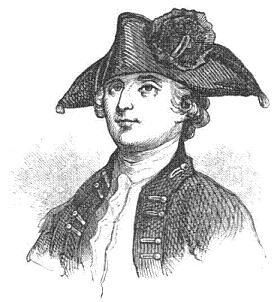
  • NCpedia: Edmund Fanning (public-domain image) Edmund Fanning, a colonial official in Hillsborough the 1760s and 1770s, was a target of the Regulators, who charged him with abusing his power. This engraving was made in the nineteenth century.

Records of the time 5

Collections and databases

  • NC LIVE: prepared search for Edmund Fanning Library card Search NC LIVE for this subject and Orange County. You can change the search terms. Sign in through your North Carolina library to access the materials.
  • Ancestry Library Edition In the libraryOrange County Public Library Census, birth, death and marriage records, and more, free on the public computers at OCPL libraries

Local help

Search further

Search other catalogs and collections for this name. Results may include other people with the same name and have not been reviewed by the Friends.

Books about Edmund Fanning

Find copies at other libraries

Photographs, papers, and newspapers

Historical records and collections

Catalog searches use the Library of Congress name heading: Fanning, Edmund, 1739-1818. Historical-record searches use the person’s name and may include namesakes. Links open in a new tab.

Found a book OCPL doesn’t own? You can often borrow it through interlibrary loan at OCPL.

Picture: Edmund Fanning. Public domain. Lossing, Benson. Pictorial Fieldbook of the Revolution. 1852. New York: Harper & Brothers, Publishers. Volume II.

More to discover

Keep Reading Local

The Friends connect people with new library materials, local writers and publishers, and resources documenting Orange County.

Two mice reading back to back against a leaf, with the hand-lettered words Friends of the Orange County Public Library
Illustration by Caldecott Medalist Matthew Cordell, gifted to the Friends 2026
