Skip to content

Theme

Families, Land & Genealogy

Families, deeds, cemeteries, marriages, wills, and land records.

Deeds, wills, marriages, cemeteries and the county’s shifting boundaries are the raw material of family history here, and the index gathers the genealogies and land records that libraries hold. The storylines follow how the county’s boundaries changed between 1771 and 1881 and the farm families of Cedar Grove and rural northern Orange.

986 works about Families, Land & Genealogy are indexed here. 149 held at OCPL →

Old Town Cemetery, Hillsborough.

Events and storylines

Named events and storylines the index follows in detail. Each has its own page.

More storylines

Other storylines that include this theme, in date order. Each has its own page.

StorylineOccaneechi Town and the Great Trading Path1680–2024 · 63 events · Occaneechi Town on the Eno, occupied from about 1680 to 1710, was where John Lawson stopped in 1701 on the trading path that ran from Virginia to the Catawba. Archaeologists located the village at the Fredricks site in 1983, and the Occaneechi Band of the Saponi Nation, recognized by the state in 2002, rebuilt a replica village there and dedicated a highway marker in 2024. StorylineThe Few family on the Eno, 1758–17711758–1771 · 11 events · The Few family's years on the Eno show how the Regulation undid a family of mill owners near Hillsborough. William Few came from Maryland in 1758 with four enslaved people, built a mill with his brother and later kept a tavern a mile from town. In 1768 he went on the bond of the Regulator William Butler. In 1771 his son James was captured at Alamance and hanged the next day, Tryon's army turned its horses onto the family's crops, and the Fews, pressed by lawsuits after going surety for several people, left for Georgia that winter. StorylineThe Bentons at Hartford: Jesse Benton and the young Thomas Hart Benton, 1780–17991780–1799 · 10 events · When Thomas Hart left Orange in 1780, Hartford and its mills passed to Jesse Benton, and his letters to Hart show what the war and the drought of 1782 cost the place. Benton backed the Science Hall academy and claimed 23,931 acres in the west, but he died in 1790 with his estate heavily in debt, and his will let his executors sell Hartford and its mills. His son Thomas Hart Benton, born in 1782 and later a U.S. senator from Missouri, left Hartford for the university and was expelled from the Philanthropic Society in March 1799 for taking his roommates' money. StorylineHall's Mill on the Eno, 1835–20171835–2017 · 6 events · A mill on the Eno west of Hillsborough and the brick house across the road passed through several families before a 2017 review found the site did not qualify for the National Register. The Rev. Ira Ellis bought the land in 1835, and his Federal brick house, later called Little Ayr Mount, is usually dated to that purchase. In 1878 Nelson Parrish Hall bought the house and 267 acres, and the mill took the Hall name. After Hall died, his widow Martha bought the farm from his estate and sold it to sheriff R. D. Baine. Only the mill's stone dam, a foundation and the trace of its race survived. StorylineHarriet, Cornelia and the Smith household, 1844–18521844–1852 · 5 events · According to UNC Libraries' account, Harriet, whom James Strudwick Smith had bought in 1834 as a maid for his daughter Mary Ruffin Smith, was raped by his son Sidney and gave birth to Cornelia in 1844. Cornelia's granddaughter Pauli Murray told the story in Proud Shoes. In 1845, shielding his property from creditors, Smith passed most of the family's holdings to Mary Ruffin Smith, selling her Harriet and her children Julius and Cornelia, and offered property in the Hillsborough Recorder to cover his debts; NCpedia says he went bankrupt that year. The family moved to Price Creek Plantation, southwest of Chapel Hill, and Harriet and her children moved with them. Smith died on December 7, 1852. StorylineThe Occaneechi Band of the Saponi Nation today1984–2024 · 28 events · The Eno-Occaneechi Indian Association formed in 1984, took the Occaneechi Band of the Saponi Nation name in 1994 and won state recognition in 2002 after a decade of petitions and a court ruling. The band bought land for its tribal grounds near Pleasant Grove in 2004, rebuilt the replica village at Hillsborough, and dedicated a state highway marker in 2024.

Indexed works

Works about Families, Land & Genealogy from library and archive catalogs. The most widely held appear first; novels are not shown here. Follow a link to find a copy or view the material.

Widely held

To Free A Family

Nathans, Sydney · 2012 · Harvard University Press

Sydney Nathans's biography of Mary Walker, an enslaved woman from Orange County who escaped to the North in the mid nineteenth century and spent the following decades in Cambridge, Massachusetts, working to free the family she had left behind. Chapter titles trace her flight, her years among Northern friends, a rescue plot, a long silence, and the reunion that gives the book its close. Published 2012 by Harvard University Press, 330 pages with 20 pages of plates, illustrations and maps.

Included because: Catalog heading in the UNC record: Families.

Reviewed in Choice Reviews Online (2012), Civil War Book Review (2012).

Miss Mary's Money

Jones, H. G. · 2014 · McFarland & Co.

H. G. Jones follows the fortune of Mary Ruffin Smith (1814-1885), the unmarried heiress whose Orange and Chatham County lands passed at her death to the University of North Carolina and the Episcopal Church. Chapters profile her grandfather Francis Jones, then trace the bequest through a quarrel among Episcopalians over Price Creek, the Chapel of the Cross and the university's buildings. A December 1885 New York Times report called the gift money; Jones shows it was land. Published by McFarland in 2014, 231 pages.

Included because: Catalog heading in the UNC record: Families.

Kinship and Neighborhood in a Southern Community

Kenzer, Robert C. · 1987 · University of Tennessee Press

Robert C. Kenzer's study of kinship and neighborhood in Orange County between 1849 and 1881, the decades before and after the Civil War, tracing family ties and neighborhood networks through the county's records. Published by the University of Tennessee Press in 1987, 251 pages with illustrations, maps, portraits and a bibliography. Topics include kinship, neighborhoods and social conditions in the county in the nineteenth century.

Included because: Catalog heading in the UNC record: Orange County (N.C.) -- Genealogy.

Reviewed in Choice Reviews Online (1988), Journal of American History (1988), The American Historical Review (1989), The Journal of Southern History (1989), Civil War history (1989), Journal of Social History (1989).

Piedmont Plantation: The Bennehan-Cameron Family and Lands in North Carolina

Anderson, Jean Bradley · 1985 · Historic Preservation Society of Durham

Jean Bradley Anderson's history of the Bennehan and Cameron families and their plantations, Stagville and Fairntosh, on lands that lay in Orange County until Durham County was formed from it in 1881. Published by the Historic Preservation Society of Durham in 1985, the book follows plantation life and ownership across several generations, with genealogical tables, a map, portraits, a bibliography and an index; 227 pages plus plates.

Included because: Catalog heading in the Duke record: Cameron family.

Reviewed in South Atlantic Quarterly (1987).

The Age of Orange: Political and Intellectual Leadership in North Carolina, 1752-1861

Blackwelder, Ruth · 1961

Ruth Blackwelder's study of political and intellectual leadership in Orange County and North Carolina from 1752 to 1861, published in Charlotte by W. Loftin in 1961. Topics include state politics and government, intellectual life before the Civil War, and county genealogy. It runs 216 pages with illustrations and a bibliography. Part of the Wall Local History Collection.

Included because: Catalog heading in the NC Cardinal record: Orange County (N.C.) -- Genealogy.

Hillsboro, Colonial and Revolutionary

Nash, Frank · 1953

Francis Nash's history of Hillsborough in colonial and Revolutionary times, first published in 1903 and reprinted in 1953 by Edwards & Broughton with an index and a sketch of the author. Topics include the Regulator Insurrection of 1766 to 1771, the Revolution and local genealogy.

Included because: Catalog heading in the NC Cardinal record: Genealogy.

Show 2 more

Orange County, 1752-1952

Lefler, Hugh Talmage; Wager, Paul W. · 1953

Hugh Talmage Lefler and Paul W. Wager's history of Orange County across its first two centuries, 1752 to 1952, prepared for the county's bicentennial. It covers government and politics, biography and the county's families, and doubles as a genealogical reference. Published in Chapel Hill by the Orange Printshop in 1953, 389 pages with illustrations and an index; this copy is a later reprint.

Included because: Catalog heading in the NC Cardinal record: Genealogy.

Reviewed in The Journal of Southern History (1954).

The Cloudbuster Nine

Keene, Anne R. · 2018

Anne R. Keene's history of the Cloudbusters, the baseball team of the Navy Pre-Flight School at the University of North Carolina in Chapel Hill during the Second World War, on which Ted Williams played in 1943. The chapters move from a batboy's trunk of keepsakes through the pre-flight training program to the players' lives after the war, and Keene's own family is part of the story. Published by Sports Publishing in New York in 2018, 340 pages with sixteen pages of plates.

Included because: Catalog heading in the UNC record: Families.

Recently indexed: North Carolina troops, 1861-1865: a roster, volumes 1-4 (microfilm) · Address by Edwin A. Alderman ... on the life of William Hooper, "the prophet of American independence" : Guilford Battle Ground, July 4, 1894 (1894) · The Chapman family, or, The descendants of Robert Chapman : one of the first settlers of Say-Brook, Conn. : with genealogical notes of William Chapman, who settled in New London, Conn., Edward Chapman, who settled at Windsor, Conn., John Chapman, of Stonington, Conn., and Rev. Benjamin Chapman, of Southington, Conn. : [extracts relating to Robert Hett Chapman] (1854) · Chief Justice Little : with some account of his descendants (1895) · The Hanes collection of rare books (1957) · The Mason bequest (1895)

Search all 986 indexed works →

Start at OCPL

Books in OCPL’s Rebecca B. Wall Local History Collection whose titles, catalog subjects, or descriptions match this theme. The Friends’ recommended starting points are labelled. Books marked Wider context cover the broader subject rather than this theme itself.

  • Rebecca Wall Collection · NC 929.375 ORANGE Granville Proprietary Land Office: Deeds & Surveys, 1761-1763 1989

    Deeds and surveys issued by the Granville Proprietary Land Office between 1761 and 1763, covering the district that took in Orange County before the Revolution. The Granville District ran across the northern half of colonial North Carolina, and these entries name the grantees and describe their tracts. Published in 1989, with material on land grants, deeds and county genealogy.

  • Foundational · NC 929.375 REG Register of Orange County, North Carolina Deeds, 1752-1768, and 1793 Weeks, Eve B. · 1984

    Eve B. Weeks's register of Orange County deeds for 1752 to 1768 and 1793, the earliest years of the county's deed books together with a later gap year. Published by Heritage Papers in Danielsville, Georgia, in 1984, 69 pages, it lists the parties to each conveyance. The spine carries a shortened form of the title.

  • Rebecca Wall Collection · NC 929.375 ORANGE Deed Books: 8 & 9 1993

    Abstracts of Orange County deed books 8 and 9, published in 1993 as part of a series covering the county's early land records. Each abstract condenses a recorded conveyance to the parties, the land and the date, which is what land title researchers and family historians usually need. Subjects include deeds for Orange County and county genealogy.

Show 6 more
  • Rebecca Wall Collection · NC 929.375 ORANGE Deed Books: 6 & 7 1993

    Orange County deed books 6 and 7 in abstract form, issued in 1993 alongside companion volumes for the adjoining books in the series. Deed abstracts name grantor and grantee, describe the tract and give the date of record, so they can carry a family through generations of land transfers when other county records are thin. Topics include deeds and county genealogy.

  • Rebecca Wall Collection · NC 929.375 ORANGE Granville Proprietary Land Office: Deeds & Surveys, 1752-1760 1989

    Covering the years 1752 to 1760, this volume abstracts deeds and surveys from the Granville Proprietary Land Office, which granted land across the northern half of colonial North Carolina, Orange County among the counties formed there. Published in 1989.

  • Wider context · NC 929.375 HOL Anson County, North Carolina, Deed Abstracts, 1749-1766, Abstracts of Wills & Estates, 1749-1795 Holcomb, Brent · 1980

    Brent H. Holcomb's abstracts of Anson County deeds from 1749 to 1766 and of wills and estate papers from 1749 to 1795. First issued in three volumes at Clinton, South Carolina, in 1974 and 1975, the abstracts were combined, repaged and given a new index by the Genealogical Publishing Company in 1980; 170 pages. The spine reads Deeds and Wills of Anson County, N.C.

  • Rebecca Wall Collection · NC 929.375 ORANGE 12 Orange County, North Carolina Deed Book: 12, 1805-1807 2018

    William D. Bennett's abstracts of Orange County Deed Book 12, the deeds recorded from 1805 to 1807, published in 1991. Deed abstracts give grantor, grantee, acreage, watercourse and adjoining landowners, so the volume serves land-title research as well as family history for the county in the early nineteenth century.

  • Rebecca Wall Collection · NC 929.375 ORANGE 4 Orange County, North Carolina Deed Book: 4, 1787-1793 2018

    William D. Bennett's abstracts of Orange County Deed Book 4, the conveyances recorded between 1787 and 1793, published in 1991. It is one of a series that works through the county's early deed books in order.

  • Rebecca Wall Collection · NC 929.375 ORANGE 10/11 Orange County, North Carolina Deed Book: 10 & 11, 1801-1806 2018

    William D. Bennett's abstracts of Orange County Deed Books 10 and 11, the deeds recorded between 1801 and 1806. Deed abstracts condense each recorded land conveyance to its essentials, so the volume serves land-title researchers and family historians tracing households in the county in the first years of the nineteenth century. Published in 1991 as a companion to his abstracts of Deed Books 6 through 9.

In the chronology

Dated events connected with this theme, in date order. See these 270 dated events in the chronology →

  1. John Lawson's party fords the Haw and meets a Virginia pack train in the Haw Fields On the last stages before Occaneechi Town, Lawson's party stripped in cold weather to ford the Haw River, which he described as running among boulders the size of houses. The next day, crossing the rich land known as the Haw Fields, they met a pack train of thirty loaded horses and four or five men led by Massey, an Englishman from Leeds trading out of Virginia, and reached the Occaneechi town about three that afternoon. People: John Lawson Place: Haw River ford and the Haw Fields (now Alamance County)Internet Archive: Douglas L. Rights, "The Trading Path to the Indians", North Carolina Historical Review 8 (1931), p. 417
  2. Occaneechi Town on the Eno is largely abandoned By 1713, when the Occaneechi signed a peace treaty with Virginia at Williamsburg, their town on the Eno near present-day Hillsborough was almost empty. They moved north to Fort Christanna in Virginia, and some Saponi families later resettled in North Carolina. Place: Hillsborough and the Eno RiverExcavating Occaneechi Town (UNC Press web edition): Pre-Revolutionary War
  3. Virginia pays an interpreter to the Saponi and Occaneechi Indians Charles Kimball petitioned the Virginia House of Burgesses for his allowance as interpreter to the Saponi and Occaneechi Indians. The petition shows the Occaneechi still named separately seventeen years after they left the Eno, and enough people speaking only their own language for an interpreter to be worth paying. Place: Williamsburg, Virginia · Also named: Charles KimballExcavating Occaneechi Town (UNC Press): Pre-Revolutionary War
  4. The Saponi scatter between Virginia and the Catawba and a group settles in Granville County After living briefly with the Catawba the Saponi returned to Virginia in 1733 and had to petition Lieutenant Governor Gooch for leave to resettle. Over the next twenty years they broke into small groups and moved south to the Catawba and back again, and by 1754 about twelve or fourteen Sapona men with as many women and children were living on Colonel William Eaton's land in Granville County, North Carolina. Place: Granville County, North Carolina · Also named: William Gooch, William EatonDocumenting the American South: Report concerning the militia in each county of North Carolina, 1754
  5. Gilbert Strayhorn comes to the Hawfields from Pennsylvania Gilbert Strayhorn, a Pennsylvania-born tailor of Scottish parentage, came to the Hawfields at about 25, went back north to marry Margaret Roan, and returned to a place about a mile south of the later Mebaneville. After two years there he moved into the New Hope bounds, where he became one of the church's founders. People: Gilbert Strayhorn Place: the HawfieldsSearch the index · NC Digital Collections: D. I. Craig, Historical Sketch of New Hope Church in Orange County, N.C. (1891), p. 9
  6. Settlers from Pennsylvania and Virginia come down the Great Wagon Road into the Haw and Eno country From the 1740s families moving south from Pennsylvania, Maryland and western Virginia along the Great Wagon Road took up land in the Piedmont backcountry that became Orange County in 1752. Quaker families reached the Cane Creek country by this route, and German and Scotch-Irish families entered the colony the same way. Place: Orange CountySearch the index · NCpedia: Great Wagon Road
  7. Craig, Blackwood and Kirkland families come down from Pennsylvania to the Hawfields A party of related Scotch-Irish families, among them William Craige, William Blackwood and Joseph Kirkland and probably the Freelands, left Pennsylvania in midwinter, driving their teams over frozen Virginia rivers, and settled in the Hawfields, where they stayed until about 1750. Craig says they left Pennsylvania because of hostile Indians and would not stop in Virginia because of its established church. Place: the Hawfields · Also named: William Craige, William Blackwood, Joseph KirklandSearch the index · NC Digital Collections: D. I. Craig, Historical Sketch of New Hope Church in Orange County, N.C. (1891), p. 8
  8. Land grants on New Hope Creek are recorded in Bladen County Bladen County records show grants on New Hope Creek, in what became eastern Orange, as early as 1745, seven years before Orange County existed. Place: New Hope CreekSearch the index · Lefler and Wager, Orange County, 1752-1952 (1953), p. 14
  9. Mark Morgan is granted land in the New Hope Creek section Morgan secured land in the New Hope Creek section of eastern Orange. By 1755 he held more enslaved people than anyone else in the county. People: Mark Morgan Place: New Hope CreekSearch the index · Lefler and Wager, Orange County, 1752-1952 (1953), p. 15
  10. The Granville District land office grants the land that became Orange County The country on the Eno, Haw and Little River lay inside Earl Granville's one eighth share of Carolina, set off in 1742 and run from Edenton through agents including Francis Corbin and Thomas Child. Grants of unclaimed land were made from 1748 until Granville's death in 1763, and William Churton was the surveyor who mapped much of the district. People: William Churton Place: Orange County · Also named: Francis Corbin, Thomas ChildSearch the index · NCpedia: Granville Grant and District
  11. Hawfields families move to New Hope Creek over doubts about their Granville titles When word spread through the Hawfields that the land titles got through Earl Granville's agents were not genuine, William Craige, Gilbert Strayhorn and other families left and took up land on the waters of New Hope. Family tradition held that the settlers named the stream for the 'new hopes' they found there. People: Gilbert Strayhorn Place: New Hope · Also named: William CraigeSearch the index · NC Digital Collections: D. I. Craig, Historical Sketch of New Hope Church in Orange County, N.C. (1891), p. 10
  12. Orange County tax lists record Bunch, Gibson and Collins families as mulatto Several Orange County tax lists of the 1750s class families named Bunch, Gibson and Collins as mulatto, and Jeremiah and Henry Bunch took land grants near the Eno. The term then covered many people of mixed descent, and Hazel argues some of these families may have been Indian people who never left the region. Place: Eno River · Also named: Jeremiah Bunch, Henry BunchNorth Carolina Archaeological Society: Forest Hazel, Occaneechi-Saponi Descendants in the North Carolina Piedmont: The Texas Community, Southern Indian Studies 40 (1991), p. 11
Show all 270 dated events
  1. The Great Trading Path across the Eno becomes the settlers' wagon road The Indian route that Virginia traders had used since the 1670s crossed the Flat and Little rivers, forded the Eno at the place where the county town was laid out, and crossed the Haw near Swepsonville. After colonists reached the Piedmont in the mid eighteenth century the path was widened into a wagon road, and it is drawn on the colonial maps of Moseley, Collet and Mouzon. Place: Orange CountySearch the index · NCpedia: Great Trading Path
  2. Quakers set up Cane Creek Monthly Meeting in the country that became Orange County About thirty Quaker families from Pennsylvania had settled near Cane Creek by 1751. Abigail Pike and Rachel Wright traveled 200 miles to the Perquimans County quarterly meeting for authority to organize, and the first monthly meeting was held on October 7, 1751. It is the oldest Quaker meeting in the North Carolina Piedmont. People: Rachel Wright Place: Orange County · Also named: Abigail PikeSearch the index · NC Department of Natural and Cultural Resources: Cane Creek Meeting (G-69)
  3. Ludwig Clapp's 640-acre grant on the Alamance is recorded Clapp was one of the German Lutheran pioneers who took up land west of the Haw River, in country that is now Alamance County. Place: Alamance Creek · Also named: Ludwig ClappSearch the index · Lefler and Wager, Orange County, 1752-1952 (1953), p. 15
  4. Marmaduke Kimbrough enters 640 acres on Pole Cat Creek Kimbrough, who took the contract for the county's first courthouse, entered a 640-acre tract on Pole Cat Creek. Place: Pole Cat Creek · Also named: Marmaduke KimbroughSearch the index · Lefler and Wager, Orange County, 1752-1952 (1953), p. 15
  5. William Blackwood's grant on Buffalo Creek is entered Blackwood's Buffalo Creek tract was entered at the land grant office. Blackwoods were among the families who also settled the New Hope section of eastern Orange. Place: Buffalo Creek · Also named: William BlackwoodSearch the index · Lefler and Wager, Orange County, 1752-1952 (1953), p. 15
  6. Mark Morgan sits in the General Assembly for Orange County Mark Morgan, a justice of the peace and militia officer who had settled on Morgan Creek near present Chapel Hill, was a member of the colonial General Assembly for Orange County for the 1753-54 session. People: Mark Morgan Place: Orange CountySearch the index · MosaicNC (NC Office of Archives and History): Morgan, Mark
  7. Gilbert Strean takes the surname Strayhorn About the time he got the deeds for his New Hope lands, Gilbert Strean, or Streaughan, changed his name to Strayhorn, saying he had put a 'horn' to it to make it sound. His nephews Alexander, John and James, who came south later to find him, kept the name Strain. People: Gilbert Strayhorn Place: New HopeSearch the index · NC Digital Collections: D. I. Craig, Historical Sketch of New Hope Church in Orange County, N.C. (1891), p. 9
  8. Former governor George Burrington pledges 30,000 acres of the Haw Old Fields to Samuel Strudwick To secure a debt then grown to about 2,000 pounds, Burrington conveyed 40,000 acres to Strudwick by lease and release with a mortgage clause, 30,000 of them in the Haw Old Fields. General John Guise, who acquired Burrington's right of redemption, passed it to Strudwick on September 28, 1761. People: George Burrington, Samuel Strudwick Place: Haw Old Fields (Hawfields) · Also named: John GuiseSearch the index · Nash, Hillsboro, Colonial and Revolutionary (1903), p. 96
  9. William Craig and Richard Caswell take up land in the New Hope area William Craig took Granville grants on New Hope Creek on September 6, 1754 (475 acres on Batts Creek) and March 13, 1755 (280 acres on Richland Fork), in the section of eastern Orange where Scotch-Irish families were settling. Richard Caswell held 640 acres at the forks of New Hope Creek by June 1756, when he sold them to William Blackwood. People: Richard Caswell Place: New Hope Creek · Also named: William Craig, William BlackwoodSearch the index · Wandering through the NC Piedmont: Recovered Colonial Deeds of Orange (abstracts of the Register of Orange, State Archives of North Carolina) · Also: Lefler and Wager, Orange County, 1752-1952
  10. Gilbert Strayhorn's grant on Prestwood Creek is entered Strayhorn's Prestwood Creek tract was one of many grants entered along the county's streams in its first years. People: Gilbert Strayhorn Place: Prestwood CreekSearch the index · Lefler and Wager, Orange County, 1752-1952 (1953), p. 15
  11. Hugh McAden preaches to the Eno Presbyterian settlers On August 10, 1755 the missionary Hugh McAden preached at Eno to a Presbyterian community already settled near the river, southeast of present Cedar Grove; the congregation counts its beginning from these years. The settlers asked Hanover Presbytery for supply preachers in 1756, and by church tradition the congregation was formally organized during the Synod mission of 1764. People: Hugh McAden Place: Cedar GroveSearch the index · Documenting the American South: William Henry Foote, Sketches of North Carolina (1846), pp. 166, 225-226, quoting Hugh McAden's journal of 1755 · Also: Kaye Graybeal, Cedar Grove district National Register nomination, 1997
  12. Storekeeper Michael Synnott sells weaver Thomas Holden 500 acres on Buck Quarter Creek Synnott conveyed to Holden the 500-acre tract he had been granted by Earl Granville in March 1752, lying across what is now St. Mary's Road. Browning matched its bounds against neighboring grants and placed the later St. Mary's Chapel lot and cemetery inside it. Place: Buck Quarter Creek, along St. Mary's Road, east of Hillsborough · Also named: Michael Synnott, Thomas Holden · Also mentions: St. Mary's Chapel, St. Mary's RoadSearch the index · Hugh Conway Browning, Information Related to St. Mary's Chapel (1996), scan p. 27
  13. Mark Morgan fails to qualify for his captaincy at the Orange regiment's general muster Reporting on the Orange regiment's general muster, Lieutenant Colonel Josias Dickson told Governor Arthur Dobbs that Mark Morgan had notice of his appointment as captain but did not attend to be qualified. Major Alexander Mebane listed Morgan among captains who refused to act and proposed Thomas Loyd in his place. People: Mark Morgan, Arthur Dobbs Place: Orange County · Also named: Josias Dickson, Alexander Mebane, Thomas LoydSearch the index · MosaicNC: Letter from Josias Dickson to Arthur Dobbs, 12 April 1755
  14. Hugh McAden preaches to the Eno and Hawfields settlements The traveling Presbyterian licentiate Hugh McAden preached to the Eno settlement on the second Sabbath of August 1755, lodging at John Anderson's house, and rode on to preach at the Hawfields on the fourth Sabbath. His journal is the earliest surviving description of either settlement. People: Hugh McAden Place: Orange County · Also named: John AndersonSearch the index · Documenting the American South: William Henry Foote, Sketches of North Carolina
  15. Moravians record a visit from Indians living at a fort near the Haw River The Moravian settlers near present Winston-Salem recorded a visit in 1756 from Indians described as Cherokees from the fort near Haw River. The Haw was then in Orange County and a long way from any known Cherokee town, and the entry places an Indian settlement in the county decades after the Piedmont was supposed to be empty of them. Place: Orange CountyExcavating Occaneechi Town (UNC Press): Pre-Revolutionary War
  16. New Hope Presbyterian Church traces its beginning to 1756 New Hope Presbyterian Church, south of Hillsborough on the road to Chapel Hill, counts 1756 as its founding year, when the Hawfields and Eno Presbyterians, with whom the New Hope families then worshiped, first asked Hanover Presbytery for preachers. Its early records burned in 1827; D. I. Craig judged it was formally organized later, most likely under Henry Pattillo after his 1765 call, and it first appears with its own minister in the 1795 Orange Presbytery minutes. People: Henry Pattillo Place: New Hope · Also mentions: New Hope Presbyterian ChurchIn the index: New Hope Presbyterian Church (Orange County, N.C.) · New Hope Presbyterian Church: History of NHPC · Also: William Henry Foote, Sketches of North Carolina
  17. James Hunter holds land on Stinking Quarter and Sandy creeks Hunter, later a leader of the Regulators, had land on these creeks in western Orange by 1757. People: James Hunter Place: Stinking Quarter CreekSearch the index · Lefler and Wager, Orange County, 1752-1952 (1953), p. 15
  18. Thomas Lloyd's grant on Mark Creek is entered Lloyd, one of Orange County's first members in the General Assembly, led the Welsh settlers who made homes between Hillsborough and present Chatham County. People: Thomas Lloyd (died 1792) Place: Mark CreekSearch the index · Lefler and Wager, Orange County, 1752-1952 (1953), p. 16
  19. Barnaby McCabe settles on the Eno on land bought from William Few Barnaby McCabe (later Cabe), a Presbyterian of Scots-Irish descent, settled in Orange County in 1758, bought 330 acres of William Few's tract on the northeast bank of the Eno, registered his cattle mark and took up farming with his wife Betsy Perkins. People: Barnaby Cabe Place: Cabe homestead, north side of the Eno west of Pleasant Green Road · Also named: Betsy Perkins Cabe, William FewSearch the index · NC State Historic Preservation Office: Cabe-Pratt-Harris House, National Register nomination (OR0656), p. 9
  20. The Few family settles on the Eno with four enslaved people and builds a saw and grist mill William Few brought his family from Maryland in the fall of 1758 to 640 acres bought from James Taylor, lying on both sides of the Eno about seven miles east of the county town. Four enslaved people came with them, and Few and his brother James built a saw and grist mill on the river. Place: Orange County · Also named: William FewSearch the index · Internet Archive: Nash, Hillsboro, Colonial and Revolutionary (1903)
  21. James Craig buys back the Richland Fork tract on New Hope Creek William Craige's Richland Fork tract, surveyed in December 1754 and deeded in September 1755, was sold to John Reaney in June 1756 and bought back from him by Craige's son James in June 1758. It was still in the family in 1891. Place: Richland Fork, New Hope Creek · Also named: James Craig, William Craige, John ReaneySearch the index · NC Digital Collections: D. I. Craig, Historical Sketch of New Hope Church in Orange County, N.C. (1891), p. 15
  22. Land later farmed by the Allison family near Caldwell is granted The tract under the Joseph Allison house near Caldwell comes from a 1759 land grant, one of the few colonial grants the survey tied to a surviving farm. People: Joseph Allison Place: CaldwellSearch the index · NC Digital Collections: Historic Resources of Orange County, National Register multiple property documentation form (1993), p. 90
  23. St. Mary's congregation is established Anglicans established St. Mary's Chapel about 1759 on land given by Thomas Holden, about seven miles northeast of Hillsborough, to serve northern Orange County. The congregation joined the Episcopal convention in 1819 and built the present brick chapel, consecrated in 1859; regular services ended in the early 1930s. Place: St. Mary's community · Also named: Thomas HoldenSearch the index · NC Department of Natural and Cultural Resources: St. Mary's Chapel (G-90)
  24. The town on the Eno is incorporated as Childsburg The town William Churton had laid out in 1754 as Corbin Town or Corbinton was incorporated by act of assembly in 1759 as Childsburg, named for Thomas Child, the colony's attorney general. It was renamed Hillsborough in 1766. People: William Churton Place: Hillsborough · Also named: Thomas Child · Also mentions: Corbin TownSearch the index · NCpedia: Orange County
  25. William Few attends a school opened in his Eno neighborhood A schoolteacher came to the Few family's neighborhood on the Eno in 1760 to teach local children, and William Few Jr. attended. He later recalled the school with pleasure. People: William Few Place: Eno River · Also named: William Few Jr.Search the index · Eno River Association: The History of Few's Ford
  26. The county town becomes a courthouse village of stores, ordinaries and public buildings William Few recalled that in 1764 the town was the metropolis of the county, where the courts were held and all public business done, a village of thirty or forty inhabitants with two or three small stores and two or three ordinary taverns, and that Scottish merchants then opened stores of European goods and a church, courthouse and jail were built. Claude Joseph Sauthier's 1768 plan of the town marks Canby's Ordinary, Nunn's Ordinary, McNair's Store, the market house, the first courthouse and the second jail. People: William Few Place: Hillsborough · Also named: Claude Joseph SauthierSearch the index · Orange County Historical Museum (Churton Street): 1768
  27. William Few moves his family to a farm a mile from town and keeps a tavern Few bought 200 acres near the town, later called the Kirkland place, and moved his family there from their mill farm lower down the Eno. He kept a tavern at the house while the family still ran the mill. People: William Few Place: Kirkland place, near HillsboroughSearch the index · Nash, Hillsboro, Colonial and Revolutionary (1903), p. 92
  28. Samuel Strudwick meets the settlers on his Haw Fields land Strudwick, who came over with Governor Tryon in 1764 to take up the Haw Fields tract, found it held by people claiming under Burrington and by squatters. Near the end of 1766 he met a large number of them, and those present agreed to recognize his title. People: Samuel Strudwick Place: Haw Old Fields (Hawfields)Search the index · Nash, Hillsboro, Colonial and Revolutionary (1903), p. 96
  29. Town lot owners are required to build, and taxable men to work the streets Building requirements enacted in 1766 gave the purchaser of a town lot two years to put up a brick, stone or frame house at least twenty feet long, sixteen feet wide and nine feet pitch in the clear, with a brick or stone chimney. A separate ordinance made all taxable males liable for street service under a penalty of two shillings eight pence for each day neglected. Place: HillsboroughSearch the index · Orange County Historical Museum (Churton Street): 1768
  30. Hillsborough is made the seat of a superior court district An act dividing the province into six districts and establishing a superior court of justice in each set the court for the District of Hillsborough at Hillsborough, for the counties of Orange and Granville, on the twenty second day of March and September, each term to run ten days. Nash records that no superior court sat at Hillsboro until March 1768, the town having belonged first to the Halifax and then to the Salisbury district. Place: HillsboroughSearch the index · Documenting the American South: Acts of the North Carolina General Assembly, 1767-1768
  31. Orange is the most populous county in the province In 1767 Orange County still ran over land later taken into Wake, Chatham, Guilford, Caswell, Person, Randolph, Rockingham, Alamance and Durham, and had the largest population of any county in North Carolina. Successive divisions cut it to about 7,560 people by 1779. Place: Orange CountySearch the index · Orange County Historical Museum (Churton Street): 1768
  32. William Few takes over management of a second family farm near Hillsborough In 1767 William Few Sr. bought another farm about seven miles from Hillsborough, and his son William, then nineteen, took over its management. People: William Few Place: Orange County · Also named: William Few Sr.Search the index · NCpedia: Few, William, Jr.
  33. Richard Faucette buys part of the Tinnin and Taylor land on the Eno The Faucettes, a Huguenot family by way of Ireland, reached Orange County in the 1760s. In 1768 Richard Faucette bought part of the Tinnin and Taylor grant, where his family would farm for two centuries. Place: Eno River near present Halls Mill Road, northern Orange County · Also named: Richard FaucetteSearch the index · NC State Historic Preservation Office: David Faucette House, National Register nomination (OR1376), p. 8
  34. William Chavis of Granville County sells 320 acres on the Haw River William Chavis of Granville County, who held land beside the Saponi settlement on William Eaton's land and appears to have been of part Indian descent, sold Joseph Pritchit 320 acres on both sides of the Haw River from a 1751 grant. Hazel notes the tract lay near where Saponi families would settle about twenty years later. Place: Haw River · Also named: William Chavis, Joseph Pritchit, William EatonNorth Carolina Archaeological Society: Forest Hazel, Occaneechi-Saponi Descendants in the North Carolina Piedmont: The Texas Community, Southern Indian Studies 40 (1991), p. 10
  35. The Assembly lets reform bills sought from Orange die A bill for trying debts under 5 pounds before one justice, asked for in an Orange petition and brought in by Fanning, failed when the two houses split over a rider on riot trials. Bills to form new counties out of Orange and Johnston and out of Orange and Rowan were also rejected, though many people had to travel as far as 60 miles to court. People: Edmund Fanning Place: New Bern (Assembly)Internet Archive: Bassett, The Regulators of North Carolina (1765-1771) (1896), p. 184
  36. Orange County inhabitants petition for a public inspection at Hillsborough Francis Nash and twenty five other inhabitants petitioned Governor Tryon and the legislature for a public inspection station at Hillsborough. They argued that having to haul tobacco and hemp at least a hundred miles overland to be inspected discouraged farmers from growing crops their soil suited. People: Francis Nash, William Tryon Place: HillsboroughSearch the index · Documenting the American South: Colonial and State Records of North Carolina, Volume 08, Page 80a
  37. Simon Lindley is born in Orange County Simon Lindley, the first son of John Lindley and Sarah Pyle, was born in Orange County on January 20, 1769. He later worked as a farmer, surveyor and Predestinarian Baptist minister, and his cipher book of 1786 to 1795 is held at UNC. People: Simon Lindley Place: Orange County · Also named: John Lindley, Sarah PyleSearch the index · UNC Libraries, Wilson Special Collections Library: Simon Lindley Cipher Book, 1786-1795
  38. Northern Orange residents petition for a county of their own They told the General Assembly that travel to the county's musters and courts was a heavy burden. Caswell County was not formed until 1777. Place: northern Orange CountyLefler and Wager, Orange County, 1752-1952 (1953), p. 18
  39. Quaker settlers farm the future Blackwood property A Quaker settler identified as Mr. Marlett had purchased the property and begun farming there. Place: Blackwood FarmSearch the index · PBS North Carolina
  40. William Few conveys his home place near Hillsborough to John Butler In debt and weighing a move to Georgia, Few deeded the Kirkland place east of town to his friend John Butler, sheriff that year. Butler in turn sold the tract to the Scottish merchant Ralph MacNair on July 23, 1771. People: William Few, John Butler, Ralph McNair Place: Kirkland place, near Hillsborough · Also named: Ralph MacNairSearch the index · Nash, Hillsboro, Colonial and Revolutionary (1903), p. 93 · Also: Internet Archive: Archibald Henderson, ed.
  41. James Hunter's family takes refuge at Gilbert Strayhorn's house John A. Freeland, grandson of Alexander Strain, told D. I. Craig that after James Hunter's house was burned and he was outlawed, the Hunter family took refuge at Gilbert Strayhorn's house near New Hope, and that Strayhorn's nephew Alexander Strain met and married Hunter's daughter there. Craig gives no date; the year assumes this was the Regulator James Hunter, outlawed in 1771. People: Gilbert Strayhorn, James Hunter Place: New Hope · Also named: Alexander StrainSearch the index · NC Digital Collections: D. I. Craig, Historical Sketch of New Hope Church in Orange County, N.C. (1891), p. 10
  42. Guilford County is formed from Orange and Rowan Governor Tryon assented to the act creating Guilford County from parts of Rowan and Orange, a bill Edmund Fanning had brought in. Tryon told the Earl of Hillsborough the new county was meant to divide the Regulator districts. People: William Tryon, Edmund Fanning Place: western Orange CountyColonial and State Records of North Carolina, vol. 8, pp. 385-479: Minutes of the Lower House of the General Assembly, January 1771 · Also: Lefler and Wager, Orange County, 1752-1952
  43. Wake and Chatham counties are formed from Orange Acts of the General Assembly session that ended January 26, 1771 created Wake County from parts of Johnston, Cumberland and Orange, effective March 12, 1771, and Chatham County from southern Orange, effective April 1. The same session also formed Guilford from Orange and Rowan, shrinking the original county on three sides. Place: CountywideColonial and State Records of North Carolina, vol. 23: Acts of the General Assembly, December 5, 1770–January 26, 1771, chs. XXII and XXVII
  44. Governor Tryon's army turns its horses onto the Few farm's crops Back at Hillsborough in mid-June 1771 after the Battle of Alamance, Governor William Tryon's army turned its horses onto the wheat, barley and oats of the Few farm a mile east of town, where William Few Sr. had given bond for Regulator leaders. The family left for Georgia that winter. People: William Few, William Tryon Place: Eno River · Also named: William Few Sr.Search the index · Nash, Hillsboro, Colonial and Revolutionary (1903), Appendix C, p. 94 · Also: NCpedia: Few, William, Jr.; Colonial and State Records of North Carolina, vol. 8, pp. 574-600: Tryon's order book in the campaign against the Regulators
  45. William Courtney buys the East King Street lots from Ralph McNair William Courtney bought from Ralph McNair the lots at 141 East King Street where the house later called William Courtney's Yellow House stands. People: Ralph McNair, William Courtney Place: William Courtney's Yellow House, 141 East King Street, Hillsborough · Also mentions: East King StreetSearch the index · NC State Historic Preservation Office: Hillsborough Historic District Additional Documentation, National Register (OR0077ad, 2014), 141 E. King Street (William Courtney's Yellow House)
  46. Caswell County is created from northern Orange An act of the General Assembly's spring 1777 session divided Orange County, forming Caswell from its northern part, from a point twelve miles due north of Hillsborough to the Virginia line. The legislature cited the hardship northern residents faced in attending to public duties, and the new county took effect June 1, 1777. Place: CountywideDocumenting the American South, Colonial and State Records of North Carolina: Acts of the North Carolina General Assembly, April 7 to May 9, 1777 (ch. 17)
  47. Christopher Barbee buys his brother Francis's share of their father's land grant east of Chapel Hill Christopher Barbee buys from his brother Francis the western half of the 585-acre grant their father William Barbee took up in 1753, which included the hilltop later called The Mountain. Barbee made his plantation there, and a stone foundation at Meadowmont is thought to be his house. People: Christopher Barbee Place: The Mountain (now Meadowmont), east of Chapel Hill · Also named: Francis Barbee, William BarbeeSearch the index · UNC Research Laboratories of Anthropology: I. Randolph Daniel Jr., A Preliminary Archaeological Survey and Assessment of the Meadowmont Property, Technical Report No. 23 (1996), p. 2
  48. William Cain acquires the Pleasant Grove plantation on the Trading Path William Cain acquired the Orange County property later called Pleasant Grove, beside the old Indian Trading Path, and held it until his death in 1834. People: William Cain Sr. Place: Pleasant Grove, Orange County · Also named: William CainSearch the index · Open Durham: Pleasant Grove / Hardscrabble Plantation
  49. Samuel Strudwick asks the Assembly to stop taxing him on the whole Haw Fields Strudwick petitioned for relief from taxes on the entire Haw Fields tract, saying settlers had blocked his court-ordered survey and, since the Revolution, had taken state patents on nearly all of the 30,000 acres, even his own house and plantation. People: Samuel Strudwick Place: Haw Old Fields (Hawfields)Search the index · Nash, Hillsboro, Colonial and Revolutionary (1903), p. 97
  50. Samuel Strudwick asks Thomas Burke for help as settlers threaten his Haw Fields plantation Strudwick wrote Burke that a man named Bowles, who held a new patent for a small plantation in sight of his house, meant to take the peaches from his orchard to distill and said he could raise a posse to do it, and that another settler who had patented Strudwick's own house might drive the family into the woods. He asked Burke what he should do. People: Samuel Strudwick, Thomas Burke Place: Haw Old Fields (Hawfields)Search the index · Nash, Hillsboro, Colonial and Revolutionary (1903), pp. 97-98
  51. Jesse Benton's son Thomas Hart Benton is born near Hillsborough Thomas Hart Benton, later a U.S. senator from Missouri, was born on March 14, 1782, the son of Jesse and Ann Gooch Benton. His biographer William N. Chambers placed the birth in a house on the Benton land on the right bank of the Eno about three miles west of Hillsborough, and thought the family did not live at Hart's Mill until late 1782; the state highway marker gives Hart's Mill, and a local tradition names Moorefields. People: Jesse Benton Place: Hart's Mill, near Hillsborough · Also named: Thomas Hart Benton, Ann Gooch Benton · Also mentions: MoorefieldsSearch the index · NC DNCR: Thomas H. Benton (G-26) · Also: Internet Archive: William N. Chambers
  52. Jesse Benton of Orange County writes to Thomas Hart about legal disputes Jesse Benton of Orange County wrote to Thomas Hart about legal disputes and the pursuit of enslaved people. The letter survives in the Jesse Benton Papers at the State Archives. People: Jesse Benton, Thomas Hart Place: Orange CountySearch the index · State Archives of North Carolina catalog: Jesse Benton Papers (PC.322)
  53. Thomas Burke dies at Tyaquin Thomas Burke died at his farm near Hillsborough after serving as North Carolina’s governor. People: Thomas Burke Place: HillsboroughSearch the index · NCpedia
  54. William Hooper divides enslaved people among his children At Hillsborough, William Hooper gave his son Thomas Hogg Hooper a woman named Judah and her child Jack, in place of Tom, a man Robert Hogg had willed to Thomas and whom Hooper had sold to Samuel Campbell for 120 pounds. The same day, to put his children on an equal footing, he made over Pat and her son Alfred to his daughter Elizabeth and sold a girl named Molly to his son William, each transfer completed by handing a silver spoon to James Hogg as trustee. People: William Hooper, James Hogg Place: Hillsborough · Also named: Thomas Hogg Hooper, William Hooper Jr.Orange County Register of Deeds: Deed Book 2, pp. 455 and 457 (deed image) · Also: Orange County Register of Deeds: sales of enslaved people, 1761-1867; Orange County Indexed: the record of Deed Book 2/455, with everyone named in it; Orange County Indexed: the record of Deed Book 2/457, with everyone named in it; Mark Chilton’s abstract of Deed Book 2/455, in Orange County Indexed’s historic deeds; Mark Chilton’s abstract of Deed Book 2/457, in Orange County Indexed’s historic deeds
  55. Indian families from Virginia settle the Texas community in northern Orange County Charles Whitmore, Jesse Whitmore and Jacob Jeffries appear on the Orange County return used for the 1790 federal census, which was compiled from a tax list of 1787. Families of the same names had moved southwest from Greensville County in Virginia, and by 1820 the settlement later called Texas, or Pleasant Grove, was intact, with the Corn and Jeffries families holding tracts of several hundred acres. Place: Orange County · Also named: Charles Whitmore, Jesse Whitmore, Jacob Jeffries · Also mentions: Pleasant GroveExcavating Occaneechi Town (UNC Press): Post-Revolutionary War
  56. Samuel Strudwick's long Haw Fields lawsuits come to an end Litigation between Strudwick and settlers on the Haw Fields tract, begun a few years after his 1766 meeting with them, ended in 1788 with Strudwick having lost about a third of the property. People: Samuel Strudwick Place: Haw Old Fields (Hawfields)Search the index · Nash, Hillsboro, Colonial and Revolutionary (1903), p. 98
  57. Simon Lindley and Anna Stanley make their home in Orange County After marrying Anna Stanley in South Carolina on July 14, 1789, Simon Lindley settled with her in Orange County. The family moved to Christian County, Kentucky, in the mid-1790s. People: Simon Lindley Place: Orange County · Also named: Anna StanleySearch the index · UNC Libraries, Wilson Special Collections Library: Simon Lindley Cipher Book, 1786-1795
  58. David Faucette buys the home tract and a grist mill from his father David Faucette paid his father Richard 400 pounds for two adjoining tracts of 100 acres where he was already living, with a grist mill and other improvements. He later built the two-story frame house that still stands above the Eno. Place: David Faucette House, 1830 Halls Mill Road at the Eno River, north of Efland · Also named: David Faucette, Richard FaucetteSearch the index · NC State Historic Preservation Office: David Faucette House, National Register nomination (OR1376), p. 8
  59. Hillsborough builders add a Federal-style house at Cain's Pleasant Grove The Cains commissioned the Hillsborough builders Martin Palmer and Samuel Hopkins to build a second, Federal-style house about ten feet from the original 1775 Georgian house at Pleasant Grove. People: William Cain Sr., Samuel Hopkins Place: Pleasant Grove, Orange County · Also named: William Cain, Martin PalmerSearch the index · Open Durham: Pleasant Grove / Hardscrabble Plantation
  60. Trustees fix the university at Chapel Hill and list its Orange County land donors Meeting on December 5, 1792, the trustees voted unanimously to place the university at New Hope Chapel Hill and recorded nine donors of Orange County land, among them Matthew McCauley (150 acres) and William McCauley (100 acres). Each donor could have one student educated free of tuition. People: Matthew McCauley, Mark Morgan, Christopher Barbee, Colonel John Hogan, William McCauley Place: Chapel HillSearch the index · UNC Libraries, History on the Hill: Original Donors to the University and the Myth of Free Tuition
  61. James Hogg moves across the Eno to Poplar Hill Hogg, who owned the land along the south bank of the Eno opposite the town, lived east of Hillsborough on the later Cameron property until 1793 or 1794. He then moved across the river to Poplar Hill, later the site of Julian S. Carr's Occoneechee Farm. People: James Hogg, Julian S. Carr Place: Poplar Hill, south of the EnoSearch the index · Nash, Hillsboro, Colonial and Revolutionary (1903), p. 38
  62. William Kirkland opens his own store in Hillsborough William Kirkland, who left Ayr, Scotland, to work in the mercantile trade, had married and opened his own store in Hillsborough by 1793. People: William Kirkland Place: HillsboroughSearch the index · Classical American Homes Preservation Trust: About the Kirkland Family (Ayr Mount), archived January 20, 2014 · Also: Open Orange: Ayr Mount
  63. William Cain is the largest landowner in Orange County, enslaving 30 people By 1800 William Cain owned 4,417 acres, the most of any landowner in Orange County, and enslaved 30 people at Pleasant Grove, a number he increased to 95 by 1830. People: William Cain Sr. Place: Pleasant Grove, Orange County · Also named: William CainSearch the index · Open Durham: Pleasant Grove / Hardscrabble Plantation
  64. James Hogg sells Poplar Hill to his son-in-law William Norwood James Hogg, who had built the house later called Poplar Hill on an 1,100-acre tract on the south bank of the Eno, sells the estate in 1803 to his son-in-law William Norwood. It later became the home of John Wall Norwood. People: James Hogg, William Norwood Place: Poplar Hill, south bank of the Eno River (now 203 South Cameron Street), Hillsborough · Also named: John Wall NorwoodSearch the index · NC State Historic Preservation Office: Hillsborough Historic District Additional Documentation, National Register (OR0077ad, 2014), 203 South Cameron Street, Poplar Hill
  65. Suit by William Kirkland and others leads to the sale of Hannah and her children Legal proceedings brought by William Kirkland, Catlett Campbell, Jacob Greer and Isaac Mordecai against Robert Bell placed Hannah and her children Jenny and David in the hands of the sheriff. Sheriff Samuel Turrentine sold the three at public auction at the Hillsborough Market House to Duncan Cameron for 200 pounds. People: Duncan Cameron, William Kirkland Place: Hillsborough, Market House · Also named: Catlett Campbell, Jacob Greer, Isaac Mordecai, Robert Bell, Samuel Turrentine, David, Hannah, JennyOn These Grounds (UNC Libraries): 1804, Sale of Hannah, Jenny, and David
  66. Jacob Jackson Farm log dwelling is built A single-pen hewn-log cabin, the oldest part of the Maple Hill house on St. Mary's Road about 2.8 miles northeast of Hillsborough, is dated to about 1810 or earlier. The National Register nomination credits it, perhaps, to yeoman farmer Jacob Jackson and finds no support for a local tradition dating it to 1750. Place: Near Hillsborough · Also named: Jacob Jackson · Also mentions: St. Mary's RoadSearch the index · NC State Historic Preservation Office: National Register nomination, Jacob Jackson Farm (Maple Hill), prepared 1993
  67. The court binds three-year-old Rebecca Baldwin to her mother, Elizabeth Woods The court bound Rebecca Baldwin, aged three, daughter of Elizabeth Woods, to Elizabeth Woods herself until she came of age, to learn spinning. The indenture was dated 14 June 1810. Place: Orange County · Also named: Rebecca Baldwin, Elizabeth WoodsSearch the index · Mark Chilton, Freedom Bound: Apprenticeship, Racism & Liberation in Orange County, North Carolina 1777 to 1868 (Wandering through the NC Piedmont)
  68. Allan Bubberly sells the future Weaver House property to Thomas Weaver In 1811 Allan Bubberly conveyed the old homestead and tavern property on the Hillsborough road to Thomas Weaver. Weaver's descendants kept it for ninety-nine years, and the house still carries the family name. Place: Weaver House, Old Hillsborough Road, Carrboro · Also named: Allan Bubberly, Thomas WeaverSearch the index · Town of Carrboro: Brown, McSwain and Florin, Carrboro, N.C.: An Architectural and Historical Inventory (1983), p. 10
  69. William Kirkland gives four enslaved people to Thomas and Anne Ruffin Out of affection for his son-in-law Thomas Ruffin and his daughter Anne, William Kirkland of Ayr Mount conveyed to Ruffin a woman named Juley, her two children, John and an infant, and a young girl, all of them already in the Ruffins' household. The deed was proved at the Orange County court that August. People: William Kirkland, Thomas Ruffin, Anne Kirkland Ruffin Place: Hillsborough · Also mentions: Ayr MountOrange County Register of Deeds: Deed Book 13, pp. 574-575 (deed image) · Also: Orange County Register of Deeds: sales of enslaved people, 1761-1867; Orange County Indexed: the record of Deed Book 13/574, with everyone named in it; Mark Chilton’s abstract of Deed Book 13/574, in Orange County Indexed’s historic deeds
  70. Ayr Mount is completed Scottish-born merchant William Kirkland built Ayr Mount, a Federal-style brick plantation house near Hillsborough, in 1815. Its brick was made on the plantation, and carpenter John J. Briggs, a mason named Collier and joiner Elhannon Nutt worked on the house. People: William Kirkland Place: Hillsborough · Also mentions: Ayr MountSearch the index · Richard Hampton Jenrette Foundation: Ayr Mount
  71. Jacob Jeffries of the Texas community makes his will The will of Jacob Jeffries, one of the first heads of household on the 1787 tax list, was witnessed by David Haitcock, and one of his daughters married into the Guy family. Hazel reads such ties among the Jeffries, Haitcock, Guy and Whitmore families as the marks of a single community that married within itself. Place: Texas community (northern Orange County) · Also named: Jacob Jeffries, David HaitcockNorth Carolina Archaeological Society: Forest Hazel, Occaneechi-Saponi Descendants in the North Carolina Piedmont: The Texas Community, Southern Indian Studies 40 (1991), p. 14
  72. Willie P. Mangum represents Orange County in the House of Commons In 1818, a year after his admission to the bar, Willie P. Mangum was elected to the House of Commons for Orange County, where he promoted constitutional reform. People: Willie P. Mangum Place: Orange CountySearch the index · NC DNCR: Willie P. Mangum (G-28), highway marker essay
  73. Mary Walker is born into an enslaved family held by the Bennehans and Camerons Mary Walker was born to Priscilla, whose mother Aggy had been one of the first enslaved children born on the Bennehan plantation in 1781. Her monument at Mount Auburn Cemetery records her birth in Orange County. People: Mary Walker Place: Orange County · Also named: Aggy, PriscillaSearch the index · NC Historic Sites: TrueInclusion, Historic Stagville
  74. Jeffries and other Texas community families move to Ohio and Indiana From the 1820s to the 1840s a number of families left the Texas community for Greene County, Ohio, and some went on to Rush and Whitley counties in Indiana. There members of the Jeffries family won three court cases between 1842 and 1869 over whether, as people of Indian descent, they could vote. Place: Texas community (northern Orange County) · Also named: Parker Jeffries, Mortimer Jeffries, William M. JeffriesNorth Carolina Archaeological Society: Forest Hazel, Occaneechi-Saponi Descendants in the North Carolina Piedmont: The Texas Community, Southern Indian Studies 40 (1991), p. 18
  75. Maple Hill farmhouse is built Jacob Jackson is thought to have built a two-story, weatherboarded log farmhouse in the Federal style about 1820, south of the earlier cabin on his farm northeast of Hillsborough. The date rests on its styling and on Jackson's documented residence there by 1822; a Greek Revival wing followed about 1855 and a connector joined the buildings in 1940. Place: Near Hillsborough · Also named: Jacob JacksonSearch the index · NC State Historic Preservation Office: National Register nomination, Jacob Jackson Farm (Maple Hill), prepared 1993
  76. Texas community families leave Orange for Sugar Fork in Macon County In the 1820s, after the Cherokee cession opened the land, a group of Guy, Whitmore, Jeffries and Gibson families from the Texas community moved to the mountains and formed the Sugar Fork settlement in Macon County. It stayed distinct for many years; letters of 1869 and 1872 to the Indian Office described its people as Catawba who had come from Orange County. Place: Texas community (northern Orange County) · Also named: Buckner Guy, Sylvia Jeffries Guy, John Guy, Aggy Whitmore Guy, Richard Guy, Patsy Whitmore Guy, Walton Jeffries, Hugh GibsonNorth Carolina Archaeological Society: Forest Hazel, Occaneechi-Saponi Descendants in the North Carolina Piedmont: The Texas Community, Southern Indian Studies 40 (1991), p. 16
  77. The 1820 census counts 23,492 people in Orange County The fourth federal census counted 23,492 people in Orange County: 16,777 white residents, 6,153 enslaved people and 562 free people of color. It listed 7,315 people engaged in agriculture, 483 in manufactures and 43 in commerce. Place: Orange CountySearch the index · Hillsborough Recorder, January 17, 1821, p. 3
  78. The court binds Walter Copley to John Rhodes Jr., named as his reputed father The court bound Walter Copley, five, son of Jane Copley, to John Rhodes Jr., whom the order calls the boy's reputed father, until he came of age to learn farming. Place: Orange County · Also named: Walter Copley, Jane Copley, John Rhodes Jr.Search the index · Mark Chilton, Freedom Bound: Apprenticeship, Racism & Liberation in Orange County, North Carolina 1777 to 1868 (Wandering through the NC Piedmont)
  79. Petitions for a new county west of the Haw circulate at the Haw River regimental muster At the Haw River regimental muster petitions for a separate county were put before the men and many signed. One plan would divide Orange in two; another would form a new county from parts of Orange, Chatham, Randolph and Guilford with the Haw River as its northeast line. Michael Holt refused to sign, arguing Orange was too small to make two counties. Place: Haw River regimental muster ground, Orange County (now Alamance County) · Also named: Michael HoltHillsborough Recorder, July 6, 1825, p. 3
  80. Burials begin in the Matthew and Martha McCauley family cemetery The family burial ground of Matthew and Martha McCauley, who gave land for the university, lies on Old Fayetteville Road near University Lake. Its graves date from about 1825 to 1850. People: Matthew McCauley Place: Old Fayetteville Road, near University Lake · Also named: Martha McCauleySearch the index · NC Digital Collections: Kelly Lally and Ruth Little, Chapel Hill Township Survey Final Report (1992), p. 30
  81. James Strayhorn builds the Blackwood farmhouse James Strayhorn built a new farmhouse on the future Blackwood Farm property. Place: Blackwood Farm · Also named: James StrayhornSearch the index · PBS North Carolina
  82. Planter William Cabe dies and is buried in the family graveyard on the Eno William Cabe, who held 1,389 acres of corn and wheat land on the Eno, died without a will. His marked stone is one of two legible among twelve graves in the Cabe family cemetery south of the house. People: William Cabe Place: Cabe family cemetery, south of the Cabe-Pratt-Harris House, near the Eno RiverSearch the index · NC State Historic Preservation Office: Cabe-Pratt-Harris House, National Register nomination (OR0656), p. 11
  83. Commissioners divide William Cabe's 1,389 acres among his heirs Court-appointed commissioners split Cabe's land into nine lots. Lot three, 160 acres where the Cabe-Pratt-Harris House stands, went to his daughter Jamima, then married to Jehu Brown. People: William Cabe Place: Cabe-Pratt-Harris House (Riverbend Farm), off Pleasant Green Road near the Eno River · Also named: Jamima Cabe, Jehu BrownSearch the index · NC State Historic Preservation Office: Cabe-Pratt-Harris House, National Register nomination (OR0656), p. 11
  84. The census lists the Texas community families as free Negro heads of household The 1830 federal census for the North District of Orange County listed the Whitmores, Jeffrieses, Corns, Burnettes, Haithcocks and Joneses among free Negro heads of household. Through the nineteenth century county and federal records almost always classed these families as free colored or mulatto, and almost never as Indian. Place: Orange CountyExcavating Occaneechi Town (UNC Press): Post-Revolutionary War
  85. Christopher Barbee turns over his home tract and blacksmith shop to his son William In 1831 Christopher Barbee sold his son William the village blacksmith property and the tract where he lived, with all adjacent land. He died the next year, and his will left William more land on Morgan Creek and Bolin Creek. People: Christopher Barbee, William Barbee Place: Chapel Hill · Also mentions: Bolin CreekSearch the index · UNC Research Laboratories of Anthropology: I. Randolph Daniel Jr., A Preliminary Archaeological Survey and Assessment of the Meadowmont Property, Technical Report No. 23 (1996), p. 3
  86. James Strudwick Smith buys Harriet, aged fifteen, as Mary Ruffin Smith's maid James Strudwick Smith bought Harriet, fifteen years old by the deed, from William Kell of Orange County to be his daughter Mary Ruffin Smith's maid. The family then lived in Hillsborough and enslaved about thirty people at a time. People: Mary Ruffin Smith, James Strudwick Smith Place: Hillsborough · Also named: William Kell, HarrietSearch the index · UNC Libraries: Pauli Murray and UNC, Smith family and early UNC connections
  87. A notice offers Christopher Barbee's livestock and household goods for sale at his late home Two years after Christopher Barbee died, a public notice offered his horses, cattle, corn, farm tools and household and kitchen furniture for sale at his late residence on The Mountain. His son William was the executor. People: William Barbee Place: The Mountain (now Meadowmont), east of Chapel Hill · Also named: Christopher BarbeeSearch the index · UNC Research Laboratories of Anthropology: I. Randolph Daniel Jr., A Preliminary Archaeological Survey and Assessment of the Meadowmont Property, Technical Report No. 23 (1996), p. 14
  88. William Cain Sr. dies at ninety-one William Cain Sr. died in Orange County on the evening of July 28, 1834, aged ninety-one. His son and executor William Cain sold the crops and stock of his Flat River plantation, his home plantation and his mill that November. People: William Cain Sr. Place: Orange County · Also named: William CainSearch the index · Hillsborough Recorder, July 30, 1834, p. 3
  89. Duncan Cameron gives his son Paul C. Cameron forty-one enslaved people Duncan Cameron deeded his son Paul C. Cameron forty-one enslaved people, with any children the women would bear: Gabriel, Mima, Simeon and Sarah in Orange County, and families at the Mill Quarter plantation in Person County, among them Phillip and Jenny and their children Randol, Jim, Ellen, Nancy and Phill. Cameron acknowledged the deed before Justice William Gaston at Raleigh on January 1, 1835. People: Duncan Cameron, Paul C. Cameron, William Gaston Place: Orange County and Person CountyOrange County Register of Deeds: Deed Book 26, p. 184 (deed image) · Also: Orange County Register of Deeds: sales of enslaved people, 1761-1867; Orange County Indexed: the record of Deed Book 26/184, with everyone named in it; Mark Chilton’s abstract of Deed Book 26/184, in Orange County Indexed’s historic deeds
  90. The Rev. Ira Ellis buys 300 acres on the Eno near Hall's Mill Road Ira Ellis, a minister and farmer then in his fifties, bought 300 acres on the Eno River and added 184 more four years later. His three-part Federal brick house, later called Little Ayr Mount, is usually dated to this purchase, and local tradition holds that it took in stagecoach travelers. Place: Rev. Ira Ellis House (Little Ayr Mount), 1800 Hall's Mill Road (SR 1336) at the Eno River, north of Efland · Also named: Ira Ellis · Also mentions: Eno RiverSearch the index · NC Historic Preservation Office: MdM Historical Consultants, Historic Structures Survey Report, Replace Bridge No. 11 on Hall's Mill Road (SR 1336) over the Eno River, Orange County (2016), filed as ER 17-0159
  91. William Kirkland dies, leaving Ayr Mount to his widow William Kirkland died in 1836 and left his estate to his wife, Margaret Scott Kirkland; their son John Umstead Kirkland later acquired Ayr Mount from her estate. The inventory taken after his death lists twenty enslaved people, some of whom worked at his store, tannery and other businesses in Hillsborough. People: William Kirkland, John U. Kirkland Place: Hillsborough, Ayr Mount · Also named: Margaret Scott KirklandSearch the index · NC Historic Preservation Office: National Register nomination, Ayr Mount (OR0002, 1971) · Also: Columbian Repository (Chapel Hill), July 2, 1836, p. 3
  92. House of Commons rejects a bill to divide Orange and form Jefferson County The House of Commons voted 65 to 48 against a bill to divide Orange County and form a new county named Jefferson, after a member named Graham argued that the constitution did not bar the division and Mills of Halifax opposed it as inexpedient. The House then refused to reconsider. People: William A. Graham Place: State House, Raleigh (for Orange County)Hillsborough Recorder, December 9, 1836, p. 3
  93. Paul C. Cameron moves to Fairntosh to manage the Cameron plantations Paul C. Cameron gave up the bar and moved with his wife, Anne Ruffin Cameron, from Burnside in Hillsborough to Fairntosh to manage the Cameron plantations with his uncle Thomas D. Bennehan. They lived there until 1856. People: Paul C. Cameron Place: Fairntosh plantation, Orange County (Durham County since 1881) · Also named: Anne Ruffin Cameron, Thomas D. BennehanSearch the index · UNC Libraries: Cameron Family Papers (#133), finding aid
  94. Matthew McCauley Jr. sells Elisha Mitchell a lot on West Franklin Street Professor Elisha Mitchell bought a West Franklin Street lot from Matthew McCauley in 1838 and sold it in 1847 to Patterson H. McDade. People: Matthew McCauley Jr., Elisha Mitchell, Patterson H. McDade Place: Chapel Hill · Also named: Matthew McCauleySearch the index · Bernard Lee Bryant Jr., Occupants and Structures of Franklin Street, Chapel Hill (1998; Chapel Hill Historical Society, 1999), scan p. 81
  95. A meeting at George Foust's votes that Orange County should be divided Delegates from the militia companies of the Hawfields and Haw River regiments met at George Foust's, with Michael Holt in the chair, voted almost unanimously that Orange should be divided, chose the nine-mile point as the line by a large majority and named a committee to draw up a memorial to the General Assembly. Place: George Foust's, western Orange County (now Alamance County) · Also named: Michael Holt, Michael W. HoltHillsborough Recorder, May 30, 1838, p. 3
  96. Matthew McCauley Jr. deeds five enslaved people to his mother, Martha McCauley By a deed of May 26, 1838, Matthew McCauley conveyed to Martha McCauley a man named Abram, a woman named Patsey, a girl named Sarah, a boy named Ben and an infant boy named Isaac, with a sorrel horse and a bay mare. People: Matthew McCauley Jr. Place: Orange County · Also named: Martha McCauley, Matthew McCauleySearch the index · Orange County Register of Deeds: sales of enslaved people, 1761-1867 (abstract of Deed Book 28, p. 112) · Also: Orange County Indexed: the record of Deed Book 28/112, with everyone named in it; Mark Chilton’s abstract of Deed Book 28/112, in Orange County Indexed’s historic deeds
  97. Commissioners seek bids to repair the Eno bridge at Hillsborough John U. Kirkland was one of five commissioners, with Cadwallader Jones, Edmund Strudwick, Josiah Turner and Catlett Campbell, who advertised for proposals to repair the bridge over the Eno at Hillsborough, with bids due in November. People: John U. Kirkland, Edmund Strudwick, Cadwallader Jones, Josiah Turner Jr. Place: Eno River bridge, Hillsborough · Also named: Catlett CampbellSearch the index · Hillsborough Recorder, October 18, 1838
  98. The House of Commons passes a bill to form Jefferson County from western Orange The House of Commons passed, 61 to 53, Benjamin Trollinger's bill to lay off a new county named Jefferson from part of Orange, after beating back motions to postpone it and to rename it Blakely; Trollinger had also presented a petition from Orange citizens asking that the county not be divided. Place: Western Orange County (proposed Jefferson County; the area later formed Alamance County) · Also named: Benjamin TrollingerHillsborough Recorder, December 13, 1838, p. 3
  99. A bill to divide Orange County fails in the state Senate by four votes A bill to divide Orange County passed the House of Commons but was lost in the state Senate by four votes during the session that ended January 8, 1839. In a March address to Orange voters, the county's legislators J. Allison, Herbert Sims, John Stockard and Benjamin Trolinger said they had backed division as they had pledged in the 1838 canvass. People: John Stockard Place: General Assembly, Raleigh (bill to divide Orange County) · Also named: J. Allison, Herbert Sims, Benjamin TrolingerHillsborough Recorder, March 7, 1839, p. 3
  100. The court binds Sally Davis's four children to their mother after her husband deserts the family Because Roling Davis had deserted his family, the court bound the children of his wife Sally Davis, Melinda Ellenor, Pleasant, Mary and Elizabeth Rhodes Davis, to Sally Davis herself until they came of age. Place: Orange County · Also named: Sally Davis, Roling Davis, Melinda Ellenor Davis, Pleasant Rhodes Davis, Mary Davis, Elizabeth Rhodes DavisSearch the index · Mark Chilton, Freedom Bound: Apprenticeship, Racism & Liberation in Orange County, North Carolina 1777 to 1868 (Wandering through the NC Piedmont)
  101. Jesse McCuistion offers to give the Albright boys back to their returning father In a statement to the August 1841 court, J. McCuistion, to whom the court had bound Henry and Jesse Albright in May while their father had been out of the state more than a year, said Isaac Albright had come back and wished to take his family to Tennessee, and that he would surrender both boys and his interest in their service to their father if the court cancelled the indenture and released him. Place: Orange County · Also named: Henry Albright, Jesse Albright, Isaac Albright, Jesse McCuistionSearch the index · Mark Chilton, Freedom Bound: Apprenticeship, Racism & Liberation in Orange County, North Carolina 1777 to 1868 (Wandering through the NC Piedmont)
  102. Willie P. Mangum builds Walnut Hall at Red Mountain Willie P. Mangum built Walnut Hall from 1842 to 1845 as an addition to his father's house of about 1800. His wife ran the 600-acre plantation, where Mangum enslaved 20 people in 1850. People: Willie P. Mangum Place: Walnut Hall, Red Mountain, Orange County (Durham County since 1881)Search the index · Open Durham: Walnut Hall, Willie P. Mangum House
  103. A meeting at the High Falls of Haw River demands a central division of Orange County A large meeting at the High Falls on Haw River, chaired by William Montgomery, resolved to keep petitioning the legislature for a central division of Orange County, condemned the recent attempt to tax the county $10,000 for a new court house, and pledged to support no legislative candidate who opposed division. A substitute offered by Giles Mebane to settle the question by a popular vote at the August election was voted down. People: William Montgomery, Giles Mebane Place: High Falls, Haw River, Orange County (now Alamance County)Hillsborough Recorder, May 5, 1842, p. 3
  104. Hillsborough citizens adopt an address urging voters to reject a central division of Orange County A meeting of Hillsborough citizens chaired by Thomas Clancy adopted an address 'To the Voters of Orange County' written by a committee of six Democrats and seven Whigs. It argued that a central division would still leave western voters across the Haw River from a court house, would double county taxes and require new court houses, jails, poorhouses, bridges and roads, and would cost the eastern half a senator. People: James Webb, James Strudwick Smith, Edmund Strudwick, John Wall Norwood Place: Hillsborough · Also named: Thomas ClancyHillsborough Recorder, July 28, 1842, p. 3
  105. Orange County voters reject a central division of the county In a poll taken at the August election on the county court's order, Orange voters turned down a central division of the county, 1,697 to about 1,150. Hillsborough voted 495 to 32 against division, while some precincts, such as Faucett's, voted heavily for it. Place: Election precincts, Orange CountyHillsborough Recorder, August 11, 1842, p. 3
  106. Matthew McCauley Jr.'s assignee in bankruptcy sells his land and six enslaved people to John W. Carr After McCauley was declared bankrupt, his assignee conveyed to John W. Carr 450 acres then held by McCauley's mother, Martha McCauley, next to Ilai W. Nunn; 160 acres next to W. H. Merritt; and six enslaved people, Abram, Patsey, Ben, Sarah, Isaac and Charity. People: Matthew McCauley Jr., John Wesley Carr Place: Orange County · Also named: Martha McCauleySearch the index · Orange County Register of Deeds: sales of enslaved people, 1761-1867 (abstract of Deed Book 30, p. 239) · Also: Orange County Indexed: the record of Deed Book 30/239, with everyone named in it; Mark Chilton’s abstract of Deed Book 30/239, in Orange County Indexed’s historic deeds
  107. Paul C. Cameron sends enslaved people from the family farms to cotton plantations in Alabama and Mississippi Paul C. Cameron bought a cotton plantation in Greene County, Alabama, in 1844 and land for another in Tunica County, Mississippi, in 1856, and sent more than 100 enslaved men and women from the family's North Carolina farms to them. People: Paul C. Cameron Place: Stagville and Fairntosh plantations, Orange County (Durham County since 1881)Search the index · UNC Research Laboratories of Archaeology, Ancient North Carolinians: Stagville (Orange County)
  108. John U. Kirkland is elected a Warden of the Poor for Orange County At an election in April 1844 Orange County chose Cadwallader Jones, Dr. James Webb, Green Jordan, Nathaniel Bain, James Faucett, John U. Kirkland and Samuel N. Tate as Wardens of the Poor. People: John U. Kirkland, Cadwallader Jones, James Webb Place: Orange County · Also named: Samuel N. Tate, James FaucettSearch the index · Hillsborough Recorder, April 11, 1844
  109. Western Orange meeting at George Foust's denounces the courthouse tax A meeting at George Foust's resolved that the $8,000 courthouse tax was ill-timed, unjust and unlawful, called on all the magistrates to reverse or sustain the order at the August court, and declared that Orange should be divided somewhere between its center and a line nine miles west of Hillsborough. Jonathan Gant chaired, and a committee of forty was named to address the county and circulate memorials for division. Place: George Foust's, western Orange County (now Alamance County) · Also named: Jonathan Gant, Jesse GantHillsborough Recorder, May 30, 1844, p. 3
  110. Meeting at Tate's store asks for a division vote and names the proposed county West Orange People gathered at Samuel N. Tate's store resolved to vote for no legislative candidate who would not pledge to carry a central division of Orange, asked the sheriff to open polls at the August election for or against a central division, and proposed that the new western county be called West Orange. A committee reported that the sheriff agreed. Place: Samuel N. Tate's store, the Hawfields, Orange County (now Alamance County) · Also named: Samuel Tate, Samuel N. TateHillsborough Recorder, July 4, 1844, p. 3
  111. Orange voters reject a central division of the county At the August election, polls opened at the request of the division men gave a majority of 292 against a central division of Orange, with 1,291 votes cast for division. All the legislative candidates had pledged beforehand to follow the result. Place: Orange CountyHillsborough Recorder, August 8, 1844, p. 3
  112. James Strudwick Smith sells Harriet, Julius and Cornelia to Mary Ruffin Smith Shielding his property from creditors, James Strudwick Smith passed most of the family's holdings to his daughter Mary Ruffin Smith, including Harriet and her children Julius and Cornelia, whom he sold to her in 1845. Cornelia had been born in 1844 after Sidney Smith raped Harriet. People: Mary Ruffin Smith, James Strudwick Smith, Cornelia Smith Fitzgerald Place: Hillsborough · Also named: Sidney Smith, Harriet, JuliusSearch the index · UNC Libraries: Pauli Murray and UNC, Smith family and early UNC connections
  113. The Smiths leave Hillsborough for Price Creek Plantation near Chapel Hill After Cornelia's birth the Smiths sold their Hillsborough house and moved to the more remote Price Creek Plantation, about 1,500 acres southwest of Chapel Hill, where building of the main house, Oakland, began in 1845. Harriet and her children moved with them. People: Mary Ruffin Smith, James Strudwick Smith Place: Price Creek Plantation · Also named: HarrietSearch the index · UNC Libraries: Pauli Murray and UNC, Smith family and early UNC connections
  114. Caroline Mallett Walker conveys the Margaret Lane house to James M. Palmer In 1846 Caroline Mary Walker conveyed the lateral-hall house at 173 West Margaret Lane, by deed of trust, to James M. Palmer. Palmer, bankrupt, gave it up in 1863, and a later owner, Tom Haise or Hayes, kept a shoemaker's shop there. People: James M. Palmer Place: Mallett House (Patterson-Palmer House), 173 West Margaret Lane, Hillsborough · Also named: Caroline Mary Mallett Walker, Mary WalkerSearch the index · NC State Historic Preservation Office: Hillsborough Historic District Additional Documentation, National Register (OR0077ad, 2014), 173 W. Margaret Lane (Mallett House)
  115. James Strayhorn's will names sixteen enslaved people James Strayhorn’s will identifies sixteen people he enslaved. Place: Blackwood Farm · Also named: James StrayhornPBS North Carolina
  116. The legislature passed the act creating Alamance County from western Orange The General Assembly ratified an act on January 29, 1849, to lay off Alamance County from the part of Orange west of a line nine miles west of Hillsborough, if Orange voters approved. They voted for division 1,257 to 1,001 on April 19, and Governor Charles Manly proclaimed the act in force on April 24, 1849. People: Charles Manly Place: Alamance (then Orange)Hillsborough Recorder, May 2, 1849, p. 3 (DigitalNC): Governor Charles Manly's proclamation of April 24, 1849 on the division of Orange
  117. Orange County voters approve dividing the county to form Alamance In the referendum the Alamance act required, Orange County voters approved dividing the county, 1,237 for division to 1,001 against, at polls from Hillsborough to Haw River and Chapel Hill. Place: Orange CountyHillsborough Recorder, April 25, 1849, p. 3
  118. Governor Manly declares the Alamance County acts in force After the sheriff of Orange certified the division vote, Governor Charles Manly proclaimed that a majority had voted for division and that the act laying off Alamance County and its supplement, both ratified January 29, 1849, were in full force. People: Charles Manly Place: RaleighHillsborough Recorder, May 2, 1849, p. 3
  119. Alamance County court holds its first session and elects county officers At its first session, held at Providence meeting house as the law required, the court of the new county of Alamance elected the county officers: Peyton P. Moore clerk of the county court, Steuben White clerk of the superior court, Thomas Webb county solicitor, Joseph Holt sheriff and George J. Freeland register. People: Thomas Webb Place: Providence meeting house, Alamance County · Also named: Peyton P. Moore, Steuben White, Joseph Holt, George J. FreelandHillsborough Recorder, June 6, 1849, p. 3
  120. Commissioners sell the first fifty lots in Graham, the new Alamance seat The commissioners for the new county of Alamance laid off the county seat of Graham and sold its first fifty town lots at auction, then advertised about forty more for a second sale in August. People: John Stockard, James A. Craig Place: Graham, Alamance CountyHillsborough Recorder, August 1, 1849, p. 3
  121. Most of Orange County's common surnames date back to the 1779 tax list Forty-nine of the sixty surnames most common in Orange County in 1850 were already on the 1779 tax list, evidence that many families stayed put even as others moved west. Place: Orange CountySearch the index · NC Digital Collections: Historic Resources of Orange County, National Register multiple property documentation form (1993), p. 25
  122. The court undoes William Couch's binding within the term and returns him to his mother On the Monday of August Term the court bound William Couch, about 11 and son of Nancy Couch, to Anderson Copley to learn farming and to read and write. Later the same term it rescinded the order and put the boy in the possession of his mother. Place: Orange County · Also named: William Couch, Nancy Couch, Anderson CopleySearch the index · Mark Chilton, Freedom Bound: Apprenticeship, Racism & Liberation in Orange County, North Carolina 1777 to 1868 (Wandering through the NC Piedmont)
  123. The court cancels Matthew Crowder's indenture and gives him back to his mother After ordering John Dezarn in August to bring Matthew Crowder before the court, the court cancelled his indenture to Dezarn and ordered the boy delivered to his mother, Mrs. House. The court had bound Matthew, then 11 and son of the late George Crowder, to Dezarn in May 1849 to learn farming and to read and write. Place: Orange County · Also named: Matthew Crowder, John Dezarn, Mrs. HouseSearch the index · Mark Chilton, Freedom Bound: Apprenticeship, Racism & Liberation in Orange County, North Carolina 1777 to 1868 (Wandering through the NC Piedmont)
  124. Paul C. Cameron builds new quarters for enslaved families at Horton Grove In the decade before the Civil War Paul C. Cameron began a building campaign at the family's Horton Grove farm near Stagville. Four of the dwellings built to house families the Camerons enslaved still stand. People: Paul C. Cameron Place: Horton Grove, Stagville, Orange County (Durham County since 1881) · Also mentions: StagvilleSearch the index · UNC Research Laboratories of Archaeology, Ancient North Carolinians: Stagville (Orange County)
  125. The Assembly confirms the line between Orange and Alamance The 1849 act creating Alamance named Edward Benson for Alamance and Freeman Walker for Orange to survey the new county line, but Walker would not act with Benson, and the line was run by Benson with W. S. Moore of Orange. It started at a gum sapling on the Caswell line and ran due south, crossing Cane Creek three times, to a birch bush on the bank of the Haw River, then followed the river to the Chatham line. Walker and others measured nine miles due west from Hillsborough and came up 44 yards short of it. The General Assembly's 1850-51 session declared the Benson and Moore line the boundary. Place: Countywide · Also named: Edward Benson, Freeman Walker, W. S. MooreInternet Archive: David Leroy Corbitt, The Formation of the North Carolina Counties, 1663-1943 (1950; 1975 printing), p. 169, quoting Public Laws of North Carolina, 1850-51, ch. 43; the commissioners' report is printed on pp. 246-247
  126. Baptist minister James Pleasant Mason marries Mary Elizabeth Morgan Mary Elizabeth Morgan (1825-1894) had inherited a tract south of Chapel Hill that came down from early settler Mark Morgan through his son John and grandson Solomon P. Morgan. The couple had four daughters, two of whom died as infants. People: James Pleasant Mason Place: Mason family land, south of NC 54, Chapel Hill · Also named: Mary Elizabeth Morgan Mason, Elizabeth MorganSearch the index · NC Digital Collections: Chapel Hill Historic Sites Survey: Final Report (1992), p. 80
  127. Peter Brown Ruffin buys the land that became Margaret Lane Cemetery According to the Alliance for Historic Hillsborough, Peter Brown Ruffin, owner of Occoneechee Farm, bought the land now called Margaret Lane Cemetery as a burial ground for people enslaved by him and his neighbor Cadwalader Jones. Plaques placed in 1987 date burials there from before 1852, and it remained a burial ground for Black residents of Hillsborough until 1931. Place: Margaret Lane Cemetery, Hillsborough · Also named: Peter Brown Ruffin, Cadwalader Jones · Also mentions: Occoneechee FarmThe Alliance for Historic Hillsborough: Margaret Lane Cemetery
  128. Ralph Graves sells the West King Street lot later the Parks-Richmond House to John J. Freeland In 1854 Ralph Graves, husband of Emma Taylor, sold Lot 18 on West King Street, for many years the home of clerk of court John Taylor, to John J. Freeland. Elbert H. and Emily Pogue owned it from the 1870s. People: John J. Freeland Place: Parks-Richmond House lot (Lot 18), 175 West King Street, Hillsborough · Also named: Ralph Graves, John Taylor · Also mentions: West King StreetSearch the index · NC State Historic Preservation Office: Hillsborough Historic District Additional Documentation, National Register (OR0077ad, 2014), 175 W. King Street (Parks-Richmond House)
  129. Abner Burnette is twice prosecuted for carrying a gun and once recorded as Indian Abner Burnette of the Texas community was indicted in Alamance County in 1855 for carrying a gun, which was unlawful for free persons of color. He pled guilty and was fined thirty one dollars. Indicted again in 1860 he pled not guilty, was convicted and was fined five cents. The 1860 census for Orange County recorded him as Indian, and the 1870 Alamance County census as mulatto. Place: Orange County · Also named: Abner Burnette · Also mentions: Texas communityExcavating Occaneechi Town (UNC Press): Post-Revolutionary War
  130. Paul C. Cameron repurchases Burnside and moves back to Hillsborough Paul and Anne Ruffin Cameron left Fairntosh in 1856, bought back Burnside, the Hillsborough house where they had first lived after their 1832 marriage, and moved back to town. People: Paul C. Cameron Place: Burnside, Hillsborough · Also named: Anne Ruffin Cameron · Also mentions: FairntoshSearch the index · UNC Libraries: Cameron Family Papers (#133), finding aid
  131. St. Mary's Chapel is built The Episcopal congregation of St. Mary's, about six miles northeast of Hillsborough, replaced its eighteenth-century church with a small brick Gothic Revival chapel on land bought beside the original tract. Bishop Thomas Atkinson consecrated it on November 25, 1859, and the congregation reported that the neat brick church had cost $2,000. Place: St. Mary's community · Also named: Thomas AtkinsonSearch the index · NC State Historic Preservation Office: National Register nomination, St. Mary's Chapel
  132. James H. Pratt buys the Jehu Brown tract and a second share of the Cabe land John Burton, Jamima Cabe's son by her first marriage, sold the 160-acre Jehu Brown tract with the house to Pratt by a deed dated 1860. The same year Pratt bought 130 adjoining acres that had been Nancy Cabe's share of her father's land. People: James H. Pratt Place: Cabe-Pratt-Harris House (Riverbend Farm), off Pleasant Green Road near the Eno River · Also named: John Burton, Nancy Cabe, Jehu Brown, Jamima CabeSearch the index · NC State Historic Preservation Office: Cabe-Pratt-Harris House, National Register nomination (OR0656), p. 12
  133. Most white male household heads in Orange County own no land Citing Robert Kenzer's study of the county, the report says that in 1860 some 59 percent of white men heading households held no land and 71.5 percent held no slaves. A third held between 1 and 250 acres, and 21.6 percent held from one to nine enslaved people. Place: Orange CountySearch the index · NC Digital Collections: Kelly Lally and Ruth Little, Chapel Hill Township Survey Final Report (1992), p. 2
  134. Orange County companies mobilize for Confederate service Answering Governor John W. Ellis's call, Capt. R. J. Ashe's Orange Light Infantry was to report at state headquarters on April 27, 1861, with about $1,000 raised by Chapel Hill residents, and was made the first company of the First Regiment of North Carolina Volunteers. The Orange Guards were drilling at Fort Macon by early May. Place: CountywideSearch the index · DigitalNC: Semi-weekly Raleigh Register, April 27, 1861, page 3 ("Old Orange in Motion")
  135. John Newman acquires the old Federal house on West Queen Street that his family keeps for generations John Newman acquired the one-story Federal house at 230 West Queen Street in the mid-1860s. It passed to his son William Henry Newman in 1917 and then to his daughters Estelle, Josie and Gertrude, and late 1940s wings were added on each side. Place: John Newman House, 230 West Queen Street, Hillsborough · Also named: John Newman, William Henry NewmanSearch the index · NC State Historic Preservation Office: Hillsborough Historic District Additional Documentation, National Register (OR0077ad, 2014), 230 W. Queen Street, John Newman House
  136. Fire destroys the block at the northwest corner of Churton and King streets A fire that broke out about 1 a.m. destroyed seventeen buildings on the northwest corner of Churton and King streets in Hillsborough, among them the corner store owned by John U. Kirkland and occupied by W. F. and T. J. Strayhorn. The Recorder reported that few owners were insured. People: John U. Kirkland, Josiah Turner Jr., William Strayhorn Place: Churton and King streets, Hillsborough · Also named: Thomas J. StrayhornSearch the index · Hillsborough Recorder, September 30, 1863
  137. Freedpeople build a church and school at Chapel Hill's West End After emancipation, Black families kept homes and small farms on Chapel Hill's west end. St. Paul's congregation, first gathered under an arbor in December 1864, built a log church on Merritt Mill Road and bought land in 1878, and in 1866 Benjamin Craig and Green Cordal bought an acre nearby for a freedmen's school. People: Green Cordal, Benjamin Craig Place: Chapel Hill · Also mentions: Merritt Mill RoadChapel Hill Historical Society, From the Rock Wall: St. Paul African Methodist Episcopal Church
  138. Benjamin Craig and Green Cordal secure land for a Black school In 1866 Benjamin Craig and Green Cordal bought a plot of land near what is now the corner of West Franklin Street and Merritt Mill Road and gave part of it to the Philadelphia Quakers for a school for freedpeople and the rest for the church that became St. Paul AME. In the spring of 1867 the Friends reported that the freedmen were putting up a school and house of worship on a fifty-dollar lot. People: Green Cordal, Benjamin Craig, George Dixon Place: Chapel Hill · Also mentions: Merritt Mill RoadTown of Carrboro: Historic Downtown Walking Tour, stop 14 · Also: Internet Archive: Fourth Annual Report of the Friends' Association of Philadelphia for the Relief of Colored Freedmen; NC Digital Collections: M. Ruth Little, The Town and Gown Architecture of Chapel Hill, 1795-1975; Open Orange: Quaker Freedmen's School
  139. Freedpeople register their marriages in Orange County An 1866 state law declared formerly enslaved couples who had lived together as husband and wife legally married and required them to register their unions, most often with the county register of deeds. Orange County’s cohabitation records from that registration survive at the State Archives and are digitized in North Carolina Digital Collections. Place: CountywideNorth Carolina Digital Collections: Cohabitation Records
  140. John U. Kirkland serves as Orange County's clerk and master in equity In 1866 John U. Kirkland, as clerk and master in equity at his office in Hillsborough, advertised court-ordered sales of Orange County land. People: John U. Kirkland Place: HillsboroughSearch the index · Hillsborough Recorder, May 23, 1866
  141. Thomas and Anne Ruffin move from the Haw River plantation to Hillsborough Thomas Ruffin and his wife Anne left their Haw River plantation early in 1866 and moved to Hillsborough, where he had bought the house he called Little Hawfields the year before. People: Anne Kirkland Ruffin, Thomas Ruffin Place: Hillsborough, Ruffin-Roulhac HouseSearch the index · UNC Libraries: Thomas Ruffin Papers, 1753-1898, 1.7. 1866-1878
  142. Andrew Green Ruffin Lloyd builds a log house on Old Hillsborough Road Around 1867 Andrew Green Ruffin Lloyd raised the log core of a house that later generations of Lloyds enlarged several times. Frame outbuildings stand on the farm. Place: Old Hillsborough Road, south of Hillsborough · Also named: Andrew Green Ruffin LloydSearch the index · NC Digital Collections: Kelly Lally and Ruth Little, Chapel Hill Township Survey Final Report (1992), p. 45
  143. Robert G. Fitzgerald comes to Hillsborough to teach a freedmen's school Fitzgerald, a Union Navy and cavalry veteran who had taught freedpeople in Amelia County, Virginia, came to Hillsborough through the Friends' Freedmen's Association of Philadelphia to teach at a new school for Black students. The Freedmen's Bureau's monthly school reports name Misses Harris and Allen as the Hillsborough teachers from February to August 1868 and first list Fitzgerald there in September; by December he and Hester Anderson taught the town's Howard school. People: Robert G. Fitzgerald Place: HillsboroughSearch the index · Orange County Historical Museum blog: Robert Fitzgerald · Also: Freedmen's Bureau, North Carolina Field Offices, Hillsboro: Monthly Reports of Schools, 1868, transcription p. 22
  144. Commissioners hire Silas M. Link to divide the county into townships Link was paid $75 to lay the school districts out into townships, and the board approved his plan of eight: Hillsboro, Little River, Mangum, Durham, Patterson, Chapel Hill, Bingham and Cedar Grove. In 1877 the board split Mangum at Little River to form Lebanon Township. Place: Orange County · Also named: Silas M. LinkLefler and Wager, Orange County, 1752-1952 (1953), p. 194
  145. Thomas Fitzgerald buys Woodside, where his son Robert builds a freedmen's school In 1869 Thomas Fitzgerald, father of the freedmen's teacher Robert G. Fitzgerald, moved to Orange County from Delaware and bought a 158-acre farm for $1,200. The family place, Woodside, lay about six miles east of Hillsborough. Robert built a freedmen's school on the property, and his diaries record a tanning business and a brick kiln he set up with his brother. People: Robert G. Fitzgerald Place: Orange CountySearch the index · NC Historic Preservation Office: Richard L. Mattson, History and Architecture of Orange County (1996), p. 36 · Also: Orange County Historical Museum blog: Robert Fitzgerald; UNC Wilson Library: Fitzgerald Family Papers #4177, finding aid; Open Orange: Woodside Farm
  146. Three barns burn on one night after a Black tenant family is evicted in southwestern Orange After William M. Jones had a Black tenant family turned out by a writ of possession, served by officer James F. Minor with Jesse W. Morrow helping, the barns of all three men, newly filled with wheat, burned within the same ten minutes one night after harvest, according to George Laws, clerk of the superior court, testifying before the Senate committee on February 15, 1871. Laws said evidence in his court showed Jeff Morrow, a Black man, had meant to have satisfaction after harvest, and that the disguised men who took two prisoners from the Hillsborough jail and hanged others acted over these burnings; constable W. G. Turrentine counted two barns, and said the one prisoner tried on the charge was acquitted. Two Alamance men who admitted White Brotherhood membership, W. S. Bradshaw and George S. Rogers, also described barns burned in one night in that neighborhood near the Alamance line, Rogers placing it in 1868, and Josiah Turner Jr. testified that the fires came just after harvest. People: George Laws Place: southwestern Orange County, near the Chatham and Alamance lines · Also named: William M. Jones, James F. Minor, Jesse W. Morrow, Jeff Morrow, Josiah Turner Jr., W. G. Turrentine · Also mentions: Hillsborough jailU.S. Senate, Select Committee, Report on the Alleged Outrages in the Southern States (1871), p. 191
  147. Washington Morrow, Thomas Jefferson Morrow and Daniel Morrow are lynched Early on August 7, 1869, about 100 disguised white men took Washington Morrow and his brother Nelson from the Hillsborough jail, where they were held on barn-burning charges, and shot Washington as they fled; he died of the wound. On October 14 a mob hanged their father, Thomas Jefferson Morrow, and their uncle, Daniel Morrow. People: Washington Morrow, Daniel Morrow, Jefferson Morrow, Thomas Jefferson Morrow Place: Countywide · Also mentions: Hillsborough jailJames Madison University, Memorializing Racial Terror: The Lynching of Washington, Thomas Jefferson, and Daniel Morrow
  148. Robert G. Fitzgerald marries Cornelia Smith of Chapel Hill Fitzgerald married Cornelia Smith, a niece of Mary Ruffin Smith, the Chapel Hill benefactor of the university. Their granddaughter Pauli Murray later told the family's story in Proud Shoes. People: Robert G. Fitzgerald, Pauli Murray, Mary Ruffin Smith, Cornelia Smith Fitzgerald Place: Orange CountySearch the index · NCpedia: Fitzgerald, Robert George (Dictionary of North Carolina Biography)
  149. Orange sheriff's posse tracks the Hillsborough jail raiders' horses toward Alamance On the morning after disguised men broke open the Orange County jail and shot two Black prisoners, the sheriff summoned Hillsborough men to follow the raiders' horse tracks from the bridge where the prisoners were shot. About three miles out, where the road forked, the tracks split toward Chatham and toward the Oaks in Alamance; Empson Moore counted forty or fifty tracks and picked up a stuffed cloth horn with blood on it, and Haywood Beverley followed twelve or fifteen riders about ten miles, to within two miles of Webb's store in Alamance. Both men described the pursuit at Governor Holden's impeachment trial on March 8, 1871. Place: Hillsborough and the roads southwest toward Alamance and Chatham counties · Also named: Empson Moore, Haywood Beverley · Also mentions: Orange County jailTrial of William W. Holden, Governor of North Carolina (1871), vol. 2, p. 1849
  150. John and Mary Jane Pope build their farm near Cedar Grove John S. Pope, a Confederate captain, and his wife Mary Jane McDade Pope built a two-story I-house on land she inherited from her father's estate in 1869; it was likely finished by 1874, when her brother's share brought the tract to about 73 acres. Tobacco was the farm's main cash crop, and its oldest surviving barn dates to about 1875. Place: Cedar Grove · Also named: John S. PopeSearch the index · NC State Historic Preservation Office: Captain John S. Pope Farm, National Register nomination (OR1029)
  151. Thomas Ruffin dies at his Hillsborough home Ruffin died in the northeast room of the house on January 15, 1870, and his widow Anne inherited the estate. He was buried at St. Matthew's Church in Hillsborough, on ground he had given for the church, where he had served on the vestry. People: Thomas Ruffin Place: Hillsborough, Ruffin-Roulhac House · Also mentions: St. Matthew's ChurchSearch the index · NC State Historic Preservation Office: Hillsborough Historic District Additional Documentation, National Register (OR0077ad, 2014), 101 E. Orange Street (Ruffin-Roulhac House) · Also: ncpedia.org; Open Orange: Ruffin-Roulhac House
  152. Three Black witnesses from Orange testify at Holden's trial on the Morrow hanging and the jail raid Anderson Morrow, who had lived on Cane Creek half a mile from the Orange line, testified that about twenty-five horsemen passed his house toward Orange around nine or ten o'clock on the night Jefferson Morrow was hanged and came back before day, and that he saw many fresh horse tracks on the Mount Willing road the morning after the Hillsborough jail raid, though he heard no one pass that night. Empson Moore and Haywood Beverley of Hillsborough then told of following the raiders' tracks with the sheriff. Holden's counsel offered the testimony to tie the Orange killings to Alamance men; the managers objected that the roads led elsewhere, and the presiding officer ruled that the jail raid was not yet connected to Alamance, so Moore was withdrawn. Place: North Carolina Senate chamber, Raleigh · Also named: Anderson Morrow, Empson Moore, Haywood Beverley · Also mentions: Hillsborough jailTrial of William W. Holden, Governor of North Carolina (1871), vol. 2, p. 1840
  153. John U. Kirkland is appointed a magistrate of Hillsborough township When James B. McDade resigned as one of the township's magistrates, the board of trustees appointed John U. Kirkland to fill the vacancy, a choice the Recorder called admirable. People: John U. Kirkland Place: Hillsborough · Also named: James B. McDadeSearch the index · Hillsborough Recorder, November 29, 1871
  154. The Turner family goes bankrupt and its North Churton Street estate is sold at auction In 1872 the Turner family goes bankrupt and its estate around the house at 404 North Churton Street is sold at auction. Edmund Strudwick of Norfolk bought the house in 1887. Place: Turner-Strudwick House, 404 North Churton Street, Hillsborough · Also named: Edmund StrudwickSearch the index · NC State Historic Preservation Office: Hillsborough Historic District Additional Documentation, National Register (OR0077ad, 2014), 404 North Churton Street, Turner-Strudwick House
  155. Addison Holden builds the Holden–Roberts farmhouse Addison Holden, a Confederate veteran and half-brother of Governor William W. Holden, built a tri-gable frame I-house in 1873 and 1874 on the farm about three miles east of Hillsborough that he bought from his uncle Isaac Holden in 1871. It is one of very few Orange County houses built during Reconstruction; George Cain Roberts bought the farm in 1908. Place: Rural Orange County · Also named: William W. HoldenSearch the index · NC State Historic Preservation Office: Holden-Roberts Farm, National Register nomination (OR0673)
  156. Anne Ruffin dies and Little Hawfields passes to her heirs Anne Kirkland Ruffin, who had inherited the Hillsborough house on Thomas Ruffin's death in 1870, died in 1875. The estate passed to her children and a grandchild. People: Anne Kirkland Ruffin, Thomas Ruffin Place: Hillsborough, Ruffin-Roulhac HouseSearch the index · NC State Historic Preservation Office: Hillsborough Historic District Additional Documentation, National Register (OR0077ad, 2014), 101 E. Orange Street (Ruffin-Roulhac House) · Also: NC State Historic Preservation Office: Ruffin-Roulhac House, National Register nomination; Open Orange: Ruffin-Roulhac House
  157. Nelson P. Hall buys the Ellis house and 267 acres on the Eno Nelson Parrish Hall bought 267 acres of the Ellis land with the brick house, though his family may have lived there since about 1870, when his son Simeon was listed as a miller. The mill on the Eno across the road took the Hall name as Hall's Mill. People: Nelson Parrish Hall Place: Rev. Ira Ellis House (Little Ayr Mount), 1800 Hall's Mill Road (SR 1336) at the Eno River, north of Efland · Also named: Simeon HallSearch the index · NC Historic Preservation Office: MdM Historical Consultants, Historic Structures Survey Report, Replace Bridge No. 11 on Hall's Mill Road (SR 1336) over the Eno River, Orange County (2016), filed as ER 17-0159
  158. William Cole buys the Smith plantation seat on Smith Level Road The Smith family held its large plantation south of Carrboro until the 1880s, when William Cole bought the 1845 house. No bigger pre-war house survives in the township, and in 1992 it stood almost unchanged on 130 acres. Place: Smith Level Road, south of Carrboro · Also named: William ColeSearch the index · NC Digital Collections: Kelly Lally and Ruth Little, Chapel Hill Township Survey Final Report (1992), p. 22
  159. Typhoid kills the two surviving Mason daughters, and their father sets aside a family burial ground Martha James Mason and Carolina Varina Mason both died of typhoid fever in 1881; their father caught it as well but recovered. James P. Mason marked off a small plot on the family land where all four daughters and later both parents were buried inside an iron fence, beside the graves of Solomon and Ann Morgan. People: James Pleasant Mason Place: Mason Family Cemetery, south of NC 54, Chapel Hill · Also named: Martha James Mason, Carolina Varina MasonSearch the index · NC Digital Collections: Chapel Hill Historic Sites Survey: Final Report (1992), p. 80
  160. Hillsborough's commissioners protest the bill to divide Orange County At their regular meeting the Hillsborough town commissioners resolved against Caleb R. Green's bill to cut Durham County out of Orange, protesting that the question had never been put before the people, and named a committee of about a hundred citizens headed by the mayor to go to Raleigh and memorialize the legislature against it. People: Paul C. Cameron, John W. Graham, Henry Kollock Nash Place: Hillsborough · Also named: Caleb R. GreenOrange County Observer (Hillsborough), January 29, 1881, p. 2
  161. The General Assembly passes the bill to cut Durham County from Orange and Wake After the Senate had first postponed the Durham County bill indefinitely and then reconsidered, the bill passed its final Senate reading, leaving the division of Orange to a vote of the people of the affected parts of Orange and Wake in April. Place: General Assembly, Raleigh (eastern Orange County)Orange County Observer (Hillsborough), March 5, 1881, p. 2
  162. Voters approve forming Durham County from eastern Orange and part of Wake Under an act ratified February 28, 1881, voters in the territory cut from eastern Orange and western Wake approved the new county on April 14, 1881, the Orange portion voting 1,464 to 250. Governor Thomas J. Jarvis then proclaimed Durham County established. People: Thomas Jordan Jarvis Place: CountywideThe News and Observer (Raleigh), April 20, 1881: Durham County (Governor Jarvis's proclamation)
  163. Commissioner J. W. Latta resigns from the Orange board after the county is divided J. W. Latta sent in his resignation from the Orange County board of commissioners, which the paper had expected because the division of the county left his seat vacant, and the board accepted it. Place: Court house, Hillsborough · Also named: J. W. LattaOrange County Observer (Hillsborough), May 7, 1881, p. 3
  164. Orange reassigns the parts of Durham and Patterson townships left outside Durham County Meeting together, the Orange magistrates and county commissioners attached the parts of Patterson and Durham townships not taken into Durham County to Chapel Hill, Hillsborough and Little River townships, according to whether they lay east of Chapel Hill Township, south of the Eno or north of it. People: Jones Watson, Nathaniel D. Bain Place: Court house, HillsboroughOrange County Observer (Hillsborough), June 18, 1881, p. 3
  165. The Berry family moves to Sunnyside south of Hillsborough Dr. John and Mary Strayhorn Berry moved from their West King Street house, now known as Two Chimneys, to Sunnyside, the Berry family plantation two miles south of town. Mary Berry tutored her daughter Harriet at home until she was twelve. People: Mary E. Strayhorn Berry, Harriet Morehead Berry Place: Hillsborough · Also named: Dr. John Berry, Mary Berry · Also mentions: Sunnyside, West King StreetSearch the index · NC DNCR: Harriet M. Berry 1877-1940 (G-100)
  166. Memorial Hall rises at UNC under Paul C. Cameron's building committee The cornerstone of Swain Memorial Hall was laid on September 25, 1883, and the hall was dedicated on June 3, 1885, honoring President David L. Swain, faculty and the university's Confederate dead. Paul C. Cameron, president of the Alumni Association and chairman of the building committee, raised money for it and gave money himself. People: Paul C. Cameron, Kemp Plummer Battle, David L. Swain, Thomas Jordan Jarvis Place: Memorial Hall, UNC, Chapel HillSearch the index · UNC Libraries: Names in Brick and Stone, Memorial Hall
  167. James H. Pratt's will leaves the Cabe farm to the family of Lucinda Harris Pratt left the 140-acre Cabe tract and the 160-acre Jehu Brown tract to Lucinda Harris for life and then to her daughters Emma and Jane, keeping a promise to provide for the family after her husband Benton Harris died in the Civil War. The Harrises held the farm until 1942. People: James H. Pratt Place: Cabe-Pratt-Harris House (Riverbend Farm), off Pleasant Green Road near the Eno River · Also named: Lucinda Harris, Benton Harris, Jehu BrownSearch the index · NC State Historic Preservation Office: Cabe-Pratt-Harris House, National Register nomination (OR0656), p. 12
  168. The university offers Mary Ruffin Smith's Jones Grove tract for sale in lots A committee of Kemp P. Battle, John Manning and A. H. Merritt advertised for sale, in lots, the 1,500-acre Jones Grove tract just over the line in Chatham County that Mary Ruffin Smith had left the university. The sales took years and brought about $15,000, part of it later lent to start Chapel Hill's first electric plant. People: Mary Ruffin Smith, Kemp Plummer Battle, John Manning Place: Chapel Hill · Also named: A. H. MerrittSearch the index · UNC Libraries: Pauli Murray and UNC, Smith family and early UNC connections
  169. A Hogan family log house goes up on Homestead Road In the 1890s a one-room log house was built for one of the Hogans, a family with homes all along the road. About 1935 it was built over and enlarged. Place: Homestead Road, near CalvanderSearch the index · NC Digital Collections: Kelly Lally and Ruth Little, Chapel Hill Township Survey Final Report (1992), p. 44
  170. Bennehan Cameron serves as a university trustee from Orange County Bennehan Cameron, elected a trustee of the University of North Carolina in 1891 and listed from Orange County, served on the board until his death in 1925. People: Bennehan Cameron Place: Chapel HillSearch the index · UNC Libraries, Southern Historical Collection: Bennehan Cameron Papers, 1866-1962 (#3623)
  171. Paul C. Cameron's will is read and his executors qualify Cameron's handwritten will, found in his travelling valise, divided an estate the paper thought worth over a million dollars, ordered lands including the old Military Academy grounds sold, and left the house and lands east of Hillsborough to his widow and then to Mildred Cameron. Anne Cameron, Bennehan Cameron, John W. Graham and R. B. Peebles qualified as executors. People: Bennehan Cameron, John W. Graham, Paul C. Cameron Place: Hillsborough · Also named: Anne Cameron, R. B. PeeblesSearch the index · Orange County Observer (Hillsborough), January 17, 1891, p. 3
  172. The name Texas appears on William Spoon's map of Alamance County William Spoon's 1893 map of Alamance County labels a road in northern Pleasant Grove Township the Texas Road and the section below it Texas, the earliest dated use of the community's name that Hazel found. The 1928 county map uses the name as well; its origin is unknown. Place: Pleasant Grove Township · Also named: William SpoonNorth Carolina Archaeological Society: Forest Hazel, Occaneechi-Saponi Descendants in the North Carolina Piedmont: The Texas Community, Southern Indian Studies 40 (1991), p. 4
  173. Surveyor N. A. Ramsey enters unclaimed land near University Station as state land Surveying land near University Station for B. N. Duke, Capt. N. A. Ramsey found ten to fifteen acres within half a mile of the station that no deed covered and no owner could be traced for, and he entered the tract at Hillsborough as state land. People: Benjamin N. (Benjamin Newton) Duke Place: University Station, Orange County · Also named: N. A. RamseySearch the index · Orange County Observer (Hillsborough), June 30, 1894, p. 3
  174. Surveyors start the Alamance-Chatham line at the Hillsborough courthouse Because the act of 1771 that created Chatham took in the part of Orange south of a point sixteen miles due south of Hillsborough, the commissioners named in 1895 to locate the line between Alamance and Chatham met in Hillsborough on April 8, 1895. With no one dissenting, they began about twenty-five feet north of the courthouse, a spot their report gives as the site of the courthouse of 1771, and ran due south sixteen miles without finding any sign of an earlier survey. Place: HillsboroughInternet Archive: David Leroy Corbitt, The Formation of the North Carolina Counties, 1663-1943 (1950; 1975 printing), p. 247: report of the commissioners to establish the boundary between Alamance and Chatham under the act of 1895
  175. Anne Ruffin Cameron, widow of Paul C. Cameron, dies in Hillsborough Anne Cameron, widow of Paul C. Cameron and daughter of Chief Justice Thomas Ruffin, died at her home in Hillsborough. Her funeral was held at St. Matthew's Church the next day, with her grandsons as pallbearers, and she was buried in the churchyard beside her husband. People: Thomas Ruffin, Paul C. Cameron Place: Her residence, Hillsborough; St. Matthew's Episcopal Church, Hillsborough · Also named: Anne Ruffin Cameron, Anne Cameron · Also mentions: St. Matthew's ChurchSearch the index · Orange County Observer (Hillsborough), June 3, 1897, p. 3
  176. The Kenans sell the Columbia Street corner lot that Christopher Barbee bought at the 1793 lot sale The Kenan family sold its lot at the corner of Columbia Street in Chapel Hill to a buyer the News names as Mr. H. H., the rest of the name being lost in the scan. Kemp P. Battle told the paper it was the last lot from the university's October 12, 1793 auction still held by the family of its first buyer, Christopher Barbee, whose line ran through William Barbee and the Hargraves to the Kenans. People: Christopher Barbee, Kemp Plummer Battle Place: Corner of Columbia Street, Chapel Hill · Also mentions: Columbia StreetSearch the index · The News (Chapel Hill), November 4, 1898, p. 1
  177. The Texas community builds Jeffries Cross Church and Martin's Chapel Baptist Church Around the turn of the twentieth century the community built two churches on land given by Joe and Levi Jeffries and by Sam Martin, in place of the circuit riding preachers who had served the settlement before. Social life in the community turned on its churches and its school. Place: Pleasant Grove Township · Also named: Joe Jeffries, Levi Jeffries, Sam MartinExcavating Occaneechi Town (UNC Press): Twentieth Century
  178. William Edgar Shambley builds a log house near his grandfather's About 1900 William Edgar Shambley, grandson of William Shambley, built a one-room log house of the usual local type at Cornwallis and Mount Hermon Church roads, a sign that log building went on into the new century. Place: Cornwallis Road · Also named: William Edgar Shambley, William ShambleySearch the index · NC Digital Collections: Kelly Lally and Ruth Little, Chapel Hill Township Survey Final Report (1992), p. 49
  179. Kemp P. Battle settles Mary Ruffin Smith's estate at Hillsborough Kemp P. Battle, an executor of Mary Ruffin Smith, settled her estate in full at Hillsborough after collecting more than $18,000; the residuary legatees, the two Episcopal dioceses of North Carolina, received about $6,500 each. People: Kemp Plummer Battle, Mary Ruffin Smith Place: HillsboroughSearch the index · Orange County Observer (Hillsborough), May 8, 1902, p. 2
  180. Commissioners create Cheeks and Eno townships Acting on a 1903 act, the county board carved Cheeks Township out of western Hillsboro Township and formed Eno River Township out of pieces of Hillsboro and Little River. Place: Orange CountyLefler and Wager, Orange County, 1752-1952 (1953), p. 205 · Also: Orange County Observer (Hillsborough), May 21, 1903, p. 3
  181. Martha Hall sells the Ellis house to Sheriff R. D. Baine After Nelson Hall died, his widow Martha bought the house and farm from his estate and sold them two years later to Orange County sheriff R. D. Baine. People: Robert D. Bain, Nelson Parrish Hall Place: Rev. Ira Ellis House (Little Ayr Mount), 1800 Hall's Mill Road (SR 1336) at the Eno River, north of Efland · Also named: Martha Hall, R. D. Baine, Nelson HallSearch the index · NC Historic Preservation Office: MdM Historical Consultants, Historic Structures Survey Report, Replace Bridge No. 11 on Hall's Mill Road (SR 1336) over the Eno River, Orange County (2016), filed as ER 17-0159
  182. Patterson Mill miller George Brown buys a farm on Mount Moriah Road In 1905 George Brown, the miller at Patterson Mill, acquired the 1885 farmstead; his children still owned it in 1992. Place: Mount Moriah · Also named: George BrownSearch the index · NC Digital Collections: Kelly Lally and Ruth Little, Chapel Hill Township Survey Final Report (1992), p. 52
  183. Herbert and Alice Blackwood purchase and revitalize the farm Herbert and Alice Blackwood purchased the farm and renewed its house and agricultural buildings. Place: Blackwood Farm · Also named: Herbert Blackwood, Alice BlackwoodSearch the index · PBS North Carolina
  184. The trustees' visiting committee backs new buildings and urges an infirmary At the June 1906 trustees meeting the visiting committee of John W. Fries, Henry A. London and Bennehan Cameron backed President Venable's call for $2,000 more a year and his building plans, urged an infirmary worthy of the university, and found student conduct very good. People: Bennehan Cameron, Francis Preston Venable Place: Chapel Hill · Also named: John W. Fries, Henry A. LondonSearch the index · Documenting the American South: Kemp P. Battle, History of the University of North Carolina, vol. II (1912), pp. 656-657
  185. William D. Hogan builds a frame I-house on Homestead Road In 1908 a small two-story frame house was built for William D. Hogan near Calvander. It was still well kept in 1992, with two later outbuildings. Place: Homestead Road, near Calvander · Also named: William D. HoganSearch the index · NC Digital Collections: Kelly Lally and Ruth Little, Chapel Hill Township Survey Final Report (1992), p. 44
  186. Brothers John and Page Couch add a frame front to a log house on Cornwallis Road Around 1910 a small frame house was built onto the front of a one-room log house for the brothers John and Page Couch. A log barn and a log building that may have housed tenants stand behind. Place: Cornwallis Road · Also named: John Couch, Page CouchSearch the index · NC Digital Collections: Kelly Lally and Ruth Little, Chapel Hill Township Survey Final Report (1992), p. 50
  187. Capt. John Kirkland dies at his home east of Hillsboro and is buried at Ayr Mount Capt. John Kirkland, born April 3, 1837, the third son of John U. and Elizabeth S. Kirkland, died at his home a mile east of town on his 77th birthday. The Rev. H. S. Bradshaw conducted the funeral, and he was buried in the family burial ground at Ayr Mount beside his wife. People: H. S. Bradshaw Place: Ayr Mount, east of Hillsborough · Also named: John Kirkland, Sue May KirklandSearch the index · Orange County Observer (Hillsborough), April 9, 1914, p. 5
  188. Orange County mobilizes for World War I Orange County organized a Council of Defense, Red Cross chapters in Chapel Hill (May 28, 1917) and Hillsborough (June 1, 1917), Liberty Loan and War Savings drives, and food conservation committees. On October 1, 1918, 650 UNC students were inducted into the Student Army Training Corps, and volunteers nursed the sick during the influenza epidemic. Place: CountywideSearch the index · Documenting the American South: Annie Sutton Cameron, A Record of the War Activities in Orange County, North Carolina, 1917-1919
  189. The Sparrow family takes over a Blackwood farm near Mount Carmel Church Road A farm first held by the Blackwood family passed to the Sparrows in the 1920s. It keeps a much-changed two-story house and a good group of log outbuildings. Place: Clearwater Lake Road, south of Chapel HillSearch the index · NC Digital Collections: Kelly Lally and Ruth Little, Chapel Hill Township Survey Final Report (1992), p. 16
  190. The Mayo family's quarry land near Hillsborough is sold to Duke's land agent for $500 A deed at the Orange County courthouse records that Duke land agent Murray Jones paid the Mayo family $500 in March 1925 for land with a working stone quarry, the source of the stone for Duke's new campus. According to family accounts, George Mayo refused to sell until he was jailed and signed so his family would not go hungry. Place: Duke Forest (New Quarry), near Hillsborough · Also named: George Mayo, Murray Jones · Also mentions: Orange County courthouseSearch the index · The Alliance for Historic Hillsborough: Mayo Rock Quarry
  191. Patrick L. Clayton sells his farm northwest of Hillsboro to James B. Duke's agents for $4,000 The Chapel Hill Weekly reported that Patrick L. Clayton, who had paid $200 for a 70-acre farm about a mile northwest of Hillsboro twenty years earlier, had sold it to representatives of James B. Duke for $4,000 for its building stone. Architects and builders had judged the stone suitable for the new Duke University. Place: About a mile northwest of Hillsborough · Also named: Patrick L. Clayton, James B. DukeSearch the index · The Chapel Hill Weekly, April 23, 1925, p. 1 (Hillsboro Man Makes a Big Profit by Selling Rock to James B. Duke)
  192. Col. Bennehan Cameron is buried in the Episcopal churchyard at Hillsborough Col. Bennehan Cameron was buried in the Episcopal cemetery at Hillsborough, with Josephus Daniels of Raleigh among the honorary pallbearers, the Weekly's Hillsboro column reported. People: Bennehan Cameron, Josephus Daniels Place: Episcopal churchyard (St. Matthew's), HillsboroughSearch the index · The Chapel Hill Weekly, June 12, 1925, p. 4
  193. Alexander H. Graham inherits Montrose on the death of his father, John W. Graham When John W. Graham died in 1928, Montrose passed to his son Alexander H. 'Sandy' Graham, later lieutenant governor. People: Alexander H. "Sandy" Graham, John W. Graham Place: Montrose, 320 St. Mary's Road, HillsboroughSearch the index · NC State Historic Preservation Office: Hillsborough Historic District Additional Documentation, National Register (OR0077ad, 2014), 320 St. Mary's Road, Montrose · Also: UNC Commission on History, Race, and a Way Forward, Graham Residence Hall
  194. Captain Samuel Webb, last of the Webb brothers, dies at Oaks Captain Samuel Webb died at Oaks at the age of 80 and was buried at Bethlehem church the next day. The Weekly called him the last of the Webb brothers well known in North Carolina; one brother was Sawney Webb of the Bell Buckle school in Tennessee. Place: Oaks, Orange County · Also named: Samuel WebbSearch the index · The Chapel Hill Weekly, April 19, 1929, p. 8
  195. Carl Durham's diggers find Dr. Bartlett Durham's grave in southwestern Orange At the request of a Durham committee that wanted to honor the man the city was named for, Carl Durham, his uncle John Durham, and three Black diggers led by Tom Stone opened seven graves in the abandoned Snipes graveyard near the Haw River before finding Dr. Bartlett Durham's metal casket under a pine tree. They covered it again, and the Weekly reported that William F. Carr's committee of the Durham Rotary Club would plan a monument and ceremonies. People: Carl T. Durham Place: Snipes graveyard, southwestern Orange County near the Haw River · Also named: John Durham, Tom Stone, William F. Carr, Bartlett DurhamSearch the index · The Chapel Hill Weekly, September 20, 1929, p. 1
  196. The Martin School is consolidated into Pleasant Grove Union School The Martin School, attended almost entirely by Indian children, was merged in 1930 with several other small schools to form Pleasant Grove Union School. The change was unpopular in the community because the school would no longer be exclusively Indian, though it brought better facilities and was in time accepted. Place: Pleasant Grove TownshipExcavating Occaneechi Town (UNC Press): Twentieth Century
  197. The Southern Historical Collection is established In May 1930 Sarah Graham Kenan of Wilmington gave UNC $25,000 to buy books, periodicals, letters and diaries for the Southern Historical Collection being gathered by history professor J. G. de Roulhac Hamilton, who became its first director. The Chapel Hill Weekly called the giver Mrs. Graham Kenan of Wilmington, who had earlier endowed a philosophy fellowship in her husband's memory. Kept in the new library, the collection grew into a leading repository of manuscripts on the American South. People: J. G. de Roulhac Hamilton Place: Chapel Hill · Also named: Sarah Graham Kenan · Also mentions: Southern Historical CollectionSearch the index · NC Department of Natural and Cultural Resources: J. G. de Roulhac Hamilton (Highway Historical Marker G-103) · Also: Chapel Hill Weekly, May 23, 1930, p. 4
  198. Mary Strayhorn Berry's recollections of antebellum Hillsborough are typed A typed transcription of Mary Elizabeth Strayhorn Berry's "Reminiscences of the Old South" records the names, family ties and skills of many people enslaved by the Strayhorn, Nichols and other Hillsborough families, and her father's store and cobbler shop. People: Mary E. Strayhorn Berry, William Strayhorn Place: HillsboroughSearch the index · UNC Wilson Library: Mary E. Strayhorn Berry Papers, 1841-1944
  199. The Texas community asks the Bureau of Indian Affairs for an Indian school Clayton Jeffries, Charles Will Jeffries and others retained a lawyer, drew up a list of Indian families, made contact with the Indian community in Person County that already had a state sponsored school, and wrote to Commissioner of Indian Affairs John Collier seeking a federal school for their children. A bureau agent visited and reported the families to be Indian, and the bureau's letters called the settlement an Indian community, but no assistance was ever given. Place: Pleasant Grove Township · Also named: Clayton Jeffries, Charles Will Jeffries, John CollierExcavating Occaneechi Town (UNC Press): Twentieth Century
  200. The Williams family buys a 38-acre farm on Mount Carmel Church Road In 1935 the Williams family acquired a farm whose buildings were already old: an antebellum frame hall-and-parlor house, two log outbuildings of the same age and two log tenant houses. Place: Mount Carmel Church Road, south of Chapel HillSearch the index · NC Digital Collections: Kelly Lally and Ruth Little, Chapel Hill Township Survey Final Report (1992), p. 17
  201. Archaeologists excavate the wall site believing it to be Occaneechi Town Joffre Coe began digging a village site on a bend of the Eno at Hillsborough in 1938 in the belief that it was the town John Lawson visited in 1701, and Robert Wauchope carried the work on in 1940 and 1941 with federal funding. A state highway marker for the Occaneechi village was erected at Hillsborough in 1941. The village Coe had found was in fact an earlier settlement of about 1400 to 1600. People: John Lawson Place: Hillsborough · Also named: Joffre Coe, Robert WauchopeAncient North Carolinians: Wall (Orange County)
  202. Descendants of Thomas Lloyd and John T. Hogan hold a joint reunion in Hillsboro Descendants of General Thomas Lloyd and Colonel John T. Hogan held a joint family reunion in Hillsboro. Archibald Henderson, Jake F. Newell of Charlotte, Sandy Graham of Hillsboro and Dr. D. B. Lloyd of Jacksonville, Texas, spoke. People: Archibald Henderson Place: Hillsborough · Also named: Jake F. NewellSearch the index · The Chapel Hill Weekly, August 5, 1938, p. 5
  203. Citizens buy land for a Negro Community Center Ten Chapel Hill men, among them Louis Graves, R. B. House and Paul Wager, signed a $1,500 note at the Bank of Chapel Hill to buy about five acres of the old Craig place at the west end of Rosemary Lane for a Black community center. The project grew out of concerns raised by the Negro Civic Club. People: William Chambers Coker, Louis Graves, R. B. House Place: Chapel Hill · Also named: Paul Wager · Also mentions: Bank of Chapel Hill, Rosemary LaneThe Chapel Hill Weekly, October 6, 1939, p. 2 (People of Both Races Combine Efforts to Establish a Community Center for Negroes)
  204. Ralph H. Graves is buried in Chapel Hill Ralph H. Graves, a New York editor and newspaper syndicate agent born in Chapel Hill, died at his home in Garden City, Long Island, on December 1, 1939. After a funeral there, a burial service was held at the Chapel Hill cemetery on the afternoon of Tuesday, December 5. People: Ralph H. Graves (1878-1939), Louis Graves, Ernest Graves Place: Chapel Hill · Also mentions: Chapel Hill cemeterySearch the index · The Chapel Hill Weekly, December 8, 1939, p. 2 (Ralph Henry Graves)
  205. Community Center land is deeded to Chapel Hill The trustees holding the five-acre community-center site deeded it to the Town of Chapel Hill, whose aldermen had voted in May to accept the title and sponsor the project, since the WPA required government ownership. The deed limited the land to a community center and recreation for Black residents. Place: Chapel HillUNC Libraries Digital Repository: History of Hargraves Center compiled by a Chapel Hill Parks and Recreation intern (late 1980s) · Also: Chapel Hill Weekly, May 10, 1940, p. 1; Chapel Hill Weekly, August 30, 1940, p. 1; Open Orange: Hargraves Community Center; Chapel Hill Weekly, February 7, 1941, p. 1
  206. University archaeologists excavate burials at the Indian village site near Hillsborough Chapel Hill Brownie Scouts touring Hillsborough watched University archaeologists remove a skeleton from a grave at the recently excavated Indian village near the town that the Weekly called Occoneechee, with each bone cleaned and bagged for the laboratory in Chapel Hill. In May Robert Wauchope, director of the University's anthropology laboratory, told the Rotary Club about mounds being excavated on the Eno River near Hillsboro. Place: Indian village site on the Eno River near Hillsborough · Also named: Robert Wauchope · Also mentions: Eno RiverThe Chapel Hill Weekly, April 4, 1941, p. 1
  207. Grandchildren of Madison and Rebecca Sugg mark their graves at Bethel church At a Sugg family reunion at Bethel church, six miles west of Chapel Hill, grandchildren of Madison R. Sugg and Rebecca Watson Sugg, among them Dr. Eugene Sugg of Washington and Rev. Charles E. Maddry of the Baptist Foreign Mission Board, presented the memorial stone they had erected over the couple's graves. Maddry preached and the day ended with a basket picnic. People: Charles Edward Maddry Place: Bethel church, six miles west of Chapel Hill · Also named: Eugene Sugg, Madison R. Sugg, Rebecca Watson SuggSearch the index · The Chapel Hill Weekly, October 17, 1941, p. 5
  208. Colonel and Mrs. Paul Henderson buy the old Patterson farm near Mount Moriah church Colonel and Mrs. Paul Henderson of Washington bought the 150-acre Patterson farm on the Riggsbee road near Mount Moriah church, about five miles northeast of Chapel Hill, from Mrs. Rose Draughon of Durham, whose husband had bought it from Lyndon C. Patterson in 1924 after 184 years in the Patterson family. They planned to restore the house Mann Patterson had built in 1800, to plans by William Sprinkle, and to make Chapel Hill their home. Place: Riggsbee road near Mount Moriah church, Chapel Hill Township · Also named: Paul Henderson, Mann Patterson, Lyndon C. Patterson, William SprinkleSearch the index · The Chapel Hill Weekly, March 6, 1942, p. 1
  209. Charles S. Mangum Jr. sells the old Mangum house on East Rosemary Street to Betty Smith Charles S. Mangum Jr. inherited the old Mangum house at East Rosemary and Hillsborough streets from his aunt, Mary Elizabeth Mangum Wilson, widow of the Methodist minister N. H. D. Wilson, who died at the house on July 29, 1944, and he sold it later that year to the novelist Betty Smith. People: Charles S. Mangum Jr., Betty Smith Place: 315 East Rosemary Street, Chapel Hill · Also named: Mary Elizabeth Mangum Wilson, N. H. D. WilsonSearch the index · The Chapel Hill Weekly, November 17, 1958, p. 3 (A Look Back at the Old Mangum Place on Rosemary Street) · Also: The News of Orange County (Hillsborough), August 3, 1944, p. 8
  210. Carrboro's new town cemetery receives its first burial The town of Carrboro made the first burial in its new cemetery, nine acres off Weaver Road just outside the town limits that the town had bought several months earlier. Four acres had been cleared and graded and a street opened from Highway 54 to the University Lake road, with walks and lots still to be laid out. Place: New Carrboro cemetery, off Weaver Road, CarrboroSearch the index · The News of Orange County (Hillsborough), July 10, 1947, p. 3
  211. Joffre Coe publishes an archaeological survey of the Occoneechee Hills area Coe's study The Cultural Sequence of the Carolina Piedmont, in a volume edited by James B. Griffin, reported a survey and excavation near the Occoneechee Hills outside Hillsborough carried out under the Archaeological Society of North Carolina. Place: Occoneechee Hills, near Hillsborough · Also named: Joffre L. Coe, James B. GriffinLefler and Wager, Orange County, 1752-1952 (1953), p. 12
  212. A drive begins to keep up the old Carrboro Cemetery After a volunteer cleared hip-high honeysuckle from the old cemetery south of Main Street, between the railroad and the No. 2 plant of Carrboro Mills, Mrs. S. E. Hundley began asking relatives of the several hundred people buried there to give to an upkeep fund. The ground had not been used since the town opened Westwood Cemetery at the end of Fidelity Street; its graves went back to just after the Civil War, and a large Black burial ground at its far end was still overgrown. Place: Old Carrboro Cemetery, south of Main Street, Carrboro · Also named: S. E. Hundley · Also mentions: Carrboro Mills, Westwood CemeterySearch the index · The News of Orange County (Hillsborough), June 9, 1955, p. 4
  213. Eno Mill houses are relocated Most company houses moved into nearby neighborhoods. Place: West HillsboroughEno River Mill — The Mill’s History
  214. Will Ed Thompson's mausoleum at Efland Presbyterian Church is finished but stands empty The brick and marble mausoleum that Will Ed Thompson's will ordered for his body was completed across the highway from Efland Presbyterian Church, but he still lay in the Chestnut Ridge church cemetery where his family buried him in 1953. Executor Clarence Ross sued to move the body; the Chestnut Ridge Memorial Association asked for damages and costs and said Ross had not disclosed the will's burial terms before the funeral. Place: Efland Presbyterian Church, Efland · Also named: Clarence Ross, Will Ed ThompsonSearch the index · The News of Orange County (Hillsborough), August 16, 1956, p. 1
  215. Commissioners authorize moving graves from the Estes Hills school tract Sitting as a board of equalization, the county commissioners passed a resolution letting the Chapel Hill school board move the graves in an abandoned cemetery on its Estes Hills school tract under the county health officer's supervision. The school board's notice said the remains, on land once owned by the heirs of Wiley J. Henderson, would be moved and reburied elsewhere after December 31, 1957. Place: Estes Hills school tract (former Wiley J. Henderson land), Chapel Hill Township · Also mentions: Chapel Hill school board, Estes HillsSearch the index · The News of Orange County (Hillsborough), November 28, 1957, p. 4
  216. Turrentine descendants rededicate their family graveyard in the Little River community About 150 members of the Turrentine family from 15 states met in Hillsboro and Chapel Hill for their sixth biennial reunion, toured historic Hillsboro, held communion and dinner at Little River Presbyterian Church, and closed with a dedication service at the family graveyard near Little River. The graveyard, said to hold the immigrant brothers Samuel and Alexander Turrentine, had been found again in 1957, and the family had bought the land and cemented the old homemade stones. Place: Turrentine family graveyard, Little River community, northeast Orange County · Also named: W. H. Turrentine · Also mentions: Little River Presbyterian ChurchSearch the index · The News of Orange County (Hillsborough), August 6, 1959, p. 1
  217. Mary Claire Engstrom and her husband buy the Nash-Hooper House in Hillsborough In 1959 Mary Claire Engstrom, who had earned a UNC doctorate in English literature in 1939, and her husband, UNC French professor Alfred G. Engstrom, bought the Nash-Hooper House in Hillsborough. From then on she turned her research to the history of Hillsborough and its surroundings. People: Mary Claire Engstrom, Alfred G. Engstrom Place: Hillsborough, Nash-Hooper HouseSearch the index · NCpedia: Engstrom, Mary Claire · Also: The News of Orange County (Hillsborough), August 20, 1959, p. 1
  218. Mary Claire Engstrom helps found the Hillsborough Historical Society Mary Claire Engstrom was instrumental in founding the Hillsborough Historical Society, which by early 1963 had bought the Read House, issued six numbers of its News-Letter and enrolled 234 members, and which held its third annual meeting on October 9, 1964. It filed National Register applications for local buildings, led walking tours and published newsletters and journals, and merged with the Orange County Historical Museum in 2007. People: Mary Claire Engstrom Place: HillsboroughSearch the index · NCpedia: Engstrom, Mary Claire · Also: Internet Archive: North Carolina Historical Review 40; Internet Archive: North Carolina Historical Review 42
  219. Mary Claire Engstrom documents 122 Hillsborough sites for the Historic American Buildings Survey From 1963 to 1965 Mary Claire Engstrom documented 122 old structures and historic sites in and around Hillsborough for the Historic American Buildings Survey. Her research helped many of them reach the National Register, including the Nash-Hooper House as a National Historic Landmark, and helped establish two Hillsborough historic districts. People: Mary Claire Engstrom Place: Hillsborough · Also mentions: Nash-Hooper HouseSearch the index · NCpedia: Engstrom, Mary Claire
  220. Mary Claire Engstrom chairs the Historic Hillsborough Commission Mary Claire Engstrom chaired the Historic Hillsborough Commission, a state-appointed body created in 1963, from 1964 to 1966 and again from 1976 to 1983. Her research files for the commission and other projects cover deeds, cemeteries, mills, inns, Quaker settlements and schools such as the Hillsborough Academy and the Burwell School. People: Mary Claire Engstrom Place: Hillsborough · Also mentions: Burwell School, Hillsborough AcademySearch the index · UNC Libraries finding aid: Mary Claire Engstrom Papers, 1963-1984 (#4684) · Also: Internet Archive: North Carolina Historical Review 42
  221. Betty Smith is buried in the Chapel Hill Memorial Cemetery Smith died on January 17, 1972, at a convalescent home in Shelton, Connecticut. Her funeral mass at St. Thomas More Church in Chapel Hill was set for January 21, and she was buried in the Chapel Hill Memorial Cemetery. People: Betty Smith Place: Chapel Hill · Also mentions: Chapel Hill Memorial Cemetery, St. Thomas More ChurchSearch the index · NCpedia: Smith, Betty · Also: The Daily Tar Heel, January 19, 1972, p. 1
  222. Mama Dip's Kitchen opens Mildred "Mama Dip" Council opened Mama Dip's Kitchen in November 1976 in a small, failing 18-seat restaurant on Rosemary Street in Chapel Hill, starting with $40 for food and $24 for change. The restaurant moved to a new building in 1999 and closed in July 2025 after 49 years. People: Mildred Council Place: Chapel Hill · Also mentions: Rosemary StreetSearch the index · Mama Dip's Kitchen: Mama Dip · Also: The Daily Tar Heel, October 20, 1993, p. 3
  223. St. Mary's Chapel is listed in the National Register St. Mary's Chapel, the brick Gothic Revival Episcopal chapel on St. Mary's Road northeast of Hillsborough, built in 1859 for a congregation dating to the late 1750s, was listed in the National Register of Historic Places on July 12, 1978. Place: St. Mary's community · Also mentions: St. Mary's RoadSearch the index · National Park Service NPGallery: St. Mary's Chapel (NRIS 78001968)
  224. The state puts the Occoneechi village site in Orange County on the Study List At its July 12, 1979 meeting the State Professional Review Committee looked at slides of four archaeological sites, one of them the Occoneechi Village Site in Orange County. It deferred a Mecklenburg cabin site for lack of documentation and placed the other three, the Orange County site among them, on the Study List. Place: Orange County (site the committee called the Occoneechi Village Site)NC State Historic Preservation Office: National Register Advisory Committee agendas, minutes and approved lists, p. 128
  225. The Fredricks site is found and excavated and Occaneechi Town is located UNC archaeologists trying to relocate the Wall site in the spring of 1983 found European trade goods among Indian pottery in a garden about a hundred yards away, and dug there for four seasons. They uncovered a palisaded village of about a quarter of an acre with ten to twelve houses set around a plaza, a sweat lodge and a cemetery outside the stockade, and identified it as the Occaneechi town Lawson visited in 1701. People: Roy S. Dickens Place: HillsboroughExcavating Occaneechi Town (UNC Press): Fredricks Site Excavation · Also: The Daily Tar Heel, October 11, 1983, p. 1; The Daily Tar Heel, November 15, 1985, p. 3; The Daily Tar Heel, May 29, 1986, p. 1
  226. The Eno-Occaneechi Indian Association forms Descendants of the Occaneechi, Saponi and related Siouan peoples living around the Little Texas settlement reorganized in 1984 as the Eno-Occaneechi Indian Association, with the aim of winning state recognition. The group has since been governed by an elected nine-member tribal council headed by a chair. Place: Orange and Alamance countiesUNC Research Laboratories of Archaeology: Graybeal, "Too Light to Be Black, Too Dark to Be White" (Native South 5, 2012)
  227. State reviewers approve adding the Frederick archaeological site to the Hillsborough Historic District The Office of State Archaeology brought site 31Or231, listed on the agenda as the Frederick Site, to the State Professional Review Committee as an amendment to the Hillsborough Historic District. On April 12, 1984 the committee approved it with the day's other National Register nominations, without separate discussion. Place: Site 31Or231, Hillsborough · Also mentions: Hillsborough Historic DistrictNC State Historic Preservation Office: National Register Advisory Committee agendas, minutes and approved lists, p. 249
  228. Cane Creek Conservation Authority members go to the General Assembly to oppose an OWASA bill Fifteen members of the Cane Creek Conservation Authority traveled to the legislature to oppose a bill OWASA sought to settle its outstanding court cases and widen its authority. People: Sam Crawford Place: North Carolina General AssemblySearch the index · Documenting the American South: Oral history interview with Sam Crawford, October 26, 1985 (K-0006)
  229. The Carolina Indian Circle petitions for public purchase of the Hillsborough Archaeological District Members of the Carolina Indian Circle spent three hours outside the UNC Student Union gathering signatures on a petition urging UNC or the state to buy the 25-acre Hillsborough Archaeological District, where UNC archaeologists had worked since 1983. James Rae Freeland, a Hillsborough builder and real estate broker who owned 20 acres holding six ancient Indian sites, had put off developing them and given the Hillsborough Preservation Fund an option on the land until February 28, 1986; $120,000 was needed to buy it. Place: Hillsborough · Also named: James Rae FreelandThe Daily Tar Heel, November 15, 1985, p. 3
  230. Hillsborough Preservation Fund holds an option on the Hillsborough Archaeological District land James Rae Freeland, who owned 20 acres with six Indian sites, put off building and gave the fund a six-month option, expiring Feb. 28, to raise the $120,000 price; the Eno River Association led the search for a buyer. People: Margaret Nygard, Roy S. Dickens Place: Hillsborough Archaeological District, Hillsborough · Also named: James Rae FreelandThe Daily Tar Heel, November 15, 1985, p. 3
  231. Trustee Richard Jenrette buys the 20-acre Indian site on the Eno at Hillsborough for UNC's study Richard H. Jenrette, a UNC trustee and New York investment banker, bought for $120,000 the 20-acre Indian site on the Eno River at Hillsborough, taking over a six-month option held by two Hillsborough preservation groups that was to expire February 28, and was to lease it to the University for continued excavation. The sale ended fears that the land would become a private residence and polo ground; UNC archaeologists believed the site might be a pre-colonial Occaneechi town. People: Richard H. Jenrette Place: Eno River site, Hillsborough · Also mentions: Eno River at HillsboroughThe Daily Tar Heel, March 3, 1986, p. 4
  232. Archaeologist Roy S. Dickens Jr., leader of the Occaneechi village dig at Hillsborough, dies Roy S. Dickens, professor of anthropology and director of UNC's Research Laboratories of Anthropology, died at home at 48. He led the excavation of the Occaneechi village found in 1983 beside the Eno River at Hillsborough, which had just received a National Geographic Society grant and was to be finished that summer. Place: University, Chapel Hill · Also named: Roy S. Dickens Jr., Roy S. Dickens · Also mentions: Eno River at HillsboroughThe Daily Tar Heel, May 29, 1986, p. 1
  233. Carrboro Mayor Jim Porto makes a statement against discrimination toward gay men and lesbians In the same pride week, gay and lesbian rights were on the Carrboro Board of Aldermen's agenda for the first time, and the mayor made what a speaker at the Durham march called a strong statement on their behalf. Place: Carrboro · Also named: Jim PortoLambda (Carolina Gay and Lesbian Association, UNC), October 1986, p. 1
  234. UNC's field school finishes excavating the Occaneechi village at Hillsborough A UNC field excavation class of 14 students and nine graduate students finished the dig begun in 1983 at the Occaneechi village a mile from downtown Hillsborough, uncovering the stockade with three entrances, foundations of 14 or 15 houses, storage pits, three burials and brass and iron tools and ornaments. The researchers dated the village to about 1690-1710 and put its population at 75 to 100. Place: Occaneechi village site, HillsboroughThe Daily Tar Heel, September 2, 1986, p. 3
  235. UNC archaeologists find what they believe is the Shakori village near Hillsborough Digging just north of the Occaneechi village they had excavated since 1983, the team from UNC's Research Laboratories of Anthropology found an earlier palisaded village from about 1670, which they believed was the lost Shakori town, perhaps twice the size of the Occaneechi village with 150 to 200 people. The dig, on land owned by trustee Richard Jenrette and a local attorney, was to run until July 22 and resume the next summer, with an open house on July 3. Place: Eno River, Hillsborough · Also named: Richard JenretteThe Daily Tar Heel, June 29, 1989, p. 11
  236. UNC's archaeology field school finishes excavating the Shakori village site on the Eno Students and staff of UNC's Research Laboratories of Anthropology finished the summer's dig at a late-1600s village near Hillsborough that they identified as Shakori, part of a 20-acre stretch of the Eno River holding four villages from about A.D. 1000 to the early 1700s. They uncovered the remains of a wooden house, glass trade beads, corn cobs, arrowheads and bone tools; the laboratory had announced a public open house at the site that day, with Eno-Occaneechi people on hand to talk with visitors. Place: Eno River site off Burnside Drive, Hillsborough · Also mentions: Eno RiverThe Daily Tar Heel, July 12, 1990, p. 3
  237. Carrboro aldermen vote 6-1 to bar sexual-orientation discrimination in the town's transit agreement The Carrboro Board of Aldermen voted 6-1 to add a clause against discrimination by sexual orientation to the federal transit-funds agreement with Chapel Hill and Durham, which already had such rules. Alderman Jacquelyn Gist pressed for the clause and for adding it to the town's own employment policy. People: Jacquelyn Gist Place: Carrboro Town Hall, CarrboroThe Daily Tar Heel, November 20, 1990, p. 2
  238. Carrboro adds sexual orientation to its equal employment opportunity policy The Board of Aldermen unanimously amended the town's personnel ordinance to add sexual orientation to the characteristics protected in its merit principle and equal employment opportunity policy. On November 13, 1990 the Board had written a sexual orientation nondiscrimination clause into a planning grant agreement with the City of Durham and asked for the code amendment to be scheduled. People: Jacquelyn Gist Place: CarrboroTown of Carrboro: Board of Aldermen minutes, December 18, 1990
  239. Carrboro lets town employees take sick and bereavement leave for domestic partners Carrboro adopted a rule letting town employees take sick leave and bereavement leave for an unmarried partner, which the Daily Tar Heel reported in 1994 made it the first local government in North Carolina to do so. Supporters cited it as the groundwork for the domestic partners registry adopted in September 1994. Place: Town Hall, CarrboroThe Daily Tar Heel, September 14, 1994, p. 1
  240. Hank Anderson and Mike Nelson take seats on the Carrboro Board of Aldermen Hank Anderson and Mike Nelson were sworn in as Carrboro aldermen on December 7, joining re-elected alderman Jacquelyn Gist and replacing Tom Gurganus, whose term had ended, and Hilliard Caldwell, who had lost the mayor's race to Eleanor Kinnaird. The Daily Tar Heel described Nelson as the only openly gay elected official in North Carolina; Anderson, a vice president of the local NAACP, said he wanted to organize the community against crime. People: Hank Anderson, Mike Nelson, Jacquelyn Gist, Hilliard Caldwell, Ellie Kinnaird Place: Town Hall, Carrboro · Also named: Tom GurganusThe Daily Tar Heel, December 9, 1993, p. 3
  241. The organization adopts the Occaneechi Band of the Saponi Nation name While its recognition petition was under review, the Eno-Occaneechi Indian Association changed its name to the Occaneechi Band of the Saponi Nation. Place: Orange and Alamance countiesFindLaw: Occaneechi Band of the Saponi Nation v. North Carolina Commission of Indian Affairs (N.C. Ct. App. 2001)
  242. Jacob Jackson Farm is listed in the National Register The National Park Service listed the Jacob Jackson Farm, also called Maple Hill, in the National Register of Historic Places on March 17, 1994, for its architecture and agriculture. The 63-acre district on St. Mary's Road northeast of Hillsborough includes a c. 1810 log cabin, a c. 1820 Federal farmhouse and a barn built about 1855 to 1910. Place: Near Hillsborough · Also mentions: Jacob Jackson Farm, St. Mary's RoadSearch the index · National Park Service NPGallery: Jackson, Jacob, Farm (NRIS 94000184)
  243. About 80 residents debate Carrboro's proposed domestic partners ordinance At the aldermen's public hearing in Carrboro Town Hall, 14 residents spoke for the ordinance to register unmarried couples and extend town benefits to them and eight spoke against it, many of the opponents from Calvary Missionary Baptist Church, whose pastor the Rev. Gary Webb argued that it conflicted with state law. Doug Ferguson of the Orange Lesbian and Gay Association said it would strengthen families. People: Mike Nelson Place: Town Hall, Carrboro · Also named: Gary Webb, Doug FergusonThe Daily Tar Heel, September 7, 1994, p. 1
  244. Carrboro registers its first domestic partners On Oct. 11, the first day of registration under the domestic partnership ordinance proposed by Alderman Mike Nelson, three couples signed the register before Town Clerk Sarah Williamson at Carrboro Town Hall: a heterosexual couple, a lesbian couple and a gay male couple. The Daily Tar Heel called it the state's first domestic partnership registration, and one couple called themselves the South's first registered domestic partners; a week later they were still the only couples registered, and an Apex lawyer had asked for copies of every application. People: Mike Nelson, Ellie Kinnaird Place: Town Hall, Carrboro · Also named: Sarah WilliamsonThe Daily Tar Heel, October 12, 1994, p. 1
  245. Gold family donates future park land The donation supplied land later developed as Gold Park. Place: HillsboroughSearch the index · Eno River Mill — The Mill’s History
  246. Carrboro votes to pay for domestic partner coverage in its employee health plan Setting town employee health insurance for fiscal 1995-96, the Board of Aldermen voted that the town would bear any expense of adding coverage for domestic partners to its Kaiser plan, after asking staff on May 23 to find out why the insurer Healthsource did not offer such coverage. The vote was six to one, with Michael Nelson opposed. People: Mike Nelson, Jacquelyn Gist, Ellie Kinnaird Place: Carrboro · Also named: Michael NelsonTown of Carrboro: Board of Aldermen minutes, June 6, 1995
  247. Mary Claire Engstrom dies Mary Claire Engstrom, born in Kansas City in 1906, died on May 20, 1997. She had lived in Hillsborough and continued her historical research there until her death. People: Mary Claire Engstrom Place: HillsboroughSearch the index · NCpedia: Engstrom, Mary Claire
  248. Mayor Mike Nelson proclaims June Lesbian and Gay Pride Month in Carrboro At the Board of Aldermen meeting of June 3, 1997, Mayor Michael Nelson issued a proclamation naming June Lesbian and Gay Pride Month in the Town of Carrboro. People: Mike Nelson Place: Carrboro · Also named: Michael NelsonTown of Carrboro: Board of Aldermen minutes, June 3, 1997
  249. The Earnhardt family gives Triangle Land Conservancy an easement on the Andrews farm Jean and John Earnhardt, Troy and Robin Andrews's daughter and son-in-law, and their sons' families donated a conservation easement to Triangle Land Conservancy in March 1998, protecting 120 acres of the old Andrews farm around Bolin Creek from development. Place: Bolin Brook Farm, Bolin Brook Farm Road and Union Grove Church Road, Calvander (Chapel Hill vicinity) · Also named: Jean Earnhardt, John Earnhardt, Philip A. Earnhardt, David C. Earnhardt · Also mentions: Bolin CreekSearch the index · NC Historic Preservation Office: Heather Fearnbach, Troy M. and Roberta C. Andrews House, National Register nomination (draft, 2026)
  250. North Carolina recognizes the Occaneechi Band of the Saponi Nation Following the 2001 appeals ruling, the Occaneechi Band of the Saponi Nation became the eighth tribe officially recognized by the State of North Carolina through the Commission of Indian Affairs. Place: Orange and Alamance countiesNC DNCR: Occaneechi Indian Tribe (G-142)
  251. Occaneechi Homeland Preservation Project begins In 2002, the year North Carolina recognized the tribe, the Occaneechi Band of the Saponi Nation began buying back ancestral land through the Occaneechi Homeland Preservation Project. Its first purchase, a 25-acre parcel in Alamance County, followed in 2004, and a later phase funded by the NC Tobacco Trust Fund planned heritage farms linked to the tribe's reconstructed 1680 village. Place: Orange and Alamance countiesUNC Libraries: John Hayles Blackfeather Jeffries Collection on Occaneechi Band of the Saponi Nation, 1950-2017
  252. Holden-Roberts Farm is listed in the National Register The National Park Service listed the Holden-Roberts Farm near Hillsborough in the National Register of Historic Places on May 2, 2002, for architecture and agriculture. The district centers on a Reconstruction-era farmhouse of about 1873, and in 2020 a conservation easement protected 57 acres of the farm on St. Mary's Road. Place: Rural Orange County · Also mentions: St. Mary's RoadSearch the index · National Park Service NPGallery: Holden--Roberts Farm (NRIS 02000436)
  253. Orange County votes to extend health benefits to domestic partners At a November 20, 2003, work session, the Orange County commissioners voted unanimously to extend employee health benefits to domestic partners. The county's insurance trust could not add them for January 2004, so the county budgeted the cost in 2004 and coverage for partners of county employees began January 1, 2005. Place: CountywideOrange County Board of Commissioners: Minutes, work session, November 20, 2003 (approved March 15, 2004), pp. 7-8
  254. John S. Pope Farm is listed in the National Register The Capt. John S. Pope Farm at 6909 Efland-Cedar Grove Road, near Cedar Grove, was listed in the National Register of Historic Places on April 23, 2013. The Pope family has farmed the tract, now in organic tobacco, since at least 1870, and its two-story I-house dates from about 1870 to 1874. Place: Cedar GroveSearch the index · National Park Service: National Register of Historic Places 2013 Weekly Lists (actions 4/22/13 to 4/26/13, ref. 13000206)
  255. Lydia Lavelle takes office as Carrboro mayor, the first openly lesbian mayor in North Carolina Lydia Lavelle, who ran unopposed for mayor in the fall 2013 election, was sworn in on December 3, 2013 as North Carolina's first openly lesbian mayor. Aldermen Randee Haven-O'Donnell, Sammy Slade and Jacquelyn Gist were sworn in for new terms at the same meeting. People: Lydia Lavelle, Jacquelyn Gist, Randee Haven-O'Donnell, Sammy Slade Place: CarrboroChapelboro: Carrboro Celebrates NC's 1st Openly-Lesbian Mayor
  256. Same-sex couples begin receiving marriage licenses in Orange County A federal judge struck down North Carolina's ban on same-sex marriage late on Friday, October 10, 2014, by which time the Orange County Register of Deeds office in Hillsborough had closed for the day. The office issued its first licences to same-sex couples when it reopened on Monday, October 13, with Carrboro mayor Lydia Lavelle and Alicia Stemper first in line; the two married at the Carrboro Town Commons on October 25, 2014. People: Lydia Lavelle Place: Countywide · Also named: Alicia StemperChapel Hill/Orange County Visitors Bureau: Chapel Hill and Carrboro, NC is a great destination for LGBT travelers and weddings
  257. Carrboro Board of Aldermen calls for the repeal of House Bill 2 at a Saturday special meeting Three days after the General Assembly passed and Governor Pat McCrory signed House Bill 2, the Board met in special session and adopted a resolution affirming the dignity of LGBT people, calling for the law's repeal and urging other North Carolina governments to use it as a model, then adopted a second resolution condemning by name the legislators and governor who enacted it. Both passed six to none with Jacquelyn Gist absent, and the Board asked staff to raise the town's rainbow pride flags on March 28. People: Lydia Lavelle, Randee Haven-O'Donnell, Sammy Slade, Damon Seils Place: Carrboro · Also named: Jacquelyn GistTown of Carrboro: Board of Aldermen special meeting minutes, March 26, 2016
  258. Carrboro Town Council adopts a nondiscrimination ordinance covering sexual orientation and gender identity Six weeks after the state's moratorium on local employment and public accommodation ordinances expired on December 1, 2020, the Council unanimously adopted Ordinance No. 10/20-21, adding to Chapter 8 of the Town Code a ban on discrimination in employment and places of public accommodation that covers sexual orientation and gender identity or expression. The ordinance took effect on adoption and cited the town's March 26, 2016 pledge to seek such protections. People: Lydia Lavelle, Jacquelyn Gist, Randee Haven-O'Donnell, Sammy Slade, Barbara Foushee, Damon Seils Place: CarrboroTown of Carrboro: Town Council minutes, January 12, 2021

Places in this theme

Buildings, schools, churches and other sites named in the dated events on this page, the most often named first. The map shows the 49 with a known location.

Map tiles © OpenStreetMap contributors. Site locations from the N.C. State Historic Preservation Office survey, Open Orange, Orange County GIS, OpenStreetMap and a few other published sources named on each site’s page; town and community pins show approximate locations.

Show 43 more

All places and the county map →

Research sources

Sources and research tools for this subject. Research guide: How to research with Orange County Indexed.

Background

National Register files

Historic sites, markers, and maps 5

Show all 5

Records of the time 13

Show all 13

Collections and databases 14

Show all 14

Local help 5

Show all 5
  • Local History Help Hours and request formOCPL Local History Liaison Meet with the Local History Liaison at the Main Library, usually Mondays from noon to 3 p.m., or send a question using the online request form

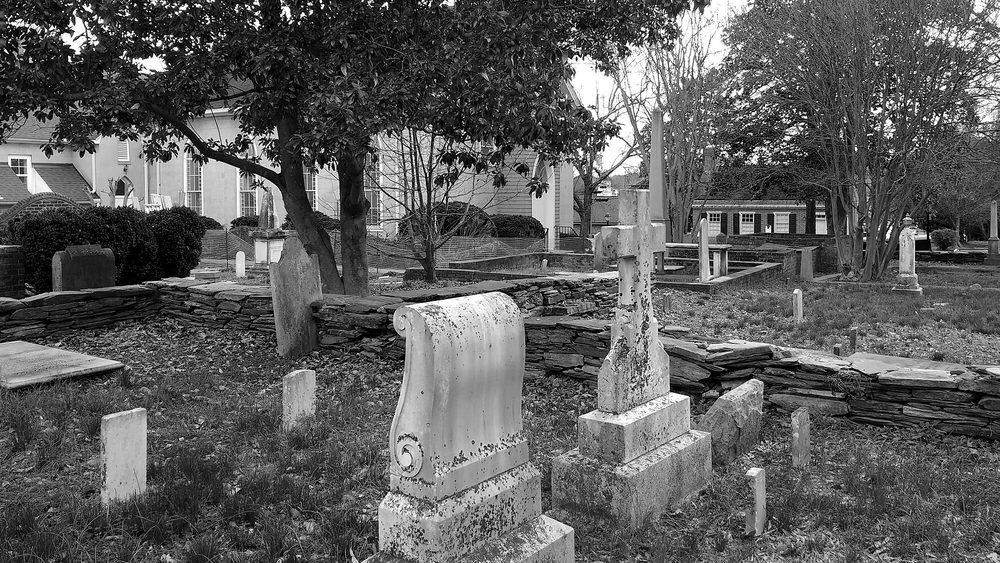
Background reading at OCPL

Books from OCPL’s Rebecca B. Wall Local History Collection that provide broader context. They may not discuss Families, Land & Genealogy directly.

  • Background reading · Rebecca Wall Collection Caswell County, North Carolina Will Books, 1814-1843: Guardians' Accounts, 1819-1847, 1850 & 1860 Census Mortality Schedules, Powers of Attorney From Deed Books, 1777-1880 Kendall, Katharine Kerr · 1983

    Caswell County, formed in 1777 from the northern part of Orange County, is the setting of Katharine Kerr Kendall's abstracts of its will books for 1814 to 1843, with guardians' accounts of 1819 to 1847, the 1850 and 1860 census mortality schedules, and powers of attorney recorded in deed books from 1777 to 1880. Mary Frances Kerr Donaldson made the index, and maps line the endpapers. Published by the compiler in 1983; 226 pages.

    Subjects in the Library of Congress catalog record: Caswell County (N.C.) -- Genealogy; Registers of births, etc -- North Carolina -- Caswell County OCPL call number: NC 929.375 KEN
  • Background reading · Rebecca Wall Collection Wake County, North Carolina, Abstract of Record of Wills, Inventories, Settlements of Estates, 1771-1802 Wynne, Frances Holloway · 1985

    Wills, estate inventories and settlements recorded in Wake County, abstracted by Frances Holloway Wynne in two indexed volumes covering 1771 to 1802 and 1802 to 1812. They appeared in 1984 and 1985, the first from Oracle Press of Baton Rouge; the second carries a slightly different title. Wake was created in 1771 out of parts of Cumberland, Johnston and Orange counties.

    Subjects in the OCPL catalog record: Registers of births, etc. -- North Carolina -- Wake County; Wills -- North Carolina -- Wake County; Inventories of decedents' estates -- North Carolina -- Wake County OCPL call number: NC 929.375 WYN
  • Background reading · Rebecca Wall Collection Abstracts of Will Books I, IA, and II of Iredell County, North Carolina, 1788-1845 Schneider, Lois · 1989

    Will abstracts from Iredell County, North Carolina's first three will books, I, IA and II, covering 1788 to 1845, compiled by Lois M. P. Schneider with an index. First published at Statesville in 1980; this printing of 1989 has 162 pages. Her companion volume abstracts the county's unrecorded wills of 1788 to 1915 and Will Book III, 1845 to 1868.

    Subjects in the Library of Congress catalog record: Wills -- North Carolina -- Iredell County; Iredell County (N.C.) -- Genealogy OCPL call number: NC 929.375 SCH

Search the Wall Collection for related books →

Picture: CC0, via Wikimedia Commons. Image credits →

More to discover

Keep Reading Local

The Friends connect people with new library materials, local writers and publishers, and resources documenting Orange County.

Two mice reading back to back against a leaf, with the hand-lettered words Friends of the Orange County Public Library
Illustration by Caldecott Medalist Matthew Cordell, gifted to the Friends 2026
