The Movie Guild and Sunday movies in Chapel Hill, 1931–1937
Sunday movies in Chapel Hill ran for years as charity benefits under an informal understanding before the aldermen legalized them in 1937. By January 1931 a Movie Guild with Paul Green as president was showing educational and artistic films to members on Sunday afternoons at the Carolina Theatre for local charities. In 1935 its directors gave one Sunday show's proceeds toward the American Legion post's log hut and added a Sunday night picture after church services, and they reported money spent on relief, school lunches and other needs. The 1937 rules allowed Sunday shows outside the evening church hour and required the Guild to report its receipts and spending each year.
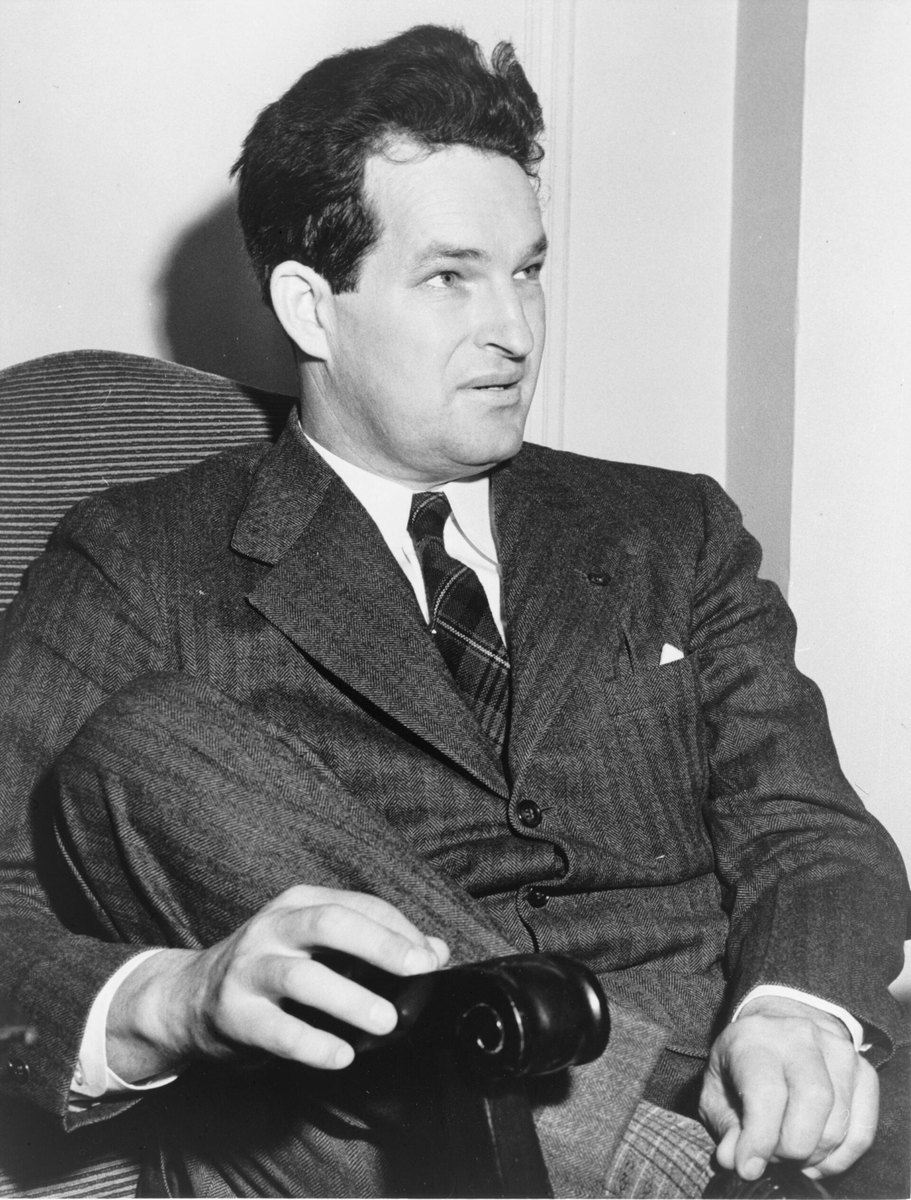
Paul Green, Movie Guild president, portrait, 1941Fred Palumbo, New York World-Telegram; via Wikimedia Commons · No known copyright restrictions · Source
By January 1931 a Chapel Hill Movie Guild had been organized with Paul Green as president to show educational and artistic films on Sunday afternoons at the Carolina Theatre for local charities, admitting members only. Sunday benefit shows had raised more than $1,500 for charity in the year or so before. On February 18, 1935 the Guild's directors voted the net proceeds of one Sunday show to the American Legion post, and late in March the gift was set for the Will Rogers picture of March 31 to start the post's log hut. On March 15 the directors voted to add a Sunday night picture at 9:20, after church services, beginning March 31. They reported $804.63 received in the 24 weeks since September 29, spent on relief allotments, help for the sick and destitute, school lunches and books, and the bath-house at the University Lake pool. Sunday shows had run for years under an informal understanding until November 10, 1937, when the aldermen legalized them. The new rules allowed Sunday picture shows from 1 to 7 P.M. and after 8:30 P.M., leaving the evening church hour clear, and required the Guild to report its receipts and spending to the board each year.
Reading on the places and people in this storyline
No indexed work is about this storyline itself yet. These are about the sites and people its dated events name, those named most often first, so they may discuss the storyline only in part. Follow a link to find a copy or view the material.
Black-and-white exterior view of the Varsity Theatre on East Franklin Street in Chapel Hill, dated between 1957 and 1983. Neighbors in the frame include Village Opticians, Jeff's Campus Confectionery and Schoolkids Records, which also traded as Record Bar.
Views of the Carolina Theatre, a movie house on East Franklin Street in Chapel Hill, from about 1941 to 1945 and from 1977. The earlier pictures are in black and white.
Varisty Theatre: photographs (Chapel Hill Historical Society)
1994
Front of the Varsity Theatre in Chapel Hill during a parade in 1994, with cars in view. One photograph in the Chapel Hill Historical Society's Prints and Photographs Collection.
Varsity Theatre, Record Bar, Sharyn Lynn Shoppe, Revco: photographs (Chapel Hill Historical Society)
1983
Negatives from 1983 of several Chapel Hill storefronts, among them the Varsity Theatre, Record Bar, the Sharyn Lynn Shoppe and Revco. From the Chapel Hill Historical Society's Prints and Photographs Collection.
Fifty-year history of PlayMakers Repertory Company, the professional theater founded in 1975 by Tom Haas with Arthur Housman on the campus of UNC Chapel Hill. Chapters by Bobbi Owen, Cecelia Moore and Gregory Kable follow the company leader by leader: Haas, David Rotenberg and Gregory Boyd, Milly S. Barranger and David Hammond, Joseph Haj and Vivienne Benesch. Appendices list productions, Department of Dramatic Art faculty, MFA graduates and administrators since 1975. Published by the department in 2021, 168 pages, online edition.
Our Noise: The Story of Merge Records, the Indie Label That Got Big and Stayed Small
Cook, John · 2009 · Algonquin Books of Chapel Hill
John Cook's history of Merge Records, the independent label that Mac McCaughan and Laura Ballance of Superchunk built in Chapel Hill. Chapters follow the label year by year from 1987 to 2009 and pause for profiles of Butterglory, Neutral Milk Hotel, the Magnetic Fields, Spoon, Lambchop and the Arcade Fire, ending on how it managed to stay small. Advance reading copy of the first edition, published in Chapel Hill in 2009, 289 pages with twelve pages of plates.
Step It Up and Go: The Story of North Carolina Popular Music
Menconi, David · 2020
David Menconi's history of popular music in North Carolina, from the working-class roots of the state's traditions to the Chapel Hill and Carrboro rock scene of recent decades. Menconi, who covered music for the Raleigh News and Observer for nearly thirty years, builds the book on interviews and reporting, and Black musicians' contributions run through it. First issued in print by UNC Press in 2020; this is the online edition, 329 pages with illustrations.
The Ackland Art Museum: a handbook published in honor of the Museum's twenty-fifth anniversary (1958-1983)
Ackland Art Museum · 1983
A handbook to the Ackland Art Museum at the University of North Carolina, published by the museum in 1983 for its twenty-fifth anniversary. It combines a catalog of the collection with a history of the museum, which opened in 1958. Includes a bibliography on pages xviii to xx. 170 pages with illustrations, 22 cm.
Durham, Woody; Lucas, Adam · 2012 · John F. Blair, Publisher
Memoir of Woody Durham, who called University of North Carolina football and basketball on the radio from 1971 until he retired in 2011, written with Adam Lucas. Four decades of Tar Heel games as heard from the broadcast booth. Subjects include radio broadcasters and sportscasters, North Carolina, biography.
Alex Albright's history of the B-1 band, the group of Black musicians drawn largely from students and graduates of North Carolina A&T who became the first Black sailors of the modern Navy to serve above the rank of messman, and the first of more than a hundred Black Navy bands in wartime. The band was posted to the Navy Pre-Flight School at Chapel Hill, the book's Orange County link. Published by R.A. Fountain in 2013, 194 pages with illustrations and portraits.
Selden, Samuel ; Sphangos, Mary Tom · 1954 · University of North Carolina Library
Brief biography of Frederick Henry Koch (1877-1944), founder of the Carolina Playmakers at the University of North Carolina, by Samuel Selden and Mary Tom Sphangos, with notes by Jonathan Daniels and others. It reprints Koch's own essay 'Folk playmaking' on pages 59 to 68. Published by the University of North Carolina Library in 1954, viii and 92 pages with illustrations and a portrait.
Gay Mahaffy Hertzman's 1971 catalogue of the collection of the William Hayes Ackland Memorial Art Center, the university art museum in Chapel Hill now called the Ackland Art Museum, printed by Herzig Somerville. William Hayes Ackland (1855 to 1940) left the bequest that founded the museum.
Henderson, Archibald · 1945 · University of N.C. Press
Archibald Henderson's short history of the Carolina Playmakers, the University of North Carolina's theater company at Chapel Hill, published by the University of North Carolina Press in 1945, 104 pages. Written while the company was still in its first decades, it gives a contemporary view of how the Playmakers saw their own mission as a people's theatre.
Exhibit publication from the Orange County Historical Museum for its special exhibit on working life, shown in Hillsborough from March to December 2024 and concerned with the county's trades and industrial arts. Produced by the museum in 2024, it documents Orange County and Hillsborough history through the work people did.
Hillsborough Artists Cooperative and Skylight Gallery, 1990-2020
Miller, Jennifer E. · 2021
Jennifer E. Miller's account of the Hillsborough Artists Cooperative and its Skylight Gallery across their first thirty years, 1990 to 2020. Topics include art in Hillsborough for that period and the history of both the cooperative and the gallery. Published in 2021, it records a local institution in the town's art scene that would otherwise leave little written trace.
Cecelia Moore's 2017 study of the Federal Theatre Project in the southern states, with the Carolina Playmakers at Chapel Hill among its subjects. Topics include theatre in North Carolina in the twentieth century and the relation of theatre to society.
Each dated event above names its source, the place to start. For finding more on an event across newspapers, records and histories, see the research guide Follow an event across several accounts. Ask at the North Carolina Room of the Orange County Public Library for help with local sources.
Cite or share
Friends of the Orange County Public Library. “The Movie Guild and Sunday movies in Chapel Hill, 1931–1937.” Orange County Indexed, https://focplnc.org/orange-county-books/storylines/movie-guild-storyline-1931/. Accessed October 22, 2026.