Reconstruction Republicans took control of the trustees in 1868, Solomon Pool’s presidency emptied the campus, the university closed in 1871, and in 1875 the legislature revived it and Cornelia Phillips Spencer rang the bell.
In briefReconstruction Republicans took control of the trustees in 1868 and dismissed the old faculty; Solomon Pool's presidency drew almost no students, and the university closed in February 1871. The legislature revived it in March 1875, Cornelia Phillips Spencer rang the bell, and it reopened in September under a rebuilt faculty.
Related works found in catalogs and archives across North Carolina. Each links to the institution that holds or provides it.
Adolphus Williamson Mangum : memorial address delivered in the chapel of the university, Sunday, May 31st, 1891
Daniels, Josephus, 1862-1948 · 1891 · Dialectic and Philanthropic Societies
Josephus Daniels's memorial address for Adolphus Williamson Mangum, delivered in the university chapel at Chapel Hill on Sunday, May 31, 1891 and printed by the Dialectic and Philanthropic Societies. Mangum, who died in 1890, was a Methodist minister on the University of North Carolina faculty. The text was detached from the North Carolina University Magazine for that year.
A memorial of John DeBerniere Hooper, a member of the University of North Carolina faculty, who died in 1886. Cornelia Phillips Spencer wrote it, and the Dialectic and Philanthropic Societies printed it at Chapel Hill after it appeared in the North Carolina University magazine for March 1886. It is faculty biography and North Carolina biography.
Papers of Locke Craig, Asheville lawyer who served in the North Carolina legislature from 1898 to 1903 and as governor from 1913 to 1917. The 126 items, beginning in 1880, include personal letters, political and religious speeches, an address on Freemasonry, and a chemistry notebook he kept as a University of North Carolina student. Kemp P. Battle, Henry G. Connor and Woodrow Wilson are among the names that appear.
Dated events connected with this event: sixteen of 46, the highlights and a sample of the rest spread across the years, in date order. See all 46 dated events in the chronology →
Earliest first. Scroll sideways, or use the arrows.
16 dated events
Swain and the faculty resign as trustees plan a new university
Appointment, election or service · Chapel Hill
At a meeting Governor Jonathan Worth called to face the university's collapse, Charles Phillips presented the resignations of President Swain, Professors Hubbard, Fetter and Smith, law professor William H. Battle and himself, and the trustees adopted Kemp P. Battle's resolution for a committee to plan an elective university system with higher standards.
Dialectic and Philanthropic societies hide their books and papers
Closing or ending · Chapel Hill
Believing the societies would not be run under their constitutions after the university changed hands, their last officers gave the Dialectic records to Alexander McIver and the Philanthropic records to William L. Saunders. The property lay safe until the societies revived in 1875.
Learning that the new Reconstruction trustees had declared his 1867 resignation final, David L. Swain wrote Governor William W. Holden, as chairman of the board, that no charge had been made against him and that a resignation accepted by a board that no longer existed could not be revived. He asked for reconsideration, but died later that month.
Pool accepted the presidency of the University of North Carolina in 1869 at a salary of fifteen hundred dollars and was permitted to keep his federal appraiser post at the same time. Governor William W. Holden had taken charge of the board of trustees to secure a president with Republican affiliations.
Federal court dismisses the state's suit to void the university's bank mortgage
Law, policy or court · Chapel Hill
The Reconstruction trustees had the state sue in the United States Circuit Court, returnable at the June 1869 term, to cancel the university's mortgage to the Bank of North Carolina, but Judges Hugh L. Bond and George W. Brooks dismissed the bill for want of jurisdiction. On July 20, 1871 the trustees present advised against an appeal.
The remains of David L. Swain and his daughter Annie are taken from Chapel Hill to Raleigh for reburial
Life event · Swain family graves, Chapel Hill; reburied in the old city cemetery, Raleigh
An undertaker, K. P. Waitt, carried the coffins of the former governor and university president and his daughter Annie from their graves in Chapel Hill to Raleigh, where they were buried side by side in the old city cemetery with only family and a few friends present.
Under President Solomon Pool and the Reconstruction board of trustees, the university shut down on February 1, 1871, after years of few students, little money and public opposition. It reopened on Monday, September 6, 1875.
Alumni meet in Raleigh to plan the university's revival
Protest or organizing · Chapel Hill
At the invitation of trustees led by Superintendent Alexander McIver, fifty-five alumni met in the state Senate chamber with B. F. Moore in the chair. Their committee proposed that the alumni association nominate a new board for the Board of Education to appoint, but most of the 1868 trustees did not resign and the plan lapsed.
Appointment, election or service · Chapel Hill, University of North Carolina
John Manning became a trustee of the University of North Carolina in 1874 and held the post for two decades, through the university's 1875 reopening.
The new trustees sue Solomon Pool and Alexander McIver at Orange Superior Court and win possession of the university in the Supreme Court
Law, policy or court · Orange County Superior Court, Hillsborough
At the May 1874 term of Orange Superior Court the new board brought one action against Superintendent Alexander McIver, who held the university's seal and books and had agreed to a friendly test suit, and another against Solomon Pool for the buildings. Judge Albion W. Tourgee ruled against the trustees; John W. Graham and James A. Graham of Hillsborough argued for them without fee, as did B. F. Moore and William H. Battle on appeal in June 1874. At its January term 1875 the state Supreme Court decided for the university on every point, and possession passed to Andrew Mickle, the board's agent, with the seal, books and papers going to Treasurer Kemp Battle.
Law, policy or court · South Building, UNC campus, Chapel Hill
A telegram from Raleigh on March 20, 1875, reported that the legislature had passed a bill letting the closed University of North Carolina reorganize with some state support. Spencer, whose letters to state leaders had pressed for the reopening, and a few friends entered South Building and tolled the college bell to celebrate.
Andrew Mickle becomes bursar of the reopened university
Appointment, election or service · Chapel Hill
Electing the reopened university's professors, the trustees broke with the old practice of making a professor bursar and chose Andrew Mickle, the Chapel Hill merchant who had acted as their agent, at $400 a year. He held the post until he left to live with his children in Texas in the early 1880s.
The university resumed classes on Monday, September 6, 1875, after more than four years closed, with Charles Phillips as chairman of the faculty, and held a public celebration on September 15. Kemp P. Battle, then secretary of the trustees, was elected president in 1876.
Francis D. Winston is the first student to arrive for the reopening
Statistic or record · Chapel Hill
Battle names Francis Donnell Winston of Bertie County the first student on the Hill in 1875, arriving a day ahead of other entrants with his brother Robert and Charles Bond. Bond was the only student to enter the agricultural department on opening day, and Battle calls him the first student of the first college of agriculture in the state.
Commencement marks twenty-five years since the university reopened
Naming or commemoration · Memorial Hall
The 1900 commencement was given over to the reopening of 1875, with nineteen members of the 1875-76 student body present and addresses by Kemp Battle, George T. Winston, W. J. Peele and President Alderman.
Buildings, schools, churches and other sites named in the dated events on this page, the most often named first. The map shows the 3 with a known location.
Search beyond the index:NC LIVE: prepared search for The university closes and reopensNC LIVE
An advanced search of the state’s shared databases already scoped to Orange County’s places and this subject; edit it freely, and sign in through your North Carolina library to read
Ask locally:Local History Help Hours and request formOCPL Local History Liaison
The library’s Local History Liaison helps in person most Mondays, 12 to 3, at the Main Library, or by the online request form
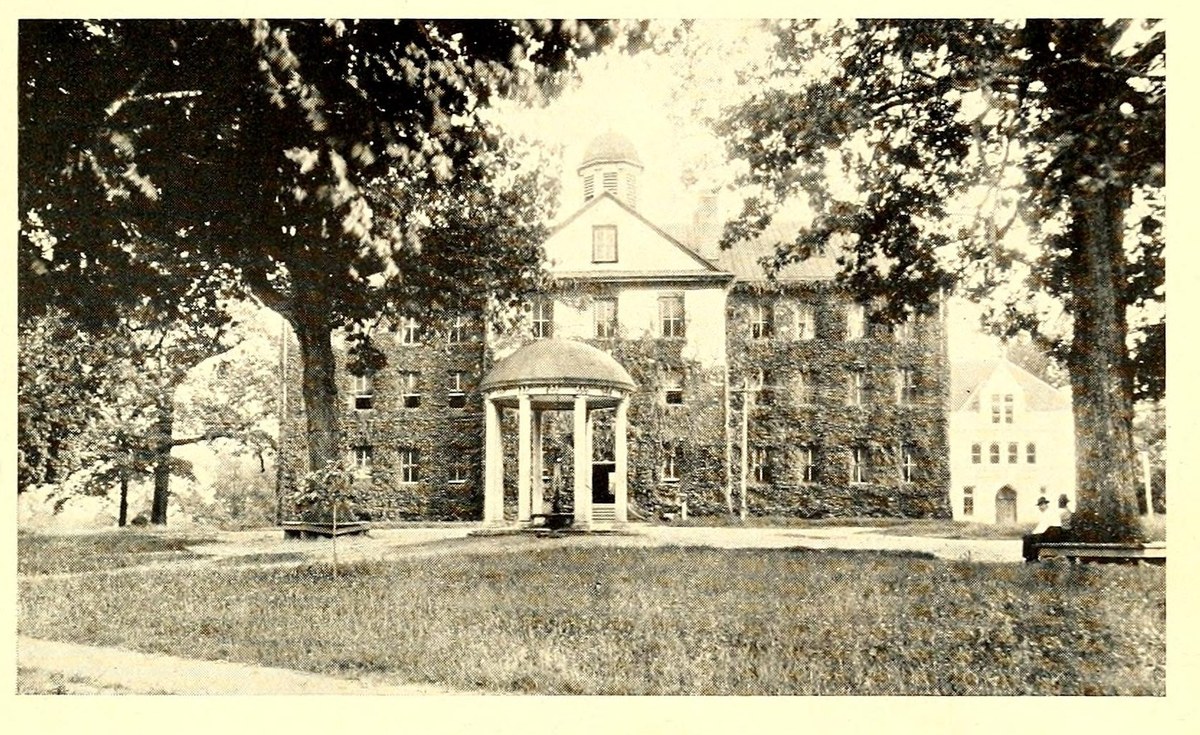
Picture: South Building and the Old Well, about 1912. Public domain. Kemp P. Battle, History of the University of North Carolina, vol. 2 (1912); via the Internet Archive
More to discover
Keep Reading Local
The Friends connect people with new library materials, local writers and publishers, and resources documenting Orange County.