Skip to content

Theme

LGBTQ+ Life & Activism

Activism, oral histories, and elected firsts: how gay and lesbian residents built a visible community in Chapel Hill and Carrboro.

Gay and lesbian residents built a visible community in Chapel Hill and Carrboro from the 1970s, and the towns elected some of the state’s first openly gay officials in the 1980s and 1990s, Joe Herzenberg and Mike Nelson among them. The records here are oral histories, activism and those municipal firsts.

41 works about LGBTQ+ Life & Activism are indexed here. 4 held at OCPL →

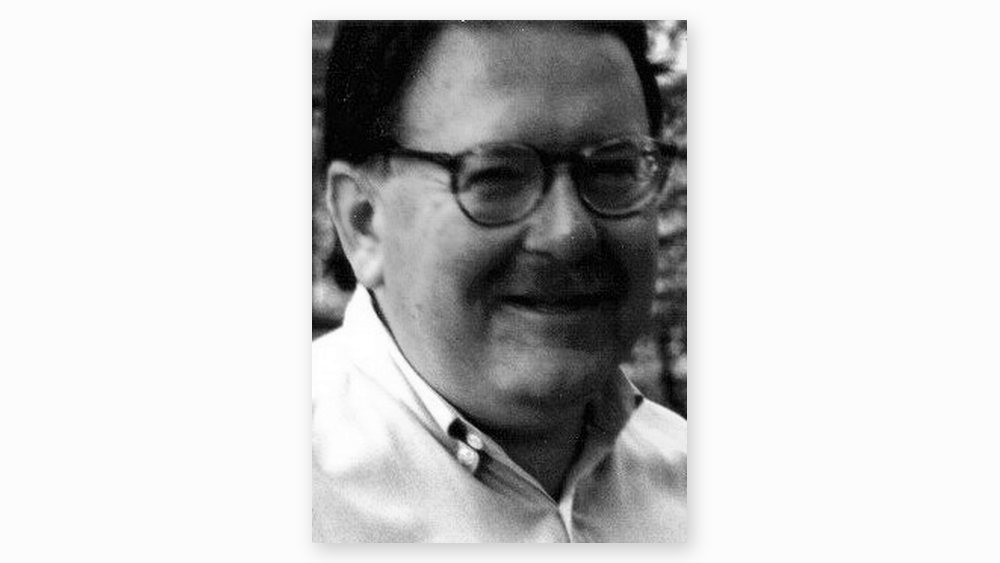
Joseph Herzenberg on North Street, Chapel Hill, 1991, by Erik Ose.

Events and storylines

Named events and storylines the index follows in detail. Each has its own page.

Carrboro’s LGBTQ municipal firstsDomestic partner registry, partner benefits and openly gay mayors, as recorded by the town LGBTQ political firsts in Chapel Hill and Carrboro, 1980s–1990sJoe Herzenberg’s election to the Chapel Hill Town Council in 1987, Mike Nelson’s as Carrboro’s mayor in 1995, and the anti-discrimination and domestic-partner measures that followed Rewriting Chapel Hill’s charter: from Board of Aldermen to Town Council, 1973–1979How Chapel Hill rewrote its town charter between 1973 and 1979: the Charter Commission and its call for eight aldermen and a four-year mayor, the charter sent to the General Assembly without a referendum, the fight over its human services powers, the 1977 fair-housing amendment and the board’s new name, Town Council Hate incidents and the Rally Against Hate at UNC, fall 1990How a run of hate incidents on the UNC campus in the fall of 1990, from a defaced Gantt poster and anti-gay signs to a racist note on the homecoming queen’s car and ’KKK’ on a University car, led to the Rally Against Hate, a march to South Building and a chancellor’s committee Herzenberg’s tax case, the recall law and two resignations, 1992–1993How the Chapel Hill Town Council changed in 1992 and 1993: Joe Herzenberg’s guilty plea for failing to file state taxes and the council’s censure, Art Werner’s election as mayor pro tem, Roosevelt Wilkerson’s resignation over a letter signed with the mayor’s name, Barbara Powell’s appointment and Herzenberg’s resignation Orange County’s civil rights ordinance, 1987–1994How Orange County came to a civil rights ordinance between 1987 and 1994: the Human Relations Commission, the draft ordinance and Sen. Howard Lee’s bill, the fight over its threatening-speech clause, the push to add sexual orientation, and the votes that brought it into Chapel Hill, Carrboro and Hillsborough
Show all 8 events and storylines

More storylines

Storylines in this theme, in date order. Each opens its own page, with its events date by date.

StorylineThe Sorrell building theatre: Carolina, Village and Varsity, 1927–19801927–1980 · 10 events · W. B. Sorrell's building on the north side of Franklin Street opened in 1927 with the Carolina Theatre between his optometry shop and Jeff's Campus Confectionery. The theatre became the Village in 1942, when a new Carolina opened across the street, and the Varsity in 1951. After pickets in 1961 it agreed to admit Black University students. Fire gutted it in November 1966, and it reopened in September 1967. StorylineGay Chapel Hill becomes visible, 1971–19741971–1974 · 7 events · Between 1971 and 1974 gay life in Chapel Hill came into the open. A Gay Liberation Front speaker addressed a UNC audience in 1971, and a Daily Tar Heel page on gay people that spring drew a state senator's bill against student-fee support of the paper. A student counseling service began counseling gay men, gay bars opened, and in 1974 a weekly rap group became the Carolina Gay Association, recognized by the University that September. StorylineGay and Lesbian Awareness Week at UNC, 1978–19941978–1994 · 17 events · The Carolina Gay Association held its first Gay Awareness Week in March 1978, and the week of films, talks and workshops became a yearly event with a Blue Jeans Day. Its notices on the cube were defaced in the early years. Speakers over the years included Jeff Levi, Tom Duane and Mandy Carter. In 1994 the week took the name Celebration Week. StorylineThe Carolina Gay and Lesbian Association, B-GLAD and student-fee funding, 1982–19941982–1994 · 46 events · From 1982 the Carolina Gay Association held a yearly Gay Awareness Week ending in Blue Jeans Day, and in 1983 a seminar on AIDS and gay civil rights. In 1984 The Landmark attacked its student-fee funding, President William Friday sent an anti-gay letter attacking the University to the SBI, and about 300 people rallied against such letters. In 1985 the group became the Carolina Gay and Lesbian Association. From 1985 Students for America, the Chapel Hill Eight and Campus Watch fought the association's student-fee funding. Student government funded it every year through 1989, though a nonbinding 1988 referendum went against the funding, 3,195 to 2,285. Student Congress members tried to end the funding again in 1991 and 1992, and a 1992 budget rider calling for review of the group's publications was blocked by the student court and struck by the next congress. The association renamed itself B-GLAD in 1992, and Student Congress passed its budget 21 to 7 in 1993. In 1993 the Honor Court acquitted the two former congress members who had circulated the list, and in 1994 Student Congress cut all funding for Lambda while B-GLAD hosted a statewide student summit. StorylineOn the Hill and the clubs that followed, 1989–19921989–1992 · 6 events · On the Hill, a dance club above Four Corners on East Franklin Street, began enforcing a dress code in September 1989 that a former bouncer said was meant to keep out gay men. Protests followed, and Student Congress called for a boycott. Club Zen opened in the space in 1990 with no dress code. In 1991 the owner of The Club said his lease was ended over his gay and Black patrons, which the building owner denied. StorylineSexual orientation policy and anti-gay harassment at UNC and in the towns, 1990–19931990–1993 · 13 events · Chancellor Paul Hardin added sexual orientation to UNC's nondiscrimination policy in 1990, and in 1991 the student code took in harassment based on sexual orientation while housing studied gay and lesbian students' needs. In 1992 the career office agreed to ask recruiters about their policies and Hardin signed a statement against the military's gay ban. That summer the association's cube notices were defaced twice, once with a death threat. Carrboro added sexual orientation to its employment policy in December 1990, and in 1993, after a student rally, Carolina Dining Services added it to its own policy while the Chapel Hill council debated a charter clause.

Indexed works

Works about LGBTQ+ Life & Activism from library and archive catalogs. The most widely held appear first; novels are not shown here. Follow a link to find a copy or view the material.

Filter these works by material, period, or place. Counts refer to works, not individual copies. A work may appear under more than one period or place.

Widely held

Jane Crow: The Life of Pauli Murray

Rosenberg, Rosalind · 2017

Rosalind Rosenberg's 2017 biography of Pauli Murray (1910-1985), lawyer, poet and Episcopal priest, raised in Durham. Its six parts follow a Southern childhood, the move to New York, the 1938 application to the University of North Carolina that was refused because Murray was Black (the chapter is titled 'Members of your race are not admitted'), law school and the coining of the phrase Jane Crow, the Cold War years, the push toward 'an NAACP for women', and a late-life ordination. 494 pages with portraits.

Included because: Catalog heading in the NC Cardinal record: Murray, Pauli, 1910-1985.

Reviewed in The Journal of Southern History (2018).

Lightning Brown papers,

Brown, Lightning · 1983

Papers of Lightning Brown, a Chapel Hill activist for gay rights who was also the first openly gay person in North Carolina to run for public office. Most of the 1,500 items concern the 1984 elections: letters to and from public officials, articles and studies reflecting his work in the Democratic Party, on national legislation and on gay rights.

Included because: Catalog heading in the Duke record: Gay rights -- United States.

Lesbian, Gay, Bisexual, Transgender, and Queer (LGBTQ) Center of the University of North Carolina at Chapel Hill records, 1975-2014.

University of North Carolina at Chapel Hill. Lesbian, Gay, Bisexual, Transgender, and Queer (LGBTQ) Center · 1975

Records of the Lesbian, Gay, Bisexual, Transgender, and Queer Center at UNC, 1975 to 2014, about 900 items in 2 linear feet, in the University Archives at UNC, collection 40433. Student groups represented include the Carolina Gay and Lesbian Association, B-GLAD, and the Women's Forum of the Association of Women Students, with student housing at Chapel Hill also covered.

Included because: Catalog heading in the UNC record: Lesbians.

UNC

William Ruthrauff Amberson papers, 1919-1968; 1971

Amberson, William Ruthrauff, 1894- · 1915

William Ruthrauff Amberson, born 1894, left papers spanning 1919 to 1968 with a small run from 1971. The papers concern the University of Tennessee at Memphis and southern farm politics: the Southern Tenant Farmers' Union, the Delta Cooperative Farm and Providence Plantation in Mississippi, the Socialist Party, and figures such as Norman Thomas, Howard Kester and Pauli Murray. Part of the Southern Historical Collection at UNC, collection 3862.

Included because: Catalog heading in the UNC record: Murray, Pauli, 1910-1985.

UNC

Michael R. Nelson papers, circa 1890-2012

Nelson, Michael R., 1963- · 1890

Roughly 2,000 items in 6.5 linear feet kept as the papers of Michael R. Nelson, born 1963, dated from about 1890 to 2012, collection 70140 in the Southern Historical Collection at UNC. Topics include politics and government in Carrboro, Chapel Hill and Orange County, campaign paraphernalia, and gay activists and politicians in North Carolina, naming Joseph A. Herzenberg, 1941 to 2007.

Included because: Catalog heading in the UNC record: Gay people.

UNC

Joseph A. Herzenberg papers 1883-2006.

Herzenberg, Joseph A., 1941-2007 · 1883

Twenty linear feet of papers from Joseph A. Herzenberg, 1941 to 2007, about 2,500 items dated 1883 to 2006 in the Southern Historical Collection at UNC, collection 5367. Diaries are among the formats. The work describes a historian and political activist in Chapel Hill, campaign paraphernalia and Democratic Party politics, and gay activists and gay politicians in North Carolina.

Included because: Catalog heading in the UNC record: Gay people.

UNC
Show 1 more

John Seelye papers,

Seelye, John · 1862

Papers of John Seelye (1931 to 2015), literary scholar and Penguin Classics editor, who taught American literature at Berkeley, Connecticut, UNC Chapel Hill, Dartmouth and Florida. The 26,100 items (46.7 linear feet) run from 1862 to 2015, mostly 1955 to 2007, in series of correspondence and contracts, academic files, research files, writings and personal papers, with Melville and Mark Twain among his subjects.

Included because: Catalog heading in the Duke record: Lesbians -- United States -- History -- 19th century.

Recently indexed: Gay youth in the Triangle (1994) · A radical queer ABC Book : told unapologetically, with a focus on radical, political history within the USA and a bias towards recorded events which leads to an unintention exclusion of the communities most marginalized (2022) · Rainbow Triangle Oral History Collection, (1998) · The Triangle : LGBT resource for the Raleigh, Durham and Chapel Hill area. (2013) · Aluminate : LGBTQ Center publication.

Search all 41 indexed works →

In the chronology

A selection of 12 events from the 302 chronology entries for this theme, including highlights and examples from different years. See all 302 dated events in the chronology →

  1. Feminary begins in Chapel Hill as a women's liberation newsletter Feminary started in Chapel Hill in 1969 as a women's liberation newsletter. It later became a lesbian-feminist journal for the South, and in 1983 its collective, by then based in Durham, sought new members to carry it on. Place: Chapel HillSearch the index · Lambda (Carolina Gay and Lesbian Association, UNC), November 1983, p. 7
  2. Vandals deface the Carolina Gay Association's cube notice for Gay Awareness Week Between Sunday afternoon, February 26, and Monday morning, February 27, 1978, the association's painted notice on the campus cube for its coming Gay Awareness Week was defaced with a slogan calling sodomy a felony and urging arrests. Lambda later said the cube listing was defaced during each of the early Gay Awareness Weeks. Place: The cube, University, Chapel HillSearch the index · Lambda (Carolina Gay and Lesbian Association, UNC), March 1978, p. 1 · Also: The Daily Tar Heel, March 2, 1978, p. 8
  3. The Orange County Democratic Party endorses civil rights legislation for gay people The county Democratic Party unanimously resolved to support H.R. 2074, which would bar discrimination by sexual orientation in employment, housing and the military, and to seek repeal of North Carolina laws that discriminated by sexual orientation. Place: Orange CountyLambda (Carolina Gay and Lesbian Association, UNC), June 1981, p. 4
  4. The Carolina Gay Association holds a fall Gay Awareness Week with a talk by Tom Chorlton Moved to the fall, the week opened with Elizabeth Gurley of Parents and Friends of Lesbians and Gays on coming out to parents, and Tom Chorlton of the National Association of Gay and Lesbian Democratic Clubs spoke on post-election strategy in Gerrard Hall on November 28. Programs by the N.C. Lesbian and Gay Health Project and Triangle Area Lesbian Feminists, a session on coming out in the Black community and a talk by the Rev. June Norris led to a Blue Jeans Day dance in Craige dormitory that drew nearly 150. Place: Gerrard Hall and Carolina Union, University, Chapel Hill · Also named: Tom Chorlton, Elizabeth Gurley, June Norris · Also mentions: Gerrard HallSearch the index · Lambda (Carolina Gay and Lesbian Association, UNC), November 1984, p. 1
  5. Student Congress rejects a bill barring sexual orientation from funding decisions After heated debate, Student Congress voted down a bill that would have barred it from weighing a group's members' race, creed, sex, sexual preference, national origin or handicap in allocating student fees, which opponents said would have ended debate on funding the Carolina Gay and Lesbian Association. Place: Student Congress, Carolina Union, UNC, Chapel HillSearch the index · The Daily Tar Heel, January 21, 1988, p. 1
  6. The Carolina Gay and Lesbian Association holds Lesbian and Gay Awareness Week The CGLA's annual week opened with an AIDS-prevention workshop by the Triangle AIDS Service Project and went on to a lesbian health workshop, a networking meeting for Black lesbians and gays, a discussion led by activist Mandy Carter on what the 1990 U.S. Senate race meant for lesbians and gays, films and an April Fool's party. Organizers said the events were meant to educate the whole campus and town. Place: UNC, Chapel Hill · Also named: Mandy CarterSearch the index · The Daily Tar Heel, March 26, 1990, p. 3
  7. The Last Call bar opens upstairs on East Franklin Street where The Club had been The Last Call bar opened above Ye Olde Waffle Shoppe on East Franklin Street in the space of The Club, an alternative dance club popular with gay students and residents that closed in fall 1991 when the building's owner would not renew its lease; the Carolina Gay and Lesbian Association chairman called that decision discriminatory. Place: East Franklin Street, Chapel HillSearch the index · The Daily Tar Heel, June 4, 1992, p. 4
  8. Review committee keeps the Chapel Hill High gay and lesbian authors unit suspended A review committee of Chapel Hill High School staff, English teachers and School Governance Committee members unanimously found the challenged works on a multicultural literature bibliography unsuitable for classroom use and recommended that the unit stay suspended until the teacher reviewed the list. It also asked the school board to adopt a policy for reviewing supplementary classroom materials, and began its report by stressing academic freedom. Place: Chapel Hill High School, Chapel HillSearch the index · The Daily Tar Heel, November 2, 1993, p. 2
  9. Mike Nelson is elected mayor of Carrboro Michael R. Nelson, then a member of the Carrboro Board of Aldermen, won the mayor's race at the municipal election held on November 7, 1995, becoming the first openly gay mayor elected in North Carolina. The Board approved the Orange County abstract of votes from that election at its meeting of December 5, 1995. People: Mike Nelson, Ellie Kinnaird Place: CarrboroTown of Carrboro: Board of Aldermen minutes, December 5, 1995
  10. The federal Office for Civil Rights reports on the English class e-mail dispute The U.S. Department of Education's Office for Civil Rights found that a UNC lecturer's February 2004 e-mail to her class, which had called a student's remarks about homosexuality hate speech, discriminated against and harassed the student, but that the university had responded appropriately and need do nothing more. Chancellor James Moeser welcomed the finding; LGBTIQ student activists said the report passed over the remarks that began the dispute. People: James Moeser Place: University, Chapel HillSearch the index · Lambda (Carolina Gay and Lesbian Association, UNC), October 2004, p. 4
  11. The Sexuality Studies program goes a school year without a director or budget According to Lambda, the provost withdrew the course releases promised for a Sexuality Studies director, leaving the program created in 2004 without a director or budget for the 2006-07 year. Students and faculty met with deans and the vice chancellor and started an online petition to save it. People: Bernadette Gray-Little Place: University, Chapel HillSearch the index · Lambda (Carolina Gay and Lesbian Association, UNC), March 2007, p. 7
  12. Orange County's clerk of superior court is honored for work in guardianship law Kleinschmidt received the Isabella Award at the National Probate Judges Conference for his contributions to guardianship and probate law. The award is named for judge Isabella Horton Grant and goes to people whose leadership improves guardianship laws, court administration and practice. People: Mark Kleinschmidt Place: Orange CountySearch the index · North Carolina Judicial Branch: Orange County Clerk Mark Kleinschmidt Honored Nationally for Leadership in Guardianship Law

See all 302 dated events in the chronology →

Places in this theme

Buildings, schools, churches and other sites named in the dated events on this page, the most often named first. The map shows the 18 with a known location.

Map tiles © OpenStreetMap contributors. Site locations from the N.C. State Historic Preservation Office survey, Open Orange, Orange County GIS, OpenStreetMap and a few other published sources named on each site’s page; town and community pins show approximate locations.

Show 16 more

All places and the county map →

Research sources

Sources and research tools for this subject. Research guide: How to research with Orange County Indexed.

Background

Records of the time

  • DigitalNC: Lambda The Carolina Gay and Lesbian Association’s newsletter from the 1970s, digitized

Collections and databases 8

  • NC LIVE: DigitalNC Library card Lambda, the Carolina Gay and Lesbian Association’s newsletter, digitized from the university library
  • NC LIVE: JSTOR Library card Scholarship on LGBTQ history in the South and on the university
  • NC LIVE: Sociology Database Library card Research on LGBTQ communities and municipal politics
  • NC LIVE: US Newsstream Library card Newspaper coverage of the Chapel Hill and Carrboro political firsts from the 1980s on
Show all 8

Local help

Picture: Public domain, via Wikimedia Commons. Image credits →

More to discover

Keep Reading Local

The Friends connect people with new library materials, local writers and publishers, and resources documenting Orange County.

Two mice reading back to back against a leaf, with the hand-lettered words Friends of the Orange County Public Library
Illustration by Caldecott Medalist Matthew Cordell, gifted to the Friends 2026
