Skip to content

Named event or history

Hillsborough court riot, September 1770

Regulators storm the Hillsborough court and beat Edmund Fanning.

From the state marker

“Judge and local official. Target of Regulators who ransacked and destroyed his nearby home, 1770. The state’s marker page heads this essay “1776-1847”, which are not Fanning’s dates: its own text has him born in 1737 and dying in London in 1818.”

State historical marker: G-19: Edmund Fanning

1 indexed work is connected with this event.

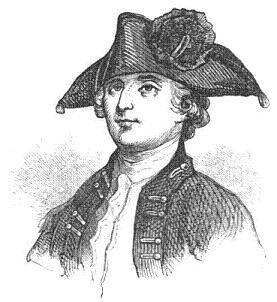
Edmund Fanning, whom the Regulators dragged from the Hillsborough court in 1770

Indexed works

Related works found in catalogs and archives across North Carolina. Each links to the institution that holds or provides it.

Letters transmitted to the Governor of Orange County regarding the rebellious and civil disturbances in several provinces

1768

Letters sent to the governor in 1768 concerning rebellious and civil disturbances in Orange County and other provinces. Edmund Fanning, Francis Nash, William Butler, Peter Craven and James Hasell are named, with Hillsborough, Brunswick, Halifax and Wilmington as places and riot, militia, warrants and troop movements as topics. Cited to Colonial Office volume CO 5/312, North Carolina correspondence of the Secretary of State, 1768 to 1769.

Why this is here: The record names this subject alongside a heading for the county or its towns.

Start at OCPL

Books in OCPL’s Rebecca B. Wall Local History Collection whose titles, catalog subjects, or descriptions match this event. The Friends’ recommended starting points are labelled. Books marked Wider context cover the broader subject rather than this event itself.

  • Start here · 975.602 KAR Breaking Loose Together: The Regulator Rebellion in Pre-revolutionary North Carolina Kars, Marjoleine · 2002

    Marjoleine Kars's history of the Regulator Rebellion of 1766 to 1771, the backcountry uprising against corrupt county officials that ended at the Battle of Alamance. Hillsborough, the Orange County seat, was a center of the Regulators' protests and the scene of their 1770 court riot. Published by the University of North Carolina Press in 2002, 286 pages with illustrations and maps.

  • Start here · NC 975.602 TROXLER Farming Dissenters: The Regulator Movement in Piedmont North Carolina Troxler, Carole Watterson · 2011

    Carole Watterson Troxler's history of the Regulator movement in Piedmont North Carolina, from land speculation and backcountry resentment through Herman Husband and the Sandy Creek network to the petitions, court proceedings and rioting in Hillsborough and Salisbury, the Battle of Alamance in 1771 and the movement's afterlife in the Revolution. An appendix compiles names in a Regulator context. Published by the North Carolina Department of Cultural Resources in 2011, 221 pages with illustrations, maps and an index.

  • Foundational · NC 975.656 CAM Hillsborough and the Regulators Cameron, Annie Sutton · 1964

    Annie Sutton Cameron's short account of Hillsborough during the Regulator uprising of 1766 to 1771, when backcountry farmers protested colonial officials and courts and Hillsborough, as the seat of Orange County, stood at the center of the conflict. Published by the Orange County Historical Museum in Hillsborough in 1964, 36 pages with illustrations.

Show 4 more
  • Rebecca Wall Collection · NC 975.6 POW The War of the Regulation and the Battle of Alamance, May 16, 1771 Powell, William Stevens · 1975

    William S. Powell's short account of the War of the Regulation and its end at the Battle of Alamance on May 16, 1771, when Governor Tryon's militia defeated the backcountry Regulators. The fighting took place in what was then Orange County, and Hillsborough, the county seat, had been the center of the Regulators' grievances and riots. Issued by the State Department of Archives and History, 32 pages with illustrations, facsimiles, a portrait and a folding map; this printing is dated 1976.

  • Wider context · NC 812 VER Esther Wake, Or, The Spirit of the Regulators: A Play in Four Acts Vermont, Adolph · 1913

    Adolph Vermont's four-act drama of the Regulator uprising, first performed on the University of North Carolina campus by its Summer School Dramatic Club on 4 July 1912. Scenes move from Governor Tryon's palace at New Bern to Orange County, on the Eno, at Hillsborough and on the Alamance battlefield, as the heroine, Esther Wake, pleads for the Regulator gunsmith James Pugh; N. W. Walker's introduction admits she may never have lived. Printed at Raleigh, 1913.

  • Wider context · NC BIO TRYON POW The Correspondence of William Tryon and Other Selected Papers Tryon, William · 1980

    The letters and papers of William Tryon, royal governor of North Carolina until 1771, edited by William S. Powell in two volumes, 1758 to 1767 and 1768 to 1818. They cover the Regulator troubles, from the riots at Hillsborough, the Orange County seat, to the battle of Alamance in 1771 and the hangings that followed. Tryon, builder of the New Bern palace, later governed New York. Division of Archives and History, 1980; indexed.

  • Rebecca Wall Collection · NC 285 ARN David Caldwell Arnett, Ethel Stephens · 1976

    Ethel Stephens Arnett's life of David Caldwell (1725 to 1824), pastor of the Buffalo and Alamance Presbyterian churches in Guilford County, who opened a log college in 1767 and practiced medicine he had taught himself. He was present at the Battle of Alamance in 1771, represented Guilford at the Halifax congress that adopted the state constitution in 1776, and sat in the Hillsborough convention of 1788. Greensboro, 1976, 106 pages with an index.

In the chronology

Dated events connected with this event, earliest first. See these 10 dated events in the chronology →

  1. Hillsborough officials and merchants pledge to defend one another after the riot Just after the September 1770 riot, Francis Nash, Edmund Fanning, Alexander Martin, Thomas Henderson, Jesse Benton, William Johnston, Adlai Osborne and others formed an association for mutual aid and protection. Many members lived too far apart to help one another in a sudden emergency. People: Francis Nash, Edmund Fanning, Alexander Martin, Jesse Benton, William Johnston, Adlai OsborneNash, Hillsboro, Colonial and Revolutionary (1903), p. 19
  2. James Hunter presents a Regulator petition to Judge Henderson on the first day of the Hillsborough court On Saturday, the first day of the September 1770 Hillsborough superior court, James Hunter presented Judge Richard Henderson with a petition signed by many Regulators. Henderson put off his answer until Monday, the day the Regulators crowded the courtroom and broke up the court. People: Richard HendersonSearch the index · Documenting the American South: Colonial and State Records of North Carolina, Letter from Richard Henderson to William Tryon (Sep 29, 1770)
  3. Regulators disrupt the Hillsborough Superior Court About 150 Regulators crowded the Hillsborough Superior Court, beat the lawyer John Williams, Edmund Fanning and others, and forced Judge Richard Henderson to adjourn; he fled that night. The next day the crowd tore down Fanning's house and wrote mocking judgments on the court docket. People: Herman Husband, Edmund Fanning, Richard Henderson, Alexander Martin, Thomas HartColonial and State Records of North Carolina, vol. 8, pp. 241-244: Letter from Richard Henderson to William Tryon, September 29, 1770
  4. Regulators pull down and plunder Edmund Fanning's house in Hillsborough The morning after the court broke up and Judge Henderson slipped out of town, the Regulators went to Fanning's house, smashed the furniture, emptied the cellar, carried his papers into the street and left the house almost demolished. Witnesses also heard them drink damnation to King George and success to the Pretender. People: Edmund Fanning, Richard Henderson, Ralph McNairDocumenting the American South, Colonial and State Records: Deposition of Ralph McNair concerning the regulators at the Hillsborough District Superior Court, October 9, 1770
  5. Hillsborough's leading men write to Governor Tryon for protection after the riot James Watson, Francis Nash, Thomas Hart, Robert Lytle, William Johnston, James Thackston and James Monro wrote from Hillsborough describing the Regulators' insolence at the superior court, said they stood hourly in danger of their lives and estates, and asked Tryon to adopt whatever measures he judged proper. People: Francis Nash, Thomas Hart, William JohnstonDocumenting the American South, Colonial and State Records: Letter from James Watson, Francis Nash, et al. to William Tryon, September 30, 1770
  6. Tryon's Council orders a proclamation against the Hillsborough rioters and defers the Assembly Meeting at New Bern on the Hillsborough dispatches, the Council heard the Attorney General's opinion that pulling down Fanning's house and the assaults amounted to a riot, and ordered a proclamation requiring every justice of the peace to pursue the persons who assembled at Hillsborough on September 24 and 25. It advised putting off the Assembly to November 30. People: William Tryon, Edmund FanningDocumenting the American South, Colonial and State Records: Minutes of the North Carolina Governor's Council, October 16 and 18, 1770
  7. The Assembly expels Orange County's member Herman Husband and the Council orders his arrest The House of Assembly resolved that Husband, a principal promoter of the late riots in Orange County and publisher of a seditious letter printed over James Hunter's name, be expelled. The same day the Council unanimously advised his arrest and the Chief Justice issued a warrant; he lay in the New Bern jail until a grand jury found no bill on February 8, 1771. People: Herman Husband, James Hunter, William Tryon, Martin HowardDocumenting the American South, Colonial and State Records: Minutes of the North Carolina Governor's Council, December 20, 1770
  8. The Assembly passes the Johnston Riot Act against the Regulators Named for its author Samuel Johnston, the law let riot cases be tried in any county, outlawed anyone who resisted or evaded arrest, and allowed the governor to use troops against the Regulators. The Crown later condemned parts of it. People: Samuel JohnstonLefler and Wager, Orange County, 1752-1952 (1953), p. 37
  9. A special court at New Bern presents and indicts Husband, Hunter, Butler and Howell for the Hillsborough riot Sitting under Chief Justice Martin Howard with Maurice Moore and Richard Henderson, the special court of oyer and terminer at New Bern received a grand jury presentment against the Regulators who in September last 'broke up that Court' at Hillsborough, and returned indictments for riot against Herman Husband, James Hunter, William Butler and Rednap Howell among others. People: Richard Henderson, Herman Husband, James Hunter, William Butler (Regulator), Maurice Moore, Martin HowardDocumenting the American South, Colonial and State Records: Minutes of the New Bern District Court of Oyer and Terminer, including court docket, March 11 to 16, 1771
  10. At Governor Martin's urging, Edmund Fanning drops his riot damage suits After the matter was raised with Governor Martin in March 1772, he urged Fanning, by then surveyor general of New York, to drop his suits over the destruction of his Hillsborough property, and Fanning had them discontinued, leaving his 1,500 pound claim to the Assembly. The House refused to pay it in March 1773. People: Edmund Fanning, Josiah MartinColonial and State Records of North Carolina, vol. 9, pp. 548-562: Minutes of the Lower House, February 27 to March 6, 1773

Research sources

Background context 6

Background from selected state and local sources

Read contemporary evidence 4

Newspapers, photographs, and records of the time

Additional research sources

Other catalogs to search and local organizations that can help.

Picture: Edmund Fanning, whom the Regulators dragged from the Hillsborough court in 1770. Public domain. Lossing, Benson. Pictorial Fieldbook of the Revolution. 1852. New York: Harper & Brothers, Publishers. Volume II.

More to discover

Keep Reading Local

The Friends connect people with new library materials, local writers and publishers, and resources documenting Orange County.

Two mice reading back to back against a leaf, with the hand-lettered words Friends of the Orange County Public Library
Illustration by Caldecott Medalist Matthew Cordell, gifted to the Friends 2026