
Hillsborough
Carrboro
Northern Orange
Beyond the branches
Jump to a decade
Researched from newspapers, government reports, Friends records, and archival collections. Uncertain or conflicting dates are identified openly.
Read about the research and terminology
What the timeline covers. This timeline traces public library service in Orange County and the communities that shaped it. It includes Hillsborough's segregated libraries; the Orange County Negro Public Library on the Central High campus; the three-county Hyconeechee Regional Library; the development of county branches; and Carrboro's long campaign for a permanent library. The story extends beyond library buildings: changes in education, race and equal access, rural service, public funding, technology, and civic life all affected who could use the library and what services it provided.
The Friends' role. Orange County's Friends groups have raised money, equipped library buildings, supported programs, and advocated for public funding and expanded service. Their work has included book sales, summer learning, Books on Break, author programs, technology and furnishings, the Book Walk, and public campaigns to preserve library hours and services.
Dates and historical scope. Orange County Public Library traditionally dates its founding to 1910, when Hillsborough residents organized a town library in the Presbyterian Session House. Earlier reading societies and Mason Locke Weems's traveling book wagon belong to the county's broader reading history, but they were not direct predecessors of the present library. Some early events survive in only one source, and a few dates conflict; timeline entries identify those uncertainties instead of treating them as settled facts.
Historical names. The timeline uses the recorded names of historical institutions when necessary, including the names of segregated libraries. Their use documents the historical record and does not endorse the language or institutions they represent.
Sources and corrections. Each entry identifies its sources and links to digitized newspapers, government reports, and archival records when those materials are available. Corrections, additional sources, photographs, and memories are welcome through the contact note at the bottom of the page.
Explore the places
Library history unfolded in school buildings, club rooms, purpose-built branches, and on the road. Choose a location to follow its story through the timeline.
Hillsborough
Carrboro
Northern Orange
Beyond the branches
No moments match these filters.
- 1800s
-
Library history
1800, Around 1800: The Flying Library rolls into town
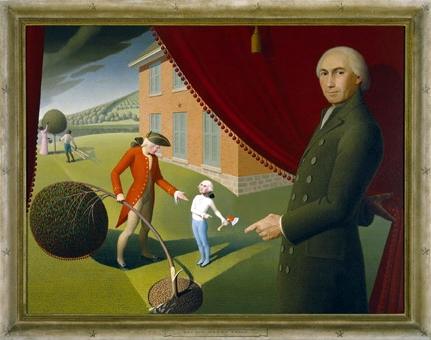
Mason Locke Weems, the itinerant “book-peddling parson” associated with the story of George Washington and the cherry tree, brings his Flying Library through Hillsborough. His wagon has bookshelves and a waterproof top and sells books to town and rural readers. Weems reports that North Carolinians especially liked “great numbers of little entertaining books.” It would be well over a century before another wagon of books, this time a lending one, rolled through the county.
Copy linkSource
Valentine, "Useful Books: Community Libraries in Antebellum North Carolina," North Carolina Libraries 64 (Fall/Winter 2006), citing Leary, The Book-Peddling Parson (Algonquin, 1984)
- 1820s
-
Library history
1822, February 7, 1822: A library society, chartered in Hillsborough
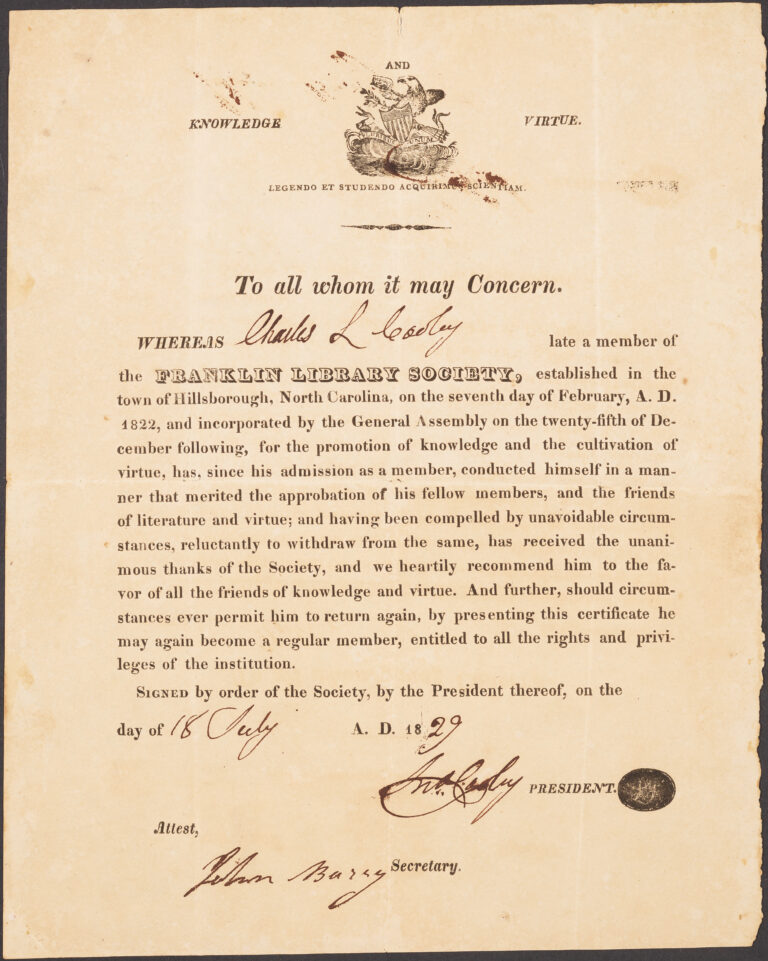
The Franklin Library Society organizes in Hillsborough on February 7, 1822, "for the promotion of learning and cultivation of virtue," and that December the General Assembly charters it as a body politic with the power to hold property and govern itself by its own bylaws. It is Orange County's only entry among some thirty community library societies incorporated across antebellum North Carolina, and the town's earliest known chartered library. A public library would not follow for nearly a century.
Copy linkSources (3)
Laws of North-Carolina, 1822, ch. CXVII (via Carolana); Petition of the Franklin Library Society, in Coon, The Beginnings of Public Education in North Carolina (1908), 1:289; Valentine, "Useful Books," North Carolina Libraries 64 (2006)
-
Library history
1825, December 1825: A lottery for books, denied
Three years into its work, the Franklin Library Society petitions the General Assembly to raise three thousand dollars by lottery, "appropriated in the purchase of useful books, to add to the Library of the Institution." The petition is signed by a full slate of officers, among them a librarian, Thomas C. Palmer, proof that Hillsborough kept a working library in 1825. The House of Commons reads the petition on December 23 and indefinitely postpones it; the Assembly that season was refusing lotteries to academies across the state as gambling in disguise.
- 1910s
-
Library history
1910: Citizens set out to start a library
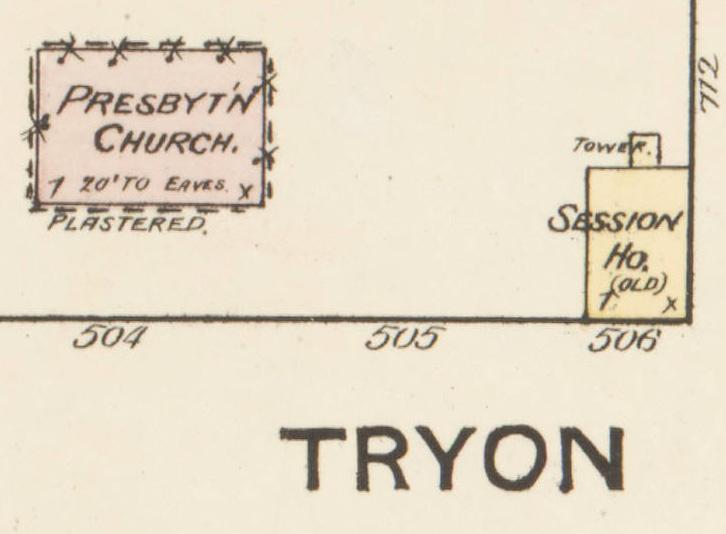
A group of Hillsborough residents meets to establish a public library. The Presbyterian Church offers its Session House at Churton and Tryon to house it. In a fiftieth-anniversary retrospective, the North Carolina Library Association counted the Hillsboro Public Library among the state’s first fifteen free public libraries.
Copy linkSources (3)
Newsletter, March 2012 ("Library History 101"); "The Spread of Public Libraries," North Carolina Libraries 54 (Fall 1996); Hughey, "Public Libraries in North Carolina," North Carolina Libraries 13, no. 1 (November 1954)
-
Library history
1917: The Hillsboro Library Association elects officers
The Hillsboro Library Association holds its annual meeting on February 22, receives officer and committee reports, and elects S. Strudwick president and A. W. Ray treasurer.
- 1920s
-
Library history
1923, January 1923: Two books per pupil
Surveying reading across North Carolina for the new Journal of Social Forces, UNC librarian Louis Round Wilson reports on a questionnaire of Orange County's 48 white schools, the graded schools of Chapel Hill and Hillsboro among them. Seven had no library at all; the rest held 3,692 volumes for 1,586 pupils, about two books each, and when asked how much the books were used, ten of the 25 teachers who answered said "not very much." Statewide he counted 67 public and semi-public libraries for 2.6 million people, one book for every twelve North Carolinians, and reckoned that more than two million residents had no public library service of any kind.
- 1930s
-
Library history
1934: Relief crews build a stone library
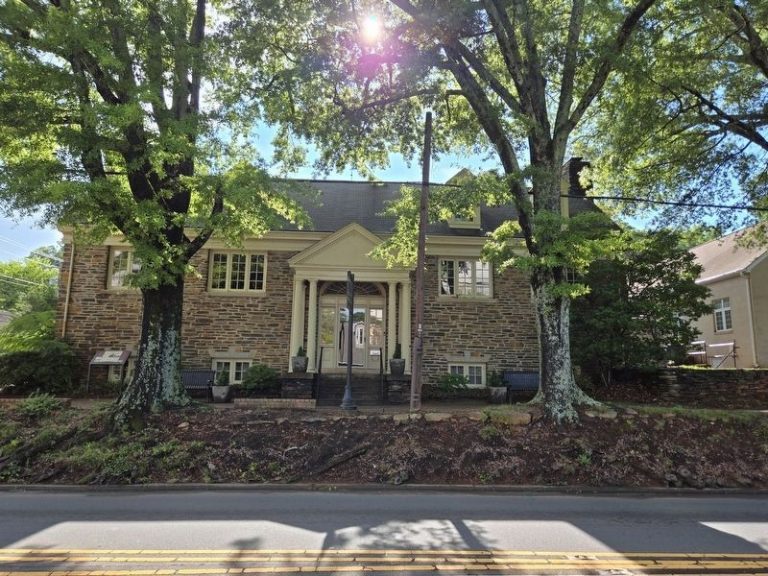
The 1934 WPA stone library building as it stands today. Photo via the Historical Marker Database. Depression-era relief crews build a stone library in Hillsborough for $15,466.10; newspapers list it that February among county relief projects. It opens as the Confederate Memorial Library and serves white patrons only, part of a segregated library landscape in which Black residents relied on separate service centered at Hillsborough High School for Negroes, later Central High.
Copy linkSources (3)
Newsletter, March 2012 ("Library History 101"); Chapel Hill Weekly, February 23, 1934 (via DigitalNC); Historic Corner historical marker, Hillsborough
-
Library history
1934: Carrboro’s first small community library
Later research into Carrboro library service records a small community library in town in 1934, predating the Carrboro Civic Club library. The surviving 2005 SILS study summarizes Neva Robinson's 1995 interviews and archival research; the 1934 library's location, operators, collection, and duration remain to be verified in the original paper.
-
Library history
1936, 1936 onward: A school library serves Black Hillsborough
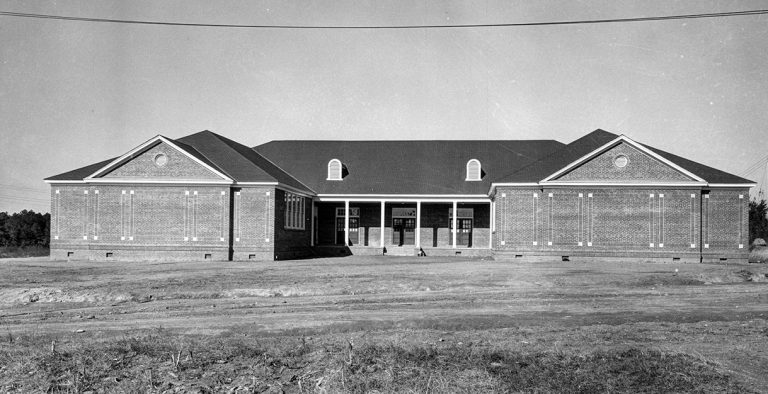
The new Hillsborough High School for Negroes, later Central High. Via Open Orange. Hillsborough High School for Negroes opens as the county's principal secondary school for Black students. From the beginning, its library does double duty: alongside serving students, it functions as the public library for Hillsborough's Black community, while librarian Agnes Whitted also teaches a private kindergarten there. It is a separate history of public access, running alongside Hillsborough's whites-only Confederate Memorial Library.
-
Library history
1939, Summer 1939: A library truck with a revolving turret
For three months, a WPA library truck tours Orange County: open the rear doors and a revolving shelved turret spins Gone with the Wind past ranks of solid histories. Lucile McDade and Louise Carroll drive it to schools and crossroads stores, where "a crowd always meets us." The county board of education and the Confederate Memorial Library in Hillsborough split the running costs; the WPA lends eleven hundred books, Hillsborough two hundred forty-five more, and the drivers report their main trouble is not having enough. The county's own bookmobile follows three years later.
- 1940s
-
Library history
1942: A bookmobile in wartime
The county's new bookmobile makes its first Chapel Hill stop in early February: two hours a month in front of the Texaco station, with librarian Ernestine Grafton in command, and readers welcome "either as browsers or to take out books." That spring it runs a wartime contest, awarding five dollars to the school that collects the most waste paper, and the proceeds buy new children's books. A budget increase lets the library take special requests from its readers; North Carolina's direct state aid to libraries had begun only the year before, when the Citizens' Library Movement, a statewide campaign rebuffed by the legislatures of 1937 and 1939, finally won $100,000 a year from the 1941 General Assembly to reach the seventy-two counties then without countywide service.
-
Library history
1945, June: Library service reaches beyond the school
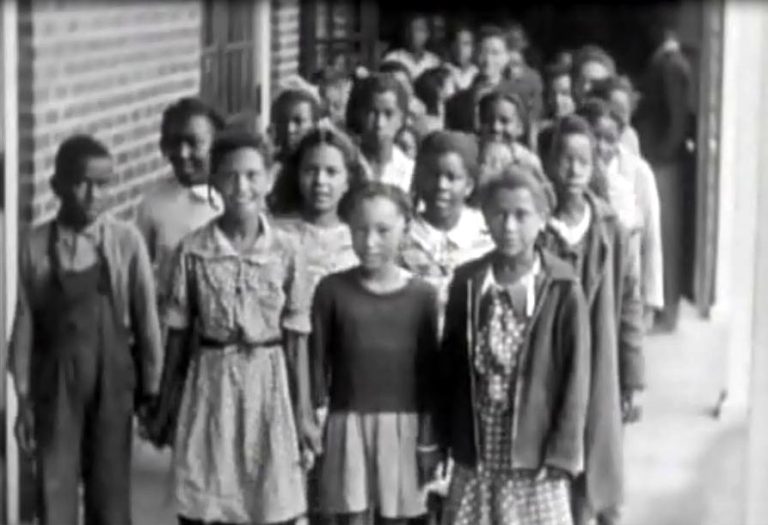
Students at the Hillsborough school in H. Lee Waters' 1939 film stills. Via Open Orange. With classes out for the summer of 1945, the newspaper's Negro Community News column announces that the library serving Hillsborough's Black community will stay open: books arranged for adults, young people and children, evening hours twice a week, rural residents specifically invited to come in, and a state library representative visiting regularly to help patrons. Six years before the Orange County Negro Public Library opens its new building, organized library service for the Black community is already running.
-
Library history
1948, November 8: Three counties, one library system
After several years of sharing a trained librarian with neighboring counties, Orange, Person, and Caswell go further and incorporate their libraries as the Hyconeechee Regional Library, pooling book collections, bookmobile routes, and trained staff. The invented name joins the Hyco River of Caswell and Person with Orange County's Occoneechee Mountain. State law had permitted multi-county library systems since 1933, and state aid, begun in 1941, pushed counties to combine. Under the region's constitution the three counties held equal seats on its board, with bookmobile headquarters in Roxboro and subheadquarters in Hillsboro and Yanceyville. The founding papers state the aim plainly: free public libraries for the use and benefit of the general public, with service intended for every citizen of the three counties.
-
Library history
1948, Reported 1948: The PTA takes on the next library project
A later history records that in 1948 "a bid for a library was passed," but responsibility for making it happen fell to Central High's PTA and other community organizations. Volunteers staffed the library three times a week for Black residents. The surviving evidence does not yet establish whether this was the same project that culminated in the purpose-built Orange County Negro Public Library in 1951.
-
Library history
1949, 1949–50 school year: 1,120 books for the whole Black community
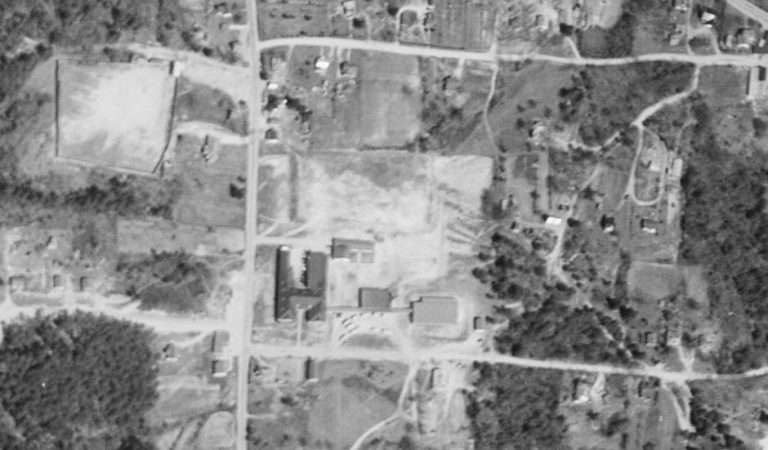
The Central High campus from the air, mid-1950s. Via Open Orange. State school reporting records Central High’s elementary division with a 1,120-volume library used by the African American community as a whole. The State Library’s statistics agree on the founding moment: its 1948-49 annual report carries the first listing of an Orange County Negro library, 1,722 volumes, a footnote noting that Negro library service "was begun in 1949," and Mrs. A. O. Whitted, the school’s Agnes Whitted, as its librarian. Community library service is firmly established well before the 1951 building opened.
- 1950s
-
Library history
1950: Carrboro opens a library of its own
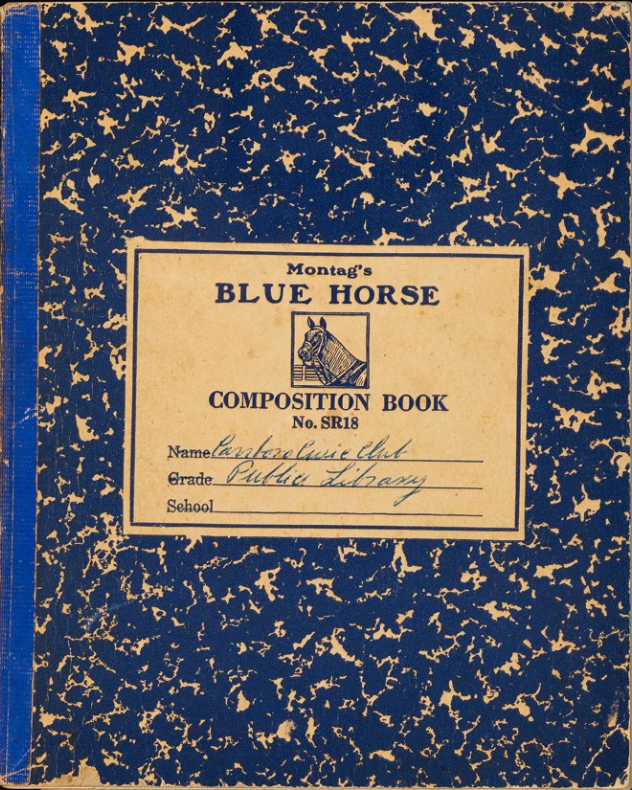
On January 25, 1950, the Carrboro Civic Club resolves to start a public library, and eight weeks later it opens in the clubhouse near the school: Wednesday afternoons, two books per borrower, Mrs. Jack Shields as the first librarian, the shelves stocked by the bookmobile and by books lent from the county library in Hillsborough. Patronage grows so fast that a second afternoon is added in May, and within the year the town board grants the library its first appropriation, $250 for new books, on a proposal drawn up by committee chair Mrs. R. J. Kiddoo. The club kept a scrapbook of the whole project, forty-three pages of minutes, rules, and clippings, now digitized at DigitalNC.
-
Library history
1950: Hyconeechee staff in 1950
A state library directory identifies Hyconeechee staff two years after the region’s founding. Ruth J. Davis, a Carolina-trained regional librarian, and bookmobile driver Mary B. Buchanan work from Roxboro; Mrs. Kendall Street staffs the Person County library; and Nannie K. Malloy and Mrs. Wright Williams staff the two Confederate Memorial libraries. Later state rosters place Malloy in Yanceyville and Williams in Hillsborough. Carrboro Civic Club records show Davis helping prepare its new library, speaking at the clubhouse and advising its library committee.
-
Library history
1951, May 1951: Orange County Negro Public Library opens
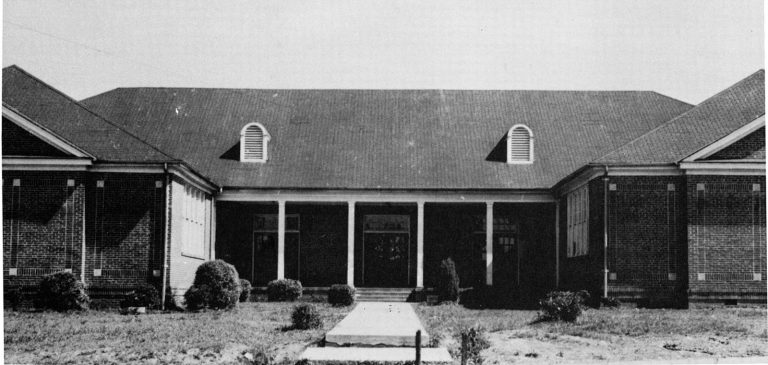
The Central High campus, 1957. Via Open Orange. North Carolina's professional library journal reports that the Orange County Negro Public Library opened to the public in May 1951 and that Black residents raised the building money through drives and private donations. A statewide retrospective independently counts it among North Carolina's new public-library buildings of the early 1950s. A later site history places it in a separate building on the Central High grounds, shared with Ms. Agnes' Kindergarten. The regional system founded three years earlier had declared its mission as service for every citizen; in Hillsborough, that service still ran through separate buildings. The state's own statistics settle how the two related: from 1951-52 the library is listed as a member unit of the Hyconeechee Regional Library, beside the county's white Confederate Memorial library, with Agnes Whitted recorded as its librarian from the service's first annual report through the mid-1950s.
Copy linkSources (5)
North Carolina Libraries, 1953 report on new public-library buildings; North Carolina Libraries, public-library building retrospective; The Alliance for Historic Hillsborough, "Central High School/Agnes Kindergarten"; Hyconeechee Regional Library constitution (via ERIC); Statistics of North Carolina Public Libraries, 1947-1957 (State Library, via HathiTrust)
-
Library history
1956, 1956–57 report year: The separate listings end
For eight years the State Library’s annual statistics had listed the Orange County Negro Public Library by name, most of them beside the county’s white library as member units of the Hyconeechee region. The 1955-56 report is the last to do so. From 1956-57, the region reports as three undivided county lines, with no separate libraries and no racial designations, even as other counties' Negro branches continue to be listed across the state. What the tables stop recording, they do not explain: whether the building on the Central campus stayed in use, and when Black residents first used the downtown library, are questions the statistics leave open.
-
Library history
1957: The Library Association retains a legal role
Nine years after the regional system forms, the General Assembly authorizes Hillsboro's commissioners to convey the Churton-and-Tryon library lot to the Hillsboro Library Association, with the property reverting to the town if it ceases to be used as a library. The act shows that the old association still held a formal place in the library's governance and property history. The arrangement was layered from the start: Hillsborough's library had operated inside the regional system since Hyconeechee's founding, while the association held the building. The special act remained on the books until 1985, three years after the library moved to Whitted, when Hillsborough's consolidated charter repealed it as legislation that had served its purpose.
- 1960s
-
Library history
1960, North Carolina context: Library integration unfolds town by town
Across North Carolina, public libraries did not desegregate on a single date. The state's white and Black professional library associations united in 1955, but access to local buildings remained a community-by-community question. Some systems opened quietly: a 1961 federal report noted that six Black students entered Caldwell County's previously white library without opposition. Elsewhere, Black residents organized for years. In Asheville, activists pressed library and city officials until all branches opened to patrons of every race in September 1961. Orange County's statistical reports stop listing separate white and Black libraries after 1955-56, but the surviving evidence has not yet established when Black residents first received unrestricted access to Hillsborough's downtown library.
Copy linkSources (4)
U.S. Commission on Civil Rights, 1961 report; Buncombe County Special Collections, "Buncombe County Libraries Celebrates 60 Years of Integration"; Wiegand, "Any Ideas? The American Library Association and the Desegregation of Public Libraries in the American South"; Wiegand and Wiegand, The Desegregation of Public Libraries in the Jim Crow South (LSU Press, 2018)
-
Library history
1962: The library gets a newspaper column
Hyconeechee director David Flick, newly succeeding Georgia H. Niven after her decade leading the region, writes a regular column for the News of Orange County, "Between the Covers," carrying reviews, library news and reading recommendations into homes across the region. Fourteen years into regionalization, the shared library has a public voice in the county paper.
-
Community context
1965, 1965 to 1968: Orange County resists the timetable
More than a decade after Brown v. Board of Education, Orange County still operates a dual school system. The district makes no move toward integration during the 1950s, despite complaints from Black residents. When all-white Orange High School opens in 1963, the Cathcart and Long families apply on the grounds that Central High is not accredited; the board turns down Linda Long, admits Tonya and Narviar Cathcart, and a citizens' petition the next year wins only three more transfers. Desegregation proceeds in the mid-1960s under a freedom-of-choice plan worked out with federal officials, at the pace the county chooses: in 1965-66, only 7 percent of the district's Black students attend an integrated school. Before then, six county schools enrolled only white students and four only Black students. The district tells federal officials, "It is our feeling that our board has gone as far in the desegregation of its school and staff as it is willing to go." The board gears integration to the construction schedule of new classrooms at the white high school, with full desegregation not planned until the 1969-70 school year.
-
Library history
1968, April: A local board still keeps watch over the library
Nearly twenty years after Orange County joins the Hyconeechee Regional Library, Hillsborough's old library still has a local board of its own. During an April open-house week, board members Mrs. E. M. Lockhart and Mrs. George Teer serve refreshments as Orange County schoolchildren compete in poster and essay contests. Whether this is the old Hillsboro Library Association under another name is not recorded.
-
Community context
1968, April: Central High marches through Hillsborough
In the weeks after Martin Luther King Jr.'s assassination, Central High students and teachers march peacefully through downtown Hillsborough; participants recall teachers such as Caleb Moore leading the march, and rallies at McPherson's ballpark, the only venue large enough to hold the crowds. Black students already attending Orange High march alongside them in solidarity, at some risk to their new standing. Students invite civil-rights speakers including Howard Fuller and Ben Ruffin. The demonstrations form part of a spring of organizing that culminates in the student walkout over school desegregation on May 20.
-
Community context
1968, May 20 to 24: Central High students walk out
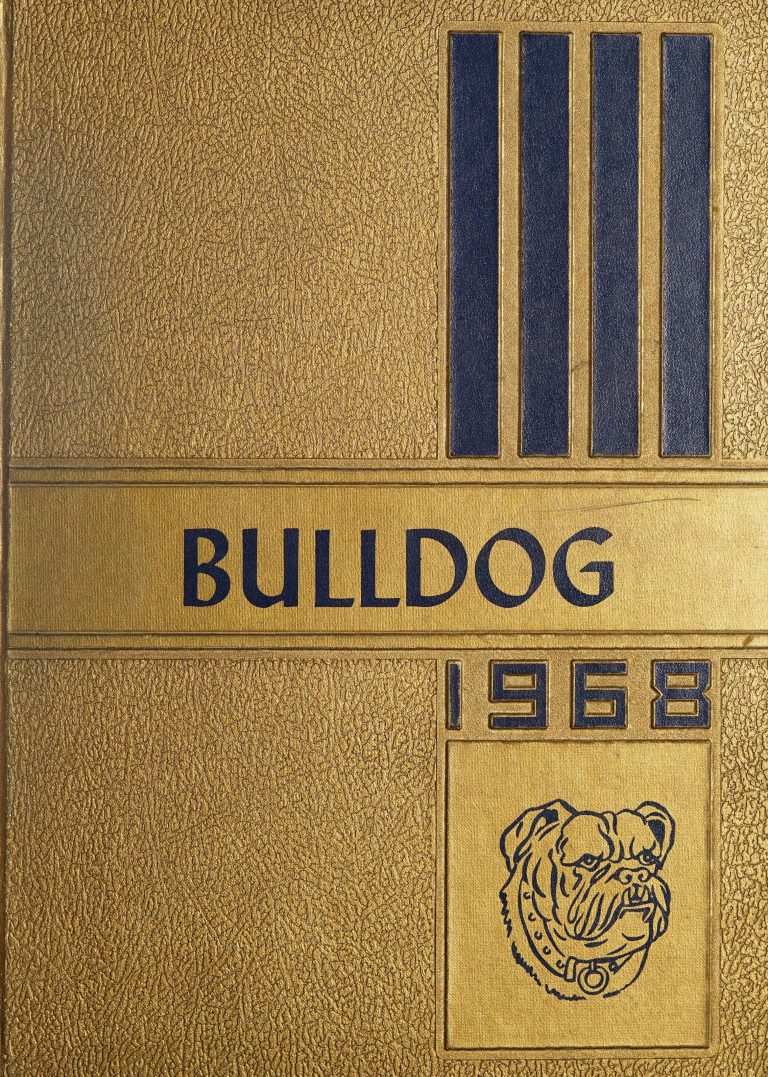
The Bulldog, Central High's yearbook for the walkout year, preserved by Orange County Public Library. Via DigitalNC. After the school board rejects a petition signed by about 546 Black parents asking that the three high school grades integrate that September, Central High's students, organizing on their own since February, act: at 9 a.m. on Monday, May 20, they walk out of class, beginning what a university researcher on the scene calls the first Black protest of segregation in Orange County's history. For two days they march for hours around the Town Hall while the board meets inside; the town answers with a march ordinance and a brief curfew. A teacher's recollection preserved in the community's history of Central names the leader at the front of the downtown march, "a very smart young guy" named Freddie Parker, and dwells on the order and peace of the demonstrations: students arrested along the way are soon released, and nothing turns violent. Advised but never directed by Durham organizer Howard Fuller, the students hold their movement together through a week of failed meetings, and the wider Black community forms a negotiating committee at Mt. Zion Baptist Church. By Friday the county has agreed that any student in the three grades may transfer to Orange High in the fall. Within days, 273 of 392 eligible students apply.
Copy linkSources (3)
Binderman, "Factors in School Integration Decisions of Negro Mothers" (UNC, 1968); Southern Education Reporting Service, May 1968; Ruffin-Villines, Hillsborough Negro School 1936–1968 (Stanback recollection), excerpted in the Orange County Historical Museum's "Integration in Orange County"
-
Community context
1969, 1968-69 school year: Orange County’s schools integrate, but only one way
After months of organizing by Central High students and families, Central's three high school grades and their teachers transfer together to Orange High in the fall of 1968; at the high school the movement runs one way only, with no white students transferring to Central, an issue the students had raised and the negotiators conceded. Across the district as a whole, a federal court later records the year plainly: 241 Black children chose formerly white schools, and five white children attended the formerly Black schools still operating in the lower grades. Integration does not bring equal treatment automatically: Black teachers recall pay and equipment still lagging their white counterparts', and Stella Horton, a Black history teacher who sided with her students' grievances, is not rehired at year's end; her lawsuit fails, but its findings preserve the year's record. The 1968-69 school year ends Orange County's formally dual school system, fourteen years after Brown, through pressure from Black students and families, federal officials and the courts. Central stops being a high school, and the campus that anchored Black Hillsborough, home to the community's public library since the 1930s, begins losing its institutions.
- 1970s
-
Library history
1974, 1973 to 1975: Hyconeechee in the mid-1970s
A state library directory lists Lloyd Osterman as Hyconeechee director in Yanceyville, Mrs. Edna Dawkins as librarian at Hillsborough’s still-named Confederate Memorial Library, and Mrs. Gladys Parker as librarian at the Carrboro club library in Town Hall. Two bookmobiles serve the three counties. Within the next decade, the Carrboro club library closes, the Hillsborough library moves and the Friends organize.
-
Library history
1976: Brenda Stephens takes the library on the road
Brenda Stephens begins her Orange County library career driving one of the region's two bookmobiles, bringing books and library service to residents who could not easily reach a branch. Seventeen years later she becomes director of the county library system and eventually leads the three-county Hyconeechee Regional Library.
-
Library history
1977: Carrboro’s Civic Club library closes
After the Carrboro Civic Club's unsuccessful 1974 effort to transfer its volunteer-run public library to town government, the club tells the town in 1976 that it can no longer administer the library, and it closes the following year. The state had counted the little library all along: its shelves grew from 661 volumes in 1951 to more than 1,100 by 1956, and the state directory of the mid-1970s still lists it at Town Hall with Mrs. Gladys Parker as librarian. Hyconeechee Regional Library's bookmobile then provides Carrboro's public library service until the McDougle branch opens in 1995.
Copy linkSources (4)
Weiss, "Local Government and the Public Library" (UNC SILS master's paper, 2005), summarizing Robinson (1995); Town of Carrboro historic walking tour; Leinaweaver, "After Ten Years" (UNC SILS master's paper, 2005); Statistics of North Carolina Public Libraries, 1947-1957 and 1973-1975 (State Library, via HathiTrust)
-
Library history
1977, December: “This is a Library. Feel Free.”
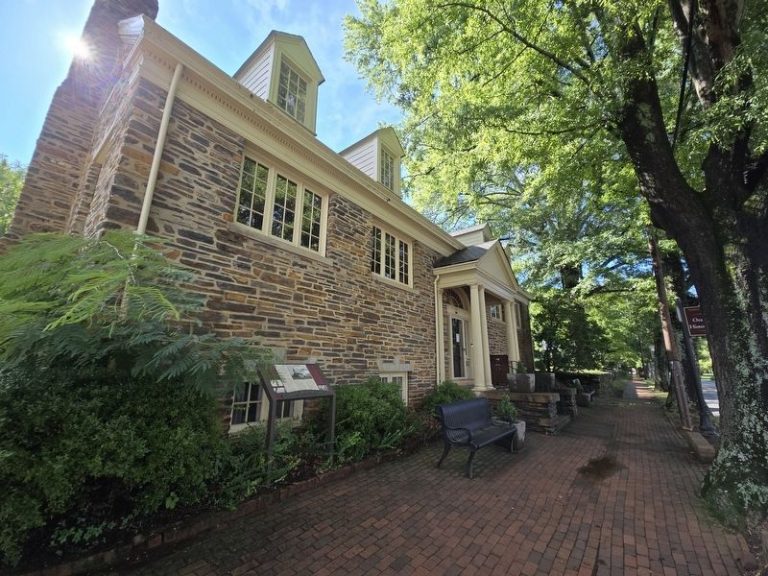
The old library building today. Photo via the Historical Marker Database. A writer visiting for The Sun finds the Confederate Memorial Library still operating under its original name, which the state library directory also used in the mid-1970s. Inside, a wooden staircase leads to biography and literature, and the newspaper rack includes the Alamance-Orange Enterprise, the New York Times and the North Carolina Anvil. A sign reads, “This is a Library. Feel Free.”
-
Library history
1979: Children’s services become a regional specialty
Hyconeechee names Daisy Whitesides, a recent graduate of Carolina's library school, coordinator of children's services for the three-county region, a dedicated professional post for work with young readers. The regional system has grown past buildings and bookmobile routes into specialized services, two years before the Friends organize.
- 1980s
-
Library history
1980: Puppets on the courthouse lawn
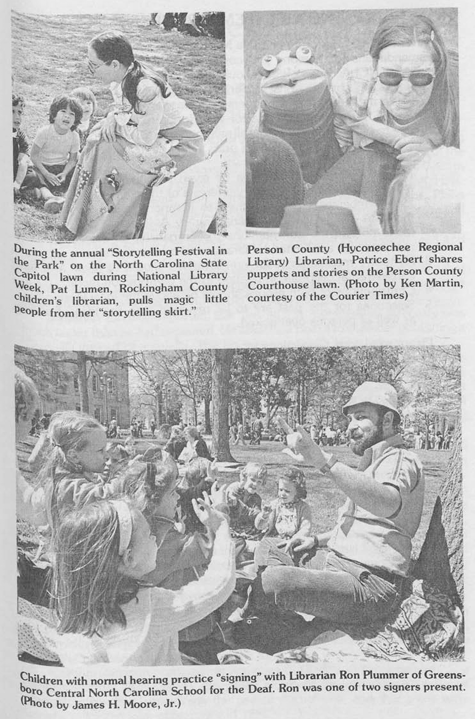
The state library journal photographs Hyconeechee librarian Patrice Ebert presenting puppets and stories on the Person County courthouse lawn. It also reports that the region marks National Library Week with a day in each county, assisted by volunteers from UNC’s library school. A year before the Friends organize in Hillsborough, the region’s librarians are already taking the library outdoors to meet its people.
-
Library history
1981, March 20: Hyconeechee librarians help organize Women in Libraries
More than one hundred librarians meet at Meredith College on March 20 to organize what becomes the North Carolina Library Association’s Women in Libraries Roundtable. The group responds to discrimination women face when seeking library directorships. Hyconeechee staff members Patrice Ebert and Nancy Massey serve on the original steering committee, and Massey later directs the regional system. The Friends organize eight months after the Meredith meeting.
Copy linkSources (2)
North Carolina Library Association, Women in Libraries Roundtable history; Hyconeechee rosters and vitae in North Carolina Libraries
-
The Friends of OCPL
1981, November 5: The Friends of the Orange County Public Library are founded
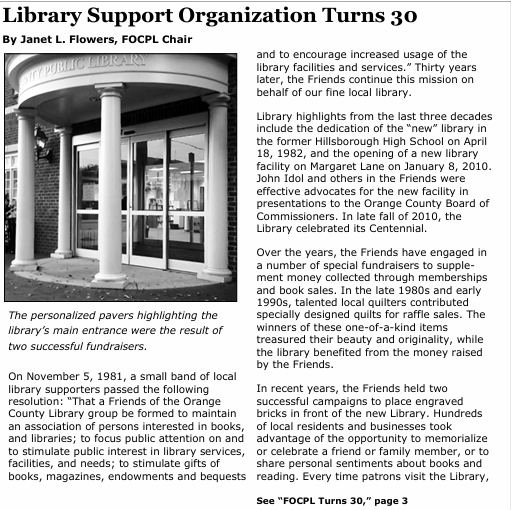
On November 5, residents organize the Friends of the Orange County Public Library to raise money and advocate for a library preparing to move into larger quarters. Kathleen Moeller-Peiffer, county librarian since 1979, is credited in her professional record with starting a Friends group during her Orange County tenure, as well as buying a new bookmobile and moving the library to its new home.
Copy linkSources (3)
Organization records; Newsletter, November 2011; New Jersey State Library biography of Kathleen Moeller-Peiffer
-
Library history
1982, April: The library moves into the old high school
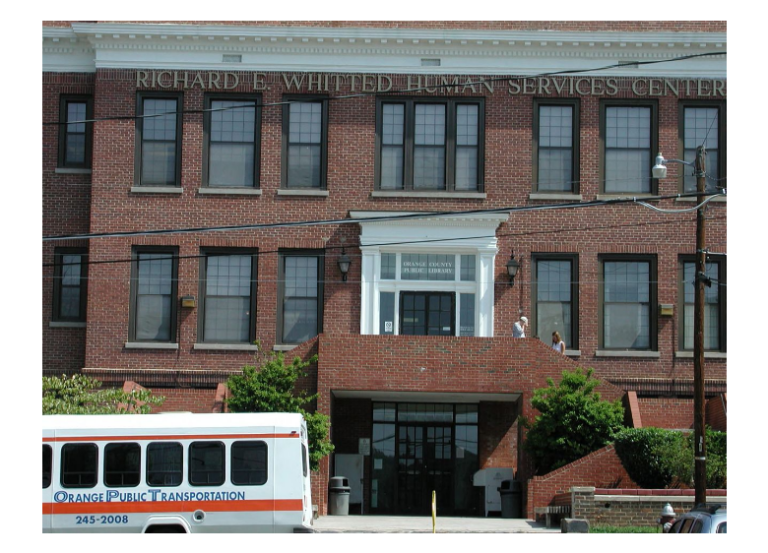
The library is dedicated in its new home on April 18: the former Hillsboro High School building on Tryon Street, known today as the Whitted building for Richard Whitted, Orange County's first Black commissioner. Volunteers had answered a newspaper call that winter to move all 30,000 of its books. The Friends, founded five months earlier, are there from the start.
Copy linkSources (3)
Newsletter, November 2011; The North Carolina Anvil, December 25, 1981 (via DigitalNC); Historic Corner historical marker, Hillsborough
-
The Friends of OCPL
1982, May 3: The Friends become a corporation
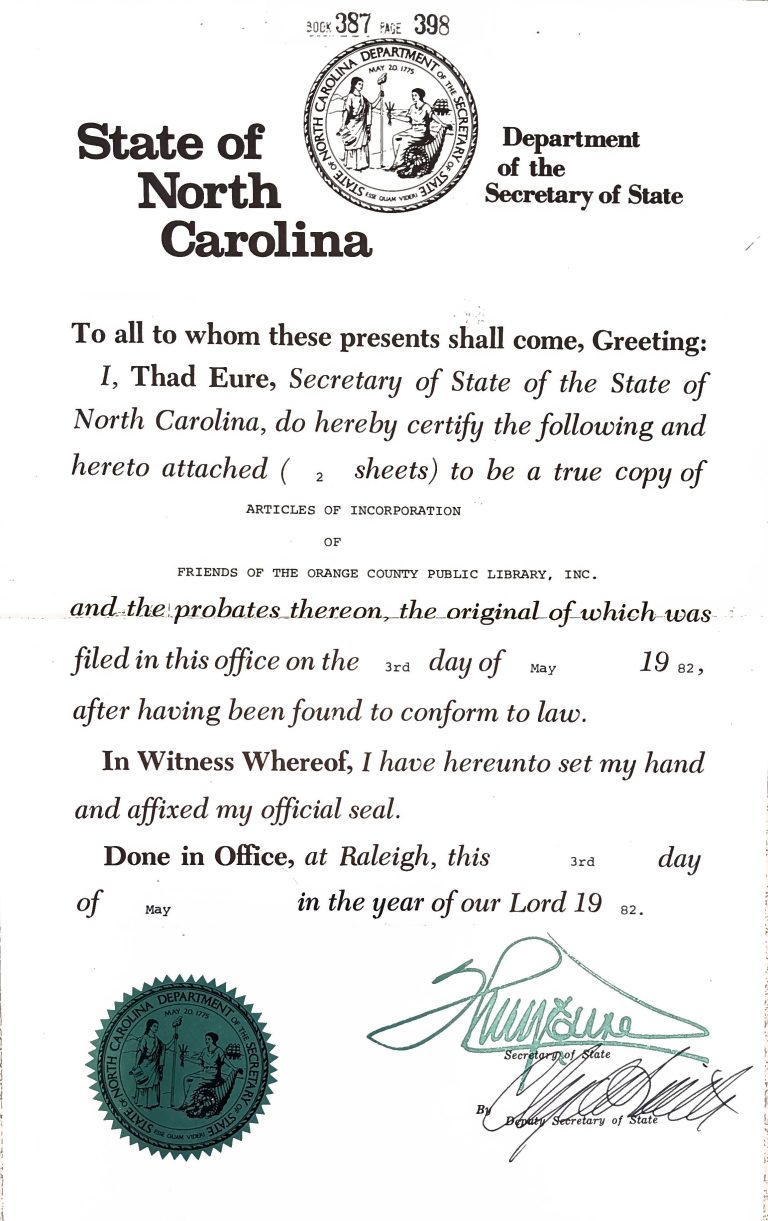
The Secretary of State's certification of the Friends' Articles of Incorporation, filed May 3, 1982. Less than a year after the Friends organize, incorporator Mark Pipkin signs the Articles of Incorporation on April 8, 1982, and Secretary of State Thad Eure files them at 10:47 on the morning of May 3: the Friends of the Orange County Public Library, Inc., with Pipkin, Dr. Sander J. Freedman of Cedar Grove and Ora Gilligan of Hillsborough as its first directors, and its registered office at the library itself on West Tryon Street. The stated purposes still fit today: stimulate public interest in the library, encourage gifts and bequests for its benefit, and increase its use. Federal 501(c)(3) recognition follows the next year.
-
The Friends of OCPL
1983, June: Recognized as a 501(c)(3) charity
The IRS recognizes the Friends as a 501(c)(3) charitable organization, and gifts to the Friends become tax-deductible.
Copy linkSource
IRS records (EIN 58-1507922)
-
Library history
1983: Overdue books go to mediation
The state journal reports Orange County trying something new with an age-old problem: county librarian Kathleen Moeller-Peiffer's first attempt at resolving differences with patrons through the local Dispute Settlement Center has been successful, with five patrons sent notices under the gentler arrangement. Nearly forty years later, the county would end overdue fines altogether.
-
The Friends of OCPL
1986: The regional director joins the Friends
Nancy O. Massey, director of the Hyconeechee Regional Library and chair of the state association’s Public Library Section, lists membership in the Friends of the Orange County Public Library among her professional activities.
-
Library history
1986, April 2: A librarian leaves the library $50,000
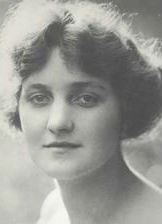
Rebecca B. Wall. Orange County Public Library, Local History Collection. Rebecca B. Wall dies on April 2 at eighty-seven, leaving the Orange County Public Library $50,000. Her own career ran from the New York Public Library and Greensboro Senior High to twenty-four years as chief librarian of Fayetteville's VA hospital, and she had served on the Orange County Board of Education from 1925 to 1929. The gift grows to more than $100,000 by 2010 and supports the local-history collection that bears her name in the new Main Library.
-
Carrboro/Southern Branch Friends
1988: The Carrboro/Southern Branch Friends campaign begins
Plans for a new Carrboro library are first proposed and a Friends group is established: the campaign that developed into the Friends organization serving the Carrboro Branch and later the Southern Branch. Over the next seven years, the Friends demonstrate demand, raise money, press local governments for support, and work through site selection and planning until the Carrboro Public Library opens at McDougle in May 1995.
- 1990s
-
The Friends of OCPL
1990, Late 1980s to early 1990s: Quilts for the library
Local quilters donate specially designed quilts for raffle sales. For years this is one of the Friends’ main fundraisers, well before the book sales took over.
Copy linkSource
Newsletter, November 2011
-
Carrboro/Southern Branch Friends
1992: The Carrboro/Southern Branch Friends take formal shape
Friends records date the Carrboro organization to 1992, while Emily Weiss’s 2005 summary of Neva Robinson’s 1995 research says a Friends group formed when the branch campaign began in 1988. The dates may represent an informal campaign followed by formal organization. The Carrboro and Orange County boards then operated separately for decades and first met in 2012.
Copy linkSources (2)
Newsletter, September 2012; Robinson, "The Carrboro Public Library" (UNC SILS master's paper, 1995), as summarized by Weiss (2005)
-
Library history
1992: The county library becomes a county department
Orange, Person and Caswell reorganize Hyconeechee so that each county takes direct responsibility for its own library's personnel, purchasing, accounting and facilities, while the regional system continues to coordinate collections, grants and broader policy. Orange County's finance director has served as the region's fiscal agent since 1991, and in 1994 the county formally accepts accountability for Hyconeechee's finances. It is the start of a separation that finishes with Hyconeechee's dissolution twenty years later.
-
Carrboro/Southern Branch Friends
1993: Commissioners reject funding for a Carrboro library
County commissioners decline to fund a Carrboro library in 1993 and suggest using space in the McDougle schools, then under construction. The Friends pursue that option.
-
Library history
1993: Brenda Stephens takes charge of the library system
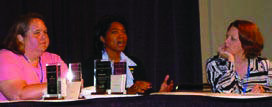
Brenda Stephens (center), with Caroline Walters and Jennie Barrett, at the North Carolina Library Association conference, 2005. North Carolina Libraries. Brenda Stephens, who started on the county bookmobile in 1976, becomes director of the Hyconeechee Regional Library, the three-county system Orange County's newly departmental library still belonged to; the state journal's 1993 conference coverage already captions her with the regional title. She leads the county's library service until her retirement in 2008.
-
Carrboro/Southern Branch Friends
1994, March: Carrboro votes to fund the branch
After "much persuasion by the Friends," the Carrboro Board of Aldermen votes unanimously to help fund a branch library at McDougle, and the county joins the arrangement. The opening is a year away.
-
Library history
1994: Local records stay open after the courthouse closes
At the urging of longtime genealogy volunteer Thomas "Nat" Clark, a copy of Mary Claire Engstrom's countywide cemetery survey is placed in the Orange County Library's North Carolina Collection. The point is access: researchers who cannot visit county offices during the workday can use the records at the library on evenings and weekends. The specialty itself is older: back in 1977 the regional library had named Eugenia Babylon its librarian for local history, genealogy and government documents. By 1999, professional preservation researchers are using the library's North Carolina Room as one of Hillsborough's principal historical archives.
-
Carrboro/Southern Branch Friends
1995, May 1995: The Carrboro Public Library opens at McDougle
After years of fundraising, advocacy and site searches by the Friends of the Carrboro Library, the Carrboro Public Library opens in the McDougle schools' media center. The town and county had agreed to fund it the previous year. Orange County retires its traditional bookmobile and redirects the money to the branch; a later outreach van provides more limited mobile service until the reorganization associated with the Main Library’s 2010 move. In 1996, the joint-use library joins the Orange County and Hyconeechee systems as the Carrboro Branch. It soon offers English classes on Sundays and weekday evenings, while the Friends fund essay-contest prizes for county students. A master’s study written that year gave the founding its epitaph: a dream of the community, a reality because of the Friends.
Copy linkSources (6)
Robinson, "The Carrboro Public Library: A Dream of the Community, A Reality Because of the Friends" (UNC SILS master's paper, 1995); Weiss, "Local Government and the Public Library" (UNC SILS master's paper, 2005); Carolina Times, December 20, 1997 (via DigitalNC); Leinaweaver, "After Ten Years" (UNC SILS master's paper, 2005); Orange County and Chapel Hill managers' report on library services, Assembly of Governments, November 2009; Orange County operating budgets
-
Carrboro/Southern Branch Friends
1995, May: Twenty hours a week, and the Friends work the desk
The new branch opens on a tight formula: twenty hours a week, every one of them outside school hours. The Friends help fund the library and staff a full twenty-hour position themselves, and the branch manual calls donated books the "lifeblood" of the collection.
-
Carrboro/Southern Branch Friends
1995, 1995 to 2022: An art gallery grows inside the library
When the Carrboro Branch opens at McDougle, the Friends create a community art program in the shared library and school media center. The purpose, longtime chair Nerys Levy later wrote, was twofold: to show art, and to make the point that libraries were becoming multifunctional cultural centers, while drawing visitors into a branch that was otherwise hard to find inside a school. Levy headed the art committee for twenty-five years. By 2015 the gallery had presented more than 1,750 local artists in more than sixty exhibitions and earned two Frances B. Reid Awards and a national Friends of Libraries award; by the time the branch closed in 2022, it had shown the work of more than 2,000.
-
Library history
1996: The Internet comes to Whitted
Working with RTPnet, the library installs its first public Internet computer at Whitted: a Pentium purchased for $1,746.88, running Windows 95 in kiosk mode. It is connected by fall, and the library offers free Web classes. Within a decade, the library has fifteen public computers, records more than 20,000 uses a year, adds wireless access and offers computer-only cards without a county residency requirement. A 2007 study finds that the library provides some patrons' only computer access.
Copy linkSources (4)
RTPnet meeting and project archives; Chapel Hill Herald, September 3, 1996, "Library offers free access to Internet, Web"; Orange County operating budgets; Brzozowski, "A Survey of Orange County Public Library Computer Users" (UNC SILS master's paper, 2007)
-
Library history
1997: Brenda Stephens receives statewide recognition
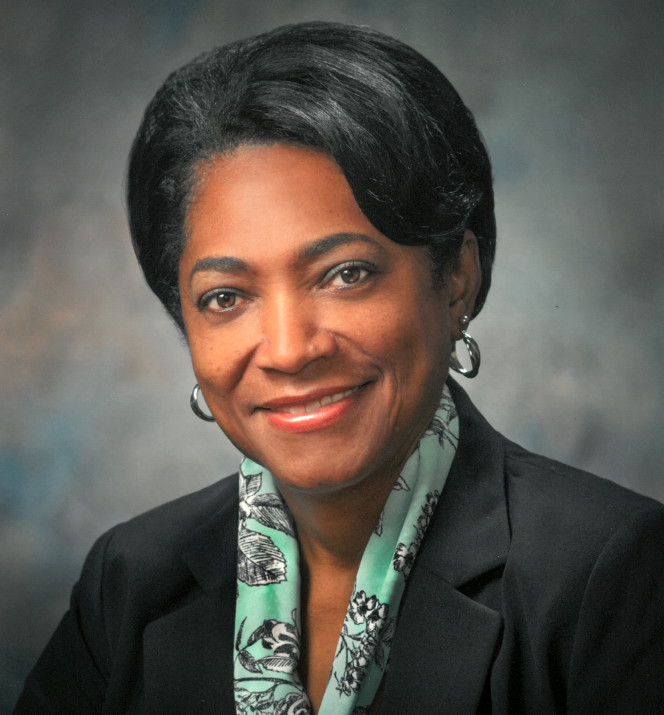
At the North Carolina Library Association's biennial conference in Raleigh, the Round Table for Ethnic Minority Concerns presents its Roadbuilder's Award for Public Librarianship to Brenda Stephens, director of the Hyconeechee Regional Library. The Roadbuilder awards honor African American librarians whose work has built North Carolina's profession and paved the way for those who follow; the journal's conference coverage photographs her receiving it.
-
The Friends of OCPL
1999, By October: The Friends appear on the World Wide Web
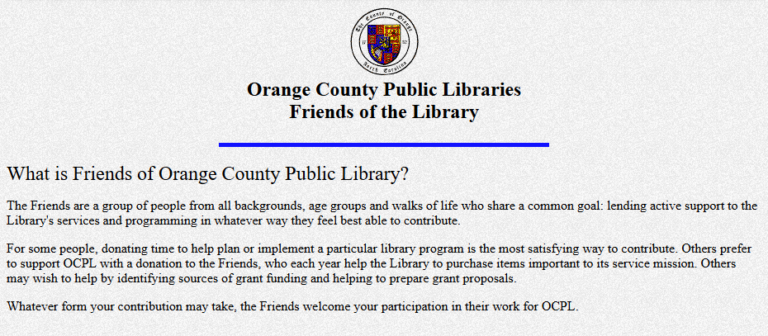
The county library’s early website, first captured by the Internet Archive on October 5, 1999, carries a Friends of the Library page: an invitation to join through staff liaison Rhonda Owen, and a picture of the group’s work at the time, “sponsoring programs for adults and children” such as the library’s Native American Day, raising money for books and equipment, and “holding a booksale annually.” The site’s events calendar shows that work in action: the Friends sponsor two of that summer’s reading-program concerts. It is the Friends’ first known appearance on the web, sixteen years before they open social media accounts of their own.
-
Library history
1999: The library starts teaching English
A statewide survey reports that Orange County Public Library began offering English-as-a-second-language tutoring and a conversation group several years earlier. Demand leads the county to fund a full-time coordinator.
- 2000s
-
Library history
2000, August 17, 2000: The joint-use contract, in writing
Orange County and the Chapel Hill-Carrboro City Schools sign a joint-use agreement for the McDougle branch on August 17, setting out in writing who provides staffing, utilities, maintenance, insurance, and janitorial service, down to stipends and entrances, with school and library hours kept from overlapping.
-
Library history
2000, January: Andrea Tullos advances from part-time hire to assistant director
The library hires Andrea Tullos part-time in January 2000 to assist the children’s librarian with a Smart Start grant. During the next twenty years, she becomes business manager, earns her library degree, serves as the Friends' staff liaison and as treasurer of the North Carolina Library Association, and becomes assistant library director.
Copy linkSources (3)
Orange County staff profile, 2019; Library website Friends pages, 2004 and 2006 captures (via the Internet Archive); North Carolina Libraries association rosters
-
Library history
2001, 2000 to 2001: A countywide library plan
In June 2000, county commissioners appoint a fourteen-member Library Services Task Force to study countywide library service and prepare a long-range plan. Its 2001 report recommends raising county library spending to the state average, advancing northern and southern library projects together, and creating an Orange County heritage center. The report also recommends the technology-centered Carrboro library that opens three years later as the Cybrary.
Copy linkSources (2)
Library Services Task Force, 2001, per the county managers' report; Orange County and Chapel Hill managers' report on library services, Assembly of Governments, November 2009
-
Library history
2001: More computers, wider access
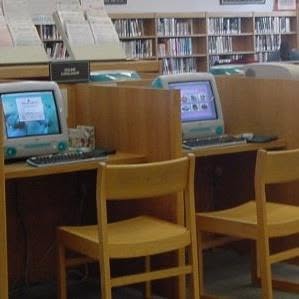
Five years after the library gets its first public Internet terminal, Hyconeechee receives a $58,581 Gates Foundation grant to expand public computer and Internet access across the regional system. By 2004-05, Orange County is reporting 15 grant-funded public computers and more than 20,000 computer sessions a year.
-
Carrboro/Southern Branch Friends
2002: The Library Arts Program wins statewide recognition
The Friends of the Carrboro Branch Library win a Frances B. Reid Award from Friends of North Carolina Public Libraries for the Library Arts Program they built at McDougle. The program turns the shared school-library space into a community gallery; by 2015 it has shown work by more than 1,750 local artists and won both state and national recognition.
-
Library history
2003: The catalog goes digital
The regional library replaces its older Galaxy automation system with Polaris, bringing circulation and catalog records onto a modern integrated library system. Patrons can soon search the collection remotely, place holds and manage their accounts online, the electronic counterpart to the public Internet access that had arrived at Whitted seven years earlier.
-
Library history
2004, FY 2004-05: County library service expands to four locations
By the 2004-05 budget year, county library funding covers Hillsborough, two Carrboro locations, Cedar Grove and service to Efland. The county budgets $908,103 for its library locations, separate from its contribution to Chapel Hill Public Library. The Orange County system operates four staffed libraries, with the new Cedar Grove Branch also designated to serve Efland.
-
Library history
2004, April 21: A branch returns library service to northern Orange
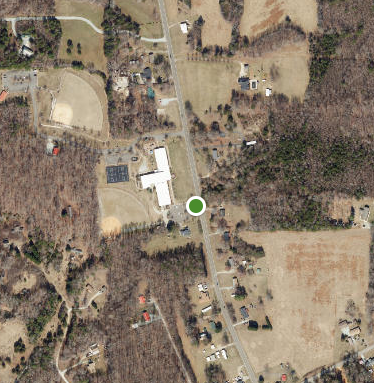
Orange County opens the Cedar Grove Branch Library in two rooms of the Northern Human Services Center, bringing a permanent library location to northern Orange County: thirty-six hours a week of books, children's and adult programs, computer classes, public computers, a book club and knitting circle, and materials fetched from across the regional system, with outreach to the area's Hispanic community. Four months later, the Cybrary opens in Carrboro as the county expands service at both ends of Orange. In the branch's second year, attendance at its children's programs nearly doubles.
-
Carrboro/Southern Branch Friends
2004, August 30, 2004: The Carrboro Cybrary opens
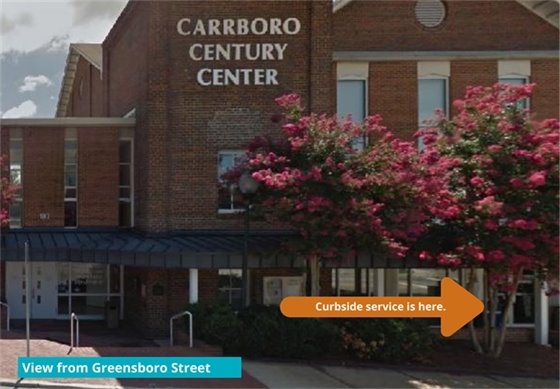
The Century Center, home of the Cybrary, in a county announcement. Orange County Government. In March 1998, the Friends of the Carrboro Library ask the town to provide downtown library space. A county task force recommends the idea in 2001, but Carrboro removes it from the 2002 budget. The Carrboro Cybrary opens in Room 5 of the Century Center in 2004 with five computer stations, current fiction and a paperback exchange. One computer is equipped for patrons with visual or hearing impairments. Librarian Susan Brown calls it “a stepping stone to getting a freestanding library of (Carrboro’s) own.” Two decades later the Southern Branch proves her right: the Cybrary closes on January 31, 2025, as services move to the Drakeford Library Complex.
-
Library history
2004: The plan calls for something bigger
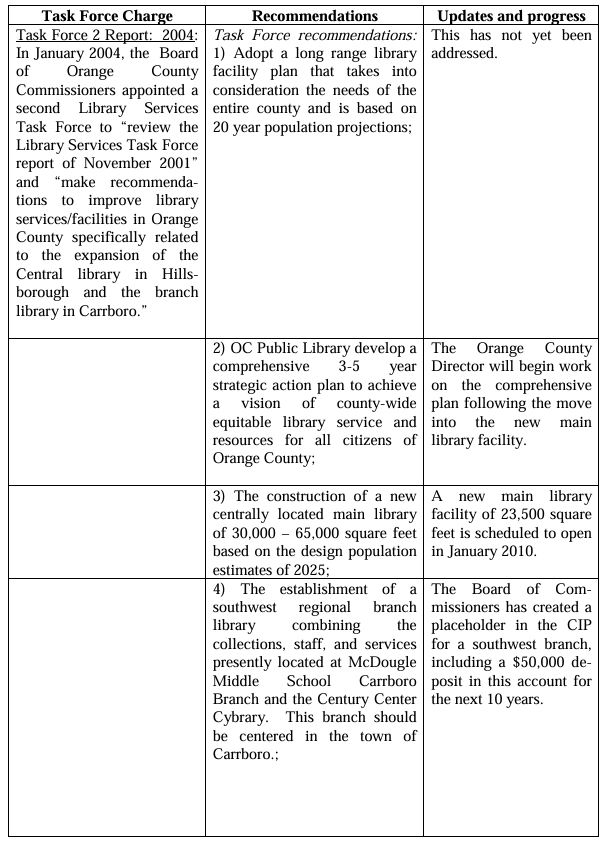
Orange County's Library Services Task Force recommends replacing the Whitted library with a centrally located Main Library of 30,000 to 65,000 square feet, sized for projected growth through 2025. The building that ultimately opens in 2010 is 23,500 square feet.
Copy linkSources (2)
Library Services Task Force, 2004, per the county managers' report; Orange County and Chapel Hill managers' report on library services, Assembly of Governments, November 2009
-
The Friends of OCPL
2006, April: The Friends adopt a vision statement
On April 20, 2006, the Friends board adopts a vision statement, and within two weeks it is on the library’s website under a systemwide name, Friends of the Orange County Public Libraries. The commitments: volunteers and financial help for programs, materials and equipment “beyond public funding”; a communication program reaching all county residents; advocacy “in public and private forums”; and collaboration among all county libraries. The regional library system’s own site republishes the statement and describes the Friends as serving Orange, Cedar Grove, Cybrary and the Carrboro Branch.
Copy linkSources (2)
Library website Friends page, May 2, 2006 capture (via the Internet Archive); Hyconeechee Regional Library System website, 2008 (via the Internet Archive)
-
Library history
2007: Downloadable video service begins
Orange County adds downloadable video service for Hyconeechee patrons, available from library computers or from home. The service marks an early expansion beyond materials used inside library buildings.
Copy linkSource
Orange County adopted budget, FY 2007-08
-
Library history
2007: Six branches across three counties
Joining a statewide Big Read program, Hyconeechee describes itself as a six-branch system serving 102,927 people across Orange, Person and Caswell, and names electronic access as especially important to its rural communities. The regional idea from 1948 survives as a shared layer, even though each county's library has run its own day-to-day affairs since 1992.
-
Library history
2007: “Thievery Leads to 25 Percent Increase in Circ Stats!”
Cybrary branch librarian Margot Malachowski describes the branch’s summer in the Public Library Association’s national journal. Under the headline “Thievery Leads to 25 Percent Increase in Circ Stats!,” she explains that part of the apparent rise in summer reading reflected books disappearing from the one-room collection.
-
Library history
2008: A new director for the final Whitted year
Lucinda Munger is appointed Orange County Library Services Director in late 2008, succeeding retiring director Brenda Stephens, and takes office on January 12, 2009, with responsibility for the Hillsborough main library and three branches just as planning for the new building enters its final year.
-
Library history
2008, FY 2008-09: Whitted is busier than ever
As plans move forward for a larger Main Library, the old Tryon Street library posts more than 209,000 checkouts, nearly twice its 2003-04 total. Across the system, circulation reaches 278,488. The cramped Whitted building is not being replaced because people stopped using it; it is being replaced as use climbs sharply.
-
The Friends of OCPL
2009: The first Bricks for Books campaign
The Friends’ first engraved-paver campaign raises about $26,000 toward the library, the largest single fundraiser anywhere in the organization’s records.
-
Library history
2009, Spring: The new library almost costs the smaller branches
With the new Hillsborough library under construction and every county department ordered to find 10 percent, the library’s own cut scenarios and then the county manager’s proposed budget put closures on the table: the Carrboro branch at McDougle and Cedar Grove would close, their staff moving to the new Main Library and their collections dispersed. Quizzed by commissioners, Director Lucinda Munger lays out the arithmetic: the budget shows only $37,000 in branch savings, but without the closures the county would have to staff four new positions at the new building, about $250,000. Carrboro speaks up. The aldermen call a special meeting, Mayor Mark Chilton writes the county that “the wholesale closure of libraries is too drastic,” and residents pack the budget hearings; one calls the plan “a theft of resources from Carrboro.” Commissioner Mike Nelson says he cannot support a budget that closes library branches. The closures do not happen that year, and by November the county’s own report on library services lists every branch still at work. For Cedar Grove the reprieve proves temporary: a second recession budget closes it the following August.
Copy linkSources (4)
Sam Wardle, "Carrboro Cybrary funding threatened," Indy Week, April 1, 2009; The Carrboro Citizen, "Carrboro library cuts on the table," May 14, 2009; The Carrboro Citizen, "Town wants library to stay," May 21, 2009; Orange County and Chapel Hill managers' report on library services, Assembly of Governments, November 2009
-
Library history
2009: Fifty thousand Internet sessions
OCPL patrons log 52,875 sessions on public Internet computers in a single year, up from 45,885 the year before. Across the Main Library and three branches, the system now has 28 public computers, one short of the state guideline for its population.
-
Library history
2009, December 13: The Whitted library closes for the last time
After twenty-nine years in the old high school building, and in a space of about 13,700 square feet the staff said the library had outgrown, the Main Library closes at Whitted on December 13 to prepare for the January 8, 2010 opening on West Margaret Lane.
-
Library history
2009, 1994 to 2010: County funding grows during the Whitted years
County operating support for the library system rises from $393,934 in 1993-94 to $1.14 million in 2008-09, then to $1.57 million as the new Main Library opens. Branch support first appears as a separate budget line in 1996-97 at about $66,000 and grows to $320,000. The system enters the new building with 24.8 staff positions, compared with a state guideline of roughly 36 for a system serving its population.
- 2010s
-
Library history
2010, January 8: A new home for the Main Library
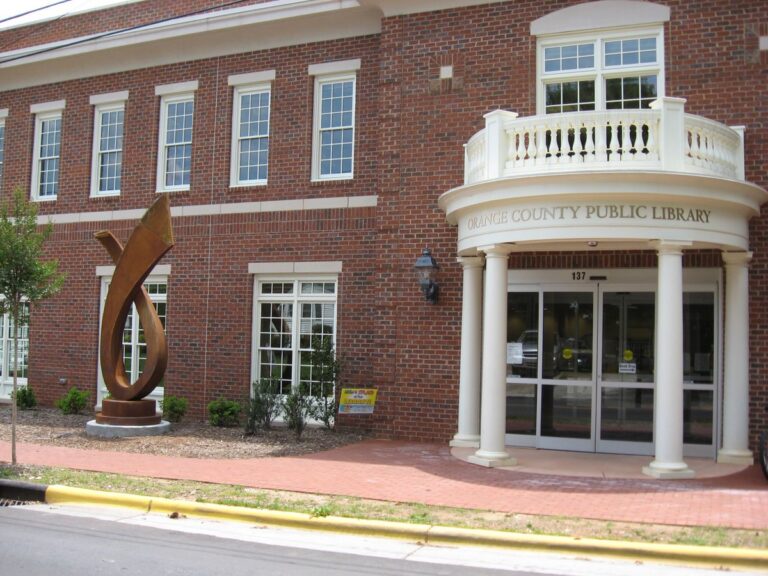
The Main Library opens on West Margaret Lane in Hillsborough with 23,500 square feet, replacing the 13,700-square-foot library on Tryon Street. Orange County pays the full project cost. Its local-history room continues the North Carolina Collection established at Whitted and carries forward proposals for an Orange County heritage center made by county task forces in 2001, 2004 and 2007.
-
The Friends of OCPL
2010: Two $20,000 gifts in one year
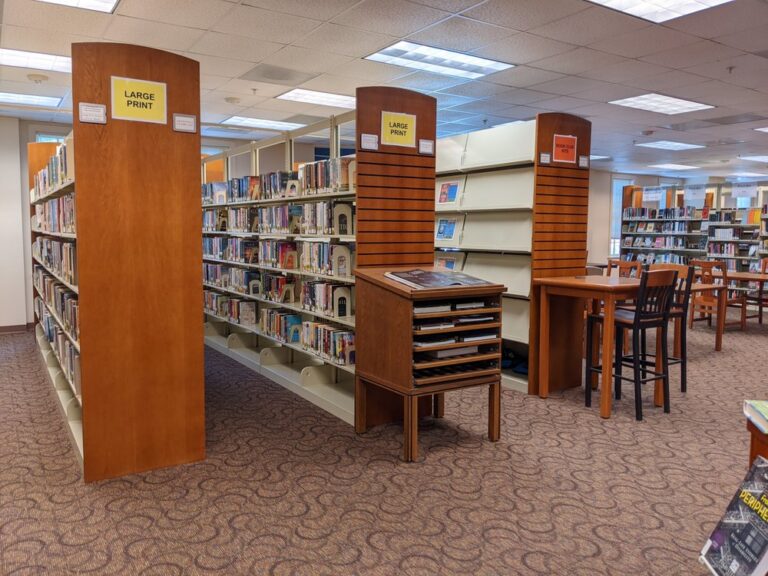
The Friends hand the library a $20,000 check at the grand opening and a second at the December annual meeting. Together they pay for the security system, the teen center furnishings, shelf end panels, a meeting-room projector, and the library’s first five Kindles.
-
The Friends of OCPL
2010, July: Bricks for Books
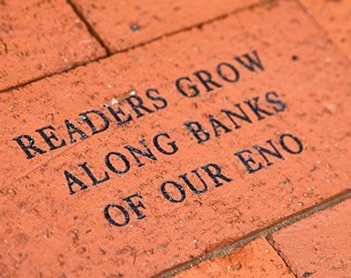
The paver campaign that began the year before finishes with 110 engraved bricks sold. They are laid in the walkway outside the new library, alongside the Rebecca Wall Heritage Center and a Wayne Trapp sculpture dedicated the same summer.
Copy linkSources (2)
Board minutes, June to September 2010; paver campaign history, December 2014
-
The Friends of OCPL
2010, February: The ongoing book sale opens
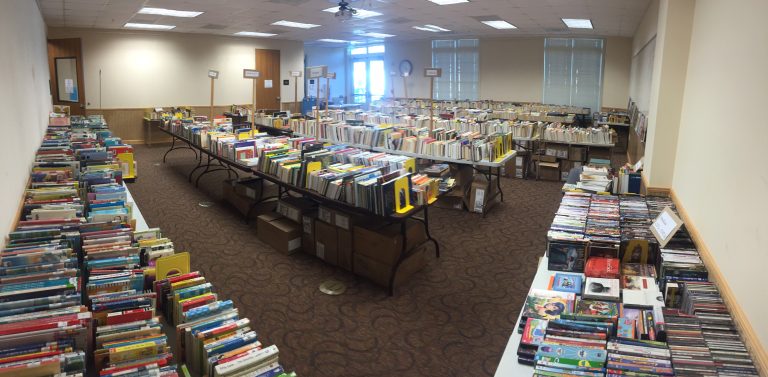
A Friends book sale, sorted and staffed by volunteers. Book sales fund most of what the Friends give the library. A permanent sale shelf opens just inside the library entrance in February, stocked with donated books and open whenever the library is. It outlasts every other fundraising idea in the Friends' records: the ongoing sale is still running today.
Copy linkSources (2)
Board minutes, 2010; treasurer's records
-
Library history
2010, August 7: The library turns one hundred
The library marks its centennial on August 7 with the dedication of "Embrace the Moment," a Wayne Trapp sculpture the Friends helped fund with $5,000, half of it covered by a Hillsborough tourism grant. It is celebrated as the first piece of public art in northern Orange County.
-
Library history
2010, August 1: The Cedar Grove Branch closes
Six years after it opened, Orange County closes the staffed Cedar Grove Branch effective August 1. The budget reports 502 registered borrowers, including 216 recent users, and a substantially higher cost per patron than at other locations. Staff, materials and furnishings move to the Main Library and Carrboro branches, whose hours are also reduced. Northern Orange County loses its only staffed library location. Materials from Cedar Grove are later reused in forty Literacy Bag outreach kits.
-
Library history
2011, June: OCPL funding rises above the state average
For the first time, Orange County Public Library funding rises above the state average per resident, a goal the Friends had supported. Per-resident funding increased from $8.27 in 2001-02 to $19.80 in 2009-10 before exceeding the statewide average.
-
The Friends of OCPL
2011: A $25,000 investment fund
The Friends open a fund at the Triangle Community Foundation with a $25,000 investment, a reserve that grew to roughly $45,000 before being folded back into library support.
-
The Friends of OCPL
2011, December: The board grows
Bylaws changes expand the board from seven to nine members and add a Treasurer-Elect, building capacity for bigger projects.
-
The Friends of OCPL
2011, November: The first newsletter, and a Tree of Knowledge
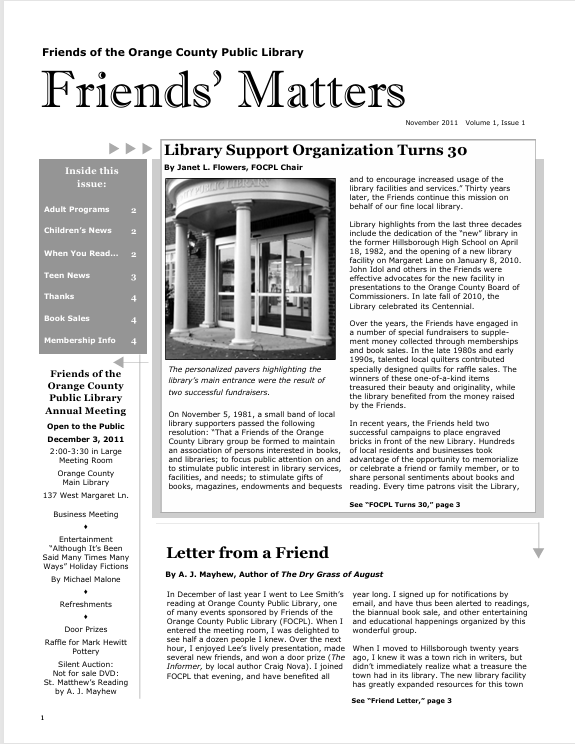
Friends' Matters, Volume 1, Issue 1, appears in November, beginning the newsletter record this site's archive still carries. The same season, a public contest chooses the Friends' logo: Sallie Scharding's stylized Tree of Knowledge, picked from about a dozen entries by some 150 ballots.
Copy linkSources (2)
Newsletter, November 2011; board minutes, September to December 2011
-
Library history
2011: A bookmobile voted down, Sundays voted in
A proposal to revive a county bookmobile fails; the manager's recommended budget had carried it as a $317,315 package, including $252,500 to finance the vehicle itself. The library keeps the $128,700 it would have cost, and the money buys year-round Sunday hours at Main and the Cybrary and turns several part-time positions full-time. Circulation rises 41 percent.
Copy linkSources (2)
-
Carrboro/Southern Branch Friends
2011: Carrboro’s Friends win the Frances B. Reid Award again
Friends of North Carolina Public Libraries names the Friends of the Carrboro Branch Library a first-place Frances B. Reid Award winner, recognizing years of advocacy for a freestanding library along with fundraising, free-book programs and student scholarships. Martha Tyson, Nerys Levy and Alex Brown accept the award with Orange County Library Director Lucinda Munger. The group had first received the award in 2002 for its Library Arts Program.
-
The Friends of OCPL
2011: The Friends fund the library’s first eBooks
The county budget records the library’s first eBook collection and Kindle readers for checkout, funded through Friends donations and increased county support.
-
Library history
2011: A Teen Advisory Board is formed
The library completes its first year of dedicated teen programming and creates a Teen Advisory Board to help plan services for that age group.
-
The Friends of OCPL
2012, March: A former president’s bequest
Sandra Peterson, who had led the Friends years earlier, leaves the organization $10,000 in her will. The board places it in the investment fund rather than spending it down.
Copy linkSources (2)
Board minutes, March 2012; newsletter, June 2012
-
Library history
2012, July: Orange County Public Library gets its name
The Hyconeechee Regional Library dissolves on July 1, and the State Library of North Carolina formally recognizes the Orange County Public Library. Each county library had operated as a department of its county government since 1992, so dissolution completed a twenty-year separation. That year, the newly independent library also contracts to replace the regional Polaris catalog system with Sierra; migration continues into the next budget year.
-
Joint Friends efforts
2012, July 23: The OCPL and Carrboro Friends meet for the first time
The Orange County and Carrboro boards sit down together for four half-hour working sessions on membership, programs, advocacy and book sales. In thirty years the two groups had never met.
-
Carrboro/Southern Branch Friends
2012, March 8: The fight for a freestanding Carrboro library continues
Seventeen years after the McDougle branch opens, the Friends are still pressing for a permanent library. During debate over where to put it, longtime advocate Nerys Levy argues that the new building needs to be accessible to older residents and to people who depend on the library for computers and information they cannot afford at home. The county’s own budget books trace the long middle: in 2011 staff are already cataloguing materials “in anticipation of the free-standing southwest branch library,” and from 2013 to 2019 every year’s objectives repeat the task of identifying a site.
-
The Friends of OCPL
2012, April: Breakfast becomes a tradition
The Friends serve the library staff an appreciation breakfast on April 10 and decide to make it annual. Staff appreciation has stayed on the Friends' calendar, in one form or another, ever since.
-
The Friends of OCPL
2013, January: Self-checkout comes upstairs
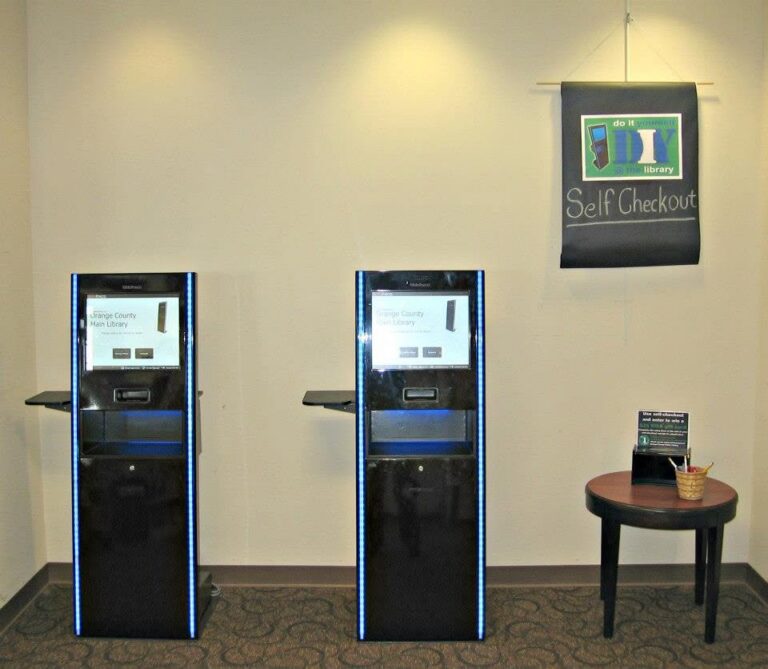
The Friends fund a third RFID self-checkout station for the library’s second floor, which the county’s capital plan did not cover. A placard on the unit credits the gift. The Friends give the library $16,372 that year, while the county reports that 63 percent of checkouts are self-service, above its 50 percent goal.
Copy linkSources (3)
Board minutes, January 2013; newsletter, December 2013; Orange County FY 2013-14 adopted budget
-
The Friends of OCPL
2013, September: The last Bricks for Books campaign
The third and final paver campaign opens in September, offering 4" x 8" engraved bricks at $100 each (three lines, fourteen characters apiece) cut to match the brick on the building. It sells 57, short of the vendor’s hundred-brick minimum order, and closes a run that had raised about $26,000 in 2009 and $12,000 in 2010. The bricks go into the walkway the following spring.
Copy linkSources (2)
Newsletter, September 2013; board minutes, November 2013 and December 2014
-
Library history
2013, November: The library’s first strategic plan
County commissioners approve the Orange County Public Library’s first strategic plan on November 5. The same year, circulation passes 400,000, double what it was four years earlier.
Copy linkSource
Newsletters, July and December 2013
-
The Friends of OCPL
2014: Tommy McNeill takes the chair
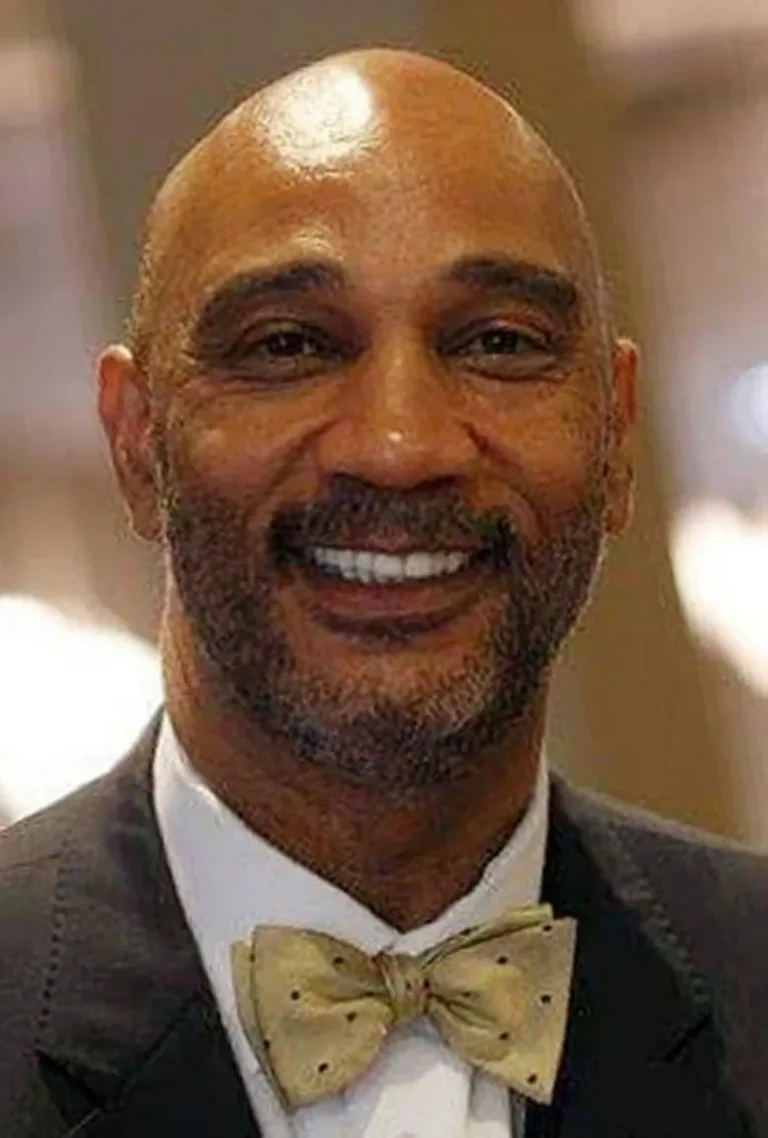
Tommy T. McNeill begins his term as president. “As far as I know, I’m the first African American President of the Friends Board,” he tells the newsletter, and sets out to grow membership by a third.
Copy linkSource
Newsletter, August 2014
-
The Friends of OCPL
2014, November: A tribute to Maya Angelou
Four Friends groups (Orange County, Carrboro, Chapel Hill and the ArtsCenter) put on a tribute to Maya Angelou at the ArtsCenter of Carrboro on November 9. Martha Flowers, who had known her since their twenties, speaks. Mama Dip sends pecan pies.
Copy linkSource
Newsletter, December 2014
-
The Friends of OCPL
2015, October: Lifetime memberships arrive
The board creates individual and family lifetime memberships, at $150 and $200. Seventy-three households have since joined for good.
Copy linkSources (2)
Board minutes, October 2015; newsletter, November 2015
-
The Friends of OCPL
2015, December: The Janet Flowers Award
The Friends establish the Janet Flowers Award at the annual meeting, honoring outstanding service to the library community. It is presented for the first time in 2016.
Copy linkSource
Newsletter, December 2015
-
The Friends of OCPL
2015: The Friends go online
The Friends open their first social media accounts in February, and in May the newsletter moves from print to the web. A web presence the Friends control themselves begins here; their own domain, focplnc.org, follows in 2022.
-
Library history
2015: The old sign comes down
Three decades after the library moved out, the Hillsborough Board of Commissioners votes to remove the Confederate Memorial lettering from the old library building’s pediment. The lettering had remained while the building served as a museum. The 1934 fundraisers had chosen a memorial library over a memorial statue; the last of the name now comes down.
-
The Friends of OCPL
2016, February: Ten books each at New Hope Elementary
The Friends put $5,628 into a Books on Break pilot with Book Harvest and the Family Success Alliance, sending every student home for the summer with ten books to keep. The following year the wider community raises over $8,000 to extend it through fifth grade.
Copy linkSources (2)
Board minutes, February 2016; newsletter, June 2017
-
Library history
2016, June: Library service returns to Cedar Grove
Orange County dedicates the renovated Cedar Grove Community Center in the building that was once the Cedar Grove School, built in the 1950s for the community's Black children and preserved at neighbors' urging. Beside it the county installs a self-service Library Station holding more than 300 popular books and DVDs, a $180,000 project that follows a Little Free Library placed in Cedar Grove Park the year before. Borrowing returns to northern Orange without a staffed branch's cost, and without its programs, computer classes and reference help. The station serves until the pandemic closures; the 2021 county budget ends its support, citing poor performance and low patron use, though a library kiosk stays on the center's list of features.
-
Library history
2016: The Southern Branch enters the capital plan
The county's capital plan puts a number on the Carrboro dream: $6,375,000 in FY 2017-18 for design and construction of a Southern Branch library to replace the Cybrary and the branch at McDougle, staffed by ten positions, two shifted from the existing Carrboro operations. The project will grow into the far larger Drakeford Library Complex, but the branch now has a budget line.
-
Library history
2016: The library lends the Internet
Working with county IT staff, the library pilots the lending of Wi-Fi hotspots in southern Orange County. Pandemic relief money later doubles the fleet; Chromebooks circulate to older residents through the Department on Aging; and an $83,821 Digital Champions Grant funds a mobile lab, additional lending devices and digital-literacy instruction. Between the first public terminal in 1996 and this, the library’s answer to the digital divide moves from a seat in the building to a signal at home.
-
The Friends of OCPL
2017, January: Flood response in 48 hours
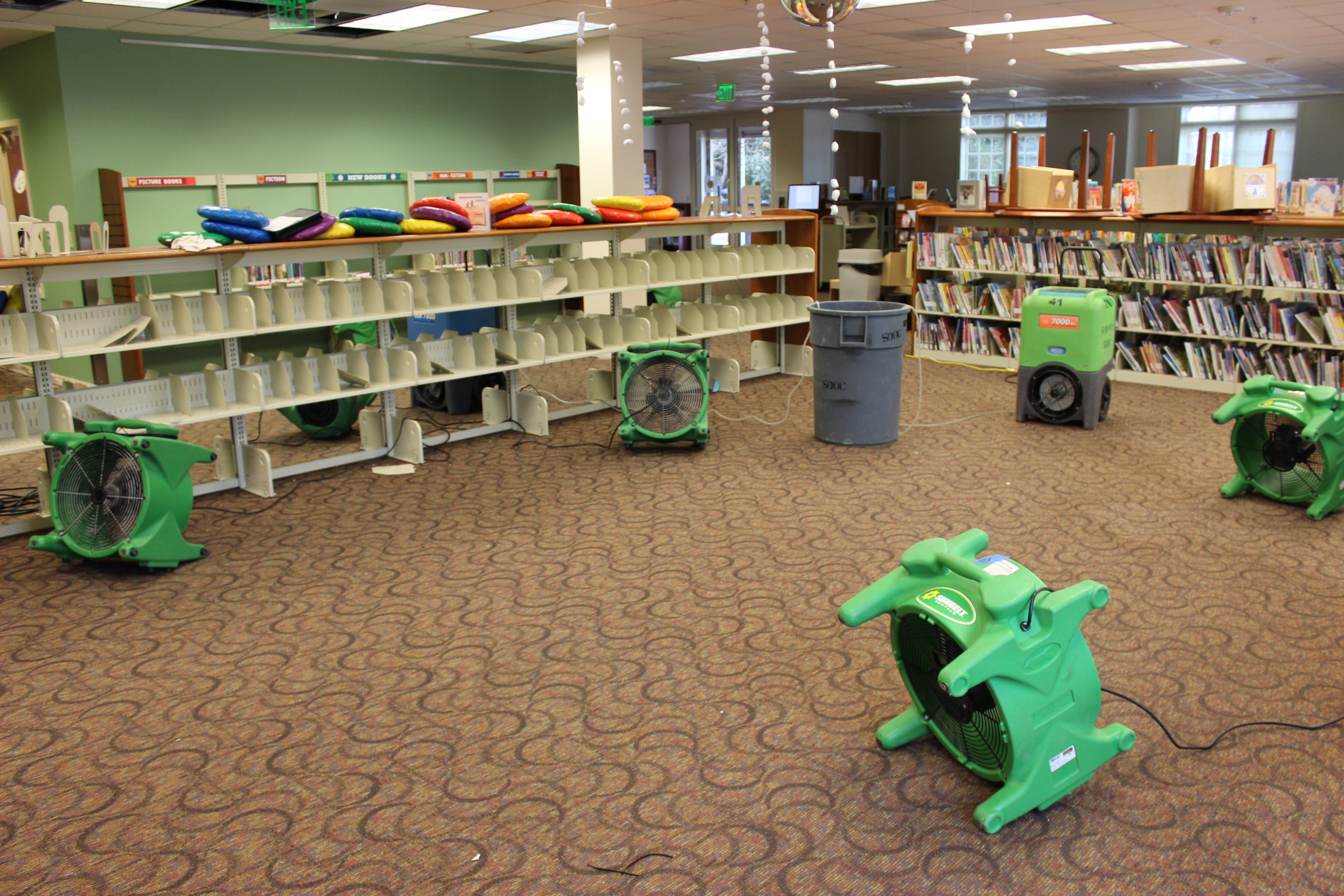
A winter storm floods the Main Library. The Friends launch an emergency GoFundMe and raise $1,500, beating the goal, and the library reopens within the week.
Copy linkSource
Newsletters, January 2017
-
The Friends of OCPL
2017: A year of grants and a first gala
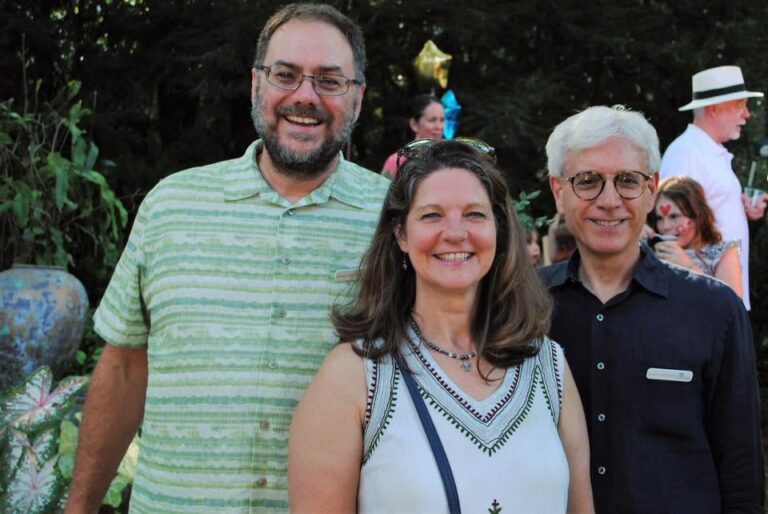
The Friends fund flood repairs, the library's strategic planning, ten summer books for every New Hope Elementary student, and the summer learning program, plus the first annual "Friendraiser" Gala.
Copy linkSource
Newsletter, annual meeting 2017
-
Joint Friends efforts
2018, March: Merger interest, first recorded
At a statewide Friends meeting, the Carrboro group is recorded as "interested in merging the two friends' groups." The county already treats the groups as one partnership: its budget that year pledges to provide “the Friends of the Orange County Public Library (Hillsborough and Carrboro)” with the information they need to raise money, volunteer, and advocate. The idea waits eight years: the two boards complete the merger in 2026.
-
The Friends of OCPL
2018, November: First Hillsborough Local Author Book Fair
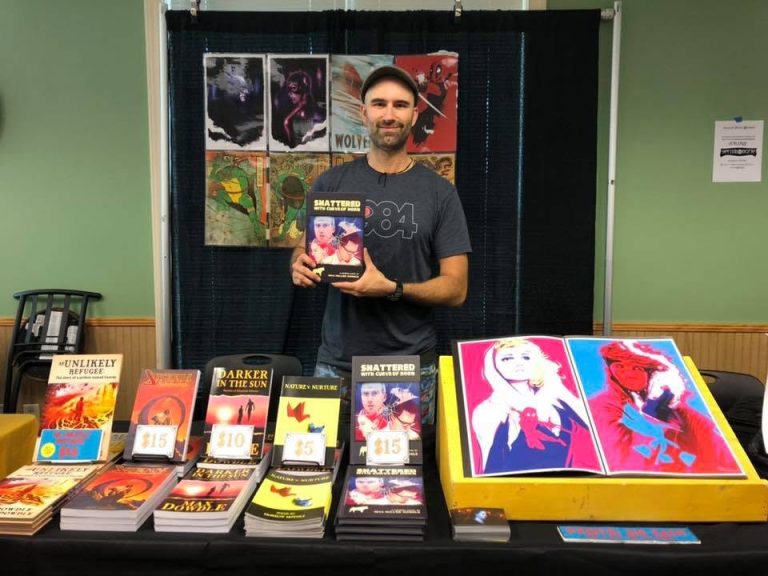
The Friends' 2019 Local Author Book Fair. The Friends host the first-ever Hillsborough Local Author Book Fair on November 24, a celebration of the town's writers that becomes a recurring tradition.
Copy linkSource
Newsletter, November 2018
-
Library history
2018, FY 2017-18: One catalog for every branch
The county combines the holdings of the Main Library, the McDougle branch, the Cybrary and the kiosk in one catalog. Circulation increases at all three staffed locations, along with courier traffic. The change follows the introduction of a systemwide patron card in 2011 and prepares the catalog for the future Southern Branch.
-
The Friends of OCPL
2018: The county begins tracking Friends support
The county adds “Friends of the Library financial support annually” to its performance measures alongside circulation and visits. The budget records $10,350, $12,750 and $23,936 through the 2017-18 fiscal year before reporting zero during the pandemic.
-
The Friends of OCPL
2019, December: A record year for book donations
So many books are donated that the Friends hold four book sales in a single year; book sales remain the organization’s biggest source of revenue. The county’s budget notices, crediting a “reinvigorated” Friends for more author fairs, appearances at Last Fridays, and more frequent book sales.
-
The Friends of OCPL
2019, May: The first Hillsborough Comics Fair
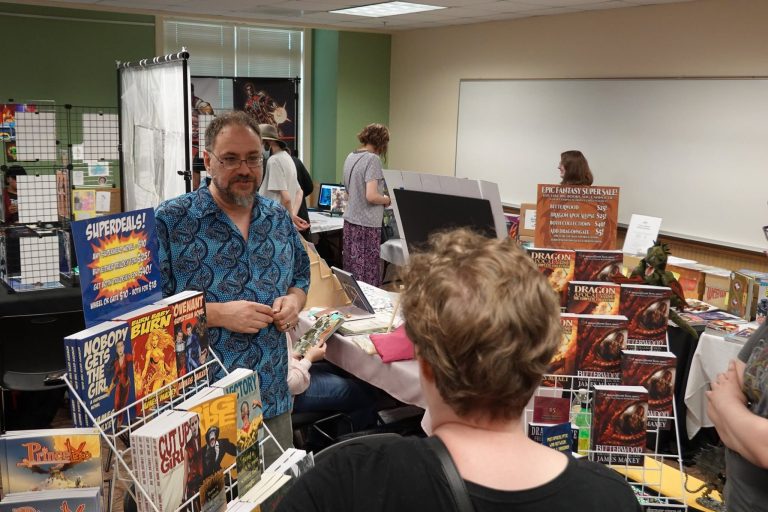
Browsing the tables at the first Hillsborough Comics Fair, May 2019. Dealers, panels, a cosplay contest and free comics for kids fill the library on May 25 for the Friends' first Comics Fair, a companion piece to the fall's Local Author Book Fair.
-
The Friends of OCPL
2019: The Friends define what they will fund
The board states its funding policy: “The county contributes and we support what the county does not.” The Friends will pay for special programs, but not collections or regular operations that are the county’s responsibility.
- 2020s
-
Library history
2020, February: Ten years in the “new” building
The Friends fund a community celebration of the Main Library's tenth anniversary in its current home, weeks before the pandemic closes the doors.
-
The Friends of OCPL
2020, May: Five authors stand in for the book sale
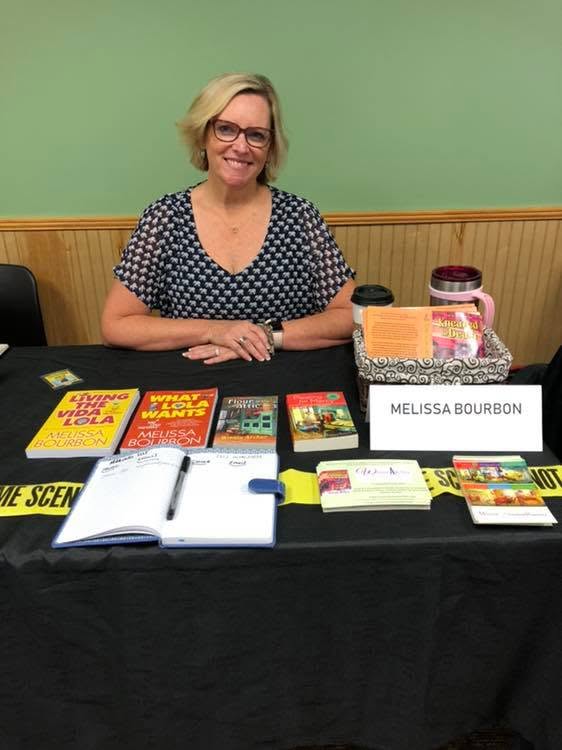
Melissa Bourbon at the 2019 Local Author Book Fair. With the library closed and the spring sale canceled, five local authors (Melissa Bourbon, Samantha Bryant, Diane Kelly, James Maxey and Dee Stribling) offer a book of their own to anyone joining at the family level.
Copy linkSource
Newsletters, May 2020
-
Library history
2020, March onward: Closed buildings, working librarians
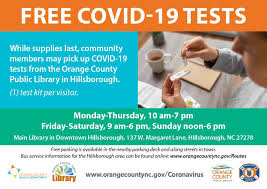
When library buildings close in March, staff work shifts at the county emergency call center and begin curbside pickup. Federal relief money doubles the Wi-Fi hotspot collection to meet increased demand. County performance tables note that services changed beginning March 16, 2020.
-
The Friends of OCPL
2021, March: A cabin in the mountains
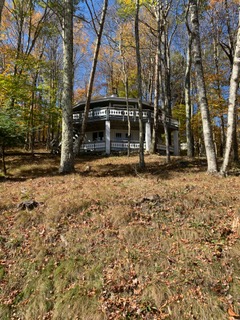
Board member Diane Kelly donates a five-night stay at her family’s Beech Mountain cabin, and the Friends raffle it in place of the book sales the pandemic had stopped. March collections come to $2,935. The raffle runs again the next year.
Copy linkSources (2)
Board minutes, January to April 2021; newsletters, 2021 and 2022
-
Library history
2021, July: The library reopens
After the pandemic closure, the building reopens to a strong turnout. The Friends fund books for the Summer Learning kickoff that welcomes families back.
-
Library history
2021, November: The library goes fine-free
County commissioners vote to end overdue fines, which library staff showed fell hardest on residents facing economic challenges. "This is going to open up the library even more," says board chair Renee Price.
-
The Friends of OCPL
2021: “Oh, You Need to Talk To”
The Friends run a monthly Sunday program over Zoom with neighbors who know something worth hearing (gardening, fabric arts, fishing, writing) and in October a conversation with Horace Johnson III and David Caldwell about living through change in Orange County.
Copy linkSource
Newsletters, 2021
-
Library history
2021, Spring: The county consolidates Carrboro library service
The pandemic-era county budget closes the McDougle branch, moves its resources to the Cybrary and increases Cybrary hours from 44 to 54 a week, matching the Main Library. The change saves $143,083. The same budget ends support for the Cedar Grove kiosk because of low use.
Copy linkSources (2)
Orange County FY 2021-22 Manager Recommended Budget; Orange County Library e-newsletter, July 2021
-
The Friends of OCPL
2022, April: Book sales resume after the shutdown
The Friends hold their first book sale after the shutdown during the final three days of April. Volunteers work through two years of accumulated donations, and every child receives a free book.
Copy linkSources (2)
Newsletter, March 2022; board minutes, March 2022
-
Library history
2022, May 5, 2022: Construction begins on the Southern Branch
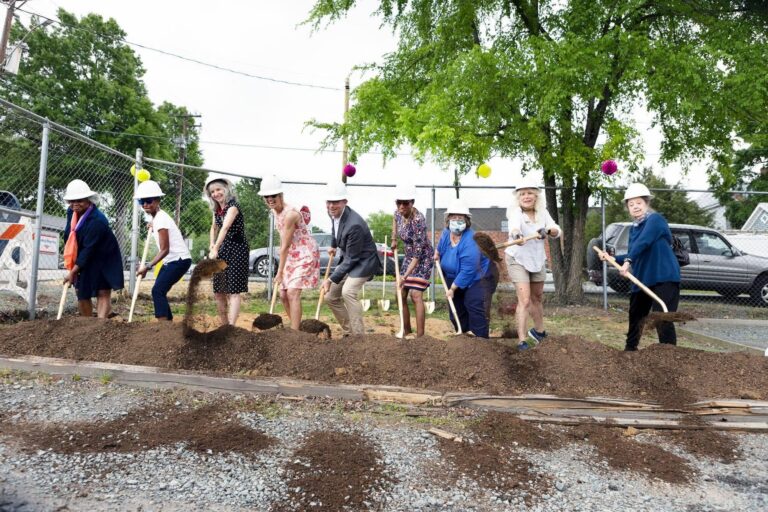
Carrboro and Orange County break ground at 203 South Greensboro Street for the future Southern Branch Library and civic center. Nerys Levy speaks for the Friends of the Southern Branch Library at the ceremony, more than three decades after the campaign for a permanent Carrboro library began.
-
Library history
2022, July 18: Erin Sapienza named library director
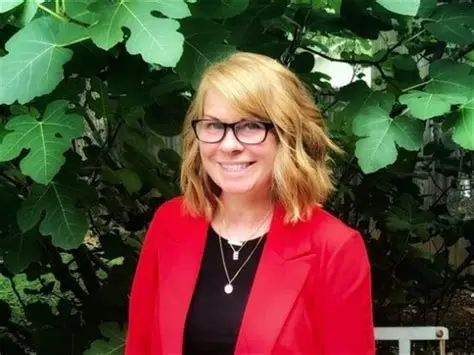
After serving as interim director, Erin Sapienza is appointed permanent director of the Orange County Public Library on July 18. She had served as branch manager beginning in 2013, community services librarian, assistant director in 2020 and interim director.
-
The Friends of OCPL
2023: The Friends report record income
Income reaches $25,751, the highest total in twelve years of treasurer’s records. The money helps support a summer learning program that registers 879 children and distributes more than 900 books.
Copy linkSources (2)
Treasurer's records, 2023; board minutes, August 2023
-
The Friends of OCPL
2023, September to December: A three-year-old’s art collection
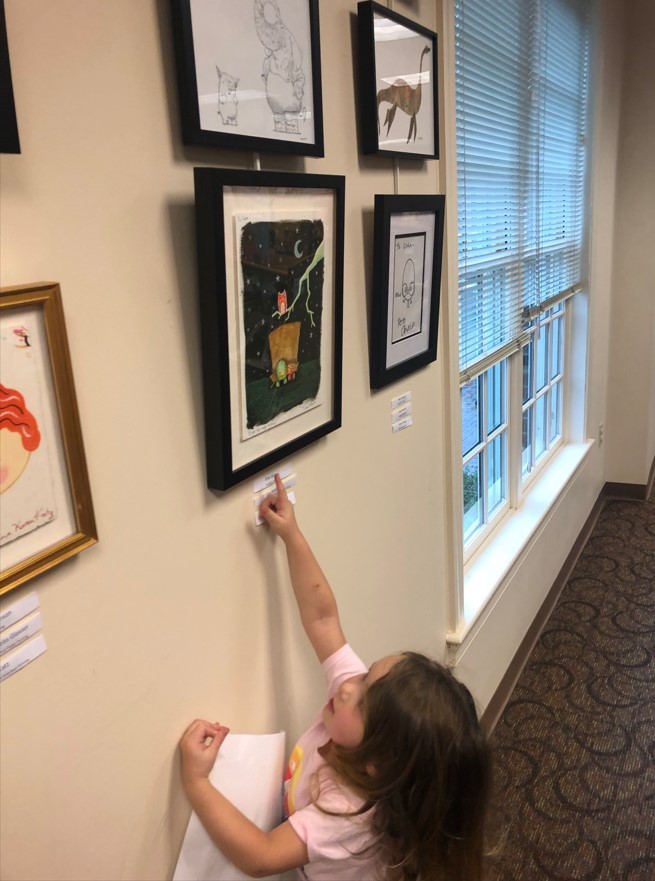
The Cora Grace Collection of Picture Book Art hangs in the library from September to December, raising funds for neurodivergent-friendly furnishings: around 100 paintings and drawings from more than 65 illustrators, among them Maurice Sendak, Eric Carle and Clement Hurd. Local press calls the exhibit a “love letter to the library.” At December’s annual meeting its three-year-old collector presents the artwork to the Friends with her father, and the library asks the Friends for $1,992 toward sensory furniture.
Copy linkSources (4)
Newsletter, September 2023; Chapelboro coverage; Orange County Arts Commission feature; Board minutes, December 2023
-
Library history
2023: Home delivery service begins
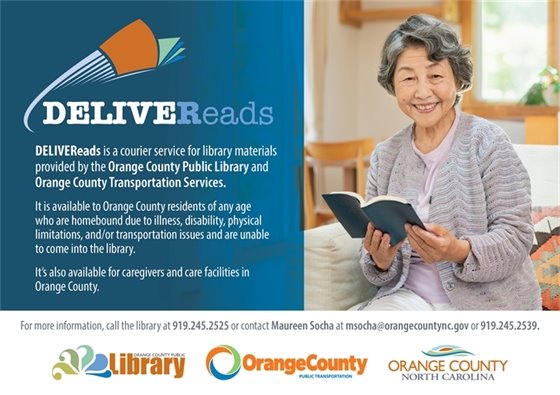
DELIVEReads, announced in the county's caregiver newsletter, 2023. Orange County Government. Orange County Public Library and Orange County Transportation Services launch DELIVEReads for residents who cannot easily reach a branch because of illness, disability, physical limitations or transportation barriers. Patrons may request up to ten items a month or ask staff to select materials for them. The service makes 180 deliveries in its first fiscal year and later expands to caregivers.
-
Library history
2023: Service in two languages
A generation after the library began teaching English, service turns bilingual: storytimes run in English and Spanish at the Century Center and the Carrboro Farmers' Market, computer classes come with Spanish interpretation through the Family Success Alliance, and a partnership with El Centro Hispano brings a health series for Spanish speakers, then monthly conversation programs. The Book Walk's bilingual stations join in 2025.
-
The Friends of OCPL
2024: The Book Walk begins
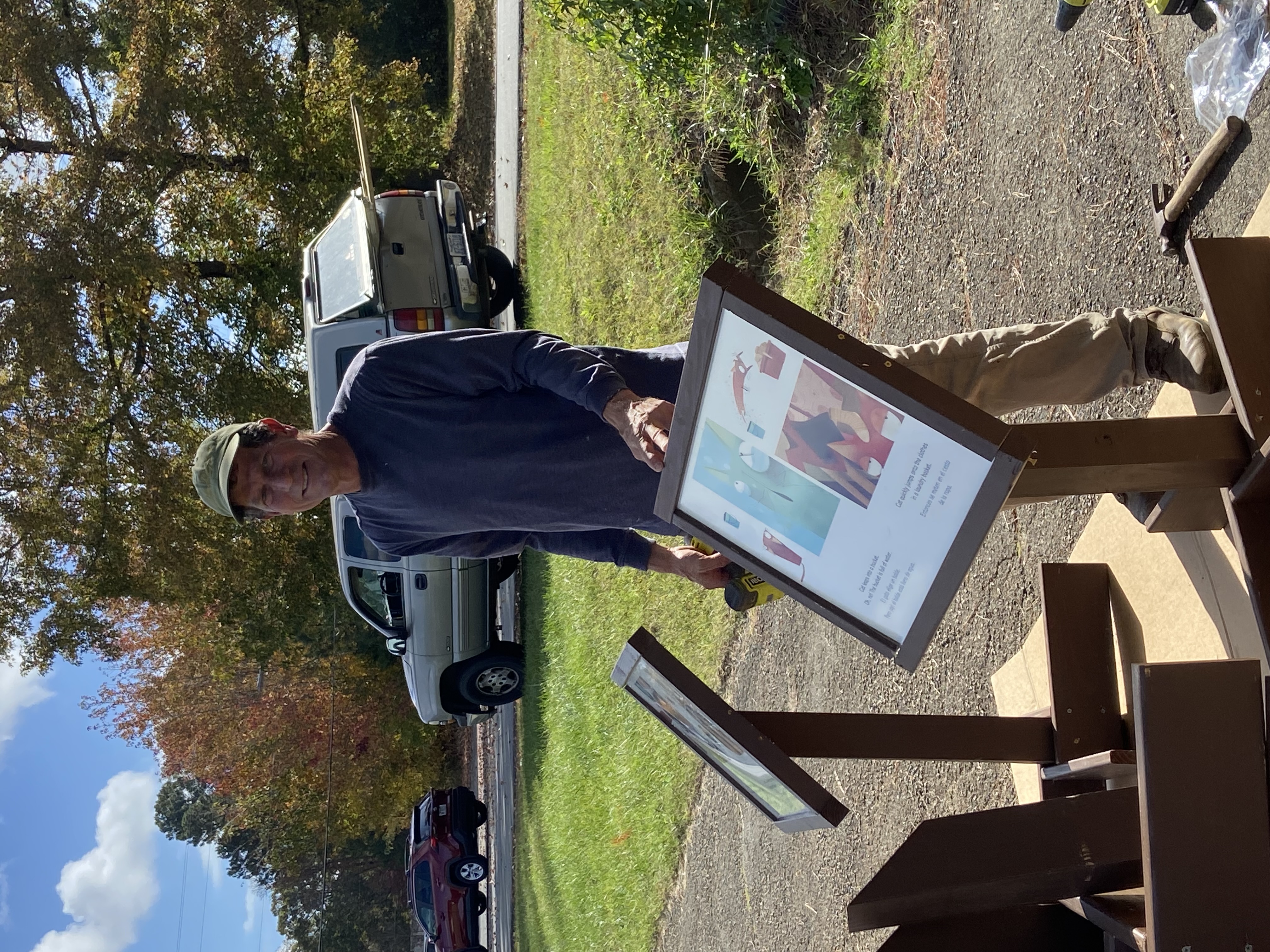
After a year of planning with Orange County Parks & Recreation, the board votes unanimously to fund the initial $8,305 for a story trail, seventeen display stations pairing reading with a walk in the park.
Copy linkSources (2)
Newsletter, 2024; Board minutes, February 2024
-
The Friends of OCPL
2024, October: S.A. Cosby fills the room

S.A. Cosby with Eryk Pruitt, October 2024. Novelists S.A. Cosby and Eryk Pruitt draw a crowd large enough that the book table has to move out of the meeting room to make seats. Cosby donates his honorarium back to the Friends.
Copy linkSources (2)
Board minutes, October 2024; newsletter, October 2024
-
Carrboro/Southern Branch Friends
2024: The Drakeford Library Complex is named
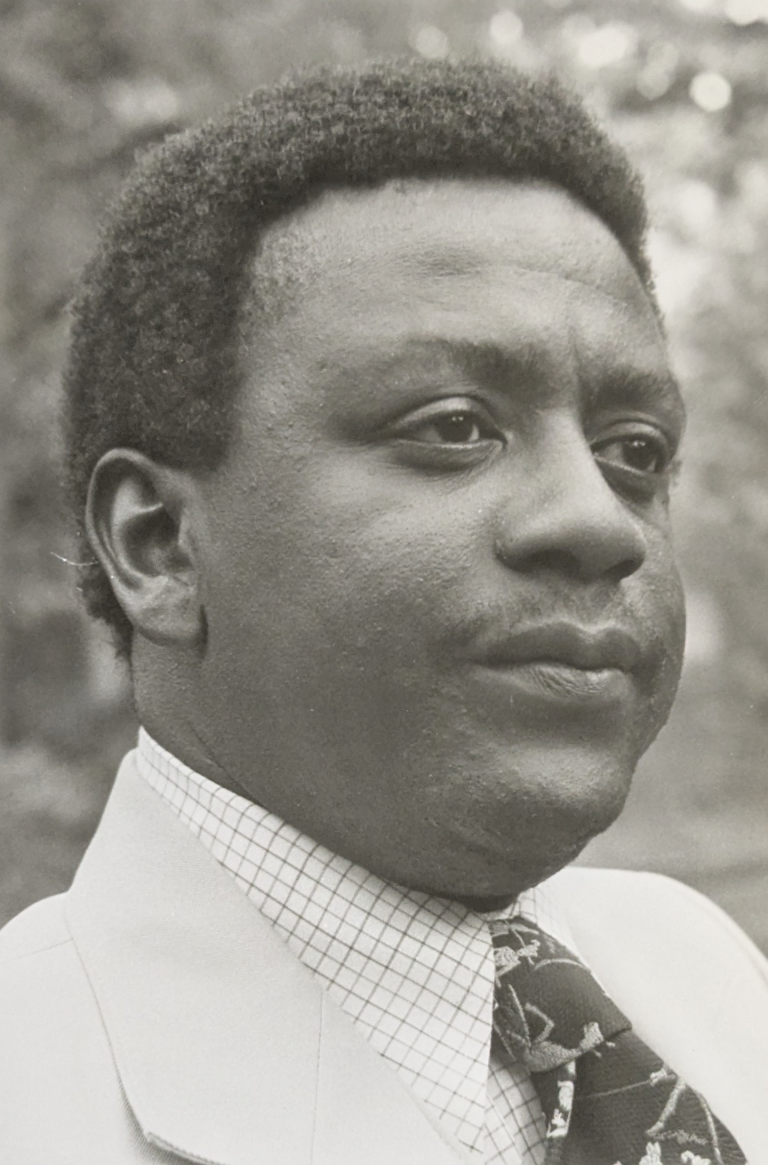
Robert "Bob" Drakeford, Carrboro's first Black mayor and the library complex's namesake. Town of Carrboro. As the Southern Branch nears completion, Carrboro and Orange County name the building for Robert “Bob” Drakeford, Carrboro’s first Black mayor. Friends representative Nerys Levy serves on the naming committee that recommends the name.
-
Library history
2024: A sensory-friendly library
Working with the Autism Society of North Carolina, staff establish a Sensory Friendly Browsing Hour with reduced stimulation. Youth Services also co-hosts the monthly Inclusive Minds Youth Social Club for neurodivergent people ages 8 to 18 and their caregivers. Sensory furniture funded in part by the Cora Grace campaign supports the programs.
-
Library history
2024: Partners in remembrance
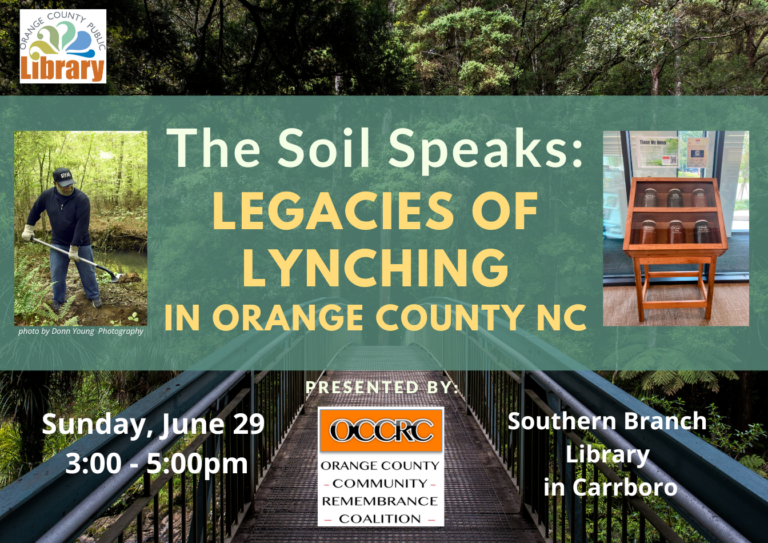
The library joins the Orange County Community Remembrance Coalition and the Chapel Hill Public Library in supporting an exhibit memorializing the victims of racial terror lynching, part of a year of equity partnerships that also includes Juneteenth, Black History Month and Women's History Month programs co-led with the county's Office of Equity and Inclusion.
-
Library history
2024: The library works across county departments
The library reports partnerships with nine county departments: home delivery with Transportation Services; commemorative programs with the Office of Equity and Inclusion; the Toy Chest with Social Services; health supplies from the Health Department; family book distribution through the Family Success Alliance; Chromebooks and a senior book club with the Department on Aging; naloxone training from Emergency Services; a pet-food drive with Animal Services; and an energy-saving lighting pilot with the sustainability office.
-
Library history
2025, January: The Order of the Long Leaf Pine
Brenda Stephens, who drove the county bookmobile in 1976 and led the library system from 1993 until her 2008 retirement, receives the Order of the Long Leaf Pine, North Carolina's highest civilian honor, for a career of service to the state's libraries.
-
Library history
2025, February: The Southern Branch opens
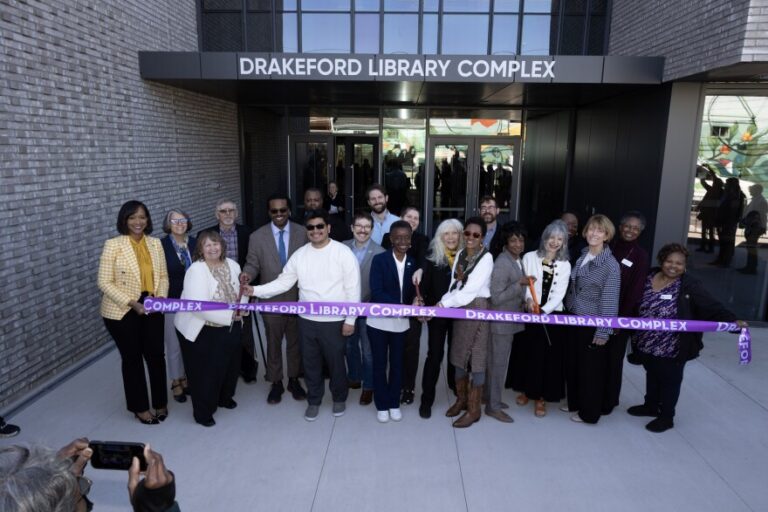
Orange County opens the library's Southern Branch in Carrboro's Drakeford Library Complex, a $42 million project in the works since 2016. Doors open in February; the weather-delayed ribbon cutting follows on March 21. Library use surges to a ten-year high, with checkouts up 23% that fiscal year.
Copy linkSources (3)
Newsletters, 2025–2026; NC Public Library Statistics; Chapelboro, March 24, 2025
-
The Friends of OCPL
2025, August: Janet Evanovich comes to Hillsborough
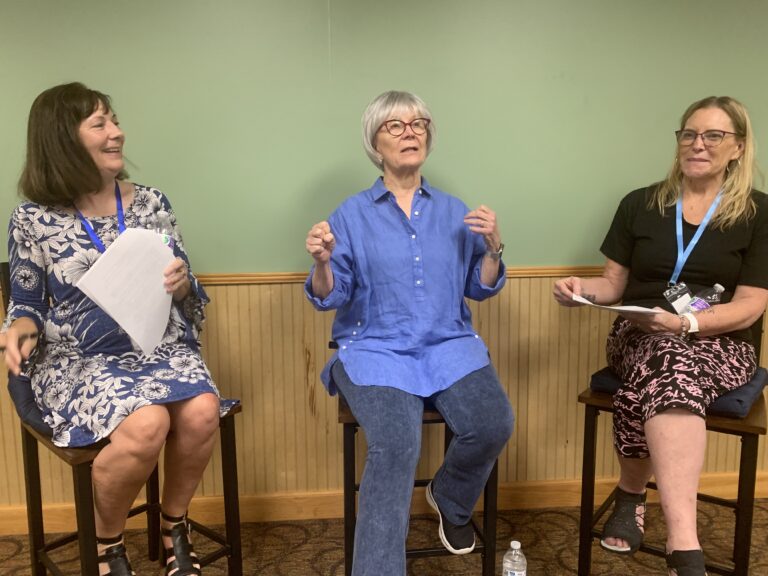
Janet Evanovich speaking at the Friends event, August 2025. Janet Evanovich fills the meeting room on August 22, with an overflow room upstairs and those guests invited down for the signing. Alex Evanovich had run a teen writing workshop a month before.
-
The Friends of OCPL
2025, October: The Book Walk opens at Efland-Cheeks Park
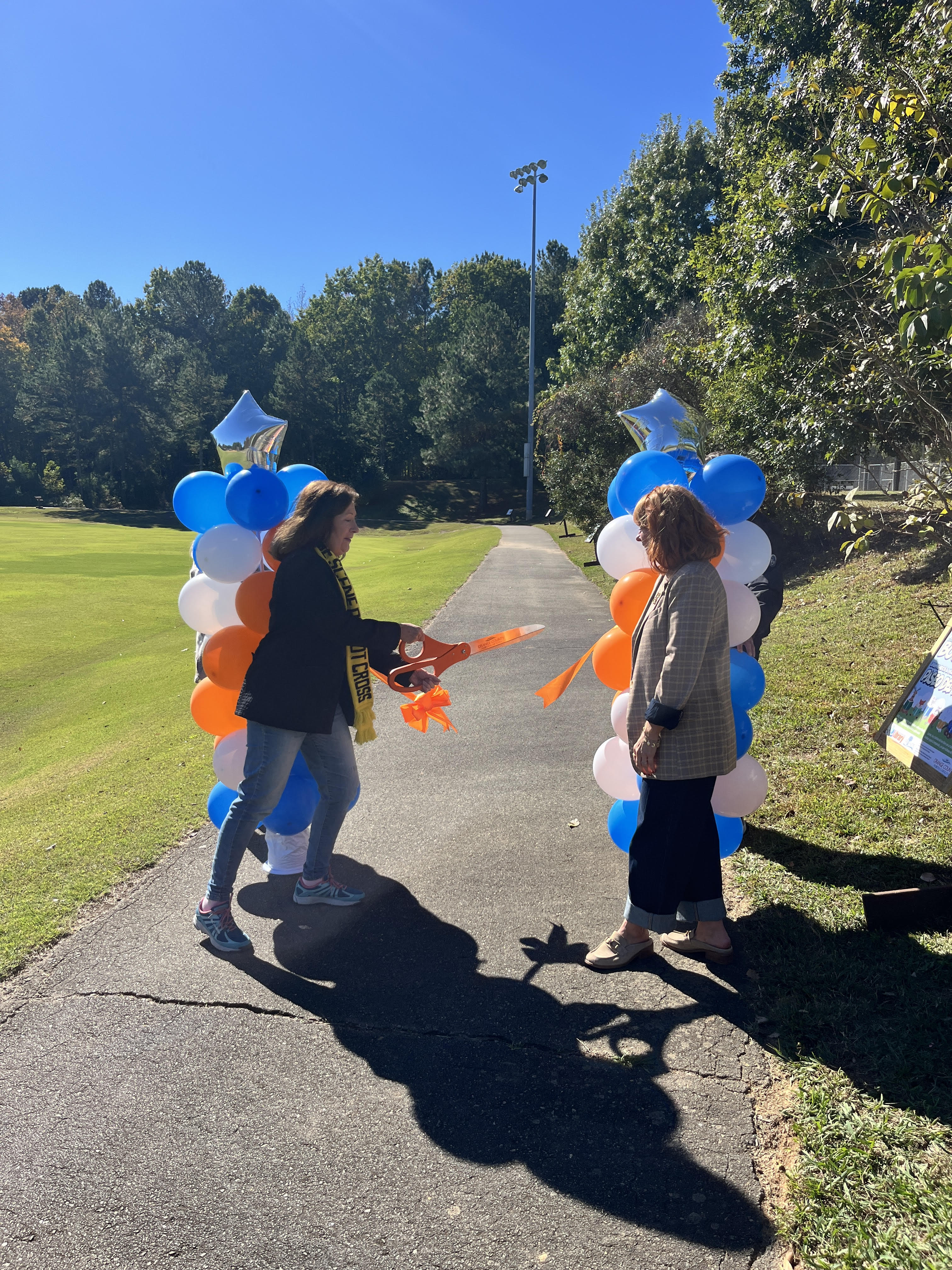
The Book Walk opens at Efland-Cheeks Park with a ribbon cutting on October 17. Seventeen bilingual stations pair a story with a walk through the park. The Efland site extends library service to a rural community without a branch.
Copy linkSources (3)
Newsletters, October–November 2025; Board minutes, February 2024 (site selection); Orange County FY 2024-25 and FY 2025-26 Manager Recommended Budgets ("funded by the Friends of OCPL")
-
Library history
2025: Interlibrary loan returns
Working with UNC-Chapel Hill, the library restores interlibrary loan at no cost to either patrons or the library. The service had previously cost patrons $4, and later $3, per request before lapsing.
-
The Friends of OCPL
2026, February: Take Your Child to the Library Day
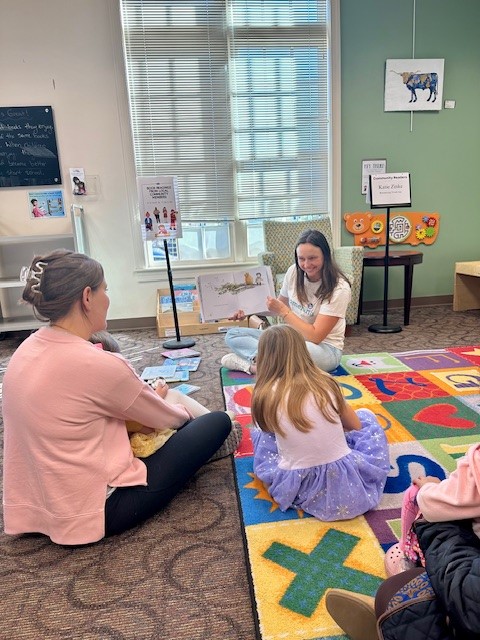
The Friends welcome 398 people to the Main Branch for the nationwide celebration, reflecting the library’s growing attendance.
Copy linkSource
Newsletter, February 2026
-
The Friends of OCPL
2026, June: 502 neighbors speak up
Facing a proposed $200,000 budget cut, the Friends gather 502 community responses in five days. The county board keeps both branches open seven days a week.
Copy linkSource
Community Responses on Amendment OP-B08, June 2026
-
Joint Friends efforts
2026: The Friends become one
With the Southern Branch open and their decades-long campaign complete, the Friends of the Southern Branch Carrboro Library formally join the Friends of the Orange County Public Library, bringing supporters of both library locations into one countywide Friends group. As a final independent act, the Carrboro Friends help fund the purchase of books to fill the new branch's shelves.
Copy linkSource
Board of Directors, 2026
-
The Friends of OCPL
2026: 45 years of the Friends of OCPL
The Friends mark 45 years: more than 200 member households, a volunteer corps that runs two book sales a year, and more than $200,000 given to the library across the projects we can document.
Copy linkSource
Organization records and treasurer’s books, 2026
-
Library history
2026: A food pantry at the library
The Southern Branch is barely a year old when it gains a community food pantry, established with a local Girl Scout troop; at the Main Library, an ongoing food drive with Orange Congregations in Mission is already collecting alongside the book returns.
Curated from the Friends’ newsletter archive and board meeting minutes, with newspaper entries verified against the digitized pages. Summer reading keeps a timeline of its own in the Summer Reading archive. Know a moment we missed? Tell us.
Where to Dig Deeper
-
Rebecca B. Wall Local History Collection
The library's own local history room: books, journals, maps, and microfilm from the area, at the Main Library in Hillsborough.
-
Orange County Historical Museum
Collecting the county's history since 1954, with archives open to researchers by appointment.
-
DigitalNC's newspaper archive
Digitized local newspapers reaching back to the 1820s; the county library turns up in their pages from 1942 on.
-
Open Orange
A community archive tracing the county building by building, and open to your own stories and photographs.
-
Orange County History Guide
Wilson Library's annotated guide to the county's histories, church records, genealogy, and maps.
-
NCpedia: Public Libraries
The statewide story our timeline sits inside, from a missionary's 36 books in 1700 to today's county systems.
The Next Chapter Is Yours
Every entry above happened because neighbors joined, gave, and showed up. Add your name to the story.
