Skip to content

Storyline · 1970–1988

UNC, HEW and the desegregation consent decree, 1970–1988

HEW pressed UNC from 1970 to do more than open its doors to Black students. The university system's desegregation plan was returned in 1973, and HEW approved a revised plan in June 1974 with a goal of raising Black enrollment at Chapel Hill to 7.1 percent. The Black Student Movement opened its membership to all students that fall, and in 1978 the Board of Governors ratified an agreement with HEW to strengthen the five historically Black campuses. Federal court rulings in 1977 had called for tougher requirements, and HEW rejected the system's plan in 1978 and again in 1979; the Board of Governors sued to block a cutoff of federal funds, and a 1981 consent decree ended the 11-year dispute. The NAACP Legal Defense Fund appealed the decree until the U.S. Supreme Court declined to hear the case in 1984, and in 1987, with the decree's enrollment goal for the mostly white campuses unmet, the Board of Governors extended it two years. Chapel Hill's Black enrollment kept falling, to 7.48 percent in 1987, and the extended decree expired at the end of 1988 with minority enrollment at the mostly white campuses at about 8.5 percent.

1970–1988 Part of Black student activism at UNC 48 dated events

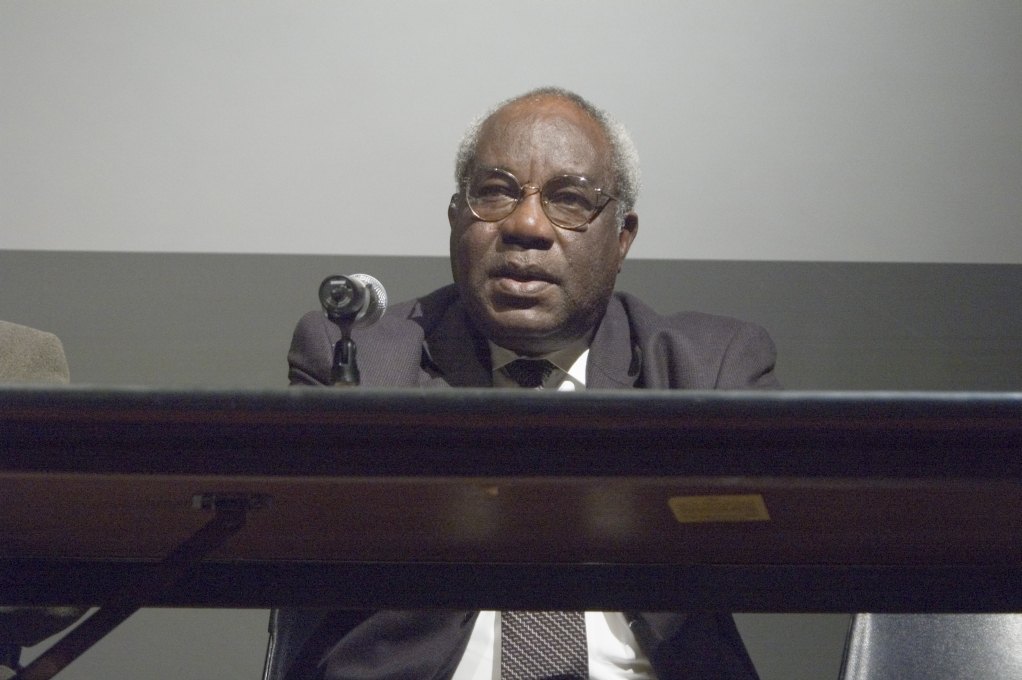
Julius L. Chambers at a UNC civil-rights panel, Chapel Hill, 13 February 2007
Julius L. Chambers at a UNC civil-rights panel, Chapel Hill, 13 February 2007Citizenplastic; via Wikimedia Commons · Public domain · Source

In February 1970 President William Friday released the findings of HEW's January visits, which held that the University was acting in good faith but that a nondiscriminatory admissions policy was not enough while enrollment still followed the old racial lines; eight of its 12 recommendations touched Chapel Hill. In April Friday answered with Project Uplift, admissions visits to 41 predominantly Black high schools and the search for Black staff. In November 1973 HEW returned the university system's desegregation plan as too general, and Friday set out to replace it. HEW officials met privately with Chancellor N. Ferebee Taylor's administration and with student leaders in January 1974, and Black Student Movement chairman Willie Mebane said afterward that the students had countered the administration's positive picture. The Board of Governors approved a revised plan in February and in March set four-year goals, among them raising Black enrollment at Chapel Hill from 5.1 to 7.1 percent; Richard Epps of the admissions office said the goals for the historically white campuses showed no real commitment. HEW approved the plan on June 21, 1974. That fall the Black Student Movement, facing a suit against its student-fee funding, opened its membership to all students and said the change complied with federal desegregation guidelines.

In January 1977, in the Adams case brought by the NAACP Legal Defense Fund, U.S. District Judge John H. Pratt in Washington found desegregation in the UNC system and five other states' universities lagging and gave HEW 45 days to set new requirements, and on April 1 he ruled that HEW had wrongly accepted the six states' plans and ordered new guidelines and new plans, writing that desegregation must not place a greater burden on Black institutions or Black students. On August 22 the Board of Governors adopted a Phase II plan for 1978 to 1983 that set a goal of a 32 percent rise in Black enrollment at the traditionally white campuses instead of the 150 percent HEW had called for; chairman William A. Johnson called HEW's criteria unrealistic, and J. J. Sansom Jr., one of the board's Black members, voted no, saying the system was segregated in fact. Moments before the vote Julius Chambers, president of the Legal Defense Fund, whose suit had led to the new criteria, resigned from the board. The Chapel Hill trustees endorsed the plan in September, with Walter S. Tucker, their only Black member, and student body president Bill Moss abstaining.

That fall a group of faculty and students, begun largely at the urging of assistant dean Hayden B. Renwick, began meeting on how white faculty treated Black students, and Taylor reported that Black faculty, up 175 percent since 1972, were still 2.4 percent of the faculty and that Black students were 6.3 percent of the student body, short of the plan's 7.1 percent goal. In October 1977 BSM members held a silent University Day protest against the University's rejection of a federal desegregation proposal and over the Bakke case, and on November 2 Chambers told about 100 people in Memorial Hall that the administration would not give up past policies. On November 11 Friday presented the board a 17-page HEW letter objecting that the plan set too low a goal for Black students at the white campuses and did too little for the Black ones, and warned that a court fight was likely. On December 30 the board approved a supplement Friday had worked out with the Office for Civil Rights that turned HEW's required 150 percent rise into a goal and dropped HEW's demand to approve program changes in advance; Kathleen Crosby, its newest member, cast the only vote against it. On February 2, 1978 HEW Secretary Joseph Califano rejected the plan and began proceedings that could cut off federal funds, after Friday refused HEW's requirement to eliminate programs duplicated at traditionally Black and traditionally white campuses. On February 10 the Board of Governors voted 26 to 1 to seek outside lawyers for a possible court fight, with Crosby voting no, and the Chapel Hill trustees urged it not to retreat, over the objections of Tucker and Moss. On May 12, 1978 the Board of Governors ratified, 19 to 3, an agreement with HEW to strengthen programs at the five historically Black state universities.

On February 23, 1979 about 75 Black Student Movement members marched to South Building calling for federal action while HEW officials Mary Berry and David S. Tatel toured the campus, and BSM chairman Allen Johnson told the officials that qualified Black applicants were being turned away; that morning Taylor had reported a 33 percent rise in Black freshmen. On March 16 about 20 students picketed a Board of Governors meeting to urge the University to meet HEW's demands, and on March 26 Califano rejected the plan again and began proceedings that could cut off nearly $90 million a year in federal aid. Talks broke down over HEW's demand to end duplicate programs at neighboring Black and white campuses, after the state offered $41 million for the five historically Black campuses, and on April 24 the Board of Governors sued HEW in federal court in Raleigh to stop a cutoff set to begin May 2. On June 8 Judge Franklin T. Dupree Jr. ruled that HEW could not withhold funds until an administrative hearing on the University's record, though he would not stop the hearing itself.

On January 7, 1980 Administrative Law Judge Lewis F. Parker postponed the hearing, set for March 10, until May 19 after HEW listed 88 witnesses; the University had asked for June 9, and on February 13 he refused its request to move the hearing to September. University officials put their cost for the case at about $500,000, with about $90 million a year in federal aid at stake. In the week of March 31 Parker, who had overseen the case for 11 months, withdrew at the request of University lawyers after telling them his daughter had been placed on the waiting list for admission to UNC-Chapel Hill; Friday called the move proper. The hearing opened in Washington on July 22 before Judge John Mathias, to decide whether the U.S. Department of Education could end federal funding to the 16-campus system for failing to dismantle its dual system of higher education. Among the early government witnesses, Chapel Hill businessman George Watts Hill Jr., former chairman of the state Board of Higher Education, blamed the Board of Governors for slowing desegregation and underfunding the five historically Black campuses. After a four-month delay the University and the state began their defense on February 24, 1981, saying they would call more than 30 witnesses over about two months to show that the system had complied with civil rights law and was improving its five historically Black campuses. In the summer of 1981 the board approved and a federal judge signed a consent decree ending the 11-year dispute, with goals of 10.6 percent Black enrollment at the traditionally white campuses and 15 percent white enrollment at the Black campuses by 1986–87 and 29 new programs at the five Black campuses; BSM chairperson Mark Canady said it gave no guarantee of desegregation. Judge Franklin T. Dupree Jr., who signed the decree in July 1981, called it fair and said it should have a chance to work; the NAACP Legal Defense Fund, which opposed it, appealed in Washington.

On September 13, 1981 CBS's "Sunday Morning" aired a 12-minute report on the decree that set the Chapel Hill and N.C. Central campuses beside 1960s footage of whites resisting integration and of Gov. George Wallace. Friday called it a profound disappointment and filed a formal protest, and Gov. Jim Hunt and Charlotte station WBTV also complained, while Canady called the report fair; on September 20 CBS aired a five-minute follow-up from Friday's interview, which Friday accepted. At the University Day convocation on October 12, UNC system vice president Raymond Dawson, one of the negotiators of the settlement, charged that a "civil rights establishment" had become intolerant of dissent; by October 14 an anonymous faculty petition calling his attacks offensive was circulating, and Canady called it ludicrous to cast the civil rights movement as the orthodoxy. At UNC's second annual Black Alumni Reunion on May 22, 1982, a panel moderated by state NAACP vice president Kelly Alexander weighed the decree: Cleon Thompson said it would raise the Black share at the historically white campuses, while Harold Wallace and Lawrence Cooper said it would close the gap only slightly before it expired in 1986 and did nothing about Black colleges losing faculty and small programs. Chancellor Christopher Fordham also spoke.

On August 24, 1982 the U.S. Court of Appeals for the District of Columbia ruled 2 to 1 that it would not interfere with the decree, upholding Judge John H. Pratt's finding that he no longer had jurisdiction over the challenge the Legal Defense Fund had brought for Black students opposed to the plan; Friday called it the third federal court to sustain the University's position. On October 14 the full appeals court agreed to hear the challenge, setting aside the panel's ruling. In November Chambers, a Charlotte civil rights attorney and former member of the Board of Governors, told about 40 people in Gerrard Hall that the University's affirmative action had failed and that the decree left no way to enforce integration of the system, noting that Black full-time faculty at the predominantly white campuses had fallen from 2.35 percent in 1975 to 2.29 percent in 1979; University officials present said newer figures showed gains. The appeals court upheld Dupree's approval of the decree, and in early November 1983 the Legal Defense Fund asked the U.S. Supreme Court to hear its appeal, arguing that the decree did not protect minority rights; UNC's Washington attorney said the University was meeting it in letter and spirit. On February 21, 1984 the justices refused without comment, leaving the decree in force. Friday called the outcome a vindication, and Chambers, as president of the Legal Defense Fund, said it would keep watching the University's progress toward the decree's enrollment goal. That fall Black students made up 8.22 percent of UNC-Chapel Hill's enrollment, down from 8.65 percent in 1983; only 66 percent of the Black students admitted in 1984 enrolled, and Vice Chancellor Harold Wallace blamed federal aid cuts among other causes. The Affirmative Action Office's Minority and Female Presence Report put Black students at 7.8 percent of Chapel Hill's enrollment in fall 1986, though women outnumbered men in both undergraduate and graduate programs, meeting another of the decree's goals. The decree expired on December 31, 1986 with its goal of 10.6 percent minority enrollment on the mostly white campuses unmet, and by February 1987 the Board of Governors had voted unanimously to extend it voluntarily for two more years; UNC president C. D. Spangler put minority enrollment at Chapel Hill between 8 and 9 percent.

Fall 1987 figures released by the Board of Governors put Black students at 7.48 percent of UNC-Chapel Hill's enrollment, 1,703 of 22,775, and across the eleven predominantly white campuses Black enrollment fell from 8.43 to 8.21 percent, the first systemwide decline since 1972, according to the Daily Tar Heel. In November 1988 the Board of Governors voted to keep its minority presence scholarships, recruiting and aid programs, and the University's Minority and Female Presence Report that month put Black undergraduates at Chapel Hill at 8.8 percent, short of the 10 percent goal. The extended decree expired on December 31, 1988, with minority enrollment at the mostly white campuses at about 8.5 percent.

Towns
Chapel Hill
Sites
1
People with pages
11

The events, date by date

Every statement above comes from these dated entries in the chronology. Each links to its source.

  1. HEW tells UNC that open admissions are not enough to end its racial identity President William Friday released the findings of the federal Department of Health, Education and Welfare's January visits to the Chapel Hill, Raleigh and Greensboro campuses. HEW found the University acting in good faith but said a nondiscriminatory admissions policy was not enough while enrollment still followed the old racial lines, and it made 12 recommendations, eight touching Chapel Hill, among them recruiting Black students and faculty. People: William C. Friday, J. Carlyle Sitterson Place: UNC, Chapel HillThe Daily Tar Heel, February 6, 1970, p. 1
  2. President Friday answers HEW's recommendations for desegregating the University Consolidated University President William C. Friday released his reply to 13 recommendations the Department of Health, Education and Welfare made after civil rights reviews of the Chapel Hill, Raleigh, Greensboro, Wilmington and Charlotte campuses. He cited Project Uplift and visits by Chapel Hill admissions officers to 41 predominantly Black high schools, said Black staff were being sought for admissions offices and athletics, and said the University was exploring joint faculty appointments with Black institutions but would not recruit students out of state. People: William C. Friday Place: Chapel HillThe Daily Tar Heel, April 16, 1970, p. 1
  3. UNC President William Friday sets out to rewrite the system's desegregation plan after HEW finds it too general University system President William Friday said he expected within about 60 days to replace the desegregation plan the Department of Health, Education and Welfare had returned with 16 pages of questions, saying it set no specific enrollment goals. On Nov. 16 the Board of Governors authorized him to hire the staff needed to revise it. People: William C. Friday Place: University of North Carolina General Administration, Chapel HillSearch the index · The Daily Tar Heel, November 14, 1973, p. 1
  4. Federal civil rights officials meet privately with UNC officials and student leaders on desegregating the University system Seven officials of the Department of Health, Education and Welfare met separately with Chancellor N. Ferebee Taylor's administration and six student leaders, part of a review of desegregation efforts in ten states. No public notice was given; University officials said HEW asked for no newspaper publicity, while HEW staff gave differing accounts, and Black Student Movement chairman Willie Mebane said afterward the administration painted a positive picture that the students countered. People: N. Ferebee Taylor, John L. Sanders Place: University, Chapel Hill · Also named: Willie MebaneSearch the index · The Daily Tar Heel, January 22, 1974, p. 1
  5. The UNC Board of Governors approves a revised plan to desegregate the state's public universities The plan, drafted by a biracial committee at the suggestion of HEW civil rights director Peter Holmes after HEW rejected the state's first plan in November 1973, relied on persuasion rather than coercion and projected 30 percent white enrollment at the historically Black campuses and 10 percent Black enrollment at the historically white ones. Studies of admissions bias, remedial programs and student aid were proposed, and enrollment impact figures were still to be added before submission to HEW. People: John L. Sanders Place: UNC General Administration, Chapel Hill · Also named: Peter HolmesSearch the index · The Daily Tar Heel, February 11, 1974, p. 1
  6. The UNC Board of Governors sets four-year minority enrollment goals for its desegregation plan Completing the desegregation plan HEW required after rejecting the state's first plan in November, the Board of Governors approved four-year enrollment goals of doubling white enrollment at the historically Black campuses and raising Black enrollment at Chapel Hill from 5.1 to 7.1 per cent, about 410 more Black students, with at least one minority faculty member on every campus's recruiting staff. Richard Epps, assistant director of undergraduate admissions, told the Daily Tar Heel the goals for the white campuses showed no real commitment to recruiting Black students. People: John L. Sanders Place: University of North Carolina at Chapel Hill (Board of Governors plan for the 16 campuses) · Also named: Richard EppsSearch the index · The Daily Tar Heel, March 19, 1974, p. 1
  7. HEW approves the University system's desegregation plan The federal Office for Civil Rights approved the UNC Board of Governors' twice-rejected plan for ending the "racial duality" of the sixteen campuses and the 57 community colleges and technical institutes, so HEW would neither sue nor withhold federal money. The plan set a goal of raising UNC-Chapel Hill's Black enrollment from 5.1 percent in 1973 to 7.1 percent by 1977, and a Daily Tar Heel news analysis called it conservative and unspecific. People: William C. Friday, Douglass Hunt Place: General Administration, University of North Carolina, Chapel HillSearch the index · The Daily Tar Heel, August 26, 1974, p. 1
  8. The Black Student Movement opens its membership to all students After two law students sued in June to stop student-fee funding of the BSM, the organization reworded its constitution to make explicit that any UNC student could join, and membership chairman Cy Davis announced a drive open to students of every race. BSM chairman Algernon Marbley wrote that the change complied with federal desegregation guidelines and challenged the administration, which had no Black members in the chancellor's cabinet, to do as much. Place: Black Student Movement office, Carolina Union, Chapel Hill · Also named: Cy Davis, Algernon MarbleyThe Daily Tar Heel, September 4, 1974, p. 1
  9. A federal judge orders HEW to set tougher desegregation requirements for the UNC system In the Adams case brought by the NAACP Legal Defense Fund, U.S. District Judge John H. Pratt ruled from the bench that desegregation in the UNC system and five other states' universities was lagging and gave HEW 45 days to set new requirements and a timetable for students and faculty. HEW said the order would call for revised admissions, stronger predominantly Black campuses and more desegregated faculties and administrations, in effect setting aside UNC's 1974 plan. People: William C. Friday Place: UNC system (U.S. District Court, Washington, D.C.) · Also named: John H. PrattSearch the index · The Daily Tar Heel, January 19, 1977, p. 1
  10. A federal judge rules that the UNC system's desegregation plan falls short of the Civil Rights Act In the NAACP Legal Defense Fund's suit against the Department of Health, Education and Welfare, U.S. District Judge John H. Pratt in Washington ruled that HEW had wrongly accepted the desegregation plans of the University of North Carolina system and five other states. He gave HEW 90 days to revise its guidelines, the states 60 days after that to submit new plans and HEW 120 days to accept or reject them, and wrote that desegregation must not place a greater burden on Black institutions or Black students. UNC President William C. Friday said he would answer only through official communication with HEW. People: William C. Friday Place: UNC General Administration, Chapel Hill · Also named: John H. Pratt · Also mentions: University of North Carolina systemSearch the index · The Daily Tar Heel, April 4, 1977, p. 1
  11. Julius Chambers resigns from the UNC Board of Governors Charlotte lawyer Julius Chambers, president of the NAACP Legal Defense and Education Fund, whose suit had led to the new HEW criteria, resigned from the Board of Governors moments before it adopted its revised desegregation plan, saying he could do more for Black North Carolinians off the board. He had served since the board was formed in 1972. People: William C. Friday Place: UNC Board of Governors (meeting place not given) · Also named: Julius ChambersSearch the index · The Daily Tar Heel, August 25, 1977, p. 4
  12. UNC Board of Governors adopts a revised desegregation plan that rejects key HEW goals The Board of Governors adopted a 175-page Phase II plan for the further elimination of racial duality, 1978 to 1983, with one vote against and one abstention, rejecting HEW's call for a 150 per cent rise in Black enrollment at traditionally white campuses in favor of a 32 per cent goal. Chairman William A. Johnson called the HEW criteria unrealistic; J. J. Sansom Jr., one of the board's Black members, voted no, saying the system was segregated in fact. People: William C. Friday Place: UNC Board of Governors (meeting place not given) · Also named: William A. Johnson, J. J. Sansom Jr.Search the index · The Daily Tar Heel, August 25, 1977, p. 1
Show all 48 dated events
  1. UNC trustees endorse the revised desegregation plan, with two abstaining The UNC-Chapel Hill Board of Trustees passed a resolution strongly supporting the Board of Governors' revised plan for further eliminating racial duality, sent to HEW under federal pressure. Walter S. Tucker of Charlotte, the board's only Black member, and student body president Bill Moss abstained, Tucker saying he had not had a chance to study the plan. Place: UNC, Chapel Hill · Also named: Walter S. Tucker, Bill MossSearch the index · The Daily Tar Heel, September 19, 1977, p. 1
  2. Faculty and Black students begin meeting on relations between Black students and white professors A loosely organized group of faculty members and students, begun largely at the urging of assistant dean Hayden B. Renwick, started meeting in mid-September on race relations at UNC and narrowed its work to how white faculty treated Black students, hearing Black students' grievances and planning guidelines for faculty. Arts and Sciences Dean Samuel R. Williamson said he would soon appoint a permanent committee on the problem. Place: UNC, Chapel Hill · Also named: Hayden B. Renwick, Samuel R. WilliamsonThe Daily Tar Heel, November 10, 1977, p. 1
  3. Black students hold a silent University Day protest over Bakke and the HEW plan Black Student Movement members held a silent demonstration at University Day against the university's rejection of the federal desegregation proposal and over the Bakke case. Chancellor N. Ferebee Taylor said it was done with great dignity; one Black faculty member later said it needed more preparation with the press. People: N. Ferebee Taylor Place: Memorial Hall, University, Chapel HillBlack Ink (Black Student Movement, UNC), November 22, 1977, p. 3
  4. Chancellor Taylor calls for more Black and women faculty and sets aside recruiting money Chancellor N. Ferebee Taylor's report on minority and female presence at UNC found that Black faculty had risen 175 percent since 1972 but were still 2.4 percent of the faculty, and that the 1,269 Black students of fall 1977 were 6.3 percent of the student body, short of the state plan's 7.1 percent goal. Taylor set aside $50,000 for recruiting minority faculty and $40,000 a year from the Pogue Fund for 16 undergraduate scholarships with attention to outstanding minority students. People: N. Ferebee Taylor Place: UNC, Chapel HillSearch the index · The Daily Tar Heel, October 26, 1977, p. 1
  5. Julius Chambers tells a Memorial Hall audience the UNC system still fails Black citizens Charlotte lawyer Julius Chambers, president of the NAACP Legal Defense Fund, who had resigned from the UNC Board of Governors in August, spoke to about 100 people in Memorial Hall on November 2, 1977 on desegregation, affirmative action and the Bakke case. He charged that the administration would not give up past policies, and he questioned how few Black faculty and staff were hired and tenured. Place: Memorial Hall, University, Chapel Hill · Also named: Julius ChambersBlack Ink (Black Student Movement, UNC), November 22, 1977, p. 2 · Also: The Daily Tar Heel, November 2, 1977, p. 1; The Daily Tar Heel, November 4, 1977, p. 1
  6. The UNC Board of Governors stands by its desegregation plan after HEW's objections Meeting in Chapel Hill, the UNC Board of Governors heard President William Friday present a 17-page HEW letter objecting that the system's revised desegregation plan set too low a goal for Black students at the traditionally white campuses and did too little for the traditionally Black ones. Friday told the board its position had not changed and warned that a federal court fight was likely; new member Kathleen R. Crosby criticized the board for approving its long-range plan without discussion. People: William C. Friday Place: Chapel Hill · Also named: Kathleen R. CrosbySearch the index · The Daily Tar Heel, November 14, 1977, p. 1
  7. The UNC Board of Governors adopts a compromise supplement to its desegregation plan At a special meeting the UNC Board of Governors approved a supplement to the state university desegregation plan, worked out by President William Friday with the federal Office for Civil Rights, that turned HEW's required 150 percent rise in Black entering students at the historically white campuses into a goal and dropped HEW's demand for prior approval of program changes. Kathleen Crosby, the board's newest member, cast the only vote against it. People: William C. Friday Place: University of North Carolina General Administration, Chapel Hill · Also named: Kathleen CrosbyThe Daily Tar Heel, January 11, 1978, p. 1
  8. HEW rejects the UNC system's desegregation plan HEW Secretary Joseph Califano rejected the desegregation plan for the 16-campus University of North Carolina system and began administrative proceedings that could lead to a cutoff of federal funds, after UNC President William Friday refused an HEW requirement to eliminate programs duplicated at traditionally Black and traditionally white campuses. The same day the NAACP Legal Defense Fund asked a federal court in Washington to cut off federal aid to the North Carolina, Virginia and Georgia systems. People: William C. Friday Place: UNC General Administration, Chapel Hill · Also named: Joseph Califano · Also mentions: University of North Carolina systemSearch the index · The Daily Tar Heel, February 3, 1978, p. 1
  9. The UNC Board of Governors votes to seek lawyers for a fight with HEW The UNC Board of Governors voted 26-1 for its chairman, William A. Johnson, to name a committee to find outside attorneys for a possible court battle with HEW over the system's desegregation plan and its federal funds. Kathleen Crosby cast the only no vote, and the Rev. E. B. Turner also objected; both said the step could harm negotiations with the Office for Civil Rights. People: William C. Friday Place: UNC Board of Governors, Chapel Hill · Also named: William A. Johnson, Kathleen Crosby, E. B. TurnerSearch the index · The Daily Tar Heel, February 13, 1978, p. 1
  10. UNC-Chapel Hill trustees back the Board of Governors against HEW's desegregation demands The UNC-Chapel Hill Board of Trustees passed a resolution urging the Board of Governors not to retreat from its opposition to HEW's desegregation requirements, over objections from Walter Tucker, the board's only Black member, and student body president Bill Moss. Moss's amendment recognizing the problem of racial duality in the 16-campus system failed 6-2. The trustees also voted 5-3 that telephone costs should not count in students' financial aid budgets. People: N. Ferebee Taylor Place: Faculty lounge, Morehead Building, University, Chapel Hill · Also named: Walter Tucker, Bill MossSearch the index · The Daily Tar Heel, February 13, 1978, p. 1
  11. UNC and HEW settle on a desegregation plan for the university system After a long dispute with the federal Department of Health, Education and Welfare, the UNC system agreed to a desegregation plan that called for strengthening programs at the five historically Black state universities and giving them priority for new degree programs; the Board of Governors ratified the agreement on May 12, 1978, by a vote of 19 to 3. Black Ink called the plan mediocre, and that fall the Board of Governors still placed the new veterinary school at N.C. State rather than N.C. A&T. Place: University of North Carolina General Administration, Chapel Hill · Also mentions: UNC systemBlack Ink (Black Student Movement, UNC), November 6, 1978, p. 4 · Also: The Daily Tar Heel, May 25, 1978, p. 3
  12. Black students march on South Building as federal civil rights officials tour UNC About 75 Black Student Movement members marched to South Building chanting for federal action on desegregation while Mary Berry and David S. Tatel of the Department of Health, Education and Welfare toured the campus. BSM chairman Allen Johnson and Byron Horton of the North Carolina Black Coalition, who had asked to see the officials, told them in Dean Hayden B. Renwick's office that qualified Black applicants were being turned away; Chancellor N. Ferebee Taylor had reported that morning a 33 percent rise in Black freshmen. People: N. Ferebee Taylor Place: South Building and Wilson Library, University, Chapel Hill · Also named: Allen Johnson, Byron Horton, Mary Berry, David S. Tatel, Hayden B. RenwickThe Daily Tar Heel, February 26, 1979, p. 1
  13. Students picket the UNC Board of Governors in support of HEW's desegregation demands About 20 students, among them Connor residents and members of the Black Student Movement and the Association for Women Students, picketed the General Administration Building on Raleigh Road during the Board of Governors meeting to urge the university to meet HEW's desegregation demands. UNC President William Friday talked with them for an hour after the meeting and met their leader the next Monday. People: William C. Friday Place: General Administration Building, Raleigh Road, Chapel HillThe Daily Tar Heel, March 19, 1979, p. 1
  14. HEW rejects the UNC system's desegregation plan and moves toward a fund cutoff HEW Secretary Joseph Califano rejected the 16-campus UNC system's desegregation plan and began administrative proceedings that could cut off nearly $90 million a year in federal aid, allowing 30 more days for talks. At a news conference in Chapel Hill UNC President William Friday said the University would await the advice of its counsel; the two sides were about $100 million apart on improvements for the five predominantly Black campuses. People: William C. Friday Place: General Administration Building, Chapel Hill · Also named: Joseph A. Califano Jr., Joseph CalifanoSearch the index · The Daily Tar Heel, March 27, 1979, p. 1
  15. The UNC Board of Governors sues HEW to block a federal funding cutoff On April 24, 1979, the UNC Board of Governors sued HEW and other federal agencies in federal court in Raleigh to stop a cutoff of federal money set to begin May 2, arguing that the University had desegregated further than most and that HEW's demands invaded its academic freedom. Talks had broken down over HEW's demand to end duplicate programs at neighboring Black and white campuses after the state offered $41 million for the five historically Black campuses. People: William C. Friday Place: U.S. District Court, RaleighSearch the index · The Daily Tar Heel, April 25, 1979, p. 1
  16. A federal judge bars HEW from cutting UNC's funds before a hearing On June 8, 1979, U.S. District Judge Franklin T. Dupree Jr. ruled in the UNC Board of Governors' suit that HEW could not withhold $23 million to $65 million in federal funds from the University until an administrative hearing on its desegregation record, keeping the case in North Carolina but refusing to stop the hearing itself. University and HEW officials each called it a victory. People: William C. Friday Place: U.S. District Court, Raleigh · Also named: Franklin T. Dupree Jr.Search the index · The Daily Tar Heel, June 14, 1979, p. 3
  17. A federal judge postpones the hearing in the UNC-HEW desegregation case On January 7, 1980, Judge Lewis F. Parker postponed until May 19 the administrative hearing in the federal government's desegregation case against the UNC system, which had been set for March 10, after HEW listed 88 witnesses; the University had asked for June 9. Up to $89 million a year in federal aid was at stake, and the University had paid more than $400,000 in legal fees. People: William C. Friday Place: University of North Carolina system (federal administrative hearing) · Also named: Lewis F. Parker · Also mentions: UNC systemSearch the index · The Daily Tar Heel, January 9, 1980, p. 3
  18. Federal judge refuses to postpone the UNC-HEW desegregation hearing On February 13, 1980, Administrative Law Judge Lewis F. Parker denied the University of North Carolina's request to move its desegregation hearing with the Department of Health, Education and Welfare from May to September, keeping the May 19 date. UNC President William Friday said the system's budget requests would come first; University officials put their cost for the case at about $500,000, with $90 million a year in federal aid at stake. People: William C. Friday Place: UNC General Administration, Chapel Hill · Also named: Lewis F. ParkerSearch the index · The Daily Tar Heel, February 15, 1980, p. 2
  19. Judge Lewis Parker withdraws from the UNC-HEW desegregation case Administrative Law Judge Lewis Parker, who had overseen the UNC-HEW desegregation case for 11 months, withdrew at the request of University lawyers after telling them his daughter had been placed on the waiting list for admission to UNC-Chapel Hill. President William Friday called the move proper; hearings were set for May 19, and both sides were unsure whether naming a new judge would delay them. People: William C. Friday Place: UNC-HEW desegregation case, University of North Carolina · Also named: Lewis ParkerSearch the index · The Daily Tar Heel, April 8, 1980, p. 1
  20. A federal hearing opens on cutting off U.S. funds to the UNC system over desegregation An administrative law hearing before Judge John Mathias opened in Washington to decide whether the Department of Education could end federal funding, about $90 million a year, to the 16-campus UNC system for failing to dismantle its dual system of higher education. Early government witnesses included Chapel Hill businessman George Watts Hill Jr., former chairman of the state Board of Higher Education, who blamed the Board of Governors for slowing desegregation and underfunding the five historically Black campuses. People: George Watts Hill Jr., William C. Friday Place: Federal hearing room, Washington, D.C. (UNC system case) · Also named: John Mathias · Also mentions: UNC systemSearch the index · The Daily Tar Heel, August 26, 1980, p. 1
  21. UNC opens its defense in the federal desegregation hearing After a four-month delay, the University of North Carolina system and the state began presenting their defense against the U.S. Department of Education's move to cut off federal funds, some $90 million to $100 million, over desegregation. UNC officials said they would call more than 30 witnesses over about two months, arguing that the system had complied with civil rights law and was improving its five historically Black campuses. People: William C. Friday Place: University of North Carolina systemSearch the index · The Daily Tar Heel, March 19, 1981, p. 1
  22. The UNC system settles the federal desegregation case with a consent decree The UNC Board of Governors approved and a federal judge signed a consent decree ending the 11-year dispute with the federal government. It set a goal of 10.6 percent Black enrollment at the traditionally white campuses and 15 percent white enrollment at the Black campuses by 1986-87 and promised 29 new programs at the five Black campuses. BSM chairperson Mark Canady said it gave no guarantee of desegregation. People: William C. Friday Place: UNC General Administration, Chapel Hill · Also named: Mark CanadySearch the index · Black Ink (Black Student Movement, UNC), August 18, 1981, p. 1
  23. Judge Franklin Dupree approves the UNC desegregation consent decree U.S. District Judge Franklin T. Dupree Jr. signed the consent decree settling the 11-year federal desegregation case against the UNC system, calling it fair and saying it should have a chance to work. The NAACP Legal Defense Fund, which opposed it, appealed in Washington. People: William C. Friday, Joseph L. Rauh, Jr Place: U.S. District Court, Raleigh; UNC General Administration, Chapel Hill · Also named: Franklin T. Dupree Jr. · Also mentions: UNC systemSearch the index · The Daily Tar Heel, July 23, 1981, p. 1
  24. UNC President William Friday protests a CBS "Sunday Morning" report on UNC desegregation On September 13, 1981, CBS's "Sunday Morning" aired a 12-minute report on the new UNC desegregation consent decree that set the Chapel Hill and N.C. Central campuses beside 1960s footage of whites resisting integration and of Gov. George Wallace. UNC President William Friday called it a profound disappointment and filed a formal protest; Gov. Jim Hunt and Charlotte station WBTV also complained, while BSM chairperson Mark Canady called the report fair. CBS aired a five-minute follow-up from Friday's interview on September 20, which Friday accepted. People: William C. Friday Place: University, Chapel Hill · Also named: Mark Canady, Jim HuntSearch the index · The Daily Tar Heel, September 14, 1981, p. 1
  25. Raymond Dawson's University Day speech on desegregation draws a faculty petition Speaking at the University Day convocation in Memorial Hall on October 12, 1981, UNC system vice president Raymond Dawson, a negotiator of the system's desegregation settlement with the federal government, charged that a "civil rights establishment" had become intolerant of dissent. By October 14 an anonymous faculty petition calling his attacks offensive was circulating, and Black Student Movement chairperson Mark Canady called it ludicrous to cast the civil rights movement as the orthodoxy. Place: Memorial Hall, UNC, Chapel Hill · Also named: Raymond Dawson, Mark Canady · Also mentions: UNC systemSearch the index · The Daily Tar Heel, October 15, 1981, p. 1
  26. UNC's second Black Alumni Reunion hears a panel on the desegregation consent decree At UNC's second annual Black Alumni Reunion on May 22, 1982, a panel of Harold Wallace, Cleon Thompson and Lawrence Cooper, moderated by state NAACP vice president Kelly Alexander, weighed the 1981 consent decree that settled the federal desegregation case. Thompson said it would raise the Black share at the historically white campuses, while Wallace and Cooper said it would close the gap only slightly before it expired in 1986 and did nothing about Black colleges losing faculty and small programs; Chancellor Christopher Fordham also spoke. People: Christopher C. Fordham III Place: UNC, Chapel Hill · Also named: Harold Wallace, Cleon Thompson, Lawrence Cooper, Kelly Alexander, Christopher FordhamThe Daily Tar Heel, May 27, 1982, p. 4
  27. A federal appeals court declines to disturb the UNC desegregation consent decree The U.S. Court of Appeals for the District of Columbia ruled 2 to 1 that it would not interfere with the 1981 consent decree settling the 12-year desegregation dispute between the 16-campus UNC system and the federal government, upholding District Judge John H. Pratt's finding that he no longer had jurisdiction. The challenge had been brought by the NAACP Legal Defense Fund for Black students opposed to the plan; UNC President William C. Friday called it the third federal court to sustain the University's position. People: William C. Friday Place: UNC General Administration, Chapel Hill (U.S. Court of Appeals, Washington, D.C.) · Also named: John H. Pratt · Also mentions: UNC systemSearch the index · The Daily Tar Heel, August 25, 1982, p. 2
  28. The full federal appeals court agrees to rehear the challenge to UNC's desegregation consent decree The full U.S. Court of Appeals in Washington agreed to hear the challenge to the Reagan administration's consent decree with North Carolina for desegregating the UNC system, setting aside a three-judge panel's ruling that would have let the plan take effect. The decree, approved by a federal judge in North Carolina in 1981, had ended 11 years of court fights and state-federal negotiation. Place: U.S. Court of Appeals, Washington, D.C.; University of North Carolina system · Also mentions: UNC systemSearch the index · The Daily Tar Heel, October 15, 1982, p. 2
  29. Civil rights lawyer J. LeVonne Chambers tells a UNC audience that affirmative action has not worked there Charlotte civil rights attorney J. LeVonne Chambers, a former member of the UNC Board of Governors, told about 40 people in Gerrard Hall that the University's affirmative action had failed and that the consent decree left no way to enforce integration of the system: Black full-time faculty at the predominantly white campuses fell from 2.35 percent in 1975 to 2.29 percent in 1979. University officials present said newer figures showed gains. People: Julius L. Chambers Place: Gerrard Hall, University, Chapel HillThe Daily Tar Heel, November 16, 1982, p. 1
  30. The NAACP Legal Defense Fund asks the U.S. Supreme Court to hear its appeal of UNC's desegregation consent decree In the week ending November 4, 1983, the Legal Defense Fund, formerly part of the NAACP, asked the U.S. Supreme Court to hear its appeal of the 1981 consent decree that ended the desegregation dispute between the UNC system and the federal government, arguing that the decree did not protect minority rights. The appeals court in Washington had upheld Judge Franklin T. Dupree Jr.'s approval of the decree, and UNC's Washington attorney said the University was meeting it in letter and spirit. Place: U.S. Supreme Court, Washington (UNC system case) · Also named: Franklin T. Dupree Jr. · Also mentions: UNC systemSearch the index · The Daily Tar Heel, November 4, 1983, p. 8
  31. U.S. Supreme Court declines to hear the challenge to the UNC system's desegregation consent decree Without comment the justices refused to hear civil rights lawyers' appeal, leaving in force the 1981 consent decree between the 16-campus UNC system and the U.S. Department of Education. UNC President William Friday called the outcome a vindication, while NAACP Legal Defense Fund president Julius L. Chambers said the Fund would keep watching the University's progress toward the decree's goal of raising Black enrollment at the mostly white campuses from 7.4 to 11.2 percent by 1986. People: William C. Friday, Julius L. Chambers Place: U.S. Supreme Court, Washington; UNC General Administration, Chapel Hill · Also mentions: UNC systemSearch the index · The Daily Tar Heel, February 22, 1984, p. 1
  32. UNC-Chapel Hill's Black enrollment falls to 8.2 percent, short of the consent decree goal Black students made up 8.22 percent of UNC-Chapel Hill's enrollment in 1984, down from 8.65 percent in 1983 and below the 10.6 percent the 1981 consent decree set for predominantly white campuses by 1986. Only 66 percent of the Black students admitted in 1984 enrolled; vice chancellor Harold Wallace blamed federal aid cuts among other causes, and BSM leaders called for a Black cultural center. Place: UNC, Chapel Hill · Also named: Harold WallaceSearch the index · The Daily Tar Heel, March 26, 1985, p. 1
  33. UNC report puts Black enrollment at 7.8 percent, short of the consent decree goal The Minority and Female Presence Report from UNC's Affirmative Action Office showed Black students made up 7.8 percent of fall 1986 enrollment at Chapel Hill, short of the 10.6 percent minority enrollment the 1981 consent decree called for by December 1986. Women outnumbered men in both undergraduate and graduate programs, meeting another goal of the decree. People: Wyndham Robertson Place: University, Chapel HillThe Daily Tar Heel, January 8, 1987, p. 1
  34. The UNC Board of Governors extends its desegregation consent decree two years With the 1981 consent decree expiring on December 31, 1986 and its goal of 10.6 percent minority enrollment on mostly white campuses unmet, the Board of Governors voted unanimously to extend it voluntarily for two more years, UNC president C. D. Spangler said. He put minority enrollment at Chapel Hill between 8 and 9 percent. The Daily Tar Heel reported the board's decision by January 8, 1987, and later said the two years were added in 1986. People: C. D. Spangler Jr. Place: UNC General Administration, Chapel HillSearch the index · Black Ink (Black Student Movement, UNC), February 27, 1987, p. 1 · Also: The Daily Tar Heel, January 8, 1987, p. 1; The Daily Tar Heel, November 16, 1987, p. 1
  35. Board of Governors figures show UNC-Chapel Hill's Black enrollment falling to 7.48 percent Fall 1987 figures released by the UNC-system Board of Governors put Black students at 7.48 percent of UNC-Chapel Hill's enrollment, 1,703 of 22,775, down from 7.67 percent in 1986 and short of the 10.6 percent goal set by the 1981 consent decree. Across the eleven predominantly white campuses Black enrollment fell from 8.43 to 8.21 percent, the first systemwide decline since 1972, according to the Daily Tar Heel. Place: University of North Carolina at Chapel HillSearch the index · The Daily Tar Heel, November 16, 1987, p. 1
  36. The UNC system's desegregation consent decree expires The 1981 consent decree between the UNC system and the U.S. Department of Education, which had set a goal of 10.6 percent minority enrollment at the 11 predominantly white campuses by 1986 and had been extended two years, expired on December 31, 1988 with minority enrollment at about 8.5 percent. In November the Board of Governors had voted to keep its minority presence scholarships, recruiting and aid programs, and the University's November 1988 Minority and Female Presence Report put Black undergraduates at UNC-Chapel Hill at 8.8 percent, short of the 10 percent goal. Place: UNC system; University, Chapel HillSearch the index · The Daily Tar Heel, January 20, 1989, p. 1

Places in this storyline

Buildings, schools, churches and other sites named in the dated events on this page, the most often named first. The map shows them all.

Map tiles © OpenStreetMap contributors. Site locations from the N.C. State Historic Preservation Office survey, Open Orange, Orange County GIS, OpenStreetMap and a few other published sources named on each site’s page; town and community pins show approximate locations.

  • Memorial Hall University buildings and grounds · Chapel Hill · 2 events here

All places and the county map →

People in this storyline

People with a page of their own whom the dated events above name, those named most often first.

Reading on the places and people in this storyline

No indexed work is about this storyline itself yet. These are about the sites and people its dated events name, those named most often first, so they may discuss the storyline only in part. Follow a link to find a copy or view the material.

About Memorial Hall · named in 2 of this story’s entries

The Carolina Union Proudly Presents: Memories of the Tech Crew of Memorial Hall

Madry, Scott · 2021

Scott Madry's recollections of the student tech crew at Memorial Hall, the University of North Carolina's auditorium in Chapel Hill, presented under the banner of the Carolina Union, the campus student union. Published in Chapel Hill in 2021.

UNC

The transformation of Memorial Hall, 2002-2005 : the University of North Carolina at Chapel Hill : limited edition prints from the photographic documentary

Carter, Catharine · 2005 · The University of North Carolina at Chapel Hill

Catharine Carter photographed the rebuilding of Memorial Hall at the University of North Carolina between 2002 and 2005, and twelve of the images were issued in 2005 as limited edition lithographic prints, numbered and signed by her, in a portfolio with text and illustrations.

UNC

A guide to the tablets of Memorial Hall at the University of North Carolina at Chapel Hill

Wooten, Patrick S. · 1992

Patrick S. Wooten's 1992 guide to the memorial tablets in Memorial Hall at the University of North Carolina at Chapel Hill, identifying the people commemorated there. Subjects include university biography, alumni and Confederate rosters, so the volume doubles as a name list for anyone tracing individuals honored on the walls. One volume in various foliations with illustrations.

UNC

Memorial Hall : its tablets and memories : acceptance of tablets memorializing Col. Robert Bingham, Ambassador Robert Worth Bingham and Senator Matt W. Ransom

Winston, Robert W. (Robert Watson), 1860-1944 · 1939

Robert W. Winston's 1939 address on Memorial Hall at the University of North Carolina and the memorial tablets set in its walls, given when tablets honoring Colonel Robert Bingham, Ambassador Robert Worth Bingham and Senator Matt W. Ransom were accepted. Printed at Chapel Hill, it records how those tablets came to be placed in the hall.

UNC

About William C. Friday · named in 26 of this story’s entries

William Friday

Link, William A. · 1995

Biography of William C. Friday, president of the University of North Carolina system, by historian William A. Link, published by UNC Press in 1995 with the subtitle power, purpose, and American higher education. It covers Friday's career and the history of the university at Chapel Hill and statewide. Part of the Rebecca B. Wall Local History Collection.

William Clyde Friday and Ida Howell Friday

Kyser, Georgia Carroll · 1984 · North Caroliniana Society

Georgia Carroll Kyser's brief biographical tribute to William Clyde Friday and his wife Ida Howell Friday, published by the North Caroliniana Society in 1984. It runs 25 pages with eight pages of plates and illustrations. Friday led the consolidated state university from Chapel Hill, where the couple made their home.

Oral history interview with Bob Scott, April 4, 1990 interview L-0193, Southern Oral History Program Collection (#4007).

Scott, Robert Walter · 2007 · University Library, UNC-Chapel Hill

Robert W. Scott (1929-2009), North Carolina's governor between 1969 and 1973 and son of Governor Kerr Scott, interviewed by William Link on April 4, 1990 for the Southern Oral History Program. Scott discusses his student years at North Carolina State College in the early 1950s and his dealings with university president William Friday, including the food workers' strike at Chapel Hill, college integration, and the consolidation of the state's universities into the UNC System during his term. One hour thirty-seven minutes. Electronic edition 2007.

Oral history interview with William C. Friday, December 18, 1990: interview L-0049, Southern Oral History Program Collection (#4007)

Friday, William C. · 2007 · University Library, UNC-Chapel Hill

William C. Friday, UNC system president from 1957 until 1986, was interviewed by Cindy Cheatham in December 1990 about Anne Queen (1911-2005). Queen came to the campus YWCA as associate director in 1956 and led the merged YMCA-YWCA from 1964 to 1975. Friday recalls working with her through the years of student political activity in Chapel Hill and reflects on the place of the Y in university life. About forty minutes; electronic edition from the UNC library, 2007, through Documenting the American South.

About N. Ferebee Taylor · named in 5 of this story’s entries

Chancellor Taylor at Morehead Planetarium

Morton, Hugh M. · 1973

Chancellor N. Ferebee Taylor of UNC-Chapel Hill stands before the sundial at Morehead Planetarium in June 1973, on a color slide by Hugh Morton.

About John L. Sanders · named in 3 of this story’s entries

John Sanders : North Carolina's "invisible hand" : presented at the close of John Sanders' tenure as Director of North Carolina's Institute of Government, July 1, 1992

1992 · Institute of Government

Letters from friends and associates gathered for John L. Sanders at the close of his tenure as director of the Institute of Government at the University of North Carolina at Chapel Hill on July 1, 1992. The title calls him North Carolina's invisible hand. Printed by the Institute of Government in Chapel Hill in one unpaginated volume.

John L. Sanders papers, 1915-2005

Sanders, John L. · 1915

Papers of John L. Sanders spanning 1915 to 2005, roughly 15,500 items across thirty three linear feet in the Southern Historical Collection at UNC, collection 04858. The papers document his work with the Institute of Government at Chapel Hill and the University of North Carolina system, legislative apportionment, faculty tenure and retirement, community colleges, Research Triangle Park, and preservation groups including Preservation North Carolina and the Tryon Palace Commission.

UNC

About Julius L. Chambers · named in 2 of this story’s entries

Oral history interview with Julius L. Chambers, June 18, 1990

Chambers, Julius L. · 2007

Julius L. Chambers, the attorney and later university administrator, interviewed on June 18, 1990 and published in 2007. Topics include college integration in North Carolina, affirmative action in education, the work of college trustees and litigation involving the University of North Carolina system, matters that ran through William Friday's Chapel Hill offices.

Perdue, Bev. Speech, Dinner to Honor Julius L. Chambers, Founding Director, UNC Center for Civil Rights

Perdue, Bev, 1947- · 2010

Remarks by Governor Bev Perdue at a dinner on 10 December 2010 honoring Julius L. Chambers, founding director of the UNC Center for Civil Rights in Chapel Hill. Civil rights, education and leadership are among its topics. Seven images.

NC Digital Collections record courtesy of the North Carolina Department of Natural and Cultural Resources.

Civil rights leader Chambers urges graduates to make impact on society, world.

Chambers, Julius L. (Julius LeVonne), 1936-2013 · 2004

Julius L. Chambers, the civil rights lawyer, gave the commencement address at Chapel Hill on May 9, 2004, urging the graduating class to make a mark on society and the wider world. Five pages. Topics include civil rights in North Carolina, segregation in education, and the university's commencement of 2004.

UNC

Julius Chambers oral history, National Visionary Leadership Project

Chambers, Julius L.; Poussaint, Renee

Oral history of Julius L. Chambers, 1936 to 2013, recorded with Renee Poussaint for the National Visionary Leadership Project. The interview ranges over his work as a civil rights lawyer, the NAACP Legal Defense and Educational Fund, North Carolina Central University and the School of Law at the University of North Carolina at Chapel Hill, where the Orange County connection lies. Color digital photographs from 2000 to 2010 accompany the interview.

Wider background: Black Life & Civil Rights · the most widely held histories of the theme this storyline is filed under; they may not discuss it

To Free A Family

Nathans, Sydney · 2012 · Harvard University Press

Sydney Nathans's biography of Mary Walker, an enslaved woman from Orange County who escaped to the North in the mid nineteenth century and spent the following decades in Cambridge, Massachusetts, working to free the family she had left behind. Chapter titles trace her flight, her years among Northern friends, a rescue plot, a long silence, and the reunion that gives the book its close. Published 2012 by Harvard University Press, 330 pages with 20 pages of plates, illustrations and maps.

Reviewed in Choice Reviews Online (2012), Civil War Book Review (2012).

The Free Men

Ehle, Jr., John Marsden · 1965

John Ehle's account of the civil rights demonstrations in Chapel Hill in 1963 and 1964 and the young people who led them, first published by Harper & Row in 1965. This reprint from Lewisville, North Carolina adds an afterword by Wayne King. Civil rights and race relations in Chapel Hill are its subjects. 340 pages with illustrations and portraits.

To Drink from the Well: The Struggle for Racial Equality at the Nation’s Oldest University

Kapur, Geeta · 2021

Geeta Kapur's history of race at the University of North Carolina at Chapel Hill, from the enslaved labor that built the campus through desegregation and the Black student protests that followed. Twelve chapters, with a foreword by William Barber II, move from the founding era and the Great Depression controversies to the state's response to integration and the turmoil of later decades; North Carolina Central University also figures. Published 2021 by Blair in Durham.

Frank Porter Graham and the 1950 Senate Race in North Carolina

Pleasants, Julian M.; Burns, Augustus M., III · 1990 · UNC Press

Julian M. Pleasants and Augustus M. Burns III on the 1950 Democratic Senate primary in North Carolina, in which Frank Porter Graham, the former president of the University of North Carolina, lost to Willis Smith after a campaign marked by race-baiting. Primaries, elections and race relations in the state are its subjects. Published by UNC Press in 1990, 356 pages with illustrations.

Reviewed in Choice Reviews Online (1991), The American Historical Review (1991), Journal of American History (1991), The Journal of Southern History (1992).

Ribbons of Color Along the Eno River

2021

Collected first-hand and second-hand stories from the Eno River valley as told from the standpoint of African Americans and Native people who have lived along the river in Orange and Durham counties, from prehistory to the present day. Issued by the Eno River Association in Durham as volume 10, number 2 of the Eno Journal, 2021, 106 pages with illustrations.

Show 6 more

The Impact of Slavery on the Education of Blacks in Orange County, North Carolina 1619-1970

Moore, Rosetta Austin · 2015

Rosetta Austin Moore's survey of Black education in Orange County from the colonial era to 1970, in a revised edition published in 2015 through Lulu in Morrisville. After chapters on slavery nationally and on schooling for enslaved people in North Carolina, the book turns to the county: its formation, the growth of its schools, the arrival of free public schooling for all, and the schools and African American educators of the twentieth century. 265 pages with maps, portraits and facsimiles.

A Mind to Stay: White Plantation, Black Homeland

Nathans, Sydney · 2017

Sydney Nathans's history of a Black community in Hale County, Alabama, whose founders were enslaved people sent there before the Civil War from the Cameron family's plantations in Orange County, North Carolina. Instead of following the Great Migration out of the South, this group stayed, moved from bondage to owning the land they had worked, and held onto it across generations. Published 2017, 342 pages with plates and maps; this is the e-book edition.

Reviewed in Journal of American History (2017), Journal of Social History (2017), London review of books (2017), The Journal of the Civil War Era (2018), The Journal of Southern History (2018), Environmental History (2018), ˜The œAlabama review (2019), The Oral History Review (2019), ˜The œRegister - Kentucky Historical Society/˜The œregister of the Kentucky Historical Society (2020).

African Americans of Durham and Orange counties : an oral history

Bolduc, Jean · 2016 · The History Press

Jean Bolduc's collection of oral history interviews with Black residents of Durham and Orange counties, published by The History Press in 2016, 125 pages with photographs and portraits. The narrators are the poet Jaki Shelton Green, civil rights lawyer Floyd McKissick, Walter Jackson, Nate Davis, Brenda Stephens, Diane Wright, Jackie Wagstaff and Michelle Johnson, and a closing chapter deals with the Ku Klux Klan. The interviews document Black life and race relations in the two counties across the twentieth century.

Sitting In and Speaking Out: Student Movements in the American South, 1960-1970

Turner, Jeffrey A. · 2010 · The University of Georgia Press

Jeffrey A. Turner's study of student activism on Southern campuses between 1960 and 1970, arguing that the region's own movement has been overshadowed by attention to national groups such as SDS. Nine chapters move from the 1960 sit-ins through white students and desegregation, the rise of student power, Black Power on Black and white campuses, and the war's effect on the region. Chapel Hill is among the campuses treated. Published 2010, 366 pages, online edition.

Reviewed in Choice Reviews Online (2011), Journal of American History (2012).

Rogers Road

Pearce, Emily Eidenier · 2009

Emily Eidenier Pearce's history of Rogers Road, the historically African American neighborhood on the edge of Chapel Hill and Carrboro, and of what happened to it after Orange County opened its landfill next door in 1972. Drawing on interviews with residents, the book records the neighborhood's origins, family life, churches and customs, and then the environmental and social burdens of decades beside the landfill. Privately issued in 2009, 298 pages with illustrations, maps and portraits.

A Traitor and a Scoundrel: Benjamin Hedrick and the Cost of Dissent

Smith, Michael Thomas · 2003 · University of Delaware Press ; London : Associated University Presses

Michael Thomas Smith's biography of Benjamin Sherwood Hedrick, the University of North Carolina chemistry professor dismissed in 1856 after he declared support for the antislavery presidential candidate John C. Fremont. Published by University of Delaware Press in 2003, 216 pages with illustrations. Topics include abolitionists and dissenters in North Carolina, the antislavery movement in the state, and the university's biography before 1962.

Reviewed in The Journal of Southern History (2005).

Research this storyline

Each dated event above names its source, the place to start. For finding more on an event across newspapers, records and histories, see the research guide Follow an event across several accounts. Ask at the North Carolina Room of the Orange County Public Library for help with local sources.

Cite or share

Friends of the Orange County Public Library. “UNC, HEW and the desegregation consent decree, 1970–1988.” Orange County Indexed, https://focplnc.org/orange-county-books/storylines/unc-hew-desegregation-storyline-1970/. Accessed October 22, 2026.

How to cite what you find

Suggest a correction or a source →

See these events in the full chronology All storylines

Two mice reading back to back against a leaf, with the hand-lettered words Friends of the Orange County Public Library
Illustration by Caldecott Medalist Matthew Cordell, gifted to the Friends 2026