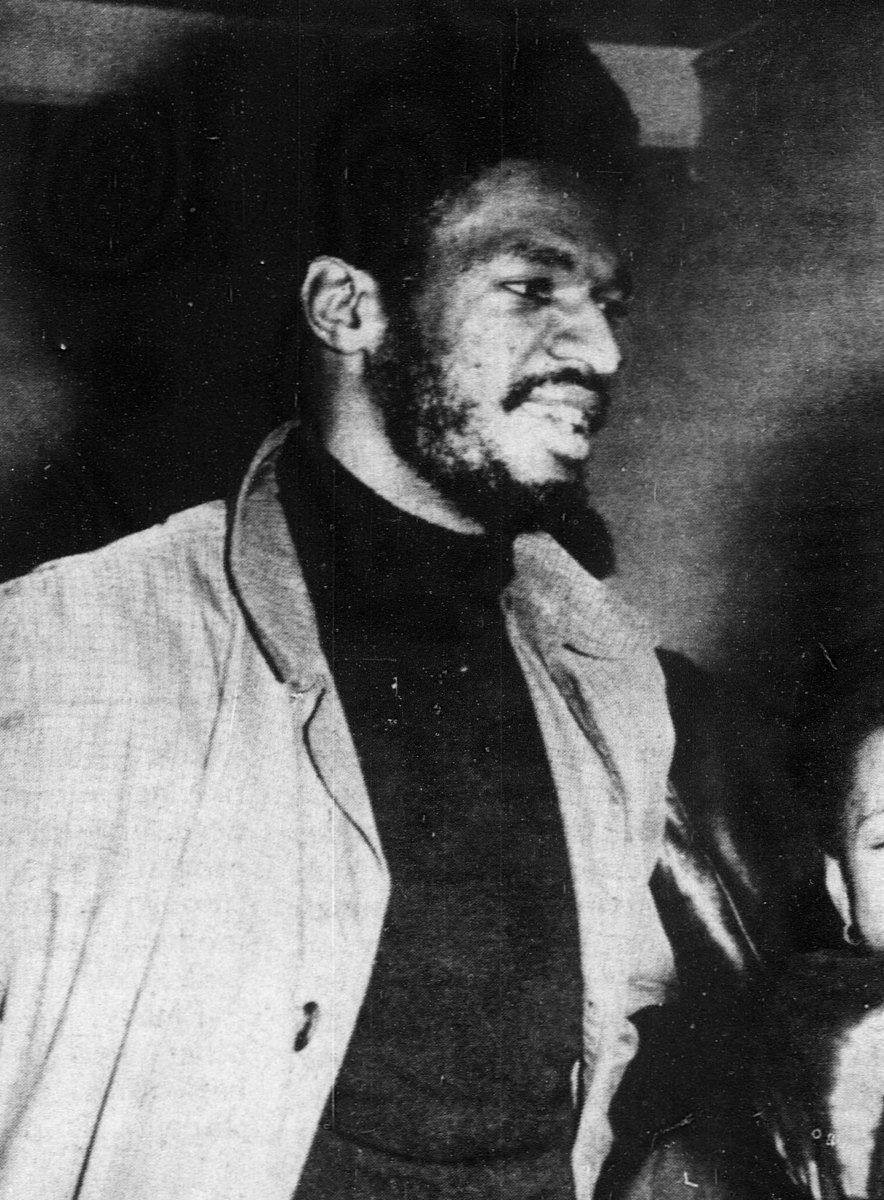
In September 1967 the School of Social Work hired Howard Fuller, a Black community organizer who had led that summer's demonstrations for housing and jobs in Durham, as a part-time lecturer; Governor Dan K. Moore, chairman of the trustees, called it a serious mistake, while Dean C. Wilson Anderson defended Fuller and President William Friday called it a routine appointment. Fuller resigned in February 1968, citing the demands of his full-time job. In August 1969 the University trustees told President William Friday not to put Mayor Howard Lee's proposed appointment to the School of Social Work faculty on the agenda of their next meeting, holding that an elected town official could not take such a post. Lee had been approached for the job before his election as mayor, and newspapers across the state questioned the decision. On September 12 the trustees reversed themselves and approved Lee for a one-year, $11,000 lectureship, below the $14,000 assistant professorship Dean C. Wilson Anderson had proposed. The same day Lee sharply criticized Governor Bob Scott at a conference of Black elected officials in Washington, and Chancellor J. Carlyle Sitterson, Friday and Anderson held up the appointment; Lee apologized to Scott and said a newspaper report had taken his words out of context. On September 17 Lee withdrew, citing pressures inside and outside the University and a 22 percent cut in the salary offered him, and Anderson said the hold on the appointment had never been lifted. In October 1970 social work students took a petition with about 400 signatures to the trustees' Visiting Committee, protesting that Provost J. C. Morrow had told Anderson he would not be recommended for a second term, for the political embarrassment, they said, of his hiring Fuller and trying to hire Lee; Morrow and Chancellor Sitterson said no recommendation had been made. Anderson resigned that December to direct a new Center of Human Services in Cleveland.
Reading on the places and people in this storyline
No indexed work is about this storyline itself yet. These are about the sites and people its dated events name, those named most often first, so they may discuss the storyline only in part. Follow a link to find a copy or view the material.
Oral history interview with Ashley Davis, April 12, 1974: interview E-0062, Southern Oral History Program Collection (#4007)
Davis, Ashley · 2007 · University Library, UNC-Chapel Hill
Ashley Davis, who entered UNC in 1968 and joined the Black Student Movement, recalls the 1969 strike by the university's cafeteria workers and the BSM's decision to stand with them when the workers asked. Recorded April 12, 1974, by Russell Rymer for the Southern Oral History Program, the hour-and-a-half interview touches on Chancellor J. Carlyle Sitterson, the Southern Student Organizing Committee and race relations among students on campus. Published online in 2007 by the UNC-Chapel Hill Library in Documenting the American South.
Progress and protests : UNC-Chapel Hill leaders during "the Long Sixties" (1957-1972) : covering chancellors William Brantley Aycock, Paul F. Sharp, and J. Carlyle Sitterson
Roundtree, Lynn · 2024 · Lynn Roundtree
Lynn Roundtree covers the University of North Carolina at Chapel Hill between 1957 and 1972 through its three chancellors, William Brantley Aycock, Paul F. Sharp and J. Carlyle Sitterson, set against the student movements of those years. Part of the Coates university leadership series, published by the author in 2024 and running to 926 pages. It is twentieth century campus history.
The coy mistress caper.
1966 · Time Inc
A four page article clipped from Life, volume 61, number 20, dated November 11, 1966, on a dispute over academic freedom at the University of North Carolina at Chapel Hill. The article concerns the instructor Michael Paull, Chancellor J. Carlyle Sitterson, Jesse Helms and Andrew Marvell's poem 'To His Coy Mistress'. Illustrated, with portraits.
Oral history interview with J. Carlyle Sitterson, November 4 and 6, 1987 interview L-0030, Southern Oral History Program Collection (#4007).
Sitterson, J. Carlyle · 2007 · University Library, UNC-Chapel Hill
Southern Oral History Program interview with J. Carlyle Sitterson (1911-1995), chancellor of the University of North Carolina at Chapel Hill from 1966, recorded by Pamela Dean on November 4 and 6, 1987, and running an hour and a half. Sitterson recalls the university in the 1960s: student demands over visitation rules, dress codes and privacy, the student movement, and the integration of the faculty. Interview L-0030 in collection #4007, published online in 2007 in Documenting the American South's Oral Histories of the American South.
William Friday
Link, William A. · 1995
Biography of William C. Friday, president of the University of North Carolina system, by historian William A. Link, published by UNC Press in 1995 with the subtitle power, purpose, and American higher education. It covers Friday's career and the history of the university at Chapel Hill and statewide. Part of the Rebecca B. Wall Local History Collection.
William Clyde Friday and Ida Howell Friday
Kyser, Georgia Carroll · 1984 · North Caroliniana Society
Georgia Carroll Kyser's brief biographical tribute to William Clyde Friday and his wife Ida Howell Friday, published by the North Caroliniana Society in 1984. It runs 25 pages with eight pages of plates and illustrations. Friday led the consolidated state university from Chapel Hill, where the couple made their home.
Oral history interview with Bob Scott, April 4, 1990 interview L-0193, Southern Oral History Program Collection (#4007).
Scott, Robert Walter · 2007 · University Library, UNC-Chapel Hill
Robert W. Scott (1929-2009), North Carolina's governor between 1969 and 1973 and son of Governor Kerr Scott, interviewed by William Link on April 4, 1990 for the Southern Oral History Program. Scott discusses his student years at North Carolina State College in the early 1950s and his dealings with university president William Friday, including the food workers' strike at Chapel Hill, college integration, and the consolidation of the state's universities into the UNC System during his term. One hour thirty-seven minutes. Electronic edition 2007.
Oral history interview with William C. Friday, December 18, 1990: interview L-0049, Southern Oral History Program Collection (#4007)
Friday, William C. · 2007 · University Library, UNC-Chapel Hill
William C. Friday, UNC system president from 1957 until 1986, was interviewed by Cindy Cheatham in December 1990 about Anne Queen (1911-2005). Queen came to the campus YWCA as associate director in 1956 and led the merged YMCA-YWCA from 1964 to 1975. Friday recalls working with her through the years of student political activity in Chapel Hill and reflects on the place of the Y in university life. About forty minutes; electronic edition from the UNC library, 2007, through Documenting the American South.
The Courage to Lead: One Man's Journey in Public Service
Lee, Howard N. · 2008 · Cotton Patch Press
Howard N. Lee (born 1934) tells his own story, from a farm childhood in Lithonia, Georgia, through college, army service in Korea at Camp Casey and the move from Savannah that planted him in Chapel Hill, to his election as mayor of Chapel Hill in 1969 and his later run for Congress and years in the state legislature. Published by Cotton Patch Press of Chapel Hill in 2008, 199 pages with plates.
Oral history interview with Edwin Caldwell, March 2, 2001: interview K-0202, Southern Oral History Program Collection (#4007)
Caldwell, Edwin · 2006 · University Library, UNC-Chapel Hill
Edwin Caldwell, Jr. reviews a life in Chapel Hill politics in a three-hour Southern Oral History Program interview recorded March 2, 2001, by Oliver White. A skilled organizer, Caldwell worked in the campaign that made Howard Lee the town's first Black mayor in 1969, ran for office more than once without winning, and became a local political power. The conversation also covers race relations, the Chapel Hill-Carrboro school board and the Church of Reconciliation. Published online in 2006 in Documenting the American South.
Oral history interview with Rebecca Clark, June 21, 2000: interview K-0536, Southern Oral History Program Collection (#4007)
Clark, Rebecca · 2006 · University Library, UNC-Chapel Hill
Interview recorded June 21, 2000 with Rebecca Clark (1915-2009), a Black Chapel Hill resident, for the Southern Oral History Program at UNC. Clark, educated in Chapel Hill's segregated schools, describes working life under segregation and the economic discrimination she met in it. Topics also include Lincoln High School, school integration, and Howard Lee, elected mayor of Chapel Hill in 1969. Interview K-0536 in collection #4007.
My life of breaking barriers, building bridges, and making history
Lee, Howard, 1934- · 2021 · North Caroliniana Society
Howard N. Lee's account of his own career, published in 2021 by the North Caroliniana Society with the society award given to him that year, together with tributes from Angela Lee, Valerie Foushee and others. Lee became mayor of Chapel Hill in 1969, the town's first Black mayor.
Wider background: Politics & Government · the most widely held histories of the theme this storyline is filed under; they may not discuss it
The Story of the Institute of Government, The University of North Carolina at Chapel Hill
Coates, Albert McKinley · 1981
Albert Coates's own account of the Institute of Government at the University of North Carolina, which he founded, subtitled 'out of a classroom in Chapel Hill' and published in 1981. The 303 pages trace the institute's history and its role in educating North Carolina's public officials.
Communists on Campus
Billingsley, William J. · 1999 · University of Georgia Press
William J. Billingsley's history of the Speaker Ban Law, the 1963 North Carolina statute that barred known Communists from speaking on state campuses, and the fight over it at the University of North Carolina in Chapel Hill. The subtitle sets the scope: race, politics and the public university in sixties North Carolina. It treats academic freedom, anti-communist movements and free speech in the state. University of Georgia Press, 1999, 308 pages with eight pages of plates.
Reviewed in Academe (2000), The American Historical Review (2001), The Journal of Southern History (2001), Journal of American History (2001), The Journal of Politics (2001).
Frank Porter Graham and the 1950 Senate Race in North Carolina
Pleasants, Julian M.; Burns, Augustus M., III · 1990 · UNC Press
Julian M. Pleasants and Augustus M. Burns III on the 1950 Democratic Senate primary in North Carolina, in which Frank Porter Graham, the former president of the University of North Carolina, lost to Willis Smith after a campaign marked by race-baiting. Primaries, elections and race relations in the state are its subjects. Published by UNC Press in 1990, 356 pages with illustrations.
Reviewed in Choice Reviews Online (1991), The American Historical Review (1991), Journal of American History (1991), The Journal of Southern History (1992).
The Age of Orange: Political and Intellectual Leadership in North Carolina, 1752-1861
Blackwelder, Ruth · 1961
Ruth Blackwelder's study of political and intellectual leadership in Orange County and North Carolina from 1752 to 1861, published in Charlotte by W. Loftin in 1961. Topics include state politics and government, intellectual life before the Civil War, and county genealogy. It runs 216 pages with illustrations and a bibliography. Part of the Wall Local History Collection.
Hillsboro, Colonial and Revolutionary
Nash, Frank · 1953
Francis Nash's history of Hillsborough in colonial and Revolutionary times, first published in 1903 and reprinted in 1953 by Edwards & Broughton with an index and a sketch of the author. Topics include the Regulator Insurrection of 1766 to 1771, the Revolution and local genealogy.
The Good Government Man
Covington, Jr., Howard E. · 2010
Howard E. Covington Jr.'s biography of Albert Coates (1896-1989), the law professor who founded the Institute of Government at the University of North Carolina and led it through its early years. Topics include Coates as a law teacher and the institute's history as a center for the study of public administration in Chapel Hill. Published in 2010 by the University Library at Chapel Hill, 322 pages with 32 pages of plates.
Show 5 more
Frank Porter Graham: A Southern Liberal
Ashby, Warren H. · 1981 · Blair
Warren Ashby's biography of Frank Porter Graham (1886-1972), president of the University of North Carolina from 1930 to 1949 and later a United States senator. Published by Blair in 1981, x and 386 pages with sixteen leaves of plates and a bibliography.
Reviewed in The American Historical Review (1981), Journal of American History (1981).
Orange County, 1752-1952
Lefler, Hugh Talmage; Wager, Paul W. · 1953
Hugh Talmage Lefler and Paul W. Wager's history of Orange County across its first two centuries, 1752 to 1952, prepared for the county's bicentennial. It covers government and politics, biography and the county's families, and doubles as a genealogical reference. Published in Chapel Hill by the Orange Printshop in 1953, 389 pages with illustrations and an index; this copy is a later reprint.
Reviewed in The Journal of Southern History (1954).
A Traitor and a Scoundrel: Benjamin Hedrick and the Cost of Dissent
Smith, Michael Thomas · 2003 · University of Delaware Press ; London : Associated University Presses
Michael Thomas Smith's biography of Benjamin Sherwood Hedrick, the University of North Carolina chemistry professor dismissed in 1856 after he declared support for the antislavery presidential candidate John C. Fremont. Published by University of Delaware Press in 2003, 216 pages with illustrations. Topics include abolitionists and dissenters in North Carolina, the antislavery movement in the state, and the university's biography before 1962.
Reviewed in The Journal of Southern History (2005).
The Papers Of Willie Person Mangum
Mangum, Willie Person · 1950 · State Dept. of Archives and History
The papers of Willie Person Mangum, 1792 to 1861, a lawyer, judge and United States senator from the part of Orange County that later became Durham County. Five volumes of correspondence published by the State Department of Archives and History beginning in 1950, arranged by date from 1807 to 1894, with illustrations, portraits and folding maps. A source for antebellum North Carolina and national politics, the Whig Party and the Mangum family.
Reviewed in The Journal of Southern History (1951), Journal of American History (1951), The Journal of Southern History (1953), Journal of American History (1953), The Journal of Southern History (1954), The Journal of Southern History (1955), The Journal of Southern History (1957), Journal of American History (1957), The American Historical Review (1957).
An Historical Address Delivered in Saint Matthew's Church, Hillsboro, N.C., on Sunday, August 24, 1924
Cheshire, Joseph Blount · 1925
Address by Bishop Joseph Blount Cheshire at St. Matthew's Church in Hillsborough on 24 August 1924, marking the parish's hundredth anniversary. Printed in Durham in 1925 at the vestry's order, with a foreword by the rector. Cheshire discusses George Micklejohn, William Mercer Green and Moses Ashley Curtis.