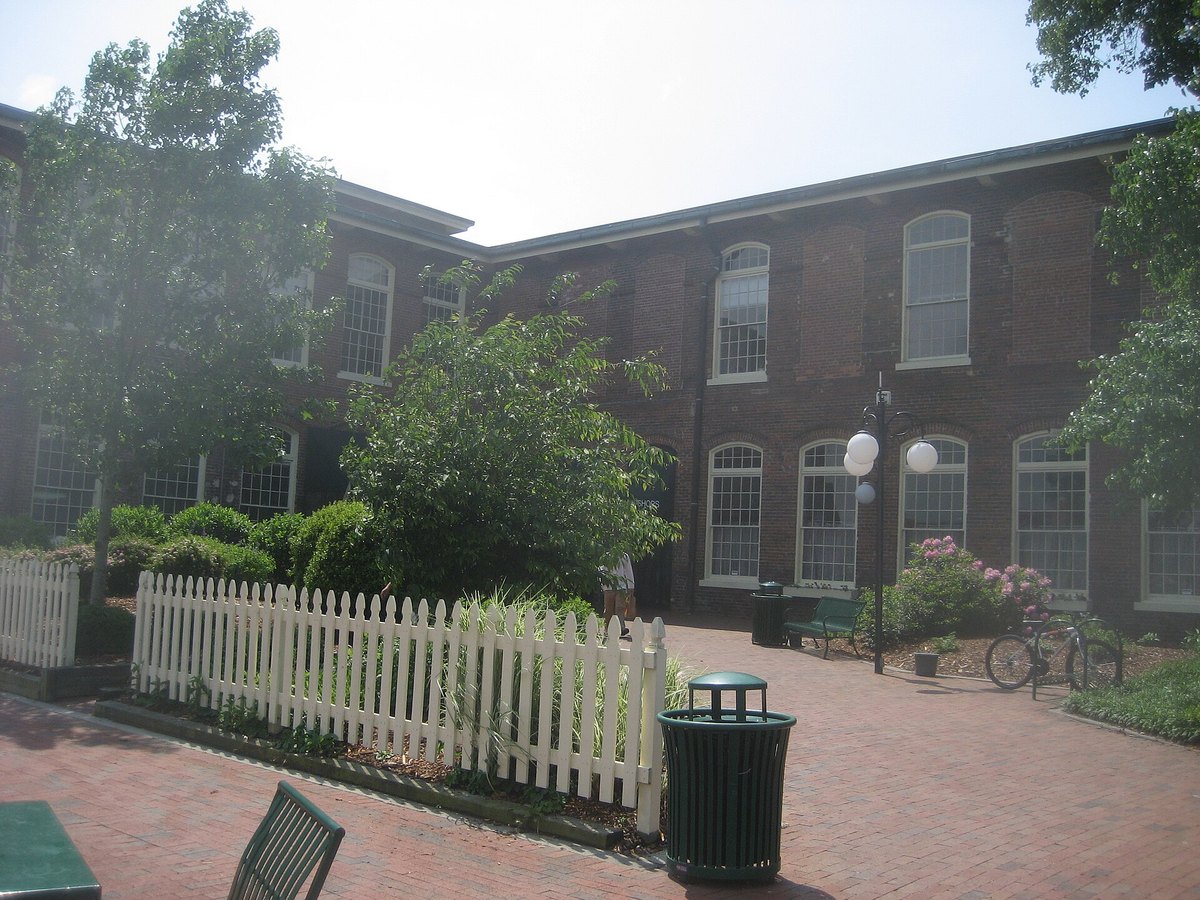
Demand for cotton stockings had been sliding since silk hosiery came in during the mid-1910s, and in 1928 Durham Hosiery Mills began curtailing work at its Carrboro mills. The 1929 crash deepened the slump. About June 1930, once the stock on hand had been run out, the company closed its No. 4 spinning mill, the former Alberta mill, saying there was no longer a market for the product as the Depression cut into the hosiery business. The Weekly counted about 175 people on its payroll, and the knitting room in the same building kept running for a time on a large order.
Two years later the company's yarn mill in Carrboro was doing better. On August 15, 1932 a ten percent raise for its workers took effect, and the mill went from short hours to full time. The Weekly reported that company officials had arranged sales of yarn in New York, and noted that the larger Carrboro mill had been shut down a year or so before. In June 1938 Durham Hosiery Mills closed Mill No. 7, its last Carrboro mill, and laid off the workers, ending the company's operations in Carrboro.
On December 10 a conference in Dean R. B. House's office brought together mill superintendent Floyd Durham, University business manager L. B. Rogerson, George H. Lawrence, Russell M. Grumman and Fred Fletcher to look for jobs for the about 140 men and women the closing had put out of work, including places on the University's PWA (Public Works Administration) building projects, and the company's W. F. Carr said it would keep giving the unemployed free rent and water in its 69 company houses after January 1 but would stop furnishing electric lights. In 1939 the company auctioned much of its Carrboro property; most houses went for $500 to $550, many to the families living in them, while Marvin J. Dawson of Chapel Hill, merchant Ernest Hearn, former foreman W. A. Riggsbee and Dick Andrews bought others as investments.
In February 1940 the Weekly reported that wages from University jobs in the dining hall, the repair shops and other departments had made up much of Carrboro's loss, while other Carrboro people rode together to mill jobs in Durham, Burlington, Saxapahaw and Swepsonville; the town had paid the interest on its water and sewer bonds all through the 1930s, and some families were moving from renting to owning homes with F.H.A. (Federal Housing Administration) loans. In August 1942 the Weekly reported that the munitions plant, in operation about two months and hiring mostly from Carrboro and nearby, had a payroll of several thousand dollars a week, and that Carrboro people were paying debts, repairing their homes and buying war bonds.
Reading on the places and people in this storyline
No indexed work is about this storyline itself yet. These are about the sites and people its dated events name, those named most often first, so they may discuss the storyline only in part. Follow a link to find a copy or view the material.
About Carr Mill · named in 2 of this story’s entries
Carr Mill, Carrboro, North Carolina : a rehabilitation project under the Tax Reform Act of 1976
Thomas, Margaret A. (Margaret Ann), 1951- · 1979
Margaret A. Thomas wrote this 1979 report on the rehabilitation of Carr Mill in Carrboro for the Technical Preservation Services Division of the Interior Department's Heritage Conservation and Recreation Service. It presents the mill as a rehabilitation project under the Tax Reform Act of 1976, with attention to federal aid for historic sites and the restoration of historic buildings. 32 illustrated pages.
Carr Mill shopping village
1977 · Carr Mill?
A short booklet on Carr Mill, the former Carrboro mill remodeled as a shopping village, issued around 1977. A note beneath the title names the owner, a limited partnership called Carr-Mill, the leasing agent Southern Real Estate of Charlotte, the architects Miller/Steever/Finch of Charlotte, and the contractor Wooten-Brawley of Statesville. Five unnumbered pages with illustrations, a map and a plan.
Carr Mill Mall
Cotten, Jerry (some photos) · 1900
Photographs following the Carrboro mill site from about 1900 to the 1970s: the Carrboro Mill in the early 1900s, a group portrait of Durham Hosiery Company workers at Carr Mill, the Carr Mill Mall later built on the site, and the sign for Elmo's Diner there. Some of the pictures are by Jerry Cotten.
Friends of Old Carrboro, Inc. collection, circa 1970s-2000
Friends of Old Carrboro, Inc · 1974
Organizational records of Friends of Old Carrboro, Inc., roughly 2,600 items in 4.5 linear feet spanning circa 1970s to 2000, part of the Southern Historical Collection at UNC, collection 70171. Topics include historic preservation and architectural conservation in Carrboro, city planning, zoning and traffic calming, with names including Claudia Roberts Brown and Jay Bryan and sites such as Carr Mill and Weaver Street Market. Materials in English.
Wider background: Work, Labor & Industry · the most widely held histories of the theme this storyline is filed under; they may not discuss it
Johnston and Robson Mill History, New Hope Creek (Orange Co., N.C.)
Dunaway, Stewart E. · 2010
Stewart E. Dunaway's history of the two mills George Johnston built on New Hope Creek in Orange County, the first in 1793 and the second in 1820, the earlier of which he sold to the Englishman William Robson. Self-published in 2010, 256 pages with illustrations, maps and facsimiles. Topics include gristmills in Orange County and the Blackwood, Johnston, Robinson and Robson families, so the volume serves both mill history and genealogy.
Mrs. Lincoln and Mrs. Keckly: The Remarkable Story of the Friendship Between a First Lady and a Former Slave
Fleischner, Jennifer · 2003 · Broadway Books
Jennifer Fleischner's double biography of Mary Todd Lincoln and Elizabeth Keckley, the dressmaker who had been enslaved, including years in Hillsborough, before buying her freedom and becoming the First Lady's confidante. Published by Broadway Books in New York in 2003, 372 pages with illustrations and a map. Topics include enslaved women in Hillsborough and the United States, dressmakers and women's friendships in the nineteenth century.
History of Patterson Mill, New Hope Creek, Orange County, NC
Dunaway, Stewart E. · 2010
Stewart E. Dunaway's 2010 study of Patterson Mill, a gristmill site on New Hope Creek where Orange County meets Chatham County. The book pairs a short genealogy of the Patterson family with a close survey of what remains of the mill on land now inside Duke Forest, supported by maps, facsimile documents and illustrations across 176 pages. Self-published in a second issue dated October 10, 2010.
A Generosity of Spirit: The Early History of the Research Triangle Park
Link, Albert N. · 1995 · Research Triangle Foundation of North Carolina
Albert N. Link's early history of Research Triangle Park, published in 1995 by the Research Triangle Foundation of North Carolina. Topics include research parks, research institutes and industrial research in the state, with the park's own history at the center. 149 pages with illustrations and maps.
From seed to harvest
Link, Albert N. · 2002 · Research Triangle Foundation of North Carolina
Albert N. Link's history of the Research Triangle Park, the research park founded to draw on the universities at Chapel Hill, Durham and Raleigh, published in 2002 by the Research Triangle Foundation of North Carolina in 278 pages with illustrations. Topics include research parks, research institutes and industrial research in North Carolina and the history of the park itself.
Sheer Resilience : An Untold Story of A Free Community of Color in Orange County, N.C
Scarlett, Beverly A. · 2024
Beverly A. Scarlett's 2024 study of a free community of color in nineteenth-century Orange County, drawing on apprenticeship and freedmen's records among other county sources.
Show 6 more
Working for A Living
Orange County Historical Museum (N.C.) · 2024
Exhibit publication from the Orange County Historical Museum for its special exhibit on working life, shown in Hillsborough from March to December 2024 and concerned with the county's trades and industrial arts. Produced by the museum in 2024, it documents Orange County and Hillsborough history through the work people did.
The East Asian collection of the University of North Carolina at Chapel Hill
Bolick, Hsi-Chu · 2010
Hsi-Chu Bolick's 2010 account of the East Asian collection at the University of North Carolina at Chapel Hill, printed as an article running from page 280 to page 292 with illustrations and portraits. Topics include East Asian libraries in Chapel Hill, library resources for East Asia, and the university's cooperation with Duke in building the collection.
The water mills of Bolin and Morgan creeks, Orange County, North Carolina
Chilton, Mark · 2008 · The author
Mark Chilton's short account of the water mills that once stood on Bolin and Morgan creeks in Orange County, prepared to accompany a talk given to the Chapel Hill Historical Society on January 27, 2008. Seven unnumbered pages with a folded plate, color illustrations and a map.
I raised my hand to volunteer : students protest in 1960s Chapel Hill.
2007 · University of North Carolina at Chapel Hill
Account of student protest in 1960s Chapel Hill, published by the University of North Carolina at Chapel Hill in 2007 with illustrations. It draws together the civil rights movement and segregation in the town, discrimination in restaurants, academic freedom and university autonomy, protest against the Vietnam War, Students for a Democratic Society and the Black Student Movement on campus.
Making Carrboro home : user alteration of company space
Lachenman, Sara Regan · 2005
Sara Regan Lachenman's 2005 thesis on how the people living in Carrboro's company built housing altered it to suit themselves. It takes up domestic architecture, working class housing and the social side of the textile industry in the town, with 158 pages of text and illustrations.
The treatment of African American girls in progressive era North Carolina's juvenile justice system (1890-1930)
Brice, Tanya Smith · 2003
Tanya Smith Brice studies how North Carolina's juvenile justice system treated African American girls between 1890 and 1930, naming among its institutions the North Carolina Industrial School for Negro Girls at Efland in Orange County. Health and hygiene, juvenile delinquency and the state's social conditions are among its subjects. A 2003 typescript of 89 leaves with a bibliography on the closing pages.